talk-data.com talk-data.com

Topic

SQL

Structured Query Language (SQL)

database_language data_manipulation data_definition programming_language

780

tagged

Activity Trend

107 peak/qtr
2020-Q1 2026-Q1

Activities

Showing filtered results

Filtering by: O'Reilly Data Engineering Books ×
Oracle Database Administration for Microsoft SQL Server DBAs

Apply Your SQL Server DBA Skills to Oracle Database Administration Use your SQL Server experience to set up and maintain a high-performance Oracle Database environment. Written by a DBA with expertise in both platforms, Oracle Database Administration for Microsoft SQL Server DBAs illustrates each technique with clear explanations, examples, and comparison tables. Get full details on Oracle Database intervals, creation assistants, management techniques, and query tools. High availability, disaster recovery, and security procedures are also extensively covered in this comprehensive Oracle Press guide. Install and configure Oracle Database on Windows or Linux systems Administer and monitor databases from Oracle Enterprise Manager Implement robust security using roles, permissions, and privileges Back up and restore databases with Oracle Recovery Manager Use the Oracle cost-based optimizer to tune performance Write, debug, and execute PL/SQL queries using Oracle SQL Developer Maximize availability with Oracle Real Application Clusters Build standby and failover servers using Oracle Data Guard
The Definitive Guide to MongoDB: The NoSQL Database for Cloud and Desktop Computing

MongoDB, a cross-platform NoSQL database, is the fastest-growing new database in the world. MongoDB provides a rich document orientated structure with dynamic queries that you'll recognize from RDMBS offerings such as MySQL. In other words, this is a book about a NoSQL database that does not require the SQL crowd to re-learn how the database world works! MongoDB has reached 1.0 and already boasts 50,000+ users. The community is strong and vibrant and MongoDB is improving at a fast rate. With scalable and fast databases becoming critical for today's applications, this book shows you how to install, administer and program MongoDB without pretending SQL never existed.

Practical DMX Queries for Microsoft SQL Server Analysis Services 2008

250+ Ready-to-Use, Powerful DMX Queries Transform data mining model information into actionable business intelligence using the Data Mining Extensions (DMX) language. Practical DMX Queries for Microsoft SQL Server Analysis Services 2008 contains more than 250 downloadable DMX queries you can use to extract and visualize data. The application, syntax, and results of each query are described in detail. The book emphasizes DMX for use in SSMS against SSAS, but the queries also apply to SSRS, SSIS, DMX in SQL, WinForms, WebForms, and many other applications. Techniques for generating DMX syntax from graphical tools are also demonstrated in this valuable resource. View cases within data mining structures and models using DMX Case queries Examine the content of a data mining model with DMX Content queries Perform DMX Prediction queries based on the Decision Trees algorithm and the Time Series algorithm Run Prediction and Cluster queries based on the Clustering algorithm Execute Prediction queries with Association and Sequence Clustering algorithms Use DMX DDL queries to create, alter, drop, back up, and restore data mining objects Display various parameters for each algorithm with Schema queries Examine the values of discrete, discretized, and continuous structure columns using Column queries Use graphical interfaces to generate Prediction, Content, Cluster, and DDL queries Deliver DMX query results to end users Download the source code from www.mhprofessional.com/computingdownload

The Business Analyst's Guide to Oracle Hyperion Interactive Reporting 11

The Business Analyst's Guide to Oracle Hyperion Interactive Reporting 11 is your go-to resource for mastering this powerful Oracle business intelligence tool. Within these pages, you'll explore the Interactive Reporting Web Client software to its fullest potential, learning how to gather, analyze, and visually present data effectively. What this Book will help me do Navigate through the Oracle Hyperion interface and utilize key functionalities with confidence. Develop and optimize data models and queries to extract meaningful insights. Integrate external data and analyze results using advanced SQL capabilities. Create compelling dashboards and customize interactive visualizations for impactful presentations. Build highly detailed and professional-quality reports that address complex analytical needs. Author(s) Edward Cody is a seasoned data analysis expert with years of hands-on experience teaching and working with Oracle Hyperion products. His pragmatic approach to reporting challenges is evident in his professional achievements and consulting projects. Edward enjoys sharing his expertise to empower others to harness the potential of cutting-edge data tools. Who is it for? This book is ideal for business analysts, data professionals, and enterprise users aiming to master Oracle Hyperion Interactive Reporting 11. Whether you are new to the software or looking to deepen your expertise, it provides incremental learning for progressively building skills that turn data into strategic decisions.

Using SQLite

Application developers, take note: databases aren't just for the IS group any more. You can build database-backed applications for the desktop, Web, embedded systems, or operating systems without linking to heavy-duty client-server databases such as Oracle and MySQL. This book shows you how to use SQLite, a small and lightweight relational database engine that you can build directly into your application. With SQLite, you'll discover how to develop a database-backed application that remains manageable in size and complexity. This book guides you every step of the way. You'll get a crash course in data modeling, become familiar with SQLite's dialect of the SQL database language, and much more. Learn how to maintain localized storage in a single file that requires no configuration Build your own SQLite library or use a precompiled distribution in your application Get a primer on SQL, and learn how to use several language functions and extensions Work with SQLite using a scripting language or a C-based language such as C# or Objective-C Understand the basics of database design, and learn how to transfer what you already know to SQLite Take advantage of virtual tables and modules "Complex SQL concepts explained clearly." --D. Richard Hipp, creator of SQLite

Microsoft® Access® 2010 Programmer's Reference

A comprehensive guide to programming for Access 2010 and 2007 Millions of people use the Access database applications, and hundreds of thousands of developers work with Access daily. Access 2010 brings better integration with SQL Server and enhanced XML support; this Wrox guide shows developers how to take advantage of these and other improvements. With in-depth coverage of VBA, macros, and other programming methods for building Access applications, this book also provides real-world code examples to demonstrate each topic. Access 2010 Programmer's Reference is a comprehensive guide to the best-of-breed techniques for programming Access applications. Coverage Includes: Introduction to Microsoft Access 2010 New Features Upgrading and Converting to Access 2010 Macros in Access 2010 Using the VBA Editor VBA Basics Using VBA in Access Creating Classes in VBA Extending VBA with APIs Working with the Windows Registry Using DAO to Access Data Using ADO to Access Data Using SQL with VBA Using VBA to Enhance Forms Enhancing Reports with VBA Customizing the Ribbon Customizing the Office Backstage Working with Office 2010 Working with SharePoint Working with .NET Building Client-Server Applications with Access The Access 2010 Templates Access Runtime Deployment Database Security Access 2010 Security Features

Database Modeling and Design, 4th Edition

Database Modeling and Design, Fourth Edition, the extensively revised edition of the classic logical database design reference, explains how you can model and design your database application in consideration of new technology or new business needs. It is an ideal text for a stand-alone data management course focused on logical database design, or a supplement to an introductory text for introductory database management. This book features clear explanations, lots of terrific examples and an illustrative case, and practical advice, with design rules that are applicable to any SQL-based system. The common examples are based on real-life experiences and have been thoroughly class-tested. The text takes a detailed look at the Unified Modeling Language (UML-2) as well as the entity-relationship (ER) approach for data requirements specification and conceptual modeling - complemented with examples for both approaches. It also discusses the use of data modeling concepts in logical database design; the transformation of the conceptual model to the relational model and to SQL syntax; the fundamentals of database normalization through the fifth normal form; and the major issues in business intelligence such as data warehousing, OLAP for decision support systems, and data mining. There are examples for how to use the most popular CASE tools to handle complex data modeling problems, along with exercises that test understanding of all material, plus solutions for many exercises. Lecture notes and a solutions manual are also available. This edition will appeal to professional data modelers and database design professionals, including database application designers, and database administrators (DBAs); new/novice data management professionals, such as those working on object oriented database design; and students in second courses in database focusing on design.+ a detailed look at the Unified Modeling Language (UML-2) as well as the entity-relationship (ER) approach for data requirements specification and conceptual modeling--with examples throughout the book in both approaches! + the details and examples of how to use data modeling concepts in logical database design, and the transformation of the conceptual model to the relational model and to SQL syntax; + the fundamentals of database normalization through the fifth normal form; + practical coverage of the major issues in business intelligence--data warehousing, OLAP for decision support systems, and data mining; + examples for how to use the most popular CASE tools to handle complex data modeling problems. + Exercises that test understanding of all material, plus solutions for many exercises.

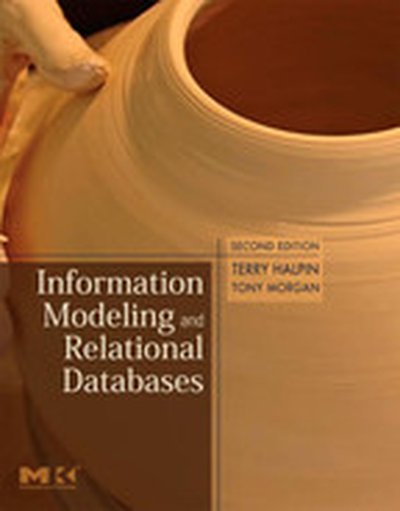
Information Modeling and Relational Databases, 2nd Edition

Information Modeling and Relational Databases, Second Edition, provides an introduction to ORM (Object-Role Modeling)and much more. In fact, it is the only book to go beyond introductory coverage and provide all of the in-depth instruction you need to transform knowledge from domain experts into a sound database design. This book is intended for anyone with a stake in the accuracy and efficacy of databases: systems analysts, information modelers, database designers and administrators, and programmers. Terry Halpin, a pioneer in the development of ORM, blends conceptual information with practical instruction that will let you begin using ORM effectively as soon as possible. Supported by examples, exercises, and useful background information, his step-by-step approach teaches you to develop a natural-language-based ORM model, and then, where needed, abstract ER and UML models from it. This book will quickly make you proficient in the modeling technique that is proving vital to the development of accurate and efficient databases that best meet real business objectives. Presents the most indepth coverage of Object-Role Modeling available anywhere, including a thorough update of the book for ORM2, as well as UML2 and E-R (Entity-Relationship) modeling Includes clear coverage of relational database concepts, and the latest developments in SQL and XML, including a new chapter on the impact of XML on information modeling, exchange and transformation New and improved case studies and exercises are provided for many topics

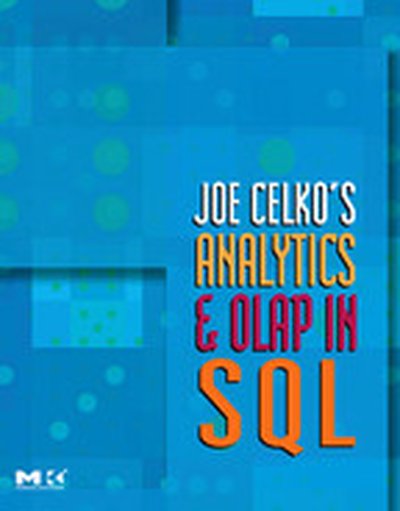
Joe Celko's Analytics and OLAP in SQL

Joe Celko's Analytics and OLAP in SQL is the first book that teaches what SQL programmers need in order to successfully make the transition from On-Line Transaction Processing (OLTP) systems into the world of On-Line Analytical Processing (OLAP). This book is not an in-depth look at particular subjects, but an overview of many subjects that will give the working RDBMS programmers a map of the terra incognita they will face — if they want to grow. It contains expert advice from a noted SQL authority and award-winning columnist, who has given ten years of service to the ANSI SQL standards committee and many more years of dependable help to readers of online forums. It offers real-world insights and lots of practical examples. It covers the OLAP extensions in SQL-99; ETL tools, OLAP features supported in DBMSs, other query tools, simple reports, and statistical software. This book is ideal for experienced SQL programmers who have worked with OLTP systems who need to learn techniques—and even some tricks—that they can use in an OLAP situation. Expert advice from a noted SQL authority and award-winning columnist, who has given ten years of service to the ANSI SQL standards committee and many more years of dependable help to readers of online forums First book that teaches what SQL programmers need in order to successfully make the transition from transactional systems (OLTP) into the world of data warehouse data and OLAP Offers real-world insights and lots of practical examples Covers the OLAP extensions in SQL-99; ETL tools, OLAP features supported in DBMSs, other query tools, simple reports, and statistical software

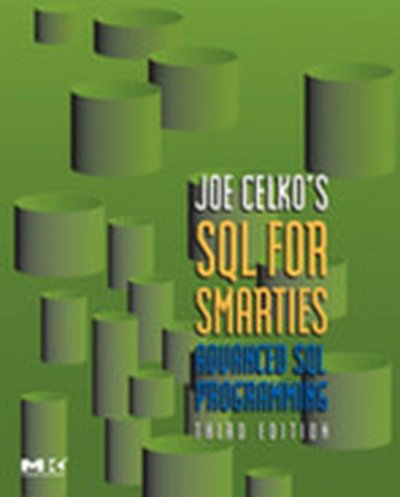
Joe Celko's SQL for Smarties, 3rd Edition

SQL for Smarties was hailed as the first book devoted explicitly to the advanced techniques needed to transform an experienced SQL programmer into an expert. Now, 10 years later and in the third edition, this classic still reigns supreme as the book written by an SQL master that teaches future SQL masters. These are not just tips and techniques; Joe also offers the best solutions to old and new challenges and conveys the way you need to think in order to get the most out of SQL programming efforts for both correctness and performance. In the third edition, Joe features new examples and updates to SQL-99, expanded sections of Query techniques, and a new section on schema design, with the same war-story teaching style that made the first and second editions of this book classics. Expert advice from a noted SQL authority and award-winning columnist, who has given ten years of service to the ANSI SQL standards committee and many more years of dependable help to readers of online forums. Teaches scores of advanced techniques that can be used with any product, in any SQL environment, whether it is an SQL-92 or SQL-99 environment. Offers tips for working around system deficiencies. Continues to use war stories--updated!--that give insights into real-world SQL programming challenges.

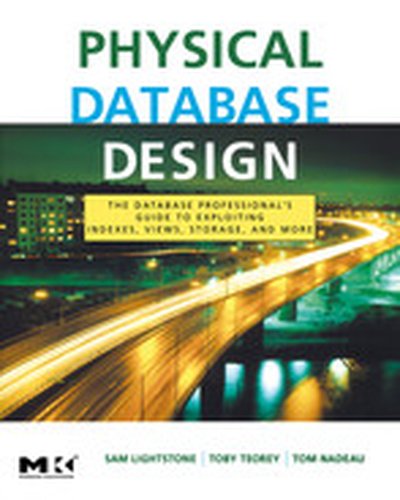
Physical Database Design

The rapidly increasing volume of information contained in relational databases places a strain on databases, performance, and maintainability: DBAs are under greater pressure than ever to optimize database structure for system performance and administration. Physical Database Design discusses the concept of how physical structures of databases affect performance, including specific examples, guidelines, and best and worst practices for a variety of DBMSs and configurations. Something as simple as improving the table index design has a profound impact on performance. Every form of relational database, such as Online Transaction Processing (OLTP), Enterprise Resource Management (ERP), Data Mining (DM), or Management Resource Planning (MRP), can be improved using the methods provided in the book. The first complete treatment on physical database design, written by the authors of the seminal, Database Modeling and Design: Logical Design, Fourth Edition Includes an introduction to the major concepts of physical database design as well as detailed examples, using methodologies and tools most popular for relational databases today: Oracle, DB2 (IBM), and SQL Server (Microsoft) Focuses on physical database design for exploiting B+tree indexing, clustered indexes, multidimensional clustering (MDC), range partitioning, shared nothing partitioning, shared disk data placement, materialized views, bitmap indexes, automated design tools, and more!

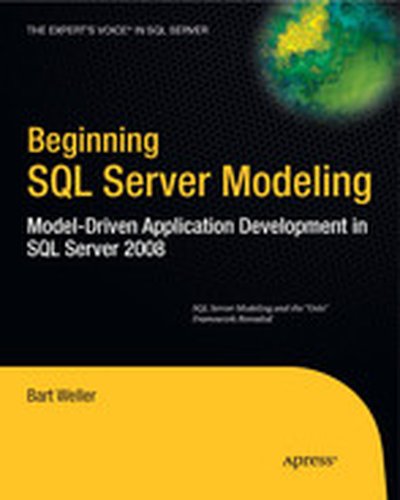
Beginning SQL Server Modeling: Model-Driven Application Development in SQL Server 2008

Get ready for model-driven application development with SQL Server Modeling! This book covers Microsoft's SQL Server Modeling (formerly known under the code name "Oslo") in detail and contains the information you need to be successful with designing and implementing workflow modeling. Beginning SQL Server Modeling will help you gain a comprehensive understanding of how to apply DSLs and other modeling components in the development of SQL Server implementations. Most importantly, after reading the book and working through the examples, you will have considerable experience using SQL Modeling components, because the book and accompanying source code take you through the steps of actually building solutions using the platform. Beginning SQL Server Modeling is the only book that comprehensively covers .NET application development using SQL Modeling. This book explains the critical concepts of SQL Server Modeling and model-driven development that every SQL Server developer should know. The book is simple and concise, giving readers an immediate return on their investment. After learning the lessons of this book, business process analysts and developers will be prepared to use SQL modeling for model-based design, development, and implementations.

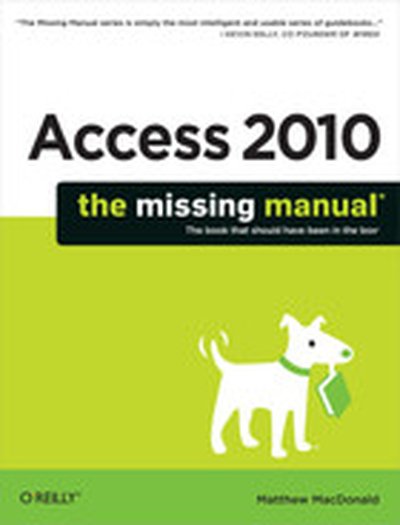
Access 2010: The Missing Manual

Unlock the secrets of this powerful database program and discover how to use your data in creative ways. With this book’s easy step-by-step process, you’ll quickly learn how to build and maintain a complete Access database, using Access 2013’s new, simpler user interface and templates. You also get practices and tips from the pros for good database design—ideal whether you’re using Access for school, business, or at home. The important stuff you need to know: Build a database with ease. Store information to track numbers, products, documents, and more. Customize the interface. Build your own forms to make data entry a snap. Find what you need fast. Search, sort, and summarize huge amounts of information. Put your data to use. Turn raw info into printed reports with attractive formatting. Share your data. Collaborate online with SharePoint and the Access web database. Dive into Access programming. Get tricks and techniques to automate common tasks. Create rich data connections. Build dynamic links with SQL Server, SharePoint, and other systems.

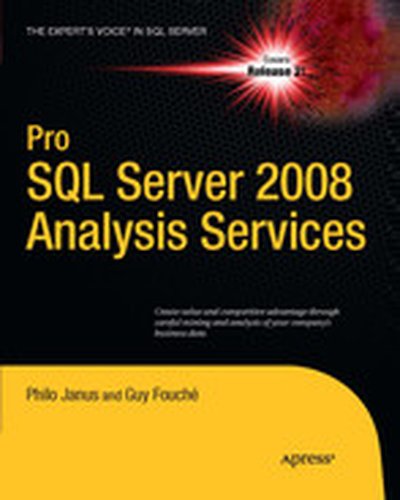
Pro SQL Server 2008 Analysis Services

Every business has a reams of business data locked away in databases, business systems, and spreadsheets. While you may be able to build some reports by pulling a few of these repositories together, actually performing any kind of analysis on the data that runs your business can range from problematic to impossible. Pro SQL Server 2008 Analysis Services will show you how to pull that data together and present it for reporting and analysis in a way that makes the data accessible to business users, instead of needing to rely on the IT department every time someone needs a different report. Accessible-With a single author's voice, this book conducts a guided tour through the technology that makes it easy to dive into. Solution-oriented-While technically deep, the goal is to focus on practical application of the technologies instead of acting as a technical manual. ComprehensiveThis book covers every aspect of Analysis Services and ancillary technologies to enable you to make the most of SQL Server.

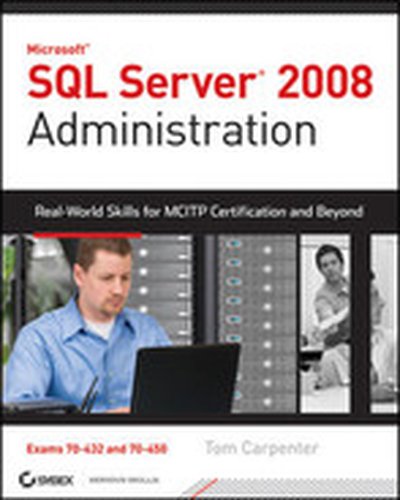
SQL Server® 2008 Administration: Real World Skills for MCITP Certification and Beyond

The ideal on-the-job reference guide for SQL Server 2008 database administrators If you manage and administer SQL Server 2008 in the real world, you need this detailed guide at your desk. From planning to disaster recovery, this practical book explores tasks and scenarios that a working SQL Server DBA faces regularly and shows you step by step how to handle them. Topics include installation and configuration, creating databases and tables, optimizing the database server, planning for high availability, and more. And, if you're preparing for MCTS or MCITP certification in SQL Server 2008 administration, this book is the perfect supplement to your preparation, featuring a CD with practice exams, flashcards, and video walkthroughs of the more difficult administrative tasks Delves into Microsoft's SQL Server 2008, a rich set of enterprise-level database services for business-critical applications Explores the skills you'll need on the job as a SQL Server 2008 administrator Shows you how to implement, maintain, and repair the SQL Server database, including bonus videos on the CD where the authors walks you through the more difficult tasks Covers database design, installation and configuration, creating databases and tables, security, backup and high availability, and more Supplements your preparation for MCTS and MCITP SQL Server 2008 certification with in-depth coverage of the skill sets required for certification, as defined by Microsoft Uses hands-on exercises and real-world scenarios to keep what you're learning grounded in the reality of the workplace Make sure you're not only prepared for certification, but also for your job as a SQL Server 2008 administrator, with this practical reference! Note: CD-ROM/DVD and other supplementary materials are not included as part of eBook file.

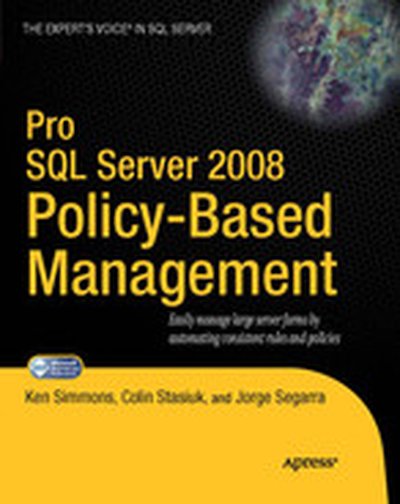
Pro SQL Server 2008 Policy-Based Management

Pro SQL Server 2008 Policy-Based Management is critical for database administrators seeking in-depth knowledge on administering servers using the new policy-based management features introduced in SQL Server 2008. This book will cover everything from a basic introduction to policy-based management to creating your own custom policies to enforce consistent rules across your organization. Provides in-depth treatment of policy-based management in a single source Provides practical usage scenarios for policy-based management Provides guidance to help meet growing regulatory compliance needs

Inside Symbian SQL: A Mobile Developer's Guide to SQLite

This is the definitive guide for Symbian C++ developers looking to use Symbian SQL in applications or system software. Since Symbian SQL and SQLite are relatively new additions to the Symbian platform, Inside Symbian SQL begins with an introduction to database theory and concepts, including a Structured Query Language (SQL) tutorial. Inside Symbian SQL also provides a detailed overview of the Symbian SQL APIs. From the outset, you will “get your hands dirty” writing Symbian SQL code. The book includes snippets and examples that application developers can immediately put to use to get started quickly. For device creators and system software developers, Inside Symbian SQL offers a unique view into the internals of the implementation and a wealth of practical advice on how to make best and most efficient use of the Symbian SQL database. Several case studies are presented – these are success stories 'from the trenches', written by Symbian engineers. Special Features: The book assumes no prior knowledge of databases Includes detailed and approachable explanations of database concepts Easy to follow SQL tutorial with SQLite examples Unique view into the Symbian SQL internals Troubleshooting section with solutions to common problems Written by the Symbian engineers who implemented SQLite on Symbian, with more than 40 years combined Symbian C++ experience, this book is for anyone interested in finding out more about using a database on Symbian.

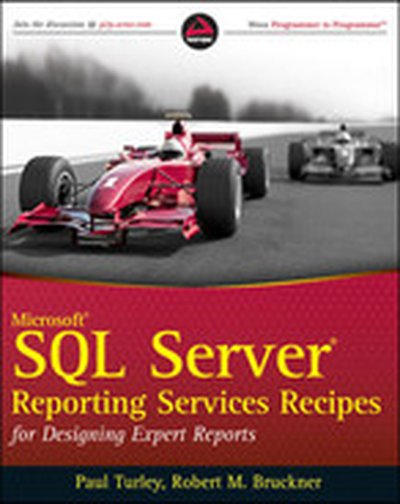
Microsoft® SQL Server® Reporting Services Recipes: for Designing Expert Reports

Learn to design more effective and sophisticated business reports While most users of SQL Server Reporting Services are now comfortable designing and building simple reports, business today demands increasingly complex reporting. In this book, top Reporting Services design experts have contributed step-by-step recipes for creating various types of reports. Written by well-known SQL Server Reporting Services experts, this book gives you the tools to meet your clients' needs Coverage includes: Business Reporting Paradigms Basic Report Design Concepts Using Report Builder. Report Design Essentials Tabular and Matrix Reports Expressions and Custom Code Formatting Report Data Columnar and Grouped Reports Bi Dashboards and Elements Synchronizing Groups, Charts, and Sparklines Chart and Gauge Reports Creating a Personal Report Card Creating a Multi-Series Multi-Y Axis Chart Interactive Reporting Integrated Reporting Applications Offline Reporting Using The Report Viewer Control Creating a Calendar Report Creating Mailing Labels Barcodes Excel Worksheet Naming and Page Naming External Image Sources Language Localization Creating a Checkbox List To Show Existing Records Using a Checkbox List To Select and Deselect Records Using The Map Wizard Filtering and Parameterization Multiple Criterion Report Filtering Using Multi-Value Parameters with a Stored Procedure Using Multi-Value Parameters with a Subscription Report Creating Custom Sorting Reports Filtering User-Specific Report Data Custom and Dynamic Data Sources Using a Web Service As a Data Source Reporting On Sharepoint List Data Dynamics Ax Report Wizard and More! Microsoft® SQL Server® Reporting Services Recipes brings together great report designs that have been field-tested by the experts Note: CD-ROM/DVD and other supplementary materials are not included as part of eBook file.

The Excel® Analyst's Guide to Access®

The ultimate handbook for Excel analysts who need reporting solutions using Access Excel and Access are intended to work together. This book offers a comprehensive review of the extensive analytical and reporting functionality that Access provides and how it enhances Excel reporting functions. Sales managers, operations analysts, administrative assistants, office managers, and many others who rely heavily on data can benefit from learning to integrate Excel and Access, and this book shows you how. Coverage includes: Data Analysis in Access & the Basics of Access Beyond Select Queries Transforming Your Data with Access Working with Calculations and Dates Performing Conditional Analysis Adding Dimension with Subqueries and Domain Aggregate Functions Running Descriptive Statistics in Access Scheduling and Running Batch Analysis Leveraging VBA to Enhance Data Analysis Reports, Dashboards, and Visualization in Access Presenting Data with Access Reports Using Pivot Tables and Pivot Charts in Access Enhancing Queries and Reports with Visualizations Advanced Excel and Access Integration Techniques Getting Access Data into Excel Using VBA to Move Data between Excel and Access Exploring Excel and Access Automation Integrating Excel and Access with XML Integrating Excel and Other Of?ce Applications Access VBA Fundamentals Understanding and Using SQL and more! The Excel Analyst's Guide to Access helps you get more from both applications. Note: CD-ROM/DVD and other supplementary materials are not included as part of eBook file.