talk-data.com talk-data.com

Topic

SQL

Structured Query Language (SQL)

database_language data_manipulation data_definition programming_language

780

tagged

Activity Trend

107 peak/qtr
2020-Q1 2026-Q1

Activities

Showing filtered results

Filtering by: O'Reilly Data Engineering Books ×
IMS Version 9 Implementation Guide: A Technical Overview

This IBM Redbooks publication provides an overview of the new functions and enhancements in IBM Information Management System (IMS) Version 9. IMS Version 9 contains over 50 enhancements, in all areas of the product. that address availability, scalability, capacity, usability, manageability, operations, on demand business, and application development requirements from its huge customer base. All of the enhancements in this new version resulted from specific customer requirements. The major enhancements include: Improved database availability for HALDB databases is provided by the long-awaited online reorganization (OLR) enhancement. The functionality of the IMS Connect product is included as an integrated function of IMS. DBRC provides a new API that allows assembler programs to query the RECON. IMS Java users will have new JDBC SQL calls and DLI Model Utility support for retrieving existing IMS data in XML format as well as storing, indexing, searching, and retrieving valid XML documents into new or existing IMS databases. We describe these enhancements and all other major changes in IMS Version 9. This book gives you the essential information that you need when you are migrating your IMS systems to IMS Version 9.
PeopleSoft for the Oracle DBA

The newest addition to the OakTable Press series, PeopleSoft for the Oracle DBA, will teach you a range of techniques for maintaining a PeopleSoft system. You will then become able to implement techniques like indexing, implementing DDL, managing tablespaces, and fixing low-performing SQL queries. Author David Kurtz is a field expert and provides answers to common questions that arise when using PeopleSoft on an Oracle database. Kurtz begins the book with an architecture overview, then proceeds to BEA Tuxedo, PeopleSoft's application server. Kurtz transitions smoothly between subsequent chapters, explaining database structures, connectivity, keys and indexing, the PeopleSoft DDL, and tablespaces. Kurtz gives appropriate weight to advanced topics as well, like schemas, performance metrics, performance monitoring utilities, and SQL optimization techniques. The final chapters provide crucial, advanced information about Tuxedo.

Hibernate: A J2EE™ Developer's Guide

Build fast, high-performance Java database applications with Hibernate. Hibernate makes it far easier to build robust, high-performance database applications with Java. Now there's a practical, hands-on guide to using Hibernate's flexible, fast object/relational persistence and query services. Will Iverson covers every facet of development with Hibernate, from its mapping system toits advanced query mechanisms and transaction support. Iverson shows you how to build Hibernate solutions that can integrate with Swing, with JSP, and even with EJBs utilizing bean-managed persistence. Using realistic examples, he demonstrates how to work with persistent objects, manage schema, and optimize database application performance. After you've mastered Hibernate's core techniques, Iverson presents best practices, tips, tricks, and style guidance for even more effective development. Coverage includes Case study applications: starting from object/relational mapping files, Java code, and existing schema Writing Hibernate queries using HQL—Hibernate's object-oriented SQL extension Using Hibernate with Java-based Criteria and Example or native SQL The Hibernate mapping file format in detail: a complete reference How Hibernate handles class and database relationships Managing session and database transactions with Hibernate Tracking and optimizing performance with p6spy and IronTrack SQL Automatically generating DDL scripts that create, update, and drop tables Even if your Java database experience is limited to basic JDBC, this book will help you leverage Hibernate's remarkable power. You'll spend far less time writing code to bridge databases with Java applications—so you can get to market faster, with more features. © Copyright Pearson Education. All rights reserved.

Oracle SQL*Plus: The Definitive Guide, 2nd Edition

Despite its wide availability and usage, few developers and DBAs have mastered the true power of Oracle SQLPlus. This bestselling book--now updated for Oracle 10g--is the only in-depth guide to this interactive query tool for writing SQL scripts. It's an essential resource for any Oracle user.The new second edition of Oracle SQLPlus: The Definitive Guide clearly describes how to perform, step-by-step, all of the tasks that Oracle developers and DBAs want to perform with SQL Plus--and maybe some you didn't realize you could perform.With Oracle SQLPlus: The Definitive Guide, you'll expertly: write and execute script files generate ad hoc reports extract data from the database query the data dictionary tables customize an SQLPlus environment and much moreIt also includes a handy quick reference to all of its syntax options and an often-requested chapter on SQL itself, along with a clear, concise, and complete introduction.This book is truly the definitive guide to SQLPlus. It's an indispensable resource for those who are new to SQL*Plus, a task-oriented learning tool for those who are already using it, and an immediately useful quick reference for every user. If you want to leverage the full power and flexibility of this popular Oracle tool, you'll need this book.

DB2® SQL PL: Essential Guide for DB2® UDB on Linux™, UNIX®, Windows®, i5/OS™, and z/OS®, Second Edition

IBM's definitive guide to writing DB2 SQL PL stored procedures, triggers, UDFs, and dynamic compound SQL Fully updated to reflect the entire DB2 UDB product family, and new SQL PL improvements for Windows, UNIX, Linux, iSeries, and zSeries Presents expert tips and best practices drawn from extensive experience in real customer environments Covers everything from basic program structure through advanced techniques Includes up-to-the-minute coverage of optimization and troubleshooting Using the IBM DB2 SQL Procedural Language (SQL PL), programmers can drive major improvements in database performance, manageability, and time-to-market. Now, IBM's own experts present the definitive guide to DB2 SQL PL development on any platform: Windows, UNIX, Linux, iSeries, or zSeries. DB2 SQL PL, Second Edition shows developers how to take advantage of every facet of the SQL PL language and development environment. The authors offer up-to-the-minute coverage, best practices, and tips for building basic SQL procedures, writing flow-of-control statements, creating cursors, handling conditions, and much more. Along the way, they illuminate advanced features ranging from stored procedures and triggers to user-defined functions. The only book to combine practical SQL PL tutorials and a detailed syntax reference, DB2 SQL PL, Second Edition draws on the authors' unparalleled expertise with SQL PL in real business environments. Coverage includes Using SQL PL to improve manageability and performance, while clearly separating DBA and development roles Writing more efficient stored procedures, triggers, user-defined functions (UDFs), and dynamic compound SQL Identifying SQL PL performance bottlenecks--and resolving them Leveraging new language enhancements for Windows, UNIX, and Linux: improved table function support, session based locking, nested save points, new prepare options, and more Using new features for iSeries V5R3: built-in string and date/time manipulation functions, SEQUENCE objects, and more Utilizing zSeries Version 8's integrated stored procedures debugging and improved SQL Conditions support Mastering DB2 Development Center, the unified development environment for creating DB2 stored procedures Whether you're developing new SQL PL applications, migrating or tuning existing applications, or administering DB2, you'll find this book indispensable.

Oracle SQL*Plus Pocket Reference, 3rd Edition

The Oracle SQL is a must-have for anyone working with Oracle databases, especially those looking to maximize the effectiveness of SQLPlus. As Oracle's long-standing interactive query tool, SQL Plus Pocket Reference Plus is available at every Oracle site, from the largest data warehouse to the smallest single-user system. Despite its wide use, however, SQLPlus is still often not completely understood or fully utilized.Database administrators and developers alike will therefore find the Oracle SQL to be extremely beneficial. In addition to summarizing all of the SQLPlus syntax and format options, including new Oracle Database 10 Plus Pocket Reference g features, this handy, on-the-job guide specifically shows readers how to: The new third edition of this book has been updated for Oracle Database 10 Differentiate between SQL and SQL Plus Interact with SQLPlus from both the command line and the web browser Select, insert, update, and delete data Format both text and HTML reports with SQL Plus Specify SQLPlus commands and format elements Tune SQL queries g to include information on both SQL Plus and SQL. New SQL information includes the SELECT statement's new MODEL clause, flashback queries, partition outer joins, and DBMS_XPLAN.With its quick-reference format and compact size, the Plus Pocket Reference follows in the long line of successful "pocket references" offered by O'Reilly. It also serves as the ideal companion to O'Reilly's larger, more comprehensive book on SQL Oracle SQL Plus, the bestselling Plus: The Definitive Guide.Author Jonathan Gennick is an editor for O'Reilly specializing in database and programming titles, having amassed some 17 years of programming and database management experience. Oracle SQL

Oracle Utilities Pocket Reference

The Oracle Utilities Pocket Reference is a handy, quick-reference guide to the multitude of Oracle utilities that database administrators (DBAs) use every hour of every day.As the undisputed leader among database products, Oracle is grasped conceptually by most DBAs. However, they understandably may not recall the specific utility to use for a given task, and, more commonly, won't in many cases remember the syntax to use. And that's exactly what the Oracle Utilities Pocket Reference supplies--the syntax and options for whatever utility a DBA needs to perform a given task.Some of the utilities documented in this guide include: Packed with information in an easy-to-read format, this valuable resource is ideal for any experienced DBA. Even database programmers who deal with Oracle will truly appreciate having the SQL*Loader, for loading data expdp and exp for exporting data to another database oradebug for use in troubleshooting loadjava and dropjava for loading and unloading Java programs Oracle Utilities Pocket Reference close at hand.Authored by Sanjay Mishra, a foremost authority on Oracle systems, this convenient and compact guide is focused and to-the-point, eliminating any potential guesswork or difficult memorization. The Oracle Utilities Pocket Reference is part of the strong-selling collection of O'Reilly "pocket reference" books.

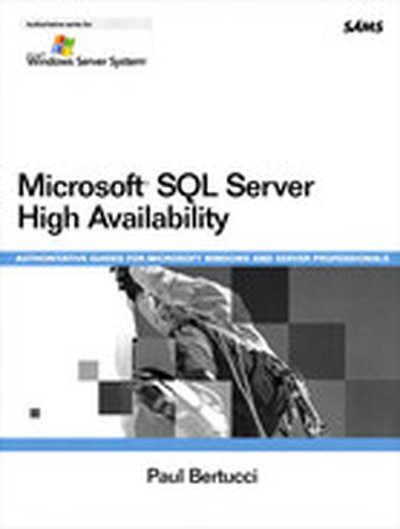
Microsoft® SQL Server High Availability

Offers example-based coverage for various high availability solutions. High availability is becoming an increasingly important topic for database administrators, data architects and system architects. Covers choosing, planning, implementing and administering a high availability solution along with the business justifications. Paul Bertucci has over 20 years of database experience including consulting for numerous Fortune 500 companies.

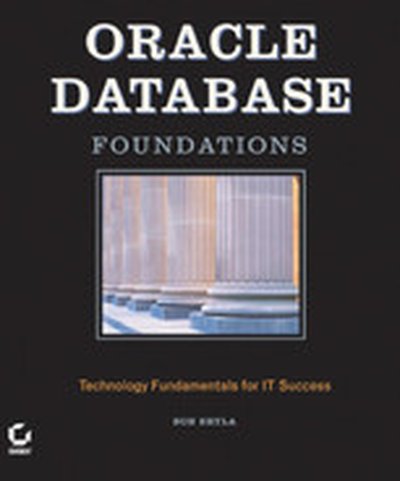
Oracle Database Foundations

The world of IT is always evolving, but in every area there are stable, core concepts that anyone just setting out needed to know last year, needs to know this year, and will still need to know next year. The purpose of the Foundations series is to identify these concepts and present them in a way that gives you the strongest possible starting point, no matter what your endeavor. Oracle Database Foundations provides essential knowledge about installing, configuring, maintaining, and querying Oracle 9i and 10g databases. What you learn here will benefit you in the short term, as you acquire and practice your skills, and in the long term, as you use them. Topics covered include: Basic relational database concepts Reporting and querying using SQLPlus and iSQLPlus Creating and maintaining a database Managing user access and security Understanding Oracle database functions Using multiple tables in a query Restricting, sorting, and grouping data Optimizing database performance Creating backups Troubleshooting database errors

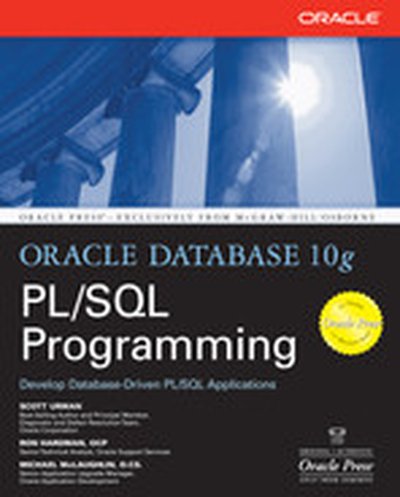
Oracle Database 10g PL/SQL Programming

Create dynamic client/server applications using PL/SQL and the comprehensive information contained in this authoritative volume. Expert Oracle insiders cover the features of PL/SQL, explain scripting semantics and syntax, and fully detail the PL/SQL functionality of Oracle Database 10 g. You’ll learn how to write powerful PL/SQL programs, interact with Oracle databases, perform complex calculations, and handle error conditions.

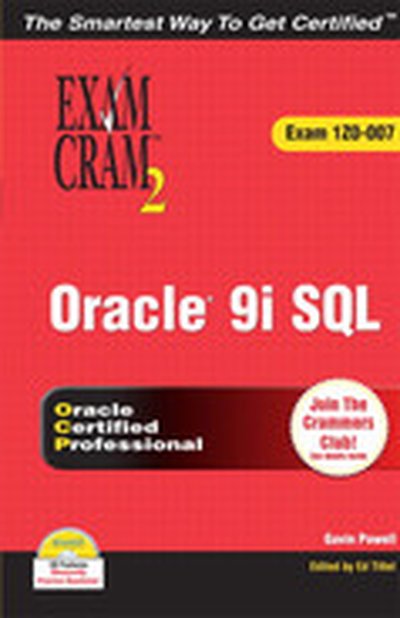
Oracle® 9i SQL Exam Cram™ 2 (Exam 1Z0-007)

Whether you're studying for the Oracle 9i SQL exam or just need to take the New Features update exam, Oracle 9i: SQL Exam Cram 2 can help you get certified. This efficient study guide follows the exam objectives clearly and concisely. New Features materials are also included in the book, as well as a full-customizable practice test engine on CD. Oracle 9i: SQL Exam Cram 2 is your smartest way to get certified.

Oracle Database 10g The Complete Reference

Get a thorough understanding of Oracle Database 10 g from the most comprehensive Oracle database reference on the market, published by Oracle Press. From critical architecture concepts to advanced object-oriented concepts, this powerhouse contains nearly 50 chapters designed to enlighten you. Upgrade from earlier versions, use SQL, SQL Plus, and PL/SQL. Get code examples and access popular documentation PDFs--plus a full electronic copy of the book on the included CD-ROM. Go beyond the basics and learn security, text searches, external tables, using Java in Oracle, and a great deal more.

Beginning Access 2003 VBA

What is this book about? Written by an Access programmer with more than 10 years of VBA experience, this is the perfect guide for Access users who are ready to take their databases to the next level, or for programmers who are new to Access or VBA. Veteran Access developer Denise Gosnell shows readers the ins and outs of Access VBA and provides plenty of source code, and fully developed sample applications to guide you along the way. Not only do readers learn to build "stand-alone" desktop applications, but readers also learn how to integrate Access applications with Web Services, and SQL Server.

SQL in a Nutshell, 2nd Edition

SQL in a Nutshell applies the eminently useful "Nutshell" format to Structured Query Language (SQL), the elegant--but complex--descriptive language that is used to create and manipulate large stores of data. For SQL programmers, analysts, and database administrators, the new second edition of SQL in a Nutshell is the essential date language reference for the world's top SQL database products. SQL in a Nutshell is a lean, focused, and thoroughly comprehensive reference for those who live in a deadline-driven world.This invaluable desktop quick reference drills down and documents every SQL command and how to use it in both commercial (Oracle, DB2, and Microsoft SQL Server) and open source implementations (PostgreSQL, and MySQL). It describes every command and reference and includes the command syntax (by vendor, if the syntax differs across implementations), a clear description, and practical examples that illustrate important concepts and uses. And it also explains how the leading commercial and open sources database product implement SQL. This wealth of information is packed into a succinct, comprehensive, and extraordinarily easy-to-use format that covers the SQL syntax of no less than 4 different databases.When you need fast, accurate, detailed, and up-to-date SQL information, SQL in a Nutshell, Second Edition will be the quick reference you'll reach for every time. SQL in a Nutshell is small enough to keep by your keyboard, and concise (as well as clearly organized) enough that you can look up the syntax you need quickly without having to wade through a lot of useless fluff. You won't want to work on a project involving SQL without it.

Oracle Database 10g XML & SQL: Design, Build, & Manage XML Applications in Java, C, C++, & PL/SQL

Written by members of the Oracle XML group, this is a must-have reference for all IT managers, DBAs, and developers who want to learn the best practices for using XML with Oracle’s XML-enabled products. Includes real-world case studies based on the authors’ experience managing Oracle’s XML Discussion Forum--a community of 20,000+ XML component users.

XML for DB2 Information Integration

In many organizations, relational databases are the backbone for data storage and retrieval. Over the last couple of years, XML has become the de facto standard to exchange information between organizations, as well as between departments or applications within the same organization. Since data tends to live in databases, it needs to be converted from a relational format into an XML format when involved in those data exchanges, as well as converted (back) from XML into a relational format for storage, or for handling by other applications. How can we achieve this? This IBM Redbooks publication describes how to design the mapping between XML and relational data, and vice versa, to enable a flexible exchange of information. IBM provides a number of products to help you bridge the gap between XML and its relational database, DB2. The DB2 engine itself provides support to generate XML fragments from relational data through the use of SQL/XML built-in functions. DB2 also provides the DB2 XML Extender. It allows you to perform XML composition, like SQL/XML, but also provides functionality to decompose XML documents and store XML documents intact inside the database. XML Extender also provides a set of transformation and validation functions. Another option to work with XML is to use the XML wrapper, a part of the set of non-relational wrappers of DB2 Information Integrator. This book also looks at the IBM tools available to assist you when dealing with XML, specifically WebSphere Application Developer and DB2 Control Center. Please note that the additional material referenced in the text is not available from IBM.

Effective Oracle Database 10g Security by Design

Oracle security expert David Knox explains how to design and develop an integrated, secure Oracle environment. “In my experience in the security world, including 32 years at the Central Intelligence Agency, I’ve not found anyone with more experience in the theory and practice of protecting your data than David Knox.” --Dave Carey, former Executive Director of the CIA

Joe Celko's Trees and Hierarchies in SQL for Smarties

Joe Celko's Trees and Hierarchies in SQL is an intermediate to advanced-level practitioner’s guide to mastering the two most challenging aspects of developing database applications in SQL. In this book, Celko illustrates several major approaches to representing trees and hierarchies and related topics that should be of interest to the working database programmer. These topics include hierarchical encoding schemes, graphs, IMS, binary trees, and more. This book covers SQL-92 and SQL:1999. · Includes graph theory and programming techniques. · Running examples throughout the book help illustrate and tie concepts together. · Loads of code, available for download from www.mkp.com.

Microsoft® SQL Server™ 2005 Reporting Services Step by Step

Your hands-on guide to learning Microsoft SQL Server Reporting Services, Microsoft’s customizable reporting solution for business data analysis. Reporting Services is a powerful tool for business intelligence, so an understanding of the essentials—how to architect a report, as well as how to install and program Reporting Services—is key to harnessing the full benefits of SQL Server. This step-by-step tutorial shows you how to get started, how to use the report project wizard, how to think about and access data, and how to build queries. It also walks you through the creation of charts and visual layouts to enable maximum visual understanding of the data analysis. Interactivity features (enhanced in SQL Server 2005) and security are also covered in detail. With STEP BY STEP, you work at your own pace through hands-on, learn-by-doing exercises. Whether you’re a beginning programmer or new to this version of the technology, you’ll understand the fundamental techniques for using Reporting Services. A companion CD includes data sets and sample code.

Hibernate: A Developer's Notebook

Do you enjoy writing software, except for the database code? Hibernate:A Developer's Notebook is for you. Database experts may enjoy fiddling with SQL, but you don't have to--the rest of the application is the fun part. And even database experts dread the tedious plumbing and typographical spaghetti needed to put their SQL into a Java program. Hibernate: A Developers Notebook shows you how to use Hibernate to automate persistence: you write natural Java objects and some simple configuration files, and Hibernate automates all the interaction between your objects and the database. You don't even need to know the database is there, and you can change from one database to another simply by changing a few statements in a configuration file. Hibernate: A Developer's Notebook walks you through the ins and outs of using Hibernate, from installation and configuration, to complex associations and composite types. Two chapters explore ways to write sophisticated queries, which you can express either through a pure Java API, or with an SQL-inspired, but object-oriented, query language. Don't let that intimidate you though: one of the biggest surprises in working with Hibernate is that for many of the common real-world application scenarios, you don't need an explicit query at all. If you've needed to add a database backend to your application, don't put it off. It's much more fun than it used to be, and Hibernate: A Developer's Notebook shows you why. Here's what a few reviewers had to say: "I'm sitting on an airplane after finishing Hibernate: A Developer's Notebook. It's rare to find a book on a new Java technology that you can get through on a domestic flight. That this notebook effectively and succinctly tackles object-relational mapping makes it, and Hibernate, even more impressive. Many books in this category would need to be checked luggage. With this book, you travel first class." --Mike Clark "A simple persistence framework deserves a simple book, and this one delivers. The examples are well described and easy to understand, yet sophisticated enough to demonstrate Hibernate in a real-world context. Jim, I'm a new fan." --Bruce Tate About the new Developer's Notebook Series from O'Reilly: Developer's Notebooks are a new book series covering important new tools for software developers. Developer's Notebooks stress example over explanation and practice over theory. They are about learning by doing; by experimenting with tools and discovering what works. "All lab, no lecture," with a thoughtful lab partner to guide the way.