talk-data.com talk-data.com

Topic

Superset

Apache Superset

bi data_exploration visualization

6

tagged

Activity Trend

1 peak/qtr
2020-Q1 2026-Q1

Activities

6 activities · Newest first

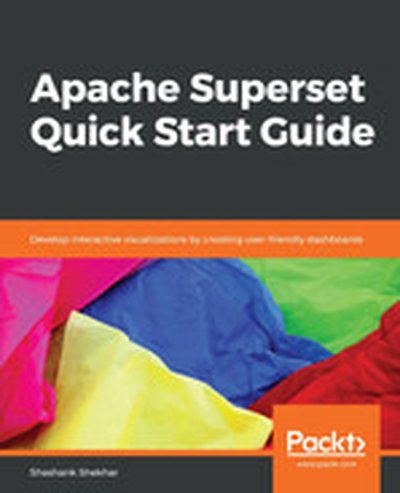
Apache Superset Quick Start Guide

Apache Superset Quick Start Guide teaches you how to leverage Apache Superset to create interactive and insightful data visualizations. With this book, you'll understand how to integrate Superset with popular databases and build user-friendly dashboards tailored for business intelligence needs. What this Book will help me do Set up and configure Apache Superset for data visualization tasks. Integrate data from SQL databases into Superset for dashboards. Design dashboards tailored to represent business metrics and insights. Use Superset's visualization techniques to explore and present various datasets. Understand and apply user role management and security features in Superset. Author(s) None Shekhar is an experienced data visualization and business intelligence specialist with years of experience in working with Apache Superset. They have written several guides on utilizing open-source tools for enterprise needs. Their technical expertise and approachable writing style make this guide practical and engaging. Who is it for? This book is geared towards data analysts, business intelligence professionals, and developers. Beginners to Superset can quickly grasp the fundamentals, while those with prior experience in data visualization will appreciate the advanced techniques. It's perfect for anyone looking to enhance their data storytelling and dashboard design skills.
Modern Big Data Processing with Hadoop

Delve into the world of big data with 'Modern Big Data Processing with Hadoop.' This comprehensive guide introduces you to the powerful capabilities of Apache Hadoop and its ecosystem to solve data processing and analytics challenges. By the end, you will have mastered the techniques necessary to architect innovative, scalable, and efficient big data solutions. What this Book will help me do Master the principles of building an enterprise-level big data strategy with Apache Hadoop. Learn to integrate Hadoop with tools such as Apache Spark, Elasticsearch, and more for comprehensive solutions. Set up and manage your big data architecture, including deployment on cloud platforms with Apache Ambari. Develop real-time data pipelines and enterprise search solutions. Leverage advanced visualization tools like Apache Superset to make sense of data insights. Author(s) None R. Patil, None Kumar, and None Shindgikar are experienced big data professionals and accomplished authors. With years of hands-on experience in implementing and managing Apache Hadoop systems, they bring a depth of expertise to their writing. Their dedication lies in making complex technical concepts accessible while demonstrating real-world best practices. Who is it for? This book is designed for data professionals aiming to advance their expertise in big data solutions using Apache Hadoop. Ideal readers include engineers and project managers involved in data architecture and those aspiring to become big data architects. Some prior exposure to big data systems is beneficial to fully benefit from this book's insights and tutorials.

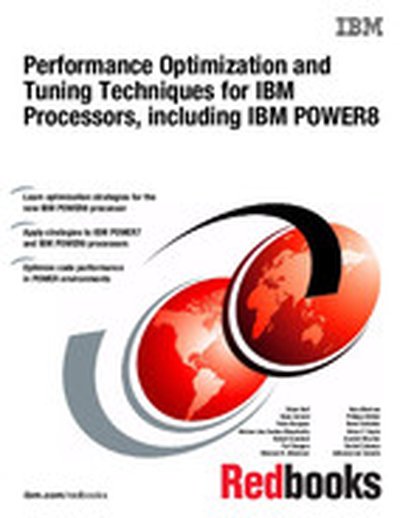
Performance Optimization and Tuning Techniques for IBM Power Systems Processors Including IBM POWER8

This IBM® Redbooks® publication focuses on gathering the correct technical information, and laying out simple guidance for optimizing code performance on IBM POWER8® processor-based systems that run the IBM AIX®, IBM i, or Linux operating systems. There is straightforward performance optimization that can be performed with a minimum of effort and without extensive previous experience or in-depth knowledge. The POWER8 processor contains many new and important performance features, such as support for eight hardware threads in each core and support for transactional memory. The POWER8 processor is a strict superset of the IBM POWER7+™ processor, and so all of the performance features of the POWER7+ processor, such as multiple page sizes, also appear in the POWER8 processor. Much of the technical information and guidance for optimizing performance on POWER8 processors that is presented in this guide also applies to POWER7+ and earlier processors, except where the guide explicitly indicates that a feature is new in the POWER8 processor. This guide strives to focus on optimizations that tend to be positive across a broad set of IBM POWER® processor chips and systems. Specific guidance is given for the POWER8 processor; however, the general guidance is applicable to the IBM POWER7+, IBM POWER7®, IBM POWER6®, IBM POWER5, and even to earlier processors. This guide is directed at personnel who are responsible for performing migration and implementation activities on POWER8 processor-based systems. This includes system administrators, system architects, network administrators, information architects, and database administrators (DBAs).

Performance Optimization and Tuning Techniques for IBM Processors, including IBM POWER8

This IBM® Redbooks® publication focuses on gathering the correct technical information, and laying out simple guidance for optimizing code performance on IBM POWER8™ systems that run the AIX®, IBM i, or Linux operating systems. There is much straightforward performance optimization that can be performed with a minimum of effort and without extensive previous experience or in-depth knowledge. The POWER8 processor contains many new and important performance features, such as support for eight hardware threads in each core and support for transactional memory. POWER8 is a strict superset of IBM POWER7+™, and so all of the performance features of POWER7+, such as multiple page sizes, also appear in POWER8. Much of the technical information and guidance for optimizing performance on POWER8 presented in this guide also applies to POWER7+ and earlier processors, except where the guide explicitly indicates that a feature is new in POWER8. This guide strives to focus on optimizations that tend to be positive across a broad set of IBM POWER® processor chips and systems. Specific guidance is given for the POWER8 processor; however, the general guidance is applicable to the IBM POWER7+, IBM POWER7®, IBM POWER6®, IBM POWER5, and even to earlier processors. This guide is directed to personnel who are responsible for performing migration and implementation activities on IBM POWER8-based servers. This includes system administrators, system architects, network administrators, information architects, and database administrators (DBAs).

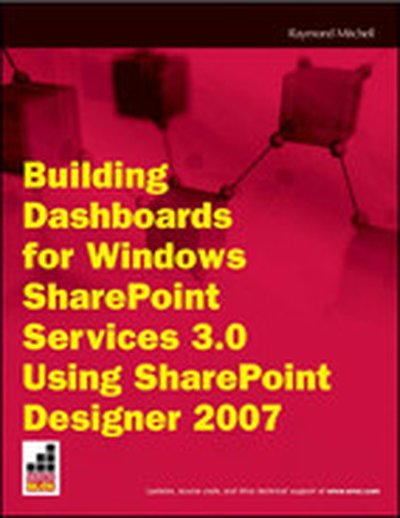
Building Dashboards for Windows SharePoint Services 3.0 Using SharePoint Designer 2007

In this Wrox Blox, you'll learn how to create powerful Dashboards for Windows SharePoint Services 3.0. First, we introduce Web Part Pages and some of the out-of-the box Web Parts available in WSS. We then look at how to use Web Part Connections to add interactivity to our Dashboards. Later we create advanced Dashboard Views using the Data Form Web Part available with SharePoint Designer 2007. While the author focuses on Windows SharePoint Services, all of the topics discussed also apply to Microsoft Office SharePoint Server 2007 as it is a superset of WSS. This Wrox Blox will be valuable for anyone wishing to share data on their SharePoint site.

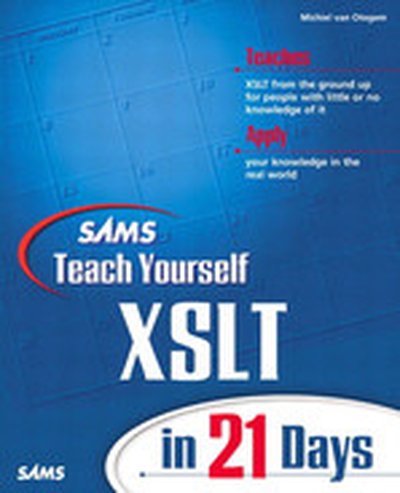
Sams Teach Yourself XSLT in 21 Days

The book covers XSLT and Xpath (as a part of XSLT), as these topics have everything to do with processing XML. It will also cover XML from an XSLT processing and design point of view. Other XML technologies will not be discussed as superset of XSLT, most notably XSL. XSL Formatting Objects alone is enough material for an entire book. Apart from that, XSLT and Xpath form the processing/programming section of the entire XSL specification. This book presents an overview of XSLT and guides readers through transforming their first XML data. In this book you will also learn: Selecting Data-Stylesheets and Xpath Basics; Inserting text and elements in output; Copying elements from the source and inserting text; Conditional processing basics and expressions; Modularizing stylesheets; Understanding, creating, and using templates; Controlling output, as well as creating more advanced output; Using multi-file stylesheets, variables, and parameters; Working with numbers, strings, multiple XML sources, and namespaces; Selecting data based upon keys; Recursion; Creating computational stylesheets; Working with parses; Designing XML and XSLT applications; Extending XSLT.