talk-data.com talk-data.com

Topic

Unix

operating_system multi_user multitasking

54

tagged

Activity Trend

1 peak/qtr
2020-Q1 2026-Q1

Activities

54 activities · Newest first

PostgreSQL

PostgreSQL is the world¿s most advanced open-source database. PostgreSQL is the most comprehensive, in-depth, and easy-to-read guide to this award-winning database. This book starts with a thorough overview of SQL, a description of all PostgreSQL data types, and a complete explanation of PostgreSQL commands. If you are a developer or an administrator, you¿ll love the chapter that explores PostgreSQL performance. The authors explain how PostgreSQL stores data on disk (and in memory) and how to measure and influence the effectiveness of PostgreSQL¿s caching mechanisms. You¿ll also learn how PostgreSQL generates and evaluates execution plans. The authors explain all of the query operators that can appear in the results of an EXPLAIN command, describing the performance implications of each operator as well as the conditions which will cause PostgreSQL to use that operator. PostgreSQL is also a complete guide for the developer. Whether you¿re developing with C, C++, ODBC, Embedded SQL, Java, Tcl/Tk, Perl, Python or PHP, you¿ll find a comprehensive description of the PostgreSQL API for your language of choice. Easy to follow exercises will walk you through the development of working applications that fully demonstrate the features offered by each API. You will also find a chapter that describes the PL/pgSQL server-side procedural language, learning how to build triggers, functions, and stored-procedures. The authors have even included a chapter that walks you through the process of extending the PostgreSQL server with custom-written C functions and new data types. The accompanying web site, www.conjectrix.com, contains downloadable versions of all of the sample code and a wealth of PostgreSQL-related resources. The last section of PostgreSQL was written for the PostgreSQL administrator. You will learn how to install PostgreSQL on Windows, Linux, and Unix systems, from source code or from pre-compiled installers. The authors have described all of the PostgreSQL configuration options (compile-time, startup, and on-the-fly). The chapter on PostgreSQL security describes all of the authentication protocols that you can choose from and describes how to secure your database, both internally and externally. If you have to support a multi-national environment, you will find the chapter on internationalization and localization to be invaluable. You won¿t find a more complete guide to PostgreSQL anywhere. The authors have made PostgreSQL approachable by leading the reader from basic concepts to advanced features. Whether you¿re a database beginner or an advanced user, you will find this book a valuable addition to your library.
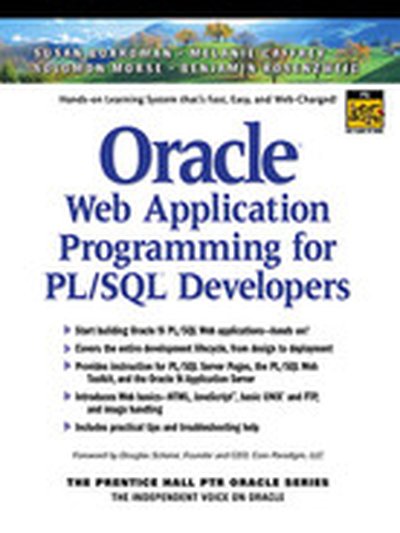
Oracle® Web Application Programming for PL/SQL® Developers

The hands-on, rapid-mastery guide to Oracle PL/SQL Web development. Start building Oracle 9i PL/SQL Web applications—hands on Covers the entire development lifecycle, from design to deployment Provides instruction for PL/SQL Server Pages, the PL/SQL Web Toolkit, and the Oracle 9i Application Server Introduces Web basics—HTML, JavaScript, basic UNIX and FTP, and image handling Reviews PL/SQL and SQL concepts Includes practical tips and troubleshooting help Leverage your SQL and PL/SQL experience to build powerful data-driven Web and e-business applications—starting right now! In this book, a team of Columbia University PL/SQL instructors cover the core pieces of what you need to know, from preliminary configuration to deployment of dynamic, data-driven applications. You'll find practical examples, hands-on exercises, and dozens of practical tips and solutions designed to save you time, effort, and frustration. One step at a time, discover how to: Configure Oracle's Internet Application Server Control Web applications and servers remotely Build Oracle Web applications with PL/SQL Create dynamic, data-driven pages Test, debug, troubleshoot, and deploy your applications Maintain and optimize running Web applications Whether you've been writing simple queries or complex PL/SQL code, this book takes your database development skills onto the Web—and into the future!

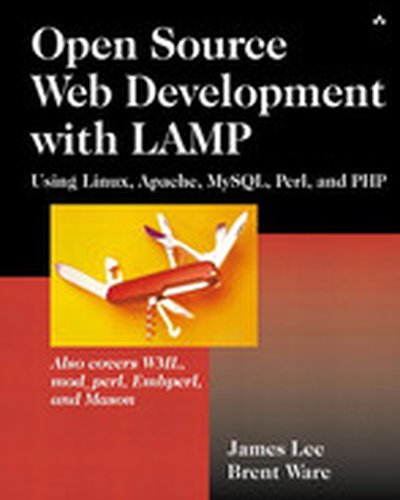
Open Source Web Development with LAMP: Using Linux, Apache, MySQL, Perl, and PHP

Open Source technologies are providing contemporary developers with a range of cost-effective and robust alternatives to commercial software for building dynamic, data-driven Web applications. This practical guide presents a comprehensive survey of LAMP (Linux, Apache, MySQL, Perl, and PHP), and it shows how these solutions can be implemented efficiently and securely while improving reliability and dramatically cutting costs. focuses on the most important core material necessary so that developers can "hit the ground running" and begin building applications right away. This book presents a balanced overview of LAMP technologies and allows the reader to decide which tool may be appropriate for the particular task at hand. After a general overview of Open Source technologies, the book presents an overview of the Web before moving on to cover structural, static, dynamic, and embedded technologies. The coverage here provides a description of the strengths and weaknesses of each Open Source technology and also acts as a reference guide for each application. Open Source Web Development with LAMP Topics covered include: A comprehensive survey of Open Source technologies Static and dynamic data and embedded HTML on the Web Linux and Unix distributions, installations, and commands Apache Web Server, Perl, and MySQL Web site META language (WML) Common gateway interface (CGI) and mod_perl Server Side Includes (SSI), Embperl, and Mason PHP syntax and functions In addition to the discussions in the book, a companion Web site--www.opensourcewebbook.com--contains supplemental information, including tools, source code, helpful links to additional resources, and errata as needed. Complete in coverage and practical in presentation, spotlights the tools and technologies today's developers need to create workable, dynamic, and secure Web sites using Open Source technologies. Open Source Web Development with LAMP 020177061XB11072002

MySQL Cookbook

While MySQL has turned up among high profile users such as Yahoo!, NASA and the U.S. Census Bureau, the rising popularity of this open source database is especially keen among users with little database experience. These days, even a small organization or web site has uses for a database, and MySQL is an obvious choice. Affordable and easy to use, MySQL packs the power, speed and efficiency that enable it to rival expensive, proprietary database solutions. Yet, even if you know the basics, anyone without practical MySQL experience--novices and skilled DBAs alike--might stumble over common database-related tasks. Fortunately, there's a sensible shortcut. MySQL Cookbook provides a unique problem-and-solution format that offers practical examples for everyday programming dilemmas. For every problem addressed in the book, there's a worked-out solution or "recipe"--short, focused pieces of code that you can insert directly into your applications. But MySQL Cookbook is more than a collection of cut-and-paste code. You also get explanations of how and why the code works, so you can learn to adapt the techniques to similar situations. The book covers a lot of ground. Solutions for typical MySQL dilemmas range from simple ways to find all records that contain a given string, to more difficult problems, such as finding matching/non-matching records in two tables. Whether you use MySQL on Unix, Linux, Windows or the Mac OS X platform, the book will show you how to: Import data from external sources Export data for use by external programs Access MySQL from your web server Use scripts with MySQL to read queries from a file Access MySQL from within client programs that use Perl, PHP, Java, Python and other languages Construct queries that solve commonly-occurring questions Interact with the server This learn-as-you-go resource will help users of all levels exploit MySQL more fully. MySQL Cookbook supplies you with an armory of ready-made techniques for specific problems so that, even if you're an experienced MySQL user, you don't have to write everything from scratch.

Managing & Using MySQL, 2nd Edition

MySQL is a popular and robust open source database product that supports key subsets of SQL on both Linux and Unix systems. MySQL is free for nonprofit use and costs a small amount for commercial use. Unlike commercial databases, MySQL is affordable and easy to use. This book includes introductions to SQL and to relational database theory. If you plan to use MySQL to build web sites or other Linux or Unix applications, this book teaches you to do that, and it will remain useful as a reference once you understand the basics. Ample tutorial material and examples are included throughout. This book has all you need to take full advantage of this powerful database management system. It takes you through the whole process from installation and configuration to programming interfaces and database administration. This second edition has a greatly enhanced administration chapter that includes information on administrative tools, server configuration, server startup and shutdown, log file management, database backup and restore, and database administration and repair. In addition, a new chapter on security describes data, server, and client-server security, while a chapter on extending MySQL provides an overview of MySQL internals and describes the use of MySQL user-defined functions. If you know C/C++, Java, Perl, PHP, or Python, you can write programs to interact with your MySQL database. In addition, you can embed queries and updates directly in an HTML file so that a web page becomes its own interface to the database. Managing and Using MySQL includes chapters on the programming language interfaces, and it also includes a complete reference section with specific function calls for each language. Also included in the reference section are references to the SQL language, and details of the MySQL system variables, programs, and utilities. New to the second edition is a reference to the internal MySQL tables, which will be of particular interest to those who want to work extensively with MySQL security.

Web Security, Privacy & Commerce, 2nd Edition

Since the first edition of this classic reference was published, World Wide Web use has exploded and e-commerce has become a daily part of business and personal life. As Web use has grown, so have the threats to our security and privacy--from credit card fraud to routine invasions of privacy by marketers to web site defacements to attacks that shut down popular web sites. Web Security, Privacy & Commerce goes behind the headlines, examines the major security risks facing us today, and explains how we can minimize them. It describes risks for Windows and Unix, Microsoft Internet Explorer and Netscape Navigator, and a wide range of current programs and products. In vast detail, the book covers: Web technology--The technological underpinnings of the modern Internet and the cryptographic foundations of e-commerce are discussed, along with SSL (the Secure Sockets Layer), the significance of the PKI (Public Key Infrastructure), and digital identification, including passwords, digital signatures, and biometrics. Web privacy and security for users--Learn the real risks to user privacy, including cookies, log files, identity theft, spam, web logs, and web bugs, and the most common risk, users' own willingness to provide e-commerce sites with personal information. Hostile mobile code in plug-ins, ActiveX controls, Java applets, and JavaScript, Flash, and Shockwave programs are also covered. Web server security--Administrators and service providers discover how to secure their systems and web services. Topics include CGI, PHP, SSL certificates, law enforcement issues, and more. Web content security--Zero in on web publishing issues for content providers, including intellectual property, copyright and trademark issues, P3P and privacy policies, digital payments, client-side digital signatures, code signing, pornography filtering and PICS, and other controls on web content. Nearly double the size of the first edition, this completely updated volume is destined to be the definitive reference on Web security risks and the techniques and technologies you can use to protect your privacy, your organization, your system, and your network.

S/390 Partners in Development: Netfinity Enabled for S/390

A Netfinity Enabled for S/390, generally known as a Netfinity/EFS system, is the smallest S/390 fully supportedby IBM. It is based on a PC Server, running UNIX, and the S/390 emulation product FLEX-ES. FLEX-ES is a product of Fundamental Software, Incorporated (FSI) of Fremont, California. This package (the Server, UNIX, and FLEX-ES) is intended to run all current S/390 operating systems. This IBM Redbooks publication introduces the Netfinity/EFS system, describes the setup process of the system in some detail, and then describes the installation and use of a particular z/OS package known as the z/OS AD CD-ROM system. While this document is primarily directed at members of IBM's S/390 Partners in Development program (also known as PartnerWorld), most of the content applies to any Netfinity/EFS system.

IBM ESS and IBM DB2 UDB Working Together

This IBM Redbooks publication gives you information to use the IBM Enterprise Storage Subsystem with IBM DB2 Universal Database. Most of the information presented here applies to UNIX and Windows environments. Our examples are only for AIX. First, we supply an overview of the products that we use in our environment and introduce the terminology. Next, we discuss the configuration options available for these products and the methodology that we recommend for sizing an Enterprise Storage Subsystem for use with the DB2 Universal Database. We also discuss the challenges of mapping the system resources to the database activity in an ESS environment, and we discuss the diagnostic tools which are available and how to use them when working with performance issues. Then we discuss backup and recovery and explain some of the new features available with DB2 UDB V7.2, which enable some of the ESS capabilities. Last, we include our test examples. This book is intended to be read by systems administrators, storage specialists, database administrators and database specialists. We assume a base knowledge of either: ESS, AIX and/or DB2 and intend that this book will help you understand your area of expertise in a wider context.

Backing Up Oracle Using Tivoli Storage Management

This IBM Redbooks publication is designed to assist Oracle Database administrators and system/storage administrators with Oracle backup solutions using Tivoli Storage Manager V4.1. The primary tool we used for backup and recovery is Tivoli Data Protection (TDP) for Oracle V1.1, and the book covers setup and configuration of TDP as well as day-to-day management examples. Operating environments covered by the project are AIX, Sun Solaris, and Microsoft Windows 2000. We provide an overview of relational database management systems and how to plan for protecting them. This book will help you install, tailor, and configure Tivoli Storage Manager and Tivoli Data Protection for Oracle on UNIX and Microsoft Windows 2000 platforms in order to accomplish backup and restore of Oracle8i databases. RMAN commands and setup are covered in detail, and emphasis is placed on practical recovery scenarios. Also featured are new solutions utilizing Tivoli's hardware integration features for IBM's ESS intelligent storage subsystem, as well as an update on using TDP for Oracle V2.2 new features. Note: This book replaces relevant sections of the earlier book, Using ADSM to Back Up Databases, SG24-4335-03, by updating and re-branding the content of that book.

Berkeley DB

Small, special-purpose computing devices and high-end core Internet servers need fast, reliable database management. Berkeley DB is an embedded database that provides high-performance, scalable, transaction-protected and recoverable data management services to applications. Extremely portable, this library runs under almost all UNIX and Windows variants, as well as a number of embedded, real-time operating systems. Berkeley DB is the ultimate resource for the world's most widely deployed embedded database engine. This book will aid software architects and engineers, product managers, and systems and network administrators without the overhead imposed by other database products. Designed by programmers for programmers, this classic library style toolkit provides a broad base of functionality to application writers. This book will help you to make intelligent choices about when and how to use Berkeley DB to meet your needs. You can visit the Sleepycat website to get the latest errata for this book. NOTE: The first printing of this book contained an error in the table of contents that caused the page numbers to be off. This will be corrected in the second printing. If you have an earlier edition, you can download a pdf of the correct table of contents that you can print out and use with your book. If you have any questions, please feel free to contact the editor of this book at [email protected].

Developing Bioinformatics Computer Skills

Bioinformatics--the application of computational and analytical methods to biological problems--is a rapidly evolving scientific discipline. Genome sequencing projects are producing vast amounts of biological data for many different organisms, and, increasingly, storing these data in public databases. Such biological databases are growing exponentially, along with the biological literature. It's impossible for even the most zealous researcher to stay on top of necessary information in the field without the aid of computer-based tools. Bioinformatics is all about building these tools. Developing Bioinformatics Computer Skills is for scientists and students who are learning computational approaches to biology for the first time, as well as for experienced biology researchers who are just starting to use computers to handle their data. The book covers the Unix file system, building tools and databases for bioinformatics, computational approaches to biological problems, an introduction to Perl for bioinformatics, data mining, and data visualization. Written in a clear, engaging style, Developing Bioinformatics Computer Skills will help biologists develop a structured approach to biological data as well as the tools they'll need to analyze the data.

Essential Guide to Computing: The Story of Information Technology, The

The complete, easy-to-understand guide to IT—now and in the future! Computers, networks, and pervasive computing Hardware, operating systems, and software How networks work: LANs, WANs, and the Internet E-business, the Web, and security The guide for ANYONE who needs to understand the key technologies driving today's economy and high tech industries! You can't afford not to understand the information revolution that's sweeping the world-but who's got time for all the acronyms and hype most technology books give you? The Essential Guide to Computing demystifies the digital society we live in with an intelligent, thorough, and up-to-date explanation of computer, networking, and Internet technologies. It's perfect for smart professionals who want to get up to speed, but don't have computer science or engineering degrees! You'll find up-to-the-minute coverage on all of today's hottest technologies including: The evolution of computing: from the room-sized "monoliths" of the 1950s to today's global Internet Preview of the next revolution: "pervasive computing" Computer hardware: microprocessors, memory, storage, I/O, displays, and architecture Windows, Macintosh, UNIX/Linux, DOS, NetWare, Palm: what operating systems do, and how they compare Programming languages: from machine language to advanced object-oriented technologies Key software applications: databases, spreadsheets, word processing, voice recognition, and beyond Microsoft and the software industry: where they stand, where they're headed How networks work: LANs, WANs, packet switching, hardware, media, and more The Internet, e-commerce, and security Enterprise applications: data warehousing, Web-centered development, and groupware Whether you're a consumer, investor, marketer, or executive, this is your start-to-finish briefing on the information technologies that have changed the world-and the coming technologies that will transform it yet again!

Sams Teach Yourself SQL in 24 Hours, Second Edition

Written by college instructors, Sams Teach Yourself SQL in 24 Hours quickly teaches beginning- to intermediate-level SQL users how to create, store, access and manipulate data using a proven step-by-step format that teaches SQL by example. This book contains a thorough explanation of database concepts, SQL procedures, and low-level programming, enabling readers to gain an understanding of the whys as well as the hows behind SQL. This book presents complete code listings and output, followed with analysis that explains exactly what the listings are doing. These practical code examples can be incorporated easily by the reader into other projects. Coverage includes SQL, as well as SQL in an enterprise setting and on the Web and Intranet. Authors Ryan Stephens and Ronald Plew are President and Vice President of Perpetual Technologies, Inc., where their duties include Oracle database administration and consulting and Oracle, SQL, and UNIX training. They have both been teaching at the collegiate level for over three years as adjunct professors at Indiana University-Purdue University in Indianapolis. Both are Oracle Certified Professionals, having specialized in Oracle and UNIX for more than 10 years each.

MySQL and mSQL

MySQL and mSQL are popular and robust database products that support key subsets of SQL on both Linux and Unix systems. Both products are free for nonprofit use and cost a small amount for commercial use. Even a small organization or web site has uses for a database. Perhaps you keep track of all your customers and find that your information is outgrowing the crude, flat-file format you started with. Or you want to ask your web site's visitors for their interests and preferences and put up a fresh web page that tallies the results. Unlike commercial databases, MySQL and mSQL are affordable and easy to use. If you know basic C, Java, Perl, or Python, you can quickly write a program to interact with your database. In addition, you can embed queries and updates right in an HTML file so that a web page becomes its own interface to the database. This book is all you need to make use of MySQL or mSQL. It takes you through the whole process from installation and configuration to programming interfaces and basic administration. Includes reference chapters and ample tutorial material. Topics include: Introductions to simple database design and SQL Building, installation, and configuration Basic programming APIs for C, C++, Java (JDBC), Perl, and Python CGI programming with databases in C and Perl Web interfaces: PHP, W3-mSQL, Lite, and mSQLPerl