talk-data.com talk-data.com

Topic

XML

Extensible Markup Language (XML)

markup_language data_exchange data_storage file_format

289

tagged

Activity Trend

1 peak/qtr
2020-Q1 2026-Q1

Activities

289 activities · Newest first

The Data Model Resource Book, Volume 3: Universal Patterns for Data Modeling

This third volume of the best-selling "Data Model Resource Book" series revolutionizes the data modeling discipline by answering the question "How can you save significant time while improving the quality of any type of data modeling effort?" In contrast to the first two volumes, this new volume focuses on the fundamental, underlying patterns that affect over 50 percent of most data modeling efforts. These patterns can be used to considerably reduce modeling time and cost, to jump-start data modeling efforts, as standards and guidelines to increase data model consistency and quality, and as an objective source against which an enterprise can evaluate data models. Praise for The Data Model Resource Book, Volume 3 "Len and Paul look beneath the superficial issues of data modeling and have produced a work that is a must for every serious designer and manager of an IT project." " The Data Model Resource Book, Volume 3: Universal Patterns for Data Modeling is a great source for reusable patterns you can use to save a tremendous amount of time, effort, and cost on any data modeling effort. Len Silverston and Paul Agnewhave provided an indispensable reference of very high-quality patterns for the most foundational types of datamodel structures. This book represents a revolutionary leap in moving the data modeling profession forward." — Ron Powell, Cofounder and Editorial Director of the Business Intelligence Network "After we model a Customer, Product, or Order, there is still more about each of these that remains to be captured, such as roles they play, classifications in which they belong, or states in which they change. The Data Model Resource Book, Volume 3: Universal Patterns for Data Modeling clearly illustrates these common structures. Len Silverston and Paul Agnew have created a valuable addition to our field, allowing us to improve the consistency and quality of our models by leveraging the many common structures within this text." — Steve Hoberman, Best-Selling Author of Data Modeling Made Simple "The large national health insurance company I work at has actively used these data patterns and the (Universal Data Models) UDM, ahead of this book, through Len Silverston’s UDM Jump Start engagement. The patterns have found their way into the core of our Enterprise Information Model, our data warehouse designs, and progressively into key business function databases. We are getting to reuse the patterns across projects and are reaping benefits in understanding, flexibility, and time-to-market. Thanks so much." — David Chasteen, Enterprise Information Architect "Reusing proven data modeling design patterns means exactly that. Data models become stable, but remain very flexible to accommodate changes. We have had the fortune of having Len and Paul share the patterns that are described in this book via our engagements with Universal Data Models, LLC. These data modeling design patterns have helped us to focus on the essential business issues because we have leveraged these reusable building blocks for many of the standard design problems. These design patterns have also helped us to evaluate the quality of data models for their intended purpose. Many times there are a lot of enhancements required. Too often the very specialized business-oriented data model is also implemented physically. This may have significant drawbacks to flexibility. I’m looking forward to increasing the data modeling design pattern competence within Nokia with the help of this book." — Teemu Mattelmaki, Chief Information Architect, Nokia "Once again, Len Silverston, this time together with Paul Agnew, has made a valuable contribution to the body of knowledge about datamodels, and the act of building sound data models. As a professional data modeler, and teacher of data modeling for almost three decades, I have always been aware that I had developed some familiar mental "patterns" which I acquired very early in my data modeling experience. When teaching data modeling, we use relatively simple workshops, but they are carefully designed so the students will see and acquire a lot of these basic "patterns" — templates that they will recognize and can use to interpret different subject matter into data model form quickly and easily. I’ve always used these patterns in the course of facilitating data modeling sessions; I was able to recognize "Ah, this is just like . . .," and quickly apply a pattern that I’d seen before. But, in all this time, I’ve never sat down and clearly categorized and documented what each of these “patterns’’ actually was in such a way that they could be easily and clearly communicated to others; Len and Paul have done exactly that. As in the other Data Model Resource Books, the thinking and writing is extraordinarily clear and understandable. I personally would have been very proud to have authored this book, and I sincerely applaud Len and Paul for another great contribution to the art and science of data modeling. It will be of great value to any data modeler." — William G. Smith, President, William G. Smith & Associates, www.williamgsmith.com "Len Silverston and Paul Agnew’s book, Universal Patterns for Data Modeling, is essential reading for anyone undertaking commercial datamodeling. With this latest volume that compiles and insightfully describes fundamental, universal data patterns, The Data Model Resource Book series represents the most important contribution to the data modeling discipline in the last decade." — Dr. Graeme Simsion, Author of Data Modeling Essentials and Data Modeling Theory and Practice "Volume 3 of this trilogy is a most welcome addition to Len Silverston’s two previous books in this area. Guidance has existed for some time for those who desire to use pattern-based analysis to jump-start their data modeling efforts. Guidance exists for those who want to use generalized and industry-specific data constructs to leverage their efforts. What has been missing is guidance to those of us needing guidance to complete the roughly one-third of data models that are not generalized or industry-specific. This is where the magic of individual organizational strategies must manifest itself, and Len and Paul have done so clearly and articulately in a manner that complements the first two volumes of The Data Model Resource Book. By adding this book to Volumes 1 and 2 you will be gaining access to some of the most integrated data modeling guidance available on the planet." — Dr. Peter Aiken, Author of XML in Data Management and data management industry leader VCU/Data Blueprint
Excel 2007 VBA Programming with XML and ASP

Excel 2007 Programming by Example with XML and ASP offers a hands-on approach for those looking to extend and customize Excel functionality. From recording a simple macro and writing VBA code to working with XML documents and using ASP to accss and display data, this book takes you on a progrmming journey that will change the way you work with Excel. Learn how to automate spreadsheet tasks with macros; write VBA code to program PivotTables, generate charts, build dialog boxes, and customize the Ribbon; handle errors and debug programs; create hyperlinks and publish HTML files. Retrieve data from the web directly into Excel; develop and manipulate smart tags using XML.

Xcelsius® 2008 Dashboard Best Practices

THE DEFINITIVE, COMPREHENSIVE, OFFICIAL GUIDE TO XCELSIUS 2008 DASHBOARDS Using Xcelsius, you can create powerful, interactive dashboards, gather data from spreadsheets or databases, and deliver knowledge that can be instantly understood and acted upon. Now there’s a definitive, authoritative guide to making the most of Xcelsius 2008, the newest version of this breakthrough product. Loren Abdulezer, editor-in-chief of Xcelsius Journal, shares insider’s knowledge that goes far beyond any other book or online help resource. Abdulezer introduces Xcelsius 2008, reviews its core concepts, and demonstrates the wide range of dashboards it can create. After you know what’s possible, you’ll go deep inside Xcelsius, gaining hands-on experience with every feature you need to master. You’ll learn how to quickly represent any data with charting components; use dials, gauges, and speedometers; incorporate multiple layers in your dashboards and visualizations; use Xcelsius to perform more useful analyses and manage more interactively; work with maps, demographics, and segmented data; create “smart data” and alerts; and much more. Abdulezer offers tips and tricks you won’t find anywhere else. You’ll learn how to work with data that isn’t rock-solid--and even how to create your own custom components that go beyond Xcelsius’s built-in features. Whether you’re a business intelligence or database professional, power user, developer, or consultant, this book will help you create superior Xcelsius dashboards--and make better decisions. THE ONLY XCELSIUS 2008 DASHBOARDING BOOK YOU NEED Use Xcelsius 2008 to get better answers, identify emerging trends and opportunities, and manage more effectively Learn hands-on, through step-by-step examples using real business data Discover tips and tricks proven in real-world environments Deliver dashboard content in whatever format works best: as HTML pages, PowerPoint presentations, PDF files, or Word documents Fully leverage the information in your Excel spreadsheets--and go beyond Excel to use XML source data, too Implement Xcelsius best practices drawn from the hard-won knowledge of the entire global user community ON THE WEB Registered owners of the book can find all this and more online: All sample files used in the book Additional guides and tutorials to help you build dashboards Templates and example files for new dashboard interfaces Introduction 1 Part I Xcelsius 2008 Fundamentals 1 Motivation for Using Xcelsius 2008 11 2 Showcase of Xcelsius 2008 Dashboards 33 3 Getting Familiar with Xcelsius 2008 43 4 Embedded Spreadsheets: The Secret Sauce of Xcelsius 2008 69 5 Using Charts and Graphs to Represent Data 127 6 Single Value Components: Dials, Gauges, Speedometers, and the Like 157 Part II Xcelsius 2008 Best Practices and Techniques 7 Using Multi-Layer Visibility in Your Dashboards and Visualizations 181 8 Managing Interactivity 203 9 Xcelsius and Statistics 229 10 Financial Analysis 257 11 Maps in Xcelsius 275 12 Smart Data and Alerts 297 13 Working with Less-Than-Optimal Data 315 14 Other Dashboard Techniques and Practices 337 Part III Advanced Features 15 XML and Data Connectivity 353 16 Creating Custom Components for Fun and Profit 371 Part IV Appendices A Supported Spreadsheet Functions in Xcelsius 2008 401 B Xcelsius Product Family Comparison 415 C Xcelsius Best Practice Techniques and Hip Pocket Tips 425 Index 431

Hibernate Search in Action

Hibernate Search in Action is a practical, example-oriented guide for Java developers with some background in Hibernate Core. As the first book to cover Hibernate Search, it guides you through every step to set up full text search functionality in your Java applications. The book also introduces core search techniques and reviews the relevant parts of Lucene, in particular the query capabilities. Hibernate Search in Action also provides a pragmatic, how-to exploration of more advanced topics such as Search clustering. For anyone using Hibernate or JBoss Seam, this book is the definitive guide on how to add or enhance search features in their applications. About the Technology Good search capability is one of the primary demands of a business application. Engines like Lucene provide a great starting point, but with complex applications it can be tricky to implement. It's tough to keep the index up to date, deal with the mismatch between the index structure and the domain model, handle querying conflicts, and so on. Hibernate Search is an enterprise search tool based on Hibernate Core and Apache Lucene. It provides full text search capabilities for Hibernate-based applications without the infrastructural code required by other search engines. With this free, open-source technology, you can quickly add high-powered search features in an intelligent, maintainable way. About the Book What's Inside About the Reader About the Author Emmanuel Bernard: After graduating from Supelec (French "Grande Ecole"), Emmanuel has spent a few years in the retail industry where he started to be involved in the ORM space and in full text technology. He joined the Hibernate team in 2003 and is now a lead developer at JBoss, a division of Red Hat. Emmanuel is the lead developer of Hibernate Annotations and Hibernate EntityManager, two key projects on top of Hibernate core implementing the Java Persistence(tm) specification. He has also lead the Hibernate Search project from its inception, reconsiling the two fields Emmanuel has been involved in: ORM and Full Text search. He is a regular speaker at various conferences and JUGs, including JavaOne, JBoss World and Javapolis (Javoxx). He is also involved in the Java Community Process as a specification lead for JSR 303 (Bean Validation) and as a expert group member for JSR 317 (Java Persistence 2.0). John Griffin has been in the software and computer industry in one form or another since 1969. He remembers writing his first FORTRAN IV program on his way back from Woodstock. Currently, he is the software engineer/architect for SOS Staffing Services, Inc. He was formerly the lead e-commerce architect for Iomega Corporation, lead SOA architect for Realm Systems and an independent consultant for the Dept of the Interior among many other callings. John has even spent time as an adjunct university professor. He enjoys being a committer to projects because he believes it's time to get involved and give back to the community. John is the author of XML and SQL Server 2000 published by New Riders Press. He is a member of the ACM. Currently, he resides in Layton, Utah with wife, Judy and Australian Shepherds, Clancy and Molly. Quotes A great resource for true database independent full text search. - Aaron Walker, base2Services It has completely changed the way I do complex search. Awesome! - Ayenda Rahien, Author of Building Domain Specific Languages in Boo Love its vast coverage--the definitive source. - Patrick Dennis, Management Dynamics Incs. Covers it all...the only source I need. - Robert Hanson, Author of GWT in Action A superb discussion of a complex topic. - Spencer Stejskal, SOS Staffing Services

Microsoft® SQL Server™ 2008 Analysis Services Unleashed

As the foundation of the Microsoft Business Intelligence Strategy, Microsoft SQL Server 2008 Analysis Services provides users with faster access to data and even more tools for managing and analyzing data across multidimensional objects (databases, dimensions, cubes). Microsoft SQL Server 2008 Analysis Services Unleashed is the ultimate guide for anyone who is planning to use the latest version of Analysis Services. It gives readers insight into the way Analysis Services functions, and explains practical methods for designing and creating multidimensional objects. It also provides valuable insight into the reasons behind the design decisions taken by the product development team. The authors have been involved with Analysis Services from its earliest days. They have documented in detail the internal features of Analysis Services 2008, explaining server architecture, main data structures, data processing, and query resolution algorithms. Discover the new functionality introduced in Analysis Services 2008 including MDX enhancements and new DMV (dynamic memory views) Work with the Business Intelligence Development Studio, the new Dimension Editor, and Aggregation Designer interfaces Enjoy complete coverage of new Shared Scalable Databases scale-out infrastructure Learn the key concepts of multidimensional modeling Explore the multidimensional object model and its definition language Integrate multidimensional and relational databases Build client applications to access data in Analysis Services Unravel the inner workings of the server architecture, including main data structures, data processing, and query resolution algorithms Learn the main concepts of the MDX language and gain an in-depth understanding of advanced MDX concepts Gain a deeper understanding of the internal and external protocols for data transfer, including the XML/A protocol Discover how Analysis Services manages memory Explore the security model, including role-based security, code-access security, and data security Category: Microsoft SQL Server Covers: Microsoft SQL Server 2008 Analysis Services User Level: Intermediate-Advanced $59.99 USA / $65.99 CAN / £38.99 Net UK±

XML: Visual QuickStart Guide, Second Edition

What is XML? XML, or eXtensible Markup Language, is a specification for storing information. It is also a specification for describing the structure of that information. And while XML is a markup language (just like HTML), XML has no tags of its own. It allows the person writing the XML to create whatever tags they need. The only condition is that these newly created tags adhere to the rules of the XML specification. In the seven years since the first edition of “XML: Visual QuickStart Guide” was published, XML has taken its place next to HTML as a foundational language on the Internet. XML has become a very popular method for storing data and the most popular method for transmitting data between all sorts of systems and applications. The reason being, where HTML was designed to display information, XML was designed to manage it. This book begins by showing you the basics of the XML language. Then, by building on that knowledge, additional and supporting languages and systems will be discussed. To get the most out of this book, you should be somewhat familiar with HTML, although you don’t need to be an expert coder by any stretch. No other previous knowledge is required. “XML: Visual QuickStart Guide, 2nd Edition” is divided into seven parts. Each part contains one or more chapters with step-by-step instructions that explain how to perform XML-related tasks. Wherever possible, examples of the concepts being discussed are displayed, and the parts of the examples on which to focus are highlighted. The order of the book is intentionally designed to be an introduction to the fundamentals of XML, followed by discussions of related XML technologies. • In Part 1 of the book, you will learn how to create an XML document. It’s relatively straightforward, and even more so if you know a little HTML. • Part 2 focuses on XSL, which is a set of languages designed to transform an XML document into something else: an HTML file, a PDF document, or another XML document. Remember, XML is designed to store and transport data, not display it. • Parts 3 and 4 of the book discuss DTD and XML Schema, languages designed to define the structure of an XML document. In conjunction with XML Namespaces (Part 5), you can guarantee that XML documents conform to a pre-defined structure, whether created by you or by someone else. • Part 6, Developments and Trends, details some of the up-and-coming XML-related languages, as well as a few new versions of existing languages. • Finally, Part 7 identifies some well-known uses of XML in the world today; some of which you may be surprised to learn. This beginner’s guide to XML is broken down as follows: • Introduction • Chapter 1: Writing XML • Part 2: XSL • Chapter 2: XSLT • Chapter 3: XPath Patterns and Expressions • Chapter 4: XPath Functions • Chapter 5: XSL-FO • Part 3: DTD • Chapter 6: Creating a DTD • Chapter 7: Entities and Notations in DTDs • Chapter 8: Validation and Using DTDs • Part 4: XML Schema • Chapter 9: XML Schema Basics • Chapter 10: Defining Simple Types • Chapter 11: Defining Complex Types • Part 5: Namespaces • Chapter 12: XML Namespaces • Chapter 13: Using XML Namespaces • Part 6: Recent W3C Recommendations • Chapter 14: XSLT 2.0 • Chapter 15: XPath 2.0 • Chapter 16: XQuery 1.0 • Part 7: XML in Practice • Chapter 17: Ajax, RSS, SOAP and More

Beginning Database Design Solutions

This book is intended for IT professionals and students who want to learn how to design, analyze, and understand databases. The material will benefit those who want a better high-level understanding of databases such as proposal managers, architects, project managers, and even customers. The material will also benefit those who will actually design, build, and work with databases such as database designers, database administrators, and programmers. In many projects, these roles overlap so the same person may be responsible for working on the proposal, managing part of the project, and designing and creating the database. This book is aimed at IT professionals and students of all experience levels. It does not assume that you have any previous experience with databases or programs that use them. It doesn't even assume that you have experience with computers. All you really need is a willingness and desire to learn. This book explains database design. It tells how to plan a database's structure so the database will be robust, resistant to errors, and flexible enough to accommodate a reasonable amount of future change. It explains how to discover database requirements, build data models to study data needs, and refine those models to improve the database's effectiveness. The book solidifies these concepts by working through a detailed example that designs a realistic database. Later chapters explain how to actually build databases using two common database products: Access 2007 and MySQL. The book finishes by describing some of the topics you need to understand to keep a database running effectively such as database maintenance and security. This book explains database design. It tells how to determine what should go in a database and how the database should be structured to give the best results. This book does not focus on actually creating the database. The details of database construction are different for different database tools so, to remain as generally as useful as possible, this book doesn't concentrate on any particular database system. You can apply the techniques described here equally to whatever database tool you use whether it's Access, SQL Server, Oracle, MySQL, or some other database product. Most database products include free editions that you can use for smaller projects. For example, SQL Server Express Edition, Oracle Express Edition, and MySQL Community Server are all free. To remain database neutral, the book does not assume you are using a particular database so you don't need any particular software or hardware. To work through the Exercises, all you really need is a pencil and some paper. You are welcome to type solutions into your computer if you like but you may actually find working with pencil and paper easier than using a graphical design tool to draw pictures, at least until you are comfortable with database design and are ready to pick a computerized design tool. "Goals of Effective Database Design," explains the reasons why people and organizations use databases. It explains a database's purpose and conditions that it must satisfy to be useful. This also describes the basic ACID (Atomicity, Consistency, Isolation, Durability) and CRUD (Create, Read, Update, Delete) features that any good database should have. It explains in high-level general terms what makes a good database and what makes a bad database. "Database Types," explains some of the different types of databases that you might decide to use. These include flat files, spreadsheets, hierarchical databases (XML), object databases, and relational databases. The relational database is one of the most powerful and most commonly used forms of database so it is the focus of this book, but it is important to realize that there are alternatives that may be more appropriate under certain circumstances. This gives some tips on deciding which kind of database might be best for a particular project. "Relational Database Fundamentals," explains basic relational database concepts such as tables, rows, and columns. It explains the common usage of relational database terms in addition to the more technical terms that are sometimes used by database theorists. It describes different kinds of constraints that databases use to guarantee that the data is stored safely and consistently. "Understanding User Needs," explains how to learn about the users' needs and gather user requirements. It tells how to study the users' current operations, existing databases (if any), and desired improvements. It describes common questions that you can ask to learn about users' operations, desires, and needs, and how to build the results into requirements documents and specifications. This explains what use cases are and tells how to use them and the requirements to guide database design and to measure success. "Translating User Needs into Data Models," introduces data modeling. It explains how to translate the user's conceptual model and the requirements into other more precise models that define the database design rigorously. This describes several database modeling techniques including user-interface models, semantic object models, entity-relationship diagrams, and relational models. "Extracting Business Rules," explains how a database can handle business rules. It explains what business rules are, how they differ from database structure requirements, and how you can identify business rules. This explains the benefits of separating business rules from the database structure and tells how achieve that separation. "Normalizing Data," explains one of the biggest tools in database design: normalization. Normalization techniques allow you to restructure a database to increase its flexibility and make it more robust. This explains the various forms of normalization, emphasizing the stages that are most common and important: first, second, and third normal forms (1NF, 2NF, and 3NF). It explains how each of these kinds of normalization helps prevent errors and tells why it is sometimes better to leave a database slightly less normalized to improve performance. "Designing Databases to Support Software Applications," explains how databases fit into the larger context of application design and lifecycle. This explains how later development depends on the underlying database design. It discusses multi-tier architectures that can help decouple the application and database design so there can be at least some changes to either without requiring changes to the other. "Common Design Patterns," explains some common patterns that are useful in many applications. Some of these techniques include implementing various kinds of relationships among objects, storing hierarchical and network data, recording temporal data, and logging and locking. "Common Design Pitfalls," explains some common design mistakes that occur in database development. It describes problems that can arise from insufficient planning, incorrect normalization, and obsession with ID fields and performance. "User Needs and Requirements," walks through the steps required to analyze the users' problem, define requirements, and create use cases. It describes interviews with fictitious customers that are used to identify the application's needs and translate them into database requirements. "Building a Data Model," translates the requirements gathered in the previous into a series of data models that precisely define the database's structure. This builds user-interface models, entity-relationship diagrams, semantic object models, and relational models to refine the database's initial design. The final relational models match the structure of a relational database fairly closely so they are easy to implement. "Extracting Business Rules," identifies the business rules embedded in the relational model. It shows how to extract those rules in order to separate them logically from the database's structure. This makes the database more robust in the face of future changes to the business rules. "Normalization and Refinement," refines the relational model by normalizing it. It walks through several versions of the database that are in different normal forms. It then selects the degree of normalization that provides a reasonable tradeoff between robust design and acceptable performance. "Microsoft Access," explains how to build a database with Microsoft Access 2007. This explains enough to get started and to use Access to build non-trivial databases. You can use other versions of Access to work through this, although the locations of menus, buttons, and other Access features are different in different versions. "MySQL," explains how to build a database with MySQL. This tells where to download a free version of MySQL. It explains how to use the MySQL Command Line Client as well as some useful graphical tools including MySQL Query Browser and MySQL Workbench. "Introduction to SQL," provides an introduction to SQL (Structured Query Language). It explains how to use SQL commands to add, insert, update, and delete data. By using SQL, you can help insulate a program from the idiosyncrasies of the particular database product that it uses to store data. "Building Databases with SQL Scripts," explains how to use SQL scripts to build a database. It explains the advantages of this technique, such as the ability to create scripts to initialize a database before performing tests. It also explains some of the restrictions on this method, such as the fact that the user must create and delete tables in specific orders to satisfy table relationships. "Database Maintenance," describes some of the database maintenance issues that are part of any database application. Though performing and restoring backups, compressing tables, rebuilding indexes, and populating data warehouses are strictly not database design tasks, they are essential to any working application. "Database Security," explains database security issues. It explains the kinds of security that some database products provide. It also explains some additional techniques that can enhance database security such as using database views to appropriately restrict the users' access to data.

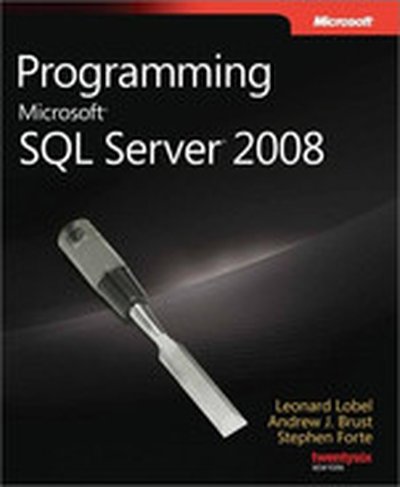
Programming Microsoft® SQL Server™ 2008

Extend your programming skills with a comprehensive study of the key features of SQL Server 2008. Delve into the new core capabilities, get practical guidance from expert developers, and put their code samples to work. This is a must-read for Microsoft .NET and SQL Server developers who work with data access—at the database, business logic, or presentation levels. Discover how to: Query complex data with powerful Transact-SQL enhancements Use new, non-relational features: hierarchical tables, native file streaming, and geospatial capabilities Exploit XML inside the database to design XML-aware applications Consume and deliver your data using Microsoft LINQ, Entity Framework, and data binding Implement database-level encryption and server auditing Build and maintain data warehouses Use Microsoft Excel to build front ends for OLAP cubes, and MDX to query them Integrate data mining into applications quickly and effectively. Get code samples on the Web.

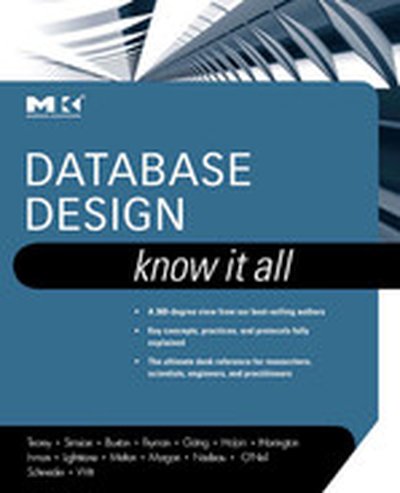
Database Design: Know It All

This book brings all of the elements of database design together in a single volume, saving the reader the time and expense of making multiple purchases. It consolidates both introductory and advanced topics, thereby covering the gamut of database design methodology ? from ER and UML techniques, to conceptual data modeling and table transformation, to storing XML and querying moving objects databases. The proposed book expertly combines the finest database design material from the Morgan Kaufmann portfolio. Individual chapters are derived from a select group of MK books authored by the best and brightest in the field. These chapters are combined into one comprehensive volume in a way that allows it to be used as a reference work for those interested in new and developing aspects of database design. This book represents a quick and efficient way to unite valuable content from leading database design experts, thereby creating a definitive, one-stop-shopping opportunity for customers to receive the information they would otherwise need to round up from separate sources. Chapters contributed by various recognized experts in the field let the reader remain up to date and fully informed from multiple viewpoints. Details multiple relational models and modeling languages, enhancing the reader’s technical expertise and familiarity with design-related requirements specification. Coverage of both theory and practice brings all of the elements of database design together in a single volume, saving the reader the time and expense of making multiple purchases.

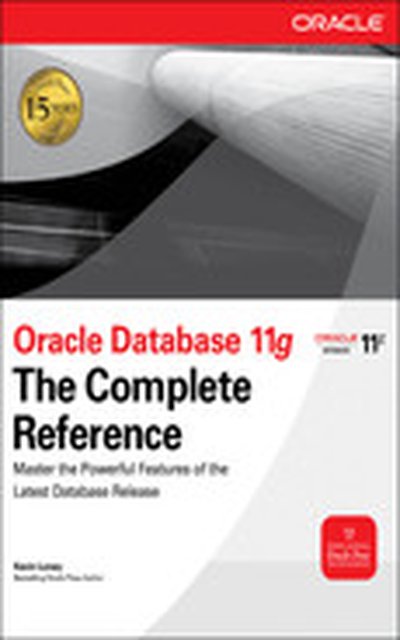
Oracle Database 11g The Complete Reference

The Definitive Guide to Oracle Database 11 g Get full details on the powerful features of Oracle Database 11 g from this thoroughly updated Oracle Press guide. Oracle Database 11g: The Complete Reference explains how to use all the new features and tools, execute powerful SQL queries, construct PL/SQL and SQLPlus statements, and work with large objects and object-relational databases. Learn how to implement the latest security measures, tune database performance, and deploy grid computing techniques. An invaluable cross-referenced appendix containing Oracle commands, keywords, features, and functions is also included. Install Oracle Database 11 g or upgrade from an earlier version Create database tables, sequences, indexes, views, and user accounts Construct SQL statements, procedures, queries, and subqueries Optimize security using virtual private databases and transparent data encryption Import and export data using SQLLoader and Oracle Data Pump Use SQL replay, change management, and result caching Avoid human errors using flashback and automatic undo management Build and tune PL/SQL triggers, functions, and packages Develop database applications using Java, JDBC, and XML Optimize availability and scalability with Oracle Real Application Clusters

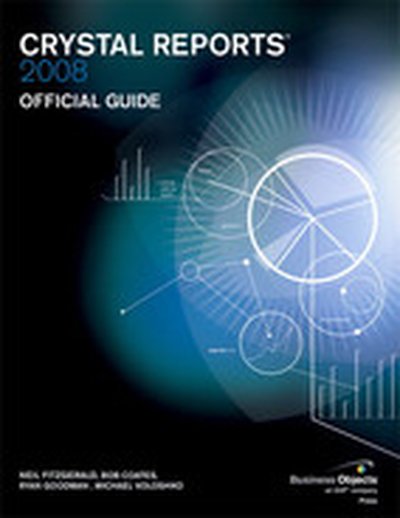
Crystal Reports® 2008 Official Guide

CRYSTAL REPORTS® 2008 OFFICIAL GUIDE Whether you’re a DBA, data warehousing or business intelligence professional, Every significant enhancement introduced in Crystal Reports 2008 is covered, including its new visualization options and more robust Web services capabilities. The book concludes by showing how to use Crystal Reports’ powerful .NET and Java SDKs to customize and extend enterprise reporting in virtually unlimited ways. • Learn hands-on, through step-by-step examples and exercises–and discover tips and tricks proven in real-world enterprise environments • Master new Crystal Reports 2008 features, including interactive report viewing, Xcelsius dashboarding, Flex, and Flash integration, Report Designer improvements, report bursting, and more • Publish professional-quality reports against virtually any data source, including relational and OLAP databases, Universes, SAP, PeopleSoft, JavaBeans, .NET/COM objects, XML, and more • Discover advanced visualization techniques using Xcelsius, charts, and maps • Learn methods for distributing reports and integrating content into other applications • Learn about the latest reporting addition to the Business Objects family–Xcelsius and begin creating dynamic and interactive dashboards NEIL FITZGERALD has spent several years working at Business Objects and with one of Business Objects’ largest providers of custom BI and enterprise reporting solutions. BOB COATES currently works as a Sales Consultant for Business Objects, an SAP company, where he has been employed for more than eleven years. RYAN GOODMAN is the founder of Centigon Solutions, Inc., and remains one of the top Xcelsius experts and evangelists in the world. MICHAEL VOLOSHKO is a senior presales consultant for the financial services team at Business Objects. ON THE WEB Find all this and more at informit.com/sams: • Java and .NET sample reports and code samples for all examples in the book • Bonus chapters, tips, tricks, and links to great reporting resources CATEGORY: Database COVERS: Crystal Reports 2008, Crystal Reports Server 2008, Crystal Reports Viewer, crystalreports.com, Xcelsius 2008 USER LEVEL: Beginning–Intermediate informit.com/sams

SQL: A Beginner's Guide, Third Edition, 3rd Edition

Essential Skills--Made Easy! Written to the SQL:2006 ANSI/ISO standard, this easy-to-follow guide will get you started programming in SQL right away. You will learn how to retrieve, insert, update, and delete database data, and perform management and administrative functions. SQL: A Beginner's Guide, Third Edition covers new features, including SQL/XML, and is loaded with updated SQL examples along with notes on using them with the latest RDBMS software versions such as MySQL 5.0, SQL Server 2008, and Oracle Database 11g. Designed for Easy Learning: Key Skills & Concepts--Lists of specific skills covered in the chapter Ask the Experts--Q&A sections filled with bonus information and helpful tips Try This--Hands-on exercises that show how to apply your skills Notes--Extra information related to the topic being covered Self-Tests--Chapter-ending quizzes to test your knowledge Annotated Syntax--Example code with commentary that describes the programming techniques being illustrated

Beginning DB2: From Novice to Professional

IBM's DB2 Express Edition is one of the most capable of the free database platforms available in today's marketplace. In Beginning DB2, author Grant Allen gets you started using DB2 Express Edition for web sites, desktop applications, and more. The author covers the basics of DB2 for developers and database administrators, shows you how to manage data in both XML and relational form, and includes numerous code examples so that you are never in doubt as to how things work. In this book, you'll find: A friendly introduction to DB2 Express Edition, an industrial-strength, relational database from IBM Dozens of examples so that you are never in doubt as to how things work Coverage of important language interfaces, such as from PHP, Ruby, C#, Python, and more The book is aimed at developers who want a robust database to back their applications.

Pro SQL Server 2008 Relational Database Design and Implementation

Learn effective and scalable database design techniques in a SQL Server environment. Pro SQL Server 2008 Relational Database Design and Implementation covers everything from design logic that business users will understand, all the way to the physical implementation of the design in a SQL Server database. Grounded in best practices and a solid understanding of the underlying theory, authors Louis Davidson, Kevin Kline, Scott Klein, and Kurt Windisch show how to 'get it right' in SQL Server database design and lay a solid groundwork for the future use of valuable business data. Solid foundation in best practices and relational theory Maximize SQL Server features to enhance security, performance, scalability Thorough treatment from conceptual design to an effective, physical implementation What you'll learn Develop conceptual models of client data using interviews and client documentation Normalize data models to enhance scalability and the long term use of valuable data Translate conceptual models into high-performing SQL Server databases Secure and protect the integrity of data as part of meeting regulatory requirements Take full advantage of new SQL Server features such as the spatial datatype, XML support, transparent data encryption, and more Create effective indexing to speed query performance Who this book is for Pro SQL Server 2008 Relational Database Design and Implementation is designed for programmers of all types who want to use SQL Server 2008 to store data. Rookie database programmers will find a complete course on the fundamentals of database design that includes conceptual designs and physical implementation. Seasoned veterans will find many tips and tricks for implementing database systems that will be well worth the time invested in reading this book.

Crystal Reports 2008: The Complete Reference

Your One-Stop Guide to Enterprise Reporting with Crystal Reports 2008 Transform disconnected corporate data into compelling, interactive business intelligence using all of the powerful tools available in Crystal Reports 2008. Through detailed explanations, real-world examples, and expert advice, this comprehensive guide shows you how to create, maintain, and distribute dynamic, visually appealing enterprise database reports. Crystal Reports 2008: The Complete Reference explains how to select and gather pertinent business data, organize it into manageable groups, and assemble it into user-friendly business reports. You will learn how to improve report interactivity with sort controls and the parameter panel; solve complex reporting problems with cross-tabs and subreports; integrate Crystal Xcelsius dashboards; reduce development time; and publish your results to Web and Windows applications. Integrate pictures, multimedia files, graphs, and charts Allow user-controlled report sorting with new sort controls Develop sophisticated formulas and custom functions with the Formula Workshop Embed Flash files, including Xcelsius 2008 interactive dashboards Create complex cross-tab reports with new derived rows and columns Export reports into Word, Excel, Acrobat, and updated XML formats Enhance Web interactivity with the new parameter panel and optional parameter fields Work with SQL databases, OLAP cubes, and proprietary systems Centralize design elements and auto-update reports using the repository Schedule and distribute reports with the latest BusinessObjects Enterprise XI 3.0 Embed reports in Web and Windows applications using Visual Studio 2008

Integrating and Extending BIRT

The world-wide developer community has downloaded over three million copies of BIRT (Business Intelligence and Reporting Tools) from the Eclipse web site. Built on the open-source Eclipse platform, BIRT is a powerful reporting system that provides an end-to-end solution, from creating and deploying reports to integrating report capabilities in enterprise applications. The second of a two-book series on business intelligence and reporting technology, introduces programmers to BIRT architecture and the reporting framework. BIRT technology makes it possible for a programmer to build a customized report using scripting and BIRT APIs. A programmer can also extend the BIRT framework by creating a new plug-in using the Eclipse Plug-in Development Environment. This book provides extensive examples on how to build plug-ins to extend the features of the BIRT framework. The source code for these examples is available for download. Integrating and Extending BIRT, Second Edition The topics discussed include Installing and deploying BIRT Deploying a BIRT report to an application server Understanding BIRT architecture Scripting in a BIRT report design Integrating BIRT functionality into applications Working with the BIRT extension framework This second edition, revised and expanded, adds the following new content Updated architectural diagrams Expanded scripting examples Tag library descriptions In-depth description of BIRT Web Viewer Configuring BIRT to use a JNDI connection XML report rendering plug-in example Fragment plug-in localization example Open Data Access (ODA) plug-in example implementing the new Data Tools Platform (DTP) design and run-time wizards

BIRT: A Field Guide to Reporting

The world-wide developer community has downloaded over three million copies of BIRT (Business Intelligence and Reporting Tools) from the Eclipse web site. Built on the open-source Eclipse platform, BIRT is a powerful reporting system that provides an end-to-end solution, from creating and deploying reports to integrating report capabilities in enterprise applications. The first in a two-book series about this exciting technology, is the authoritative guide to using BIRT Report Designer, the graphical tool that enables users of all levels to build reports, simple to sophisticated, without any programming. BIRT, Second Edition: A Field Guide to Reporting is an essential resource for users who want to create presentation quality reports from day one. The extensive examples, step-by-step instructions, and abundant illustrations help new users develop their report design skills quickly. Power users can find the information they need to make the most of the product’s rich set of features to build complex and compelling reports. By the time you finish this book, you learn the following and more BIRT, Second Edition: A Field Guide to Reporting Design effective business and corporate reports that convey information through images, charts, tables, and cross tabs Build reports using data from a variety of sources, including databases, XML documents, spreadsheets, and web services Enliven reports with interactive features, such as hyperlinks, Tooltips, and highlighting Create consistently styled reports and collaborate with other report designers through the use of templates and libraries of reusable elements Localize reports for an international audience This second edition, revised and expanded, adds updated examples and covers all the new and improved product features, including Cross tabs and OLAP cubes New chart types, including Gantt, bubble, tube, and cone charts Web services as a new data source New report output formats, including doc, ppt, xls, and PostScript The capability for reports to reference CSS Localization of report parameter and data values

Microsoft SQL Server 2008 Reporting Services, 3rd Edition

The Definitive Guide to Microsoft SQL Server 2008 Reporting Services Create and deliver data-rich reports across the enterprise using this complete server-based reporting solution. Written by a member of the original Reporting Services development team, Microsoft SQL Server 2008 Reporting Services covers the entire report-building and distribution process, including data extraction, integration with desktop and Web applications, and end-user access. The book explains how to maximize all of the powerful features, including the new Tablix data format, as well as enhanced performance, scalability, and visualization capabilities. Install, configure, and customize SQL Server 2008 Reporting Services Create SELECT queries to extract data Generate reports from the Report Wizard and from scratch Add charts, images, and gauges Build reusable report templates Use the new Tablix data format to create reports with any structure Export reports to Word, Excel, PDF, HTML, XML, and other formats Enable end-user access to reports via the Report Server and its Report Manager web interface

XSLT, 2nd Edition

After years of anticipation and delay, the W3C finally released the XSLT 2.0 standard in January 2007. The revised edition of this classic book offers practical, real-world examples that demonstrate how you can apply XSLT stylesheets to XML data using either the new specification, or the older XSLT 1.0 standard. XSLT is a critical language for converting XML documents into other formats, such as HTML code or a PDF file. With XSLT, you get a thorough understanding of XSLT and XPath and their relationship to other web standards, along with recommendations for a honed toolkit in an open platform-neutral, standards-based environment. This book: Covers the XSLT basics, including simple stylesheets and methods for setting up transformation engines Walks you through the many parts of XSLT, particularly XSLT's template-based approach to transformations Applies both XSLT 1.0 and 2.0 solutions to the same problems, helping you decide which version of XSLT is more appropriate for your project Includes profuse examples that complement both the tutorial and the reference material The new edition of XSLT has been updated thoroughly to explain XSLT 2.0's many dependencies, notably XML Schema and XPath 2.0. Want to find out how the 2.0 specification improves on the old? This book will explain.

Pro SQL Server 2008 XML

Knowledge and ability to apply XML are de rigueur in today's world, and SQL Server developers and administrators are no exception to that rule. Pro SQL Server 2008 XML is your key to unlocking the powerful XML feature set first introduced in SQL Server 2005 and since refined in SQL Server 2008. Author Michael Coles shows how to store XML using SQL Server's built-in XML data type. Learn to query and manipulate XML data using standard technologies such as XQuery and XSLT. No SQL Server database professional can afford to be without knowledge of the XML feature set. Pro SQL Server 2008 XML delivers on the knowledge that you need to remain competitive in your career. Shows how to store, query, and manipulate XML documents in SQL Server Provides step-by-step examples showing best practices and advanced features Accurately discusses how SQL Server's XML feature set stacks up against the ISO XML standards