talk-data.com talk-data.com

Topic

XML

Extensible Markup Language (XML)

markup_language data_exchange data_storage file_format

289

tagged

Activity Trend

1 peak/qtr
2020-Q1 2026-Q1

Activities

289 activities · Newest first

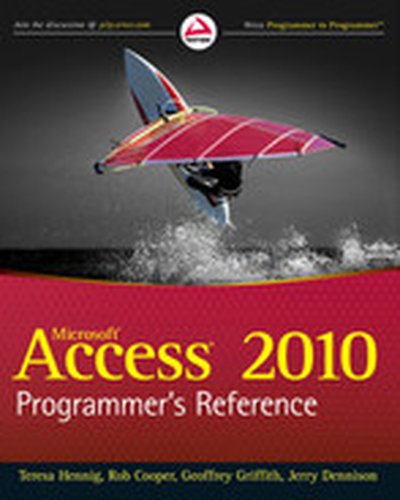
Microsoft® Access® 2010 Programmer's Reference

A comprehensive guide to programming for Access 2010 and 2007 Millions of people use the Access database applications, and hundreds of thousands of developers work with Access daily. Access 2010 brings better integration with SQL Server and enhanced XML support; this Wrox guide shows developers how to take advantage of these and other improvements. With in-depth coverage of VBA, macros, and other programming methods for building Access applications, this book also provides real-world code examples to demonstrate each topic. Access 2010 Programmer's Reference is a comprehensive guide to the best-of-breed techniques for programming Access applications. Coverage Includes: Introduction to Microsoft Access 2010 New Features Upgrading and Converting to Access 2010 Macros in Access 2010 Using the VBA Editor VBA Basics Using VBA in Access Creating Classes in VBA Extending VBA with APIs Working with the Windows Registry Using DAO to Access Data Using ADO to Access Data Using SQL with VBA Using VBA to Enhance Forms Enhancing Reports with VBA Customizing the Ribbon Customizing the Office Backstage Working with Office 2010 Working with SharePoint Working with .NET Building Client-Server Applications with Access The Access 2010 Templates Access Runtime Deployment Database Security Access 2010 Security Features
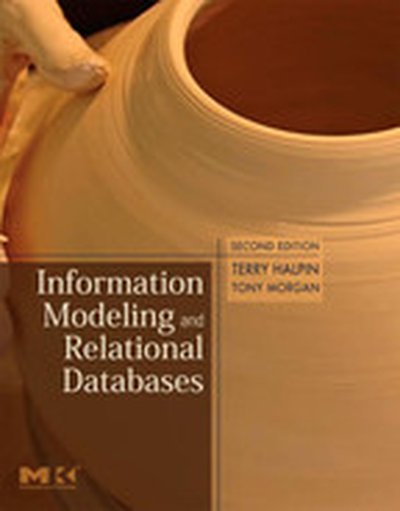
Information Modeling and Relational Databases, 2nd Edition

Information Modeling and Relational Databases, Second Edition, provides an introduction to ORM (Object-Role Modeling)and much more. In fact, it is the only book to go beyond introductory coverage and provide all of the in-depth instruction you need to transform knowledge from domain experts into a sound database design. This book is intended for anyone with a stake in the accuracy and efficacy of databases: systems analysts, information modelers, database designers and administrators, and programmers. Terry Halpin, a pioneer in the development of ORM, blends conceptual information with practical instruction that will let you begin using ORM effectively as soon as possible. Supported by examples, exercises, and useful background information, his step-by-step approach teaches you to develop a natural-language-based ORM model, and then, where needed, abstract ER and UML models from it. This book will quickly make you proficient in the modeling technique that is proving vital to the development of accurate and efficient databases that best meet real business objectives. Presents the most indepth coverage of Object-Role Modeling available anywhere, including a thorough update of the book for ORM2, as well as UML2 and E-R (Entity-Relationship) modeling Includes clear coverage of relational database concepts, and the latest developments in SQL and XML, including a new chapter on the impact of XML on information modeling, exchange and transformation New and improved case studies and exercises are provided for many topics

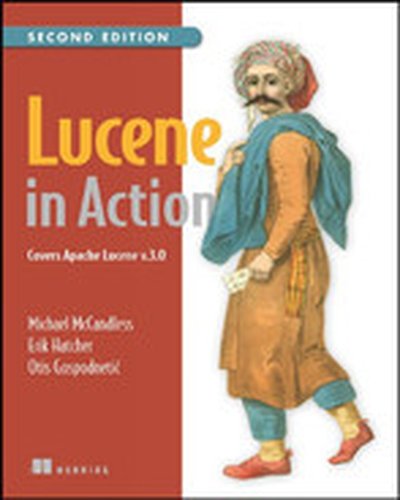
Lucene in Action, Second Edition

When Lucene first appeared, this superfast search engine was nothing short of amazing. Today, Lucene still delivers. Its high-performance, easy-to-use API, features like numeric fields, payloads, near-real-time search, and huge increases in indexing and searching speed make it the leading search tool. And with clear writing, reusable examples, and unmatched advice, Lucene in Action, Second Edition is still the definitive guide to effectively integrating search into your applications. This totally revised book shows you how to index your documents, including formats such as MS Word, PDF, HTML, and XML. It introduces you to searching, sorting, and filtering, and covers the numerous improvements to Lucene since the first edition. Source code is for Lucene 3.0.1. About the Technology About the Book What's Inside Performing hot backups Using numeric fields Tuning for indexing or searching speed Boosting matches with payloads Creating reusable analyzers Adding concurrency with threads Four new case studies Much more! About the Reader About the Authors Michael McCandless is a Lucene PMC member and committer with more than a decade of experience building search engines. Erik Hatcher and Otis Gospodnetić are the authors of the first edition of Lucene in Action and long-time contributors to Lucene, Solr, Mahout, and other Lucene-based projects. Quotes ... brings you up to speed. - Doug Cutting, Founder of Lucene, Nutch, and Hadoop This new edition has it all. - Chad Davis, Blackdog Software, Author of Struts 2 in Action Very readable, full of expert tips. - Rick Wagner, Acxiom Corp. Elegant, and easy to read - just like Lucene itself. - Shai Erera, IBM Haifa Research Labs For a Lucene developer, it's required reading. - Stuart Caborn, Thoughtworks

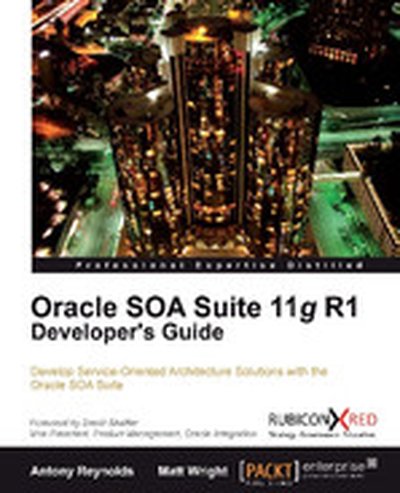
Oracle SOA Suite 11g R1 Developer's Guide

This book provides a detailed guide to developing Service-Oriented Architecture (SOA) solutions using Oracle SOA Suite 11g R1. You'll learn how to implement real-world SOA applications with the suite's various tools and technologies. The tutorials and practical examples ensure that you'll acquire the hands-on skills you need to succeed. What this Book will help me do Learn to use the Oracle Service Bus for building seamless service integrations. Master the BPEL Process Manager to design advanced business workflows. Understand the comprehensive functionalities of the Mediator and Rules Editor. Gain insights on deploying and securing SOA composites effectively. Develop skills in leveraging the Metadata Repository for reusable resources. Author(s) The authors are experts with years of practical experience in SOA architecture and Oracle's suite of tools. They bring their professional expertise and teaching acumen to foster a deep understanding of the subject. Their goal is to translate technical concepts into accessible and actionable insights, making it manageable for developers and architects alike. Who is it for? This book is tailored for developers and architects with foundational knowledge of SOA concepts, including web services and XML technologies. It's for professionals aiming to deepen their expertise in SOA implementation using Oracle's ecosystem. If you're looking to tackle real-world challenges in enterprise integration, this resource is for you.

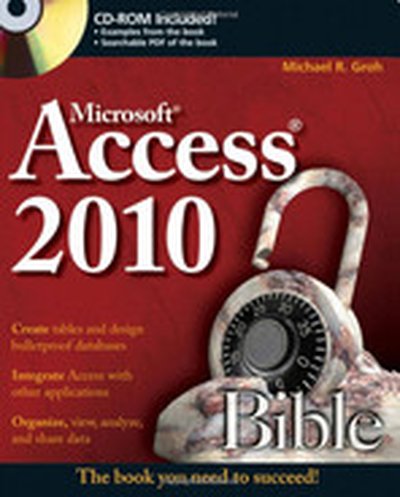
Access® 2010 Bible

The expert guidance you need to get the most out of Access 2010 Get the Access 2010 information you need to succeed with this comprehensive reference. If this is your first encounter with Access, you'll appreciate the thorough attention to database fundamentals and terminology. If you're familiar with earlier versions, you can jump right into Access 2010 enhancements such as the new Access user interface and wider use of XML and Web services. Takes you under the hood of Microsoft Access 2010, the database application included with Microsoft Office 2010 Explores the latest enhancements, such as a new user interface and wider use of XML and Web services; also, how to exchange data with Word, Excel, PowerPoint, and other Office apps Covers how to create tables, manipulate datasheets, and work with multiple tables Explains the seven database objects and how to use a seven-step design method to build a database tailored to your needs Shows you how to build forms, use Visual Basic and the VBA Editor, automate query parameters, create functions and subroutines, use XML to create data access pages, and more Includes a CD with all source code from the book and working examples, plus bonus shareware, freeware, trial, demo and evaluation programs that work with or enhance Microsoft Office You’ll want to keep this soup-to-nuts Access reference close at hand! Note: CD-ROM/DVD and other supplementary materials are not included as part of eBook file.

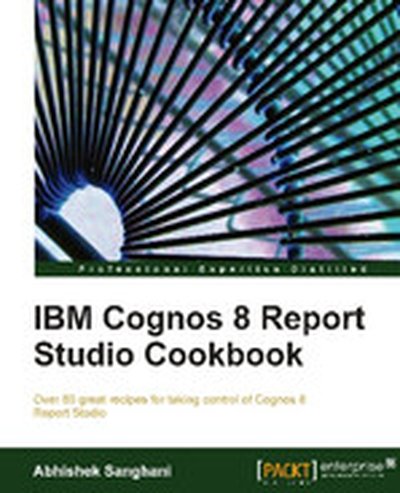
IBM Cognos 8 Report Studio Cookbook

The "IBM Cognos 8 Report Studio Cookbook" by Abhishek Sanghani provides over 80 hands-on recipes to enhance your proficiency in creating business reports using Cognos 8 Report Studio. From mastering basic techniques to leveraging advanced features, this book is your guide to developing reports that meet real-world business demands. What this Book will help me do Understand and utilize advanced techniques for sorting, filtering, and aggregating data in reports. Implement features like conditional formatting, cascaded prompts, and master-detail queries to enhance report functionality. Create dynamic, user-friendly business reports tailored to specific requirements. Make use of XML specifications to customize reports beyond the capabilities of the default tools. Adopt best practices in report development such as version control and regression testing. Author(s) Abhishek Sanghani is an experienced Business Intelligence professional specializing in IBM Cognos and data analytics. With practical knowledge from implementing solutions for various industries, he brings a wealth of insight into creating powerful business reports. Abhishek's approachable writing makes advanced Report Studio concepts accessible to readers. Who is it for? This book is ideally suited for Business Intelligence or MIS developers working with Cognos Report Studio, seeking advanced guidance for creating reports. Business analysts and power users wanting to extend beyond basic report authoring will also benefit greatly. The book assumes a functional understanding of Cognos Studio and familiarity with its ecosystem.

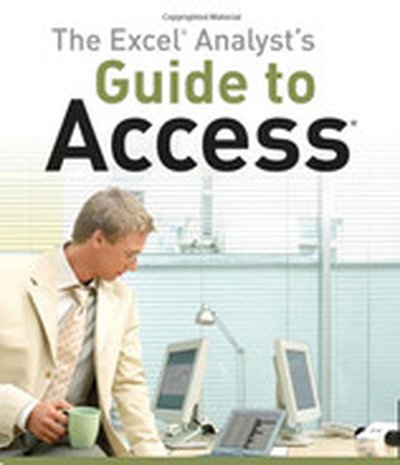
The Excel® Analyst's Guide to Access®

The ultimate handbook for Excel analysts who need reporting solutions using Access Excel and Access are intended to work together. This book offers a comprehensive review of the extensive analytical and reporting functionality that Access provides and how it enhances Excel reporting functions. Sales managers, operations analysts, administrative assistants, office managers, and many others who rely heavily on data can benefit from learning to integrate Excel and Access, and this book shows you how. Coverage includes: Data Analysis in Access & the Basics of Access Beyond Select Queries Transforming Your Data with Access Working with Calculations and Dates Performing Conditional Analysis Adding Dimension with Subqueries and Domain Aggregate Functions Running Descriptive Statistics in Access Scheduling and Running Batch Analysis Leveraging VBA to Enhance Data Analysis Reports, Dashboards, and Visualization in Access Presenting Data with Access Reports Using Pivot Tables and Pivot Charts in Access Enhancing Queries and Reports with Visualizations Advanced Excel and Access Integration Techniques Getting Access Data into Excel Using VBA to Move Data between Excel and Access Exploring Excel and Access Automation Integrating Excel and Access with XML Integrating Excel and Other Of?ce Applications Access VBA Fundamentals Understanding and Using SQL and more! The Excel Analyst's Guide to Access helps you get more from both applications. Note: CD-ROM/DVD and other supplementary materials are not included as part of eBook file.

SQL For Dummies®, 7th Edition

Learn SQL the fun and easy way – no programming experience needed! SQL For Dummies, 7th Edition, shows programmers and web developers how to use SQL to build relational databases and get valuable information from them. This book covers the core features of the SQL language. Topics covered include how to use SQL to structure a DBMS and implement a database design; secure a database; and retrieve information from a database. This edition will be revised to reflect the new enhancements of SQL/XML:2008. The latest update of the perennial bestselling SQL For Dummies, which has sold more than 210,000 units in six editions. SQL is the most popular database language in the world Covers creating, accessing, manipulating, maintaining, and storing information in relational database management systems (DBMS) such as Access, Oracle, SQL Server, and MySQL. Includes new content on using SQL with XML to power data-driven web sites and using SQL with Access 2010 Whether you're daunted by database development or a system admin star, SQL For Dummies, 7th Dummies will have you working your web site in no time at all.

Oracle SQL Recipes: A Problem-Solution Approach

Have you ever been faced with a new type of query to write, or been asked to create an unfamiliar database object? In such situations, you have probably wanted a good, solid example upon which to build, and instead have been forced into the drudgery of parsing railroad-style syntax diagrams in Oracle's manual set. This book frees you from that drudgery by providing tested and working examples of SQL used to solve common problems faced by developers and database administrators on a daily basis. When you're under pressure to get results fast, Oracle SQL Recipes is there at your side. Example-based, providing quality solutions to everyday problems Respects your time by putting solutions first and keeping discussions short Solves the most commonly encountered SQL problems What you'll learn Recognize common query patterns and apply their corresponding solutions. Solve common reporting problems such as sorting rows into buckets. Troubleshoot SQL performance problems. Create and manage database objects such as tables, indexes, and views. Work with XML and tree-structured data. Take advantage of analytic functions, regular expressions, hierarchical query support, and other powerful aspects of Oracle SQL. Who is this book for? Oracle SQL Recipes is written for developers and database administrators who write SQL to run against an Oracle database. It is further written for those whose time is precious, and who just wish for a good example to help them get on with their work. If you want to spend your time writing SQL rather than reading about it, then this is the right book for you.

Oracle E-Business Suite Development & Extensibility Handbook

Extend and Customize Oracle E-Business Suite Transform your Oracle E-Business Suite infrastructure to suit enterprise requirements using the comprehensive development methods in this Oracle Press guide. Oracle E-Business Suite Development & Extensibility Handbook lays out each tool alongside reusable code and step-by-step examples. Learn how to create multiorg objects, integrate Java and PL/SQL, design custom user interfaces, and use Oracle Application Framework and Oracle Workflow. This detailed volume also explains how to work with Oracle XML Gateway, publish dynamic business intelligence reports, and tune your configuration. Manage an efficient development platform with Oracle Application Object Library Develop concurrent programs, customized forms, and personalized graphical user interfaces Securely share data between organizations Distribute business communiqués through Oracle Reports and Oracle Business Intelligence Publisher Develop Java extensions with Oracle JDeveloper and Oracle Application Framework Capture and graphically map business processes using Oracle Workflow Exchange data between applications via Oracle XML Gateway Change the appearance of applications using Custom Look and Feel Integrate Oracle E-Business Suite with service-oriented architecture using Oracle Applications Adapter On Demand

Inside Microsoft® SQL Server® 2008: T-SQL Programming

Get a detailed look at the internal architecture of T-SQL with this comprehensive programming reference. Database developers and administrators get best practices, expert techniques, and code samples to master the intricacies of this programming language—solving complex problems with real-world solutions. Discover how to: Work with T-SQL and CLR user-defined functions, stored procedures, and triggers. Handle transactions, concurrency, and error handling. Efficiently use temporary objects, including temporary tables, table variables, and table expressions. Evaluate when to use set-based programming techniques and when to use cursors. Work with dynamic SQL in an efficient and secure manner. Treat date- and time-related data in a robust manner. Develop CLR user-defined types and learn about temporal support in the relational model. Use XML and XQuery and implement a dynamic schema solution. Work with spatial data using the new geometry and geography types and spatial indexes. Track access and changes to data using extended events, SQL Server Audit, change tracking, and change data capture. Use Service Broker for controlled asynchronous processing in database applications. All the book’s code samples will be available for download from the companion Web site.

Beginning XSLT and XPath: Transforming XML Documents and Data

Provides the basic education in the XSLT processing model that developers have requested The growth of XML content management applications is boosting the demand for XSLT and XPath skills. This beginning Wrox book provides a firm foundation in the XSLT processing model, giving developers an important skillset. If, like many developers, you've had trouble grasping the XSLT processing model, you'll appreciate how this book focuses specifically on what you need to know. XSLT examples address the often-requested processing steps for typical XML document and data vocabularies. You will see exactly how XSLT relies on XPath, and how the processing model differs from most programming languages. A case study demonstrates how to build a static Web site using XSLT 2.0 elements and XPath 2.0 functions. Explains XSLT and XPath, covering both version 1.0 and 2.0 Covers using templates, control and branching, variable and parameters, sorting and grouping, and using modular stylesheets Also examines strings, dates, and numbers; working with multiple documents and text; generating identifiers; and testing and documentation All topics contain incremental code examples Addresses the much-requested processing steps for typical XML document and data vocabularies, including how the processing model differs from most programming languages Beginning XSLT and XPath: Transforming XML Documents and Data is the essential guide you need to thoroughly understand the important XSLT processing model. Note: CD-ROM/DVD and other supplementary materials are not included as part of eBook file.

DB2® pureXML® Cookbook: Master the Power of the IBM® Hybrid Data Server

DB2 pureXML Cookbook Master the Power of the IBM Hybrid Data Server Hands-On Solutions and Best Practices for Developing and Managing XML Database Applications with DB2 More and more database developers and DBAs are being asked to develop applications and manage databases that involve XML data. Many are utilizing the highly praised DB2 pureXML technology from IBM. In the DB2 pureXML Cookbook, two leading experts from IBM offer the practical solutions and proven code samples that database professionals need to build better XML solutions faster. Organized by task, this book is packed with more than 700 easy-to-adapt “recipe-style” examples covering the entire application lifecycle–from planning and design through coding, optimization, and troubleshooting. This extraordinary library of recipes includes more than 250 XQuery and SQL/XML queries. With the authors’ hands-on guidance, you’ll learn how to combine pureXML “ingredients” to efficiently perform virtually any XML data management task, from the simplest to the most advanced. Coverage includes pureXML in DB2 9 for z/OS and DB2 9.1, 9.5, and 9.7 for Linux, UNIX, and Windows Best practices for designing XML data, applications, and storage objects Importing, exporting, loading, replicating, and federating XML data Querying XML data, from start to finish: XPath and XQuery data model and languages, SQL/XML, stored procedures, UDFs, and much more Avoiding common errors and inefficient XML queries Converting relational data to XML and vice versa Updating and transforming XML documents Defining and working with XML indexes Monitoring and optimizing the performance of XML queries and other operations Using XML Schemas to constrain and validate XML documents XML application development–including code samples for Java, .NET, C, COBOL,PL/1, PHP, and Perl

flex & bison

If you need to parse or process text data in Linux or Unix, this useful book explains how to use flex and bison to solve your problems quickly. flex & bison is the long-awaited sequel to the classic O'Reilly book, lex & yacc. In the nearly two decades since the original book was published, the flex and bison utilities have proven to be more reliable and more powerful than the original Unix tools. flex & bison covers the same core functionality vital to Linux and Unix program development, along with several important new topics. You'll find revised tutorials for novices and references for advanced users, as well as an explanation of each utility's basic usage and simple, standalone applications you can create with them. With flex & bison, you'll discover the wide range of uses these flexible tools offer. Address syntax crunching that regular expressions tools can't handle Build compilers and interpreters, and handle a wide range of text processing functions Interpret code, configuration files, or any other structured format Learn key programming techniques, including abstract syntax trees and symbol tables Implement a full SQL grammar-with complete sample code Use new features such as pure (reentrant) lexers and parsers, powerful GLR parsers, and interfaces to C++

Data Mashups in R

This article demonstrates how the realworld data is imported, managed, visualized, and analyzed within the R statistical framework. Presented as a spatial mashup, this tutorial introduces the user to R packages, R syntax, and data structures. The user will learn how the R environment works with R packages as well as its own capabilities in statistical analysis. We will be accessing spatial data in several formats-html, xml, shapefiles, and text-locally and over the web to produce a map of home foreclosure auctions and perform statistical analysis on these events.

Databases A Beginner's Guide

Essential Database Skills--Made Easy! Learn standard database design and management techniques applicable to any type of database. Featuring clear examples using both Microsoft Access and Oracle, Databases: A Beginner's Guide begins by showing you how to use Structured Query Language (SQL) to create and access database objects. Then, you'll discover how to implement logical design using normalization, transform the logical design into a physical database, and handle data and process modeling. You'll also get details on database security, online analytical processing (OLAP), connecting databases to applications, and integrating XML and object content into databases. Designed for Easy Learning Key Skills & Concepts--Chapter-opening lists of specific skills covered in the chapter Ask the Expert--Q&A sections filled with bonus information and helpful tips Try This--Hands-on exercises that show you how to apply your skills Notes--Extra information related to the topic being covered Self Tests--Chapter-ending quizzes to test your knowledge

Introduction to Data Technologies

Written by a member of the R Development Core Team, this resource provides important information on how to work with research data. It contains a collection of diverse, computer-related topics, connecting them through numerous, real-world case studies. The author describes open source technologies and open standards and devotes separate chapters to each computer language, including HTML, XML, SQL, and R. Explanatory diagrams aid in understanding important concepts, helping readers perform research tasks with ease. In addition, the author's website includes a suite of exercises as well as the code and data sets used in the case studies.

Foundation XML and E4X for Flash and Flex

XML is the lingua franca of the Web. All designers and developers working in a web environment need a sound understanding of XML and its role in application development. Many software packages and organizations allow for the exchange of data using an XML format. Web services and RSS feeds are now commonplace. For those working with Flash and Flex, a thorough understanding of XML is particularly important. XML documents are one option for the data provided to SWF applications. Flash and Flex can load, display, and modify XML content. These applications can also send XML content to other applications for updating or for use in different situations. ActionScript 3.0 introduced some fundamental changes to the way in which Flash and Flex applications work with XML. One significant change is that XML is now a native data type. ActionScript 3.0 also introduced new classes and a different framework for working with external documents. These changes are based on the E4X ECMAScript standard, and they streamline and simplify the process for working with XML in Flash and Flex. In Foundation XML and E4X for Flash and Flex, Sas Jacobs gives you an introduction to XML and E4X. She explores the XML and XMLList classes and explains E4X expressions, providing examples for both Flash and Flex. In addition to explaining how to incorporate XML documents in Shockwave Flash applications, Sas shows you approaches specific to Flash and Flex and explores real-world usage. The book finishes with two case studies. In the first, you will learn how to consume and display information and images from Flickr using Flash. In the second, you will work with Adobe Kuler in Flex. Whether you are a designer or developer, this book will help you work with XML and make the transition from ActionScript 2.0 to ActionScript 3.0. It will also provide you with an excellent grounding if you are new to Flash and Flex.

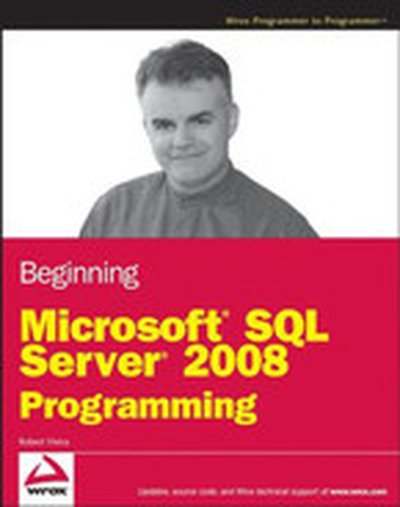
Beginning Microsoft® SQL Server® 2008 Programming

This comprehensive introduction to SQL Server begins with an overview of database design basics and the SQL query language along with an in-depth look at SQL Server itself Progresses on to a clear explanation of how to implement fundamental concepts with the new 2008 version of SQL Server Discusses creating and changing tables, managing keys, writing scripts, working with stored procedures, programming with XML, using SQL Server Reporting and Integration Services, and more Features updated and new material, including new examples using Microsoft's AdventureWorks sample database