talk-data.com talk-data.com

Event

O'Reilly Data Engineering Books

2001-10-19 – 2027-05-25 Oreilly Visit website ↗

Activities tracked

3377

Collection of O'Reilly books on Data Engineering.

Filtering by: data-engineering ×

Sessions & talks

Showing 1701–1725 of 3377 · Newest first

Search within this event →
Computing in Geographic Information Systems

Capable of acquiring large volumes of data through sensors deployed in air, land, and sea, and making this information readily available in a continuous time frame, the science of geographical information system (GIS) is rapidly evolving. This popular information system is emerging as a platform for scientific visualization, simulation, and computation of spatio-temporal data. New computing techniques are being researched and implemented to match the increasing capability of modern-day computing platforms and easy availability of spatio-temporal data. This has led to the need for the design, analysis, development, and optimization of new algorithms for extracting spatio-temporal patterns from a large volume of spatial data. considers the computational aspects, and helps students understand the mathematical principles of GIS. It provides a deeper understanding of the algorithms and mathematical methods inherent in the process of designing and developing GIS functions. It examines the associated scientific computations along with the applications of computational geometry, differential geometry, and affine geometry in processing spatial data. It also covers the mathematical aspects of geodesy, cartography, map projection, spatial interpolation, spatial statistics, and coordinate transformation. The book discusses the principles of bathymetry and generation of electronic navigation charts. Computing in Geographic Information Systems The book consists of 12 chapters. Chapters one through four delve into the modeling and preprocessing of spatial data and prepares the spatial data as input to the GIS system. Chapters five through eight describe the various techniques of computing the spatial data using different geometric and statically techniques. Chapters nine through eleven define the technique for image registration computation and measurements of spatial objects and phenomenon. Examines cartographic modeling and map projection Covers the mathematical aspects of different map projections Explores some of the spatial analysis techniques and applications of GIS Introduces the bathymetric principles and systems generated using bathymetric charts Explains concepts of differential geometry, affine geometry, and computational geometry Discusses popular analysis and measurement methods used in GIS This text outlines the key concepts encompassing GIS and spatio-temporal information, and is intended for students, researchers, and professionals engaged in analysis, visualization, and estimation of spatio-temporal events.
Microsoft® Azure™ SQL Database Step by Step

Your hands-on guide to Azure SQL Database fundamentals Expand your expertise—and teach yourself the fundamentals of Microsoft Azure SQL Database. If you have previous programming experience but are new to Azure, this tutorial delivers the step-by-step guidance and coding exercises you need to master core topics and techniques. Discover how to: Perform Azure setup and configuration Explore design and security considerations Use programming and reporting services Migrate data Backup and sync data Work with scalability and high performance Understand the differences between SQL Server and Microsoft Azure SQL Database

IBM Distributed Virtual Switch 5000V Quickstart Guide

The IBM® Distributed Virtual Switch 5000V (DVS 5000V) is a software-based network switching solution that is designed for use with the virtualized network resources in a VMware enhanced data center. It works with VMware vSphere and ESXi 5.0 and beyond to provide an IBM Networking OS management plane and advanced Layer 2 features in the control and data planes. It provides a large-scale, secure, and dynamic integrated virtual and physical environment for efficient virtual machine (VM) networking that is aware of server virtualization events, such as VMotion and Distributed Resource Scheduler (DRS). The DVS 5000V interoperates with any 802.1Qbg compliant physical switch to enable switching of local VM traffic in the hypervisor or in the upstream physical switch. Network administrators who are familiar with IBM System Networking switches can manage the DVS 5000V just like IBM physical switches by using advanced networking, troubleshooting, and management features to make the virtual switch more visible and easier to manage. This IBM Redbooks® publication helps the network and system administrator install, tailor, and quickly configure the IBM Distributed Virtual Switch 5000V (DVS 5000V) for a new or existing virtualization computing environment. It provides several practical applications of the numerous features of the DVS 5000V, including a step-by-step guide to deploying, configuring, maintaining, and troubleshooting the device. Administrators who are already familiar with the CLI interface of IBM System Networking switches will be comfortable with the DVS 5000V. Regardless of whether the reader has previous experience with IBM System Networking, this publication is designed to help you get the DVS 5000V functional quickly, and provide a conceptual explanation of how the DVS 5000V works in tandem with VMware.

FileMaker Pro 13: The Missing Manual

You don’t need a technical background to build powerful databases with FileMaker Pro 13. This crystal-clear guide covers all new FileMaker Pro 13 features, such as its improved layout tools and enhanced mobile support. Whether you’re running a business, printing a catalog, or planning a wedding, you’ll learn how to customize your database to run on a PC, Mac, Web browser, or iOS device. The important stuff you need to know: Get started. Tour FileMaker Pro’s features and create your first database in minutes. Access data anywhere. Use FileMaker Go on your iPad or iPhone—or share data on the Web. Dive into relational data. Solve problems quickly by connecting and combining data tables. Create professional documents. Publish reports, invoices, catalogs, and other documents with ease. Harness processing power. Use calculations and scripts to crunch numbers, search text, and automate tasks. Add visual power and clarity. Create colorful charts to illustrate and summarize your data. Share your database on a secure server. Add the high-level features of FileMaker Pro Advanced and FileMaker Pro Server.

Harnessing the Power of ProtecTIER and Tivoli Storage Manager

This IBM® Redbooks® publication will help you install, tailor, and configure IBM ProtecTIER® products with IBM Tivoli® Storage Manager to harness the performance and the power of the two products working together as a data protection solution. This book goes beyond the preferred practices of each product and provides in-depth explanations of each of the items that are configurable, and the underlying reasons behind the suggestions. This book provides enough detailed information to allow an administrator to make the correct choices about which methods to use when implementing both products to meet and to exceed the business requirements. This publication provides descriptions and guidance about the following topics: Terminology and concepts of ProtecTIER and Tivoli Storage Manager Planning for ProtecTIER to run with Tivoli Storage Manager Setup and configuration of the IBM ProtecTIER device as a storage pool in the Tivoli Storage Manager environment, primarily as a Virtual Tape Library (VTL) interface, with a description as a File System Interface (FSI) Day-to-day administration of ProtecTIER when it is used in a Tivoli Storage Manager environment Overview of how to plan for disaster recovery in a ProtecTIER and Tivoli Storage Manager environment Monitoring and problem solving: How a system administrator can review ProtecTIER logs and Tivoli Storage Manager server logs to identify the source of problems Hints, tips, and use cases for ProtecTIER and Tivoli Storage Manager administrators

Modernizing IBM i Applications from the Database up to the User Interface and Everything in Between

This IBM® Redbooks® publication is focused on melding industry preferred practices with the unique needs of the IBM i community and providing a holistic view of modernization. This book covers key trends for application structure, user interface, data access, and the database. Modernization is a broad term when applied to applications. It is more than a single event. It is a sequence of actions. But even more, it is a process of rethinking how to approach the creation and maintenance of applications. There are tangible deliveries when it comes to modernization, the most notable being a modern user interface (UI), such as a web browser or being able to access applications from a mobile device. The UI, however, is only the beginning. There are many more aspects to modernization. Using modern tools and methodologies can significantly improve productivity and reduce long-term cost while positioning applications for the next decade. It is time to put the past away. Tools and methodologies have undergone significant transformation, improving functionality, usability, and productivity. This is true of the plethora of IBM tools and the wealth of tools available from many Independent Solution Providers (ISVs). This publication is the result of work that was done by IBM, industry experts, and by representatives from many of the ISV Tool Providers. Some of their tools are referenced in the book. In addition to reviewing technologies based on context, there is an explanation of why modernization is important and a description of the business benefits of investing in modernization. This critical information is key for line-of-business executives who want to understand the benefits of a modernization project. This book is appropriate for CIOs, architects, developers, and business leaders. Related information Making the Case for Modernization, IBM Systems Magazine

Large Scale and Big Data

Large Scale and Big Data: Processing and Management provides readers with a central source of reference on the data management techniques currently available for large-scale data processing. Presenting chapters written by leading researchers, academics, and practitioners, it addresses the fundamental challenges associated with Big Data processing tools and techniques across a range of computing environments. The book begins by discussing the basic concepts and tools of large-scale Big Data processing and cloud computing. It also provides an overview of different programming models and cloud-based deployment models. The book’s second section examines the usage of advanced Big Data processing techniques in different domains, including semantic web, graph processing, and stream processing. The third section discusses advanced topics of Big Data processing such as consistency management, privacy, and security. Supplying a comprehensive summary from both the research and applied perspectives, the book covers recent research discoveries and applications, making it an ideal reference for a wide range of audiences, including researchers and academics working on databases, data mining, and web scale data processing. After reading this book, you will gain a fundamental understanding of how to use Big Data-processing tools and techniques effectively across application domains. Coverage includes cloud data management architectures, big data analytics visualization, data management, analytics for vast amounts of unstructured data, clustering, classification, link analysis of big data, scalable data mining, and machine learning techniques.

SAP HCM - A Complete Tutorial

"SAP HCM - A Complete Tutorial" is your comprehensive guide to mastering SAP HCM concepts and configurations. Through practical examples and real-world solutions, this book ensures that you understand and apply the diverse functionalities within SAP HCM effectively. Learn how to handle challenges, automate processes, and deliver value to organizational HR functions. What this Book will help me do Grasp the core principles and features of SAP HCM. Configure and solve real-time issues within the module. Streamline HR processes using SAP HCM tools and techniques. Leverage best practices for customizing and optimizing SAP HCM functions. Develop proficiency in deploying SAP HCM for business needs. Author(s) Karthik S, an experienced professional in ERP systems and SAP HCM solutions, has spent years guiding organizations in deploying SAP-based solutions. Renowned for clear instruction and practical approaches, Karthik has written this book to help readers quickly learn, implement, and benefit from SAP HCM technologies. Who is it for? This book is ideal for IT professionals and ERP consultants interested in mastering SAP HCM. Whether you're new to SAP or looking to deepen existing knowledge, it's tailored for those seeking practical skills to configure and optimize HCM solutions. Readers should have a basic understanding of ERP concepts and a desire to develop SAP-specific expertise.

Healthcare Information Privacy and Security: Regulatory Compliance and Data Security in the Age of Electronic Health Records

Healthcare IT is the growth industry right now, and the need for guidance in regard to privacy and security is huge. Why? With new federal incentives and penalties tied to the HITECH Act, HIPAA, and the implementation of Electronic Health Record (EHR) systems, medical practices and healthcare systems are implementing new software at breakneck speed. Yet privacy and security considerations are often an afterthought, putting healthcare organizations at risk of fines and damage to their reputations. Healthcare Information Privacy and Security: Regulatory Compliance and Data Security in the Age of Electronic Health Records outlines the new regulatory regime, and it also provides IT professionals with the processes and protocols, standards, and governance tools they need to maintain a secure and legal environment for data and records. It’s a concrete resource that will help you understand the issues affecting the law and regulatory compliance, privacy, and security in the enterprise. As healthcare IT security expert Bernard Peter Robichau II shows, the success of a privacy and security initiative lies not just in proper planning but also in identifying who will own the implementation and maintain technologies and processes. From executive sponsors to system analysts and administrators, a properly designed security program requires that that the right people are assigned to the right tasks and have the tools they need. Robichau explains how to design and implement that program with an eye toward long-term success. Putting processes and systems in place is, of course, only the start. Robichau also shows how to manage your security program and maintain operational support including ongoing maintenance and policy updates. (Because regulations never sleep!) This book will help you devise solutions that include: Identity and access management systems Proper application design Physical and environmental safeguards Systemwide and client-based security configurations Safeguards for patient data Training and auditing procedures Governance and policy administration Healthcare Information Privacy and Security is the definitive guide to help you through the process of maintaining privacy and security in the healthcare industry. It will help you keep health information safe, and it will help keep your organization—whether local clinic or major hospital system—on the right side of the law.

GeoComputation, Second Edition, 2nd Edition

A revision of Openshaw and Abrahart’s seminal work, GeoComputation, Second Edition retains influences of its originators while also providing updated, state-of-the-art information on changes in the computational environment. In keeping with the field’s development, this new edition takes a broader view and provides comprehensive coverage across the field of GeoComputation. See What’s New in the Second Edition: Coverage of ubiquitous computing, the GeoWeb, reproducible research, open access, and agent-based modelling Expanded chapter on Genetic Programming and a separate chapter developed on Evolutionary Algorithms Ten chapters updated by the same or new authors and eight new chapters added to reflect state of the art Each chapter is a stand-alone entity that covers a particular topic. You can simply dip in and out or read it from cover to cover. The opening chapter by Stan Openshaw has been preserved, with only a limited number of minor essential modifications having been enacted. This is not just a matter of respect. Openshaw’s work is eloquent, prophetic, and his overall message remains largely unchanged. In contrast to other books on this subject, GeoComputation: Second Edition supplies a state-of-the-art review of all major areas in GeoComputation with chapters written especially for this book by invited specialists. This approach helps develop and expand a computational culture, one that can exploit the ever-increasing richness of modern geographical and geospatial datasets. It also supplies an instructional guide to be kept within easy reach for regular access and when need arises.

IBM System z Connectivity Handbook

This IBM® Redbooks® publication discusses the connectivity options available for use within and beyond the data center for the IBM System z® family of mainframes, which includes these systems: IBM zEnterprise® EC12 (zEC12) IBM zEnterprise BC12 (zBC12) IBM zEnterprise 196 (z196) IBM zEnterprise 114 (z114) IBM System z10® Enterprise Class (z10 EC) IBM System z10 Business Class (z10 BC) This book highlights the hardware and software components, functions, typical uses, coexistence, and relative merits of these connectivity features. It helps readers understand the connectivity alternatives that are available when planning and designing their data center infrastructures. The changes to this edition are based on the System z hardware announcement dated July 23, 2013. This book is intended for data center planners, IT professionals, systems engineers, technical sales staff, and network planners who are involved in the planning of connectivity solutions for IBM System z servers.

Architecting and Deploying IBM DB2 with BLU Acceleration in Your Analytical Environment

IBM® DB2® with BLU Acceleration is a revolutionary technology that is delivered in DB2 for Linux, UNIX, and Windows Release 10.5. BLU Acceleration delivers breakthrough performance improvements for analytic queries by using dynamic in-memory columnar technologies. Different from other vendor solutions, BLU Acceleration allows the unified computing of online transaction processing (OLTP) and analytics data inside a single database, therefore, removing barriers and accelerating results for users. With observed hundredfold improvement in query response time, BLU Acceleration provides a simple, fast, and easy-to-use solution for the needs of today's organizations; quick access to business answers can be used to gain a competitive edge, lower costs, and more. This IBM Redbooks® publication introduces the concepts of DB2 with BLU Acceleration. It discusses the steps to move from a relational database to using BLU Acceleration, optimizing BLU usage, and deploying BLU into existing analytic solutions today, with an example of IBM Cognos®. This book also describes integration of DB2 with BLU Acceleration into SAP Business Warehouse (SAP BW) and SAP's near-line storage solution on DB2. This publication is intended to be helpful to a wide-ranging audience, including those readers who want to understand the technologies and readers who have planning, deployment, and support responsibilities.

Pro SQL Server Internals

Pro SQL Server Internals explains how different SQL Server components work "under the hood" and how they communicate with each other. This is the practical book with a large number of examples that will show you how various design and implementation decisions affect the behavior and performance of your systems. Pro SQL Server Internals covers a multiple SQL Server versions starting with SQL Server 2005 all the way up to the recently released SQL Server 2014. You’ll learn about new SQL Server 2014 features including the new Cardinality Estimator, In-Memory OLTP Engine (codename Hekaton), and Clustered Columnstore Indexes. With Pro SQL Server Internals, you have a solid roadmap for understanding the depth and power of the SQL Server database backend, regardless of the version and edition of SQL Server you use. Pro SQL Server Internals does the following: Explains how to design efficient database schema, indexing, and transaction strategies. Shows how various database objects and technologies are implemented internally and when they should or should not be used. Demonstrates how SQL Server executes queries and works with data and transaction logs.

Programming the Windows Runtime by Example: A Comprehensive Guide to WinRT with Examples in C# and XAML

Master Windows 8.1/Windows Runtime Programming Through 80 Expert Projects This is the most complete, hands-on, solutions-focused guide to programming modern Windows applications with the Windows Runtime. Leading Windows development consultants Jeremy Likness and John Garland present easy-to-adapt C# and XAML example code for more than 80 projects. Their real-world application examples help you apply Windows 8.1’s best improvements, including large tiles, the new search control, flyouts, command bars, native WinRT networking, and new deployment and sideloading options. Drawing on their pioneering experience, they illuminate key areas of the Windows Runtime API, offering uniquely detailed coverage of encryption, cloud connectivity, devices, printers, and media integration. You’ll find cutting-edge tips and tricks available in no other book. This is an indispensable resource for all intermediate-to-advanced Windows developers, and for any architect building desktop, tablet, or mobile solutions with Microsoft technologies. Its focus on both C# and XAML will make it valuable to millions of Windows developers already familiar with Silverlight, WPF, and/or .NET. Coverage includes • Creating robust app interfaces with the newest XAML controls, including flyouts and command bars • Saving data in a persistent “roaming zone” for syncing across Windows 8.1 devices • Using Visual State Manager (VSM) to build apps that adapt to various device resolutions and orientations • Integrating virtually any form of data into your apps • Connecting with web services, RSS, Atom feeds, and social networks • Securing apps via authentication, encrypting, signing, and single sign-on with Microsoft Account, Facebook, Google, and more • Leveraging Windows 8.1 media enhancements that improve battery life and app performance • Networking more effectively with Windows 8.1’s revamped HTTP implementation and new location APIs • Using Tiles and Toasts to keep apps alive and connected, even when they aren’t running • Enabling users to send content between devices via NFC tap and send • Ensuring accessibility and globalizing your apps • Efficiently debugging, optimizing, packaging, and deploying your apps • Building sideloadable apps that don’t have to be published in Windows Store “This book doesn’t just focus on singular concepts, it also provides end-to-end perspective on building an app in WinRT. It is one of those essential tools for Windows developers that will help you complete your software goals sooner than without it!” —Tim Heuer, Principal Program Manager Lead, XAML Platform, Microsoft Corporation

IBM System Storage N series Reference Architecture for Virtualized Environments

This IBM® Redbooks® publication provides deployment guidelines, workload estimates, and preferred practices for clients who want a proven IBM technology stack for virtualized VMware and Microsoft environments. The result is a Reference Architecture for Virtualized Environments (RAVE) that uses VMware vSphere or Microsoft Hypervisor, IBM System x® or IBM BladeCenter® server, IBM System Networking, and IBM System Storage® N series with Clustered Data ONTAP as a storage foundation. The reference architecture can be used as a foundation to create dynamic cloud solutions and make full use of underlying storage features and functions. This book provides a blueprint that illustrates how clients can create a virtualized infrastructure and storage cloud to help address current and future data storage business requirements. It explores the solutions that IBM offers to create a storage cloud solution addressing client needs. This book also shows how the Reference Architecture for Virtualized Environments and the extensive experience of IBM in cloud computing, services, proven technologies, and products support a Smart Storage Cloud solution that is designed for your storage optimization efforts. This book is for anyone who wants to learn how to successfully deploy a virtualized environment. It is also written for anyone who wants to understand how IBM addresses data storage and compute challenges with IBM System Storage N series solutions with IBM servers and networking solutions. This book is suitable for IT architects, business partners, IBM clients, storage solution integrators, and IBM sales representatives.

OCP Upgrade to Oracle Database 12c Exam Guide (Exam 1Z0-060), 2nd Edition

A Fully Integrated Study System for OCP Exam 1Z0-060 Prepare for the Oracle Certified Professional Upgrade to Oracle Database 12 c exam with this exclusive Oracle Press guide. Each chapter features step-by-step examples, a certification summary, a two-minute drill, and a self-test to reinforce the topics presented. This authoritative resource helps you pass the exam and also serves as an essential, on-the-job reference. Get complete coverage of the new features of Oracle Database 12 c, including: Oracle Enterprise Manager Database Express and additional tools for database monitoring Multitenant container databases and pluggable databases Auditing, administrative privileges, data redaction, and other Oracle security features Adaptive execution plans, adaptive statistics, and automatic SQL plan management Oracle Recovery Manager backup and recovery improvements Oracle Database Resource Manager and other performance enhancements Oracle Data Pump, SQL*Loader, external tables, and online operations enhancements Improvements to information lifecycle management and storage, including automatic data optimization, in-database archiving, and temporal validity Electronic content includes: 170 practice exam questions with detailed answer explanations

IBM HiperSockets Implementation Guide

This IBM® Redbooks® publication provides information about the IBM System z® HiperSockets™ function. It offers a broad description of the architecture, functions, and operating systems support. This publication will help you plan and implement HiperSockets. It provides information about the definitions needed to configure HiperSockets for the supported operating systems. This book is intended for system programmers, network planners, and systems engineers who want to plan and install HiperSockets. A solid background in network and Transmission Control Protocol/Internet Protocol (TCP/IP) is assumed.

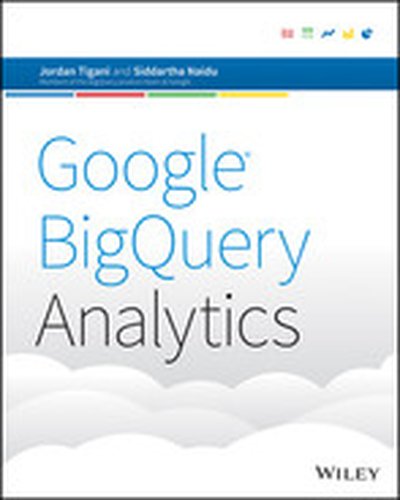
Google BigQuery Analytics

How to effectively use BigQuery, avoid common mistakes, and execute sophisticated queries against large datasets Google BigQuery Analytics is the perfect guide for business and data analysts who want the latest tips on running complex queries and writing code to communicate with the BigQuery API. The book uses real-world examples to demonstrate current best practices and techniques, and also explains and demonstrates streaming ingestion, transformation via Hadoop in Google Compute engine, AppEngine datastore integration, and using GViz with Tableau to generate charts of query results. In addition to the mechanics of BigQuery, the book also covers the architecture of the underlying Dremel query engine, providing a thorough understanding that leads to better query results. Features a companion website that includes all code and data sets from the book Uses real-world examples to explain everything analysts need to know to effectively use BigQuery Includes web application examples coded in Python

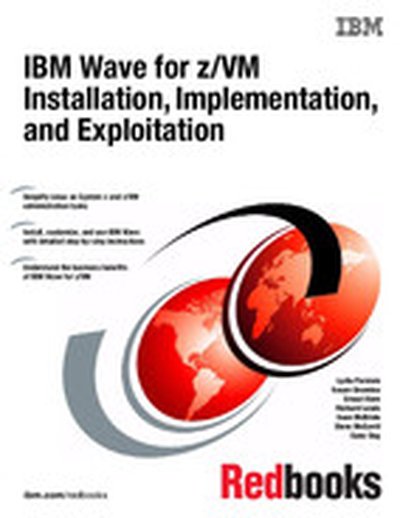
IBM Wave for z/VM Installation, Implementation, and Exploitation

IBM® Wave for z/VM® is a virtualization management solution for IBM z/VM and Linux on System z®. This virtualization management software provides a simplified and cost effective way for companies to harness the consolidation capabilities of the IBM System z platform and its ability to host the workloads of tens of thousands of commodity servers. IBM Wave for z/VM is a complete management solution for System z-based virtual server farms. This IBM Redbooks® publication provides a guide to understanding IBM Wave for z/VM by providing information about the IBM Wave for z/VM architecture and how it fits into the Cloud. Also provided is a planning and design guide that is based on common scenarios. This IBM Redbooks publication also provides installation and configuration task information and how to manage and operate the environment. The intended audience for this IBM Redbooks publication is IT Architects who are responsible for planning their IBM Wave for z/VM environments and IT Specialists who are responsible for implementing them.

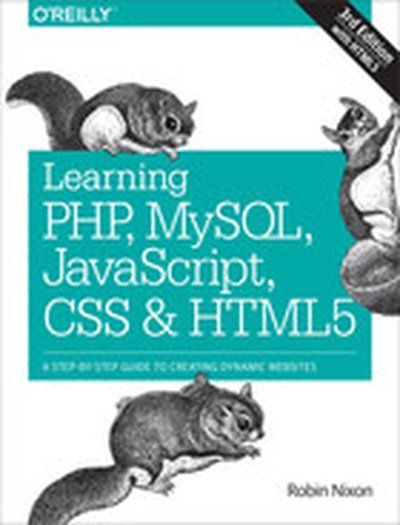
Learning PHP, MySQL, JavaScript, CSS & HTML5, 3rd Edition

Build interactive, data-driven websites with the potent combination of open-source technologies and web standards, even if you only have basic HTML knowledge. With this popular hands-on guide, you’ll tackle dynamic web programming with the help of today’s core technologies: PHP, MySQL, JavaScript, CSS, and HTML5. Explore each technology separately, learn how to use them together, and pick up valuable web programming practices along the way. At the end of the book, you’ll put everything together to build a fully functional social networking site. Learn PHP in-depth, along with the basics of object-oriented programming Explore MySQL, from database structure to complex queries Create dynamic PHP web pages that tailor themselves to the user Manage cookies and sessions, and maintain a high level of security Master the JavaScript language and use it to create interactive web pages Use Ajax calls for background browser/server communication Acquire CSS2 & CSS3 skills for professionally styling your web pages Implement all the new HTML5 features, including geolocation, audio, video, and the canvas

Just Hibernate

If you’re looking for a short, sweet, and simple introduction (or reintroduction) to Hibernate, this is the book you want. Through clear real-world examples, you’ll learn Hibernate and object-relational mapping from the ground up, starting with the basics. Then you’ll dive into the framework’s moving parts to understand how they work in action. Storing Java objects in relational databases is usually a challenging and complex task for any Java developer, experienced or not. This book, like others in the Just series, delivers a concise, example-driven tutorial for Java beginners. You’ll gain enough knowledge and confidence to start working on real-world projects with Hibernate. Compare how JDBC and Hibernate work with object persistence Learn how annotations are used to create Hibernate applications Understand how to persist and retrieve Java data structures Focus on the fundamentals of associations and their mappings Delve into advanced concepts such as caching, inheritance, and types Walk through the Hibernate Query Language API, with examples Develop Java Persistence API applications, using Hibernate as the provider Work hands-on with code snippets to understand the technology

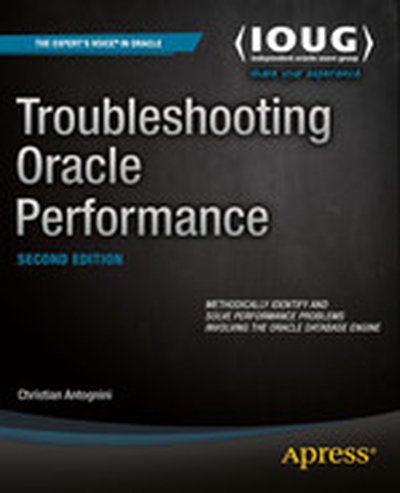
Troubleshooting Oracle Performance, Second Edition

Troubleshooting Oracle Performance, 2nd Edition is your systematic guide to diagnosing and resolving performance problems in database-backed applications involving Oracle's database engine. Christian Antognini brings a decade and a half experience to his topic. His first edition is one of the most well-respected books in its field. This second edition has been rigorously updated to cover the latest developments in Oracle Database 11 g Release 2 through Oracle Database 12 c. What do you do when your database application isn't running fast enough? You troubleshoot, of course. Finding the slow part of an application is often the easy part of the battle. It's finding a solution that's difficult. Troubleshooting Oracle Performance, 2nd Edition helps by providing a systematic approach to addressing the underlying causes of poor database application performance. The author freely shares his experience while explaining the underlying foundations of how SQL statements are executed by the Oracle database engine. You'll be able to draw a solid foundation of theory and shared experience as you face head-on the performance challenges in your daily work. Written for developers by an application developer who has learned by doing Gives a systematic approach to solving database application performance problems Helps you plan for performance as you would for any other application requirement What you'll learn Systematically identify performance problems Configure the query optimizer to meet performance goals Read and recognize inefficient execution plans Minimize the impact of parsing upon performance Optimize data access, joins, and the physical design of your database Improve performance through parallel processing, materialized views, and result caching Apply SQL tuning techniques such as hints, SQL profiles, stored outlines, and SQL plan baselines Reduce inefficiencies from too much procedural code Who this book is for Troubleshooting Oracle Performance, Second Edition is targeted at application developers and database administrators involved in troubleshooting performance problems in Oracle-based applications.

IBM System Storage N series Clustered Data ONTAP

IBM® System Storage® N series storage systems offer an excellent solution for a broad range of deployment scenarios. IBM System Storage N series storage systems function as a multiprotocol storage device that is designed to allow you to simultaneously serve both file and block-level data across a single network. These activities are demanding procedures that, for some solutions, require multiple, separately managed systems. The flexibility of IBM System Storage N series storage systems, however, allows them to address the storage needs of a wide range of organizations, including distributed enterprises and data centers for midrange enterprises. IBM System Storage N series storage systems also support sites with computer and data-intensive enterprise applications, such as database, data warehousing, workgroup collaboration, and messaging. This IBM Redbooks® publication explains the software features of the IBM System Storage N series storage systems with Clustered Data ONTAP (cDOT) Version 8.2, which is the first version available on the IBM System Storage N series, and as of October 2013, is also the most current version available. cDOT is different from previous ONTAP versions by the fact that it offers a storage solution that operates as a cluster with flexible scaling capabilities. cDOT configurations allow clients to build a scale-out architecture, protecting their investment and allowing horizontal scaling of their environment. This book also covers topics such as installation, setup, and administration of those software features from the IBM System Storage N series storage systems and clients, and provides example scenarios.

Advanced Case Management with IBM Case Manager

Organizations face case management challenges that require insight, responsiveness, and collaboration. IBM® Case Manager, Version 5.2, is an advanced case management product that unites information, process, and people to provide the 360-degree view of case information and achieve optimized outcomes. With IBM Case Manager, knowledge workers can extract critical case information through integrated business rules, collaboration, and analytics. This easy access to information enhances decision-making ability and leads to more successful case outcomes. IBM Case Manager also helps capture industry preferred practices in frameworks and templates to empower business users and accelerate return on investment. This IBM Redbooks® publication introduces the case management concept. It includes the reason for and benefits of case management, and why it is different from the traditional business process management or content management. In addition, this book addresses how you can design and build a case management solution with IBM Case Manager and integrate that solution with external products and components. This book is intended to provide IT architects and IT specialists with the high-level concepts of case management and the capabilities of IBM Case Manager. It also serves as a practical guide for IT professionals who are responsible for designing, building, customizing, and deploying IBM Case Manager solutions.

IBM System Storage N series Hardware Guide

This IBM® Redbooks® publication provides a detailed look at the features, benefits, and capabilities of the IBM System Storage® N series hardware offerings. The IBM System Storage N series systems can help you tackle the challenge of effective data management by using virtualization technology and a unified storage architecture. The N series delivers low- to high-end enterprise storage and data management capabilities with midrange affordability. Built-in serviceability and manageability features help support your efforts to increase reliability, simplify and unify storage infrastructure and maintenance, and deliver exceptional economy. The IBM System Storage N series systems provide a range of reliable, scalable storage solutions to meet various storage requirements. These capabilities are achieved by using network access protocols, such as Network File System (NFS), Common Internet File System (CIFS), HTTP, and iSCSI, and storage area network technologies, such as Fibre Channel. By using built-in Redundant Array of Independent Disks (RAID) technologies, all data is protected with options to enhance protection through mirroring, replication, Snapshots, and backup. These storage systems also have simple management interfaces that make installation, administration, and troubleshooting straightforward. In addition, this book addresses high-availability solutions, including clustering and MetroCluster that support highest business continuity requirements. MetroCluster is a unique solution that combines array-based clustering with synchronous mirroring to deliver continuous availability.