talk-data.com talk-data.com

Event

O'Reilly Data Engineering Books

2001-10-19 – 2027-05-25 Oreilly Visit website ↗

Activities tracked

3406

Collection of O'Reilly books on Data Engineering.

Filtering by: data ×

Sessions & talks

Showing 1876–1900 of 3406 · Newest first

Search within this event →
Joe Celko’s Complete Guide to NoSQL

Joe Celko's Complete Guide to NoSQL provides a complete overview of non-relational technologies so that you can become more nimble to meet the needs of your organization. As data continues to explode and grow more complex, SQL is becoming less useful for querying data and extracting meaning. In this new world of bigger and faster data, you will need to leverage non-relational technologies to get the most out of the information you have. Learn where, when, and why the benefits of NoSQL outweigh those of SQL with Joe Celko's Complete Guide to NoSQL. This book covers three areas that make today's new data different from the data of the past: velocity, volume and variety. When information is changing faster than you can collect and query it, it simply cannot be treated the same as static data. Celko will help you understand velocity, to equip you with the tools to drink from a fire hose. Old storage and access models do not work for big data. Celko will help you understand volume, as well as different ways to store and access data such as petabytes and exabytes. Not all data can fit into a relational model, including genetic data, semantic data, and data generated by social networks. Celko will help you understand variety, as well as the alternative storage, query, and management frameworks needed by certain kinds of data. Gain a complete understanding of the situations in which SQL has more drawbacks than benefits so that you can better determine when to utilize NoSQL technologies for maximum benefit Recognize the pros and cons of columnar, streaming, and graph databases Make the transition to NoSQL with the expert guidance of best-selling SQL expert Joe Celko
Securing Your Mobile Business with IBM Worklight

The IBM® Worklight® mobile application platform helps you to develop, deploy, host, and manage mobile enterprise applications. It also enables companies to integrate security into their overall mobile application lifecycle. This IBM Redbooks® publication describes the security capabilities offered by Worklight to address mobile application security objectives. The book begins with an overview of IBM MobileFirst and its security offerings. The book also describes a business scenario illustrating where security is needed in mobile solutions, and how Worklight can help you achieve it. This publication then provides specific, hands-on guidance about how to integrate Worklight with enterprise security. It also provides step-by-step guidance to implementing mobile security features, including direct update, remote disable, and encrypted offline cache. Integration between Worklight and other IBM security technologies is also covered, including integration with IBM Security Access Manager and IBM WebSphere® DataPower®. This Redbooks publication is of interest to anyone looking to better understand mobile security, and to learn how to enhance mobile security with Worklight.

Oracle Big Data Handbook

Transform Big Data into Insight "In this book, some of Oracle's best engineers and architects explain how you can make use of big data. They'll tell you how you can integrate your existing Oracle solutions with big data systems, using each where appropriate and moving data between them as needed." -- Doug Cutting, co-creator of Apache Hadoop Cowritten by members of Oracle's big data team, Oracle Big Data Handbook provides complete coverage of Oracle's comprehensive, integrated set of products for acquiring, organizing, analyzing, and leveraging unstructured data. The book discusses the strategies and technologies essential for a successful big data implementation, including Apache Hadoop, Oracle Big Data Appliance, Oracle Big Data Connectors, Oracle NoSQL Database, Oracle Endeca, Oracle Advanced Analytics, and Oracle's open source R offerings. Best practices for migrating from legacy systems and integrating existing data warehousing and analytics solutions into an enterprise big data infrastructure are also included in this Oracle Press guide. Understand the value of a comprehensive big data strategy Maximize the distributed processing power of the Apache Hadoop platform Discover the advantages of using Oracle Big Data Appliance as an engineered system for Hadoop and Oracle NoSQL Database Configure, deploy, and monitor Hadoop and Oracle NoSQL Database using Oracle Big Data Appliance Integrate your existing data warehousing and analytics infrastructure into a big data architecture Share data among Hadoop and relational databases using Oracle Big Data Connectors Understand how Oracle NoSQL Database integrates into the Oracle Big Data architecture Deliver faster time to value using in-database analytics Analyze data with Oracle Advanced Analytics (Oracle R Enterprise and Oracle Data Mining), Oracle R Distribution, ROracle, and Oracle R Connector for Hadoop Analyze disparate data with Oracle Endeca Information Discovery Plan and implement a big data governance strategy and develop an architecture and roadmap

Oracle E-Business Suite 12 Tuning Tips & Techniques

Master Oracle E-Business Suite 12 Performance Tuning and Optimization Deliver on the promise of lower TCO and achieve operational excellence by implementing a comprehensive enterprise application management process. Oracle E-Business Suite 12 Tuning Tips & Techniques offers detailed coverage of the versatile tools, features, and services available for managing application reliability, availability, performance, optimization, and governance. Best practices for maintaining overall application health and supporting evolving priorities, technologies, and systems are also included in this Oracle Press guide. Get a comprehensive technical and functional overview of Oracle E-Business Suite 12 Plan, develop, and implement a management lifecycle strategy Execute an effective reliability management solution Monitor and maintain availability Improve application speed and performance Optimize Oracle E-Business Suite for short-term flexibility and long-term strategic goals Implement strong application governance processes Measure the success and performance of your management plan Maintain an agile, future-ready Oracle E-Business Suite platform

IBM Linear Tape File System Enterprise Edition V1.1 Installation and Configuration Guide

This IBM® Redbooks® publication helps you with planning, installation, and configuration of the new IBM Linear Tape File System™ (LTFS) Enterprise Edition (EE) V1R1 for the IBM System Storage® TS3500 Tape Library. LTFS EE is designed to enable the use of LTFS for the policy management of tape as a storage tier in an IBM general parallel file system-based (IBM GPFS™) environment and helps encourage the use of tape as a critical tier in the storage environment. LTFS EE can run any application that is designed for disk files on tape. LTFS EE supports IBM Linear Tape-Open (LTO) Ultrium 6 and 5 tape drives, and IBM System Storage TS1140 Tape Drives that are installed in TS3500 tape libraries. LTFS EE can play a major role in reducing the cost of storage for data that does not need the access performance of primary disk. The use of LTFS EE to replace disks with tape in Tier 2 and Tier 3 storage can improve data access over other storage solutions because it improves efficiency and streamlines management for files on tape. LTFS EE simplifies the use of tape by making it transparent to the user and manageable by the administrator under a single infrastructure. This publication is intended for anyone who wants to understand more about LTFS EE planning and implementation. This book is suitable for IBM clients, IBM Business Partners, IBM specialist sales representatives, and technical specialists.

Hybrid Analytics Solution using IBM DB2 Analytics Accelerator for z/OS V3.1

The IBM® DB2® Analytics Accelerator Version 3.1 for IBM z/OS® (simply called Accelerator in this book) is a union of the IBM System z® quality of service and IBM Netezza® technology to accelerate complex queries in a DB2 for z/OS highly secure and available environment. Superior performance and scalability with rapid appliance deployment provide an ideal solution for complex analysis. In this IBM Redbooks® publication, we provide technical decision-makers with a broad understanding of the benefits of Version 3.1 of the Accelerator's major new functions. We describe their installation and the advantages to existing analytical processes as measured in our test environment. We also describe the IBM zEnterprise® Analytics System 9700, a hybrid System z solution offering that is surrounded by a complete set of optional packs to enable customers to custom tailor the system to their unique needs..

Oracle Goldengate 11g Complete Cookbook

Oracle Goldengate 11g Complete Cookbook is a detailed practical guide for mastering the setup and administration of Oracle Goldengate 11g. This book will walk you through Oracle Goldengate's features, from installation basics to advanced operations like cross-platform replication, enabling you to effectively manage database replication environments. What this Book will help me do Learn to configure DML and DDL replications using Oracle Goldengate effectively. Acquire skills to troubleshoot, monitor, and optimize Oracle Goldengate replication processes. Understand cross-platform replication setups and solutions for high availability environments. Master the use of OEM 12c for monitoring and managing Oracle Goldengate replication. Develop expertise in resolving replication conflicts and reverse-engineering changes applied through Goldengate. Author(s) Ankur Gupta is an experienced database administrator with years of practice optimizing Oracle database systems. His extensive experience with Oracle Goldengate has equipped him with the expertise to deliver practical guidelines and actionable insights. Through this work, he aims to simplify complex tasks, enabling readers to confidently handle Oracle Goldengate implementations. Who is it for? This book is designed for database administrators, system architects, and middleware administrators who work or plan to work with Oracle Goldengate 11g. It caters to professionals involved in managing replication tasks on a daily basis or setting up Oracle Goldengate for migrations. A foundational understanding of Oracle database operations is recommended to fully benefit from this book.

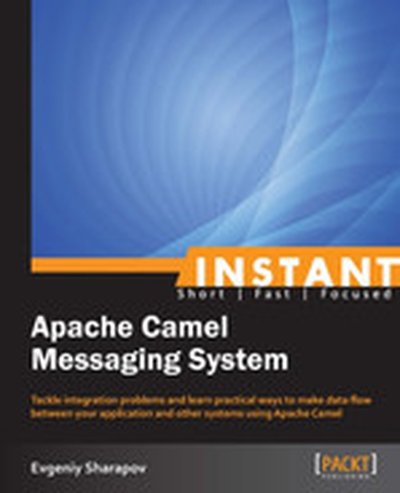
Instant Apache Camel Messaging System

This book, 'Instant Apache Camel Messaging System,' focuses on using the Apache Camel framework to solve integration challenges between applications and systems. By working through practical examples, you'll learn to set up, develop, and configure efficient data flows using Camel. What this Book will help me do Effectively integrate Apache Camel into your application. Develop applications using unit tests, mocks, and test-first approaches. Configure Camel applications with the Spring Framework. Implement POJO beans in your Camel configurations for flexible workflows. Utilize modern Java DSL within Camel for an optimized integration experience. Author(s) Evgeniy Sharapov is an experienced software developer with a deep understanding of integration frameworks. His professional expertise encompasses Apache Camel and Java-based solutions. Evgeniy's writing style is focused and practical, delivering essential knowledge to developers. Who is it for? This book is best suited for Java developers who want a clear pathway to using Apache Camel. Whether you're tackling an integration project or learning Camel for the first time, this guide is structured to meet your needs. Beginners to Camel will feel supported, while those experienced in integration can solidify their foundation. Readers should be familiar with Java development and seek to learn practical integration methodologies.

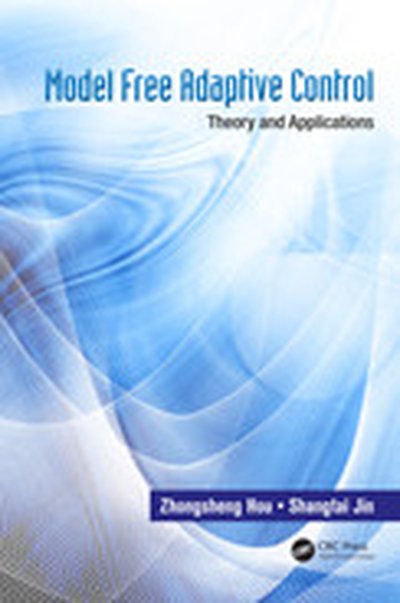
Model Free Adaptive Control

The book summarizes theory and applications of data-driven model-free adaptive control (MFAC) which is different from the traditional adaptive control. The traditional unmodeled dynamics do not exist in MFAC framework. In addition, MFAC is suitable for many practical applications since it is easily implemented and has strong robustness. By reading this book, readers become familiar with MFAC in a short time, and can quickly carry out their independent research and applications.

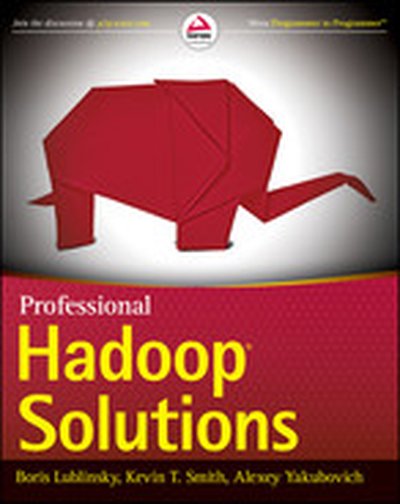
Professional Hadoop Solutions

The go-to guidebook for deploying Big Data solutions with Hadoop Today's enterprise architects need to understand how the Hadoop frameworks and APIs fit together, and how they can be integrated to deliver real-world solutions. This book is a practical, detailed guide to building and implementing those solutions, with code-level instruction in the popular Wrox tradition. It covers storing data with HDFS and Hbase, processing data with MapReduce, and automating data processing with Oozie. Hadoop security, running Hadoop with Amazon Web Services, best practices, and automating Hadoop processes in real time are also covered in depth. With in-depth code examples in Java and XML and the latest on recent additions to the Hadoop ecosystem, this complete resource also covers the use of APIs, exposing their inner workings and allowing architects and developers to better leverage and customize them. The ultimate guide for developers, designers, and architects who need to build and deploy Hadoop applications Covers storing and processing data with various technologies, automating data processing, Hadoop security, and delivering real-time solutions Includes detailed, real-world examples and code-level guidelines Explains when, why, and how to use these tools effectively Written by a team of Hadoop experts in the programmer-to-programmer Wrox style Professional Hadoop Solutions is the reference enterprise architects and developers need to maximize the power of Hadoop.

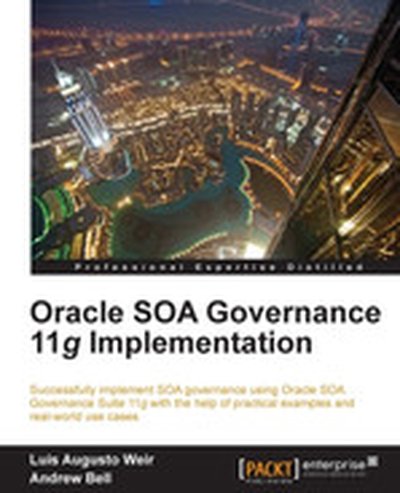
Oracle SOA Governance 11g Implementation

"Oracle SOA Governance 11g Implementation" is a comprehensive guide to understanding and deploying service-oriented architecture (SOA) governance using Oracle SOA Governance Suite 11g. Through practical examples and real-world use cases, this book explores the principles and practices of implementing effective SOA governance to achieve robust and efficient service management. What this Book will help me do Understand and assess your organization's SOA maturity and identify governance challenges to address them strategically. Learn the implementation of Oracle Enterprise Repository and Oracle Service Registry to handle design-time and runtime governance requirements. Discover best practices for deploying Oracle Service Registry and leveraging its integration with Oracle Enterprise Repository. Gain insights into runtime governance using tools like Oracle Enterprise Manager and Web Service Manager. Understand how to extend Oracle SOA Governance to manage and govern Oracle Application Integration Architecture implementations. Author(s) Luis Weir is an experienced SOA expert and enterprise architect who has spent years implementing Oracle SOA governance solutions for diverse organizations. With a rich background in SOA practices and enterprise architectures, he combines practical experience with a clear and structured writing style to offer actionable insights. Through his work, he aims to empower readers with tools to advance their SOA governance skills. Who is it for? This book is tailored for enterprise architects, SOA consultants, and technical leads who need to implement or enhance SOA governance within their organizations. It is particularly valuable for those familiar with Oracle SOA Suite 11g but also accommodates readers new to its governance tools. If your goal is to establish effective SOA governance mechanisms, this book provides the guidance required.

IBM Flex System V7000 Storage Node Introduction and Implementation Guide

IBM® Flex System™ products are ideally suited for data center environments that require flexible, cost-effective, secure, and energy-efficient hardware. IBM Flex System V7000 Storage Node is the latest addition to the IBM Flex Systems product family and is a modular storage system designed to fit into the IBM Flex System Enterprise chassis. When purchased in the IBM PureFlex™ configurations, IBM Flex System V7000 Storage Node is configured from the factory into the hardware solution purchased. If, however, the configuration wanted is not offered in the predefined offerings, then a "Build to Order" configuration is designed to meet your needs. IBM Flex System V7000 Storage Node includes the capability to virtualize its own internal storage in the same manner as the IBM Storwize® V7000 does. It is designed to be a scalable internal storage system to support the compute nodes of the IBM Flex System environment. This IBM Redbooks® publication introduces the features and functions of IBM Flex System V7000 Storage Node through several examples. This book is aimed at pre-sales and post-sales technical support and marketing personnel and storage administrators. It can help you understand the architecture of IBM Flex System V7000 Storage Node, how to implement it, and how to take advantage of the industry leading functions and features.

IBM SAN Solution Design Best Practices for VMware vSphere ESXi

In this IBM® Redbooks® publication, we describe recommendations based on an IBM b-type storage area network (SAN) environment that is utilizing VMware vSphere ESXi. We describe the hardware and software and the unique features that they bring to the marketplace. We then highlight those features and how they apply to the SAN environment, and the best practices for ensuring that you get the best out of your SAN. For background reading, we recommend the following Redbooks publications: - Introduction to Storage Area Networks and System Networking, SG24-5470 - IBM System Storage SAN Volume Controller Best Practices and Performance Guidelines, SG24-7521 - IBM System Storage SAN Volume Controller and Storwize V7000 Replication Family Services, SG24-7574 - Implementing the IBM System Storage SAN Volume Controller V6.3, SG24-7933 - IBM SAN Volume Controller Stretched Cluster with PowerVM and PowerHA, SG24-8142 - Implementing the IBM SAN Volume Controller and FlashSystem 820, SG24-8172 - IBM System Storage DS8000 Copy Services for Open Systems, SG24-6788 - IBM System Storage DS8000: Host Attachment and Interoperability, SG24-8887 This book is aimed at pre- and post-sales support, system administrators, and storage administrators.

Oracle to DB2 Conversion Guide: Compatibility Made Easy

This IBM® Redbooks® publication describes IBM DB2® SQL compatibility features. The latest version of DB2 includes extensive native support for the PL/SQL procedural language, new data types, scalar functions, improved concurrency, built-in packages, OCI, SQL*Plus, and more. These features can help with developing applications that run on both DB2 and Oracle and can help simplify the process of moving from Oracle to DB2. In addition, IBM now provides tools to simplify the enablement process, such as the highly scalable IBM Data Movement Tool for moving schema and data into DB2, and an Editor and Profiler for PL/SQL provided by the IBM Data Studio tool suite. This Oracle to DB2 migration guide describes new technology, preferred practices for moving to DB2, and common scenarios that can help you as you move from Oracle to DB2. This book is intended for IT architects and developers who are converting from Oracle to DB2. DB2 compatibility with Oracle is provided through native support. The new capabilities in DB2 that provide compatibility are implemented at the lowest and most intimate levels of the database kernel, as though they were originally engineered for DB2. means that the DB2 implementation is done without the aid of an emulation layer. This intimacy leads to the scalable implementation that DB2 offers, providing identical performance between DB2 compatibility features and DB2 other language elements. For example, DB2 runs SQL PL at the same performance as PL/SQL implementations of the same function.

Implementing the IBM SAN Volume Controller and FlashSystem 820

In today's 24 x 7 world, there is likely not a business on this planet, IBM® Smarter Planet® or not, that finds that their storage requirements are growing too fast and demand is starting to outpace supply. Not only this, but in this cost-conscious environment of today, the costs of managing this growth are likely to be eating into the IT budget. One way to make better use of existing storage without adding more complexity to the infrastructure is the IBM System Storage® SAN Volume Controller (SVC). For many years now this has helped business become more flexible, agile, and introduced an extremely efficient storage environment. SAN Volume Controller is designed to deliver the benefits of storage virtualization in environments from large enterprises to small businesses and midmarket companies. Virtualizing storage with SAN Volume Controller helps make new and existing storage more effective. SAN Volume Controller includes many functions that are traditionally deployed separately in disk systems. By including these in a virtualization system, SAN Volume Controller standardizes functions across virtualized storage for greater flexibility and potentially lower costs. Now, with IBM FlashSystem™ storage, SAN Volume Controller is enabled to extend its reach and benefit all virtualized storage. For example, IBM Easy Tier® optimizes use of flash storage. And IBM Real-time Compression™ enhances efficiency even further by enabling the storage of up to five times as much active primary data in the same physical disk space. In this IBM Redbooks® publication, we show how to integrate the IBM FlashSystem 820 to provide storage to the SAN Volume Controller, and show how they are designed to operate seamlessly together, reducing management effort. In this book, which is aimed at pre- and post-sales support, storage administrators, and people that want to get an overview of this new and exciting technology, we show the steps required to implement the IBM FlashSystem 820 in an existing SAN Volume Controller environment. We also highlight some of the new features in SAN Volume Controller that increase performance. If you are not already familiar with the SAN Volume Controller, it is beneficial to read the following IBM Redbooks publications: - Implementing the IBM System Storage SAN Volume Controller V6.3, SG24-7933 - Implementing the IBM Storwize V7000 V6.3, SG24-7938 - Real-time Compression in SAN Volume Controller and Storwize V7000, REDP-4859 - IBM SAN Volume Controller and IBM FlashSystem 820: Best Practices and Performance Capabilities, REDP-5027 - IBM FlashSystem 710 and IBM FlashSystem 810, TIPS1002 - IBM FlashSystem 720 and IBM FlashSystem 820, TIPS1003 - Flash or SSD: Why and When to Use IBM FlashSystem, REDP-5020

Oracle Essentials, 5th Edition

Written by Oracle insiders, this indispensable guide distills an enormous amount of information about the Oracle Database into one compact volume. Ideal for novice and experienced DBAs, developers, managers, and users, Oracle Essentials walks you through technologies and features in Oracle’s product line, including its architecture, data structures, networking, concurrency, and tuning. Complete with illustrations and helpful hints, this fifth edition provides a valuable one-stop overview of Oracle Database 12c, including an introduction to Oracle and cloud computing. Oracle Essentials provides the conceptual background you need to understand how Oracle truly works. Topics include: A complete overview of Oracle databases and data stores, and Fusion Middleware products and features Core concepts and structures in Oracle’s architecture, including pluggable databases Oracle objects and the various datatypes Oracle supports System and database management, including Oracle Enterprise Manager 12c Security options, basic auditing capabilities, and options for meeting compliance needs Performance characteristics of disk, memory, and CPU tuning Basic principles of multiuser concurrency Oracle’s online transaction processing (OLTP) Data warehouses, Big Data, and Oracle’s business intelligence tools Backup and recovery, and high availability and failover solutions

Repeat the Remarkable: How Strong Leaders Overcome Business Challenges to Take Their Performance to the Next Level

Learn how IBM has overcome its toughest challenges—and how you can replicate iconic company's success Over the past 100 years, the IBM Corporation has survived several recessions and innumerable twists and turns in the global technology market. And even in an economy of global recession, this icon continues to repeat remarkable performance after remarkable performance—reinventing the meaning of corporate sustainability, employee loyalty and value-added leadership—and followed by memorable customer service. Repeat the Remarkable reveals the leadership lessons of a top IBM leadership development trainer. In it, Holley gives you the tools to tap into your own personal success—so you can lead your company to remarkable and repeatable performances Perry Holley is program director, IBM Leadership Development.

BizTalk 2013 EDI for Supply Chain Management: Working with Invoices, Purchase Orders and Related Document Types

Building a successful supply chain processing EDI implementation in BizTalk Server can be complex. Decisions must be made around how to extract and publish data, how to map to the various EDI standards, and how to appropriately batch and deliver data. If architected properly, your BizTalk solution can be highly efficient, simple, and something that can be managed and extended for years to come. The topics in this book include building complete inbound and outbound solutions for 810, 845, and 850 EDI document types, which will lay the groundwork for any document type you may be implementing. In addition, topics on how to set up FTP, SFTP, and AS2 protocols for document exchange, working with 997/999 acknowledgements, and creating custom applications for archiving and monitoring data are included. Covering mapping, architectural patterns, orchestrations, trading partner configurations, AS2, SFTP, FTP, usage of role links, and data routing, you will find that BizTalk 2013 EDI for Supply Chain Management gives you the detail and knowledge needed for success with your own implementations. What you'll learn Successfully create professional, industry-standard and compliant implementations Build fully operational inbound and outbound processes using AS2, SFTP, and FTP Integrate with SQL Server, .NET Libraries, and other platforms and technologies Develop maps, schemas, orchestrations and configure encrypted file delivery Configure role links to allow for shipment of outbound data to multiple parties Who this book is for BizTalk Developers, technical architects, and executives of manufacturing or supply companies looking to implement EDI on BizTalk

Making Sense of NoSQL

Making Sense of NoSQL clearly and concisely explains the concepts, features, benefits, potential, and limitations of NoSQL technologies. Using examples and use cases, illustrations, and plain, jargon-free writing, this guide shows how you can effectively assemble a NoSQL solution to replace or augment the traditional RDBMS you have now. About the Technology About the Book If you want to understand and perhaps start using the new data storage and analysis technologies that go beyond the SQL database model, this book is for you. Written in plain language suitable for technical managers and developers, and using many examples, use cases, and illustrations, this book explains the concepts, features, benefits, potential, and limitations of NoSQL. Making Sense of NoSQL starts by comparing familiar database concepts to the new NoSQL patterns that augment or replace them. Then, you'll explore case studies on big data, search, reliability, and business agility that apply these new patterns to today's business problems. You'll see how NoSQL systems can leverage the resources of modern cloud computing and multiple-CPU data centers. The final chapters show you how to choose the right NoSQL technologies for your own needs. What's Inside NoSQL data architecture patterns NoSQL for big data Search, high availability, and security Choosing an architecture About the Reader Managers and developers will welcome this lucid overview of the potential and capabilities of NoSQL technologies. About the Authors Dan McCreary and Ann Kelly lead an independent training and consultancy firm focused on NoSQL solutions and are cofounders of the NoSQL Now! Conference. Quotes Easily digestible, practical advice for technical managers, architects, and developers. - From the Foreword by Tony Shaw, CEO of DATAVERSITY Cuts through the jargon and gives you the information you need to know. - Craig Smith, Unbound DNA A concise yet thorough description of the many facets of NoSQL, from big data to search. - John Guthrie, Pivotal Brings common sense to the world of NoSQL. - Ignacio Lopez Vellon, Atos Worldgrid Get ahead of your peers ... fast-track to NoSQL now! - Ian Stirk, Stirk Consultancy, Ltd

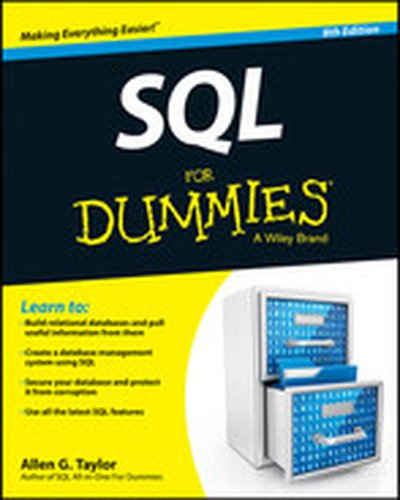
SQL For Dummies, 8th Edition

Uncover the secrets of SQL and start building better relational databases today! This fun and friendly guide will help you demystify database management systems so you can create more powerful databases and access information with ease. Updated for the latest SQL functionality, SQL For Dummies, 8th Edition covers the core SQL language and shows you how to use SQL to structure a DBMS, implement a database design, secure your data, and retrieve information when you need it. Includes new enhancements of SQL:2011, including temporal data functionality which allows you to set valid times for transactions to occur and helps prevent database corruption Covers creating, accessing, manipulating, maintaining, and storing information in relational database management systems like Access, Oracle, SQL Server, and MySQL Provides tips for keeping your data safe from theft, accidental or malicious corruption, or loss due to equipment failures and advice on eliminating errors in your work Don't be daunted by database development anymore - get SQL For Dummies, 8th Edition, and you'll be on your way to SQL stardom.

Instant Apache Camel Message Routing

Instant Apache Camel Message Routing is your guide to understanding and implementing integration solutions using Apache Camel. This book introduces you to Camel's routing capabilities and enterprise integration patterns, making it accessible for learners aiming to streamline their message handling processes. With a concise and practical approach, this book helps you quickly gain valuable routing and integration skills. What this Book will help me do Gain an in-depth understanding of Apache Camel's architecture and message routing capabilities. Learn to implement enterprise integration patterns such as content-based routing and dynamic routing effectively. Get hands-on experience with Camel's components for connecting disparate systems with ease. Master advanced Camel features like parallel processing, message splitting, and aggregation techniques. Develop robust message error handling strategies using Camel's error handling capabilities. Author(s) Bilgin Ibryam, the author of this concise guide, is an experienced software engineer specializing in application integration and distributed systems. With a deep understanding of Apache Camel and related technologies, he offers a step-by-step approach to teach effective message routing. Bilgin's writing style focuses on clarity and practical learning to empower developers. Who is it for? This book is tailored for Java developers eager to learn about Apache Camel and message routing. Beginners will appreciate the structured introduction to integration patterns, while intermediate learners can benefit from the deep dive into Camel's advanced features. It's ideal for developers seeking to connect applications seamlessly using a powerful, open-source tool.

Instant GSON

Explore the powerful features of the GSON library in this concise and practical book. "Instant GSON" provides a hands-on guide to efficiently handling JSON data using Google's GSON library. In this book, you'll learn essential techniques to convert Java objects to JSON and vice versa, utilize field exclusion strategies, and implement GSON in real-world applications. What this Book will help me do Convert Java objects into JSON format and retrieve Java objects from JSON data. Understand and work with GSON's handling of generic types and nested classes. Learn how to implement field exclusion strategies and write custom JSON converters. Gain knowledge on pretty-printing JSON and utilizing versioning support. Effectively use GSON in various practical Java-based applications, including web projects. Author(s) Sandeep Patel is an experienced software developer specializing in Java programming and JSON data interchange. With years of hands-on experience working with GSON, Sandeep has a deep understanding of its capabilities and nuances. His writing style is focused on practical examples and clear explanations, aimed at helping readers efficiently integrate advanced JSON management into their programming projects. Who is it for? If you are a Java developer who is new to the GSON library and keen to incorporate it into your projects, this book is for you. "Instant GSON" will appeal to software developers aiming to boost productivity and master JSON data handling. Readers should have a basic understanding of Java programming and an interest in JSON serialization and deserialization. This book provides guidance tailored to beginner and intermediate skill levels.

Mongoose for Application Development

This book is your hands-on guide to mastering Mongoose for application development on the Node.js stack. By working through practical examples, you'll learn how to define data schemas, efficiently interact with your database, and build a real-life project management application using this powerful tool. What this Book will help me do Master connecting Node.js applications to MongoDB using Mongoose. Define and leverage data schemas and models for robust data management. Perform CRUD operations seamlessly using Mongoose's accessible APIs. Integrate advanced concepts like schema validators, population, and sub-documents. Learn to enhance productivity by developing and utilizing reusable plugins. Author(s) Simon Holmes, an experienced web developer, specializes in JavaScript, Node.js, and database technologies. Known for his clear and effective teaching style, Simon has authored several books and tutorials to help developers be more proficient and productive. His insights on Mongoose bridge the gap between practical application and theoretical knowledge. Who is it for? This book is perfect for developers interested in Node.js who want to incorporate MongoDB into their applications and need a structured yet hands-on approach. It's suitable for learners new to Mongoose as well as experienced developers seeking to optimize their database interactions. Key audiences include backend developers, full-stack developers, and software engineers aiming to enhance their database schemas and queries.

Creating Composite Application Pattern Models for IBM PureApplication System

This IBM® Redbooks® publication describes how IBM PureApplication™ System supports the creation of virtual systems and virtual applications. PureApplication System does so using a pattern model that enables you to take advantage of predefined, pre-configured, and proven middleware topologies and deployments. This book also presents an abstraction level that focuses on functional capabilities and applications, completely encapsulating the underlying middleware. It describes in detail the model and the associated frameworks in PureApplication System, as well as a methodology and approach toward designing and implementing a custom pattern model. This book shows concrete implementation examples that you can use when creating your own pattern model, paired with a collection of leading practices. This IBM Redbooks publication gives critical guidance to, and serves as a reference for, independent software vendors (ISVs) who want to create patterns for their packaged applications on PureApplication System. Clients who want to extend and enhance their existing patterns can also use this book.

IBM Flex System and PureFlex System Network Implementation with Cisco Systems

To meet today's complex and ever-changing business demands, you need a solid foundation of server, storage, networking, and software resources. It must be simple to deploy and able to quickly and automatically adapt to changing conditions. You also need access to, and the ability to take advantage of, broad expertise and proven best practices in systems management, applications, hardware maintenance, and more. IBM® PureFlex™ System is part of the IBM PureSystems™ family of expert integrated systems. It combines advanced IBM hardware and software along with patterns of expertise and integrates them into three optimized configurations that are simple to acquire and deploy. With the PureFlex System, you can achieve faster time to value. If you want a pre-configured, pre-integrated infrastructure with integrated management and cloud capabilities, factory tuned from IBM with x86 and Power hybrid solution, IBM PureFlex System is the answer. In this IBM Redbooks® publication, the examples use a Cisco Nexus 5000 Series Switch, although any configurations should also apply to the Cisco Nexus 7000 Series Switch too. However, it is wise to check as there might be minor differences. This book also covers the different variations for the implementation of these use cases when you use Cisco Catalyst Series Switches.