talk-data.com talk-data.com

Event

O'Reilly Data Science Books

2013-08-09 – 2026-02-25 Oreilly Visit website ↗

Activities tracked

333

Collection of O'Reilly books on Data Science.

Filtering by: AI/ML ×

Sessions & talks

Showing 301–325 of 333 · Newest first

Search within this event →
Computational Intelligent Data Analysis for Sustainable Development

Going beyond performing simple analyses, researchers involved in the highly dynamic field of computational intelligent data analysis design algorithms that solve increasingly complex data problems in changing environments, including economic, environmental, and social data. This volume presents novel methodologies for automatically processing these types of data to support rational decision making for sustainable development. Through numerous case studies and applications, it illustrates important data analysis methods, including mathematical optimization, machine learning, signal processing, and temporal and spatial analysis, for quantifying and describing sustainable development problems.

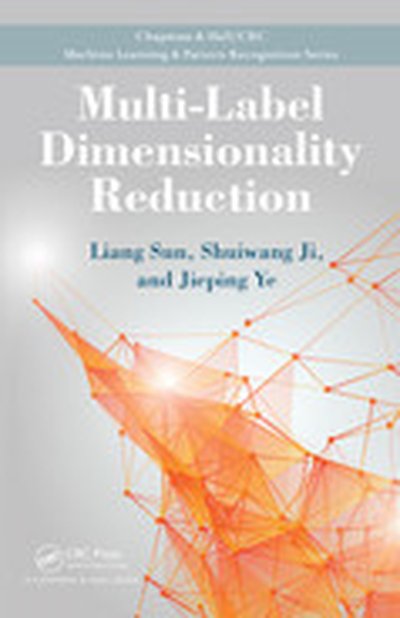
Multi-Label Dimensionality Reduction

The data mining and machine learning literature currently lacks a unified treatment of multi-label dimensionality reduction that incorporates both algorithmic developments and applications. Addressing this shortfall, this book covers the methodological developments, theoretical properties, computational aspects, and applications of many multi-label dimensionality reduction algorithms, including existing dimensionality reduction algorithms and new developments of traditional algorithms. It illustrates how to apply the algorithms to solve real-world problems. A supplementary website provides a MATLAB package for implementing popular dimensionality reduction algorithms.

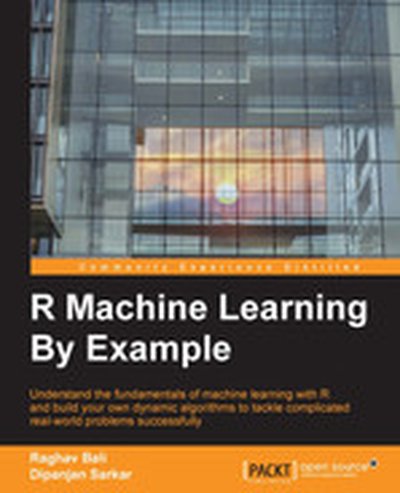
R Machine Learning By Example

This book, 'R Machine Learning by Example,' offers a hands-on approach to learning about machine learning using R. You will not only understand the theoretical aspects but also learn to apply machine learning algorithms to solve real-world problems. Through guided examples, you'll explore predictive modeling, data analysis, and other machine learning techniques implemented in R. What this Book will help me do Master the use of R for advanced data handling and exploration. Visualize multidimensional data effectively to derive insights. Understand and implement key machine learning algorithms in R. Solve practical, industry-relevant problems across multiple domains using R. Learn to optimize and fine-tune machine learning models for better results. Author(s) Raghav Bali, the author, is a seasoned data scientist with expertise in machine learning. With years of experience using R in data science, he has taught both professionals and enthusiasts how to use machine learning effectively. His approachable and clear writing style ensures that learners of various skill levels can benefit from his insights and guidance. Who is it for? This book is perfect for analysts, data scientists, or enthusiasts who want to leverage R for machine learning. It is suitable for beginners familiar with basic R concepts and intermediate learners looking to deepen their understanding of machine learning applications. If you are aiming to solve practical problems using data, this book will serve as a comprehensive guide.

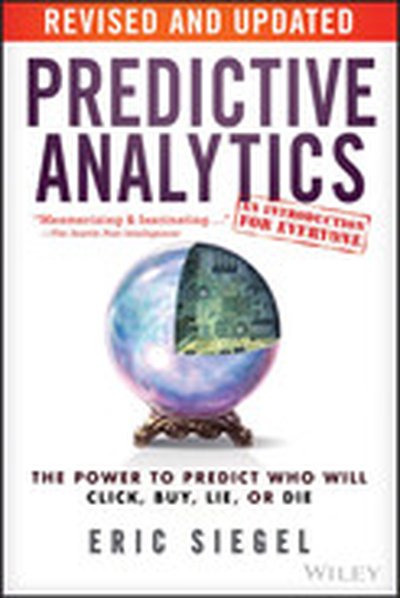
Predictive Analytics, Revised and Updated

"Mesmerizing & fascinating..." — The Seattle Post-Intelligencer "The Freakonomics of big data." —Stein Kretsinger, founding executive of Advertising.com Award-winning | Used by over 30 universities | Translated into 9 languages An introduction for everyone. In this rich, fascinating — surprisingly accessible — introduction, leading expert Eric Siegel reveals how predictive analytics works, and how it affects everyone every day. Rather than a “how to” for hands-on techies, the book serves lay readers and experts alike by covering new case studies and the latest state-of-the-art techniques. Prediction is booming. It reinvents industries and runs the world. Companies, governments, law enforcement, hospitals, and universities are seizing upon the power. These institutions predict whether you're going to click, buy, lie, or die. Why? For good reason: predicting human behavior combats risk, boosts sales, fortifies healthcare, streamlines manufacturing, conquers spam, optimizes social networks, toughens crime fighting, and wins elections. How? Prediction is powered by the world's most potent, flourishing unnatural resource: data. Accumulated in large part as the by-product of routine tasks, data is the unsalted, flavorless residue deposited en masse as organizations churn away. Surprise! This heap of refuse is a gold mine. Big data embodies an extraordinary wealth of experience from which to learn. unleashes the power of data. With this technology Predictive Analytics , the computer literally learns from data how to predict the future behavior of individuals. Perfect prediction is not possible, but putting odds on the future drives millions of decisions more effectively, determining whom to call, mail, investigate, incarcerate, set up on a date, or medicate. In this lucid, captivating introduction — now in its Revised and Updated edition — former Columbia University professor and Predictive Analytics World founder Eric Siegel reveals the power and perils of prediction: What type of mortgage risk Chase Bank predicted before the recession. Predicting which people will drop out of school, cancel a subscription, or get divorced before they even know it themselves. Why early retirement predicts a shorter life expectancy and vegetarians miss fewer flights. Five reasons why organizations predict death — including one health insurance company. How U.S. Bank and Obama for America calculated — and Hillary for America 2016 plans to calculate — the way to most strongly persuade each individual. Why the NSA wants all your data: machine learning supercomputers to fight terrorism. How IBM's Watson computer used predictive modeling to answer questions and beat the human champs on TV's Jeopardy! How companies ascertain untold, private truths — how Target figures out you're pregnant and Hewlett-Packard deduces you're about to quit your job. How judges and parole boards rely on crime-predicting computers to decide how long convicts remain in prison. 182 examples from Airbnb, the BBC, Citibank, ConEd, Facebook, Ford, Google, the IRS, LinkedIn, Match.com, MTV, Netflix, PayPal, Pfizer, Spotify, Uber, UPS, Wikipedia, and more. How does predictive analytics work? This jam-packed book satisfies by demystifying the intriguing science under the hood. For future hands-on practitioners pursuing a career in the field, it sets a strong foundation, delivers the prerequisite knowledge, and whets your appetite for more. A truly omnipresent science, predictive analytics constantly affects our daily lives. Whether

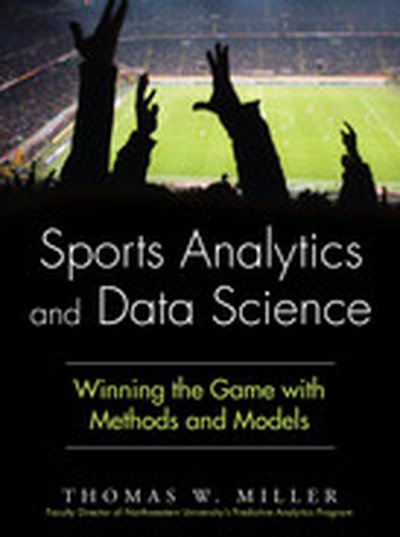
Sports Analytics and Data Science: Winning the Game with Methods and Models

TO BUILD WINNING TEAMS AND SUCCESSFUL SPORTS BUSINESSES, GUIDE YOUR DECISIONS WITH DATA This up-to-the-minute reference will help you master all three facets of sports analytics – and use it to win! Sports Analytics and Data Science is the most accessible and practical guide to sports analytics for everyone who cares about winning and everyone who is interested in data science. You’ll discover how successful sports analytics blends business and sports savvy, modern information technology, and sophisticated modeling techniques. You’ll master the discipline through realistic sports vignettes and intuitive data visualizations—not complex math. Thomas W. Miller, leader of Northwestern University’s pioneering program in predictive analytics, guides you through defining problems, identifying data, crafting and optimizing models, writing effective R and Python code, interpreting your results, and more. Every chapter focuses on one key sports analytics application. Miller guides you through assessing players and teams, predicting scores and making game-day decisions, crafting brands and marketing messages, increasing revenue and profitability, and much more. Step by step, you’ll learn how analysts transform raw data and analytical models into wins: both on the field and in any sports business. Whether you’re a team executive, coach, fan, fantasy player, or data scientist, this guide will be a powerful source of competitive advantage… in any sport, by any measure. All data sets, extensive R and Python code, and additional examples available for download at http://www.ftpress.com/miller/ This exceptionally complete and practical guide to sports data science and modeling teaches through realistic examples from sports industry economics, marketing, management, performance measurement, and competitive analysis. Thomas W. Miller, faculty director of Northwestern University’s pioneering Predictive Analytics program, shows how to use advanced measures of individual and team performance to judge the competitive position of both individual athletes and teams, and to make more accurate predictions about their future performance. Miller’s modeling techniques draw on methods from economics, accounting, finance, classical and Bayesian statistics, machine learning, simulation, and mathematical programming. Miller illustrates them through realistic case studies, with fully worked examples in both R and Python. Sports Analytics and Data Science will be an invaluable resource for everyone who wants to seriously investigate and more accurately predict player, team, and sports business performance, including students, teachers, sports analysts, sports fans, trainers, coaches, and team and sports business managers. It will also be valuable to all students of analytics and data science who want to build their skills through familiar and accessible sports applications Gain powerful, actionable insights for: Understanding sports markets Assessing players Ranking teams Predicting scores Making game day decisions Crafting marketing messages Promoting brands and products Growing revenues Managing finances Playing what-if games And much more

Mastering SciPy

Dive into 'Mastering SciPy' to unlock the full potential of the SciPy ecosystem for scientific computation and data analysis. This book thoughtfully combines mathematical concepts with Python programming to tackle real-world computational challenges. What this Book will help me do Effectively implement algorithms for data interpolation, approximation, and function optimization. Develop strategies for managing large datasets and performing linear algebra computations. Create and solve differential equations for scientific modeling and simulations. Apply advanced data analysis, statistical methods, and machine learning algorithms. Utilize computational geometry techniques for applications in engineering and data science. Author(s) The authors, None Blanco-Silva and Francisco Javier B Silva, are practitioners and educators in scientific computing and Python programming. They bring a wealth of experience in using SciPy to solve practical scientific challenges. Their clear and engaging approach makes these complex topics accessible and applicable. Who is it for? This book is tailored for professionals and researchers who use Python and are familiar with numerical methods. If you are looking to deepen your understanding of SciPy's capabilities to solve scientific and engineering problems, this book is ideal for you. Readers with a background in IPython and computational mathematics will benefit the most. Beginners in scientific Python can also learn by following the hands-on examples and clear explanations.

Business Statistics Made Easy in SAS

Learn or refresh core statistical methods for business with SAS® and approach real business analytics issues and techniques using a practical approach that avoids complex mathematics and instead employs easy-to-follow explanations.

Business Statistics Made Easy in SAS® is designed as a user-friendly, practice-oriented, introductory text to teach businesspeople, students, and others core statistical concepts and applications. It begins with absolute core principles and takes you through an overview of statistics, data and data collection, an introduction to SAS®, and basic statistics (descriptive statistics and basic associational statistics). The book also provides an overview of statistical modeling, effect size, statistical significance and power testing, basics of linear regression, introduction to comparison of means, basics of chi-square tests for categories, extrapolating statistics to business outcomes, and some topical issues in statistics, such as big data, simulation, machine learning, and data warehousing.

The book steers away from complex mathematical-based explanations, and it also avoids basing explanations on the traditional build-up of distributions, probability theory and the like, which tend to lose the practice-oriented reader. Instead, it teaches the core ideas of statistics through methods such as careful, intuitive written explanations, easy-to-follow diagrams, step-by-step technique implementation, and interesting metaphors.

With no previous SAS experience necessary, Business Statistics Made Easy in SAS® is an ideal introduction for beginners. It is suitable for introductory undergraduate classes, postgraduate courses such as MBA refresher classes, and for the business practitioner. It is compatible with SAS® University Edition.

Learning Bayesian Models with R

Dive into the world of Bayesian Machine Learning with "Learning Bayesian Models with R." This comprehensive guide introduces the foundations of probability theory and Bayesian inference, teaches you how to implement these concepts with the R programming language, and progresses to practical techniques for supervised and unsupervised problems in data science. What this Book will help me do Understand and set up an R environment for Bayesian modeling Build Bayesian models including linear regression and classification for predictive analysis Learn to apply Bayesian inference to real-world machine learning problems Work with big data and high-performance computation frameworks like Hadoop and Spark Master advanced Bayesian techniques and apply them to deep learning and AI challenges Author(s) Hari Manassery Koduvely is a proficient data scientist with extensive experience in leveraging Bayesian frameworks for real-world applications. His passion for Bayesian Machine Learning is evident in his approachable and detailed teaching methodology, aimed at making these complex topics accessible for practitioners. Who is it for? This book is best suited for data scientists, analysts, and statisticians familiar with R and basic probability theory who aim to enhance their expertise in Bayesian approaches. It's ideal for professionals tackling machine learning challenges in applied data contexts. If you're looking to incorporate advanced probabilistic methods into your projects, this guide will show you how.

Practical Graph Analytics with Apache Giraph

Practical Graph Analytics with Apache Giraph helps you build data mining and machine learning applications using the Apache Foundation’s Giraph framework for graph processing. This is the same framework as used by Facebook, Google, and other social media analytics operations to derive business value from vast amounts of interconnected data points. Graphs arise in a wealth of data scenarios and describe the connections that are naturally formed in both digital and real worlds. Examples of such connections abound in online social networks such as Facebook and Twitter, among users who rate movies from services like Netflix and Amazon Prime, and are useful even in the context of biological networks for scientific research. Whether in the context of business or science, viewing data as connected adds value by increasing the amount of information available to be drawn from that data and put to use in generating new revenue or scientific opportunities. Apache Giraph offers a simple yet flexible programming model targeted to graph algorithms and designed to scale easily to accommodate massive amounts of data. Originally developed at Yahoo!, Giraph is now a top top-level project at the Apache Foundation, and it enlists contributors from companies such as Facebook, LinkedIn, and Twitter. Practical Graph Analytics with Apache Giraph brings the power of Apache Giraph to you, showing how to harness the power of graph processing for your own data by building sophisticated graph analytics applications using the very same framework that is relied upon by some of the largest players in the industry today.

Mastering Data analysis with R

Unlock the full potential of the R programming language with 'Mastering Data Analysis with R'. This book takes you from basic data manipulation to advanced visualization and modeling techniques, providing hands-on guidance to solve real-world data science challenges. What this Book will help me do Efficiently manipulate and clean large datasets using R techniques. Build and evaluate statistical models and machine learning algorithms. Visualize data insights through compelling graphics and visualizations. Analyze social networks and graph data within R's environment. Perform geospatial data analysis with specialized R packages. Author(s) None Daróczi is a seasoned data scientist and R developer with extensive industry and academic experience. He specializes in employing R for sophisticated data analysis tasks and visualization. His approachable writing style, combined with in-depth technical expertise, ensures learners of varying levels can connect with and benefit from his materials. Who is it for? This book is ideal for data scientists, statisticians, and analysts who are familiar with basics of R and want to deepen their expertise. If you are looking to learn practical applications of advanced R capabilities for data wrangling, modeling, and visualization, this is for you. It suits professionals aiming to implement data-driven solutions and empowers them to make informed decisions with R's tools. Find practical techniques to elevate your data analysis proficiency here.

Building a Recommendation System with R

Dive into building recommendation systems with R in this comprehensive guide. You will learn about data mining, machine learning, and how R's powerful libraries and tools can be utilized to create efficient and optimized recommendation engines. By the end of this book, you will have the expertise to develop custom solutions tailored to specific data and user cases. What this Book will help me do Master the foundations of recommendation systems and their applications. Understand and implement essential data preprocessing techniques. Learn to optimize recommendation algorithms for better efficiency. Explore the use of the recommenderlab package in R for building models. Gain hands-on experience through a complete case study building a recommendation engine. Author(s) None Usuelli is a seasoned data scientist and R programming enthusiast passionate about machine learning and data analysis. They have extensive experience in developing recommendation systems for various industries, leveraging the power of R for robust solutions. None's clear teaching approach makes complex concepts accessible to learners of all levels. Who is it for? This book is ideal for developers who already possess a fundamental understanding of R and basic machine learning principles. If you aim to deepen your knowledge in creating advanced recommendation systems and practically apply these concepts, this book is the perfect resource for you. It is an excellent guide for professionals looking to specialize in predictive analytics and systems design.

Machine Learning with R - Second Edition

Machine Learning with R (Second Edition) provides a thorough introduction to machine learning techniques and their application using the R programming language. You'll gain hands-on experience implementing various algorithms and solving real-world data challenges, making it an invaluable resource for aspiring data scientists and analysts. What this Book will help me do Understand the fundamentals of machine learning and its applications in data analysis. Master the use of R for cleaning, exploring, and visualizing data to prepare it for modeling. Build and apply machine learning models for classification, prediction, and clustering tasks. Evaluate and fine-tune model performance to ensure accurate predictions. Explore advanced topics like text mining, handling social network data, and big data analytics. Author(s) Brett Lantz is a data scientist with significant experience as both a practitioner and communicator in the machine learning field. With a focus on accessibility, he aims to demystify complex concepts for readers interested in data science. His blend of hands-on methods and theoretical insight has made his work a favorite for both beginners and experienced professionals. Who is it for? Ideal for data analysts and aspiring data scientists who have intermediate programming skills and are exploring machine learning. Perfect for R users ready to expand their skill set to include predictive modeling techniques. Also fits those with some experience in machine learning but new to the R environment. Provides insightful guidance for anyone looking to apply machine learning in practical, real-world scenarios.

Predictive Analytics using Rattle and Qlik Sense

Explore the practical applications of predictive analytics with a focus on leveraging Rattle and Qlik Sense in your projects. From setting up your environment to constructing comprehensive data applications, this book provides a complete roadmap for mastering these tools and techniques. Gain valuable insights into your data and elevate your analytical skills for real-world business scenarios. What this Book will help me do Set up your analytics environment with Qlik Sense, R, and Rattle to kick-start your projects. Master visualization techniques and statistical methods to uncover meaningful insights. Develop data-driven predictive models and evaluate their performances effectively. Learn unsupervised and supervised machine learning techniques for diverse data problems. Build data storytelling and dashboards in Qlik Sense to showcase your results compellingly. Author(s) Ferran Garcia Pagans is a seasoned data analyst and author with extensive experience in predictive analytics and data visualization. His deep knowledge of modern analytics tools like Rattle and Qlik Sense enables him to guide professionals in deriving actionable insights from data. He excels in breaking down complex concepts into accessible knowledge, making his work invaluable for learners. Who is it for? This book is perfect for business analysts, data professionals, and enthusiasts looking to enhance their understanding of predictive analytics. It suits those with foundational knowledge of statistics and tools like Excel and R. If your goal is to implement real-world predictive models and data storytelling using Rattle and Qlik Sense, this book is an ideal companion.

Mastering Predictive Analytics with R

Dive into the realm of predictive analytics with this R-focused guide. Whether you're building your first model or refining complex analytics strategies, this book equips you with fundamental techniques and in-depth understanding of predictive modeling using R. What this Book will help me do Master the end-to-end predictive modeling process. Classify and select suitable predictive models for specific use cases. Understand the mechanics and assumptions of various predictive models. Evaluate predictive model performance with appropriate metrics. Enhance your R programming skills for analytical tasks. Author(s) The authors of this book combine strong technical expertise in data science and predictive analytics with extensive hands-on experience in applying them to real-world challenges. They excel at distilling complex topics into approachable, actionable steps for readers at varying levels of familiarity with R and data analysis. Their commitment to empowering learners defines their work. Who is it for? This book is perfect for budding data scientists and quantitative analysts with basic R knowledge who aspire to master predictive analytics. Even experienced professionals will find valuable model-specific insights. If you're familiar with basic statistics and eager to bridge the gap to robust machine learning applications, this book is for you.

The Last Mile of Analytics: Making the Leap from Platforms to Tools

Here's the net takeaway: Businesses want insights from data they can translate into meaningful actions and real results. Software vendors are beginning to deliver a new generation of advanced analytics packages that address business issues directly. In this O'Reilly report, Mike Barlow reveals how this new user-friendly software is helping businesses go beyond data analysis and straight to decision-making—without requiring data science expertise or truckloads of cash. How has advanced analytics progressed from lab project to commercial product so quickly? Through interviews with data analysts, you'll understand the role that machine learning plays in specialized analytics packages, and how this software alone can make decisions based on what's likely to happen next. When you have these capabilities, you’ve reached "the last mile of analytics."

Marketing Data Science: Modeling Techniques in Predictive Analytics with R and Python

Now a leader of Northwestern University's prestigious analytics program presents a fully-integrated treatment of both the business and academic elements of marketing applications in predictive analytics. Writing for both managers and students, Thomas W. Miller explains essential concepts, principles, and theory in the context of real-world applications. , Building on Miller's pioneering program, thoroughly addresses segmentation, target marketing, brand and product positioning, new product development, choice modeling, recommender systems, pricing research, retail site selection, demand estimation, sales forecasting, customer retention, and lifetime value analysis. Marketing Data Science Starting where Miller's widely-praised Modeling Techniques in Predictive Analytics left off, he integrates crucial information and insights that were previously segregated in texts on web analytics, network science, information technology, and programming. Coverage includes: The role of analytics in delivering effective messages on the web Understanding the web by understanding its hidden structures Being recognized on the web – and watching your own competitors Visualizing networks and understanding communities within them Measuring sentiment and making recommendations Leveraging key data science methods: databases/data preparation, classical/Bayesian statistics, regression/classification, machine learning, and text analytics Six complete case studies address exceptionally relevant issues such as: separating legitimate email from spam; identifying legally-relevant information for lawsuit discovery; gleaning insights from anonymous web surfing data, and more. This text's extensive set of web and network problems draw on rich public-domain data sources; many are accompanied by solutions in Python and/or R. will be an invaluable resource for all students, faculty, and professional marketers who want to use business analytics to improve marketing performance. Marketing Data Science

Data Science from Scratch

Data science libraries, frameworks, modules, and toolkits are great for doing data science, but they’re also a good way to dive into the discipline without actually understanding data science. In this book, you’ll learn how many of the most fundamental data science tools and algorithms work by implementing them from scratch. If you have an aptitude for mathematics and some programming skills, author Joel Grus will help you get comfortable with the math and statistics at the core of data science, and with hacking skills you need to get started as a data scientist. Today’s messy glut of data holds answers to questions no one’s even thought to ask. This book provides you with the know-how to dig those answers out. Get a crash course in Python Learn the basics of linear algebra, statistics, and probability—and understand how and when they're used in data science Collect, explore, clean, munge, and manipulate data Dive into the fundamentals of machine learning Implement models such as k-nearest Neighbors, Naive Bayes, linear and logistic regression, decision trees, neural networks, and clustering Explore recommender systems, natural language processing, network analysis, MapReduce, and databases

Data Science For Dummies

Discover how data science can help you gain in-depth insight into your business - the easy way! Jobs in data science abound, but few people have the data science skills needed to fill these increasingly important roles in organizations. Data Science For Dummies is the perfect starting point for IT professionals and students interested in making sense of their organization's massive data sets and applying their findings to real-world business scenarios. From uncovering rich data sources to managing large amounts of data within hardware and software limitations, ensuring consistency in reporting, merging various data sources, and beyond, you'll develop the know-how you need to effectively interpret data and tell a story that can be understood by anyone in your organization. Provides a background in data science fundamentals before moving on to working with relational databases and unstructured data and preparing your data for analysis Details different data visualization techniques that can be used to showcase and summarize your data Explains both supervised and unsupervised machine learning, including regression, model validation, and clustering techniques Includes coverage of big data processing tools like MapReduce, Hadoop, Dremel, Storm, and Spark It's a big, big data world out there - let Data Science For Dummies help you harness its power and gain a competitive edge for your organization.

Data Scientists at Work

Data Scientists at Work is a collection of interviews with sixteen of the world's most influential and innovative data scientists from across the spectrum of this hot new profession. "Data scientist is the sexiest job in the 21st century," according to the Harvard Business Review. By 2018, the United States will experience a shortage of 190,000 skilled data scientists, according to a McKinsey report. Through incisive in-depth interviews, this book mines the what, how, and why of the practice of data science from the stories, ideas, shop talk, and forecasts of its preeminent practitioners across diverse industries: social network (Yann LeCun, Facebook); professional network (Daniel Tunkelang, LinkedIn); venture capital (Roger Ehrenberg, IA Ventures); enterprise cloud computing and neuroscience (Eric Jonas, formerly Salesforce.com); newspaper and media (Chris Wiggins, The New York Times); streaming television (Caitlin Smallwood, Netflix); music forecast (Victor Hu, Next Big Sound); strategic intelligence (Amy Heineike, Quid); environmental big data (Andre´ Karpis?ts?enkoEach of these data scientists shares how he or she tailors the torrent-taming techniques of big data, data visualization, search, and statistics to specific jobs by dint of ingenuity, imagination, patience, and passion. , Planet OS); geospatial marketing intelligence (Jonathan Lenaghan, PlaceIQ); advertising (Claudia Perlich, Dstillery); fashion e-commerce (Anna Smith, Rent the Runway); specialty retail (Erin Shellman, Nordstrom); email marketing (John Foreman, MailChimp); predictive sales intelligence (Kira Radinsky, SalesPredict); and humanitarian nonprofit (Jake Porway, DataKind). The book features a stimulating foreword by Google's Director of Research, Peter Norvig. Data Scientists at Work parts the curtain on the interviewees’ earliest data projects, how they became data scientists, their discoveries and surprises in working with data, their thoughts on the past, present, and future of the profession, their experiences of team collaboration within their organizations, and the insights they have gained as they get their hands dirty refining mountains of raw data into objects of commercial, scientific, and educational value for their organizations and clients.

Modern Analytics Methodologies: Driving Business Value with Analytics

Create a complete roadmap for capitalizing on analytics to grow topline revenue and build shareholder value in your unique organization! Modern Analytics Methodologies goes far beyond the classic Analytics Maturity Model to help you overcome the gaps between your current analytics capabilities and where you need to go. Pioneering analytics experts Michele Chambers and Thomas Dinsmore help you implement analytics that supports your strategy, aligns with your culture, and serves your customers and stakeholders. Drawing on work with dozens of leading enterprises, Michele Chambers and Thomas Dinsmore describe high-value applications from many industries, and help you systematically identify and deliver on your company's best opportunities. Writing for both professionals and students, they show how to: Leverage the convergence of macro trends ranging from "flattening" and "green" to Big Data and machine learning Go beyond the Analytics Maturity Model: power your unique business strategy with an equally focused analytics strategy Link key business objectives with core characteristics of your organization, value chain, and stakeholders Take advantage of game changing opportunities before competitors do Effectively integrate the managerial and operational aspects of analytics Measure performance with dashboards, scorecards, visualization, simulation, and more Prioritize and score prospective analytics projects Identify "Quick Wins" you can implement while you're planning for the long-term Build an effective Analytic Program Office to make your roadmap persistent Update and revise your roadmap for new needs and technologies Modern Analytics Methodologies will be an indispensable resource for any executive or professional concerned with analytics, including Chief Analytics Officers; Chief Data Officers; Chief Scientists; Chief Marketing Officers; Chief Risk Officers; Chief Strategy Officers; VPs of Analytics or Big Data; data scientists; business strategists; and line-of-business executives.

Nonlinear Parameter Optimization Using R Tools

Nonlinear Parameter Optimization Using R John C. Nash, Telfer School of Management, University of Ottawa, Canada A systematic and comprehensive treatment of optimization software using R In recent decades, optimization techniques have been streamlined by computational and artificial intelligence methods to analyze more variables, especially under non-linear, multivariable conditions, more quickly than ever before. Optimization is an important tool for decision science and for the analysis of physical systems used in engineering. Nonlinear Parameter Optimization with R explores the principal tools available in R for function minimization, optimization, and nonlinear parameter determination and features numerous examples throughout. Nonlinear Parameter Optimization with R: Provides a comprehensive treatment of optimization techniques Examines optimization problems that arise in statistics and how to solve them using R Enables researchers and practitioners to solve parameter determination problems Presents traditional methods as well as recent developments in R Is supported by an accompanying website featuring R code, examples and datasets Researchers and practitioners who have to solve parameter determination problems who are users of R but are novices in the field optimization or function minimization will benefit from this book. It will also be useful for scientists building and estimating nonlinear models in various fields such as hydrology, sports forecasting, ecology, chemical engineering, pharmaco-kinetics, agriculture, economics and statistics.

A Practical Guide to Data Mining for Business and Industry

Data mining is well on its way to becoming a recognized discipline in the overlapping areas of IT, statistics, machine learning, and AI. Practical Data Mining for Business presents a user-friendly approach to data mining methods, covering the typical uses to which it is applied. The methodology is complemented by case studies to create a versatile reference book, allowing readers to look for specific methods as well as for specific applications. The book is formatted to allow statisticians, computer scientists, and economists to cross-reference from a particular application or method to sectors of interest.

Wavelet Neural Networks: With Applications in Financial Engineering, Chaos, and Classification

A step-by-step introduction to modeling, training, and forecasting using wavelet networks Wavelet Neural Networks: With Applications in Financial Engineering, Chaos, and Classification presents the statistical model identification framework that is needed to successfully apply wavelet networks as well as extensive comparisons of alternate methods. Providing a concise and rigorous treatment for constructing optimal wavelet networks, the book links mathematical aspects of wavelet network construction to statistical modeling and forecasting applications in areas such as finance, chaos, and classification. The authors ensure that readers obtain a complete understanding of model identification by providing in-depth coverage of both model selection and variable significance testing. Featuring an accessible approach with introductory coverage of the basic principles of wavelet analysis, Wavelet Neural Networks: With Applications in Financial Engineering, Chaos, and Classification also includes: Methods that can be easily implemented or adapted by researchers, academics, and professionals in identification and modeling for complex nonlinear systems and artificial intelligence Multiple examples and thoroughly explained procedures with numerous applications ranging from financial modeling and financial engineering, time series prediction and construction of confidence and prediction intervals, and classification and chaotic time series prediction An extensive introduction to neural networks that begins with regression models and builds to more complex frameworks Coverage of both the variable selection algorithm and the model selection algorithm for wavelet networks in addition to methods for constructing confidence and prediction intervals Ideal as a textbook for MBA and graduate-level courses in applied neural network modeling, artificial intelligence, advanced data analysis, time series, and forecasting in financial engineering, the book is also useful as a supplement for courses in informatics, identification and modeling for complex nonlinear systems, and computational finance. In addition, the book serves as a valuable reference for researchers and practitioners in the fields of mathematical modeling, engineering, artificial intelligence, decision science, neural networks, and finance and economics.

Heuristics in Analytics: A Practical Perspective of What Influences Our Analytical World

A practical guide to deploying mathematical and statistical models when performing analytics The Heuristics in Analytics describes analytic processes and how they fit into the heuristic world around us. In spite of the strong heuristic characteristics of the analytical processes, this important book emphasizes the need to have the proper tools to engage analytics. It describes the analytical process from the exploratory analysis in respect to business scenarios and corporate environments, to model developments; and from statistics, probability, stochastic, mathematics, and artificial intelligence; to the deployments and possible outcomes. Describes the overall analytical process in terms of modeling, deployment, and application Offers a new perspective of the randomness in analytical modeling Presents distinct analytical approaches such as statistical, probabilistic, stochastic, and mathematical Includes case studies on the entire analytical process using telecom companies based in Brazil, Ireland, Turkey, United Sates, and Canada Randomness holds a strong impact in the everyday world. It makes sense, then, that analytics are put in place to understand business occurrences, marketplace scenarios, and consumer behavior. The Heuristics in Analytics uniquely shows how random events on a daily basis might completely change expectations, predictions, and behaviors, particularly in corporate environments, and how companies can build a proper analytical strategy to diminish the effect of randomness in business actions.

Algorithmic and Artificial Intelligence Methods for Protein Bioinformatics

An in-depth look at the latest research, methods, and applications in the field of protein bioinformatics This book presents the latest developments in protein bioinformatics, introducing for the first time cutting-edge research results alongside novel algorithmic and AI methods for the analysis of protein data. In one complete, self-contained volume, Algorithmic and Artificial Intelligence Methods for Protein Bioinformatics addresses key challenges facing both computer scientists and biologists, arming readers with tools and techniques for analyzing and interpreting protein data and solving a variety of biological problems. Featuring a collection of authoritative articles by leaders in the field, this work focuses on the analysis of protein sequences, structures, and interaction networks using both traditional algorithms and AI methods. It also examines, in great detail, data preparation, simulation, experiments, evaluation methods, and applications. Algorithmic and Artificial Intelligence Methods for Protein Bioinformatics: Highlights protein analysis applications such as protein-related drug activity comparison Incorporates salient case studies illustrating how to apply the methods outlined in the book Tackles the complex relationship between proteins from a systems biology point of view Relates the topic to other emerging technologies such as data mining and visualization Includes many tables and illustrations demonstrating concepts and performance figures Algorithmic and Artificial Intelligence Methods for Protein Bioinformatics is an essential reference for bioinformatics specialists in research and industry, and for anyone wishing to better understand the rich field of protein bioinformatics.