talk-data.com talk-data.com

Event

O'Reilly Data Science Books

2013-08-09 – 2026-02-25 Oreilly Visit website ↗

Activities tracked

794

Collection of O'Reilly books on Data Science.

Filtering by: data-science-tasks ×

Sessions & talks

Showing 351–375 of 794 · Newest first

Search within this event →
Probability and Statistics with Reliability, Queuing, and Computer Science Applications, 2nd Edition

An accessible introduction to probability, stochastic processes, and statistics for computer science and engineering applications This updated and revised edition of the popular classic relates fundamental concepts in probability and statistics to the computer sciences and engineering. The author uses Markov chains and other statistical tools to illustrate processes in reliability of computer systems and networks, fault tolerance, and performance. This edition features an entirely new section on stochastic Petri nets?as well as new sections on system availability modeling, wireless system modeling, numerical solution techniques for Markov chains, and software reliability modeling, among other subjects. Extensive revisions take new developments in solution techniques and applications into account and bring this work totally up to date. It includes more than 200 worked examples and self-study exercises for each section. Probability and Statistics with Reliability, Queuing and Computer Science Applications, Second Edition offers a comprehensive introduction to probability, stochastic processes, and statistics for students of computer science, electrical and computer engineering, and applied mathematics. Its wealth of practical examples and up-to-date information makes it an excellent resource for practitioners as well. An Instructor's Manual presenting detailed solutions to all the problems in the book is available from the Wiley editorial department.
Theory and Methods of Statistics

Theory and Methods of Statistics covers essential topics for advanced graduate students and professional research statisticians. This comprehensive resource covers many important areas in one manageable volume, including core subjects such as probability theory, mathematical statistics, and linear models, and various special topics, including nonparametrics, curve estimation, multivariate analysis, time series, and resampling. The book presents subjects such as "maximum likelihood and sufficiency," and is written with an intuitive, heuristic approach to build reader comprehension. It also includes many probability inequalities that are not only useful in the context of this text, but also as a resource for investigating convergence of statistical procedures. Codifies foundational information in many core areas of statistics into a comprehensive and definitive resource Serves as an excellent text for select master’s and PhD programs, as well as a professional reference Integrates numerous examples to illustrate advanced concepts Includes many probability inequalities useful for investigating convergence of statistical procedures

Applied Regression and Modeling

The book is divided into three parts – (1) prerequisite to regression analysis followed by a discussion on simple regression, (2) multiple regression analysis with applications, and (3) regression and modeling including the second order models, nonlinear regression, and interaction models in regressions. All these sections provide examples with complete computer analysis and instructions commonly used in modeling and analyzing these problems. The book deals with detailed analysis and interpretation of computer results. This will help readers to appreciate the power of computer in applying regression models. The readers will find that the understanding of computer results is critical to implementing regression and modeling in real world situation. The book is written for juniors, seniors and graduate students in business, MBAs, professional MBAs, and working people in business and industry. Managers, practitioners, professionals, quality professionals, quality engineers, and anyone involved in data analysis, business analytics, and quality and six sigma will find the book to be a valuable resource.

Understanding and Applying Basic Statistical Methods Using R

Features a straightforward and concise resource for introductory statistical concepts, methods, and techniques using R Understanding and Applying Basic Statistical Methods Using R uniquely bridges the gap between advances in the statistical literature and methods routinely used by non-statisticians. Providing a conceptual basis for understanding the relative merits and applications of these methods, the book features modern insights and advances relevant to basic techniques in terms of dealing with non-normality, outliers, heteroscedasticity (unequal variances), and curvature. Featuring a guide to R, the book uses R programming to explore introductory statistical concepts and standard methods for dealing with known problems associated with classic techniques. Thoroughly class-room tested, the book includes sections that focus on either R programming or computational details to help the reader become acquainted with basic concepts and principles essential in terms of understanding and applying the many methods currently available. Covering relevant material from a wide range of disciplines, Understanding and Applying Basic Statistical Methods Using R also includes: Numerous illustrations and exercises that use data to demonstrate the practical importance of multiple perspectives Discussions on common mistakes such as eliminating outliers and applying standard methods based on means using the remaining data Detailed coverage on R programming with descriptions on how to apply both classic and more modern methods using R A companion website with the data and solutions to all of the exercises Understanding and Applying Basic Statistical Methods Using R is an ideal textbook for an undergraduate and graduate-level statistics courses in the science and/or social science departments. The book can also serve as a reference for professional statisticians and other practitioners looking to better understand modern statistical methods as well as R programming.

Network Reliability

In Engineering theory and applications, we think and operate in terms of logics and models with some acceptable and reasonable assumptions. The present text is aimed at providing modelling and analysis techniques for the evaluation of reliability measures (2-terminal, all-terminal, k-terminal reliability) for systems whose structure can be described in the form of a probabilistic graph. Among the several approaches of network reliability evaluation, the multiple-variable-inversion sum-of-disjoint product approach finds a well-deserved niche as it provides the reliability or unreliability expression in a most efficient and compact manner. However, it does require an efficiently enumerated minimal inputs (minimal path, spanning tree, minimal k-trees, minimal cut, minimal global-cut, minimal k-cut) depending on the desired reliability. The present book covers these two aspects in detail through the descriptions of several algorithms devised by the ‘reliability fraternity’ and explained through solved examples to obtain and evaluate 2-terminal, k-terminal and all-terminal network reliability/unreliability measures and could be its USP. The accompanying web-based supplementary information containing modifiable Matlab® source code for the algorithms is another feature of this book. A very concerted effort has been made to keep the book ideally suitable for first course or even for a novice stepping into the area of network reliability. The mathematical treatment is kept as minimal as possible with an assumption on the readers’ side that they have basic knowledge in graph theory, probabilities laws, Boolean laws and set theory.

Threat Forecasting

Drawing upon years of practical experience and using numerous examples and illustrative case studies, Threat Forecasting: Leveraging Big Data for Predictive Analysis discusses important topics, including the danger of using historic data as the basis for predicting future breaches, how to use security intelligence as a tool to develop threat forecasting techniques, and how to use threat data visualization techniques and threat simulation tools. Readers will gain valuable security insights into unstructured big data, along with tactics on how to use the data to their advantage to reduce risk. Presents case studies and actual data to demonstrate threat data visualization techniques and threat simulation tools Explores the usage of kill chain modelling to inform actionable security intelligence Demonstrates a methodology that can be used to create a full threat forecast analysis for enterprise networks of any size

Regression Analysis Microsoft® Excel®

This is today’s most complete guide to regression analysis with Microsoft® Excel for any business analytics or research task. Drawing on 25 years of advanced statistical experience, Microsoft MVP Conrad Carlberg shows how to use Excel’s regression-related worksheet functions to perform a wide spectrum of practical analyses. Carlberg clearly explains all the theory you’ll need to avoid mistakes, understand what your regressions are really doing, and evaluate analyses performed by others. From simple correlations and t-tests through multiple analysis of covariance, Carlberg offers hands-on, step-by-step walkthroughs using meaningful examples. He discusses the consequences of using each option and argument, points out idiosyncrasies and controversies associated with Excel’s regression functions, and shows how to use them reliably in fields ranging from medical research to financial analysis to operations. You don’t need expensive software or a doctorate in statistics to work with regression analyses. Microsoft Excel has all the tools you need—and this book has all the knowledge! Understand what regression analysis can and can’t do, and why Master regression-based functions built into all recent versions of Excel Work with correlation and simple regression Make the most of Excel’s improved LINEST() function Plan and perform multiple regression Distinguish the assumptions that matter from the ones that don’t Extend your analysis options by using regression instead of traditional analysis of variance Add covariates to your analysis to reduce bias and increase statistical power

A Course in Statistics with R

Integrates the theory and applications of statistics using R A Course in Statistics with R has been written to bridge the gap between theory and applications and explain how mathematical expressions are converted into R programs. The book has been primarily designed as a useful companion for a Masters student during each semester of the course, but will also help applied statisticians in revisiting the underpinnings of the subject. With this dual goal in mind, the book begins with R basics and quickly covers visualization and exploratory analysis. Probability and statistical inference, inclusive of classical, nonparametric, and Bayesian schools, is developed with definitions, motivations, mathematical expression and R programs in a way which will help the reader to understand the mathematical development as well as R implementation. Linear regression models, experimental designs, multivariate analysis, and categorical data analysis are treated in a way which makes effective use of visualization techniques and the related statistical techniques underlying them through practical applications, and hence helps the reader to achieve a clear understanding of the associated statistical models. Key features: Integrates R basics with statistical concepts Provides graphical presentations inclusive of mathematical expressions Aids understanding of limit theorems of probability with and without the simulation approach Presents detailed algorithmic development of statistical models from scratch Includes practical applications with over 50 data sets

Regression for Economics, Second Edition

Regression analysis can be used to establish causal relationships between factors and the response variable. However, in order to be able to do so, economic theory must be used to provide the causal relationship and then regression analysis is applied to verify the validity of the theory. Regression analysis is the most commonly used analytical tool and can be understood without complex mathematics.  This book simplifies and demystifies regression analysis. All the examples are from economics and in almost all the cases, real data is used to show the application of the method. By limiting the use of mathematical symbols, the author enables a logical reader to learn regression, without shortchanging the subject.  The book is targeted to all business students and executives who need to understand the concept of regression for practical and professional purposes.

Good Charts

Dataviz—the new language of business A good visualization can communicate the nature and potential impact of information and ideas more powerfully than any other form of communication. For a long time “dataviz” was left to specialists—data scientists and professional designers. No longer. A new generation of tools and massive amounts of available data make it easy for anyone to create visualizations that communicate ideas far more effectively than generic spreadsheet charts ever could. What’s more, building good charts is quickly becoming a need-to-have skill for managers. If you’re not doing it, other managers are, and they’re getting noticed for it and getting credit for contributing to your company’s success. In Good Charts, dataviz maven Scott Berinato provides an essential guide to how visualization works and how to use this new language to impress and persuade. Dataviz today is where spreadsheets and word processors were in the early 1980s—on the cusp of changing how we work. Berinato lays out a system for thinking visually and building better charts through a process of talking, sketching, and prototyping. This book is much more than a set of static rules for making visualizations. It taps into both well-established and cutting-edge research in visual perception and neuroscience, as well as the emerging field of visualization science, to explore why good charts (and bad ones) create “feelings behind our eyes.” Along the way, Berinato also includes many engaging vignettes of dataviz pros, illustrating the ideas in practice. Good Charts will help you turn plain, uninspiring charts that merely present information into smart, effective visualizations that powerfully convey ideas.

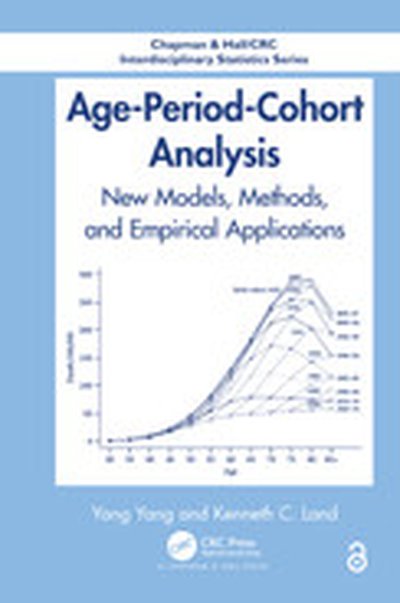
Age-Period-Cohort Analysis

This book explores the ways in which statistical models, methods, and research designs can be used to open new possibilities for APC analysis. Within a single, consistent HAPC-GLMM statistical modeling framework, the authors synthesize APC models and methods for three research designs: age-by-time period tables of population rates or proportions, repeated cross-section sample surveys, and accelerated longitudinal panel studies. They show how the empirical application of the models to various problems leads to many fascinating findings on how outcome variables develop along the age, period, and cohort dimensions.

Computational Intelligent Data Analysis for Sustainable Development

Going beyond performing simple analyses, researchers involved in the highly dynamic field of computational intelligent data analysis design algorithms that solve increasingly complex data problems in changing environments, including economic, environmental, and social data. This volume presents novel methodologies for automatically processing these types of data to support rational decision making for sustainable development. Through numerous case studies and applications, it illustrates important data analysis methods, including mathematical optimization, machine learning, signal processing, and temporal and spatial analysis, for quantifying and describing sustainable development problems.

Constrained Principal Component Analysis and Related Techniques

This book shows how constrained principal component analysis (CPCA) offers a unified framework for regression techniques and PCA. Keeping the use of complicated iterative methods to a minimum, the book includes implementation details and many real application examples. It also offers material for methodologically oriented readers interested in developing statistical techniques of their own. MATLAB programs as well as data to create the book's examples are available on the author's website.

Contrast Data Mining

This work collects recent results from this specialized area of data mining that have previously been scattered in the literature, making them more accessible to researchers and developers in data mining and other fields. The book not only presents concepts and techniques for contrast data mining, but also explores the use of contrast mining to solve challenging problems in various scientific, medical, and business domains. It examines how contrast mining is used in discriminative gene transfer and microarray analysis, computational toxicology, spatial and image data classification, network security, and many more applications.

Incomplete Categorical Data Design

A self-contained, systematic introduction, this book shows you how to draw valid statistical inferences from survey data with sensitive characteristics. It guides you in applying the non-randomized response approach in surveys and new non-randomized response designs. The techniques covered integrate the strengths of existing approaches, including randomized response models, incomplete categorical data design, the EM algorithm, the bootstrap method, and the data augmentation algorithm. All R codes for the examples are available online.

Statistical Methods for QTL Mapping

While numerous advanced statistical approaches have recently been developed for quantitative trait loci (QTL) mapping, the methods are scattered throughout the literature. This book brings together many recent statistical techniques that address the data complexity of QTL mapping. It emphasizes the modern statistical methodology for QTL mapping as well as the statistical issues that arise during this process. The book gives the necessary biological background for statisticians without training in genetics and, likewise, covers statistical thinking and principles for geneticists.

Stochastic Financial Models

Developed from the esteemed author's advanced undergraduate and graduate courses at the University of Cambridge, this text provides a hands-on, sound introduction to mathematical finance. Assuming no prior knowledge of stochastic calculus or measure-theoretic probability, the author includes the relevant mathematical background as well as many exercises with solutions. He first presents the classical topics of utility and the mean-variance approach to portfolio choice. Focusing on derivative pricing, the text then covers the binomial model, the general discrete-time model, Brownian motion, the Black-Scholes model, and various interest-rate models.

Transportation Statistics and Microsimulation

By discussing statistical concepts in the context of transportation planning and operations, this text provides the necessary background for making informed transportation-related decisions. It explains the why behind standard methods and uses real-world transportation examples and problems to illustrate key concepts. The book covers the statistical techniques most frequently employed by transportation and pavement professionals. To familiarize readers with the underlying theory and equations, it contains problems that can be solved using SAS's JMP package, which enables users to interactively explore and visualize data.

Gnuplot in Action, Second Edition

Gnuplot in Action, Second Edition is a major revision of this popular and authoritative guide for developers, engineers, and scientists who want to learn and use gnuplot effectively. Fully updated for gnuplot version 5, the book includes four pages of color illustrations and four bonus appendixes available in the eBook. About the Technology Gnuplot is an open-source graphics program that helps you analyze, interpret, and present numerical data. Available for Unix, Mac, and Windows, it is well-maintained, mature, and totally free. About the Book Gnuplot in Action, Second Edition is a major revision of this authoritative guide for developers, engineers, and scientists. The book starts with a tutorial introduction, followed by a systematic overview of gnuplot's core features and full coverage of gnuplot's advanced capabilities. Experienced readers will appreciate the discussion of gnuplot 5?s features, including new plot types, improved text and color handling, and support for interactive, web-based display formats. The book concludes with chapters on graphical effects and general techniques for understanding data with graphs. It includes four pages of color illustrations. 3D graphics, false-color plots, heatmaps, and multivariate visualizations are covered in chapter-length appendixes available in the eBook. What's Inside Creating different types of graphs in detail Animations, scripting, batch operations Extensive discussion of terminals Updated to cover gnuplot version 5 About the Reader No prior experience with gnuplot is required. This book concentrates on practical applications of gnuplot relevant to users of all levels. About the Author Philipp K. Janert, Ph.D, is a programmer and scientist. He is the author of several books on data analysis and applied math and has been a gnuplot power user and developer for over 20 years. Quotes The highly anticipated, updated version of my go-to-for-everything book on gnuplot. - Ryan Balfanz, Shift Medical, Inc. The essential guide for newcomers and the definitive handbook for advanced users. - Zoltán Vörös, University of Innsbruck Learn how to use gnuplot to convert meaningful data into attention-grabbing visualizations that communicate your message quickly and accurately. - David Kerns, Rincon Research Corporation An accessible guide to gnuplot and best practices of everyday data visualization. - Wesley R. Elsberry,PhD, RealPage, Inc.

The Conversion Code

"If you need more traffic, leads and sales, you need The Conversion Code." "We've helped 11,000+ businesses generate more than 31 million leads and consider The Conversion Code a must read." Neil Patel co-founder Crazy Egg "We'd been closing 55% of our qualified appointments. We increased that to 76% as a direct result of implementing The Conversion Code." Oli Gardner co-founder Unbounce "The strategies in The Conversion Code are highly effective and immediately helped our entire sales team. The book explains the science behind selling in a way that is simple to remember and easy to implement." Dan Stewart CEO Happy Grasshopper Steve Pacinelli CMO BombBomb Capture and close more Internet leads with a new sales script and powerful marketing templates The Conversion Code provides a step-by-step blueprint for increasing sales in the modern, Internet-driven era. Today's consumers are savvy, and they have more options than ever before. Capturing their attention and turning it into revenue requires a whole new approach to marketing and sales. This book provides clear guidance toward conquering the new paradigm shift towards online lead generation and inside sales. You'll learn how to capture those invaluable Internet leads, convert them into appointments, and close more deals. Regardless of product or industry, this proven process will increase both the quantity and quality of leads and put your sales figures on the rise. Traditional sales and marketing advice is becoming less and less relevant as today's consumers are spending much more time online, and salespeople are calling, emailing, and texting leads instead of meeting them in person. This book shows you where to find them, how to engage them, and how to position your company as the ideal solution to their needs. The business world is moving away from "belly-to-belly" interactions and traditional advertising. Companies are forced to engage with prospective customers first online—the vast majority through social media, mobile apps, blogs, and live chat—before ever meeting in person. Yesterday's marketing advice no longer applies to today's tech savvy, mobile-first, social media-addicted consumer, and the new sales environment demands that you meet consumers where they are and close them, quickly. The Conversion Code gives you an actionable blueprint for capturing Internet leads and turning them into customers. Engage with consumers more effectively online Leverage the strengths of social media, apps, and blogs to capture more leads for less money Convert more Internet leads into real-world prospects and sales appointments Make connections on every call and learn the exact words that close more sales

Babylon.js Essentials

Embark on a journey to create stunning web-based 3D applications and games using Babylon.js, a powerful JavaScript framework. This essentials book takes you from the ground up, teaching the theory and practical applications of 3D development, with a particular focus on ease and accessibility. By the end of this guide, you'll possess the skills to design and implement dynamic 3D experiences. What this Book will help me do Gain a fundamental understanding of TypeScript and its advantages in large-scale projects like 3D engines. Master the foundational principles of 3D development with Babylon.js, emphasized through hands-on practice and clear theory. Learn to apply materials in Babylon.js, enabling you to alter and enrich the visual appeal of 3D objects. Incorporate collision physics and gameplay dynamics by understanding essential concepts like impostors in 3D simulations. Utilize advanced Babylon.js features, such as 3D audio spatialization and rendering post-process effects, to create immersive experiences. Author(s) None Moreau-Mathis, a software developer with significant experience, has worked on developing cutting-edge applications at companies like Microsoft. Their expertise in 3D development frameworks, particularly Babylon.js, has enabled them to break down complex technical concepts into approachable lessons. Moreau-Mathis combines a passion for sharing knowledge with years of hands-on experience to provide readers with practical and inspirational advice. Who is it for? This book is perfect for developers familiar with HTML5 and seeking to begin 3D Web application and game development using Babylon.js. Readers should have basic programming knowledge, such as in Object-Oriented Programming, and familiarity with web development concepts to grasp framework architecture effectively. Whether you are enhancing your web development toolkit or starting out with 3D, this book will help you achieve your aims.

Regression Analysis with Python

Dive into the world of regression analysis guided by Python in this comprehensive book. From simple linear regression to complex models, you'll gain a deep understanding of how to analyze data and predict outcomes. By the end of this book, you will be equipped with the skills to tidy data, build models, and apply regression techniques to real-world problems. What this Book will help me do Understand and format datasets to prepare them for regression analysis efficiently. Build and implement various regression models, such as linear and logistic regression, to solve data science problems. Develop techniques to combat overfitting and ensure predictive accuracy. Learn to scale and adapt regression models to large datasets and apply incremental learning. Apply the skills gained to make informed business decisions using predictive insights from regression models. Author(s) Luca Massaron and Alberto Boschetti are seasoned data professionals with years of expertise in data science, regression analysis, and Python programming. They are passionate about teaching and have crafted this book to demystify regression for learners interested in predictive analytics. Their approachable style ensures concepts are accessible yet comprehensive. Who is it for? This book is ideal for Python developers and data scientists who have a foundational knowledge of math and statistics. Whether you're looking to delve deeper into predictive modeling or efficiently analyze datasets, this book provides step-by-step guidance. If you've dabbled in data science and wish to expand your skillset to include regression analysis, this book is for you!

Data Wrangling with Python

How do you take your data analysis skills beyond Excel to the next level? By learning just enough Python to get stuff done. This hands-on guide shows non-programmers like you how to process information that’s initially too messy or difficult to access. You don't need to know a thing about the Python programming language to get started. Through various step-by-step exercises, you’ll learn how to acquire, clean, analyze, and present data efficiently. You’ll also discover how to automate your data process, schedule file- editing and clean-up tasks, process larger datasets, and create compelling stories with data you obtain. Quickly learn basic Python syntax, data types, and language concepts Work with both machine-readable and human-consumable data Scrape websites and APIs to find a bounty of useful information Clean and format data to eliminate duplicates and errors in your datasets Learn when to standardize data and when to test and script data cleanup Explore and analyze your datasets with new Python libraries and techniques Use Python solutions to automate your entire data-wrangling process

Web Application Development with R Using Shiny Second Edition - Second Edition

This book dives into the practical application of R's power combined with Shiny's simplicity to build web-based analytics and interactive data summary tools. By following this step-by-step guide, you'll go from the basics of building with R and Shiny to creating sophisticated custom dashboards and interactive web apps. What this Book will help me do Create interactive web apps and dashboards using Shiny with impressive user interfaces. Integrate Shiny applications into custom HTML and CSS-based web pages for enhanced flexibility. Produce user-friendly Shiny applications extended with JavaScript and jQuery for added functionality. Develop web solutions that include interactive graphics, maps, and data analysis summaries. Deliver and deploy web apps securely using cloud solutions or self-hosted servers. Author(s) Chris Beeley, an experienced R developer and teacher, has a robust background in statistical programming and data analysis. Chris is passionate about sharing knowledge through practical examples and hands-on exercises. As the author of this book, Chris ensures that readers receive a clear and approachable entry into web application development using Shiny. Who is it for? This book is ideal for data enthusiasts, analysts, and developers looking to transition their analytic skills to the web. It caters to readers with basic programming knowledge but does not require prior experience with R or Shiny. It is perfect for professionals and learners wanting to create interactive analytics tools, dashboards, or data-driven web applications.

Excel Dashboards and Reports for Dummies, 3rd Edition

Make the most of your data using the power of Excel When you think of data, do you think of endless rows and columns in spreadsheets? Excel Dashboards and Reports For Dummies, 3 shows you how to make the most of your data—and puts an end to mind-numbing spreadsheets by exploring new ways to conceptualize and present key information. There's often a gap between handling data and synthesizing it into meaningful reports, and this approachable text bridges this gap with quick and accessible information that answers key questions, like how to meaningfully capture data trends, how to show relationships in data, and when it's better to show variances than actual data values. rd Edition As a leading spreadsheet application, Microsoft Excel is the go-to data software. This tool allows you to use dashboard reports that leverage gauges, maps, charts, sliders, and other visual elements to present complex data in a manner that's easy to understand. Using Excel dashboards effectively can improve your professional capabilities by leaps and bounds. Analyze and report on large amounts of data in a meaningful way Look at data from different perspectives, and better visualize the information you're presenting by quickly slicing data on the fly Automate redundant reporting and analysis functions, making your data analysis and reporting routine more efficient Create visualizations, dashboards, and what-if analyses that are as visually appealing as they are substantial Excel Dashboards and Reports For Dummies, 3 is a fantastic resource if you're looking to spice up your reporting! rd Edition