talk-data.com talk-data.com

Event

O'Reilly Data Science Books

2013-08-09 – 2026-02-25 Oreilly Visit website ↗

Activities tracked

2093

Collection of O'Reilly books on Data Science.

Filtering by: data ×

Sessions & talks

Showing 51–75 of 2093 · Newest first

Search within this event →
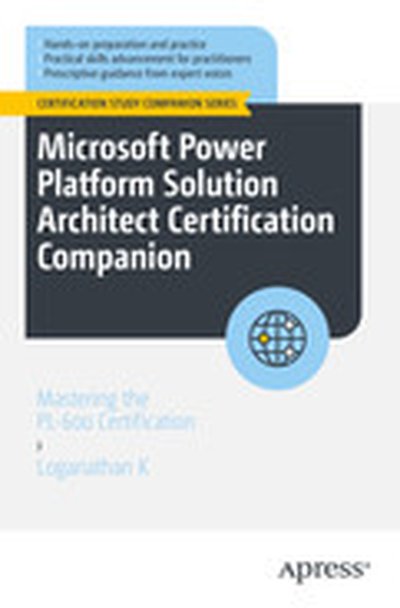
Microsoft Power Platform Solution Architect Certification Companion: Mastering the PL-600 Certification

This comprehensive guide book equips you with the knowledge and confidence needed to prep for the exam and thrive as a Power Platform Solution Architect. The book starts with a foundation for successful solution architecture, emphasizing essential skills such as requirements gathering, governance, and security. You will learn to navigate customer discovery, translate business needs into technical requirements, and design solutions that address both functional and non-functional needs. The second part of the book delves into the Microsoft Power Platform ecosystem, offering an in-depth look at its core components—Power Apps, Power Automate, Power BI, Microsoft Copilot, and Robotic Process Automation (RPA). Detailed insights into data modeling, security strategies, and AI integration will guide you in building scalable, secure solutions. Coverage of application life cycle management, which empowers solution architects to design, implement, and deploy Power Platform solutions effectively, is discussed next. You will then go through real-world scenarios, giving you a practical understanding of the challenges and considerations in managing Power Platform projects within a business context. The book concludes with strategies for continuous learning and resources for professional development, including practice questions to assess knowledge and readiness for the PL-600 exam. After reading the book, you will be ready to take the exam and become a successful Power Platform Solution Architect. What You Will Learn Understand the Solution Architect's role, responsibilities, and strategic approaches to successfully navigate projects Master the basics of Power Platform Solution Architecture Understand governance, security, and integration concepts in real-world scenarios Design and deploy effective business solutions using Power Platform components Gain the skills necessary to prep for the PL-600 certification exam Who This Book Is For Professionals pursuing Microsoft PL-600 Solution Architect certification and IT consultants and developers transitioning to solution architect roles
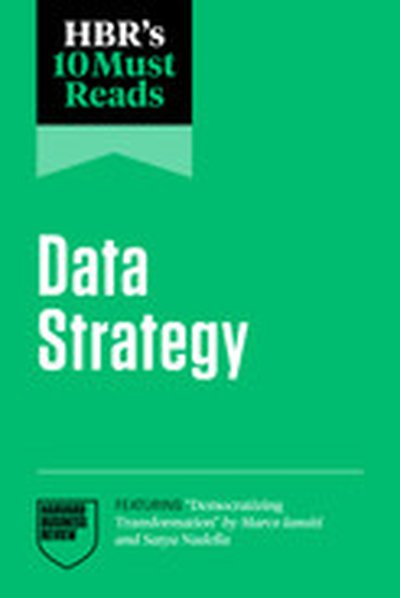
HBR's 10 Must Reads on Data Strategy (featuring "Democratizing Transformation" by Marco Iansiti and Satya Nadella)

Data is your business. Have you unlocked its full potential? If you read nothing else on data strategy, read this book. We've combed through hundreds of Harvard Business Review articles and selected the most important ones to help you maximize your analytics capabilities; harness the power of data, algorithms, and AI; and gain competitive advantage in our hyperconnected world. This book will inspire you to: Reap the rewards of digital transformation Make better data-driven decisions Design breakout products that generate profitable insights Address vulnerabilities to cyberattacks and data breaches Reskill your workforce and build a culture of continuous learning Win with personalized customer experiences at scale This collection of articles includes "What's Your Data Strategy?," by Leandro DalleMule and Thomas H. Davenport; "Democratizing Transformation," by Marco Iansiti and Satya Nadella; "Why Companies Should Consolidate Tech Roles in the C-Suite," by Thomas H. Davenport, John Spens, and Saurabh Gupta; "Developing a Digital Mindset," by Tsedal Neeley and Paul Leonardi; "What Does It Actually Take to Build a Data-Driven Culture?," by Mai B. AlOwaish and Thomas C. Redman; "When Data Creates Competitive Advantage," by Andrei Hagiu and Julian Wright; "Building an Insights Engine," by Frank van den Driest, Stan Sthanunathan, and Keith Weed; "Personalization Done Right," by Mark Abraham and David C. Edelman; "Ensure High-Quality Data Powers Your AI," by Thomas C. Redman; "The Ethics of Managing People's Data," by Michael Segalla and Dominique Rouzies; "Where Data-Driven Decision-Making Can Go Wrong," by Michael Luca and Amy C. Edmondson; "Sizing Up Your Cyberrisks," by Thomas J. Parenty and Jack J. Domet; "A Better Way to Put Your Data to Work," Veeral Desai, Tim Fountaine, and Kayvaun Rowshankish; and "Heavy Machinery Meets AI," by Vijay Govindarajan and Venkat Venkatraman. HBR's 10 Must Reads are definitive collections of classic ideas, practical advice, and essential thinking from the pages of Harvard Business Review. Exploring topics like disruptive innovation, emotional intelligence, and new technology in our ever-evolving world, these books empower any leader to make bold decisions and inspire others.

Microsoft Power Automate Cookbook

Despite recent advances in technology, software developers, enterprise users, and business technologists still spend much of their time performing repetitive manual tasks. This cookbook shows you how to level up your automation skills with Power Automate to drive efficiency and productivity within your organization. Author Ahmad Najjar provides recipes to help you complete common tasks and solve a wide range of issues you'll encounter when working with Power Automate. This cookbook guides you through fundamental concepts as well as basic-to-intermediate Power Automate activities—everything from understanding flow components to automating approvals, building on-demand flows, and integrating Power Automate with other applications and services. You'll also learn how Microsoft 365 services correlate and integrate with Power Automate. Use Power Automate to create a standard workflow Integrate Power Automate with other applications and services Leverage other Power Platform tools with Power Automate Use Power Automate to work with files and build basic business process flows Send notifications and reminders using Power Automate Trigger workflows on demand

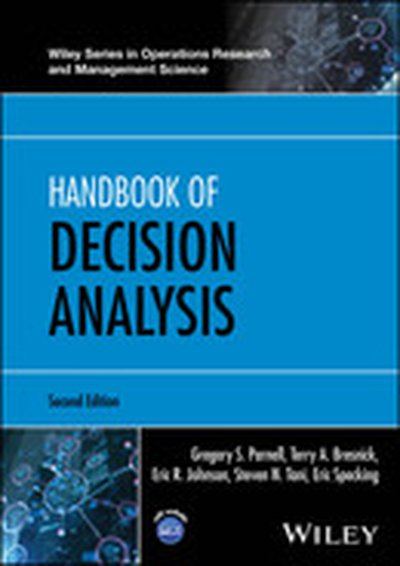
Handbook of Decision Analysis, 2nd Edition

Qualitative and quantitative techniques to apply decision analysis to real-world decision problems, supported by sound mathematics, best practices, soft skills, and more With substantive illustrations based on the authors’ personal experiences throughout, Handbook of Decision Analysis describes the philosophy, knowledge, science, and art of decision analysis. Key insights from decision analysis applications and behavioral decision analysis research are presented, and numerous decision analysis textbooks, technical books, and research papers are referenced for comprehensive coverage. This book does not introduce new decision analysis mathematical theory, but rather ensures the reader can understand and use the most common mathematics and best practices, allowing them to apply rigorous decision analysis with confidence. The material is supported by examples and solution steps using Microsoft Excel and includes many challenging real-world problems. Given the increase in the availability of data due to the development of products that deliver huge amounts of data, and the development of data science techniques and academic programs, a new theme of this Second Edition is the use of decision analysis techniques with big data and data analytics. Written by a team of highly qualified professionals and academics, Handbook of Decision Analysis includes information on: Behavioral decision-making insights, decision framing opportunities, collaboration with stakeholders, information assessment, and decision analysis modeling techniques Principles of value creation through designing alternatives, clear value/risk tradeoffs, and decision implementation Qualitative and quantitative techniques for each key decision analysis task, as opposed to presenting one technique for all decisions. Stakeholder analysis, decision hierarchies, and influence diagrams to frame descriptive, predictive, and prescriptive analytics decision problems to ensure implementation success Handbook of Decision Analysis is a highly valuable textbook, reference, and/or refresher for students and decision professionals in business, management science, engineering, engineering management, operations management, mathematics, and statistics who want to increase the breadth and depth of their technical and soft skills for success when faced with a professional or personal decision.

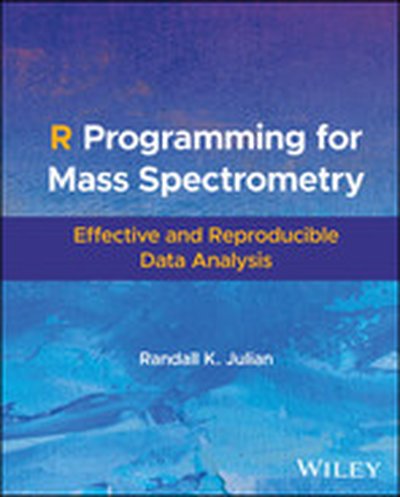
R Programming for Mass Spectrometry

A practical guide to reproducible and high impact mass spectrometry data analysis R Programming for Mass Spectrometry teaches a rigorous and detailed approach to analyzing mass spectrometry data using the R programming language. It emphasizes reproducible research practices and transparent data workflows and is designed for analytical chemists, biostatisticians, and data scientists working with mass spectrometry. Readers will find specific algorithms and reproducible examples that address common challenges in mass spectrometry alongside example code and outputs. Each chapter provides practical guidance on statistical summaries, spectral search, chromatographic data processing, and machine learning for mass spectrometry. Key topics include: Comprehensive data analysis using the Tidyverse in combination with Bioconductor, a widely used software project for the analysis of biological data Processing chromatographic peaks, peak detection, and quality control in mass spectrometry data Applying machine learning techniques, using Tidymodels for supervised and unsupervised learning, as well as for feature engineering and selection, providing modern approaches to data-driven insights Methods for producing reproducible, publication-ready reports and web pages using RMarkdown R Programming for Mass Spectrometry is an indispensable guide for researchers, instructors, and students. It provides modern tools and methodologies for comprehensive data analysis. With a companion website that includes code and example datasets, it serves as both a practical guide and a valuable resource for promoting reproducible research in mass spectrometry.

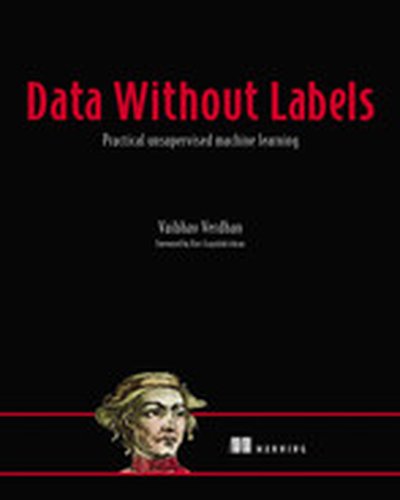
Data Without Labels

Discover all-practical implementations of the key algorithms and models for handling unlabeled data. Full of case studies demonstrating how to apply each technique to real-world problems. In Data Without Labels you’ll learn: Fundamental building blocks and concepts of machine learning and unsupervised learning Data cleaning for structured and unstructured data like text and images Clustering algorithms like K-means, hierarchical clustering, DBSCAN, Gaussian Mixture Models, and Spectral clustering Dimensionality reduction methods like Principal Component Analysis (PCA), SVD, Multidimensional scaling, and t-SNE Association rule algorithms like aPriori, ECLAT, SPADE Unsupervised time series clustering, Gaussian Mixture models, and statistical methods Building neural networks such as GANs and autoencoders Dimensionality reduction methods like Principal Component Analysis and multidimensional scaling Association rule algorithms like aPriori, ECLAT, and SPADE Working with Python tools and libraries like sci-kit learn, numpy, Pandas, matplotlib, Seaborn, Keras, TensorFlow, and Flask How to interpret the results of unsupervised learning Choosing the right algorithm for your problem Deploying unsupervised learning to production Maintenance and refresh of an ML solution Data Without Labels introduces mathematical techniques, key algorithms, and Python implementations that will help you build machine learning models for unannotated data. You’ll discover hands-off and unsupervised machine learning approaches that can still untangle raw, real-world datasets and support sound strategic decisions for your business. Don’t get bogged down in theory—the book bridges the gap between complex math and practical Python implementations, covering end-to-end model development all the way through to production deployment. You’ll discover the business use cases for machine learning and unsupervised learning, and access insightful research papers to complete your knowledge. About the Technology Generative AI, predictive algorithms, fraud detection, and many other analysis tasks rely on cheap and plentiful unlabeled data. Machine learning on data without labels—or unsupervised learning—turns raw text, images, and numbers into insights about your customers, accurate computer vision, and high-quality datasets for training AI models. This book will show you how. About the Book Data Without Labels is a comprehensive guide to unsupervised learning, offering a deep dive into its mathematical foundations, algorithms, and practical applications. It presents practical examples from retail, aviation, and banking using fully annotated Python code. You’ll explore core techniques like clustering and dimensionality reduction along with advanced topics like autoencoders and GANs. As you go, you’ll learn where to apply unsupervised learning in business applications and discover how to develop your own machine learning models end-to-end. What's Inside Master unsupervised learning algorithms Real-world business applications Curate AI training datasets Explore autoencoders and GANs applications About the Reader Intended for data science professionals. Assumes knowledge of Python and basic machine learning. About the Author Vaibhav Verdhan is a seasoned data science professional with extensive experience working on data science projects in a large pharmaceutical company. Quotes An invaluable resource for anyone navigating the complexities of unsupervised learning. A must-have. - Ganna Pogrebna, The Alan Turing Institute Empowers the reader to unlock the hidden potential within their data. - Sonny Shergill, Astra Zeneca A must-have for teams working with unstructured data. Cuts through the fog of theory ili Explains the theory and delivers practical solutions. - Leonardo Gomes da Silva, onGRID Sports Technology The Bible for unsupervised learning! Full of real-world applications, clear explanations, and excellent Python implementations. - Gary Bake, Falconhurst Technologies

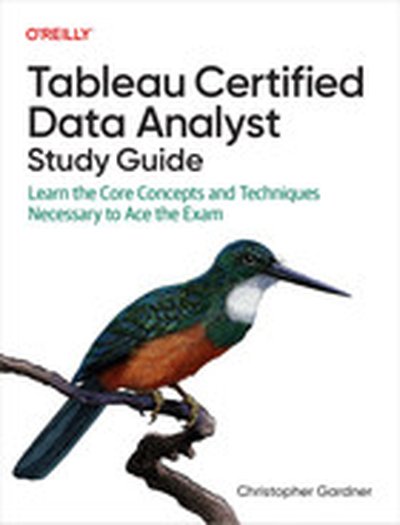
Tableau Certified Data Analyst Study Guide

In today's data-driven world, earning the Tableau Certified Data Analyst credential signals your ability to connect, analyze, and communicate insights using one of the industry's leading visualization platforms. This study guide offers practical and comprehensive preparation for the certification exam, with walk-throughs, best practices, vocabulary, and example questions to help you build both confidence and competence in Tableau. Written by Christopher Gardner, business intelligence analyst and lead Tableau developer at the University of Michigan, this guide supports first-time test-takers and seasoned users alike. You'll begin with foundational skills in Tableau Prep Builder and Tableau Desktop—connecting, combining, and preparing data—before progressing to building effective visualizations, performing calculations, and applying advanced tools like level-of-detail expressions, parameters, forecasts, and predictive analytics. Read, manipulate, and prepare data for analysis Navigate Tableau's tools to build impactful visualizations Write calculations and functions to enhance your dashboards Share your work responsibly with secure publishing options

Next-Level A/B Testing

The better the tools you have in your experimentation toolkit, the better off teams will be shipping and evaluating new features on a product. Learn how to create robust A/B testing strategies that evolve with your product and engineering needs. See how to run experiments quickly, efficiently, and at less cost with the overarching goal of improving your product experience and your company's bottom line. The long-term success of any product hinges on a company’s ability to experiment quickly and effectively. The more a company evolves and grows, the more demand there is on the experimentation platform. To continue to meet testing demands and empower teams to leverage A/B testing in their product development life cycle, it’s vital to incorporate techniques to improve testing velocity, cost, and quality. Learn how to create an A/B testing environment for the long term that lets you quickly construct, run, and analyze tests and enables the business to explore and exploit new features in a cost-effective and controlled way. Know when to use techniques — stratified random sampling, interleaving, and metric sensitivity analysis — that let you work faster, more accurately, and more cost-effectively. With practical strategies and hands-on engineering tasks oriented around improving the rate and quality of testing on a product, you can apply what you’ve learned to optimize your experimentation practices. A/B testing is vital to product development. It's time to create the tools and environment that let you run these tests easily, affordably, and reliably.

Applied Machine Learning for Data Science Practitioners

A single-volume reference on data science techniques for evaluating and solving business problems using Applied Machine Learning (ML). Applied Machine Learning for Data Science Practitioners offers a practical, step-by-step guide to building end-to-end ML solutions for real-world business challenges, empowering data science practitioners to make informed decisions and select the right techniques for any use case. Unlike many data science books that focus on popular algorithms and coding, this book takes a holistic approach. It equips you with the knowledge to evaluate a range of techniques and algorithms. The book balances theoretical concepts with practical examples to illustrate key concepts, derive insights, and demonstrate applications. In addition to code snippets and reviewing output, the book provides guidance on interpreting results. This book is an essential resource if you are looking to elevate your understanding of ML and your technical capabilities, combining theoretical and practical coding examples. A basic understanding of using data to solve business problems, high school-level math and statistics, and basic Python coding skills are assumed. Written by a recognized data science expert, Applied Machine Learning for Data Science Practitioners covers essential topics, including: Data Science Fundamentals that provide you with an overview of core concepts, laying the foundation for understanding ML. Data Preparation covers the process of framing ML problems and preparing data and features for modeling. ML Problem Solving introduces you to a range of ML algorithms, including Regression, Classification, Ranking, Clustering, Patterns, Time Series, and Anomaly Detection. Model Optimization explores frameworks, decision trees, and ensemble methods to enhance performance and guide the selection of the most effective model. ML Ethics addresses ethical considerations, including fairness, accountability, transparency, and ethics. Model Deployment and Monitoring focuses on production deployment, performance monitoring, and adapting to model drift.

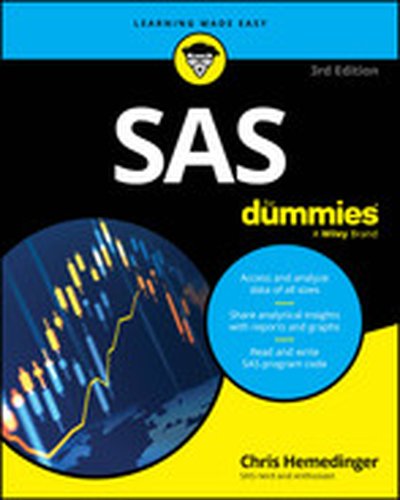
SAS For Dummies, 3rd Edition

Become data-savvy with the widely used data and AI software Data and analytics are essential for any business, giving insight into what's working, what can be improved, and what else needs to be done. SAS software helps you make sure you're doing data right, with a host of data management, reporting, and analysis tools. SAS For Dummies teaches you the essentials, helping you navigate this statistical software and turn information into value. In this book, learn how to gather data, create reports, and analyze results. You'll also discover how SAS machine learning and AI can help deliver decisions based on data. Even if you're brand new to data and analytics, this easy-to-follow guide will turn you into an SAS power user. Become familiar with the most popular SAS applications, including SAS 9 and SAS Viya Connect to data, organize your information, and adopt sound data security practices Get a primer on working with data sets, variables, and statistical analysis Explore and analyze data through SAS programming and rich application interfaces Create and share graphs interactive visualizations to deliver insights This is the perfect Dummies guide for new SAS users looking to improve their skills—in any industry and for any organization size.

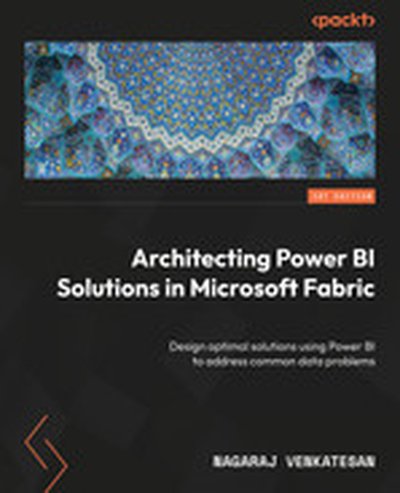
Architecting Power BI Solutions in Microsoft Fabric

This book is a comprehensive guide to building sophisticated and robust Power BI solutions that solve common data problems effectively. Written with hands-on professionals in mind, it provides essential insights and practical advice to help you choose the right tools and approaches for any BI task. Readers will learn to create performant, secure, and innovative business intelligence systems. What this Book will help me do Identify the scenarios where each Power BI component fits best. Apply secure and performance-conscious design principles when building BI solutions. Leverage Microsoft Fabric and other advanced integrations to maximize Power BI's capabilities. Implement AI-powered features such as Copilot and predictive modeling in Power BI. Facilitate collaboration and governance using Power BI's advanced features. Author(s) Nagaraj Venkatesan has over 17 years of professional expertise in data platform technologies and business intelligence tools. Through a rich career in data solution architecture, he has mastered the art of designing efficient and reliable Power BI implementations. This book reflects his passion for empowering professionals to make the most of Power BI. Who is it for? If you are a solution architect, data engineer, or Power BI report developer looking to elevate your skills in designing optimized Power BI solutions, this book is for you. Business analysts and data scientists can also benefit immensely from the book's coverage of self-service BI and data science integration. Some familiarity with Power BI will enhance your learning experience, but newcomers eager to learn will also find it invaluable.

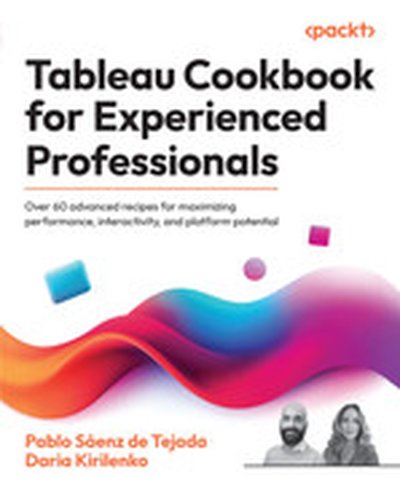
Tableau Cookbook for Experienced Professionals

This book takes an advanced dive into using Tableau for professional data visualization and analytics. You will learn techniques for crafting highly interactive dashboards, optimizing their performance, and leveraging Tableau's APIs and server features. With a focus on real-world applications, this resource serves as a guide for professionals aiming to master advanced Tableau skills. What this Book will help me do Build robust, high-performing Tableau data models for enterprise analytics. Use advanced geospatial techniques to create dynamic, data-rich mapping visualizations. Leverage APIs and developer tools to integrate Tableau with other platforms. Optimize Tableau dashboards for performance and interactivity. Apply best practices for content management and data security in Tableau implementations. Author(s) Pablo Sáenz de Tejada and Daria Kirilenko are seasoned Tableau experts with vast professional experience in implementing advanced analytics solutions. Pablo specializes in enterprise-level dashboard design and has trained numerous professionals globally. Daria focuses on integrating Tableau into complex data ecosystems, bringing a practical and innovative approach to analytics. Who is it for? This book is tailored for professionals such as Tableau developers, data analysts, and BI consultants who already have a foundational knowledge of Tableau. It is ideal for those seeking to deepen their skills and gain expertise in tackling advanced data visualization challenges. Whether you work in corporate analytics or enjoy exploring data in your own projects, this book will enhance your Tableau proficiency.

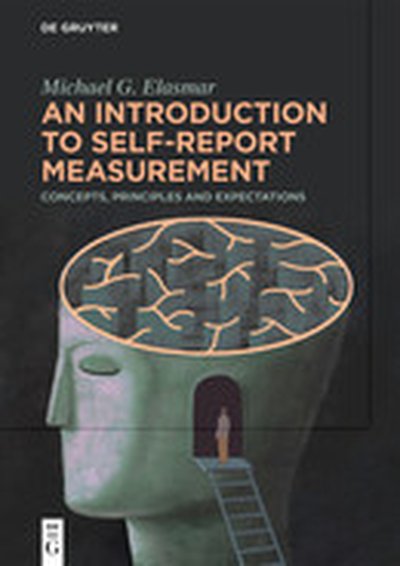
An Introduction to Self-Report Measurement

This book covers the science of measuring the invisible building blocks of thought processes that are useful for understanding humans, including technology users, media consumers, and consumers of goods and services. It provides: An explanation of what self-report measurement entails for beginners; A clear set of assumptions needed in order for self-report measures to yield valuable information; A mindset that needs to be adopted when using self-report measurement in the contexts of surveys and experiments; Guidance for extracting opinion from social media text content and integrating AI; A roadmap for quantifying the errors associated with self-report measurement.

Think Stats, 3rd Edition

If you know how to program, you have the skills to turn data into knowledge. This thoroughly revised edition presents statistical concepts computationally, rather than mathematically, using programs written in Python. Through practical examples and exercises based on real-world datasets, you'll learn the entire process of exploratory data analysis—from wrangling data and generating statistics to identifying patterns and testing hypotheses. Whether you're a data scientist, software engineer, or data enthusiast, you'll get up to speed on commonly used tools including NumPy, SciPy, and Pandas. You'll explore distributions, relationships between variables, visualization, and many other concepts. And all chapters are available as Jupyter notebooks, so you can read the text, run the code, and work on exercises all in one place. Analyze data distributions and visualize patterns using Python libraries Improve predictions and insights with regression models Dive into specialized topics like time series analysis and survival analysis Integrate statistical techniques and tools for validation, inference, and more Communicate findings with effective data visualization Troubleshoot common data analysis challenges Boost reproducibility and collaboration in data analysis projects with interactive notebooks

Data Insight Foundations: Step-by-Step Data Analysis with R

This book is an essential guide designed to equip you with the vital tools and knowledge needed to excel in data science. Master the end-to-end process of data collection, processing, validation, and imputation using R, and understand fundamental theories to achieve transparency with literate programming, renv, and Git--and much more. Each chapter is concise and focused, rendering complex topics accessible and easy to understand. Data Insight Foundations caters to a diverse audience, including web developers, mathematicians, data analysts, and economists, and its flexible structure allows enables you to explore chapters in sequence or navigate directly to the topics most relevant to you. While examples are primarily in R, a basic understanding of the language is advantageous but not essential. Many chapters, especially those focusing on theory, require no programming knowledge at all. Dive in and discover how to manipulate data, ensure reproducibility, conduct thorough literature reviews, collect data effectively, and present your findings with clarity. What You Will Learn Data Management: Master the end-to-end process of data collection, processing, validation, and imputation using R. Reproducible Research: Understand fundamental theories and achieve transparency with literate programming, renv, and Git. Academic Writing: Conduct scientific literature reviews and write structured papers and reports with Quarto. Survey Design: Design well-structured surveys and manage data collection effectively. Data Visualization: Understand data visualization theory and create well-designed and captivating graphics using ggplot2. Who this Book is For Career professionals such as research and data analysts transitioning from academia to a professional setting where production quality significantly impacts career progression. Some familiarity with data analytics processes and an interest in learning R or Python are ideal.

Time Series Analysis with Spark

Time Series Analysis with Spark provides a practical introduction to leveraging Apache Spark and Databricks for time series analysis. You'll learn to prepare, model, and deploy robust and scalable time series solutions for real-world applications. From data preparation to advanced generative AI techniques, this guide prepares you to excel in big data analytics. What this Book will help me do Understand the core concepts and architectures of Apache Spark for time series analysis. Learn to clean, organize, and prepare time series data for big data environments. Gain expertise in choosing, building, and training various time series models tailored to specific projects. Master techniques to scale your models in production using Spark and Databricks. Explore the integration of advanced technologies such as generative AI to enhance predictions and derive insights. Author(s) Yoni Ramaswami, a Senior Solutions Architect at Databricks, has extensive experience in data engineering and AI solutions. With a focus on creating innovative big data and AI strategies across industries, Yoni authored this book to empower professionals to efficiently handle time series data. Yoni's approachable style ensures that both foundational concepts and advanced techniques are accessible to readers. Who is it for? This book is ideal for data engineers, machine learning engineers, data scientists, and analysts interested in enhancing their expertise in time series analysis using Apache Spark and Databricks. Whether you're new to time series or looking to refine your skills, you'll find both foundational insights and advanced practices explained clearly. A basic understanding of Spark is helpful but not required.

Time Series Forecasting Using Generative AI : Leveraging AI for Precision Forecasting

"Time Series Forecasting Using Generative AI introduces readers to Generative Artificial Intelligence (Gen AI) in time series analysis, offering an essential exploration of cutting-edge forecasting methodologies." The book covers a wide range of topics, starting with an overview of Generative AI, where readers gain insights into the history and fundamentals of Gen AI with a brief introduction to large language models. The subsequent chapter explains practical applications, guiding readers through the implementation of diverse neural network architectures for time series analysis such as Multi-Layer Perceptrons (MLP), WaveNet, Temporal Convolutional Network (TCN), Bidirectional Temporal Convolutional Network (BiTCN), Recurrent Neural Networks (RNN), Long Short-Term Memory (LSTM), Deep AutoRegressive(DeepAR), and Neural Basis Expansion Analysis(NBEATS) using modern tools. Building on this foundation, the book introduces the power of Transformer architecture, exploring its variants such as Vanilla Transformers, Inverted Transformer (iTransformer), DLinear, NLinear, and Patch Time Series Transformer (PatchTST). Finally, The book delves into foundation models such as Time-LLM, Chronos, TimeGPT, Moirai, and TimesFM enabling readers to implement sophisticated forecasting models tailored to their specific needs. This book empowers readers with the knowledge and skills needed to leverage Gen AI for accurate and efficient time series forecasting. By providing a detailed exploration of advanced forecasting models and methodologies, this book enables practitioners to make informed decisions and drive business growth through data-driven insights. ● Understand the core history and applications of Gen AI and its potential to revolutionize time series forecasting. ● Learn to implement different neural network architectures such as MLP, WaveNet, TCN, BiTCN, RNN, LSTM, DeepAR, and NBEATS for time series forecasting. ● Discover the potential of Transformer architecture and its variants, such as Vanilla Transformers, iTransformer, DLinear, NLinear, and PatchTST, for time series forecasting. ● Explore complex foundation models like Time-LLM, Chronos, TimeGPT, Moirai, and TimesFM. ● Gain practical knowledge on how to apply Gen AI techniques to real-world time series forecasting challenges and make data-driven decisions. Who this book is for: Data Scientists, Machine learning engineers, Business Aanalysts, Statisticians, Economists, Financial Analysts, Operations Research Analysts, Data Analysts, Students.

Effective Data Analysis

Learn the technical and soft skills you need to succeed in your career as a data analyst. You’ve learned how to use Python, R, SQL, and the statistical skills needed to get started as a data analyst—so, what’s next? Effective Data Analysis bridges the gap between foundational skills and real-world application. This book provides clear, actionable guidance on transforming business questions into impactful data projects, ensuring you’re tracking the right metrics, and equipping you with a modern data analyst’s essential toolbox. In Effective Data Analysis, you’ll gain the skills needed to excel as a data analyst, including: Maximizing the impact of your analytics projects and deliverables Identifying and leveraging data sources to enhance organizational insights Mastering statistical tests, understanding their strengths, limitations, and when to use them Overcoming the challenges and caveats at every stage of an analytics project Applying your expertise across a variety of domains with confidence Effective Data Analysis is full of sage advice on how to be an effective data analyst in a real production environment. Inside, you’ll find methods that enhance the value of your work—from choosing the right analysis approach, to developing a data-informed organizational culture. About the Technology Data analysts need top-notch knowledge of statistics and programming. They also need to manage clueless stakeholders, navigate messy problems, and advocate for resources. This unique book covers the essential technical topics and soft skills you need to be effective in the real world. About the Book Effective Data Analysis helps you lock down those skills along with unfiltered insight into what the job really looks like. You’ll build out your technical toolbox with tips for defining metrics, testing code, automation, sourcing data, and more. Along the way, you’ll learn to handle the human side of data analysis, including how to turn vague requirements into efficient data pipelines. And you’re sure to love author Mona Khalil’s illustrations, industry examples, and a friendly writing style. What's Inside Identify and incorporate external data Communicate with non-technical stakeholders Apply and interpret statistical tests Techniques to approach any business problem About the Reader Written for early-career data analysts, but useful for all. About the Author Mona Khalil is the Senior Manager of Analytics Engineering at Justworks. Quotes Your roadmap to becoming a standout data analyst! An intriguing blend of technical expertise and practical wisdom. - Chester Ismay, MATE Seminars A thoughtful guide to delivering real-world data analysis. It will be an eye-opening read for all data professionals! - David Lee, Justworks Inc. Compelling insights into the relationship between organizations and data. The real-life examples will help you excel in your data career. - Jeremy Moulton, Greenhouse Mona’s wide range of experience shines in her thoughtful, relevant examples. - Jessica Cherny, Fivetran

Hands-On APIs for AI and Data Science

Are you ready to grow your skills in AI and data science? A great place to start is learning to build and use APIs in real-world data and AI projects. API skills have become essential for AI and data science success, because they are used in a variety of ways in these fields. With this practical book, data scientists and software developers will gain hands-on experience developing and using APIs with the Python programming language and popular frameworks like FastAPI and StreamLit. As you complete the chapters in the book, you'll be creating portfolio projects that teach you how to: Design APIs that data scientists and AIs love Develop APIs using Python and FastAPI Deploy APIs using multiple cloud providers Create data science projects such as visualizations and models using APIs as a data source Access APIs using generative AI and LLMs

Implementing Analytics Solutions Using Microsoft Fabric—DP-600 Exam Study Guide

Master the art of designing and implementing analytics solutions using Microsoft Fabric with this comprehensive guide. Whether you're preparing for the DP-600 certification exam or want to advance your career, this book offers expert insights into data analytics in Microsoft environments. What this Book will help me do Confidently pass the DP-600 certification exam by mastering exam-tested skills. Acquire practical expertise in deploying data analytics solutions with Microsoft Fabric. Understand and optimize data integration, security, and performance in analytics systems. Learn advanced techniques including semantic model optimization and advanced SQL querying. Prepare for real-world challenges through mock exams and hands-on exercises. Author(s) Jagjeet Singh Makhija and Charles Odunukwe, authors of this guide, are seasoned Microsoft specialists with decades of experience in data analytics, certification training, and technology consulting. Their clear and methodical approach ensures learners at all levels can grow their expertise. Who is it for? If you're a data analyst or IT professional looking to enhance your skills in analytics and Microsoft's technologies, this book is for you. It's ideal for those pursuing the DP-600 certification or aiming to improve their data integration and analysis capabilities.

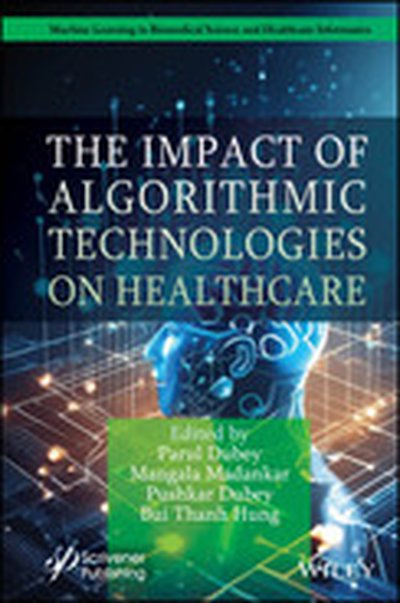
The Impact of Algorithmic Technologies on Healthcare

The book explores the fundamental principles and transformative advancements in cutting-edge algorithmic technologies, detailing their application and impact on revolutionizing healthcare. This book provides an in-depth account of how technologies such as artificial intelligence (AI), machine learning (ML), and the Internet of Things (IoT) are reshaping healthcare, transitioning from traditional diagnostic and treatment approaches to data-driven solutions that improve predictive accuracy and patient outcomes. The text also addresses the challenges and considerations associated with adopting these technologies, including ethical implications, data security concerns, and the need for human-centered approaches in algorithmic medicine. After introducing digital twin technology and its potential to enhance healthcare delivery, the book examines the broader effects of digital technology on the healthcare system. Subsequent chapters explore topics such as innovations in medical imaging, predictive analytics for improved patient outcomes, and deep learning algorithms for brain tumor detection. Other topics include generative adversarial networks (GANs), convolutional neural networks (CNNs), smart wearables for remote patient monitoring, effective IoT solutions, telemedicine advancements, and blockchain security for healthcare systems. The integration of biometric systems driven by AI, securing cyber-physical systems in healthcare, and digitizing wellness through electronic health records (EHRs) and electronic medical records (EMRs) are also discussed. The book concludes with an extensive case study comparing the impacts of various healthcare applications, offering insights and encouraging further research and innovation in this dynamic field. Audience This book is suitable for academicians and professionals in health informatics, bioinformatics, biomedical science and engineering, artificial intelligence, as well as clinicians, IT specialists, and policymakers in healthcare.

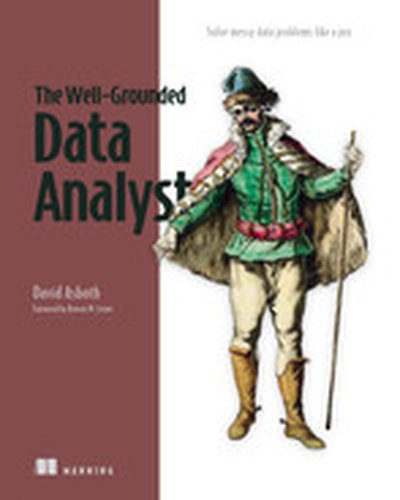
The Well-Grounded Data Analyst

Complete eight data science projects that lock in important real-world skills—along with a practical process you can use to learn any new technique quickly and efficiently. Data analysts need to be problem solvers—and The Well-Grounded Data Analyst will teach you how to solve the most common problems you'll face in industry. You'll explore eight scenarios that your class or bootcamp won’t have covered, so you can accomplish what your boss is asking for. In The Well-Grounded Data Analyst you'll learn: High-value skills to tackle specific analytical problems Deconstructing problems for faster, practical solutions Data modeling, PDF data extraction, and categorical data manipulation Handling vague metrics, deciphering inherited projects, and defining customer records The Well-Grounded Data Analyst is for junior and early-career data analysts looking to supplement their foundational data skills with real-world problem solving. As you explore each project, you'll also master a proven process for quickly learning new skills developed by author and Half Stack Data Science podcast host David Asboth. You'll learn how to determine a minimum viable answer for your stakeholders, identify and obtain the data you need to deliver, and reliably present and iterate on your findings. The book can be read cover-to-cover or opened to the chapter most relevant to your current challenges. About the Technology Real world data analysis is messy. Success requires tackling challenges like unreliable data sources, ambiguous requests, and incompatible formats—often with limited guidance. This book goes beyond the clean, structured examples you see in classrooms and bootcamps, offering a step-by-step framework you can use to confidently solve any data analysis problem like a pro. About the Book The Well-Grounded Data Analyst introduces you to eight scenarios that every data analyst is bound to face. You’ll practice author David Asboth’s results-oriented approach as you model data by identifying customer records, navigate poorly-defined metrics, extract data from PDFs, and much more! It also teaches you how to take over incomplete projects and create rapid prototypes with real data. Along the way, you’ll build an impressive portfolio of projects you can showcase at your next interview. What's Inside Deconstructing problems Handling vague metrics Data modeling Categorical data manipulation About the Reader For early-career data scientists. About the Author David Asboth is a data generalist educator, and software architect. He co-hosts the Half Stack Data Science podcast. Quotes Well reasoned and well written, with approaches to solve many sorts of data analysis problems. - Naomi Ceder, Fellow of the Python Software Foundation An excellent resource for any aspiring data scientist! - Andrew R. Freed, IBM David’s clear and repeatable framework will give you confidence to tackle open-ended stakeholder requests and reach an answer much faster! - Shaun McGirr, DevOn Software Services A book version of shadowing a senior data analyst while they explain handling frequent data problems at work, including all the ugly gotchas. - Randy Au, Google