talk-data.com talk-data.com

Event

O'Reilly Data Science Books

2013-08-09 – 2026-02-25 Oreilly Visit website ↗

Activities tracked

2118

Collection of O'Reilly books on Data Science.

Sessions & talks

Showing 1051–1075 of 2118 · Newest first

Search within this event →
JMP 13 Reliability and Survival Methods

JMP 13 Reliability and Survival Methods provides details about evaluating and improving reliability in a product or system and analyzing survival data for people and products. The book explains how to fit the best distribution to your time-to-event data or analyze destruction data. A few other topics include analyzing competing causes of failure, modeling reliability as improvements are made over time, and analyzing recurring events.

Google Analytics Breakthrough

A complete, start-to-finish guide to Google Analytics instrumentation and reporting Google Analytics Breakthrough is a much-needed comprehensive resource for the world's most widely adopted analytics tool. Designed to provide a complete, best-practices foundation in measurement strategy, implementation, reporting, and optimization, this book systematically demystifies the broad range of Google Analytics features and configurations. Throughout the end-to-end learning experience, you'll sharpen your core competencies, discover hidden functionality, learn to avoid common pitfalls, and develop next-generation tracking and analysis strategies so you can understand what is helping or hindering your digital performance and begin driving more success. Google Analytics Breakthrough offers practical instruction and expert perspectives on the full range of implementation and reporting skills: Learn how to campaign-tag inbound links to uncover the email, social, PPC, and banner/remarketing traffic hiding as other traffic sources and to confidently measure the ROI of each marketing channel Add event tracking to capture the many important user interactions that Google Analytics does not record by default, such as video plays, PDF downloads, scrolling, and AJAX updates Master Google Tag Manager for greater flexibility and process control in implementation Set up goals and Enhanced Ecommerce tracking to measure performance against organizational KPIs and configure conversion funnels to isolate drop-off Create audience segments that map to your audience constituencies, amplify trends, and help identify optimization opportunities Populate custom dimensions that reflect your organization, your content, and your visitors so Google Analytics can speak your language Gain a more complete view of customer behavior with mobile app and cross-device tracking Incorporate related tools and techniques: third-party data visualization, CRM integration for long-term value and lead qualification, marketing automation, phone conversion tracking, usability, and A/B testing Improve data storytelling and foster analytics adoption in the enterprise As many as 10-25 million organizations have installed Google Analytics, including an estimated 67 percent of Fortune 500 companies, but deficiencies plague most implementations, and inadequate reporting practices continue to hinder meaningful analysis. By following the strategies and techniques in Google Analytics Breakthrough, you can address the gaps in your own still set, transcend the common limitations, and begin using Google Analytics for real competitive advantage. Critical contributions from industry luminaries such as Brian Clifton, Tim Ash, Bryan and Jeffrey Eisenberg, and Jim Sterne – and a foreword by Avinash Kaushik – enhance the learning experience and empower you to drive consistent, real-world improvement through analytics.

SAS Data Analytic Development

Design quality SAS software and evaluate SAS software quality SAS Data Analytic Development is the developer’s compendium for writing better-performing software and the manager’s guide to building comprehensive software performance requirements. The text introduces and parallels the International Organization for Standardization (ISO) software product quality model, demonstrating 15 performance requirements that represent dimensions of software quality, including: reliability, recoverability, robustness, execution efficiency (i.e., speed), efficiency, scalability, portability, security, automation, maintainability, modularity, readability, testability, stability, and reusability. The text is intended to be read cover-to-cover or used as a reference tool to instruct, inspire, deliver, and evaluate software quality. A common fault in many software development environments is a focus on functional requirements—the what and how—to the detriment of performance requirements, which specify instead how well software should function (assessed through software execution) or how easily software should be maintained (assessed through code inspection). Without the definition and communication of performance requirements, developers risk either building software that lacks intended quality or wasting time delivering software that exceeds performance objectives—thus, either underperforming or gold-plating, both of which are undesirable. Managers, customers, and other decision makers should also understand the dimensions of software quality both to define performance requirements at project outset as well as to evaluate whether those objectives were met at software completion. As data analytic software, SAS transforms data into information and ultimately knowledge and data-driven decisions. Not surprisingly, data quality is a central focus and theme of SAS literature; however, code quality is far less commonly described and too often references only the speed or efficiency with which software should execute, omitting other critical dimensions of software quality. SAS® software project definitions and technical requirements often fall victim to this paradox, in which rigorous quality requirements exist for data and data products yet not for the software that undergirds them. By demonstrating the cost and benefits of software quality inclusion and the risk of software quality exclusion, stakeholders learn to value, prioritize, implement, and evaluate dimensions of software quality within risk management and project management frameworks of the software development life cycle (SDLC). Thus, SAS Data Analytic Development recalibrates business value, placing code quality on par with data quality, and performance requirements on par with functional requirements.

Statistical Shape Analysis, 2nd Edition

A thoroughly revised and updated edition of this introduction to modern statistical methods for shape analysis Shape analysis is an important tool in the many disciplines where objects are compared using geometrical features. Examples include comparing brain shape in schizophrenia; investigating protein molecules in bioinformatics; and describing growth of organisms in biology. This book is a significant update of the highly-regarded `Statistical Shape Analysis’ by the same authors. The new edition lays the foundations of landmark shape analysis, including geometrical concepts and statistical techniques, and extends to include analysis of curves, surfaces, images and other types of object data. Key definitions and concepts are discussed throughout, and the relative merits of different approaches are presented. The authors have included substantial new material on recent statistical developments and offer numerous examples throughout the text. Concepts are introduced in an accessible manner, while retaining sufficient detail for more specialist statisticians to appreciate the challenges and opportunities of this new field. Computer code has been included for instructional use, along with exercises to enable readers to implement the applications themselves in R and to follow the key ideas by hands-on analysis. Statistical Shape Analysis: with Applications in R will offer a valuable introduction to this fast-moving research area for statisticians and other applied scientists working in diverse areas, including archaeology, bioinformatics, biology, chemistry, computer science, medicine, morphometics and image analysis .

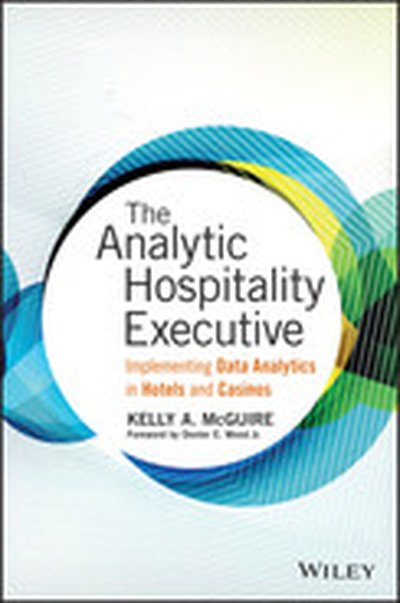
The Analytic Hospitality Executive

Targeted analytics to address the unique opportunities in hospitality and gaming The Analytic Hospitality Executive helps decision makers understand big data and how it can drive value in the industry. Written by a leading business analytics expert who specializes in hospitality and travel, this book draws a direct link between big data and hospitality, and shows you how to incorporate analytics into your strategic management initiative. You'll learn which data types are critical, how to identify productive data sources, and how to integrate analytics into multiple business processes to create an overall analytic culture that turns information into insight. The discussion includes the tools and tips that help make it happen, and points you toward the specific places in your business that could benefit from advanced analytics. The hospitality and gaming industry has unique needs and opportunities, and this book's targeted guidance provides a roadmap to big data benefits. Like most industries, the hospitality and gaming industry is experiencing a rapid increase in data volume, variety, and velocity. This book shows you how to corral this growing current, and channel it into productive avenues that drive better business. Understand big data and analytics Incorporate analytics into existing business processes Identify the most valuable data sources Create a strategic analytic culture that drives value Although the industry is just beginning to recognize the value of big data, it's important to get up to speed quickly or risk losing out on benefits that could drive business to greater heights. The Analytic Hospitality Executive provides a targeted game plan from an expert on the inside, so you can start making your data work for you.

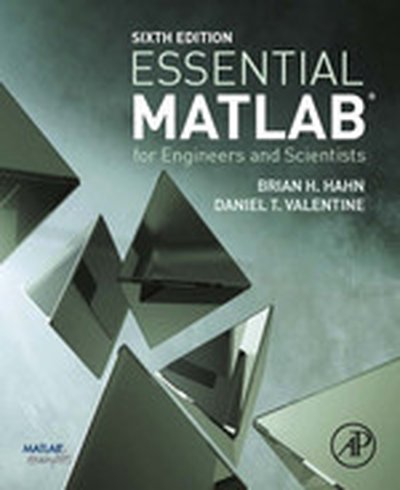
Essential MATLAB for Engineers and Scientists, 6th Edition

Essential MATLAB for Engineers and Scientists, Sixth Edition, provides a concise, balanced overview of MATLAB's functionality that facilitates independent learning, with coverage of both the fundamentals and applications. The essentials of MATLAB are illustrated throughout, featuring complete coverage of the software's windows and menus. Program design and algorithm development are presented clearly and intuitively, along with many examples from a wide range of familiar scientific and engineering areas. This updated edition includes the latest MATLAB versions through 2016a, and is an ideal book for a first course on MATLAB, or for an engineering problem-solving course using MATLAB, as well as a self-learning tutorial for professionals and students expected to learn and apply MATLAB. Updated to include all the newer features through MATLAB R2016a Includes new chapter on complex variables analysis Presents a comparison of execution time between compiled and un-compiled code that includes examples Describes the new H2 graphics features

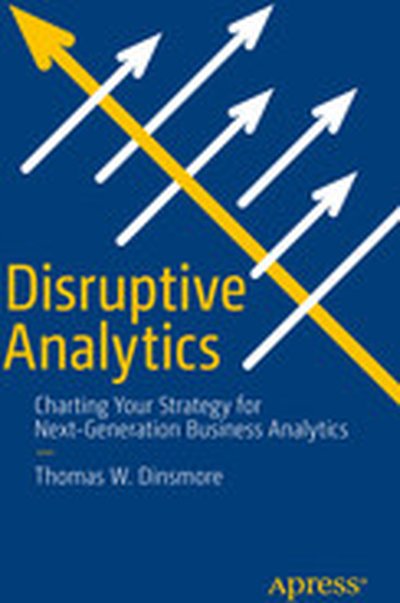
Disruptive Analytics: Charting Your Strategy for Next-Generation Business Analytics

Learn all you need to know about seven key innovations disrupting business analytics today. These innovations—the open source business model, cloud analytics, the Hadoop ecosystem, Spark and in-memory analytics, streaming analytics, Deep Learning, and self-service analytics—are radically changing how businesses use data for competitive advantage. Taken together, they are disrupting the business analytics value chain, creating new opportunities. Enterprises who seize the opportunity will thrive and prosper, while others struggle and decline: disrupt or be disrupted. Disruptive Business Analytics provides strategies to profit from disruption. It shows you how to organize for insight, build and provision an open source stack, how to practice lean data warehousing, and how to assimilate disruptive innovations into an organization. Through a short history of business analytics and a detailed survey of products and services, analytics authority Thomas W. Dinsmore provides a practical explanation of the most compelling innovations available today. What You'll Learn Discover how the open source business model works and how to make it work for you See how cloud computing completely changes the economics of analytics Harness the power of Hadoop and its ecosystem Find out why Apache Spark is everywhere Discover the potential of streaming and real-time analytics Learn what Deep Learning can do and why it matters See how self-service analytics can change the way organizations do business Who This Book Is For Corporate actors at all levels of responsibility for analytics: analysts, CIOs, CTOs, strategic decision makers, managers, systems architects, technical marketers, product developers, IT personnel, and consultants.

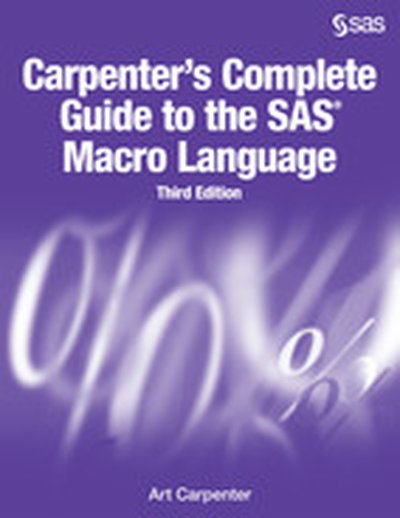
Carpenter's Complete Guide to the SAS Macro Language, Third Edition, 3rd Edition

For SAS programmers or analysts who need to generalize their programs or improve programming efficiency, Art Carpenter thoroughly updates his highly successful second edition of Carpenter's Complete Guide to the SAS Macro Language with an extensive collection of new macro language techniques and examples. Addressing the composition and operation of the SAS macro facility and the SAS macro language, this third edition offers nearly 400 ready-to-use macros, macro functions, and macro tools that enable you to convert SAS code to macros, define macro variables, and more! Users with a basic understanding of Base SAS who are new to the SAS macro language will find more detail, utilities, and references to additional learning opportunities; advanced macro language programmers who need help with data-driven macros and dynamic application development will find greatly expanded treatment of these topics. This revised and enlarged edition includes the following topics: New and expanded introduction to the macro language Functions, automatic macro variables, and macro statements new to the macro language Expanded macro language tools that interface with the operating system Expanded data-driven methodologies used to build dynamic applications Expanded discussion of list processing, with four alternative approaches presented Additional file and data management examples Expanded discussion of CALL EXECUTE and DOSUBL New discussion of using the macro language on remote servers Expanded discussion and examples of macro quoting Far beyond a reference manual issued from an “ivory tower,” this book is pragmatic and example-driven: Yes, you will find syntax examples; yes, the code is explained. But the focus of this book is on actual code used to solve real-world business problems. In fact, an entire appendix is dedicated to listing the nearly 70 classes of problems that are solved by programs covered in this edition. Discussion of the examples elucidates the pros and cons of the particular solution and often suggests alternative approaches. Therefore, this book provides you both a compendium of reusable and adaptable code, and opportunities for deepening your understanding and growing as a SAS programmer.

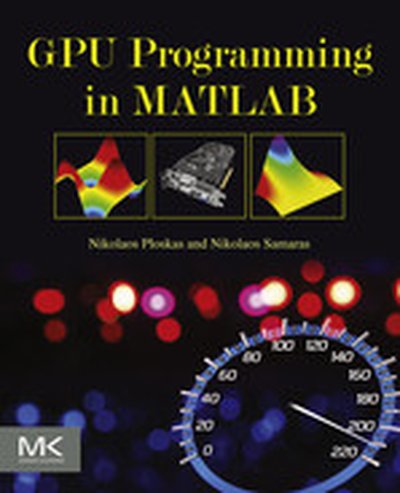
GPU Programming in MATLAB

GPU programming in MATLAB is intended for scientists, engineers, or students who develop or maintain applications in MATLAB and would like to accelerate their codes using GPU programming without losing the many benefits of MATLAB. The book starts with coverage of the Parallel Computing Toolbox and other MATLAB toolboxes for GPU computing, which allow applications to be ported straightforwardly onto GPUs without extensive knowledge of GPU programming. The next part covers built-in, GPU-enabled features of MATLAB, including options to leverage GPUs across multicore or different computer systems. Finally, advanced material includes CUDA code in MATLAB and optimizing existing GPU applications. Throughout the book, examples and source codes illustrate every concept so that readers can immediately apply them to their own development. Provides in-depth, comprehensive coverage of GPUs with MATLAB, including the parallel computing toolbox and built-in features for other MATLAB toolboxes Explains how to accelerate computationally heavy applications in MATLAB without the need to re-write them in another language Presents case studies illustrating key concepts across multiple fields Includes source code, sample datasets, and lecture slides

Data Analysis Plans: A Blueprint for Success Using SAS

Data Analysis Plans: A Blueprint for Success Using SAS gets you started on building an effective data analysis plan with a solid foundation for planning and managing your analytics projects. Data analysis plans are critical to the success of analytics projects and can improve the workflow of your project when implemented effectively. This book provides step-by-step instructions on writing, implementing, and updating your data analysis plan. It emphasizes the concept of an analysis plan as a working document that you update throughout the life of a project.

This book will help you manage the following tasks:

control client expectations

limit and refine the scope of the analysis

enable clear communication and understanding among team members

organize and develop your final report

SAS users of any level of experience will benefit from this book, but beginners will find it extremely useful as they build foundational knowledge for performing data analysis and hypotheses testing. Subject areas include medical research, public health research, social studies, educational testing and evaluation, and environmental studies.

Metaheuristics for String Problems in Bio-informatics

So-called string problems are abundant in bioinformatics and computational biology. New optimization problems dealing with DNA or protein sequences are constantly arising and researchers are highly in need of efficient optimization techniques for solving them. One obstacle for optimization practitioners is the atypical nature of these problems which require an interdisciplinary approach in order to solve them efficiently and accurately.

A Primer on Nonparametric Analysis, Volume I

Nonparametric statistics provide a scientific methodology for cases where customary statistics are not applicable. Nonparametric statistics are used when the requirements for parametric analysis fail, such as when data are not normally distributed or the sample size is too small. The method provides an alternative for such cases and is often nearly as powerful as parametric statistics. Another advantage of nonparametric statistics is that it offers analytical methods that are not available otherwise. Nonparametric methods are intuitive and simple to comprehend, which helps researchers in the social sciences understand the methods in spite of lacking mathematical rigor needed in analytical methods customarily used in science. This book is a methodology book and bypasses theoretical proofs while providing comprehensive explanations of the logic behind the methods and ample examples, which are all solved using direct computations as well as by using Stata. It is arranged into two integrated volumes. Although each volume, and for that matter each chapter, can be used separately, it is advisable to read as much of both volumes as possible; because familiarity with what is applicable for different problems will enhance capabilities.

A Primer on Nonparametric Analysis, Volume II

Nonparametric statistics provide a scientific methodology for cases where customary statistics are not applicable. Nonparametric statistics are used when the requirements for parametric analysis fail, such as when data are not normally distributed or the sample size is too small. The method provides an alternative for such cases and is often nearly as powerful as parametric statistics. Another advantage of nonparametric statistics is that it offers analytical methods that are not available otherwise. Nonparametric methods are intuitive and simple to comprehend, which helps researchers in the social sciences understand the methods in spite of lacking mathematical rigor needed in analytical methods customarily used in science. This book is a methodology book and bypasses theoretical proofs while providing comprehensive explanations of the logic behind the methods and ample examples, which are all solved using direct computations as well as by using Stata. It is arranged into two integrated volumes. Although each volume, and for that matter each chapter, can be used separately, it is advisable to read as much of both volumes as possible; because familiarity with what is applicable for different problems will enhance capabilities.

Demand Forecasting for Managers

Most decisions and plans in a firm require a forecast. Not matching supply with demand can make or break any business, and that's why forecasting is so invaluable. Forecasting can appear as a frightening topic with many arcane equations to master. For this reason, the authors start out from the very basics and provide a non-technical overview of common forecasting techniques as well as organizational aspects of creating a robust forecasting process. The book also discusses how to measure forecast accuracy to hold people accountable and guide continuous improvement. This book does not require prior knowledge of higher mathematics, statistics, or operations research. It is designed to serve as a first introduction to the non-expert, such as a manager overseeing a forecasting group, or an MBA student who needs to be familiar with the broad outlines of forecasting without specializing in it.

Writing code for R packages

R packages are a great way to share and create code that you and others can use over and over again. Why is it important? Developing R code for inclusion in a package is different than simply writing R scripts. What you'll learn—and how you can apply it Learn best practices for writing R code for packages: organizing your functions, code style recommendations, understanding and planning for how code will be run. Plan for the "unknowns" once you release a package to the world. Also includes hints for submitting a package to CRAN. This lesson is for you because… You're an R developer and need to package code so that others can reuse it You want to prepare a package to submit to CRAN Prerequisites Some familiarity with the R language Materials or downloads needed in advance Install R Install RStudio This lesson is taken from by Hadley Wickham. R Packages

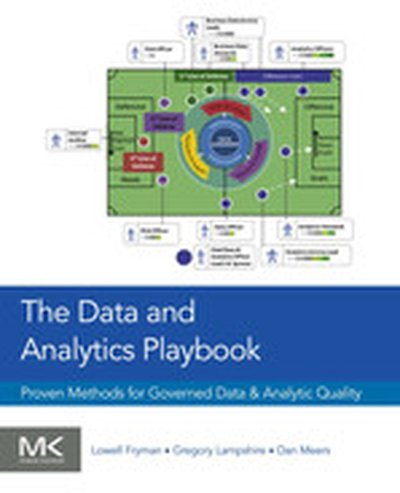
The Data and Analytics Playbook

The Data and Analytics Playbook: Proven Methods for Governed Data and Analytic Quality explores the way in which data continues to dominate budgets, along with the varying efforts made across a variety of business enablement projects, including applications, web and mobile computing, big data analytics, and traditional data integration. The book teaches readers how to use proven methods and accelerators to break through data obstacles to provide faster, higher quality delivery of mission critical programs. Drawing upon years of practical experience, and using numerous examples and an easy to understand playbook, Lowell Fryman, Gregory Lampshire, and Dan Meers discuss a simple, proven approach to the execution of multiple data oriented activities. In addition, they present a clear set of methods to provide reliable governance, controls, risk, and exposure management for enterprise data and the programs that rely upon it. In addition, they discuss a cost-effective approach to providing sustainable governance and quality outcomes that enhance project delivery, while also ensuring ongoing controls. Example activities, templates, outputs, resources, and roles are explored, along with different organizational models in common use today and the ways they can be mapped to leverage playbook data governance throughout the organization. Provides a mature and proven playbook approach (methodology) to enabling data governance that supports agile implementation Features specific examples of current industry challenges in enterprise risk management, including anti-money laundering and fraud prevention Describes business benefit measures and funding approaches using exposure based cost models that augment risk models for cost avoidance analysis and accelerated delivery approaches using data integration sprints for application, integration, and information delivery success

A Recipe for Success Using SAS University Edition

Filled with helpful examples and real-life projects of SAS users, A Recipe for Success Using SAS University Edition is an easy guide on how to start applying the analytical power of SAS to real-world scenarios. This book shows you: how to start using analytics how to use SAS to accomplish a project goal how to effectively apply SAS to your community or school how users like you implemented SAS to solve their analytical problems A beginner’s guide on how to create and complete your first analytics project using SAS University Edition, this book is broken down into easy-to-read chapters that also include quick takeaway tips. It introduces you to the vocabulary and structure of the SAS language, shows you how to plan and execute a successful project, introduces you to basic statistics, and it walks you through case studies to inspire and motivate you to complete your own projects. Following a recipe for success using this book, harness the power of SAS to plan and complete your first analytics project!

Big Data Analytics with R

Unlock the potential of big data analytics by mastering R programming with this comprehensive guide. This book takes you step-by-step through real-world scenarios where R's capabilities shine, providing you with practical skills to handle, process, and analyze large and complex datasets effectively. What this Book will help me do Understand the latest big data processing methods and how R can enhance their application. Set up and use big data platforms such as Hadoop and Spark in conjunction with R. Utilize R for practical big data problems, such as analyzing consumption and behavioral datasets. Integrate R with SQL and NoSQL databases to maximize its versatility in data management. Discover advanced machine learning implementations using R and Spark MLlib for predictive analytics. Author(s) None Walkowiak is an experienced data analyst and R programming expert with a passion for data engineering and machine learning. With a deep knowledge of big data platforms and extensive teaching experience, they bring a clear and approachable writing style to help learners excel. Who is it for? Ideal for data analysts, scientists, and engineers with fundamental data analysis knowledge looking to enhance their big data capabilities using R. If you aim to adapt R for large-scale data management and analysis workflows, this book is your ideal companion to bridge the gap.

R for Data Science Cookbook

The "R for Data Science Cookbook" is your comprehensive guide to tackling data problems using R. Focusing on practical applications, you will learn data manipulation, visualization, statistical inference, and machine learning with a hands-on approach using popular R packages. What this Book will help me do Master the use of R's functional programming features to streamline your analysis workflows. Extract, transform, and visualize data effectively using robust R packages like dplyr and ggplot2. Learn to create intuitive and professional visualizations and reports that communicate insights effectively. Implement key statistical modeling and machine learning techniques to solve real-world problems. Acquire expertise in data mining techniques, including clustering and association rule mining. Author(s) Yu-Wei Chiu, also known as David Chiu, is an experienced data scientist and educator. With a solid technical background in using R for data science, he combines theory with practical applications in his writing. David's approachable style and rich examples make complex topics accessible and engaging for learners. Who is it for? This book is perfect for individuals who already have a foundation in R and are looking to deepen their expertise in applying R to data science tasks. Ideal readers are analysts and statisticians eager to solve real-world problems using practical tools. If you're aspiring to work effectively with large data sets or want to learn versatile data analysis techniques, this book is designed for you. It bridges the gap between theoretical knowledge and actionable skills, making it invaluable for professionals and learners alike.

Statistical Analysis with Excel For Dummies, 4th Edition

Learn all of Excel's statistical tools Test your hypotheses and draw conclusions Use Excel to give meaning to your data Use Excel to interpret stats Statistical analysis with Excel is incredibly useful—and this book shows you that it can be easy, too! You'll discover how to use Excel's perfectly designed tools to analyze and understand data, predict trends, make decisions, and more. Tackle the technical aspects of Excel and start using them to interpret your data! Inside... Covers Excel 2016 for Windows® & Mac® users Check out new Excel stuff Make sense of worksheets Create shortcuts Tool around with analysis Use Quick Statistics Graph your data Work with probability Handle random variables

AI and Medicine

Data-driven techniques have improved decision-making processes for people in industries such as finance and real estate. Yet, despite promising solutions that data analytics and artificial intelligence/machine learning (ML) tools can bring to healthcare, the industry remains largely unconvinced. In this O’Reilly report, you’ll explore the potential of—and impediments to—widespread adoption of AI and ML in the medical field. You’ll also learn how extensive government regulation and resistance from the medical community have so far stymied full-scale acceptance of sophisticated data analytics in healthcare. Through interviews with several professionals working at the intersection of medicine and data science, author Mike Barlow examines five areas where the application of AI/ML strategies can spur a beneficial revolution in healthcare: Identifying risks and interventions for healthcare management of entire populations Closing gaps in care by designing plans for individual patients Supporting customized self-care treatment plans and monitoring patient health in real time Optimizing healthcare processes through data analysis to improve care and reduce costs Helping doctors and patients choose proper medications, dosages, and promising surgical options

Embedding Analytics in Modern Applications

To satisfy end users who want easily accessible answers, many software vendors are looking to add analytics and reporting capabilities to their applications. Embedding analytics into applications can lead to wider adoption and product use, improved user experience, and differentiated products, but embedding analytics can also come with challenges and complexities. In this report, author Courtney Webster reviews several approaches and methods for embedding analytics capabilities into your applications. Should you implement a separate reporting portal, an in-application reporting tab, or go all in with a fully embedded in-page analytics solution? And do you build your own or buy a solution out of the box? To help you choose the right embedded analytics tool, Webster examines seven challenges—from customization, usability, and capabilities to scalability, performance, and data structure support—and presents best practice solutions for each.

Working with Text

What is text mining, and how can it be used? What relevance do these methods have to everyday work in information science and the digital humanities? How does one develop competences in text mining? Working with Text provides a series of cross-disciplinary perspectives on text mining and its applications. As text mining raises legal and ethical issues, the legal background of text mining and the responsibilities of the engineer are discussed in this book. Chapters provide an introduction to the use of the popular GATE text mining package with data drawn from social media, the use of text mining to support semantic search, the development of an authority system to support content tagging, and recent techniques in automatic language evaluation. Focused studies describe text mining on historical texts, automated indexing using constrained vocabularies, and the use of natural language processing to explore the climate science literature. Interviews are included that offer a glimpse into the real-life experience of working within commercial and academic text mining. Introduces text analysis and text mining tools Provides a comprehensive overview of costs and benefits Introduces the topic, making it accessible to a general audience in a variety of fields, including examples from biology, chemistry, sociology, and criminology