talk-data.com talk-data.com

Event

O'Reilly Data Science Books

2013-08-09 – 2026-02-25 Oreilly Visit website ↗

Activities tracked

2118

Collection of O'Reilly books on Data Science.

Sessions & talks

Showing 1726–1750 of 2118 · Newest first

Search within this event →
IBM Cognos Dynamic Cubes

IBM® Cognos® Business Intelligence (BI) provides a proven enterprise BI platform with an open data strategy, providing customers with the ability to leverage data from any source, package it into a business model, and make it available to consumers in various interfaces that are tailored to the task. IBM Cognos Dynamic Cubes complements the existing Cognos BI capabilities and continues the tradition of an open data model. It focuses on extending the scalability of the IBM Cognos platform to enable speed-of-thought analytics over terabytes of enterprise data, without having to invest in a new data warehouse appliance. This capability adds a new level of query intelligence so you can unleash the power of your enterprise data warehouse. This IBM Redbooks® publication addresses IBM Cognos Business Intelligence V10.2 and specifically, the IBM Cognos Dynamic Cubes capabilities. This book can help you in the following ways: Understand core features of the Dynamic Cubes capabilities of IBM Cognos BI V10.2 Learn by example with practical scenarios using the IBM Cognos samples
Statistical Monitoring of Complex Multivariate Processes: With Applications in Industrial Process Control

The development and application of multivariate statistical techniques in process monitoring has gained substantial interest over the past two decades in academia and industry alike. Initially developed for monitoring and fault diagnosis in complex systems, such techniques have been refined and applied in various engineering areas, for example mechanical and manufacturing, chemical, electrical and electronic, and power engineering. The recipe for the tremendous interest in multivariate statistical techniques lies in its simplicity and adaptability for developing monitoring applications. In contrast, competitive model, signal or knowledge based techniques showed their potential only whenever cost-benefit economics have justified the required effort in developing applications. Statistical Monitoring of Complex Multivariate Processes presents recent advances in statistics based process monitoring, explaining how these processes can now be used in areas such as mechanical and manufacturing engineering for example, in addition to the traditional chemical industry. This book: Contains a detailed theoretical background of the component technology. Brings together a large body of work to address the field's drawbacks, and develops methods for their improvement. Details cross-disciplinary utilization, exemplified by examples in chemical, mechanical and manufacturing engineering. Presents real life industrial applications, outlining deficiencies in the methodology and how to address them. Includes numerous examples, tutorial questions and homework assignments in the form of individual and team-based projects, to enhance the learning experience. Features a supplementary website including Matlab algorithms and data sets. This book provides a timely reference text to the rapidly evolving area of multivariate statistical analysis for academics, advanced level students, and practitioners alike.

Industrial Statistics with Minitab

Industrial Statistics with MINITAB demonstrates the use of MINITAB as a tool for performing statistical analysis in an industrial context. This book covers introductory industrial statistics, exploring the most commonly used techniques alongside those that serve to give an overview of more complex issues. A plethora of examples in MINITAB are featured along with case studies for each of the statistical techniques presented. Industrial Statistics with MINITAB: Provides comprehensive coverage of user-friendly practical guidance to the essential statistical methods applied in industry. Explores statistical techniques and how they can be used effectively with the help of MINITAB 16. Contains extensive illustrative examples and case studies throughout and assumes no previous statistical knowledge. Emphasises data graphics and visualization, and the most used industrial statistical tools, such as Statistical Process Control and Design of Experiments. Is supported by an accompanying website featuring case studies and the corresponding datasets. Six Sigma Green Belts and Black Belts will find explanations and examples of the most relevant techniques in DMAIC projects. The book can also be used as quick reference enabling the reader to be confident enough to explore other MINITAB capabilities.

Cody's Collection of Popular SAS Programming Tasks and How to Tackle Them

Cody's Collection of Popular SAS Programming Tasks and How to Tackle Them presents often-used programming tasks that readers can either use as presented or modify to fit their own programs, all in one handy volume. Esteemed author and SAS expert Ron Cody covers such topics as character to numeric conversion, automatic detection of numeric errors, combining summary data with detail data, restructuring a data set, grouping values using several innovative methods, performing an operation on all character or all numeric variables in a SAS data set, and much more! SAS users of all levels interested in improving their programming skills will benefit from this easy-to-follow collection of tasks.

This book is part of the SAS Press program.

Solving Business Problems with Informix TimeSeries

The world is becoming more and more instrumented, interconnected, and intelligent in what IBM® terms a smarter planet, with more and more data being collected for analysis. In trade magazines, this trend is called big data. As part of this trend, the following types of time-based information are collected: Large data centers support a corporation or provide cloud services. These data centers need to collect temperature, humidity, and other types of Utility meters (referred to as smart meters) allow utility companies to collect information over a wireless network and to collect more data than ever before. IBM Informix® TimeSeries is optimized for the processing of time-based data and can provide the following benefits: Storage savings: Storage can be optimized when you know the characteristics of your time-based data. Informix TimeSeries often uses one third of the storage space that is required by a standard relational database. Query performance: Informix TimeSeries takes into consideration the type of data to optimize its organization on disk and eliminates the need for some large indexes and additional sorting. For these reasons and more, some queries can easily have an order of magnitude performance improvement compared to standard relational. Simpler queries: Informix TimeSeries includes a large set of specialized functions that allow you to better express the processing that you want to execute. It even provides a toolkit so that you can add proprietary algoritms to the library. This IBM Redbooks® publication is for people who want to implement a solution that revolves around time-based data. It gives you the information that you need to get started and be productive with Informix TimeSeries.

Regression for Economics

Regression analysis is the most commonly used statistical method in the world. Although few would characterize this technique as simple, regression is in fact both simple and elegant. The complexity that many attribute to regression analysis is often a reflection of their lack of familiarity with the language of mathematics. But regression analysis can be understood even without a mastery of sophisticated mathematical concepts. This book provides the foundation and will help demystify regression analysis using examples from economics and with real data to show the applications of the method. The concepts related to regression analysis are explained in a way that is comprehensible to those whose mathematical skills are not matching that of the expert level, and uses Microsoft Excel to obtain regression results. What hinders peoples’ comprehension of regression analysis is the difficulty many have in understanding mathematical symbols and derivations. By removing this obstacle, this book enables the logical reader to learn regression without possessing superior mathematical skills.

SAS Hash Object Programming Made Easy

Hash objects, an efficient look-up tool in the SAS DATA step, are object-oriented programming structures that function differently from traditional SAS language statements. Michele Burlew's SAS Hash Object Programming Made Easy shows readers how to use these powerful features, which they can program to quickly look up and manage data and to conserve computing resources. SAS provides various look-up techniques, and hash objects are among the newest, so therefore many users may not have yet used them. Because the examples presented vary in complexity, SAS Hash Object Programming Made Easy is useful to SAS users of all experience levels, from novice programmer to advanced programmer. Novice programmers can adapt some of the simpler hash programming techniques as they develop their SAS programming skills. This book helps more experienced programmers learn how to take advantage of hash object programming by comparing traditional processing techniques to those that use hash objects. Additionally, users from diverse fields with different requirements can adapt the examples in SAS Hash Object Programming Made Easy to fit their unique situations.

This book is part of the SAS Press program.

Enterprise Analytics: Optimize Performance, Process, and Decisions Through Big Data

The Definitive Guide to Enterprise-Level Analytics Strategy, Technology, Implementation, and Management Organizations are capturing exponentially larger amounts of data than ever, and now they have to figure out what to do with it. Using analytics, you can harness this data, discover hidden patterns, and use this knowledge to act meaningfully for competitive advantage. Suddenly, you can go beyond understanding “how, when, and where” events have occurred, to understand why – and use this knowledge to reshape the future. Now, analytics pioneer Tom Davenport and the world-renowned experts at the International Institute for Analytics (IIA) have brought together the latest techniques, best practices, and research on analytics in a single primer for maximizing the value of enterprise data. Enterprise Analytics is today’s definitive guide to analytics strategy, planning, organization, implementation, and usage. It covers everything from building better analytics organizations to gathering data; implementing predictive analytics to linking analysis with organizational performance. The authors offer specific insights for optimizing supply chains, online services, marketing, fraud detection, and many other business functions. They support their powerful techniques with many real-world examples, including chapter-length case studies from healthcare, retail, and financial services. Enterprise Analytics will be an invaluable resource for every business and technical professional who wants to make better data-driven decisions: operations, supply chain, and product managers; product, financial, and marketing analysts; CIOs and other IT leaders; data, web, and data warehouse specialists, and many others.

Bayesian Statistics: An Introduction, 4th Edition

Bayesian Statistics is the school of thought that combines prior beliefs with the likelihood of a hypothesis to arrive at posterior beliefs. The first edition of Peter Lee's book appeared in 1989, but the subject has moved ever onwards, with increasing emphasis on Monte Carlo based techniques. This new fourth edition looks at recent techniques such as variational methods, Bayesian importance sampling, approximate Bayesian computation and Reversible Jump Markov Chain Monte Carlo (RJMCMC), providing a concise account of the way in which the Bayesian approach to statistics develops as well as how it contrasts with the conventional approach. The theory is built up step by step, and important notions such as sufficiency are brought out of a discussion of the salient features of specific examples. This edition: Includes expanded coverage of Gibbs sampling, including more numerical examples and treatments of OpenBUGS, R2WinBUGS and R2OpenBUGS. Presents significant new material on recent techniques such as Bayesian importance sampling, variational Bayes, Approximate Bayesian Computation (ABC) and Reversible Jump Markov Chain Monte Carlo (RJMCMC). Provides extensive examples throughout the book to complement the theory presented. Accompanied by a supporting website featuring new material and solutions. More and more students are realizing that they need to learn Bayesian statistics to meet their academic and professional goals. This book is best suited for use as a main text in courses on Bayesian statistics for third and fourth year undergraduates and postgraduate students.

Infographics: The Power of Visual Storytelling

Transform your marketing efforts through the power of visual content In today's fast-paced environment, you must communicate your message in a concise and engaging way that sets it apart from the noise. Visual content—such as infographics and data visualization—can accomplish this. With DIY functionality, Infographics: The Power of Visual Storytelling will teach you how to find stories in your data, and how to visually communicate and share them with your audience for maximum impact. Infographics will show you the vast potential to using the communication medium as a marketing tool by creating informative and shareable infographic content. Learn how to explain an object, idea, or process using strong illustration that captures interest and provides instant clarity Discover how to unlock interesting stories (in previously buried or boring data) and turn them into visual communications that will help build brands and increase sales Use the power of visual content to communicate with and engage your audience, capture attention, and expand your market.

How Data Science Is Transforming Health Care

In the early days of the 20th century, department store magnate JohnWanamaker famously said, "I know that half of my advertising doesn'twork. The problem is that I don't know which half." That remainedbasically true until Google transformed advertising with AdSense basedon new uses of data and analysis. The same might be said about healthcare and it's poised to go through a similar transformation as newtools, techniques, and data sources come on line. Soon we'll makepolicy and resource decisions based on much better understanding ofwhat leads to the best outcomes, and we'll make medical decisionsbased on a patient's specific biology. The result will be betterhealth at less cost. This paper explores how data analysis will help us structure thebusiness of health care more effectively around outcomes, and how itwill transform the practice of medicine by personalizing for eachspecific patient.

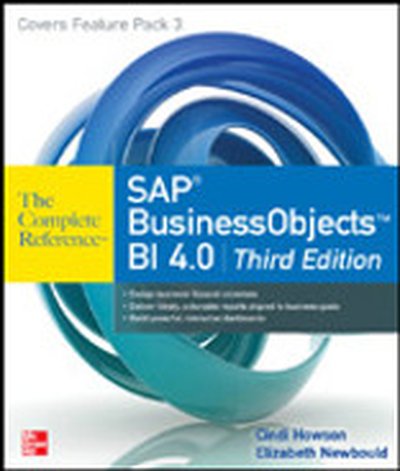
SAP BusinessObjects BI 4.0 The Complete Reference 3/E

The definitive reference for building actionable business intelligence—completely revised for SAP BusinessObjects BI 4.0. Unleash the full potential of business intelligence with fact-based decisions, aligned to business goals, using reports and dashboards that lead from insight to action. SAP BusinessObjects BI 4.0: The Complete Reference offers completely updated coverage of the latest BI platform. Find out how to work with the new Information Design Tool to create universes that access multiple data sources and SAP BW. See how to translate complex business questions into highly efficient Web Intelligence queries and publish your results to the BI Launchpad. Learn how to create dashboards from data sourced through a universe or spreadsheet. The most important concepts for universe designers, report and dashboard authors, and business analysts are fully explained and illustrated by screenshots, diagrams, and step-by-step instructions. Establish and evolve BI goals Maximize your BI investments by offering the right module to the right user Create robust universes with the Information Design Tool, leveraging multiple data sources, derived tables, aggregate awareness, and parameters Develop a security plan that is scalable and flexible Design Web Intelligence reports from basic to advanced Create sophisticated calculations and advanced formatting to highlight critical business trends Build powerful dashboards to embed in PowerPoint or the BI Launchpad Use Explorer to visually navigate large data sets and uncover patterns

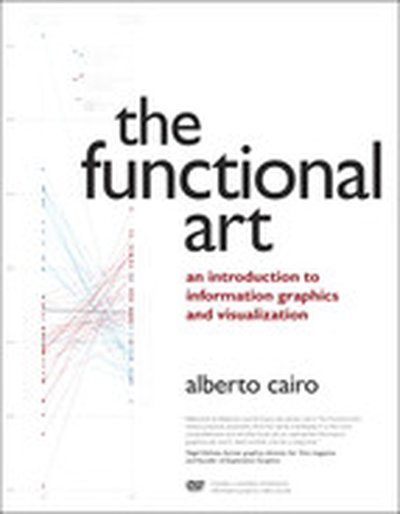
The Functional Art: An introduction to information graphics and visualization

Unlike any time before in our lives, we have access to vast amounts of free information. With the right tools, we can start to make sense of all this data to see patterns and trends that would otherwise be invisible to us. By transforming numbers into graphical shapes, we allow readers to understand the stories those numbers hide. In this practical introduction to understanding and using information graphics, you’ll learn how to use data visualizations as tools to see beyond lists of numbers and variables and achieve new insights into the complex world around us. Regardless of the kind of data you’re working with–business, science, politics, sports, or even your own personal finances–this book will show you how to use statistical charts, maps, and explanation diagrams to spot the stories in the data and learn new things from it. Condé Nast Traveler’s John Grimwade , National Geographic Magazine’s Fernando Baptista, The New York Times’ Steve Duenes, The Washington Post’s Hannah Fairfield, Hans Rosling of the Gapminder Foundation, Stanford’s Geoff McGhee, and European superstars Moritz Stefaner, Jan Willem Tulp, Stefanie Posavec, and Gregor Aisch. The Functional Art reveals: In this introductory course on information graphics, Alberto Cairo goes into greater detail with even more visual examples of how to create effective information graphics that function as practical tools for aiding perception. You’ll learn how to: incorporate basic design principles in your visualizations, create simple interfaces for interactive graphics, and choose the appropriate type of graphic forms for your data. Cairo also deconstructs successful information graphics from The New York Times and National Geographic magazine with sketches and images not shown in the book.

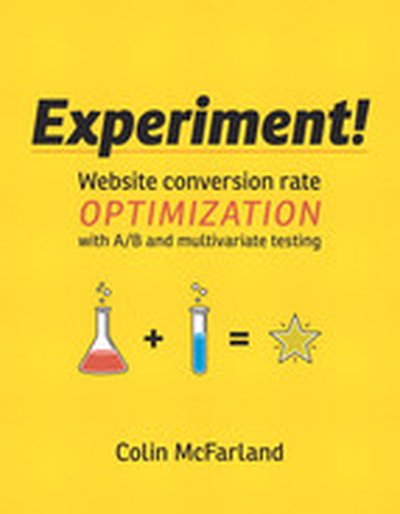
Experiment!: Website conversion rate optimization with A/B and multivariate testing

Testing is a surefire way to dramatically improve your website’s conversion rate and increase revenue. When you run experiments with changes to design or content, you’ll quickly discover which changes better motivate your users to take action. This book shows how to learn from your customers’ behavior and decisions, and how their responses reveal the strengths and weaknesses of your site. It will show you how to make websites that work harder and convert better. Learn how to approach experiments to improve conversion Understand the various methods of testing including A/B and multivariate Discover experiment ideas, and go beyond optimization to innovation Recognize the UX and design implications of experimenting Learn to analyze data and deliver results Experimenting changes the way you think about design and the way you work. It helps prevent the loudest voice from deciding direction; instead, through an experiment, you’ll ask the most important voices--your customers--“What do you think?”

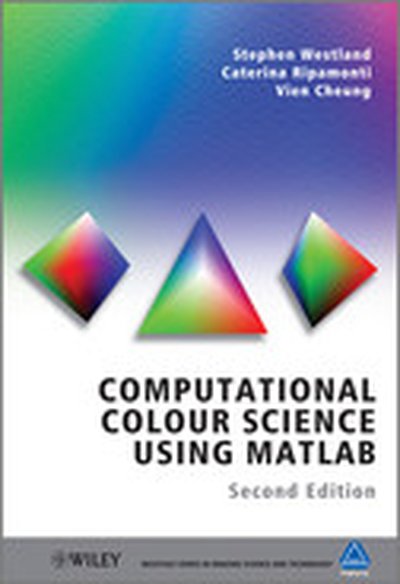
Computational Colour Science Using MATLAB, 2nd Edition

Computational Colour Science Using MATLAB 2nd Edition offers a practical, problem-based approach to colour physics. The book focuses on the key issues encountered in modern colour engineering, including efficient representation of colour information, Fourier analysis of reflectance spectra and advanced colorimetric computation. Emphasis is placed on the practical applications rather than the techniques themselves, with material structured around key topics. These topics include colour calibration of visual displays, computer recipe prediction and models for colour-appearance prediction. Each topic is carefully introduced at three levels to aid student understanding. First, theoretical ideas and background information are discussed, then explanations of mathematical solutions follow and finally practical solutions are presented using MATLAB. The content includes: A compendium of equations and numerical data required by the modern colour and imaging scientist. Numerous examples of solutions and algorithms for a wide-range of computational problems in colour science. Example scripts using the MATLAB programming language. This 2nd edition contains substantial new and revised material, including three innovative chapters on colour imaging, psychophysical methods, and physiological colour spaces; the MATLAB toolbox has been extended with a professional, optimized, toolbox to go alongside the current teaching toolbox; and a java toolbox has been added which will interest users who are writing web applications and/or applets or mobile phone applications. Computational Colour Science Using MATLAB 2nd Edition is an invaluable resource for students taking courses in colour science, colour chemistry and colour physics as well as technicians and researchers working in the area. In addition, it acts a useful reference for professionals and researchers working in colour dependent industries such as textiles, paints, print & electronic imaging. Review from First Edition: "...highly recommended as a concise introduction to the practicalities of colour science..." (Color Technology, 2004)

Experiment!: Planning, Implementing and Interpreting

Experiments are the most effective way to learn about the world. By cleverly interfering with something to see how it reacts we are able to find out how it works. In contrast to passive observation, experimenting provides us with data relevant to our research and thus less time and effort is spent separating relevant from irrelevant information. The art of experimentation is often learnt by doing, so an intuitive understanding of the experimental method usually evolves gradually through years of trial and error. This book speeds up the journey for the reader to becoming a proficient experimenter. Organized in two parts, this unique text begins by providing a general introduction to the scientific approach to experimentation. It then describes the processes and tools required, including the relevant statistical and experimental methods. Towards the end of the book a methodology is presented, which leads the reader through the three phases of an experiment: 'Planning', 'Data Collection', and 'Analysis and Synthesis'. Experiment! Provides an excellent introduction to the methodology and implementation of experimentation in the natural, engineering and medical sciences Puts practical tools into scientific context Features a number of selected actual experiments to explore what are the key characteristics of good experiments Includes examples and exercises in every chapter This book focuses on general research skills, such as adopting a scientific mindset, learning how to plan meaningful experiments and understanding the fundamentals of collecting and interpreting data. It is directed to anyone engaged in experiments, especially Ph.D. and masters students just starting to create and develop their own experiments.

Regression Analysis

The technique of regression analysis is used so often in business and economics today that an understanding of its use is necessary for almost everyone engaged in the field. This book will teach you the essential elements of building and understanding regression models in a business/economic context in an intuitive manner. The authors take a non-theoretical treatment that is accessible even if you have a limited statistical background. It is specifically designed to teach the correct use of regression, while advising you of its limitations and teaching about common pitfalls. This book describes exactly how regression models are developed and evaluated —where real data is used, instead of contrived textbook-like problems. Completing this book will allow you to understand and build basic business/economic models using regression analysis. You will be able to interpret the output of those models and you will be able to evaluate the models for accuracy and shortcomings. Even if you never build a model yourself, at some point in your career it is likely that you will find it necessary to interpret one; this book will make that possible. Included are instructions for using Microsoft Excel to build business/economic models using regression analysis with an appendix using screen shots and step-by-step instructions.

Applied Data Mining for Forecasting Using SAS

Applied Data Mining for Forecasting Using SAS, by Tim Rey, Arthur Kordon, and Chip Wells, introduces and describes approaches for mining large time series data sets. Written for forecasting practitioners, engineers, statisticians, and economists, the book details how to select useful candidate input variables for time series regression models in environments when the number of candidates is large, and identifies the correlation structure between selected candidate inputs and the forecast variable.

Categorical Data Analysis Using SAS, Third Edition, 3rd Edition

Statisticians and researchers will find Categorical Data Analysis Using SAS, Third Edition, by Maura Stokes, Charles Davis, and Gary Koch, to be a useful discussion of categorical data analysis techniques as well as an invaluable aid in applying these methods with SAS. Practical examples from a broad range of applications illustrate the use of the FREQ, LOGISTIC, GENMOD, NPAR1WAY, and CATMOD procedures in a variety of analyses. Topics discussed include assessing association in contingency tables and sets of tables, logistic regression and conditional logistic regression, weighted least squares modeling, repeated measurements analyses, loglinear models, generalized estimating equations, and bioassay analysis.

The third edition updates the use of SAS/STAT software to SAS/STAT 12.1 and incorporates ODS Graphics. Many additional SAS statements and options are employed, and graphs such as effect plots, odds ratio plots, regression diagnostic plots, and agreement plots are discussed. The material has also been revised and reorganized to reflect the evolution of categorical data analysis strategies. Additional techniques include such topics as exact Poisson regression, partial proportional odds models, Newcombe confidence intervals, incidence density ratios, and so on.

This book is part of the SAS Press program.

Common Errors in Statistics (and How to Avoid Them), 4th Edition

Praise for Common Errors in Statistics (and How to Avoid Them) "A very engaging and valuable book for all who use statistics in any setting." —CHOICE "Addresses popular mistakes often made in data collection and provides an indispensable guide to accurate statistical analysis and reporting. The authors' emphasis on careful practice, combined with a focus on the development of solutions, reveals the true value of statistics when applied correctly in any area of research." —MAA Reviews Common Errors in Statistics (and How to Avoid Them), Fourth Edition provides a mathematically rigorous, yet readily accessible foundation in statistics for experienced readers as well as students learning to design and complete experiments, surveys, and clinical trials. Providing a consistent level of coherency throughout, the highly readable Fourth Edition focuses on debunking popular myths, analyzing common mistakes, and instructing readers on how to choose the appropriate statistical technique to address their specific task. The authors begin with an introduction to the main sources of error and provide techniques for avoiding them. Subsequent chapters outline key methods and practices for accurate analysis, reporting, and model building. The Fourth Edition features newly added topics, including: Baseline data Detecting fraud Linear regression versus linear behavior Case control studies Minimum reporting requirements Non-random samples The book concludes with a glossary that outlines key terms, and an extensive bibliography with several hundred citations directing readers to resources for further study. Presented in an easy-to-follow style, Common Errors in Statistics, Fourth Edition is an excellent book for students and professionals in industry, government, medicine, and the social sciences.

R For Dummies

Still trying to wrap your head around R? With more than two million users, R is the open-source programming language standard for data analysis and statistical modeling. R is packed with powerful programming capabilities, but learning to use R in the real world can be overwhelming for even the most seasoned statisticians. This easy-to-follow guide explains how to use R for data processing and statistical analysis, and then, shows you how to present your data using compelling and informative graphics. You'll gain practical experience using R in a variety of settings and delve deeper into R's feature-rich toolset. Includes tips for the initial installation of R Demonstrates how to easily perform calculations on vectors, arrays, and lists of data Shows how to effectively visualize data using R's powerful graphics packages Gives pointers on how to find, install, and use add-on packages created by the R community Provides tips on getting additional help from R mailing lists and websites Whether you're just starting out with statistical analysis or are a procedural programming pro, R For Dummies is the book you need to get the most out of R.

Statistical Inference: A Short Course

A concise, easily accessible introduction to descriptive and inferential techniques Statistical Inference: A Short Course offers a concise presentation of the essentials of basic statistics for readers seeking to acquire a working knowledge of statistical concepts, measures, and procedures. The author conducts tests on the assumption of randomness and normality, provides nonparametric methods when parametric approaches might not work. The book also explores how to determine a confidence interval for a population median while also providing coverage of ratio estimation, randomness, and causality. To ensure a thorough understanding of all key concepts, Statistical Inference provides numerous examples and solutions along with complete and precise answers to many fundamental questions, including: How do we determine that a given dataset is actually a random sample? With what level of precision and reliability can a population sample be estimated? How are probabilities determined and are they the same thing as odds? How can we predict the level of one variable from that of another? What is the strength of the relationship between two variables? The book is organized to present fundamental statistical concepts first, with later chapters exploring more advanced topics and additional statistical tests such as Distributional Hypotheses, Multinomial Chi-Square Statistics, and the Chi-Square Distribution. Each chapter includes appendices and exercises, allowing readers to test their comprehension of the presented material. Statistical Inference: A Short Course is an excellent book for courses on probability, mathematical statistics, and statistical inference at the upper-undergraduate and graduate levels. The book also serves as a valuable reference for researchers and practitioners who would like to develop further insights into essential statistical tools.

Getting Started with D3

Learn how to create beautiful, interactive, browser-based data visualizations with the D3 JavaScript library. This hands-on book shows you how to use a combination of JavaScript and SVG to build everything from simple bar charts to complex infographics. You’ll learn how to use basic D3 tools by building visualizations based on real data from the New York Metropolitan Transit Authority. Using historical tables, geographical information, and other data, you’ll graph bus breakdowns and accidents and the percentage of subway trains running on time, among other examples. By the end of the book, you’ll be prepared to build your own web-based data visualizations with D3. Join a dataset with elements of a webpage, and modify the elements based on the data Map data values onto pixels and colors with D3’s scale objects Apply axis and line generators to simplify aspects of building visualizations Create a simple UI that allows users to investigate and compare data Use D3 transitions in your UI to animate important aspects of the data Get an introduction to D3 layout tools for building more sophisticated visualizations If you can code and manipulate data, and know how to work with JavaScript and SVG, this book is for you.