talk-data.com talk-data.com

Topic

AI/ML

Artificial Intelligence/Machine Learning

data_science algorithms predictive_analytics

9014

tagged

Activity Trend

1532 peak/qtr
2020-Q1 2026-Q1

Activities

9014 activities · Newest first

Although this week’s business surveys sent an upbeat growth signal, the message from labor market reports in the US and elsewhere dominates risk assessments and the direction central banks will travel.

Speakers:

Bruce Kasman

Joseph Lupton

This podcast was recorded on 5 September 2025.

This communication is provided for information purposes only. Institutional clients please visit www.jpmm.com/research/disclosures for important disclosures. © 2025 JPMorgan Chase & Co. All rights reserved. This material or any portion hereof may not be reprinted, sold or redistributed without the written consent of J.P. Morgan. It is strictly prohibited to use or share without prior written consent from J.P. Morgan any research material received from J.P. Morgan or an authorized third-party (“J.P. Morgan Data”) in any third-party artificial intelligence (“AI”) systems or models when such J.P. Morgan Data is accessible by a third-party. It is permissible to use J.P. Morgan Data for internal business purposes only in an AI system or model that protects the confidentiality of J.P. Morgan Data so as to prevent any and all access to or use of such J.P. Morgan Data by any third-party.

Você já parou para pensar quais viéses seu algoritmo pode carregar e como isso impacta suas análises? Neste episódio, conversamos com Andressa Freires, fundadora da diversiData e Data Science Specialist, sobre como as perspectivas dos desenvolvedores de AIs e modelos podem transpassar no conteúdo criado por essas tecnologias. Além disso, discutimos como a falta de diversidade pode impactar as ferramentas que são amplamente utilizadas pelo mundo e as consequências desse movimento. Lembrando que você pode encontrar todos os podcasts da comunidade Data Hackers no Spotify, iTunes, Google Podcast, Castbox e muitas outras plataformas. Nossa Bancada Data Hackers: Paulo Vasconcellos — Co-founder da Data Hackers e Principal Data Scientist na Hotmart. Monique Femme — Head of Community Management na Data Hackers Referências: https://mitsloanreview.com.br/quebrando-correntes-e-liderando-com-proposito/ https://linktr.ee/diversidata https://www.amazon.com/Unmasking-AI-Mission-Protect-Machines/dp/0593241835 https://www.amazon.com/Weapons-Math-Destruction-Increases-Inequality/dp/0553418815

In this episode, Conor and Bryce interview Sean Parent about his thoughts on AI, its impact on the software industry and society, and more! Link to Episode 250 on WebsiteDiscuss this episode, leave a comment, or ask a question (on GitHub)Socials ADSP: The Podcast: TwitterConor Hoekstra: Twitter | BlueSky | MastodonBryce Adelstein Lelbach: TwitterAbout the Guest: Sean Parent is a senior principal scientist and software architect managing Adobe's Software Technology Lab. Sean first joined Adobe in 1993 working on Photoshop and is one of the creators of Photoshop Mobile, Lightroom Mobile, and Lightroom Web. In 2009 Sean spent a year at Google working on Chrome OS before returning to Adobe. From 1988 through 1993 Sean worked at Apple, where he was part of the system software team that developed the technologies allowing Apple’s successful transition to PowerPC. Show Notes Date Recorded: 2025-08-21 Date Released: 2025-09-05 Snowcrash by Neal StephensonTech LayoffslumeWall-EAltered CarbonTerminatorIntro Song Info Miss You by Sarah Jansen https://soundcloud.com/sarahjansenmusic Creative Commons — Attribution 3.0 Unported — CC BY 3.0 Free Download / Stream: http://bit.ly/l-miss-you Music promoted by Audio Library https://youtu.be/iYYxnasvfx8

LLMs seem like a hot solution now, until you try deploying one. In this episode, Andriy Burkov, machine learning expert and author of The Hundred-Page Machine Learning Book, joins us for a grounded, sometimes blunt conversation about why many LLM applications fail. We talk about sentiment analysis, difficulty with taxonomy, agents getting tripped up on formatting, and why MCP might not solve your problems. If you're tired of the hype and want to understand the real state of applied LLMs, this episode delivers. What You'll Learn: What is often misunderstood about LLMs The reliability of sentiment analysis How can we make agents more resilient?   📚 Check out Andriy's books on machine learning and LLMs: The Hundred-Page Machine Learning Book The Hundred-Page Language Models Book: hands-on with Pytorch  🤝 Follow Andriy on LinkedIn!   Register for free to be part of the next live session: https://bit.ly/3XB3A8b   Follow us on Socials: LinkedIn YouTube Instagram (Mavens of Data) Instagram (Maven Analytics) TikTok Facebook Medium X/Twitter

MongoDB Essentials

Get started fast with MongoDB architecture, core operations, and AI-powered tools for building intelligent applications Free with your book: DRM-free PDF version + access to Packt's next-gen Reader Key Features Quickly grasp the MongoDB architecture and distributed design principles Learn practical data modeling, CRUD operations, and aggregation techniques Explore AI-enabled tools for building intelligent applications with MongoDB Purchase of the print or Kindle book includes a free PDF eBook Book Description Modern applications demand flexibility, speed, and intelligence, and MongoDB delivers all three. This mini guide wastes no time, offering a concise, practical introduction to handling data flexibly and efficiently with MongoDB. MongoDB Essentials helps developers, architects, database administrators, and decision makers get started quickly and confidently. The book introduces MongoDB’s core principles, from the document data model to its distributed architecture, including replica sets and sharding. It then helps you build hands-on skills such as installing MongoDB, designing effective data schemas, performing CRUD operations, and working with the aggregation pipeline. You’ll discover performance tips along the way and learn how AI-enhanced tools like Atlas Search and Atlas Vector Search power intelligent application development. With clear explanations and a practical approach, this book gives you the foundation and skills you need to start working with MongoDB right away. Email sign-up and proof of purchase required What you will learn Understand MongoDB's document model and architecture Set up local MongoDB deployments quickly Design schemas tailored to application access patterns Perform CRUD and aggregation operations efficiently Use tools to optimize query performance and scalability Explore AI-powered features such as Atlas Search and Atlas Vector Search Who this book is for This book is for anyone looking to explore MongoDB, including students, developers, system architects, managers, database administrators, and decision makers who want to familiarize themselves with what a modern database can offer. Whether you're building your first application or exploring what MongoDB can do for you, this book is the idea starting point for your MongoDB journey.

The Official MongoDB Guide

The official guide to MongoDB architecture, tools, and cloud features, written by leading MongoDB subject matter experts to help you build secure, scalable, high-performance applications Key Features Design resilient, secure solutions with high performance and scalability Streamline development with modern tooling, indexing, and AI-powered workflows Deploy and optimize in the cloud using advanced MongoDB Atlas features Purchase of the print or Kindle book includes a free PDF eBook Book Description Delivering secure, scalable, and high-performance applications is never easy, especially when systems must handle growth, protect sensitive data, and perform reliably under pressure. The Official MongoDB Guide addresses these challenges with guidance from MongoDB’s top subject matter experts, so you learn proven best practices directly from those who know the technology inside out. This book takes you from core concepts and architecture through to advanced techniques for data modeling, indexing, and query optimization, supported by real-world patterns that improve performance and resilience. It offers practical coverage of developer tooling, IDE integrations, and AI-assisted workflows that will help you work faster and more effectively. Security-focused chapters walk you through authentication, authorization, encryption, and compliance, while chapters dedicated to MongoDB Atlas showcase its robust security features and demonstrate how to deploy, scale, and leverage platform-native capabilities such as Atlas Search and Atlas Vector Search. By the end of this book, you’ll be able to design, build, and manage MongoDB applications with the confidence that comes from learning directly from the experts shaping the technology. What you will learn Build secure, scalable, and high-performance applications Design efficient data models and indexes for real workloads Write powerful queries to sort, filter, and project data Protect applications with authentication and encryption Accelerate coding with AI-powered and IDE-based tools Launch, scale, and manage MongoDB Atlas with confidence Unlock advanced features like Atlas Search and Atlas Vector Search Apply proven techniques from MongoDB's own engineering leaders Who this book is for This book is for developers, database professionals, architects, and platform teams who want to get the most out of MongoDB. Whether you’re building web apps, APIs, mobile services, or backend systems, the concepts covered here will help you structure data, improve performance, and deliver value to your users. No prior experience with MongoDB is required, but familiarity with databases and programming will be helpful.

In this episode of Hub & Spoken, host Jason Foster, CEO & Founder of Cynozure, is joined by James Lupton, Chief Technology Officer at Cynozure, to explore the findings from What Matters Most for Insurers Now — a new report shaped by insights from 35 senior leaders across the insurance industry. While the report focuses on insurers, its lessons resonate far more widely. Jason and James discuss how organisations across sectors are wrestling with the same issues: outdated and overly customised legacy systems that hold back innovation, a persistent gap between the ambition to build a data-driven culture and the actions taken to achieve it, and the importance of leadership support that goes beyond lip service to meaningful investment and behaviour change. They also consider the next frontier: AI agents. With many firms experimenting but few ready to deploy, Jason and James unpack what true readiness looks like and why success requires more than just technology. This episode offers practical reflections for leaders in complex, regulated industries who are striving to "fix forward" and unlock the real value of data and AI. Download What Matters Most for Insurers Now here *****    Cynozure is a leading data, analytics and AI company that helps organisations to reach their data potential. It works with clients on data and AI strategy, data management, data architecture and engineering, analytics and AI, data culture and literacy, and data leadership. The company was named one of The Sunday Times' fastest-growing private companies in both 2022 and 2023 and recognised as The Best Place to Work in Data by DataIQ in 2023 and 2024. Cynozure is a certified B Corporation. 

There are very few people like Stephen Brobst, a legendary tech CTO and "certified data geek," Stephen shares his incredible journey, from his early days in computational physics and building real-time trading systems on Wall Street to becoming the CTO for Teradata and now Ab Initio Software. Stephen provides a masterclass on the evolution of data architecture, tracing the macro trends from early decision support systems to "active data warehousing" and the rise of AI/ML (formerly known as data mining). He dives deep into why metadata-driven architecture is critical for the future and how AI, large language models, and real-time sensor technology will fundamentally reshape industries and eliminate the dashboard as we know it. We also chat about something way cooler, as Stephen discusses his three passions: travel, music, and teaching. He reveals his personal rule of never staying in the same city for more than five consecutive days since 1993 and how he manages a life of constant motion. From his early days DJing punk rock and seeing the Sex Pistols' last concert to his minimalist travel philosophy and ever-growing bucket list, Stephen offers a unique perspective on living a life rich with experience over material possessions. Finally, he offers invaluable advice for the next generation on navigating careers in an AI-driven world and living life to the fullest.

The line between human work and AI capabilities is blurring in today's business environment. AI agents are now handling autonomous tasks across customer support, data management, and sales prospecting with increasing sophistication. But how do you effectively integrate these agents into your existing workflows? What's the right approach to training and evaluating AI team members? With data quality being the foundation of successful AI implementation, how can you ensure your systems have the unified context they need while maintaining proper governance and privacy controls? Karen Ng is the Head of Product at HubSpot, where she leads product strategy, design, and partnerships with the mission of helping millions of organizations grow better. Since joining in 2022, she has driven innovation across Smart CRM, Operations Hub, Breeze Intelligence, and the developer ecosystem, with a focus on unifying structured and unstructured data to make AI truly useful for businesses. Known for leading with clarity and “AI speed,” she pushes HubSpot to stay ahead of disruption and empower customers to thrive. Previously, Karen held senior product leadership roles at Common Room, Google, and Microsoft. At Common Room, she built the product and data science teams from the ground up, while at Google she directed Android’s product frameworks like Jetpack and Jetpack Compose. During more than a decade at Microsoft, she helped shape the company’s .NET strategy and launched the Roslyn compiler platform. Recognized as a Product 50 Winner and recipient of the PM Award for Technical Strategist, she also advises and invests in high-growth technology companies. In the episode, Richie and Karen explore the evolving role of AI agents in sales, marketing, and support, the distinction between chatbots, co-pilots, and autonomous agents, the importance of data quality and context, the concept of hybrid teams, the future of AI-driven business processes, and much more. Links Mentioned in the Show: Hubspot Breeze AgentsConnect with KarenWebinar: Pricing & Monetizing Your AI Products with Sam Lee, VP of Pricing Strategy & Product Operations at HubSpotRelated Episode: Enterprise AI Agents with Jun Qian, VP of Generative AI Services at OracleRewatch RADAR AI  New to DataCamp? Learn on the go using the DataCamp mobile appEmpower your business with world-class data and AI skills with DataCamp for business

Kubeflow pipelines meet uv

Kubeflow is a platform for building and deploying portable and scalable machine learning (ML) workflows using containers on Kubernetes-based systems.

We will code together a simple Kubeflow pipeline, show how to test it locally. As a bonus, we will explore one solution to avoid dependency hell using the modern dependency management tool uv.

Scraping urban mobility: analysis of Berlin carsharing

Free-floating carsharing systems struggle to balance vehicle supply and demand, which often results in inefficient fleet distribution and reduced vehicle utilization. This talk explores how data scraping can be used to model vehicle demand and user behavior, enabling targeted incentives to encourage self-balancing vehicle flows.

Using information scraped from a major mobility provider over multiple months, the presentation provides spatiotemporal analyses and machine learning results to determine whether it's practically possible to offer low-friction discounts that lead to improved fleet balance.

In this episode, I talk with Ilya Preston, co-founder and CEO of PAXAFE, a logistics orchestration and decision intelligence platform for temperature-controlled supply chains (aka “cold chain”). Ilya explains how PAXAFE helps companies shipping sensitive products, like pharmaceuticals, vaccines, food, and produce, by delivering end-to-end visibility and actionable insights powered by analytics and AI that reduce product loss, improve efficiency, and support smarter real-time decisions.

Ilya shares the challenges of building a configurable system that works for transportation, planning, and quality teams across industries. We also discuss their product development philosophy, team structure, and use of AI for document processing, diagnostics, and workflow automation. 

Highlights/ Skip to:  

Intro to Paxafe  (2:13)   How PAXAFE brings tons of cold chain data together in one user experience (2:33) Innovation in cold chain analytics is up, but so is cold chain product loss. (4:42) The product challenge of getting sufficient telemetry data at the right level of specificity to derive useful analytical insights (7:14)  Why and how PAXAFE pivoted away from providing IoT hardware to collect telemetry (10:23) How PAXAFE supports complex customer workflows, cold chain logistics, and complex supply chains (13:57) Who the end users of PAXAFE are, and how the product team designs for these users (20:00) Pharma loses around $40 billion a year relying on ‘Bob’s intuition’ in the warehouse. How Paxafe balances institutional user knowledge with the cold hard facts of analytics (42:43) Lessons learned when Ilya’s team fell in love with its own product and didn’t listen to the market  (23:57)

Quotes from Today’s Episode "Our initial vision for what PAXAFE would become was 99.9% spot on. The only thing we misjudged was market readiness—we built a product that was a few years ahead of its time." –IIya

"As an industry, pharma is losing $40 billion worth of product every year because decisions are still based on warehouse intuition about what works and what doesn’t. In production, the problem is even more extreme, with roughly $800 billion lost annually due to temperature issues and excursions." -IIya

"With our own design, our initial hypothesis and vision for what Pacaf could be really shaped where we are today. Early on, we had a strong perspective on what our customers needed—and along the way, we fell in love with our own product and design.." -IIya

"We spent months perfecting risk scores… only to hear from customers, ‘I don’t care about a 71 versus a 62—just tell me what to do.’ That single insight changed everything." -IIya

"If you’re not talking to customers or building a product that supports those conversations, you’re literally wasting time. In the zero-to-product-market-fit phase, nothing else matters, you need to focus entirely on understanding your customers and iterating your product around their needs..” -IIya

"Don’t build anything on day one, probably not on day two, three, or four either. Go out and talk to customers. Focus not on what they think they need, but on their real pain points. Understand their existing workflows and the constraints they face while trying to solve those problems." -IIya

Links

PAXAFE: https://www.paxafe.com/ LinkedIn for Ilya Preston: https://www.linkedin.com/in/ilyapreston/ LinkedIn for company: https://www.linkedin.com/company/paxafe/

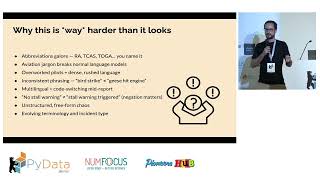
Flying Beyond Keywords: Our Aviation Semantic Search Journey

In aviation, search isn’t simple—people use abbreviations, slang, and technical terms that make exact matching tricky. We started with just Postgres, aiming for something that worked. Over time, we upgraded: semantic embeddings, reranking. We tackled filter complexity, slow index builds, and embedding updates and much more. Along the way, we learned a lot about making AI search fast, accurate, and actually usable for our users. It’s been a journey—full of turbulence, but worth the landing.

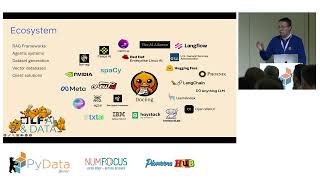
Docling: Get your documents ready for gen AI

Docling, an open source package, is rapidly becoming the de facto standard for document parsing and export in the Python community. Earning close to 30,000 GitHub in less than one year and now part of the Linux AI & Data Foundation. Docling is redefining document AI with its ease and speed of use. In this session, we’ll introduce Docling and its features, including usages with various generative AI frameworks and protocols (e.g. MCP).

Está no ar, o Data Hackers News !! Os assuntos mais quentes da semana, com as principais notícias da área de Dados, IA e Tecnologia, que você também encontra na nossa Newsletter semanal, agora no Podcast do Data Hackers !! Aperte o play e ouça agora, o Data Hackers News dessa semana ! Para saber tudo sobre o que está acontecendo na área de dados, se inscreva na Newsletter semanal: ⁠⁠⁠⁠⁠⁠⁠⁠⁠⁠⁠⁠⁠⁠⁠⁠⁠⁠⁠⁠⁠⁠⁠⁠⁠⁠⁠⁠⁠⁠⁠⁠https://www.datahackers.news/⁠⁠⁠⁠⁠⁠⁠⁠⁠⁠⁠⁠⁠⁠⁠⁠⁠⁠⁠⁠⁠⁠⁠⁠⁠⁠⁠⁠⁠⁠⁠⁠ Conheça nossos comentaristas do Data Hackers News: ⁠⁠⁠⁠⁠⁠⁠⁠⁠⁠⁠⁠⁠⁠⁠⁠⁠⁠⁠⁠⁠⁠⁠⁠⁠⁠⁠⁠Monique Femme⁠⁠⁠⁠⁠⁠⁠⁠⁠⁠⁠⁠⁠⁠⁠⁠⁠⁠⁠⁠⁠⁠⁠⁠⁠⁠⁠⁠⁠ Paulo Vasconcellos ⁠Matérias/assuntos comentados: Evento Mettup Itaú Demais canais do Data Hackers: ⁠⁠⁠⁠⁠⁠⁠⁠⁠⁠⁠⁠⁠⁠⁠⁠⁠⁠⁠⁠⁠⁠⁠⁠⁠⁠⁠⁠⁠⁠⁠⁠Site⁠⁠⁠⁠⁠⁠⁠⁠⁠⁠⁠⁠⁠⁠⁠⁠⁠⁠⁠⁠⁠⁠⁠⁠⁠⁠⁠⁠⁠⁠⁠⁠ ⁠⁠⁠⁠⁠⁠⁠⁠⁠⁠⁠⁠⁠⁠⁠⁠⁠⁠⁠⁠⁠⁠⁠⁠⁠⁠⁠⁠⁠⁠⁠⁠Linkedin⁠⁠⁠⁠⁠⁠⁠⁠⁠⁠⁠⁠⁠⁠⁠⁠⁠⁠⁠⁠⁠⁠⁠⁠⁠⁠⁠⁠⁠⁠⁠⁠ ⁠⁠⁠⁠⁠⁠⁠⁠⁠⁠⁠⁠⁠⁠⁠⁠⁠⁠⁠⁠⁠⁠⁠⁠⁠⁠⁠⁠⁠⁠⁠⁠Instagram⁠⁠⁠⁠⁠⁠⁠⁠⁠⁠⁠⁠⁠⁠⁠⁠⁠⁠⁠⁠⁠⁠⁠⁠⁠⁠⁠⁠⁠⁠⁠⁠ ⁠⁠⁠⁠⁠⁠⁠⁠⁠⁠⁠⁠⁠⁠⁠⁠⁠⁠⁠⁠⁠⁠⁠⁠⁠⁠⁠⁠⁠⁠⁠⁠Tik Tok⁠⁠⁠⁠⁠⁠⁠⁠⁠⁠⁠⁠⁠⁠⁠⁠⁠⁠⁠⁠⁠⁠⁠⁠⁠⁠⁠⁠⁠⁠⁠⁠ ⁠⁠⁠⁠⁠⁠⁠⁠⁠⁠⁠⁠⁠⁠⁠⁠⁠⁠⁠⁠⁠⁠⁠⁠⁠⁠⁠⁠⁠⁠⁠⁠You Tube⁠⁠⁠⁠⁠⁠⁠⁠⁠⁠⁠⁠⁠⁠⁠⁠⁠⁠⁠⁠⁠⁠⁠⁠⁠⁠⁠⁠⁠⁠⁠

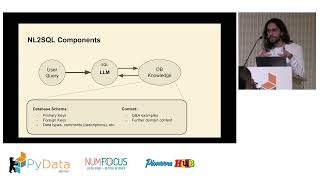
Building an AI Agent for Natural Language to SQL Query Execution on Live Databases

This hands-on tutorial will guide participants through building an end-to-end AI agent that translates natural language questions into SQL queries, validates and executes them on live databases, and returns accurate responses. Participants will build a system that intelligently routes between a specialized SQL agent and a ReAct chat agent, implementing RAG for query similarity matching, comprehensive safety validation, and human-in-the-loop confirmation. By the end of this session, attendees will have created a powerful and extensible system they can adapt to their own data sources.

Send us a text Get ready for an insightful conversation on the future of data integration and real-time decision making with Dima Spivak, Director of Product Management at StreamSets. We cover everything from the “why StreamSets” story to its secret sauce, how it plays in regulated industries, and what makes it a powerful player in data fabric, AI, and streaming use cases. If you’re passionate about the future of data pipelines, governance, and AI-driven insights, this one’s for you! ⏱️ Episode Guide: 02:02 | Meet Dima Spivak04:19 | Why StreamSets?06:00 | What is StreamSets?09:48 | On-Demand Expense11:34 | Regulated Industries12:36 | The Secret Sauce14:41 | A Competitive View15:50 | Data Fabric + StreamSets18:25 | StreamSets + AI21:12 | Use Cases That Matter24:02 | The Future of Streaming25:48 | Quality + Testing31:19 | For Fun 🎉🔗 Connect with Dima: LinkedIn: linkedin.com/in/dmitryspivak Website: https://www.ibm.com/blog/announcement/ibm-acquires-streamSets/ Want to be featured as a guest on Making Data Simple? Reach out to us at [email protected] and tell us why you should be next. The Making Data Simple Podcast is hosted by Al Martin, WW VP Technical Sales, IBM, where we explore trending technologies, business innovation, and leadership ... while keeping it simple & fun.