talk-data.com talk-data.com

Topic

AI/ML

Artificial Intelligence/Machine Learning

data_science algorithms predictive_analytics

9014

tagged

Activity Trend

1532 peak/qtr
2020-Q1 2026-Q1

Activities

9014 activities · Newest first

In this episode, we follow Caenorhabditis elegans into the magnetic field. Researchers have developed an elegant way to measure whole-brain neural activity in freely moving worms using a calcium-sensitive MRI contrast agent — a major step toward non-invasive brain mapping at the organism scale.

We explore:

How a genetically targeted MRI probe was used to detect calcium flux across the entire worm brain The fusion of genetics, MRI physics, and behavioural tracking Real-time measurements of brain dynamics during natural behaviour How this technique opens the door to non-invasive neuroimaging in small model organisms Implications for understanding how global brain states coordinate behaviour

📖 Based on the research article: “Functional MRI of brain-wide activity in freely moving C. elegans” Uday A. Ramalingam, Andrew M. Leifer, et al. Published in Nature (2024) 🔗 https://doi.org/10.1038/s41586-024-08331-x

🎧 Subscribe to the WOrM Podcast for more full-organism innovations in imaging, neuroscience, and behaviour!

This podcast is generated with artificial intelligence and curated by Veeren. If you’d like your publication featured on the show, please get in touch.

📩 More info: 🔗 ⁠⁠www.veerenchauhan.com⁠⁠ 📧 [email protected]

Private AI memory app, built respectfully, to echo my parents’ advice—comfort across oceans today, and someday after they’re gone. Private AI memory app—ethical, respectful, and comforting. I share why I built a small, private AI that echoes my parents’ advice when distance (India ↔ U.S.) feels heavy—and how I kept it ethical with privacy, consent, and dignity. This isn’t a replacement for real conversations; it’s a quiet anchor for hard days, and a way to preserve the feeling behind their words. You’ll learn Design for comfort over novelty (two simple voice profiles)Boundaries: privacy, consent, dignity—and why they matterA high-level recipe for a personal AI tool (framework-agnostic)A no-code way to try the idea safely todayBuild it yourself (guide): https://medium.com/data-science-collective/what-if-you-could-talk-to-your-parents-long-after-theyre-gone-i-built-an-ai-for-that-62bbaf37236d If this helped: Follow the show and share it with someone who misses home. Affiliate Disclosure This episode may contain affiliate links. If you purchase via these links, I may earn a small commission at no extra cost to you. Thanks for supporting the show. Affiliate partners (links below): RSS.com — Start your podcast, get free transcripts, and earn ad revenue with as few as 10 monthly downloads. Sign up here.Sider.ai — Your AI-powered research and productivity assistant for breaking down job descriptions into keywords. Try Sider here.Riverside.fm — Record your podcast in studio-quality audio and 4K video from anywhere. Get started with Riverside here.

7 essential habits helped me transition into data analytics (even without prior experience), and I'm sharing them in today's episode. If you're transitioning into data analytics, I've also created a free tool to help you monitor and track your progress. FREE 7 Habits Tracker here: http://datacareerjumpstart.com/7Habits ⚡Start designing today with Gamma for free ➡ https://landadatajob.com/gamma Here's your next watch! Stop Doing Random Data Courses - Read These Books Instead https://youtu.be/Ea9a-OM3Kfw?si=p6C2Vtknztv2ubBb 💌 Join 10k+ aspiring data analysts & get my tips in your inbox weekly 👉 https://www.datacareerjumpstart.com/newsletter 🆘 Feeling stuck in your data journey? Come to my next free "How to Land Your First Data Job" training 👉 https://www.datacareerjumpstart.com/training 👩‍💻 Want to land a data job in less than 90 days? 👉 https://www.datacareerjumpstart.com/daa 👔 Ace The Interview with Confidence 👉 https://www.datacareerjumpstart.com/interviewsimulator

⌚ TIMESTAMPS 00:00 Introduction 00:06 - Habit 1:  I built a real-world project every single month. 02:23 - Showcase your projects with Gamma! 03:18 - Habit 2: I read five pages a day. 05:24 - Habit 3:  I started seeing the real applications of data. 06:32 - Habit 4:  I started sharing my learnings on LinkedIn. 08:54 - Habit 5:  I applied for jobs consistently, not when I just felt ready. 09:50 - Habit 6:  I sent 1 to 3 cold DMs every week. 11:13 - Habit 7:  I started attending data events every month. 12:38 - FREE Habit Tracker

🔗 CONNECT WITH AVERY 🎥 YouTube Channel: https://www.youtube.com/@averysmith 🤝 LinkedIn: https://www.linkedin.com/in/averyjsmith/ 📸 Instagram: https://instagram.com/datacareerjumpstart 🎵 TikTok: https://www.tiktok.com/@verydata 💻 Website: https://www.datacareerjumpstart.com/ Mentioned in this episode: Join the last cohort of 2025! The LAST cohort of The Data Analytics Accelerator for 2025 kicks off on Monday, December 8th and enrollment is officially open!

To celebrate the end of the year, we’re running a special End-of-Year Sale, where you’ll get: ✅ A discount on your enrollment 🎁 6 bonus gifts, including job listings, interview prep, AI tools + more

If your goal is to land a data job in 2026, this is your chance to get ahead of the competition and start strong.

👉 Join the December Cohort & Claim Your Bonuses: https://DataCareerJumpstart.com/daa https://www.datacareerjumpstart.com/daa

Summary In this episode of the Data Engineering Podcast Andy Warfield talks about the innovative functionalities of S3 Tables and Vectors and their integration into modern data stacks. Andy shares his journey through the tech industry and his role at Amazon, where he collaborates to enhance storage capabilities, discussing the evolution of S3 from a simple storage solution to a sophisticated system supporting advanced data types like tables and vectors crucial for analytics and AI-driven applications. He explains the motivations behind introducing S3 Tables and Vectors, highlighting their role in simplifying data management and enhancing performance for complex workloads, and shares insights into the technical challenges and design considerations involved in developing these features. The conversation explores potential applications of S3 Tables and Vectors in fields like AI, genomics, and media, and discusses future directions for S3's development to further support data-driven innovation.

Announcements Hello and welcome to the Data Engineering Podcast, the show about modern data managementTired of data migrations that drag on for months or even years? What if I told you there's a way to cut that timeline by up to 6x while guaranteeing accuracy? Datafold's Migration Agent is the only AI-powered solution that doesn't just translate your code; it validates every single data point to ensure perfect parity between your old and new systems. Whether you're moving from Oracle to Snowflake, migrating stored procedures to dbt, or handling complex multi-system migrations, they deliver production-ready code with a guaranteed timeline and fixed price. Stop burning budget on endless consulting hours. Visit dataengineeringpodcast.com/datafold to book a demo and see how they're turning months-long migration nightmares into week-long success stories.Your host is Tobias Macey and today I'm interviewing Andy Warfield about S3 Tables and VectorsInterview IntroductionHow did you get involved in the area of data management?Can you describe what your goals are with the Tables and Vector features of S3?How did the experience of building S3 Tables inform your work on S3 Vectors?There are numerous implementations of vector storage and search. How do you view the role of S3 in the context of that ecosystem?The most directly analogous implementation that I'm aware of is the Lance table format. How would you compare the implementation and capabilities of Lance with what you are building with S3 Vectors?What opportunity do you see for being able to offer a protocol compatible implementation similar to the Iceberg compatibility that you provide with S3 Tables?Can you describe the technical implementation of the Vectors functionality in S3?What are the sources of inspiration that you looked to in designing the service?Can you describe some of the ways that S3 Vectors might be integrated into a typical AI application?What are the most interesting, innovative, or unexpected ways that you have seen S3 Tables/Vectors used?What are the most interesting, unexpected, or challenging lessons that you have learned while working on S3 Tables/Vectors?When is S3 the wrong choice for Iceberg or Vector implementations?What do you have planned for the future of S3 Tables and Vectors?Contact Info LinkedInParting Question From your perspective, what is the biggest gap in the tooling or technology for data management today?Closing Announcements Thank you for listening! Don't forget to check out our other shows. Podcast.init covers the Python language, its community, and the innovative ways it is being used. The AI Engineering Podcast is your guide to the fast-moving world of building AI systems.Visit the site to subscribe to the show, sign up for the mailing list, and read the show notes.If you've learned something or tried out a project from the show then tell us about it! Email [email protected] with your story.Links S3 TablesS3 VectorsS3 ExpressParquetIcebergVector IndexVector DatabasepgvectorEmbedding ModelRetrieval Augmented GenerationTwelveLabsAmazon BedrockIceberg REST CatalogLog-Structured Merge TreeS3 MetadataSentence TransformerSparkTrinoDaftThe intro and outro music is from The Hug by The Freak Fandango Orchestra / CC BY-SA

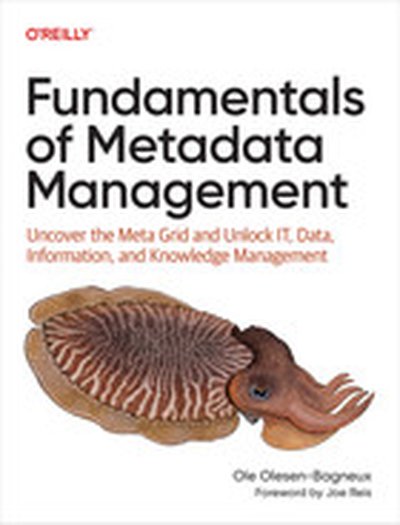
Fundamentals of Metadata Management

Whether it's to adhere to regulations, access markets by meeting specific standards, or devise data analytics and AI strategies, companies today are busy implementing metadata repositories—metadata tools about the IT, data, information, and knowledge in your company. Until now, most of these repositories have been implemented in isolation from one another, but that practice lies at the core of problems with data management in many companies today. Author Ole Olesen-Bagneux, chief evangelist at Actian, shows you how to masterfully manage your metadata repositories by properly coordinating them. That requires a data discovery team to increase insights for all key players in enterprise data management, from the CIO and CDO to enterprise and data architects. Coordinating these repositories will help you and your organization democratize data and excel at data management. This book shows you how. Learn what metadata repositories are and what they do Explore which data to represent in these repositories Set up a data discovery team to make data searchable Learn how to manage and coordinate repositories in a meta grid Increase innovation by setting up a functional data marketplace Make information security and data protection more robust Gain a deeper understanding of your company IT landscape Activate real enterprise architecture based on evidence

The structured data that powers business decisions is more complex than the sequences processed by traditional AI models. Enterprise databases with their interconnected tables of customers, products, and transactions form intricate graphs that contain valuable predictive signals. But how can we effectively extract insights from these complex relationships without extensive manual feature engineering? Graph transformers are revolutionizing this space by treating databases as networks and learning directly from raw data. What if you could build models in hours instead of months while achieving better accuracy? How might this technology change the role of data scientists, allowing them to focus on business impact rather than data preparation? Could this be the missing piece that brings the AI revolution to predictive modeling? Jure Leskovec is a Professor of Computer Science at Stanford University, where he is affiliated with the Stanford AI Lab, the Machine Learning Group, and the Center for Research on Foundation Models. Previously, he served as Chief Scientist at Pinterest and held a research role at the Chan Zuckerberg Biohub. He is also a co-founder of Kumo.AI, a machine learning startup. Leskovec has contributed significantly to the development of Graph Neural Networks and co-authored PyG, a widely-used library in the field. Research from his lab has supported public health efforts during the COVID-19 pandemic and informed product development at companies including Facebook, Pinterest, Uber, YouTube, and Amazon. His work has received several recognitions, including the Microsoft Research Faculty Fellowship (2011), the Okawa Research Award (2012), the Alfred P. Sloan Fellowship (2012), the Lagrange Prize (2015), and the ICDM Research Contributions Award (2019). His research spans social networks, machine learning, data mining, and computational biomedicine, with a focus on drug discovery. He has received 12 best paper awards and five 10-year Test of Time awards at leading academic conferences. In the episode, Richie and Jure explore the need for a foundation model for enterprise data, the limitations of current AI models in predictive tasks, the potential of graph transformers for business data, and the transformative impact of relational foundation models on machine learning workflows, and much more. Links Mentioned in the Show: Jure’s PublicationsKumo AIConnect with JureCourse - Transformer Models with PyTorchRelated Episode: High Performance Generative AI Applications with Ram Sriharsha, CTO at PineconeRewatch RADAR AI  New to DataCamp? Learn on the go using the DataCamp mobile appEmpower your business with world-class data and AI skills with DataCamp for business

Que os dados são protagonistas das decisões mais estratégicas das empresas você já sabe. Mas como isso acontece, na prática? Neste episódio, reunimos as lideranças do board do AI & Data Leaders 2025 — um dos eventos mais relevantes do país para decisores em inteligência artificial e dados — para explorar como essas tecnologias estão redefinindo estratégias e moldando o futuro dos negócios. Falamos sobre as tendências que já estão moldando o mercado, as principais apostas para os próximos anos e o que as empresas mais competitivas estão fazendo para usar dados e IA como ativos estratégicos. Se você quer entender para onde estamos indo e como se preparar para esse futuro esse episódio é um guia indispensável! Lembrando que você pode encontrar todos os podcasts da comunidade Data Hackers no Spotify, iTunes, Google Podcast, Castbox e muitas outras plataformas. Convidados: Fabricio Santos  - Founder do AI Data Leaders Rosane Ricciardi - CDAO at Amil Group Sergio Gaiotto - Diretor de Dados e IA na Claro e Professor no Lab Data da FIA Daniel Serman - Diretor de Dados na TIM Nossa Bancada Data Hackers: Paulo Vasconcellos — Co-founder da Data Hackers e Principal Data Scientist na Hotmart. Monique Femme — Head of Community Management na Data Hackers Referências: IA & DATA LEADERS: https://aidataleaders.com.br/?gad_source=1&gad_campaignid=22742814867&gbraid=0AAAAA_bGvNGjtQef03VsUhQBa5xSalprn&gclid=CjwKCAjwy7HEBhBJEiwA5hQNohjG-9yXfW6GtmCQjSLc4ocrL-ibMfQDzjHeSySSvuKjxg-5Y7ylNxoCxi8QAvD_BwE

What does it mean to be agentic? Is there a spectrum of agency?  In this episode of The Analytics Engineering Podcast, Tristan Handy talks to Sean Falconer, senior director of AI strategy at Confluent, about AI agents. They discuss what truly makes software "agentic," where agents are successfully being deployed, and how to conceptualize and build agents within enterprise infrastructure.  Sean shares practical ideas about the changing trends in AI, the role of basic models, and why agents may be better for businesses than for consumers. This episode will give you a clear, practical idea of how AI agents can change businesses, instead of being a vague marketing buzzword. For full show notes and to read 6+ years of back issues of the podcast's companion newsletter, head to https://roundup.getdbt.com. The Analytics Engineering Podcast is sponsored by dbt Labs.

Turn writing into a clean, editable deck—create slides with AI so you focus on the message, not formatting. Includes a simple presentation workflow. 🎧 Episode Summary: Create slides with AI—fast, clear, editable. This episode shows how I turned long-form writing (blogs, memos, outlines) into a polished slide deck you can download and edit—without getting stuck in formatting. You’ll get a simple AI presentation workflow, a reusable prompt, and ideas for diagrams that actually support your point. You’ll learn A repeatable blog → slides structure (7–10 slides, title + 3–5 bullets)How to keep slides human: clarity over decorationWhen to include a diagram (only for processes/flows)A fast export routine so you can present anywhereTry this (no code) “Convert this article into a 9-slide deck. For each slide: short title + 3–5 bullets, no paragraphs. If a slide describes a process, write a one-line prompt for a simple diagram. Keep language clear and speak to a non-expert audience.” Do next Generate → lightly edit → export → deliver. The goal is a message people can follow, not a template people admire. DIY guide https://medium.com/data-science-collective/i-built-an-ai-that-turns-any-blog-post-into-a-polished-slide-deck-with-smart-diagrams-10cbda8010aa

First-half resilience and robust risk markets have challenged our forecast for a sharp deceleration in 2H25 and tempered risks of recession. This week’s news on global industry and the US labor market affirms our call.

Speakers:

Bruce Kasman

Joseph Lupton

This podcast was recorded on 1 August 2025.

This communication is provided for information purposes only. Institutional clients please visit www.jpmm.com/research/disclosures for important disclosures. © 2025 JPMorgan Chase & Co. All rights reserved. This material or any portion hereof may not be reprinted, sold or redistributed without the written consent of J.P. Morgan. It is strictly prohibited to use or share without prior written consent from J.P. Morgan any research material received from J.P. Morgan or an authorized third-party (“J.P. Morgan Data”) in any third-party artificial intelligence (“AI”) systems or models when such J.P. Morgan Data is accessible by a third-party. It is permissible to use J.P. Morgan Data for internal business purposes only in an AI system or model that protects the confidentiality of J.P. Morgan Data so as to prevent any and all access to or use of such J.P. Morgan Data by any third-party.

Does today's use of AI coding agents remind you of a drunken high school or college party? Just like people discovering drugs and alcohol for the first time, I feel like the tech and data industry is in a similar place. "Just vibe..." is the mantra now.

But when I talk with developers and data practitioners in private, I get different vibes. There's definitely a concern that we're collectively building lots of slopware and are setting ourselves up for trouble as an industry.

What does AI transformation really look like inside a 180-year-old company? In this episode of Data Unchained, we are joined by Younes Hairej, founder and CEO of Aokumo Inc, a trailblazing company helping enterprises in Japan and beyond bridge the gap between business intent and AI execution. From deploying autonomous AI agents that eliminate the need for dashboards and YAML, to revitalizing siloed, analog systems in manufacturing, Younes shares what it takes to modernize legacy infrastructure without starting over. Cyberpunk by jiglr | https://soundcloud.com/jiglrmusic Music promoted by https://www.free-stock-music.com Creative Commons Attribution 3.0 Unported License https://creativecommons.org/licenses/by/3.0/deed.en_US

ArtificialIntelligence #EnterpriseAI #AITransformation #Kubernetes #DevOps #GenAI #DigitalTransformation #OpenSourceAI #DataInfrastructure #BusinessInnovation #AIInJapan #LegacyModernization #MetadataStrategy #AIOrchestration #CloudNative #AIAutomation #DataGovernance #MLOps #IntelligentAgents #TechLeadership

Hosted on Acast. See acast.com/privacy for more information.

In this episode, Conor and Bryce continue part 2 of their chat about AI, how it's changing the way they work and more. Link to Episode 245 on WebsiteDiscuss this episode, leave a comment, or ask a question (on GitHub)Socials ADSP: The Podcast: TwitterConor Hoekstra: Twitter | BlueSky | MastodonBryce Adelstein Lelbach: TwitterShow Notes Date Recorded: 2025-07-01 Date Released: 2025-08-01 AI Poll ResultsAll of Conor's Vibe Coded ProjectsCursorClaude 4C++Now 2019: Hana Dusíková “Compile Time Regular Expressions with A Deterministic Finite Automaton”GPU ModeIntro Song Info Miss You by Sarah Jansen https://soundcloud.com/sarahjansenmusic Creative Commons — Attribution 3.0 Unported — CC BY 3.0 Free Download / Stream: http://bit.ly/l-miss-you Music promoted by Audio Library https://youtu.be/iYYxnasvfx8

PGlite, a WASM build of PostgreSQL, offers a new way to run and use my favorite database. In this talk, we’ll explore the technology behind PGlite and look at various use cases. I’ll also share a real-world story about how I used it at my company, traide AI, and the challenges I faced—some of which I overcame, while others are still awaiting solutions.

Está no ar, o Data Hackers News !! Os assuntos mais quentes da semana, com as principais notícias da área de Dados, IA e Tecnologia, que você também encontra na nossa Newsletter semanal, agora no Podcast do Data Hackers !! Aperte o play e ouça agora, o Data Hackers News dessa semana ! Para saber tudo sobre o que está acontecendo na área de dados, se inscreva na Newsletter semanal: ⁠⁠⁠⁠⁠⁠⁠⁠⁠⁠⁠⁠⁠⁠⁠⁠⁠⁠⁠⁠⁠⁠⁠⁠⁠⁠⁠⁠⁠⁠⁠⁠https://www.datahackers.news/⁠⁠⁠⁠⁠⁠⁠⁠⁠⁠⁠⁠⁠⁠⁠⁠⁠⁠⁠⁠⁠⁠⁠⁠⁠⁠⁠⁠⁠⁠⁠⁠ Acesse os links: ⁠Inscrições do Data Hackers Challenge 2025⁠ ⁠Live Zoho: Decisões Baseadas em Dados: Aplicando Machine Learning com o Zoho Analytics Conheça nossos comentaristas do Data Hackers News: ⁠⁠⁠⁠⁠⁠⁠⁠⁠⁠⁠⁠⁠⁠⁠⁠⁠⁠⁠⁠⁠⁠⁠⁠⁠⁠⁠⁠Monique Femme⁠⁠⁠⁠⁠⁠⁠⁠⁠⁠⁠⁠⁠⁠⁠⁠⁠⁠⁠⁠⁠⁠⁠⁠⁠⁠⁠⁠⁠ Paulo Vasconcellos ⁠Matérias/assuntos comentados: Demais canais do Data Hackers: ⁠⁠⁠⁠⁠⁠⁠⁠⁠⁠⁠⁠⁠⁠⁠⁠⁠⁠⁠⁠⁠⁠⁠⁠⁠⁠⁠⁠⁠⁠⁠⁠Site⁠⁠⁠⁠⁠⁠⁠⁠⁠⁠⁠⁠⁠⁠⁠⁠⁠⁠⁠⁠⁠⁠⁠⁠⁠⁠⁠⁠⁠⁠⁠⁠ ⁠⁠⁠⁠⁠⁠⁠⁠⁠⁠⁠⁠⁠⁠⁠⁠⁠⁠⁠⁠⁠⁠⁠⁠⁠⁠⁠⁠⁠⁠⁠⁠Linkedin⁠⁠⁠⁠⁠⁠⁠⁠⁠⁠⁠⁠⁠⁠⁠⁠⁠⁠⁠⁠⁠⁠⁠⁠⁠⁠⁠⁠⁠⁠⁠⁠ ⁠⁠⁠⁠⁠⁠⁠⁠⁠⁠⁠⁠⁠⁠⁠⁠⁠⁠⁠⁠⁠⁠⁠⁠⁠⁠⁠⁠⁠⁠⁠⁠Instagram⁠⁠⁠⁠⁠⁠⁠⁠⁠⁠⁠⁠⁠⁠⁠⁠⁠⁠⁠⁠⁠⁠⁠⁠⁠⁠⁠⁠⁠⁠⁠⁠ ⁠⁠⁠⁠⁠⁠⁠⁠⁠⁠⁠⁠⁠⁠⁠⁠⁠⁠⁠⁠⁠⁠⁠⁠⁠⁠⁠⁠⁠⁠⁠⁠Tik Tok⁠⁠⁠⁠⁠⁠⁠⁠⁠⁠⁠⁠⁠⁠⁠⁠⁠⁠⁠⁠⁠⁠⁠⁠⁠⁠⁠⁠⁠⁠⁠⁠ ⁠⁠⁠⁠⁠⁠⁠⁠⁠⁠⁠⁠⁠⁠⁠⁠⁠⁠⁠⁠⁠⁠⁠⁠⁠⁠⁠⁠⁠⁠⁠⁠You Tube⁠⁠⁠⁠⁠⁠⁠⁠⁠⁠⁠⁠⁠⁠⁠⁠⁠⁠⁠⁠⁠⁠⁠⁠⁠⁠⁠⁠⁠⁠⁠

Send us a text Deep Diving into the future of AI:

Join Dr. Sean Falconer — AI Entrepreneur in Residence at Confluent, software engineering leader, and developer relations expert — for a deep dive into the future of AI, data streaming, and what it really means to build at the edge of innovation. From managing multiple LLMs to testing autonomous agents and sharing his bold contrarian takes, Sean helps us simplify the complexity of today's tech. 📌 Timestamps  04:38 – Meet Sean Falconer 11:11 – Lifelong Learning 12:31 – AI Entrepreneur in Residence 16:28 – Multiple LLMs in Action 21:07 – The Tech Behind Confluent 25:51 – Why Sean Chose Confluent 28:40 – Invest or Short? 36:58 – Testing Agents IRL 40:51 – The Contrarian AI Take 42:27 – Looking Ahead: The Future of AI🔗 Connect with Sean: LinkedInSubstackMedium

Want to be featured as a guest on Making Data Simple? Reach out to us at [email protected] and tell us why you should be next. The Making Data Simple Podcast is hosted by Al Martin, WW VP Technical Sales, IBM, where we explore trending technologies, business innovation, and leadership ... while keeping it simple & fun.