talk-data.com talk-data.com

Topic

AI/ML

Artificial Intelligence/Machine Learning

data_science algorithms predictive_analytics

9014

tagged

Activity Trend

1532 peak/qtr
2020-Q1 2026-Q1

Activities

9014 activities · Newest first

Send us a text The master of Artificial Intelligence: Ruchir Puri, Chief Scientist of IBM Research, an IBM Fellow, and Vice-President of IBM Corporate Technology.  AI questions you were afraid to ask, from hallucinations to watsonx. #makingdatasimple #watsonx

Welcome to the enlightening world of AI with Ruchir Puri, the Master of Artificial Intelligence and esteemed guest on our podcast. Join us as we embark on a captivating journey, delving deep into the realms of AI that you've always been curious about but hesitant to ask. From hallucinations to WatsonX, we leave no stone unturned in our quest for knowledge. Ruchir Puri, Chief Scientist of IBM Research and IBM Fellow, as well as Vice-President of IBM Corporate Technology, shares his expertise and insights, unraveling the complexities and potential of AI. Tune in to gain a comprehensive understanding of AI's capabilities and its impact on our lives. Prepare to have your questions answered and be amazed by the wonders of AI.

02:17 Meet Ruchir Puri the "Maker"09:24 A day in the life 14:22 The AI hype 24:21 Why now?27:36 The AI triangle35:57 Why IBM 40:58 Deciding factors43:57 Is bigger better?47:59 Hallucinations 49:53 watsonx52:33 Who are you betting on?54:23 First stepsLinkedIn: linkedin.com/in/ruchir-puri-b117021a Website: https://www.ibm.com/watsonx Want to be featured as a guest on Making Data Simple?  Reach out to us at [email protected] and tell us why you should be next.  The Making Data Simple Podcast is hosted by Al Martin, WW VP Technical Sales, IBM, where we explore trending technologies, business innovation, and leadership ... while keeping it simple & fun.  Want to be featured as a guest on Making Data Simple? Reach out to us at [email protected] and tell us why you should be next. The Making Data Simple Podcast is hosted by Al Martin, WW VP Technical Sales, IBM, where we explore trending technologies, business innovation, and leadership ... while keeping it simple & fun. Want to be featured as a guest on Making Data Simple? Reach out to us at [email protected] and tell us why you should be next. The Making Data Simple Podcast is hosted by Al Martin, WW VP Technical Sales, IBM, where we explore trending technologies, business innovation, and leadership ... while keeping it simple & fun. Want to be featured as a guest on Making Data Simple? Reach out to us at [email protected] and tell us why you should be next. The Making Data Simple Podcast is hosted by Al Martin, WW VP Technical Sales, IBM, where we explore trending technologies, business innovation, and leadership ... while keeping it simple & fun.
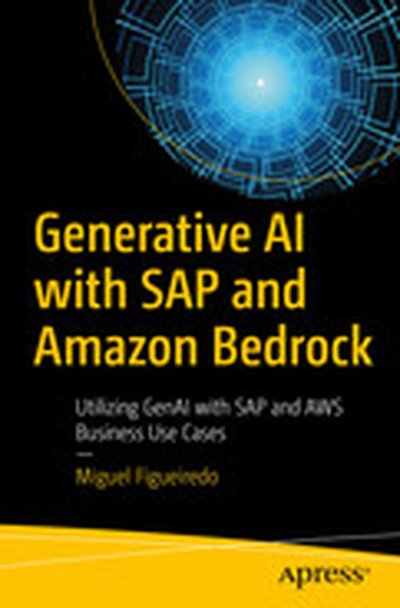

Generative AI with SAP and Amazon Bedrock: Utilizing GenAI with SAP and AWS Business Use Cases

Explore Generative AI and understand its key concepts, architecture, and tangible business use cases. This book will help you develop the skills needed to use SAP AI Core service features available in the SAP Business Technology Platform. You’ll examine large language model (LLM) concepts and gain the practical knowledge to unleash the best use of Gen AI. As you progress, you’ll learn how to get started with your own LLM models and work with Generative AI use cases. Additionally, you’ll see how to take advantage Amazon Bedrock stack using AWS SDK for ABAP. To fully leverage your knowledge, Generative AI with SAP and Amazon Bedrock offers practical step-by-step instructions for how to establish a cloud SAP BTP account model and create your first GenAIartifacts. This work is an important prerequisite for those who want to take full advantage of generative AI with SAP. What You Will Learn Master the concepts and terminology of artificial intelligence and GenAI Understand opportunities and impacts for different industries with GenAI Become familiar with SAP AI Core, Amazon Bedrock, AWS SDK for ABAP and develop your firsts GenAI projects Accelerate your development skills Gain more productivity and time implementing GenAI use cases Who this Book Is For Anyone who wants to learn about Generative AI for Enterprise and SAP practitioners who want to take advantage of AI within the SAP ecosystem to support their systems and workflows.

Meet  @SundasKhalid: High school dropout, immigrant, and now a powerhouse in data at Google! She shares pivotal tips for breaking into data, invaluable financial literacy insights, and how she champions salary negotiation by helping others secure higher pay. Special offer for Data Career Podcast viewers: Use the code AVERY 20 to avail of HUGE discounts from Sundas' Negotiation Masterclass: https://sklab.io/p/salary What's Sundas' REAL 6-Figure Tech Salary After 10 Years? https://youtu.be/EjJm_rcUOxY?si=YTOtXT_fLyqWzU1I 💌 Join 10k+ aspiring data analysts & get my tips in your inbox weekly 👉 https://www.datacareerjumpstart.com/newsletter 🆘 Feeling stuck in your data journey? Come to my next free "How to Land Your First Data Job" training 👉 https://www.datacareerjumpstart.com/training 👩‍💻 Want to land a data job in less than 90 days? 👉 https://www.datacareerjumpstart.com/daa 👔 Ace The Interview with Confidence 👉 https://www.datacareerjumpstart.com/interviewsimulator ⌚ TIMESTAMPS 00:00 - Introduction 01:05 - From high school dropout, immigrant child, to analytics lead at Google! 15:24 - Number 1 piece of advice 19:36 - AI in the workplace 24:04 - Financial literacy and salary negotiation 🔗 CONNECT WITH SUNDAS 🎥 YouTube Channel: https://www.youtube.com/@SundasKhalid 🤝 LinkedIn: https://www.linkedin.com/in/sundaskhalid/ 📸 Instagram: https://www.instagram.com/sundaskhalidd 🎵 TikTok: https://www.tiktok.com/@sundaskhalidd 💻 Website: https://sundaskhalid.com/ 🎥 Facebook: https://www.facebook.com/sundaskhalidd/ 🔗 CONNECT WITH AVERY 🎥 YouTube Channel: https://www.youtube.com/@averysmith 🤝 LinkedIn: https://www.linkedin.com/in/averyjsmith/ 📸 Instagram: https://instagram.com/datacareerjumpstart 🎵 TikTok: https://www.tiktok.com/@verydata 💻 Website: https://www.datacareerjumpstart.com/ Mentioned in this episode: Join the last cohort of 2025! The LAST cohort of The Data Analytics Accelerator for 2025 kicks off on Monday, December 8th and enrollment is officially open!

To celebrate the end of the year, we’re running a special End-of-Year Sale, where you’ll get: ✅ A discount on your enrollment 🎁 6 bonus gifts, including job listings, interview prep, AI tools + more

If your goal is to land a data job in 2026, this is your chance to get ahead of the competition and start strong.

👉 Join the December Cohort & Claim Your Bonuses: https://DataCareerJumpstart.com/daa https://www.datacareerjumpstart.com/daa

podcast_episode
by Val Kroll , Michael Tiffany (Fulcra Dynamics) , Julie Hoyer , Tim Wilson (Analytics Power Hour - Columbus (OH) , Moe Kiss (Canva) , Michael Helbling (Search Discovery)

Every listener of this show is keenly aware that they are enabling the collection of various forms of hyper-specific data. Smartphones are movement and light biometric data collection machines. Many of us augment this data with a smartwatch, a smart ring, or both. A connected scale? Sure! Maybe even a continuous glucose monitor (CGM)! But… why? And what are the ramifications both for changing the ways we move through life for the better (Live healthier! Proactive wellness!) and for the worse (privacy risks and bad actors)? We had a wide-ranging discussion with Michael Tiffany, co-founder and CEO of Fulcra Dynamics, that took a run at these topics and more. Why, it's possible you'll get so excited by the content that one of your devices will record a temporary spike in your heart rate! For complete show notes, including links to items mentioned in this episode and a transcript of the show, visit the show page.

Kirk is joined by Pooya Kabiri, CEO of METIS Power, to discuss the increasing demand for efficient energy solutions in data centers, AI, microgrids, and the importance of collaboration. 0:00 Introduction to METIS Power 5:08 Power Generation Solutions 17:59 The Growing Demand for Data Centers 29:26 The Role of AI in Power Needs 37:53 Understanding Microgrids 50:51 The Future of Power and Microgrids 54:45 Microgrid Demand and Utility Dynamics 56:43 Reliability and Microgrid Solutions 59:26 Competing with Utility Providers 1:00:40 Temporary Power and Service Agreements 1:01:29 Microgrid vs. Traditional Power Solutions 1:04:55 The Role of UPS in Data Centers 1:07:31 Philosophical Perspectives on Microgrid Reliability 1:09:50 The Future of Microgrids in Data Centers 1:11:51 Fuel Supply and Market Dynamics 1:14:22 Addressing Demand Fluctuations 1:17:27 Navigating Regulatory Challenges 1:22:29 The Economics of Microgrid Operations 1:27:19 Ideal Customers and Geographical Considerations 1:31:11 Exploring Different Industry Applications 1:34:12 Microgrid Size and Scalability 1:39:05 The Future Landscape of Microgrids 1:43:45 Demystifying Microgrid Capabilities 1:48:36 Closing Thoughts and Industry Reflections

For more about us: https://linktr.ee/overwatchmissioncritical

Today, we’re joined by Zach Wasserman, Co-Founder of Fleet, open-source device management for IT and security teams with thousands of laptops and servers. We talk about:  Best ways to build trust with usersImpacts of AI on open source, including using gen AI to describe human-created queriesCross-platform endpoint managementDetermining the scope of device management with BYOD & less traditional computing devicesDevice management surprises

Optimization and decision intelligence are reshaping industries, from logistics to finance. But what does this mean for professionals navigating daily challenges? Whether you're scheduling employees or managing power grids, finding the optimal solution can mean the difference between success and failure. How do you leverage optimization to make smarter, data-driven decisions? And how do you ensure these solutions are embraced by your team? Join us as we delve into the practical applications of optimization in the workplace. Duke Perrucci is the CEO at Gurobi Optimization. Prior to being appointed CEO, Duke served as CRO and COO since 2018. Perrucci has over 25 years of experience in sales, marketing, and analytics roles. Before joining Gurobi, he served at Cambridge Analytica, FocusVision, and Unilever. He also spent nine years with Information Resources, Inc., where he worked across the entire PepsiCo enterprise. Dr. Ed Klotz is a Senior Mathematical Optimization Specialist at Gurobi Optimization. Klotz has over 30 years of experience in the mathematical optimization software industry. He is a technical expert who has helped customers solve some of the world’s most challenging mathematical optimization problems. Dr. Klotz works closely with Gurobi's customers to support them in implementing and utilizing mathematical optimization in their organizations. He also interacts heavily with the R&D team based on his experiences with the customers. In the episode, Richie, Duke, and Ed explore decision intelligence, optimization in various industries, the synergy between optimization and machine learning, overcoming challenges in model building, the role of large language models in democratizing optimization, and much more. Links Mentioned in the Show: Gurobi OptimizationConnect with Duke and EdSkill Track: Artificial Intelligence (AI) LeadershipRelated Episode: Making Better Decisions using Data & AI with Cassie Kozyrkov, Google's First Chief Decision ScientistSign up to RADAR: Skills Edition New to DataCamp? Learn on the go using the DataCamp mobile appEmpower your business with world-class data and AI skills with DataCamp for business

Summary In this episode of the Data Engineering Podcast Bartosz Mikulski talks about preparing data for AI applications. Bartosz shares his journey from data engineering to MLOps and emphasizes the importance of data testing over software development in AI contexts. He discusses the types of data assets required for AI applications, including extensive test datasets, especially in generative AI, and explains the differences in data requirements for various AI application styles. The conversation also explores the skills data engineers need to transition into AI, such as familiarity with vector databases and new data modeling strategies, and highlights the challenges of evolving AI applications, including frequent reprocessing of data when changing chunking strategies or embedding models.

Announcements Hello and welcome to the Data Engineering Podcast, the show about modern data managementData migrations are brutal. They drag on for months—sometimes years—burning through resources and crushing team morale. Datafold's AI-powered Migration Agent changes all that. Their unique combination of AI code translation and automated data validation has helped companies complete migrations up to 10 times faster than manual approaches. And they're so confident in their solution, they'll actually guarantee your timeline in writing. Ready to turn your year-long migration into weeks? Visit dataengineeringpodcast.com/datafold today for the details. Your host is Tobias Macey and today I'm interviewing Bartosz Mikulski about how to prepare data for use in AI applicationsInterview IntroductionHow did you get involved in the area of data management?Can you start by outlining some of the main categories of data assets that are needed for AI applications?How does the nature of the application change those requirements? (e.g. RAG app vs. agent, etc.)How do the different assets map to the stages of the application lifecycle?What are some of the common roles and divisions of responsibility that you see in the construction and operation of a "typical" AI application?For data engineers who are used to data warehousing/BI, what are the skills that map to AI apps?What are some of the data modeling patterns that are needed to support AI apps?chunking strategies metadata managementWhat are the new categories of data that data engineers need to manage in the context of AI applications?agent memory generation/evolution conversation history managementdata collection for fine tuningWhat are some of the notable evolutions in the space of AI applications and their patterns that have happened in the past ~1-2 years that relate to the responsibilities of data engineers?What are some of the skills gaps that teams should be aware of and identify training opportunities for?What are the most interesting, innovative, or unexpected ways that you have seen data teams address the needs of AI applications?What are the most interesting, unexpected, or challenging lessons that you have learned while working on AI applications and their reliance on data?What are some of the emerging trends that you are paying particular attention to?Contact Info WebsiteLinkedInParting Question From your perspective, what is the biggest gap in the tooling or technology for data management today?Closing Announcements Thank you for listening! Don't forget to check out our other shows. Podcast.init covers the Python language, its community, and the innovative ways it is being used. The AI Engineering Podcast is your guide to the fast-moving world of building AI systems.Visit the site to subscribe to the show, sign up for the mailing list, and read the show notes.If you've learned something or tried out a project from the show then tell us about it! Email [email protected] with your story.Links SparkRayChunking StrategiesHypothetical document embeddingsModel Fine TuningPrompt CompressionThe intro and outro music is from The Hug by The Freak Fandango Orchestra / CC BY-SA

The latest data show downside surprises to growth and upside surprises to inflation. However, with so much noise at the start of the year, it is hard to take too much signal and with fundamentals still solid, we are comfortable with the outlook for healthy global growth this quarter. The risk is more looking forward and how the flood of back-and-forth Trump policies is impacting business decision making.

Speakers:

Bruce Kasman

Joseph Lupton

This podcast was recorded on 14 February 2025.

This communication is provided for information purposes only. Institutional clients please visit www.jpmm.com/research/disclosures for important disclosures. © 2025 JPMorgan Chase & Co. All rights reserved. This material or any portion hereof may not be reprinted, sold or redistributed without the written consent of J.P. Morgan. It is strictly prohibited to use or share without prior written consent from J.P. Morgan any research material received from J.P. Morgan or an authorized third-party (“J.P. Morgan Data”) in any third-party artificial intelligence (“AI”) systems or models when such J.P. Morgan Data is accessible by a third-party. It is permissible to use J.P. Morgan Data for internal business purposes only in an AI system or model that protects the confidentiality of J.P. Morgan Data so as to prevent any and all access to or use of such J.P. Morgan Data by any third-party.

With AI becoming engrained in nearly every product, there's still a BIG problem - AI and product teams have trouble working together. Whether it's different communication and working styles, or lack of a common language, AI teams stall because they can't align with Product. Anne-Claire Baschet & Yoann Benoit join me to chat about unifying AI and Product Development.

Article: AI & Product: Two Development Cycles to Unifyhttps://craftingdataproducts.substack.com/p/ai-and-product-two-development-cycles

In this podcast episode, we talked with Alexander Guschin about launching a career off Kaggle.

About the Speaker: Alexander Guschin is a Machine Learning Engineer with 10+ years of experience, a Kaggle Grandmaster ranked 5th globally, and a teacher to 100K+ students. He leads DS and SE teams and contributes to open-source ML tools. 0:00 Starting with Machine Learning: Challenges and Early Steps 13:05 Community and Learning Through Kaggle Sessions 17:10 Broadening Skills Through Kaggle Participation 18:54 Early Competitions and Lessons Learned 21:10 Transitioning to Simpler Solutions Over Time
23:51 Benefits of Kaggle for Starting a Career in Machine Learning
29:08 Teamwork vs. Solo Participation in Competitions
31:14 Schoolchildren in AI Competitions 42:33 Transition to Industry and MLOps 50:13 Encouraging teamwork in student projects 50:48 Designing competitive machine learning tasks 52:22 Leaderboard types for tracking performance 53:44 Managing small-scale university classes 54:17 Experience with Coursera and online teaching 59:40 Convincing managers about Kaggle's value 61:38 Secrets of Kaggle competition success 63:11 Generative AI's impact on competitive ML 65:13 Evolution of automated ML solutions 66:22 Reflecting on competitive data science experience

🔗 CONNECT WITH ALEXANDER GUSCHINLinkedin - https://www.linkedin.com/in/1aguschin/Website - https://www.aguschin.com/

🔗 CONNECT WITH DataTalksClub Join DataTalks.Club:⁠⁠⁠⁠https://datatalks.club/slack.html⁠⁠⁠⁠ Our events:⁠⁠⁠⁠https://datatalks.club/events.html⁠⁠⁠⁠ Datalike Substack -⁠⁠⁠⁠https://datalike.substack.com/⁠⁠⁠⁠ LinkedIn:⁠⁠⁠⁠  / datatalks-club  ⁠

Welcome back to another podcast episode of Data Unchained. Jon Toor, CMO of Cloudian, joins us at Super Computing 2024 to discuss the future of decentralized data management, the evolving landscape of AI-driven storage, and what the next steps look like for metadata and object storage.

DataUnchained #Supercomputing2024 #AI #GPUComputing #ObjectStorage #GPUDirect #Cloudian #Hammerspace #DataScience #MachineLearning #AIInfrastructure #DataStorage #TechPodcast #ArtificialIntelligence #SC24 #BigData #DataManagement

Cyberpunk by jiglr | https://soundcloud.com/jiglrmusic Music promoted by https://www.free-stock-music.com Creative Commons Attribution 3.0 Unported License https://creativecommons.org/licenses/by/3.0/deed.en_US Hosted on Acast. See acast.com/privacy for more information.

Building AI-Powered Products

Drawing from her experience at Google and Meta, Dr. Marily Nika delivers the definitive guide for product managers building AI and GenAI powered products. Packed with smart strategies, actionable tools, and real-world examples, this book breaks down the complex world of AI agents and generative AI products into a playbook for driving innovation to help product leaders bridge the gap between niche AI and GenAI technologies and user pain points. Whether you're already leading product teams or are an aspiring product manager, and regardless of your prior knowledge with AI, this guide will empower you to confidently navigate every stage of the AI product lifecycle. Confidently manage AI product development with tools, frameworks, strategic insights, and real-world examples from Google, Meta, OpenAI, and more Lead product orgs to solve real problems via agentic AI and GenAI capabilities Gain AI Awareness and technical fluency to work with AI models, LLMs, and the algorithms that power them; get cross-functional alignment; make strategic trade-offs; and set OKRs

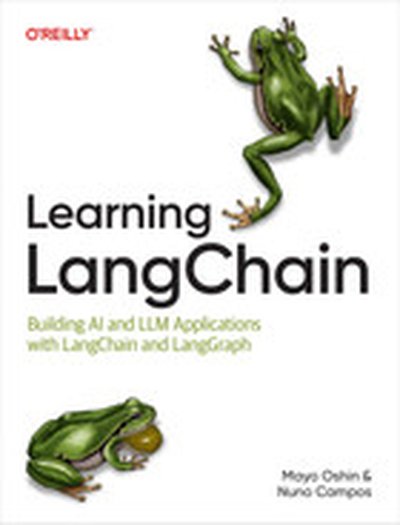
Learning LangChain

If you're looking to build production-ready AI applications that can reason and retrieve external data for context-awareness, you'll need to master--;a popular development framework and platform for building, running, and managing agentic applications. LangChain is used by several leading companies, including Zapier, Replit, Databricks, and many more. This guide is an indispensable resource for developers who understand Python or JavaScript but are beginners eager to harness the power of AI. Authors Mayo Oshin and Nuno Campos demystify the use of LangChain through practical insights and in-depth tutorials. Starting with basic concepts, this book shows you step-by-step how to build a production-ready AI agent that uses your data. Harness the power of retrieval-augmented generation (RAG) to enhance the accuracy of LLMs using external up-to-date data Develop and deploy AI applications that interact intelligently and contextually with users Make use of the powerful agent architecture with LangGraph Integrate and manage third-party APIs and tools to extend the functionality of your AI applications Monitor, test, and evaluate your AI applications to improve performance Understand the foundations of LLM app development and how they can be used with LangChain

Send us a text Welcome to the cozy corner of the tech world where ones and zeros mingle with casual chit-chat. DataTopics Unpluggedis your go-to spot for relaxed discussions around tech, news, data, and society. Dive into conversations that should flow as smoothly as your morning coffee (but don’t), where industry insights meet laid-back banter. Whether you're a data aficionado or just someone curious about the digital age, pull up a chair, relax, and let's get into the heart of data, unplugged style! This week, we break down some of the biggest developments in AI, investments, and automation: France’s AI Boom: $85 billion in investments – A look at how a mix of international and domestic funds is fueling France’s AI ecosystem, and why Mistral AI might be Europe's best shot at competing with OpenAI.Anthropic’s AI Job Index: Who’s using AI at work? – A deep dive into the latest report on how AI is being used in different industries, from software development to education, and the surprising ways automation is creeping into unexpected jobs.The $6 AI Model: How low can costs go? – Researchers have managed to create a reasoning model for just $6. We unpack how they pulled it off and what this means for the AI landscape.AI Censorship & Model Distillation: What’s really going on? – A discussion on recent claims that certain AI models come with baked-in censorship, and whether fine-tuning is playing a bigger role than we think.PromptLayer’s No-Code AI Tools – Are no-code AI development platforms the next big thing?Predicted Outputs: OpenAI’s approach to efficient code editing – A look at how OpenAI’s "Predicted Outputs" feature could make AI-assisted coding more efficient.MacOS System Monitoring & Dev Tooling: The geeky stuff – A breakdown of system monitoring tools for Mac users who love to keep an eye on every process running in the background.Snapshot Testing with Birdie – Exploring the concept of snapshot testing beyond UI testing and into function outputs.BeeWare & the Python Ecosystem – A look at how BeeWare is helping Python developers build cross-platform applications.Astral, Ruff, and UV: Python’s performance evolution – The latest from Charlie Marsh on the tools shaping Python development.

Thought leadership is more than just a buzzword—it's a strategic tool that can significantly influence business decisions and relationships. But what makes thought leadership effective? How do you ensure your insights are not only heard but also trusted and acted upon? What role does generative AI play in enhancing the storytelling process, and how can it be leveraged to create compelling narratives that resonate with your audience? Cindy Anderson is the Chief Marketing Officer/Global Lead for Engagement & Eminence at the IBM Institute for Business Value (IBV).  She has co-authored research reports, published numerous articles, and delivered presentations on thought leadership, diversity, strategy implementation, project management, and technology to global audiences. She oversees a team of 30 editors, designers, and social media/email marketers. She is a founding board member of the Global Thought Leadership Institute at APQC, a new association that advances the practice of thought leadership. Anthony Marshall is the Chair of the Board of Advisors for The Global Thought Leadership Institute at APQC and the Senior Research Director of thought leadership at the IBM Institute for Business Value (IBV), leading the top-rated thought leadership and analysis program. He oversees a global team of 60 technology and industry experts, statisticians, economists, and analysts. Anthony conducts original thought leadership and has authored dozens of refereed articles and studies on topics including generative AI, innovation, digital and business transformation and ecosystems, open collaboration and skills. In the episode, Richie, Cindy, and Anthony explore the framework for thought leadership storytelling, the role of generative AI in thought leadership, the ROI of thought leadership, building trust and quality in research, and much more. Links Mentioned in the Show: The ROI of Thought Leadership book by Cindy and AnthonyAPQCConnect with Cindy and AnthonySkill Track: Artificial Intelligence (AI) LeadershipRelated Episode: How Generative AI is Changing Leadership with Christie Smith, Founder of the Humanity Institute and Kelly Monahan, Managing Director, Research InstituteSign up to RADAR: Skills Edition New to DataCamp? Learn on the go using the DataCamp mobile appEmpower your business with world-class data and AI skills with DataCamp for business

Supported by Our Partners • WorkOS — The modern identity platform for B2B SaaS • CodeRabbit — Cut code review time and bugs in half • Augment Code — AI coding assistant that pro engineering teams love — How do you architect a live streaming system to deal with more load than it’s ever been done before? Today, we hear from an architect of such a system: Ashutosh Agrawal, formerly Chief Architect of JioCinema (and currently Staff Software Engineer at Google DeepMind.) We take a deep dive into video streaming architecture, tackling the complexities of live streaming at scale (at tens of millions of parallel streams) and the challenges engineers face in delivering seamless experiences. We talk about the following topics:  • How large-scale live streaming architectures are designed • Tradeoffs in optimizing performance • Early warning signs of streaming failures and how to detect them • Why capacity planning for streaming is SO difficult • The technical hurdles of streaming in APAC regions • Why Ashutosh hates APMs (Application Performance Management systems) • Ashutosh’s advice for those looking to improve their systems design expertise • And much more! — Timestamps (00:00) Intro (01:28) The world record-breaking live stream and how support works with live events (05:57) An overview of streaming architecture (21:48) The differences between internet streaming and traditional television.l (22:26) How adaptive bitrate streaming works (25:30) How throttling works on the mobile tower side  (27:46) Leading indicators of streaming problems and the data visualization needed (31:03) How metrics are set  (33:38) Best practices for capacity planning  (35:50) Which resources are planned for in capacity planning  (37:10) How streaming services plan for future live events with vendors (41:01) APAC specific challenges (44:48) Horizontal scaling vs. vertical scaling  (46:10) Why auto-scaling doesn’t work (47:30) Concurrency: the golden metric to scale against (48:17) User journeys that cause problems  (49:59) Recommendations for learning more about video streaming  (51:11) How Ashutosh learned on the job (55:21) Advice for engineers who would like to get better at systems (1:00:10) Rapid fire round — The Pragmatic Engineer deepdives relevant for this episode: • Software architect archetypes https://newsletter.pragmaticengineer.com/p/software-architect-archetypes  • Engineering leadership skill set overlaps https://newsletter.pragmaticengineer.com/p/engineering-leadership-skillset-overlaps  • Software architecture with Grady Booch https://newsletter.pragmaticengineer.com/p/software-architecture-with-grady-booch — See the transcript and other references from the episode at ⁠⁠https://newsletter.pragmaticengineer.com/podcast⁠⁠ — Production and marketing by ⁠⁠⁠⁠⁠⁠⁠⁠https://penname.co/⁠⁠⁠⁠⁠⁠⁠⁠. For inquiries about sponsoring the podcast, email [email protected].

Get full access to The Pragmatic Engineer at newsletter.pragmaticengineer.com/subscribe

The Data Product Management In Action podcast, brought to you by executive producer Scott Hirleman, is a platform for data product management practitioners to share insights and experiences. In this episode, host Frannie Helforoush talks with our host Nick Zervoudis, Head of Product at CKDelta and founder of Value from Data and AI, about his new course designed to help data teams deliver maximum impact. Nick discusses the growing importance of being value-focused amidst economic challenges like inflation and layoffs. Tailored for data product managers and consultants, the cohort-based course emphasizes opportunity discovery, valuation, and aligning data initiatives with business profitability. Hosted on Maven, the interactive format fosters peer learning. Check out Nick's course on Maven and tune in to learn how to ensure your data and AI efforts deliver tangible results. About our host Frannie Helforoush: Frannie's journey began as a software engineer and evolved into a strategic product manager. Now, as a data product manager, she leverages her expertise in both fields to create impactful solutions. Frannie thrives on making data accessible and actionable, driving product innovation, and ensuring product thinking is integral to data management. Connect with Frannie on LinkedIn. Meet our Guest Nick Zervoudis: Nick is Head of Product at CKDelta, an AI software business within the CKHutchison Holdings group. Nick oversees a portfolio of data products and works with sister companies to uncover new opportunities to innovate using data,analytics, and machine learning.Nick's career has revolved around data and advanced analytics from day one,having worked as an analyst, consultant, product manager, and instructor for startups, SMEs, and enterprises including PepsiCo, Sainsbury's, Lloyds BankingGroup, IKEA, Capgemini Invent, BrainStation, QuantSpark, and Hg Capital. Nick is also the co-host ofLondon's Data Product Management meetup, and speaks and writes regularly about data & AI product management. Connect with Nick on LinkedIn. Core offerings delivered by Value from Data & AI: Data product management training Fractional Data Product Manager Data startup advisory 1:1 coaching One-off data and AI discovery projects Data monetization advisory All views and opinions expressed are those of the individuals and do not necessarily reflect their employers or anyone else.  Join the conversation on LinkedIn.  Apply to be a guest or nominate someone that you know.  Do you love what you're listening to? Please rate and review the podcast, and share it with fellow practitioners you know. Your support helps us reach more listeners and continue providing valuable insights!