talk-data.com talk-data.com

Topic

AI/ML

Artificial Intelligence/Machine Learning

data_science algorithms predictive_analytics

9014

tagged

Activity Trend

1532 peak/qtr
2020-Q1 2026-Q1

Activities

9014 activities · Newest first

I won't lie, I'm pretty nervous. In this episode, I share my AMBITIOUS plan to help 52 people land their dream data jobs this year! I call it 'Mission 52,' and I'll make myself more accountable to all of you by documenting my whole journey. Learn more about PremiumDataJobs here: https://youtu.be/yELzmrEGPbU 👩‍💻 Want to land a data job in less than 90 days? 👉 https://www.datacareerjumpstart.com/daa 💌 Join 10k+ aspiring data analysts & get my tips in your inbox weekly 👉 https://www.datacareerjumpstart.com/newsletter 🆘 Feeling stuck in your data journey? Come to my next free "How to Land Your First Data Job" training 👉 https://www.datacareerjumpstart.com/training 👔 Ace The Interview with Confidence 👉 https://www.datacareerjumpstart.com/interviewsimulator ⌚ TIMESTAMPS 00:00 - Introduction 01:31 - My 5 steps to help you. 02:40 - PremiumDataJobs.com 05:42 - Data Analytics Accelerator 07:18 - I need your help! 🔗 CONNECT WITH AVERY 🎥 YouTube Channel: https://www.youtube.com/@averysmith 🤝 LinkedIn: https://www.linkedin.com/in/averyjsmith/ 📸 Instagram: https://instagram.com/datacareerjumpstart 🎵 TikTok: https://www.tiktok.com/@verydata 💻 Website: https://www.datacareerjumpstart.com/ Mentioned in this episode: Join the last cohort of 2025! The LAST cohort of The Data Analytics Accelerator for 2025 kicks off on Monday, December 8th and enrollment is officially open!

To celebrate the end of the year, we’re running a special End-of-Year Sale, where you’ll get: ✅ A discount on your enrollment 🎁 6 bonus gifts, including job listings, interview prep, AI tools + more

If your goal is to land a data job in 2026, this is your chance to get ahead of the competition and start strong.

👉 Join the December Cohort & Claim Your Bonuses: https://DataCareerJumpstart.com/daa https://www.datacareerjumpstart.com/daa

I’m doing things a bit differently for this episode of Experiencing Data. For the first time on the show, I’m hosting a panel discussion. I’m joined by Thomson Reuters’s Simon Landry, Sumo Logic’s Greg Nudelman, and Google’s Paz Perez to chat about how we design user experiences that improve people’s lives and create business impact when we expose LLM capabilities to our users. 

With the rise of AI, there are a lot of opportunities for innovation, but there are also many challenges—and frankly, my feeling is that a lot of these capabilities right now are making things worse for users, not better. We’re looking at a range of topics such as the pros and cons of AI-first thinking, collaboration between UX designers and ML engineers, and the necessity of diversifying design teams when integrating AI and LLMs into b2b products. 

Highlights/ Skip to 

Thoughts on how the current state of LLMs implementations and its impact on user experience (1:51)  The problems that can come with the "AI-first" design philosophy (7:58)  Should a company's design resources be spent on go toward AI development? (17:20) How designers can navigate "fuzzy experiences” (21:28) Why you need to narrow and clearly define the problems you’re trying to solve when building LLMs products (27:35) Why diversity matters in your design and research teams when building LLMs (31:56)  Where you can find more from Paz, Greg, and Simon (40:43)

Quotes from Today’s Episode

“ [AI] will connect the dots. It will argue pro, it will argue against, it will create evidence supporting and refuting, so it’s really up to us to kind of drive this. If we understand the capabilities, then it is an almost limitless field of possibility. And these things are taught, and it’s a fundamentally different approach to how we build user interfaces. They’re no longer completely deterministic. They’re also extremely personalized to the point where it’s ridiculous.” - Greg Nudelman (12:47) “ To put an LLM into a product means that there’s a non-zero chance your user is going to have a [negative] experience and no longer be your customer. That is a giant reputational risk, and there’s also a financial cost associated with running these models. I think we need to take more of a service design lens when it comes to [designing our products with AI] and ask what is the thing somebody wants to do… not on my website, but in their lives? What brings them to my [product]? How can I imagine a different world that leverages these capabilities to help them do their job? Because what [designers] are competing against is [a customer workflow] that probably worked well enough.” - Simon Landry (15:41) “ When we go general availability (GA) with a product, that traditionally means [designers] have done all the research, got everything perfect, and it’s all great, right? Today, GA is a starting gun. We don’t know [if the product is working] unless we [seek out user feedback]. A massive research method is needed. [We need qualitative research] like sitting down with the customer and watching them use the product to really understand what is happening[…] but you also need to collect data. What are they typing in? What are they getting back? Is somebody who’s typing in this type of question always having a short interaction? Let’s dig into it with rapid, iterative testing and evaluation, so that we can update our model and then move forward. Launching a product these days means the starting guns have been fired. Put the research to work to figure out the next step.” - (23:29) Greg Nudelman “ I think that having diversity on your design team (i.e. gender, level of experience, etc.) is critical. We’ve already seen some terrible outcomes. Multiple examples where an LLM is crafting horrendous emails, introductions, and so on. This is exactly why UXers need to get involved [with building LLMs]. This is why diversity in UX and on your tech team that deals with AI is so valuable. Number one piece of advice: get some researchers. Number two: make sure your team is diverse.” - Greg Nudelman (32:39) “ It’s extremely important to have UX talks with researchers, content designers, and data teams. It’s important to understand what a user is trying to do, the context [of their decisions], and the intention. [Designers] need to help [the data team] understand the types of data and prompts being used to train models. Those things are better when they’re written and thought of by [designers] who understand where the user is coming from. [Design teams working with data teams] are getting much better results than the [teams] that are working in a vacuum.” - Paz Perez (35:19)

Links

Milly Barker’s LinkedIn post Greg Nudelman’s Value Matrix Article Greg Nudelman website  Paz Perez on Medium Paz Perez on LinkedIn Simon Landry LinkedIn

Today, we’re joined by Luis Garcia, President of PETE, an Orlando-based tech startup that offers a suite of cost-effective and customizable solutions that enable organizations to deliver personalized workforce learning at scale. We talk about:

Tackling the challenges of digital learning: content development & learning assessmentThe role of AI in scaling workforce development & engaging learners one-on-oneCalculating the ROI of a learning management systemFlipping the normal training paradigm of fixed time with variable learningTraining topics that SaaS companies are most interested in

The rise of AI agents in the workplace is transforming how businesses operate, tackling repetitive tasks and freeing up human employees for more creative endeavors. But what does this mean for the future of work, and how can professionals leverage these tools effectively? As AI agents become more sophisticated, capable of reasoning and decision-making, how do you ensure they align with your business goals? What are the implications for data privacy and security, and how do you manage the transition to a more automated workforce while maintaining human oversight? Surojit Chatterjee is the founder and CEO of Ema. Previously, he guided Coinbase through a successful 2021 IPO as its Chief Product Officer and scaled Google Mobile Ads and Google Shopping into multi-billion dollar businesses as the VP and Head of Product. Surojit holds 40 US patents and has an MBA from MIT, MS in Computer Science from SUNY at Buffalo, and B. Tech from IIT Kharagpur. In the episode, Richie and Surojit explore the transformative role of AI agents in automating repetitive business tasks, enhancing creativity and innovation, improving customer support, and redefining workplace efficiency. They discuss the potential of AI employees, data privacy concerns, and the future of AI-driven business processes, and much more. Links Mentioned in the Show: EmaConnect with SurojitSkill Track: Artificial Intelligence (AI) LeadershipRelated Episode: How Generative AI is Changing Leadership with Christie Smith, Founder of the Humanity Institute and Kelly Monahan, Managing Director, Research InstituteAttend RADAR Skills Edition New to DataCamp? Learn on the go using the DataCamp mobile appEmpower your business with world-class data and AI skills with DataCamp for business

Bogdan Banu, Data Engineering Manager at Veed.io, joined Yuliia to share his journey of building a data platform from scratch at a fast-growing startup. As Veed's first data hire, Bogdan discusses how he established a modern data stack while maintaining strong governance principles and cost consciousness. Bogdan covered insights on implementing consent-based video data processing for AI initiatives, approaches to data democratization, and how his data team balancs velocity with security. Bogdan shared his perspectives on making strategic vendor choices, measuring business value, and fostering a culture of intelligent experimentation in startup environments.Bogdan's Linkedin - https://www.linkedin.com/in/bogdan-banu-a68a237/

Looking for something? Whether it's a product, information, or inspiration, algorithms are anticipating your needs and delivering answers before you even know the question. Powered by LLMs and AI, these systems are redefining the activites of search and discovery - and the types of data needed to power these new feedback loops.

Over the last two decades, analytics has undergone a profound transformation, reshaping not only the technology we use but also the skills that define our roles. In this session, we'll explore the natural evolution, and major paradigm shifts in the field, from the rise of webmasters to the era of storytelling and now to the age of AI mastery. Join me as we reflect on the industry's journey, the changing demands on analysts, and how we've continually adapted to stay ahead in a fast-moving digital landscape.

In a week of news regarding ongoing resilient growth and still-solid inflation, our key call of a Trump-lite policy outcome this year is being severely challenged with the confirmation of 25% tariffs on Canada and Mexico. Such an outturn would not only weigh more heavily on the global outlook but also undermine the US expansion given the centrality of the US’s most important trading partners. Amid a flurry of central bank meetings, we largely got what was expected.

Speakers:

Bruce Kasman

Joseph Lupton

This podcast was recorded on 31 January 2025.

This communication is provided for information purposes only. Institutional clients please visit www.jpmm.com/research/disclosures for important disclosures. © 2025 JPMorgan Chase & Co. All rights reserved. This material or any portion hereof may not be reprinted, sold or redistributed without the written consent of J.P. Morgan. It is strictly prohibited to use or share without prior written consent from J.P. Morgan any research material received from J.P. Morgan or an authorized third-party (“J.P. Morgan Data”) in any third-party artificial intelligence (“AI”) systems or models when such J.P. Morgan Data is accessible by a third-party. It is permissible to use J.P. Morgan Data for internal business purposes only in an AI system or model that protects the confidentiality of J.P. Morgan Data so as to prevent any and all access to or use of such J.P. Morgan Data by any third-party.

In this podcast episode, we talked with Andrey Cheptsov about ​The future of AI infrastructure.

About the Speaker: Andrey Cheptsov is the founder and CEO of dstack, an open-source alternative to Kubernetes and Slurm, built to simplify the orchestration of AI infrastructure. Before dstack, Andrey worked at JetBrains for over a decade helping different teams make the best developer tools. During the event, the guest, Andrey Cheptsov, founder and CEO of dstack, discussed the complexities of AI infrastructure. We explore topics like the challenges of using Kubernetes for AI workloads, the need to rethink container orchestration, and the future of hybrid and cloud-only infrastructures. Andrey also shares insights into the role of on-premise and bare-metal solutions, edge computing, and federated learning. 00:00 Andrey's Career Journey: From JetBrains to DStack 5:00 The Motivation Behind DStack 7:00 Challenges in Machine Learning Infrastructure 10:00 Transitioning from Cloud to On-Prem Solutions 14:30 Reflections on OpenAI's Evolution 17:30 Open Source vs Proprietary Models: A Balanced Perspective 21:01 Monolithic vs. Decentralized AI businesses 22:05 The role of privacy and control in AI for industries like banking and healthcare 30:00 Challenges in training large AI models: GPUs and distributed systems 37:03 DeepSpeed's efficient training approach vs. brute force methods 39:00 Challenges for small and medium businesses: hosting and fine-tuning models 47:01 Managing Kubernetes challenges for AI teams 52:00 Hybrid vs. cloud-only infrastructure 56:03 On-premise vs. bare-metal solutions 58:05 Exploring edge computing and its challenges

🔗 CONNECT WITH ANDREY CHEPTSOV Twitter -  / andrey_cheptsov   Linkedin -  / andrey-cheptsov   GitHub - https://github.com/dstackai/dstack/ Website - https://dstack.ai/

🔗 CONNECT WITH DataTalksClub Join DataTalks.Club:⁠⁠⁠https://datatalks.club/slack.html⁠⁠⁠ Our events:⁠⁠⁠https://datatalks.club/events.html⁠⁠⁠ Datalike Substack -⁠⁠⁠https://datalike.substack.com/⁠⁠⁠ LinkedIn:⁠⁠⁠  / datatalks-club  ⁠

Mergulhamos no universo dos AI Agents e discutimos por que eles são considerados a próxima revolução em Data & AI. Nossos convidados exploram desde os conceitos básicos até aplicações reais, incluindo como empresas estão criando agentes de forma autônoma e o papel do Langflow — uma plataforma de AI Agents, fundada por um brasileiro, que já é destaque no cenário internacional — nesse ecossistema.

Neste episódio do Data Hackers — a maior comunidade de AI e Data Science do Brasil - cconheçam Mikaeri Ohana - Head de Dados e IA na CI&T & Content Creator at Explica Mi , e o Gabriel Almeida - Founder & CTO @ Langflow.

Lembrando que você pode encontrar todos os podcasts da comunidade Data Hackers no Spotify, iTunes, Google Podcast, Castbox e muitas outras plataformas.

Nossa Bancada Data Hackers:

Paulo Vasconcellos - Co-founder da Data Hackers e Principal Data Scientist na Hotmart.

Monique Femme — Head of Community Management na Data Hackers

Gabriel Lages — Co-founder da Data Hackers e Data & Analytics Sr. Director na Hotmart.

Referências:

Participe do Evento do ifood: https://lu.ma/si2mn42p Blog Data Hackers - Langflow: Conheça uma plataforma de AI Agents fundada por um Brasileiro que já é destaque no cenário internacional: https://www.datahackers.news/p/langflow-conheca-uma-plataforma-de-ai-agents-fundada-por-um-brasileiro Langflow: https://www.langflow.org/pt/ Site da DataStax:
 Blog Data Hackers - CrewAI : https://www.datahackers.news/p/crew-ai-a-startup-brasileira-que-esta-dominando-o-mercado-de-ai-agents

Send us a text Welcome to the cozy corner of the tech world where ones and zeros mingle with casual chit-chat. DataTopics Unplugged is your go-to spot for relaxed discussions around tech, news, data, and society. This week, we’re joined by Jonas Soenen, a machine learning engineer at Dataroots, to break down the latest AI shakeups—from DeepSeek R1 challenging OpenAI to new AI automation tools that might just change how we use the internet. Let’s dive in: DeepSeek R1: Open-source revolution or just open weights? – A new AI model making waves with transparency and cost efficiency. But is OpenAI really at risk? Reinforcement learning, no tricks needed – How DeepSeek R1 trains without complex search trees or hidden techniques—and why that’s a big deal. Web LM Arena’s leaderboard – How DeepSeek R1 ranks against OpenAI, Anthropic, and other top models in real-world coding tasks. Kimi – Another promising open-weight model challenging the AI giants. Could this be the real alternative to GPT-4? Open-source AI and industry reactions – Why are companies like OpenAI hesitant to embrace open-source AI, and will DeepSeek’s approach change the game? ByteDance’s surprise AI play – The TikTok parent company is quietly building its own powerful AI models—should OpenAI and Google be worried? OpenAI’s Stargate project – A massive $500B AI infrastructure initiative—how does this impact AI accessibility and competition? OpenAI’s Operator: Your new AI assistant? – A browser-based agent that can shop for you, browse the web, and click buttons—but how secure is it? Midscene & UI-TARS Desktop – AI-powered automation tools that might soon replace traditional workflows. Nightshade – A new method for artists to poison AI training data, protecting their work from unauthorized AI-generated copies. Nepenthes – A tool designed to fight back against LLM text scrapers—could this help protect data from being swallowed into future AI models? AI in music: Paul McCartney vs. AI-generated songs – The legendary Beatle wants stronger copyright protections, but is AI creativity a threat or a tool? 📢 Note: Recent press coverage has clarified key details. Training infrastructure and cost figures mentioned were for DeepSeek V3—DeepSeek R1’s actual training costs have not been officially disclosed.

Personalization is more than a buzzword—it's a powerful tool for businesses to connect with customers on a deeper level. As data and AI technologies evolve, the ability to deliver personalized experiences becomes more accessible. But what does this mean for professionals tasked with implementing these strategies? How do you ensure that personalization efforts are both effective and respectful of customer privacy? David Edelman is a Digital and Marketing Transformation Executive Advisor, working with executives on digital and marketing transformation. He has been working in marketing and personalization since the '80s. In addition to his consultancy business, David is an Executive Teaching Fellow at Harvard Business School and a board member for several organizations. Previously, David was Chief Marketing Officer at Aetna, and a Partner at McKinsey. Forbes has repeatedly named him one of the Top 20 Most Influential Voices in Marketing, and Ad Age has named him a Top 20 Chief Marketing and Technology Officer. He is a co-author of "Personalized: Customer Strategy in the Age of AI". In this episode, Richie and David explore the power of personalization in customer experiences, the importance of understanding customer data, strategies for effective personalization, the role of AI in enhancing customer interactions, and much more. Links Mentioned in the Show: Personalized: Customer Strategy in the Age of AIConnect with DavidSkill Track: Artificial Intelligence (AI) LeadershipRelated Episode: Can You Use AI-Driven Pricing Ethically? with Jose Mendoza, Academic Director & Clinical Associate Professor at NYURewatch sessions from RADAR: Forward Edition New to DataCamp? Learn on the go using the DataCamp mobile appEmpower your business with world-class data and AI skills with DataCamp for business

Episode Description Ever feel like your phone knows you a little too well? One Google search, and suddenly, ads follow you across the internet like a digital stalker. AI-powered personalization has long relied on collecting massive amounts of personal data—but what if it didn’t have to? In this episode of Data & AI with Mukundan, we explore a game-changing shift in AI—personalized experiences without intrusive tracking. Two groundbreaking techniques, Sequential Layer Expansion and FedSelect, are reshaping how AI learns from users while keeping their data private. We’ll break down: ✅ Why AI personalization has been broken until now ✅ How these new models improve AI recommendations without privacy risks ✅ Real-world applications in streaming, e-commerce, and healthcare ✅ How AI can respect human identity while scaling globally The future of AI is personal, but it doesn’t have to be invasive. Tune in to discover how AI can work for you—without spying on you. Key Takeaways 🔹 The Problem: Why AI Personalization Has Been Broken Streaming services, e-commerce, and healthcare AI often make irrelevant or generic recommendations.Most AI models collect massive amounts of user data, stored on centralized servers—risking leaks, breaches, and misuse.AI personalization has been a “one-size-fits-all” approach that doesn’t truly adapt to individual needs.🔹 The Solution: AI That Learns Without Spying on You ✨ Sequential Layer Expansion – AI that grows with you Instead of static AI models, this method builds in layers, adapting over time.It learns only what’s relevant to you, reducing unnecessary data collection.Think of it like training for a marathon—starting small and progressively improving.✨ FedSelect – AI that fine-tunes only what matters Instead of changing an entire AI model, it selectively updates the most relevant parameters.Think of it like tuning a car—you upgrade what’s needed instead of replacing the whole engine.Everything happens locally on your device, meaning your raw data never leaves.🔹 Real-World Impact: How This Changes AI for You 🎬 Streaming Services – Netflix finally gets your taste right—without tracking you across the web. 🛍️ E-commerce – Shopping apps suggest what you actually need, not random trending items. 🏥 Healthcare – AI-powered health plans tailored to your genes and habits—without sharing your medical data. 🔹 The Bigger Picture: Why This Matters for the Future of AI Personalized AI at scale: AI adapts to billions of users while remaining privacy-first.AI that respects human identity: You control your AI, not the other way around.The end of surveillance-style tracking: No more creepy ads following you around.🌟 AI can be personal—without being invasive. That’s the future we should all demand. Fedselect: https://arxiv.org/abs/2404.02478 | Sequential Layer Expansion:https://arxiv.org/abs/2404.17799 🔔 Subscribe, rate, and review for more AI insights!

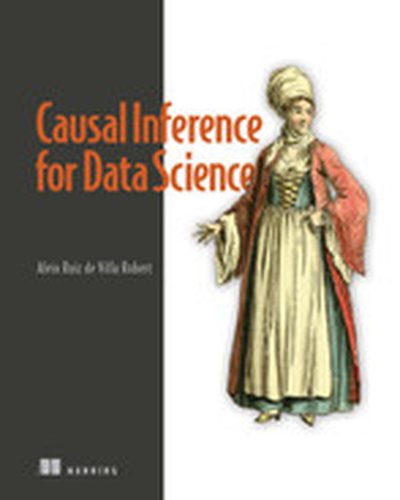
Causal Inference for Data Science

When you know the cause of an event, you can affect its outcome. This accessible introduction to causal inference shows you how to determine causality and estimate effects using statistics and machine learning. A/B tests or randomized controlled trials are expensive and often unfeasible in a business environment. Causal Inference for Data Science reveals the techniques and methodologies you can use to identify causes from data, even when no experiment or test has been performed. In Causal Inference for Data Science you will learn how to: Model reality using causal graphs Estimate causal effects using statistical and machine learning techniques Determine when to use A/B tests, causal inference, and machine learning Explain and assess objectives, assumptions, risks, and limitations Determine if you have enough variables for your analysis It’s possible to predict events without knowing what causes them. Understanding causality allows you both to make data-driven predictions and also intervene to affect the outcomes. Causal Inference for Data Science shows you how to build data science tools that can identify the root cause of trends and events. You’ll learn how to interpret historical data, understand customer behaviors, and empower management to apply optimal decisions. About the Technology Why did you get a particular result? What would have lead to a different outcome? These are the essential questions of causal inference. This powerful methodology improves your decisions by connecting cause and effect—even when you can’t run experiments, A/B tests, or expensive controlled trials. About the Book Causal Inference for Data Science introduces techniques to apply causal reasoning to ordinary business scenarios. And with this clearly-written, practical guide, you won’t need advanced statistics or high-level math to put causal inference into practice! By applying a simple approach based on Directed Acyclic Graphs (DAGs), you’ll learn to assess advertising performance, pick productive health treatments, deliver effective product pricing, and more. What's Inside When to use A/B tests, causal inference, and ML Assess objectives, assumptions, risks, and limitations Apply causal inference to real business data About the Reader For data scientists, ML engineers, and statisticians. About the Author Aleix Ruiz de Villa Robert is a data scientist with a PhD in mathematical analysis from the Universitat Autònoma de Barcelona. Quotes With intuitive explanations, application-focused insights, and real-world examples, this book offers immense practical value. - Philipp Bach, Maintainer of the DoubleML libraries for Python and R An essential guide for navigating the complexities of real-world data analysis. - Adi Shavit, SWAPP A must-read! Demystifies causal inference with a blend of theory and practice. - Karan Gupta, SunPower Corporation Causal relationships can mask and distort results. This book provides a set of tools to extract insights correctly. - Peter V. Henstock, Harvard Extension

Supported by Our Partners • Formation — Level up your career and compensation with Formation.  • WorkOS — The modern identity platform for B2B SaaS • Vanta — Automate compliance and simplify security with Vanta. — In today’s episode of The Pragmatic Engineer, I’m joined by Jonas Tyroller, one of the developers behind Thronefall, a minimalist indie strategy game that blends tower defense and kingdom-building, now available on Steam. Jonas takes us through the journey of creating Thronefall from start to finish, offering insights into the world of indie game development. We explore: • Why indie developers often skip traditional testing and how they find bugs • The developer workflow using Unity, C# and Blender • The two types of prototypes game developers build  • Why Jonas spent months building game prototypes in 1-2 days • How Jonas uses ChatGPT to build games • Jonas’s tips on making games that sell • And more! — Timestamps (00:00) Intro (02:07) Building in Unity (04:05) What the shader tool is used for  (08:44) How a Unity build is structured (11:01) How game developers write and debug code  (16:21) Jonas’s Unity workflow (18:13) Importing assets from Blender (21:06) The size of Thronefall and how it can be so small (24:04) Jonas’s thoughts on code review (26:42) Why practices like code review and source control might not be relevant for all contexts (30:40) How Jonas and Paul ensure the game is fun  (32:25) How Jonas and Paul used beta testing feedback to improve their game (35:14) The mini-games in Thronefall and why they are so difficult (38:14) The struggle to find the right level of difficulty for the game (41:43) Porting to Nintendo Switch (45:11) The prototypes Jonas and Paul made to get to Thronefall (46:59) The challenge of finding something you want to build that will sell (47:20) Jonas’s ideation process and how they figure out what to build  (49:35) How Thronefall evolved from a mini-game prototype (51:50) How long you spend on prototyping  (52:30) A lesson in failing fast (53:50) The gameplay prototype vs. the art prototype (55:53) How Jonas and Paul distribute work  (57:35) Next steps after having the play prototype and art prototype (59:36) How a launch on Steam works  (1:01:18) Why pathfinding was the most challenging part of building Thronefall (1:08:40) Gen AI tools for building indie games  (1:09:50) How Jonas uses ChatGPT for editing code and as a translator  (1:13:25) The pros and cons of being an indie developer  (1:15:32) Jonas’s advice for software engineers looking to get into indie game development (1:19:32) What to look for in a game design school (1:22:46) How luck figures into success and Jonas’s tips for building a game that sells (1:26:32) Rapid fire round — The Pragmatic Engineer deepdives relevant for this episode: • Game development basics https://newsletter.pragmaticengineer.com/p/game-development-basics  • Building a simple game using Unity https://newsletter.pragmaticengineer.com/p/building-a-simple-game — See the transcript and other references from the episode at ⁠⁠https://newsletter.pragmaticengineer.com/podcast⁠⁠ — Production and marketing by ⁠⁠⁠⁠⁠⁠⁠⁠https://penname.co/⁠⁠⁠⁠⁠⁠⁠⁠. For inquiries about sponsoring the podcast, email [email protected].

Get full access to The Pragmatic Engineer at newsletter.pragmaticengineer.com/subscribe

Season 1 Episode 29: Navigating Trade-Offs and Balancing Priorities The Data Product Management In Action podcast, brought to you by executive producer Scott Hirleman, is a platform for data product management practitioners to share insights and experiences. In this episode of Data Product Management in Action, host Alexa Westlake talks with Anita Chen, diving into the complexities of managing data products. Anita, a product manager at PagerDuty, shares her approach to defining data products, prioritizing work, and balancing project work with interrupt-driven tasks. They discuss the critical roles of governance, security, and user enablement while emphasizing the importance of transparency and communication. The conversation also explores the transformative potential of generative AI in data product interactions and the build-vs-buy decision-making process. Gain insights into how data product management uniquely differs from traditional software product management and learn actionable strategies for success. Meet our Host Alexa Westlake: Alexa is a Data Analytics Leader in the Identity and Access Management space with a proven track record scaling high-growth SaaS companies. As a Staff Data Analyst at Okta, she brings a wealth of expertise in enterprise data, business intelligence, and strategic decision-making from the various industries she's worked in including telecommunications, strategy execution, and cloud computing. With a passion for harnessing the power of data for actionable insights, Alexa plays a crucial role in driving Okta's security, growth, and scale, helping the organization leverage data to execute on their market opportunity. Connect with Alexa on LinkedIn.

Meet our guest Anita Chen:  Anita is a Data Product Manager at PagerDuty, a digital operations company helping teams resolve issues faster, eliminate alert fatigue, and build more reliable services! Her background is mainly in the People Analytics space which has now expanded to data at scale with our Enterprise Data Team. She currently helps build data products that enable our teams to deliver the best possible customer experience. Anita is most passionate about how data can impact someone's lived experience and endeavor to democratize data in everything she builds. Connect with Anita on LinkedIn. All views and opinions expressed are those of the individuals and do not necessarily reflect their employers or anyone else.  Join the conversation on LinkedIn.  Apply to be a guest or nominate someone that you know.  Do you love what you're listening to? Please rate and review the podcast, and share it with fellow practitioners you know. Your support helps us reach more listeners and continue providing valuable insights!