This presentation highlights practical validation techniques to prevent misconfigurations and enhance reliability in Apache Airflow environments. We cover two key safeguards: validating that sensors are correctly tied to their upstream tasks, and checking that critical DAGs have PagerDuty alerting enabled. Both validations are automated and integrated into our CI/CD pipeline using GitHub Actions, ensuring continuous enforcement and early detection of potential issues before deployment. In addition, we’ve implemented a solution to track Service Level Objectives (SLOs) for our DAGs, enabling better insight into reliability and performance over time. These checks form a practical defense against operational blind spots, promoting workflow reliability and robust incident response. Join us as we uncover practical strategies to streamline workflow monitoring and enhance system resilience using Apache Airflow's robust capabilities.
 talk-data.com
Topic
PagerDuty
17
tagged
Activity Trend
Top Events
Season 1 Episode 29: Navigating Trade-Offs and Balancing Priorities The Data Product Management In Action podcast, brought to you by executive producer Scott Hirleman, is a platform for data product management practitioners to share insights and experiences. In this episode of Data Product Management in Action, host Alexa Westlake talks with Anita Chen, diving into the complexities of managing data products. Anita, a product manager at PagerDuty, shares her approach to defining data products, prioritizing work, and balancing project work with interrupt-driven tasks. They discuss the critical roles of governance, security, and user enablement while emphasizing the importance of transparency and communication. The conversation also explores the transformative potential of generative AI in data product interactions and the build-vs-buy decision-making process. Gain insights into how data product management uniquely differs from traditional software product management and learn actionable strategies for success. Meet our Host Alexa Westlake: Alexa is a Data Analytics Leader in the Identity and Access Management space with a proven track record scaling high-growth SaaS companies. As a Staff Data Analyst at Okta, she brings a wealth of expertise in enterprise data, business intelligence, and strategic decision-making from the various industries she's worked in including telecommunications, strategy execution, and cloud computing. With a passion for harnessing the power of data for actionable insights, Alexa plays a crucial role in driving Okta's security, growth, and scale, helping the organization leverage data to execute on their market opportunity. Connect with Alexa on LinkedIn.
Meet our guest Anita Chen: Anita is a Data Product Manager at PagerDuty, a digital operations company helping teams resolve issues faster, eliminate alert fatigue, and build more reliable services! Her background is mainly in the People Analytics space which has now expanded to data at scale with our Enterprise Data Team. She currently helps build data products that enable our teams to deliver the best possible customer experience. Anita is most passionate about how data can impact someone's lived experience and endeavor to democratize data in everything she builds. Connect with Anita on LinkedIn. All views and opinions expressed are those of the individuals and do not necessarily reflect their employers or anyone else. Join the conversation on LinkedIn. Apply to be a guest or nominate someone that you know. Do you love what you're listening to? Please rate and review the podcast, and share it with fellow practitioners you know. Your support helps us reach more listeners and continue providing valuable insights!
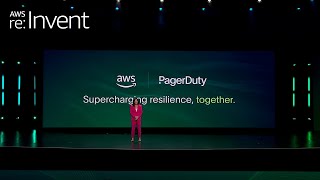
Jennifer Tejada, Chair and CEO, PagerDuty, spoke about its longstanding partnership with AWS and how they are working together to bring the power of generative AI to digital operations management, helping their mutual customers proactively prevent and resolve issues to maintain the highest reliability standards for their digital operations.
Learn more about AWS events: https://go.aws/events
Subscribe: More AWS videos: http://bit.ly/2O3zS75 More AWS events videos: http://bit.ly/316g9t4
ABOUT AWS Amazon Web Services (AWS) hosts events, both online and in-person, bringing the cloud computing community together to connect, collaborate, and learn from AWS experts. AWS is the world’s most comprehensive and broadly adopted cloud platform, offering over 200 fully featured services from data centers globally. Millions of customers—including the fastest-growing startups, largest enterprises, and leading government agencies—are using AWS to lower costs, become more agile, and innovate faster.
AWSreInvent #AWSreInvent2024 #AWS
Summary
The modern data stack has made it more economical to use enterprise grade technologies to power analytics at organizations of every scale. Unfortunately it has also introduced new overhead to manage the full experience as a single workflow. At the Modern Data Company they created the DataOS platform as a means of driving your full analytics lifecycle through code, while providing automatic knowledge graphs and data discovery. In this episode Srujan Akula explains how the system is implemented and how you can start using it today with your existing data systems.
Announcements
Hello and welcome to the Data Engineering Podcast, the show about modern data management Truly leveraging and benefiting from streaming data is hard - the data stack is costly, difficult to use and still has limitations. Materialize breaks down those barriers with a true cloud-native streaming database - not simply a database that connects to streaming systems. With a PostgreSQL-compatible interface, you can now work with real-time data using ANSI SQL including the ability to perform multi-way complex joins, which support stream-to-stream, stream-to-table, table-to-table, and more, all in standard SQL. Go to dataengineeringpodcast.com/materialize today and sign up for early access to get started. If you like what you see and want to help make it better, they're hiring across all functions! Struggling with broken pipelines? Stale dashboards? Missing data? If this resonates with you, you’re not alone. Data engineers struggling with unreliable data need look no further than Monte Carlo, the leading end-to-end Data Observability Platform! Trusted by the data teams at Fox, JetBlue, and PagerDuty, Monte Carlo solves the costly problem of broken data pipelines. Monte Carlo monitors and alerts for data issues across your data warehouses, data lakes, dbt models, Airflow jobs, and business intelligence tools, reducing time to detection and resolution from weeks to just minutes. Monte Carlo also gives you a holistic picture of data health with automatic, end-to-end lineage from ingestion to the BI layer directly out of the box. Start trusting your data with Monte Carlo today! Visit dataengineeringpodcast.com/montecarlo to learn more. Data and analytics leaders, 2023 is your year to sharpen your leadership skills, refine your strategies and lead with purpose. Join your peers at Gartner Data & Analytics Summit, March 20 – 22 in Orlando, FL for 3 days of expert guidance, peer networking and collaboration. Listeners can save $375 off standard rates with code GARTNERDA. Go to dataengineeringpodcast.com/gartnerda today to find out more. Your host is Tobias Macey and today I'm interviewing Srujan Akula about DataOS, a pre-integrated and managed data platform built by The Modern Data Company
Interview
Introduction How did you get involved in the area of data management? Can you describe what your mission at The Modern Data Company is and the story behind it? Your flagship (only?) product is a platform that you're calling DataOS. What is the scope and goal of that platform?
Who is the target audience?
On your site you refer to the idea of "data as software". What are the principles and ways of thinking that are encompassed by that concept?
What are the platform capabilities that are required to make it possible?
There are 11 "Key Features" listed on your site for the DataOS. What was your process for identifying the "must have" vs "nice to have" features for launching the platform? Can you describe the technical architecture that powers your DataOS product?
What are the core principles that you are optimizing for in the design of your platform? How have the design and goals of the system changed or evolved since you started working on DataOS?
Can you describe the workflow for the different practitioners and stakeholders working on an installation of DataOS? What are the interfaces and escape hatches that are available for integrating with and ext
Summary
Managing end-to-end data flows becomes complex and unwieldy as the scale of data and its variety of applications in an organization grows. Part of this complexity is due to the transformation and orchestration of data living in disparate systems. The team at Upsolver is taking aim at this problem with the latest iteration of their platform in the form of SQLake. In this episode Ori Rafael explains how they are automating the creation and scheduling of orchestration flows and their related transforations in a unified SQL interface.
Announcements
Hello and welcome to the Data Engineering Podcast, the show about modern data management Data and analytics leaders, 2023 is your year to sharpen your leadership skills, refine your strategies and lead with purpose. Join your peers at Gartner Data & Analytics Summit, March 20 – 22 in Orlando, FL for 3 days of expert guidance, peer networking and collaboration. Listeners can save $375 off standard rates with code GARTNERDA. Go to dataengineeringpodcast.com/gartnerda today to find out more. Truly leveraging and benefiting from streaming data is hard - the data stack is costly, difficult to use and still has limitations. Materialize breaks down those barriers with a true cloud-native streaming database - not simply a database that connects to streaming systems. With a PostgreSQL-compatible interface, you can now work with real-time data using ANSI SQL including the ability to perform multi-way complex joins, which support stream-to-stream, stream-to-table, table-to-table, and more, all in standard SQL. Go to dataengineeringpodcast.com/materialize today and sign up for early access to get started. If you like what you see and want to help make it better, they're hiring across all functions! Struggling with broken pipelines? Stale dashboards? Missing data? If this resonates with you, you’re not alone. Data engineers struggling with unreliable data need look no further than Monte Carlo, the leading end-to-end Data Observability Platform! Trusted by the data teams at Fox, JetBlue, and PagerDuty, Monte Carlo solves the costly problem of broken data pipelines. Monte Carlo monitors and alerts for data issues across your data warehouses, data lakes, dbt models, Airflow jobs, and business intelligence tools, reducing time to detection and resolution from weeks to just minutes. Monte Carlo also gives you a holistic picture of data health with automatic, end-to-end lineage from ingestion to the BI layer directly out of the box. Start trusting your data with Monte Carlo today! Visit dataengineeringpodcast.com/montecarlo to learn more. Your host is Tobias Macey and today I'm interviewing Ori Rafael about the SQLake feature for the Upsolver platform that automatically generates pipelines from your queries
Interview
Introduction How did you get involved in the area of data management? Can you describe what the SQLake product is and the story behind it?
What is the core problem that you are trying to solve?
What are some of the anti-patterns that you have seen teams adopt when designing and implementing DAGs in a tool such as Airlow? What are the benefits of merging the logic for transformation and orchestration into the same interface and dialect (SQL)? Can you describe the technical implementation of the SQLake feature? What does the workflow look like for designing and deploying pipelines in SQLake? What are the opportunities for using utilities such as dbt for managing logical complexity as the number of pipelines scales?
SQL has traditionally been challenging to compose. How did that factor into your design process for how to structure the dialect extensions for job scheduling?
What are some of the complexities that you have had to address in your orchestration system to be able to manage timeliness of operations as volume and complexity of the data scales? What are some of the edge cases that you have had to provide escape hatches for? What are the most interesting, innova
Summary
Making effective use of data requires proper context around the information that is being used. As the size and complexity of your organization increases the difficulty of ensuring that everyone has the necessary knowledge about how to get their work done scales exponentially. Wikis and intranets are a common way to attempt to solve this problem, but they are frequently ineffective. Rehgan Avon co-founded AlignAI to help address this challenge through a more purposeful platform designed to collect and distribute the knowledge of how and why data is used in a business. In this episode she shares the strategic and tactical elements of how to make more effective use of the technical and organizational resources that are available to you for getting work done with data.
Announcements
Hello and welcome to the Data Engineering Podcast, the show about modern data management When you're ready to build your next pipeline, or want to test out the projects you hear about on the show, you'll need somewhere to deploy it, so check out our friends at Linode. With their new managed database service you can launch a production ready MySQL, Postgres, or MongoDB cluster in minutes, with automated backups, 40 Gbps connections from your application hosts, and high throughput SSDs. Go to dataengineeringpodcast.com/linode today and get a $100 credit to launch a database, create a Kubernetes cluster, or take advantage of all of their other services. And don't forget to thank them for their continued support of this show! Atlan is the metadata hub for your data ecosystem. Instead of locking your metadata into a new silo, unleash its transformative potential with Atlan's active metadata capabilities. Push information about data freshness and quality to your business intelligence, automatically scale up and down your warehouse based on usage patterns, and let the bots answer those questions in Slack so that the humans can focus on delivering real value. Go to dataengineeringpodcast.com/atlan today to learn more about how Atlan’s active metadata platform is helping pioneering data teams like Postman, Plaid, WeWork & Unilever achieve extraordinary things with metadata and escape the chaos. Struggling with broken pipelines? Stale dashboards? Missing data? If this resonates with you, you’re not alone. Data engineers struggling with unreliable data need look no further than Monte Carlo, the leading end-to-end Data Observability Platform! Trusted by the data teams at Fox, JetBlue, and PagerDuty, Monte Carlo solves the costly problem of broken data pipelines. Monte Carlo monitors and alerts for data issues across your data warehouses, data lakes, dbt models, Airflow jobs, and business intelligence tools, reducing time to detection and resolution from weeks to just minutes. Monte Carlo also gives you a holistic picture of data health with automatic, end-to-end lineage from ingestion to the BI layer directly out of the box. Start trusting your data with Monte Carlo today! Visit dataengineeringpodcast.com/montecarlo to learn more. Your host is Tobias Macey and today I'm interviewing Rehgan Avon about her work at AlignAI to help organizations standardize their technical and procedural approaches to working with data
Interview
Introduction How did you get involved in the area of data management? Can you describe what AlignAI is and the story behind it? What are the core problems that you are focused on addressing?
What are the tactical ways that you are working to solve those problems?
What are some of the common and avoidable ways that analytics/AI projects go wrong?
What are some of the ways that organizational scale and complexity impacts their ability to execute on data and AI projects?
What are the ways that incomplete/unevenly distributed knowledge manifests in project design and execution? Can you describe the design and implementation of the AlignAI platform?
How have the goals and implementation of the product changed since you
Summary
Five years of hosting the Data Engineering Podcast has provided Tobias Macey with a wealth of insight into the work of building and operating data systems at a variety of scales and for myriad purposes. In order to condense that acquired knowledge into a format that is useful to everyone Scott Hirleman turns the tables in this episode and asks Tobias about the tactical and strategic aspects of his experiences applying those lessons to the work of building a data platform from scratch.
Announcements
Hello and welcome to the Data Engineering Podcast, the show about modern data management When you're ready to build your next pipeline, or want to test out the projects you hear about on the show, you'll need somewhere to deploy it, so check out our friends at Linode. With their new managed database service you can launch a production ready MySQL, Postgres, or MongoDB cluster in minutes, with automated backups, 40 Gbps connections from your application hosts, and high throughput SSDs. Go to dataengineeringpodcast.com/linode today and get a $100 credit to launch a database, create a Kubernetes cluster, or take advantage of all of their other services. And don't forget to thank them for their continued support of this show! Atlan is the metadata hub for your data ecosystem. Instead of locking your metadata into a new silo, unleash its transformative potential with Atlan's active metadata capabilities. Push information about data freshness and quality to your business intelligence, automatically scale up and down your warehouse based on usage patterns, and let the bots answer those questions in Slack so that the humans can focus on delivering real value. Go to dataengineeringpodcast.com/atlan today to learn more about how Atlan’s active metadata platform is helping pioneering data teams like Postman, Plaid, WeWork & Unilever achieve extraordinary things with metadata and escape the chaos. Struggling with broken pipelines? Stale dashboards? Missing data? If this resonates with you, you’re not alone. Data engineers struggling with unreliable data need look no further than Monte Carlo, the leading end-to-end Data Observability Platform! Trusted by the data teams at Fox, JetBlue, and PagerDuty, Monte Carlo solves the costly problem of broken data pipelines. Monte Carlo monitors and alerts for data issues across your data warehouses, data lakes, dbt models, Airflow jobs, and business intelligence tools, reducing time to detection and resolution from weeks to just minutes. Monte Carlo also gives you a holistic picture of data health with automatic, end-to-end lineage from ingestion to the BI layer directly out of the box. Start trusting your data with Monte Carlo today! Visit dataengineeringpodcast.com/montecarlo to learn more. Your host is Tobias Macey and today I'm being interviewed by Scott Hirleman about my work on the podcasts and my experience building a data platform
Interview
Introduction How did you get involved in the area of data management?
Data platform building journey
Why are you building, who are the users/use cases How to focus on doing what matters over cool tools How to build a good UX Anything surprising or did you discover anything you didn't expect at the start How to build so it's modular and can be improved in the future
General build vs buy and vendor selection process
Obviously have a good BS detector - how can others build theirs So many tools, where do you start - capability need, vendor suite offering, etc. Anything surprising in doing much of this at once How do you think about TCO in build versus buy Any advice
Guest call out
Be brave, believe you are good enough to be on the show Look at past episodes and don't pitch the same as what's been on recently And vendors, be smart, work with your customers to come up with a good pitch for them as guests...
Tobias' advice and learnings from building out a data platform:
Advice: when considering a tool, start from what are you act
Summary
One of the reasons that data work is so challenging is because no single person or team owns the entire process. This introduces friction in the process of collecting, processing, and using data. In order to reduce the potential for broken pipelines some teams have started to adopt the idea of data contracts. In this episode Abe Gong brings his experiences with the Great Expectations project and community to discuss the technical and organizational considerations involved in implementing these constraints to your data workflows.
Announcements
Hello and welcome to the Data Engineering Podcast, the show about modern data management When you're ready to build your next pipeline, or want to test out the projects you hear about on the show, you'll need somewhere to deploy it, so check out our friends at Linode. With their new managed database service you can launch a production ready MySQL, Postgres, or MongoDB cluster in minutes, with automated backups, 40 Gbps connections from your application hosts, and high throughput SSDs. Go to dataengineeringpodcast.com/linode today and get a $100 credit to launch a database, create a Kubernetes cluster, or take advantage of all of their other services. And don't forget to thank them for their continued support of this show! Atlan is the metadata hub for your data ecosystem. Instead of locking your metadata into a new silo, unleash its transformative potential with Atlan's active metadata capabilities. Push information about data freshness and quality to your business intelligence, automatically scale up and down your warehouse based on usage patterns, and let the bots answer those questions in Slack so that the humans can focus on delivering real value. Go to dataengineeringpodcast.com/atlan today to learn more about how Atlan’s active metadata platform is helping pioneering data teams like Postman, Plaid, WeWork & Unilever achieve extraordinary things with metadata and escape the chaos. Struggling with broken pipelines? Stale dashboards? Missing data? If this resonates with you, you’re not alone. Data engineers struggling with unreliable data need look no further than Monte Carlo, the leading end-to-end Data Observability Platform! Trusted by the data teams at Fox, JetBlue, and PagerDuty, Monte Carlo solves the costly problem of broken data pipelines. Monte Carlo monitors and alerts for data issues across your data warehouses, data lakes, dbt models, Airflow jobs, and business intelligence tools, reducing time to detection and resolution from weeks to just minutes. Monte Carlo also gives you a holistic picture of data health with automatic, end-to-end lineage from ingestion to the BI layer directly out of the box. Start trusting your data with Monte Carlo today! Visit dataengineeringpodcast.com/montecarlo to learn more. Your host is Tobias Macey and today I'm interviewing Abe Gong about the technical and organizational implementation of data contracts
Interview
Introduction How did you get involved in the area of data management? Can you describe what your conception of a data contract is?
What are some of the ways that you have seen them implemented?
How has your work on Great Expectations influenced your thinking on the strategic and tactical aspects of adopting/implementing data contracts in a given team/organization?
What does the negotiation process look like for identifying what needs to be included in a contract?
What are the interfaces/integration points where data contracts are most useful/necessary? What are the discussions that need to happen when deciding when/whether a contract "violation" is a blocking action vs. issuing a notification? At what level of detail/granularity are contracts most helpful? At the technical level, what does the implementation/integration/deployment of a contract look like? What are the most interesting, innovative, or unexpected ways that you have seen data contracts used? What are the most interesting, unexpected, or chall
Summary Business intelligence is the foremost application of data in organizations of all sizes. The typical conception of how it is accessed is through a web or desktop application running on a powerful laptop. Zing Data is building a mobile native platform for business intelligence. This opens the door for busy employees to access and analyze their company information away from their desk, but it has the more powerful effect of bringing first-class support to companies operating in mobile-first economies. In this episode Sabin Thomas shares his experiences building the platform and the interesting ways that it is being used.
Announcements
Hello and welcome to the Data Engineering Podcast, the show about modern data management When you’re ready to build your next pipeline, or want to test out the projects you hear about on the show, you’ll need somewhere to deploy it, so check out our friends at Linode. With their new managed database service you can launch a production ready MySQL, Postgres, or MongoDB cluster in minutes, with automated backups, 40 Gbps connections from your application hosts, and high throughput SSDs. Go to dataengineeringpodcast.com/linode today and get a $100 credit to launch a database, create a Kubernetes cluster, or take advantage of all of their other services. And don’t forget to thank them for their continued support of this show! Atlan is the metadata hub for your data ecosystem. Instead of locking your metadata into a new silo, unleash its transformative potential with Atlan’s active metadata capabilities. Push information about data freshness and quality to your business intelligence, automatically scale up and down your warehouse based on usage patterns, and let the bots answer those questions in Slack so that the humans can focus on delivering real value. Go to dataengineeringpodcast.com/atlan today to learn more about how Atlan’s active metadata platform is helping pioneering data teams like Postman, Plaid, WeWork & Unilever achieve extraordinary things with metadata and escape the chaos. Data engineers don’t enjoy writing, maintaining, and modifying ETL pipelines all day, every day. Especially once they realize 90% of all major data sources like Google Analytics, Salesforce, Adwords, Facebook, Spreadsheets, etc., are already available as plug-and-play connectors with reliable, intuitive SaaS solutions. Hevo Data is a highly reliable and intuitive data pipeline platform used by data engineers from 40+ countries to set up and run low-latency ELT pipelines with zero maintenance. Boasting more than 150 out-of-the-box connectors that can be set up in minutes, Hevo also allows you to monitor and control your pipelines. You get: real-time data flow visibility, fail-safe mechanisms, and alerts if anything breaks; preload transformations and auto-schema mapping precisely control how data lands in your destination; models and workflows to transform data for analytics; and reverse-ETL capability to move the transformed data back to your business software to inspire timely action. All of this, plus its transparent pricing and 24*7 live support, makes it consistently voted by users as the Leader in the Data Pipeline category on review platforms like G2. Go to dataengineeringpodcast.com/hevodata and sign up for a free 14-day trial that also comes with 24×7 support. Struggling with broken pipelines? Stale dashboards? Missing data? If this resonates with you, you’re not alone. Data engineers struggling with unreliable data need look no further than Monte Carlo, the leading end-to-end Data Observability Platform! Trusted by the data teams at Fox, JetBlue, and PagerDuty, Monte Carlo solves the costly problem of broken data pipelines. Monte Carlo monitors and alerts for data issues across your data warehouses, data lakes, dbt models, Airflow jobs, and business intelligence tools, reducing time to detection and resolution from weeks to just minutes. Monte Carlo also gives you a holistic picture
Summary The data ecosystem has been growing rapidly, with new communities joining and bringing their preferred programming languages to the mix. This has led to inefficiencies in how data is stored, accessed, and shared across process and system boundaries. The Arrow project is designed to eliminate wasted effort in translating between languages, and Voltron Data was created to help grow and support its technology and community. In this episode Wes McKinney shares the ways that Arrow and its related projects are improving the efficiency of data systems and driving their next stage of evolution.
Announcements
Hello and welcome to the Data Engineering Podcast, the show about modern data management When you’re ready to build your next pipeline, or want to test out the projects you hear about on the show, you’ll need somewhere to deploy it, so check out our friends at Linode. With their new managed database service you can launch a production ready MySQL, Postgres, or MongoDB cluster in minutes, with automated backups, 40 Gbps connections from your application hosts, and high throughput SSDs. Go to dataengineeringpodcast.com/linode today and get a $100 credit to launch a database, create a Kubernetes cluster, or take advantage of all of their other services. And don’t forget to thank them for their continued support of this show! Atlan is the metadata hub for your data ecosystem. Instead of locking your metadata into a new silo, unleash its transformative potential with Atlan’s active metadata capabilities. Push information about data freshness and quality to your business intelligence, automatically scale up and down your warehouse based on usage patterns, and let the bots answer those questions in Slack so that the humans can focus on delivering real value. Go to dataengineeringpodcast.com/atlan today to learn more about how Atlan’s active metadata platform is helping pioneering data teams like Postman, Plaid, WeWork & Unilever achieve extraordinary things with metadata and escape the chaos. Struggling with broken pipelines? Stale dashboards? Missing data? If this resonates with you, you’re not alone. Data engineers struggling with unreliable data need look no further than Monte Carlo, the leading end-to-end Data Observability Platform! Trusted by the data teams at Fox, JetBlue, and PagerDuty, Monte Carlo solves the costly problem of broken data pipelines. Monte Carlo monitors and alerts for data issues across your data warehouses, data lakes, dbt models, Airflow jobs, and business intelligence tools, reducing time to detection and resolution from weeks to just minutes. Monte Carlo also gives you a holistic picture of data health with automatic, end-to-end lineage from ingestion to the BI layer directly out of the box. Start trusting your data with Monte Carlo today! Visit dataengineeringpodcast.com/montecarlo to learn more. Data engineers don’t enjoy writing, maintaining, and modifying ETL pipelines all day, every day. Especially once they realize 90% of all major data sources like Google Analytics, Salesforce, Adwords, Facebook, Spreadsheets, etc., are already available as plug-and-play connectors with reliable, intuitive SaaS solutions. Hevo Data is a highly reliable and intuitive data pipeline platform used by data engineers from 40+ countries to set up and run low-latency ELT pipelines with zero maintenance. Boasting more than 150 out-of-the-box connectors that can be set up in minutes, Hevo also allows you to monitor and control your pipelines. You get: real-time data flow visibility, fail-safe mechanisms, and alerts if anything breaks; preload transformations and auto-schema mapping precisely control how data lands in your destination; models and workflows to transform data for analytics; and reverse-ETL capability to move the transformed data back to your business software to inspire timely action. All of this, plus its transparent pricing and 24*7 live support, makes it consistently voted by users as the Leader in the Data Pipeline category on review platforms like G2. Go to dataengineeringpodcast.com/hevodata and sign up for a free 14-day trial that also comes with 24×7 support. Your host is Tobias Macey and today I’m interviewing Wes McKinney about his work at Voltron Data and on the Arrow ecosystem
Interview
Introduction How did you get involved in the area of data management? Can you describe what you are building at Voltron Data and the story behind it? What is the vision for the broader data ecosystem that you are trying to realize through your investment in Arrow and related projects?
How does your work at Voltron Data contribute to the realization of that vision?
What is the impact on engineer productivity and compute efficiency that gets introduced by the impedance mismatches between language and framework representations of data? The scope and capabilities of the Arrow project have grown substantially since it was first introduced. Can you give an overview of the current features and extensions to the project? What are some of the ways that ArrowVe and its related projects can be integrated with or replace the different elements of a data platform? Can you describe how Arrow is implemented?
What are the most complex/challenging aspects of the engineering needed to support interoperable data interchange between language runtimes?
How are you balancing the desire to move quickly and improve the Arrow protocol and implementations, with the need to wait for other players in the ecosystem (e.g. database engines, compute frameworks, etc.) to add support? With the growing application of data formats such as graphs and vectors, what do you see as the role of Arrow and its ideas in those use cases? For workflows that rely on integrating structured and unstructured data, what are the options for interaction with non-tabular data? (e.g. images, documents, etc.) With your support-focused business model, how are you approaching marketing and customer education to make it viable and scalable? What are the most interesting, innovative, or unexpected ways that you have seen Arrow used? What are the most interesting, unexpected, or challenging lessons that you have learned while working on Arrow and its ecosystem? When is Arrow the wrong choice? What do you have planned for the future of Arrow?
Contact Info
Website wesm on GitHub @wesmckinn on Twitter
Parting Question
From your perspective, what is the biggest gap in the tooling or technology for data management today?
Closing Announcements
Thank you for listening! Don’t forget to check out our other shows. Podcast.init covers the Python language, its community, and the innovative ways it is being used. The Machine Learning Podcast helps you go from idea to production with machine learning. Visit the site to subscribe to the show, sign up for the mailing list, and read the show notes. If you’ve learned something or tried out a project from the show then tell us about it! Email [email protected]) with your story. To help other people find the show please leave a review on Apple Podcasts and tell your friends and co-workers
Links
Voltron Data Pandas
Podcast Episode
Apache Arrow Partial Differential Equation FPGA == Field-Programmable Gate Array GPU == Graphics Processing Unit Ursa Labs Voltron (cartoon) Feature Engineering PySpark Substrait Arrow Flight Acero Arrow Datafusion Velox Ibis SIMD == Single Instruction, Multiple Data Lance DuckDB
Podcast Episode
Data Threads Conference Nano-Arrow Arrow ADBC Protocol Apache Iceberg
Podcast Episode
The intro and outro music is from The Hug by The Freak Fandango Orchestra / CC BY-SA
Sponsored By:
Atlan: 
Have you ever woken up to a crisis because a number on a dashboard is broken and no one knows why? Or sent out frustrating slack messages trying to find the right data set? Or tried to understand what a column name means?
Our friends at Atlan started out as a data team themselves and faced all this collaboration chaos themselves, and started building Atlan as an internal tool for themselves. Atlan is a collaborative workspace for data-driven teams, like Github for engineering or Figma for design teams. By acting as a virtual hub for data assets ranging from tables and dashboards to SQL snippets & code, Atlan enables teams to create a single source of truth for all their data assets, and collaborate across the modern data stack through deep integrations with tools like Snowflake, Slack, Looker and more.
Go to dataengineeringpodcast.com/atlan and sign up for a free trial. If you’re a data engineering podcast listener, you get credits worth $3000 on an annual subscription.a href="https://dataengineeringpodcast.com/montecarlo"…
Summary Designing a data platform is a complex and iterative undertaking which requires accounting for many conflicting needs. Designing a platform that relies on a data lake as its central architectural tenet adds additional layers of difficulty. Srivatsan Sridharan has had the opportunity to design, build, and run data lake platforms for both Yelp and Robinhood, with many valuable lessons learned from each experience. In this episode he shares his insights and advice on how to approach such an undertaking in your own organization.
Announcements
Hello and welcome to the Data Engineering Podcast, the show about modern data management When you’re ready to build your next pipeline, or want to test out the projects you hear about on the show, you’ll need somewhere to deploy it, so check out our friends at Linode. With their managed Kubernetes platform it’s now even easier to deploy and scale your workflows, or try out the latest Helm charts from tools like Pulsar and Pachyderm. With simple pricing, fast networking, object storage, and worldwide data centers, you’ve got everything you need to run a bulletproof data platform. Go to dataengineeringpodcast.com/linode today and get a $100 credit to try out a Kubernetes cluster of your own. And don’t forget to thank them for their continued support of this show! This episode is brought to you by Acryl Data, the company behind DataHub, the leading developer-friendly data catalog for the modern data stack. Open Source DataHub is running in production at several companies like Peloton, Optum, Udemy, Zynga and others. Acryl Data provides DataHub as an easy to consume SaaS product which has been adopted by several companies. Signup for the SaaS product at dataengineeringpodcast.com/acryl RudderStack helps you build a customer data platform on your warehouse or data lake. Instead of trapping data in a black box, they enable you to easily collect customer data from the entire stack and build an identity graph on your warehouse, giving you full visibility and control. Their SDKs make event streaming from any app or website easy, and their state-of-the-art reverse ETL pipelines enable you to send enriched data to any cloud tool. Sign up free… or just get the free t-shirt for being a listener of the Data Engineering Podcast at dataengineeringpodcast.com/rudder. Struggling with broken pipelines? Stale dashboards? Missing data? If this resonates with you, you’re not alone. Data engineers struggling with unreliable data need look no further than Monte Carlo, the leading end-to-end Data Observability Platform! Trusted by the data teams at Fox, JetBlue, and PagerDuty, Monte Carlo solves the costly problem of broken data pipelines. Monte Carlo monitors and alerts for data issues across your data warehouses, data lakes, dbt models, Airflow jobs, and business intelligence tools, reducing time to detection and resolution from weeks to just minutes. Monte Carlo also gives you a holistic picture of data health with automatic, end-to-end lineage from ingestion to the BI layer directly out of the box. Start trusting your data with Monte Carlo today! Visit dataengineeringpodcast.com/montecarlo to learn more. Your host is Tobias Macey and today I’m interviewing Srivatsan Sridharan about the technological, staffing, and design considerations for building a data platform
Interview
Introduction How did you get involved in the area of data management? Can you describe what your experience has been with designing and implementing data platforms? What are the elements that you have found to be common requirements across organizations and data characteristics? What are the architectural elements that require the most detailed consideration based on organizational needs and data requirements? How has the ecosystem for building maintainable and usable data lakes matured over the past few years?
What are the elements that are still cumbersome or intractable?
The streaming ecosystem has also gone t
Summary Many of the events, ideas, and objects that we try to represent through data have a high degree of connectivity in the real world. These connections are best represented and analyzed as graphs to provide efficient and accurate analysis of their relationships. TigerGraph is a leading database that offers a highly scalable and performant native graph engine for powering graph analytics and machine learning. In this episode Jon Herke shares how TigerGraph customers are taking advantage of those capabilities to achieve meaningful discoveries in their fields, the utilities that it provides for modeling and managing your connected data, and some of his own experiences working with the platform before joining the company.
Announcements
Hello and welcome to the Data Engineering Podcast, the show about modern data management When you’re ready to build your next pipeline, or want to test out the projects you hear about on the show, you’ll need somewhere to deploy it, so check out our friends at Linode. With their managed Kubernetes platform it’s now even easier to deploy and scale your workflows, or try out the latest Helm charts from tools like Pulsar and Pachyderm. With simple pricing, fast networking, object storage, and worldwide data centers, you’ve got everything you need to run a bulletproof data platform. Go to dataengineeringpodcast.com/linode today and get a $100 credit to try out a Kubernetes cluster of your own. And don’t forget to thank them for their continued support of this show! This episode is brought to you by Acryl Data, the company behind DataHub, the leading developer-friendly data catalog for the modern data stack. Open Source DataHub is running in production at several companies like Peloton, Optum, Udemy, Zynga and others. Acryl Data provides DataHub as an easy to consume SaaS product which has been adopted by several companies. Signup for the SaaS product at dataengineeringpodcast.com/acryl RudderStack helps you build a customer data platform on your warehouse or data lake. Instead of trapping data in a black box, they enable you to easily collect customer data from the entire stack and build an identity graph on your warehouse, giving you full visibility and control. Their SDKs make event streaming from any app or website easy, and their state-of-the-art reverse ETL pipelines enable you to send enriched data to any cloud tool. Sign up free… or just get the free t-shirt for being a listener of the Data Engineering Podcast at dataengineeringpodcast.com/rudder. Struggling with broken pipelines? Stale dashboards? Missing data? If this resonates with you, you’re not alone. Data engineers struggling with unreliable data need look no further than Monte Carlo, the leading end-to-end Data Observability Platform! Trusted by the data teams at Fox, JetBlue, and PagerDuty, Monte Carlo solves the costly problem of broken data pipelines. Monte Carlo monitors and alerts for data issues across your data warehouses, data lakes, dbt models, Airflow jobs, and business intelligence tools, reducing time to detection and resolution from weeks to just minutes. Monte Carlo also gives you a holistic picture of data health with automatic, end-to-end lineage from ingestion to the BI layer directly out of the box. Start trusting your data with Monte Carlo today! Visit http://www.dataengineeringpodcast.com/montecarlo?utm_source=rss&utm_medium=rss to learn more. Your host is Tobias Macey and today I’m interviewing Jon Herke about TigerGraph, a distributed native graph database
Interview
Introduction How did you get involved in the area of data management? Can you describe what TigerGraph is and the story behind it? What are some of the core use cases that you are focused on supporting? How has TigerGraph changed over the past 4 years since I spoke with Todd Blaschka at the Open Data Science Conference? How has the ecosystem of graph databases changed in usage and design in recent years? What are some of the persi
Summary The predominant pattern for data integration in the cloud has become extract, load, and then transform or ELT. Matillion was an early innovator of that approach and in this episode CTO Ed Thompson explains how they have evolved the platform to keep pace with the rapidly changing ecosystem. He describes how the platform is architected, the challenges related to selling cloud technologies into enterprise organizations, and how you can adopt Matillion for your own workflows to reduce the maintenance burden of data integration workflows.
Announcements
Hello and welcome to the Data Engineering Podcast, the show about modern data management When you’re ready to build your next pipeline, or want to test out the projects you hear about on the show, you’ll need somewhere to deploy it, so check out our friends at Linode. With their managed Kubernetes platform it’s now even easier to deploy and scale your workflows, or try out the latest Helm charts from tools like Pulsar and Pachyderm. With simple pricing, fast networking, object storage, and worldwide data centers, you’ve got everything you need to run a bulletproof data platform. Go to dataengineeringpodcast.com/linode today and get a $100 credit to try out a Kubernetes cluster of your own. And don’t forget to thank them for their continued support of this show! Atlan is a collaborative workspace for data-driven teams, like Github for engineering or Figma for design teams. By acting as a virtual hub for data assets ranging from tables and dashboards to SQL snippets & code, Atlan enables teams to create a single source of truth for all their data assets, and collaborate across the modern data stack through deep integrations with tools like Snowflake, Slack, Looker and more. Go to dataengineeringpodcast.com/atlan today and sign up for a free trial. If you’re a data engineering podcast listener, you get credits worth $3000 on an annual subscription Modern data teams are dealing with a lot of complexity in their data pipelines and analytical code. Monitoring data quality, tracing incidents, and testing changes can be daunting and often takes hours to days or even weeks. By the time errors have made their way into production, it’s often too late and damage is done. Datafold built automated regression testing to help data and analytics engineers deal with data quality in their pull requests. Datafold shows how a change in SQL code affects your data, both on a statistical level and down to individual rows and values before it gets merged to production. No more shipping and praying, you can now know exactly what will change in your database! Datafold integrates with all major data warehouses as well as frameworks such as Airflow & dbt and seamlessly plugs into CI workflows. Visit dataengineeringpodcast.com/datafold today to book a demo with Datafold. Struggling with broken pipelines? Stale dashboards? Missing data? If this resonates with you, you’re not alone. Data engineers struggling with unreliable data need look no further than Monte Carlo, the leading end-to-end Data Observability Platform! Trusted by the data teams at Fox, JetBlue, and PagerDuty, Monte Carlo solves the costly problem of broken data pipelines. Monte Carlo monitors and alerts for data issues across your data warehouses, data lakes, dbt models, Airflow jobs, and business intelligence tools, reducing time to detection and resolution from weeks to just minutes. Monte Carlo also gives you a holistic picture of data health with automatic, end-to-end lineage from ingestion to the BI layer directly out of the box. Start trusting your data with Monte Carlo today! Visit http://www.dataengineeringpodcast.com/montecarlo?utm_source=rss&utm_medium=rss to learn more. Your host is Tobias Macey and today I’m interviewing Ed Thompson about Matillion, a cloud-native data integration platform for accelerating your time to analytics
Interview
Introduction How did you get involved in the area of data management?
Summary A huge amount of effort goes into modeling and shaping data to make it available for analytical purposes. This is often due to the need to simplify the final queries so that they are performant for visualization or limited exploration. In order to cut down the level of effort involved in making data usable, Matthew Halliday and his co-founders created Incorta as an end-to-end, in-memory analytical engine that removes barriers to insights on your data. In this episode he explains how the system works, the use cases that it empowers, and how you can start using it for your own analytics today.
Announcements
Hello and welcome to the Data Engineering Podcast, the show about modern data management When you’re ready to build your next pipeline, or want to test out the projects you hear about on the show, you’ll need somewhere to deploy it, so check out our friends at Linode. With their managed Kubernetes platform it’s now even easier to deploy and scale your workflows, or try out the latest Helm charts from tools like Pulsar and Pachyderm. With simple pricing, fast networking, object storage, and worldwide data centers, you’ve got everything you need to run a bulletproof data platform. Go to dataengineeringpodcast.com/linode today and get a $100 credit to try out a Kubernetes cluster of your own. And don’t forget to thank them for their continued support of this show! Atlan is a collaborative workspace for data-driven teams, like Github for engineering or Figma for design teams. By acting as a virtual hub for data assets ranging from tables and dashboards to SQL snippets & code, Atlan enables teams to create a single source of truth for all their data assets, and collaborate across the modern data stack through deep integrations with tools like Snowflake, Slack, Looker and more. Go to dataengineeringpodcast.com/atlan today and sign up for a free trial. If you’re a data engineering podcast listener, you get credits worth $3000 on an annual subscription Modern data teams are dealing with a lot of complexity in their data pipelines and analytical code. Monitoring data quality, tracing incidents, and testing changes can be daunting and often takes hours to days or even weeks. By the time errors have made their way into production, it’s often too late and damage is done. Datafold built automated regression testing to help data and analytics engineers deal with data quality in their pull requests. Datafold shows how a change in SQL code affects your data, both on a statistical level and down to individual rows and values before it gets merged to production. No more shipping and praying, you can now know exactly what will change in your database! Datafold integrates with all major data warehouses as well as frameworks such as Airflow & dbt and seamlessly plugs into CI workflows. Visit dataengineeringpodcast.com/datafold today to book a demo with Datafold. Struggling with broken pipelines? Stale dashboards? Missing data? If this resonates with you, you’re not alone. Data engineers struggling with unreliable data need look no further than Monte Carlo, the leading end-to-end Data Observability Platform! Trusted by the data teams at Fox, JetBlue, and PagerDuty, Monte Carlo solves the costly problem of broken data pipelines. Monte Carlo monitors and alerts for data issues across your data warehouses, data lakes, dbt models, Airflow jobs, and business intelligence tools, reducing time to detection and resolution from weeks to just minutes. Monte Carlo also gives you a holistic picture of data health with automatic, end-to-end lineage from ingestion to the BI layer directly out of the box. Start trusting your data with Monte Carlo today! Visit http://www.dataengineeringpodcast.com/montecarlo?utm_source=rss&utm_medium=rss to learn more. Your host is Tobias Macey and today I’m interviewing Matthew Halliday about Incorta, an in-memory, unified data and analytics platform as a service
Interview
Introduction How did you g
Scribd is migrating its data pipeline from an in house system to Airflow. It’s a one big giant data pipeline consisting of more than 1,500 tasks. In this talk, I would like to share couple best practices on setting up a cloud native Airflow deployment in AWS. For those who are interested in migrating a non-trivial data pipeline to Airflow, I will also share how Scribd plans and executes the migration. Here are some of the topics that will be covered: How to setup a highly available Airflow cluster in AWS using both ECS and EKS with Terraform. How to manage Airflow DAGs across multiple git repositories. How we manage Airflow variables using a custom Airflow Terraform provider. Best practices on monitoring multiple Airflow clusters with Datadog and Pagerduty. How to Airflow to make it feature parity with Scribd’s in house orchestration system. How to plan and execute non-trivial data pipeline migrations. We transcompiled internal DSL to Airflow DAG to simulate what a real run will look like to surface performance issues early in the process. How we fixed an Airflow performance bottleneck so our giant DAG can be properly rendered in Web UI. For detailed deep dives on some of topics mentioned above, please check out our blog post series at https://tech.scribd.com/tag/airflow-series/ [Slides] ( https://docs.google.com/presentation/d/e/2PACX-1vRb-iH5NX2d7m-rQ7WGc6XlRvRCADwXq2hdjRjRuJ5h7e9ybfoUA13ytxpHgx7JG815fIKEE-QKuRUV/pub?start=false&loop=false&delayms=3000 )
Summary The PostgreSQL database is massively popular due to its flexibility and extensive ecosystem of extensions, but it is still not the first choice for high performance analytics. Swarm64 aims to change that by adding support for advanced hardware capabilities like FPGAs and optimized usage of modern SSDs. In this episode CEO and co-founder Thomas Richter discusses his motivation for creating an extension to optimize Postgres hardware usage, the benefits of running your analytics on the same platform as your application, and how it works under the hood. If you are trying to get more performance out of your database then this episode is for you!
Announcements
Hello and welcome to the Data Engineering Podcast, the show about modern data management When you’re ready to build your next pipeline, or want to test out the projects you hear about on the show, you’ll need somewhere to deploy it, so check out our friends at Linode. With 200Gbit private networking, scalable shared block storage, a 40Gbit public network, fast object storage, and a brand new managed Kubernetes platform, you’ve got everything you need to run a fast, reliable, and bullet-proof data platform. And for your machine learning workloads, they’ve got dedicated CPU and GPU instances. Go to dataengineeringpodcast.com/linode today to get a $20 credit and launch a new server in under a minute. And don’t forget to thank them for their continued support of this show! You monitor your website to make sure that you’re the first to know when something goes wrong, but what about your data? Tidy Data is the DataOps monitoring platform that you’ve been missing. With real time alerts for problems in your databases, ETL pipelines, or data warehouse, and integrations with Slack, Pagerduty, and custom webhooks you can fix the errors before they become a problem. Go to dataengineeringpodcast.com/tidydata today and get started for free with no credit card required. Your host is Tobias Macey and today I’m interviewing Thomas Richter about Swarm64, a PostgreSQL extension to improve parallelism and add support for FPGAs
Interview
Introduction How did you get involved in the area of data management? Can you start by explaining what Swarm64 is?
How did the business get started and what keeps you motivated?
What are some of the common bottlenecks that users of postgres run into? What are the use cases and workloads that gain the most benefit from increased parallelism in the database engine? By increasing the processing throughput of the database, how does that impact disk I/O and what are some options for avoiding bottlenecks in the persistence layer? Can you describe how Swarm64 is implemented?
How has the product evolved since you first began working on it?
How has the evolution of postgres impacted your product direction?
What are some of the notable challenges that you have dealt with as a result of upstream changes in postgres?
How has the hardware landscape evolved and how does that affect your prioritization of features and improvements? What are some of the other extensions in the postgres ecosystem that are most commonly used alongside Swarm64?
Which extensions conflict with yours and how does that impact potential adoption?
In addition to your work to optimize performance of the postres engine, you also provide support for using an FPGA as a co-processor. What are the benefits that an FPGA provides over and above a CPU or GPU architecture?
What are the available options for provisioning hardware in a datacenter or the cloud that has access to an FPGA? Most people are familiar with the relevant attributes for selecting a CPU or GPU, what are the specifications that they should be looking at when selecting an FPGA?
For users who are adopting Swarm64, how does it impact the way they should be thinking of their data models? What is involved in migrating an existing database to use Swarm64? What are some of the most interesting, unexpected, or
Summary There have been several generations of platforms for managing streaming data, each with their own strengths and weaknesses, and different areas of focus. Pulsar is one of the recent entrants which has quickly gained adoption and an impressive set of capabilities. In this episode Sijie Guo discusses his motivations for spending so much of his time and energy on contributing to the project and growing the community. His most recent endeavor at StreamNative is focused on combining the capabilities of Pulsar with the cloud native movement to make it easier to build and scale real time messaging systems with built in event processing capabilities. This was a great conversation about the strengths of the Pulsar project, how it has evolved in recent years, and some of the innovative ways that it is being used. Pulsar is a well engineered and robust platform for building the core of any system that relies on durable access to easily scalable streams of data.
Announcements
Hello and welcome to the Data Engineering Podcast, the show about modern data management When you’re ready to build your next pipeline, or want to test out the projects you hear about on the show, you’ll need somewhere to deploy it, so check out our friends at Linode. With 200Gbit private networking, scalable shared block storage, a 40Gbit public network, fast object storage, and a brand new managed Kubernetes platform, you’ve got everything you need to run a fast, reliable, and bullet-proof data platform. And for your machine learning workloads, they’ve got dedicated CPU and GPU instances. Go to dataengineeringpodcast.com/linode today to get a $20 credit and launch a new server in under a minute. And don’t forget to thank them for their continued support of this show! You monitor your website to make sure that you’re the first to know when something goes wrong, but what about your data? Tidy Data is the DataOps monitoring platform that you’ve been missing. With real time alerts for problems in your databases, ETL pipelines, or data warehouse, and integrations with Slack, Pagerduty, and custom webhooks you can fix the errors before they become a problem. Go to dataengineeringpodcast.com/tidydata today and get started for free with no credit card required. Your host is Tobias Macey and today I’m interviewing Sijie Guo about the current state of the Pulsar framework for stream processing and his experiences building a managed offering for it at StreamNative
Interview
Introduction How did you get involved in the area of data management? Can you start by giving an overview of what Pulsar is?
How did you get involved with the project?
What is Pulsar’s role in the lifecycle of data and where does it fit in the overall ecosystem of data tools? How has the Pulsar project evolved or changed over the past 2 years?
How has the overall state of the ecosystem influenced the direction that Pulsar has taken?
One of the critical elements in the success of a piece of technology is the ecosystem that grows around it. How has the community responded to Pulsar, and what are some of the barriers to adoption?
How are you and other project leaders addressing those barriers?
You were a co-founder at Streamlio, which was built on top of Pulsar, and now you have founded StreamNative to offer Pulsar as a service. What did you learned from your time at Streamlio that has been most helpful in your current endeavor?
How would you characterize your relationship with the project and community in each role?
What motivates you to dedicate so much of your time and enery to Pulsar in particular, and the streaming data ecosystem in general?
Why is streaming data such an important capability? How have projects such as Kafka and Pulsar impacted the broader software and data landscape?
What are some of the most interesting, innovative, or unexpected ways that you have seen Pulsar used? When is Pulsar the wrong choice? What do you have planned for the future of S