talk-data.com talk-data.com

Topic

AI/ML

Artificial Intelligence/Machine Learning

data_science algorithms predictive_analytics

9014

tagged

Activity Trend

1532 peak/qtr
2020-Q1 2026-Q1

Activities

9014 activities · Newest first

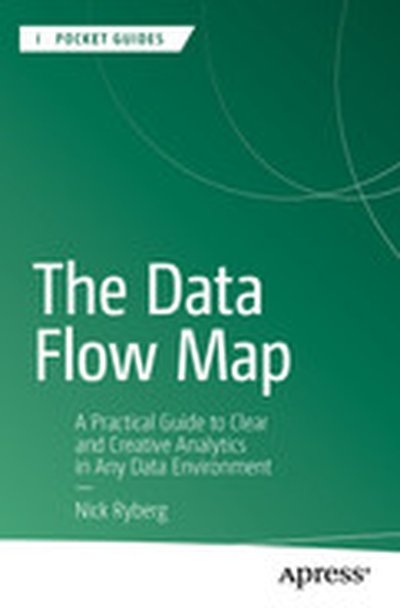
The Data Flow Map: A Practical Guide to Clear and Creative Analytics in Any Data Environment

Unlock the secrets of practical data analysis with the Data Flow Map framework—a game-changing approach that transcends tools and platforms. This book isn’t just another programming manual; it’s a guide to thinking and communicating about data at a higher level. Whether you're working with spreadsheets, databases, or AI-driven models, you'll learn how to express your analytics in clear, common language that anyone can understand. In today’s data-rich world, clarity is the real challenge. Technical details often obscure insights that could drive real impact. The Data Flow Map framework simplifies complexity into three core motions: source, focus, and build. The first half of the book explores these concepts through illustrations and stories. The second half applies them to real-world datasets using tools like Excel, SQL, and Python, showing how the framework works across platforms and use cases. A vital resource for analysts at any level, this book offers a practical, tool-agnostic approach to data analysis. With hands-on examples and a universal mental model, you’ll gain the confidence to tackle any dataset, align your team, and deliver insights that matter. Whether you're a beginner or a seasoned pro, the Data Flow Map framework will transform how you approach data analytics. What You Will Learn Grasp essential elements applicable to every data analysis workflow Adapt quickly to any dataset, tool, or platform Master analytic thinking at a higher level Use analytics patterns to better understand the world Break complex analysis into manageable, repeatable steps Iterate faster to uncover deeper insights and better solutions Communicate findings clearly for better decision-making Who This Book Is For Aspiring data professionals and experienced analysts, from beginners to seasoned data engineers, focused on data collection, analysis, and decision making
In this episode of Data Unchained, host Molly Presley is joined by Carl Watts of the Library of Congress for a deep dive into what it takes to manage and preserve one of the largest and most complex data environments in the world. Carl shares firsthand insight into overseeing more than 150 petabytes of historical data, navigating large scale tape migrations, and confronting the governance, copyright, and operational challenges that come with applying AI to national archives. The conversation explores whether artificial intelligence can responsibly unlock siloed collections across text, audio, video, and web archives, and what it truly costs to move, protect, and future proof America’s digital memory at petabyte scale. Cyberpunk by jiglr | https://soundcloud.com/jiglrmusic Music promoted by https://www.free-stock-music.com Creative Commons Attribution 3.0 Unported License https://creativecommons.org/licenses/by/3.0/deed.en_US Hosted on Acast. See acast.com/privacy for more information.

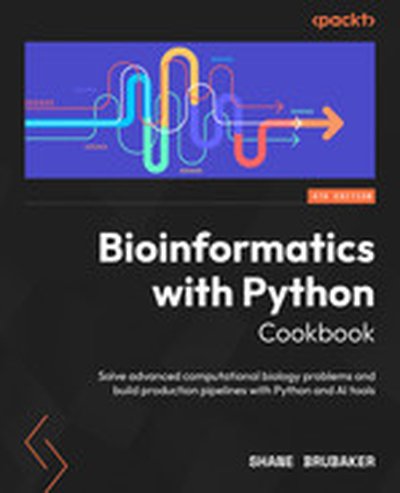
Bioinformatics with Python Cookbook - Fourth Edition

Bioinformatics with Python Cookbook provides a practical, hands-on approach to solving computational biology challenges with Python, enabling readers to analyze sequencing data, leverage AI for bioinformatics applications, and design robust computational pipelines. What this Book will help me do Perform comprehensive sequence analysis using Python libraries for refined data interpretation. Configure and run bioinformatics workflows on cloud environments for scalable solutions. Apply advanced data science practices to analyze and visualize bioinformatics data. Explore the integration of AI tools in processing multimodal biological datasets. Understand and utilize bioinformatics databases for research and development. Author(s) Shane Brubaker is an experienced computational biologist and software developer with a strong background in bioinformatics and Python programming. With years of experience in data analysis and software engineering, Shane has authored numerous solutions for real-world bioinformatics issues. He brings a practical, example-driven teaching approach, aimed at empowering readers to apply techniques effectively in their work. Who is it for? This book is suitable for bioinformatics professionals, data scientists, and software engineers with moderate experience seeking to expand their computational biology knowledge. Readers should have basic understanding of biology, programming, and cloud tools. By engaging with this book, learners can advance their skills in Python and bioinformatics to address complex biological data challenges effectively.

AWS re:Invent 2025 - Optimize agentic AI apps with semantic caching in Amazon ElastiCache (DAT451)

Multi-agent AI systems now orchestrate complex workflows requiring frequent foundation model calls. In this session, learn how you can reduce latencies to single-digit milliseconds from single-digit seconds with vector search for Amazon ElastiCache for Valkey in agentic AI applications using semantic caching, while also reducing the cost incurred from your foundation models for production workloads. By implementing semantic caching in agentic architectures like RAG-powered assistants and autonomous agents, customers can create performant and cost-effective production-scale agentic AI systems.

Learn More: More AWS events: https://go.aws/3kss9CP

Subscribe: More AWS videos: http://bit.ly/2O3zS75 More AWS events videos: http://bit.ly/316g9t4

ABOUT AWS: Amazon Web Services (AWS) hosts events, both online and in-person, bringing the cloud computing community together to connect, collaborate, and learn from AWS experts. AWS is the world's most comprehensive and broadly adopted cloud platform, offering over 200 fully featured services from data centers globally. Millions of customers—including the fastest-growing startups, largest enterprises, and leading government agencies—are using AWS to lower costs, become more agile, and innovate faster.

AWSreInvent #AWSreInvent2025 #AWS

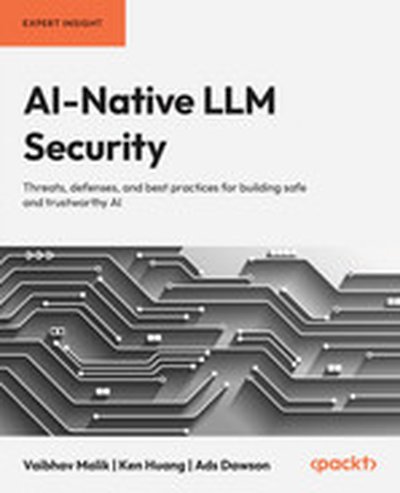
AI-Native LLM Security

"AI Native LLM Security" is your essential guide to understanding and securing large language models and AI systems. With a focus on implementing practical strategies and leveraging frameworks like OWASP Top 10, this book equips professionals to identify and mitigate risks effectively. By reading this, you'll gain the expertise to confidently manage LLM security challenges. What this Book will help me do Learn about adversarial AI attacks and methods to defend against them. Understand secure-by-design methodologies and their application to LLM systems. Gain insights on implementing MLSecOps practices for robust AI security. Navigate ethical considerations and legal aspects of AI security. Secure AI development life cycles with practical strategies and standards. Author(s) The authors, Vaibhav Malik, Ken Huang, and Adam Dawson, are experts in AI security with collective experience covering cybersecurity, AI development, and security frameworks. Their dedication to advancing trustworthy AI ensures that this book is both technically comprehensive and approachable. Who is it for? This book is perfect for cybersecurity experts, AI developers, and technology managers aiming to secure and manage AI systems. Readers should have a basic understanding of AI and security concepts. If you're a security architect, ML engineer, DevOps professional, or a leader overseeing AI initiatives, this book will help you address LLM security effectively for your field.

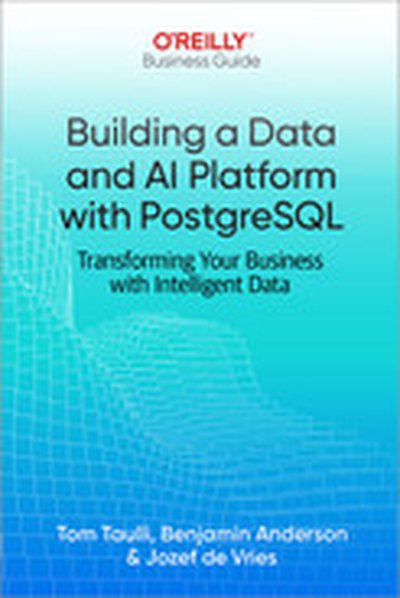
Building a Data and AI Platform with PostgreSQL

In a world where data sovereignty, scalability, and AI innovation are at the forefront of enterprise strategy, PostgreSQL is emerging as the key to unlocking transformative business value. This new guide serves as your beacon for navigating the convergence of AI, open source technologies, and intelligent data platforms. Authors Tom Taulli, Benjamin Anderson, and Jozef de Vries offer a strategic and practical approach to building AI and data platforms that balance innovation with governance, empowering organizations to take control of their data future. Whether you're designing frameworks for advanced AI applications, modernizing legacy infrastructures, or solving data challenges at scale, you can use this guide to bridge the gap between technical complexity and actionable strategy. Written for IT executives, data leaders, and practitioners alike, it will equip you with the tools and insights to harness Postgre's unique capabilities—extensibility, unstructured data management, and hybrid workloads—for long-term success in an AI-driven world. Learn how to build an AI and data platform using PostgreSQL Overcome data challenges like modernization, integration, and governance Optimize AI performance with model fine-tuning and retrieval-augmented generation (RAG) best practices Discover use cases that align data strategy with business goals Take charge of your data and AI future with this comprehensive and accessible roadmap

Data is key for advances in machine learning, including mobile applications like robots and autonomous cars. To ensure reliable operation, occurring scenarios must be reflected by the underlying dataset. Since the open-world environments can contain unknown scenarios and novel objects, active learning from online data collection and handling of unknowns is required. In this talk we discuss different approach to address this real world requirements.

Data is key for advances in machine learning, including mobile applications like robots and autonomous cars. To ensure reliable operation, occurring scenarios must be reflected by the underlying dataset. Since the open-world environments can contain unknown scenarios and novel objects, active learning from online data collection and handling of unknowns is required. In this talk we discuss different approach to address this real world requirements.

Modern mobility systems rely on massive, high-quality multimodal datasets — yet real-world data is messy. Misaligned sensors, inconsistent metadata, and uneven scenario coverage can slow development and lead to costly model failures. The Physical AI Workbench, built in collaboration between Voxel51 and NVIDIA, provides an automated and scalable pipeline for auditing, reconstructing, and enriching autonomous driving datasets. In this talk, we’ll show how FiftyOne serves as the central interface for inspecting and validating sensor alignment, scene structure, and scenario diversity, while NVIDIA Neural Reconstruction (NuRec) enables physics-aware reconstruction directly from real-world captures. We’ll highlight how these capabilities support automated dataset quality checks, reduce manual review overhead, and streamline the creation of richer datasets for model training and evaluation. Attendees will gain insight into how Physical AI workflows help mobility teams scale, improve dataset reliability, and accelerate iteration from data capture to model deployment — without rewriting their infrastructure.

While modern autonomous driving systems increasingly rely on machine learning and deep neural networks, classical algorithms continue to play a foundational role in ensuring reliability, interpretability, and real-time performance. Techniques such as Kalman filtering, A* path planning, PID control, and SLAM remain integral to perception, localization, and decision-making modules. Their deterministic nature and lower computational overhead make them especially valuable in safety-critical scenarios and resource-constrained environments. This talk explores the enduring relevance of classical algorithms, their integration with learning-based methods, and their evolving scope in the context of next-generation autonomous vehicle architectures.

Data is key for advances in machine learning, including mobile applications like robots and autonomous cars. To ensure reliable operation, occurring scenarios must be reflected by the underlying dataset. Since the open-world environments can contain unknown scenarios and novel objects, active learning from online data collection and handling of unknowns is required. In this talk we discuss different approach to address this real world requirements.

Data is key for advances in machine learning, including mobile applications like robots and autonomous cars. To ensure reliable operation, occurring scenarios must be reflected by the underlying dataset. Since the open-world environments can contain unknown scenarios and novel objects, active learning from online data collection and handling of unknowns is required. In this talk we discuss different approach to address this real world requirements.

Modern mobility systems rely on massive, high-quality multimodal datasets — yet real-world data is messy. Misaligned sensors, inconsistent metadata, and uneven scenario coverage can slow development and lead to costly model failures. The Physical AI Workbench, built in collaboration between Voxel51 and NVIDIA, provides an automated and scalable pipeline for auditing, reconstructing, and enriching autonomous driving datasets.\n\nIn this talk, we’ll show how FiftyOne serves as the central interface for inspecting and validating sensor alignment, scene structure, and scenario diversity, while NVIDIA Neural Reconstruction (NuRec) enables physics-aware reconstruction directly from real-world captures. We’ll highlight how these capabilities support automated dataset quality checks, reduce manual review overhead, and streamline the creation of richer datasets for model training and evaluation.\n\nAttendees will gain insight into how Physical AI workflows help mobility teams scale, improve dataset reliability, and accelerate iteration from data capture to model deployment — without rewriting their infrastructure.

While modern autonomous driving systems increasingly rely on machine learning and deep neural networks, classical algorithms continue to play a foundational role in ensuring reliability, interpretability, and real-time performance. Techniques such as Kalman filtering, A* path planning, PID control, and SLAM remain integral to perception, localization, and decision-making modules. Their deterministic nature and lower computational overhead make them especially valuable in safety-critical scenarios and resource-constrained environments. This talk explores the enduring relevance of classical algorithms, their integration with learning-based methods, and their evolving scope in the context of next-generation autonomous vehicle architectures.