talk-data.com talk-data.com

Topic

AI/ML

Artificial Intelligence/Machine Learning

data_science algorithms predictive_analytics

9014

tagged

Activity Trend

1532 peak/qtr
2020-Q1 2026-Q1

Activities

9014 activities · Newest first

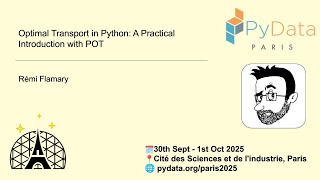
Optimal Transport in Python: A Practical Introduction with POT

Optimal Transport (OT) is a powerful mathematical framework with applications in machine learning, statistics, and data science. This talk introduces the Python Optimal Transport toolbox (POT), an open-source library designed to efficiently solve OT problems. Attendees will learn the basics of OT, explore real-world use cases, and gain hands-on experience with POT (https://pythonot.github.io/) .

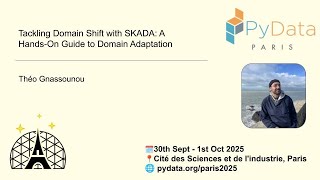
Tackling Domain Shift with SKADA: A Hands-On Guide to Domain Adaptation

Domain adaptation addresses the challenge of applying ML models to data that differs from the training distribution—a common issue in real-world applications. SKADA is a new Python library that brings domain adaptation tools to the sci-kit-learn and PyTorch ecosystem. This talk covers SKADA’s design, its integration with standard ML workflows, and how it helps practitioners build models that generalize better across domains.

If your job search feels like tab-hell—applications everywhere, prep scattered, follow-ups forgotten—this episode is your reset. I walk you through three small but mighty AI agents you can build in an afternoon: • Application Tracker Agent — paste a job link → extract company, title, pay, location → auto-log to Notion/Sheets → set a 7-day follow-up. • Interview Prep Agent — feed the JD + your resume → get tailored behavioral questions, SQL/case drills, and a tight “Tell me about yourself.” • Follow-Up Agent — generate a thank-you in your voice, log the interview date, and nudge you if you haven’t heard back. You’ll learn the agent essentials—planning, memory, feedback loops—plus a copy-and-paste framework, example prompts, and quality checks so your agents save time instead of making noise. Chapters below. Show notes include my working templates, prompts, and affiliate tools I actually use (Riverside for recording, RSS.com for hosting, Sider for research). Rate the show if this helped—it means a lot. Primary keywords: ai agents, job search, interview prep, application tracking, follow-up emails Secondary keywords: Notion, Google Sheets, SQL interview, behavioral questions, automation, productivity, podseo, career tools

Links & Resources Recording Partner: Riverside → Sign up here (affiliate)Host Your Podcast: RSS.com (affiliate )Research Tools: Sider.ai (affiliate)Join the Newsletter: Free Email Newsletter to receive practical AI tools weekly.Join the Discussion (comments hub): https://mukundansankar.substack.com/notes🔗 Connect with Me:Website: Data & AI with MukundanTwitter/X: @sankarmukund475LinkedIn: Mukundan SankarYouTube: Subscribe

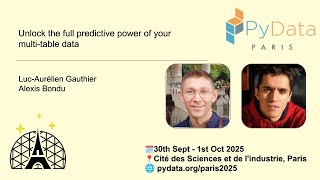
Unlock the full predictive power of your multi-table data

While most machine learning tutorials and challenges focus on single-table datasets, real-world enterprise data is often distributed across multiple tables, such as customer logs, transaction records, or manufacturing logs. In this talk, we address the often-overlooked challenge of building predictive features directly from raw, multi-table data. You will learn how to automate feature engineering using a scalable, supervised, and overfit-resistant approach, grounded in information theory and available as a Python open-source library. The talk is aimed at data scientists and ML engineers working with structured data; basic machine learning knowledge is sufficient to follow.

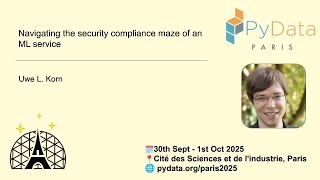
Navigating the security compliance maze of an ML service

While everyone is talking about the m(e/a)ss of bureaucracy, we want to show you hands-on what you could need to be doing to operate an ML service. We will give an overview of things like ISO-27001 certifications, Cyber Resilience Act or AIBOMs. We want to highlight their impact/intention and give advice on how integrate them into your development workflow.

This talk is written from a practiconer's perspective and will help you set up your project to make your compliance department happy. It isn't meant as a deep-dive into the individual standards.

Behavioral science is revolutionizing how businesses connect with customers and influence decisions. By understanding the psychological principles that drive human behavior, companies can create more effective marketing strategies and product experiences. But how can you apply these insights in your data-driven work? What simple changes could dramatically improve how your audience responds to your messaging? The difference between abstract and concrete language can quadruple memorability, and timing your communications around 'fresh start' moments can increase receptivity by over 50%. Whether you're designing user experiences or communicating insights, understanding these hidden patterns of human behavior could be your competitive advantage. Richard Shotton is the founder of Astroten, a consultancy that applies behavioral science to marketing, helping brands of all sizes solve business challenges with insights from psychology. As a keynote speaker, he is known for exploring consumer psychology, the impact of behavioral experiments, and how biases shape decision-making. He began his career in media planning over 20 years ago, working on accounts such as Coca-Cola, Lexus, Halifax, Peugeot, and comparethemarket. He has since held senior roles including Head of Insight at ZenithOptimedia and Head of Behavioral Science at Manning Gottlieb, while also conducting experiments featured in publications such as Marketing Week, The Drum, Campaign, Admap, and Mediatel. Richard is the author of two acclaimed books: The Choice Factory (2018), which was named Best Sales & Marketing Book at the 2019 Business Book Awards and voted #1 in the BBH World Cup of Advertising Books; and The Illusion of Choice (2023), which highlights the most important psychological biases business leaders can harness for competitive advantage. In the episode, the two Richards explore the power of behavioral science in marketing, the impact of visual language, the role of social proof, the importance of simplicity in communication, how biases influence decision-making, the fresh start effect, the ethical considerations of using behavioral insights, and much more. Links Mentioned in the Show: Richard’s Book—Hacking the Human Mind: The behavioral science secrets behind 17 of the world's best brandsAstrotenBlog: To create strong memories, use concrete languageConnect with RichardCourse: Marketing Analytics for BusinessRelated Episode: Career Skills for Data Professionals with Wes Kao, Co-Founder of MavenRewatch RADAR AI  New to DataCamp? Learn on the go using the DataCamp mobile appEmpower your business with world-class data and AI skills with DataCamp for business

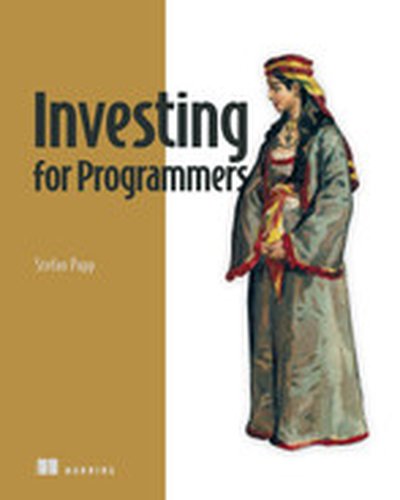
Investing for Programmers

Maximize your portfolio, analyze markets, and make data-driven investment decisions using Python and generative AI. Investing for Programmers shows you how you can turn your existing skills as a programmer into a knack for making sharper investment choices. You’ll learn how to use the Python ecosystem, modern analytic methods, and cutting-edge AI tools to make better decisions and improve the odds of long-term financial success. In Investing for Programmers you’ll learn how to: Build stock analysis tools and predictive models Identify market-beating investment opportunities Design and evaluate algorithmic trading strategies Use AI to automate investment research Analyze market sentiments with media data mining In Investing for Programmers you'll learn the basics of financial investment as you conduct real market analysis, connect with trading APIs to automate buy-sell, and develop a systematic approach to risk management. Don’t worry—there’s no dodgy financial advice or flimsy get-rich-quick schemes. Real-life examples help you build your own intuition about financial markets, and make better decisions for retirement, financial independence, and getting more from your hard-earned money. About the Technology A programmer has a unique edge when it comes to investing. Using open-source Python libraries and AI tools, you can perform sophisticated analysis normally reserved for expensive financial professionals. This book guides you step-by-step through building your own stock analysis tools, forecasting models, and more so you can make smart, data-driven investment decisions. About the Book Investing for Programmers shows you how to analyze investment opportunities using Python and machine learning. In this easy-to-read handbook, experienced algorithmic investor Stefan Papp shows you how to use Pandas, NumPy, and Matplotlib to dissect stock market data, uncover patterns, and build your own trading models. You’ll also discover how to use AI agents and LLMs to enhance your financial research and decision-making process. What's Inside Build stock analysis tools and predictive models Design algorithmic trading strategies Use AI to automate investment research Analyze market sentiment with media data mining About the Reader For professional and hobbyist Python programmers with basic personal finance experience. About the Author Stefan Papp combines 20 years of investment experience in stocks, cryptocurrency, and bonds with decades of work as a data engineer, architect, and software consultant. Quotes Especially valuable for anyone looking to improve their investing. - Armen Kherlopian, Covenant Venture Capital A great breadth of topics—from basic finance concepts to cutting-edge technology. - Ilya Kipnis, Quantstrat Trader A top tip for people who want to leverage development skills to improve their investment possibilities. - Michael Zambiasi, Raiffeisen Digital Bank Brilliantly bridges the worlds of coding and finance. - Thomas Wiecki, PyMC Labs

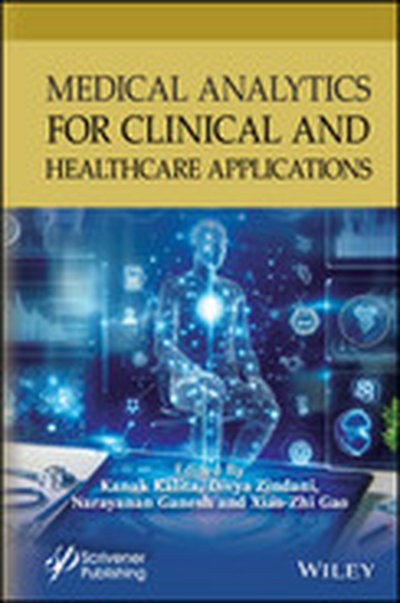
Medical Analytics for Clinical and Healthcare Applications

The book is essential for anyone exploring the forefront of healthcare innovation, as it offers a thorough exploration of transformative data-driven methodologies that can significantly enhance patient outcomes and clinical efficiency in today’s evolving medical landscape. In today’s rapidly advancing healthcare landscape, the integration of medical analytics has become essential for improving patient outcomes, clinical efficiency, and decision-making. Medical Analytics for Clinical and Healthcare Applications provides a comprehensive examination of how data-driven methodologies are revolutionizing the medical field. This book offers a deep dive into innovative techniques, real-world applications, and emerging trends in medical analytics, showcasing how these advancements are transforming disease detection, diagnosis, treatment planning, and healthcare management. Spanning sixteen chapters across five subsections, this edited volume covers a wide array of topics—from foundational principles of medical data analysis to cutting-edge applications in predictive healthcare and medical data security. Readers will encounter state-of-the-art methodologies, including machine learning models, predictive analytics, and deep learning techniques applied to various healthcare challenges such as mental health disorders, cancer detection, and hospital mortality predictions. Medical Analytics for Clinical and Healthcare Applications equips readers with the knowledge to harness the power of medical analytics and its potential to shape the future of healthcare. Through its interdisciplinary approach and expert insights, this volume is poised to serve as a valuable resource for advancing healthcare technologies and improving the overall quality of care. Readers will find the volume: Explores the latest medical analytics techniques applied across clinical settings, from diagnosis to treatment optimization; Features real-world case studies and tools for implementing data-driven solutions in healthcare; Bridges the gap between healthcare professionals, data scientists, and engineers for collaborative innovation in medical technologies; Provides foresight into emerging trends and technologies shaping the future of healthcare analytics. Audience Healthcare professionals, clinical researchers, medical data scientists, biomedical engineers, IT professionals, academics, and policymakers focused on the intersection of medicine and data analytics.

Summary In this crossover episode of the AI Engineering Podcast, host Tobias Macey interviews Brijesh Tripathi, CEO of Flex AI, about revolutionizing AI engineering by removing DevOps burdens through "workload as a service". Brijesh shares his expertise from leading AI/HPC architecture at Intel and deploying supercomputers like Aurora, highlighting how access friction and idle infrastructure slow progress. Join them as they discuss Flex AI's innovative approach to simplifying heterogeneous compute, standardizing on consistent Kubernetes layers, and abstracting inference across various accelerators, allowing teams to iterate faster without wrestling with drivers, libraries, or cloud-by-cloud differences. Brijesh also shares insights into Flex AI's strategies for lifting utilization, protecting real-time workloads, and spanning the full lifecycle from fine-tuning to autoscaled inference, all while keeping complexity at bay.

Pre-amble I hope you enjoy this cross-over episode of the AI Engineering Podcast, another show that I run to act as your guide to the fast-moving world of building scalable and maintainable AI systems. As generative AI models have grown more powerful and are being applied to a broader range of use cases, the lines between data and AI engineering are becoming increasingly blurry. The responsibilities of data teams are being extended into the realm of context engineering, as well as designing and supporting new infrastructure elements that serve the needs of agentic applications. This episode is an example of the types of work that are not easily categorized into one or the other camp.

Announcements Hello and welcome to the Data Engineering Podcast, the show about modern data managementData teams everywhere face the same problem: they're forcing ML models, streaming data, and real-time processing through orchestration tools built for simple ETL. The result? Inflexible infrastructure that can't adapt to different workloads. That's why Cash App and Cisco rely on Prefect. Cash App's fraud detection team got what they needed - flexible compute options, isolated environments for custom packages, and seamless data exchange between workflows. Each model runs on the right infrastructure, whether that's high-memory machines or distributed compute. Orchestration is the foundation that determines whether your data team ships or struggles. ETL, ML model training, AI Engineering, Streaming - Prefect runs it all from ingestion to activation in one platform. Whoop and 1Password also trust Prefect for their data operations. If these industry leaders use Prefect for critical workflows, see what it can do for you at dataengineeringpodcast.com/prefect.Data migrations are brutal. They drag on for months—sometimes years—burning through resources and crushing team morale. Datafold's AI-powered Migration Agent changes all that. Their unique combination of AI code translation and automated data validation has helped companies complete migrations up to 10 times faster than manual approaches. And they're so confident in their solution, they'll actually guarantee your timeline in writing. Ready to turn your year-long migration into weeks? Visit dataengineeringpodcast.com/datafold today for the details. Your host is Tobias Macey and today I'm interviewing Brijesh Tripathi about FlexAI, a platform offering a service-oriented abstraction for AI workloadsInterview IntroductionHow did you get involved in machine learning?Can you describe what FlexAI is and the story behind it?What are some examples of the ways that infrastructure challenges contribute to friction in developing and operating AI applications?How do those challenges contribute to issues when scaling new applications/businesses that are founded on AI?There are numerous managed services and deployable operational elements for operationalizing AI systems. What are some of the main pitfalls that teams need to be aware of when determining how much of that infrastructure to own themselves?Orchestration is a key element of managing the data and model lifecycles of these applications. How does your approach of "workload as a service" help to mitigate some of the complexities in the overall maintenance of that workload?Can you describe the design and architecture of the FlexAI platform?How has the implementation evolved from when you first started working on it?For someone who is going to build on top of FlexAI, what are the primary interfaces and concepts that they need to be aware of?Can you describe the workflow of going from problem to deployment for an AI workload using FlexAI?One of the perennial challenges of making a well-integrated platform is that there are inevitably pre-existing workloads that don't map cleanly onto the assumptions of the vendor. What are the affordances and escape hatches that you have built in to allow partial/incremental adoption of your service?What are the elements of AI workloads and applications that you are explicitly not trying to solve for?What are the most interesting, innovative, or unexpected ways that you have seen FlexAI used?What are the most interesting, unexpected, or challenging lessons that you have learned while working on FlexAI?When is FlexAI the wrong choice?What do you have planned for the future of FlexAI?Contact Info LinkedInParting Question From your perspective, what are the biggest gaps in tooling, technology, or training for AI systems today?Links Flex AIAurora Super ComputerCoreWeaveKubernetesCUDAROCmTensor Processing Unit (TPU)PyTorchTritonTrainiumASIC == Application Specific Integrated CircuitSOC == System On a ChipLoveableFlexAI BlueprintsTenstorrentThe intro and outro music is from The Hug by The Freak Fandango Orchestra / CC BY-SA

The  global expansion is now tracking a strong 3Q outturn, led by a robust increase in the US. The contrast of this strength with a near-stall in global employment is striking. Strong wealth gains and a falling saving rate are supporting consumer spending for now. But labor income growth is softening broadly, and is set to take a sharp leg down next quarter in the US. Absent a bounce back in hiring, the expansion will be on shaky ground.

This podcast was recorded on September 26, 2025.

This communication is provided for information purposes only. Institutional clients please visit www.jpmm.com/research/disclosures for important disclosures. © 2025 JPMorgan Chase & Co. All rights reserved. This material or any portion hereof may not be reprinted, sold or redistributed without the written consent of J.P. Morgan. It is strictly prohibited to use or share without prior written consent from J.P. Morgan any research material received from J.P. Morgan or an authorized third-party (“J.P. Morgan Data”) in any third-party artificial intelligence (“AI”) systems or models when such J.P. Morgan Data is accessible by a third-party. It is permissible to use J.P. Morgan Data for internal business purposes only in an AI system or model that protects the confidentiality of J.P. Morgan Data so as to prevent any and all access to or use of such J.P. Morgan Data by any third-party.

In this episode, we talk with Michael Lanham, an AI and software innovator with over two decades of experience spanning game development, fintech, oil and gas, and agricultural tech. Michael shares his journey from building neural network-based games and evolutionary algorithms to writing influential books on AI agents and deep learning. He offers insights into the evolving AI landscape, practical uses of AI agents, and the future of generative AI in gaming and beyond.

TIMECODES 00:00 Micheal Lanham’s career journey and AI agent books 05:45 Publishing journey: AR, Pokémon Go, sound design, and reinforcement learning 10:00 Evolution of AI: evolutionary algorithms, deep learning, and agents 13:33 Evolutionary algorithms in prompt engineering and LLMs 18:13 AI agent books second edition and practical applications 20:57 AI agent workflows: minimalism, task breakdown, and collaboration 26:25 Collaboration and orchestration among AI agents 31:24 Tools and reasoning servers for agent communication 35:17 AI agents in game development and generative AI impact 38:57 Future of generative AI in gaming and immersive content 41:42 Coding agents, new LLMs, and local deployment 45:40 AI model trends and data scientist career advice 53:36 Cognitive testing, evaluation, and monitoring in AI 58:50 Publishing details and closing remarks

Connect with Micheal Linkedin - https://www.linkedin.com/in/micheal-lanham-189693123/ Connect with DataTalks.Club: Join the community - https://datatalks.club/slack.htmlSubscribe to our Google calendar to have all our events in your calendar - https://calendar.google.com/calendar/...Check other upcoming events - https://lu.ma/dtc-eventsGitHub: https://github.com/DataTalksClubLinkedIn -   / datatalks-club   Twitter -   / datatalksclub   Website - https://datatalks.club/

At PyData Berlin, community members and industry voices highlighted how AI and data tooling are evolving across knowledge graphs, MLOps, small-model fine-tuning, explainability, and developer advocacy.

  • Igor Kvachenok (Leuphana University / ProKube) combined knowledge graphs with LLMs for structured data extraction in the polymer industry, and noted how MLOps is shifting toward LLM-focused workflows.
  • Selim Nowicki (Distill Labs) introduced a platform that uses knowledge distillation to fine-tune smaller models efficiently, making model specialization faster and more accessible.
  • Gülsah Durmaz (Architect & Developer) shared her transition from architecture to coding, creating Python tools for design automation and volunteering with PyData through PyLadies.
  • Yashasvi Misra (Pure Storage) spoke on explainable AI, stressing accountability and compliance, and shared her perspective as both a data engineer and active Python community organizer.
  • Mehdi Ouazza (MotherDuck) reflected on developer advocacy through video, workshops, and branding, showing how creative communication boosts adoption of open-source tools like DuckDB.

Igor Kvachenok Master’s student in Data Science at Leuphana University of Lüneburg, writing a thesis on LLM-enhanced data extraction for the polymer industry. Builds RDF knowledge graphs from semi-structured documents and works at ProKube on MLOps platforms powered by Kubeflow and Kubernetes.

Connect: https://www.linkedin.com/in/igor-kvachenok/

Selim Nowicki Founder of Distill Labs, a startup making small-model fine-tuning simple and fast with knowledge distillation. Previously led data teams at Berlin startups like Delivery Hero, Trade Republic, and Tier Mobility. Sees parallels between today’s ML tooling and dbt’s impact on analytics.

Connect: https://www.linkedin.com/in/selim-nowicki/

Gülsah Durmaz Architect turned developer, creating Python-based tools for architectural design automation with Rhino and Grasshopper. Active in PyLadies and a volunteer at PyData Berlin, she values the community for networking and learning, and aims to bring ML into architecture workflows.

Connect: https://www.linkedin.com/in/gulsah-durmaz/

Yashasvi (Yashi) Misra Data Engineer at Pure Storage, community organizer with PyLadies India, PyCon India, and Women Techmakers. Advocates for inclusive spaces in tech and speaks on explainable AI, bridging her day-to-day in data engineering with her passion for ethical ML.

Connect: https://www.linkedin.com/in/misrayashasvi/

Mehdi Ouazza Developer Advocate at MotherDuck, formerly a data engineer, now focused on building community and education around DuckDB. Runs popular YouTube channels ("mehdio DataTV" and "MotherDuck") and delivered a hands-on workshop at PyData Berlin. Blends technical clarity with creative storytelling.

Connect: https://www.linkedin.com/in/mehd-io/

In this episode, we talk with Daniel, an astrophysicist turned machine learning engineer and AI ambassador. Daniel shares his journey bridging astronomy and data science, how he leveraged live courses and public knowledge sharing to grow his skills, and his experiences working on cutting-edge radio astronomy projects and AI deployments. He also discusses practical advice for beginners in data and astronomy, and insights on career growth through community and continuous learning.TIMECODES00:00 Lunar eclipse story and Daniel’s astronomy career04:12 Electromagnetic spectrum and MEERKAT data explained10:39 Data analysis and positional cross-correlation challenges15:25 Physics behind radio star detection and observation limits16:35 Radio astronomy’s advantage and machine learning potential20:37 Radio astronomy progress and Daniel’s ML journey26:00 Python tools and experience with ZoomCamps31:26 Intel internship and exploring LLMs41:04 Sharing progress and course projects with orchestration tools44:49 Setting up Airflow 3.0 and building data pipelines47:39 AI startups, training resources, and NVIDIA courses50:20 Student access to education, NVIDIA experience, and beginner astronomy programs57:59 Skills, projects, and career advice for beginners59:19 Starting with data science or engineering1:00:07 Course sponsorship, data tools, and learning resourcesConnect with Daniel Linkedin -   / egbodaniel   Connect with DataTalks.Club: Join the community - https://datatalks.club/slack.htmlSubscribe to our Google calendar to have all our events in your calendar - https://calendar.google.com/calendar/...Check other upcoming events - https://lu.ma/dtc-eventsGitHub: https://github.com/DataTalksClubLinkedIn -   / datatalks-club   Twitter -   / datatalksclub   Website - https://datatalks.club/

podcast_episode
by Molly Presley , Paul Lekas (Software and Information Industry Association (SIIA))

In this episode of Data Unchained, host Molly Presley sits down with Paul Lekas, Head of Global Public Policy for the Software and Information Industry Association (SIIA), to explore the future of data, AI, and public policy. From privacy legislation to the challenges of AI training data, Paul offers a unique perspective on how industry, government, and civil society must work together to build a trustworthy data ecosystem. You can find out more about Chris and SIIA by visiting their website: https://www.siia.net/ Cyberpunk by jiglr | https://soundcloud.com/jiglrmusic Music promoted by https://www.free-stock-music.com Creative Commons Attribution 3.0 Unported License https://creativecommons.org/licenses/by/3.0/deed.en_US

Hosted on Acast. See acast.com/privacy for more information.

Real-Time Context Engineering for LLMs

Context engineering has replaced prompt engineering as the main challenge in building agents and LLM applications. Context engineering involves providing LLMs with relevant and timely context data from various data sources, which allows them to make context-aware decisions. The context data provided to the LLM must be produced in real-time to enable it to react intelligently at human perceivable latencies (a second or two at most). If the application takes longer to react, humans would perceive it as laggy and unintelligent. In this talk, we will introduce context engineering and motivate for real-time context engineering for interactive applications. We will also demonstrate how to integrate real-time context data from applications inside Python agents using the Hopsworks feature store and corresponding application IDs. Application IDs are the key to unlock application context data for agents and LLMs. We will walk through an example of an interactive application (TikTok clone) that we make AI-enabled with Hopsworks.

Is Prompt Engineering Dead? How Auto-Optimization is Changing the Game

The rise of LLMs has elevated prompt engineering as a critical skill in the AI industry, but manual prompt tuning is often inefficient and model-specific. This talk explores various automatic prompt optimization approaches, ranging from simple ones like bootstrapped few-shot to more complex techniques such as MIPRO and TextGrad, and showcases their practical applications through frameworks like DSPy and AdalFlow. By exploring the benefits, challenges, and trade-offs of these approaches, the attendees will be able to answer the question: is prompt engineering dead, or has it just evolved?

Nora Szentivanyi and Raphael Brun-Aguerre discuss their takeaways from the latest CPI reports, the key drivers shaping the outlook, and implications for monetary policy.

This podcast was recorded on September 26, 2025.

This communication is provided for information purposes only.  Institutional clients can view the related reports at https://www.jpmm.com/research/content/GPS-5085949-0 and https://www.jpmm.com/research/content/GPS-5083938-0 for more information; please visit www.jpmm.com/research/disclosures for important disclosures.

© 2025 JPMorgan Chase & Co. All rights reserved. This material or any portion hereof may not be reprinted, sold or redistributed without the written consent of J.P. Morgan. It is strictly prohibited to use or share without prior written consent from J.P. Morgan any research material received from J.P. Morgan or an authorized third-party (“J.P. Morgan Data”) in any third-party artificial intelligence (“AI”) systems or models when such J.P. Morgan Data is accessible by a third-party. It is permissible to use J.P. Morgan Data for internal business purposes only in an AI system or model that protects the confidentiality of J.P. Morgan Data so as to prevent any and all access to or use of such J.P. Morgan Data by any third-party.