talk-data.com talk-data.com

Topic

API

Application Programming Interface (API)

integration software_development data_exchange

232

tagged

Activity Trend

65 peak/qtr
2020-Q1 2026-Q1

Activities

Showing filtered results

Filtering by: O'Reilly Data Engineering Books ×
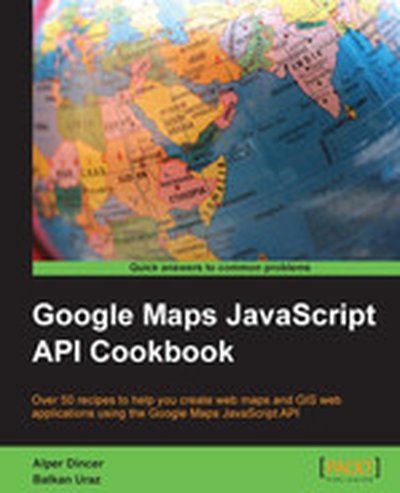
Google Maps JavaScript API Cookbook

The Google Maps JavaScript API Cookbook is your go-to guide for mastering Google's powerful Maps JavaScript API. With its recipe-based approach, it helps you quickly learn how to include maps on websites and mobile devices, customize functionality, integrate advanced GIS tools, and make the most of Google's mapping power. What this Book will help me do Create customized maps with JavaScript for mobile and web applications. Integrate GIS services like GeoServer and ArcGIS with Google APIs. Add and manage vector and raster layers to enrich visual data. Work with geocoding and direction services for added intelligence. Extend API functionalities using external libraries and datasets. Author(s) None Dincer and None Uraz are experienced GIS developers with a strong background in mapping technologies. They have utilized the Google Maps JavaScript API in numerous real-world projects over years of professional experience. Their approachable writing style ensures that you can learn complex topics with ease. Who is it for? This book is designed for JavaScript developers who aim to enhance their skills by integrating mapping functionalities into their applications. It is suitable for those at an intermediate programming level, looking to include maps in web and mobile platforms. If you're interested in GIS and leveraging Google APIs for robust mapping solutions, this is for you.
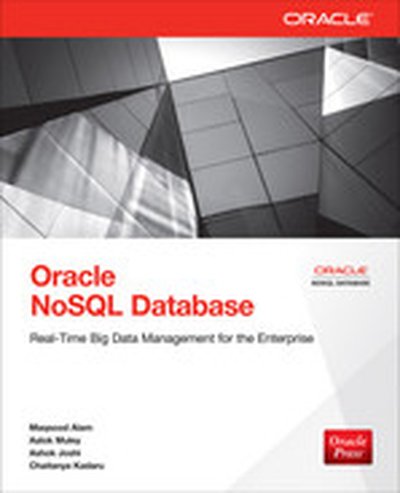
Oracle NoSQL Database

Master Oracle NoSQL Database Enable highly reliable, scalable, and available data. Oracle NoSQL Database: Real-Time Big Data Management for the Enterprise shows you how to take full advantage of this cost-effective solution for storing, retrieving, and updating high-volume, unstructured data. The book covers installation, configuration, application development, capacity planning and sizing, and integration with other enterprise data center products. Real-world examples illustrate the concepts presented in this Oracle Press guide. Understand Oracle NoSQL Database architecture and the underlying data storage engine, Oracle Berkeley DB Install and configure Oracle NoSQL Database for optimal performance Develop complex, distributed applications using a rich set of APIs Read and write data into the Oracle NoSQL Database key-value store Apply an Avro schema to the value portion of the key-value pair using Avro bindings Learn best practices for capacity planning and sizing an enterpriselevel Oracle NoSQL Database deployment Integrate Oracle NoSQL Database with Oracle Database, Oracle Event Processing, and Hadoop Code examples from the book are available for download at www.OraclePressBooks.com.

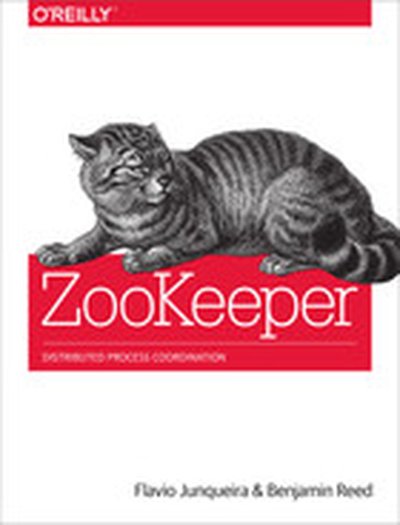
ZooKeeper

Building distributed applications is difficult enough without having to coordinate the actions that make them work. This practical guide shows how Apache ZooKeeper helps you manage distributed systems, so you can focus mainly on application logic. Even with ZooKeeper, implementing coordination tasks is not trivial, but this book provides good practices to give you a head start, and points out caveats that developers and administrators alike need to watch for along the way. In three separate sections, ZooKeeper contributors Flavio Junqueira and Benjamin Reed introduce the principles of distributed systems, provide ZooKeeper programming techniques, and include the information you need to administer this service. Learn how ZooKeeper solves common coordination tasks Explore the ZooKeeper API’s Java and C implementations and how they differ Use methods to track and react to ZooKeeper state changes Handle failures of the network, application processes, and ZooKeeper itself Learn about ZooKeeper’s trickier aspects dealing with concurrency, ordering, and configuration Use the Curator high-level interface for connection management Become familiar with ZooKeeper internals and administration tools

Microsoft Mapping: Geospatial Development with Bing Maps and C#

Geospatial mapping applications have become hugely popular in recent years. With smart-phone and tablet numbers snow-balling this trend looks set to continue well into the future. Indeed, it is true to say that in today's mobile world location-aware apps are becoming the norm rather than the exception. In Microsoft Mapping author Ray Rischpater showcases Microsoft's Bing Maps API and demonstrates how its integration features make it by far the strongest mapping candidate for business that are already using Windows 8 or the .NET Framework. Whether you want to build a new app from scratch of add a few modest geospatial features to your existing website Ray's carefully chosen examples will provide you with both the inspiration and the code you need to achieve your goals. What you'll learn Fully working code samples that show the concepts in use with ASP.NET 4.5, Windows 8 and Windows Phone. Complete solutions to the common problems of geospatial development: visualisation, hosting and localization of services are all explained. Demonstrates how the Bing Maps API can be connected to the Azure Cloud in order to provide a stand-alone mapping bolt-on with little additional up-front cost and great reliability. Unique coverage of how the Bing Maps API can be implanted within Windows Phone and iOS apps to provide a robust service tailored to the capabilities of each device. Who this book is for This book is for experienced Microsoft developers with a grounding in C# and .NET together with a basic understanding of WCF.

Professional Hadoop Solutions

The go-to guidebook for deploying Big Data solutions with Hadoop Today's enterprise architects need to understand how the Hadoop frameworks and APIs fit together, and how they can be integrated to deliver real-world solutions. This book is a practical, detailed guide to building and implementing those solutions, with code-level instruction in the popular Wrox tradition. It covers storing data with HDFS and Hbase, processing data with MapReduce, and automating data processing with Oozie. Hadoop security, running Hadoop with Amazon Web Services, best practices, and automating Hadoop processes in real time are also covered in depth. With in-depth code examples in Java and XML and the latest on recent additions to the Hadoop ecosystem, this complete resource also covers the use of APIs, exposing their inner workings and allowing architects and developers to better leverage and customize them. The ultimate guide for developers, designers, and architects who need to build and deploy Hadoop applications Covers storing and processing data with various technologies, automating data processing, Hadoop security, and delivering real-time solutions Includes detailed, real-world examples and code-level guidelines Explains when, why, and how to use these tools effectively Written by a team of Hadoop experts in the programmer-to-programmer Wrox style Professional Hadoop Solutions is the reference enterprise architects and developers need to maximize the power of Hadoop.

Mongoose for Application Development

This book is your hands-on guide to mastering Mongoose for application development on the Node.js stack. By working through practical examples, you'll learn how to define data schemas, efficiently interact with your database, and build a real-life project management application using this powerful tool. What this Book will help me do Master connecting Node.js applications to MongoDB using Mongoose. Define and leverage data schemas and models for robust data management. Perform CRUD operations seamlessly using Mongoose's accessible APIs. Integrate advanced concepts like schema validators, population, and sub-documents. Learn to enhance productivity by developing and utilizing reusable plugins. Author(s) Simon Holmes, an experienced web developer, specializes in JavaScript, Node.js, and database technologies. Known for his clear and effective teaching style, Simon has authored several books and tutorials to help developers be more proficient and productive. His insights on Mongoose bridge the gap between practical application and theoretical knowledge. Who is it for? This book is perfect for developers interested in Node.js who want to incorporate MongoDB into their applications and need a structured yet hands-on approach. It's suitable for learners new to Mongoose as well as experienced developers seeking to optimize their database interactions. Key audiences include backend developers, full-stack developers, and software engineers aiming to enhance their database schemas and queries.

Professional Access 2013 Programming

Authoritative and comprehensive coverage for building Access 2013 Solutions Access, the most popular database system in the world, just opened a new frontier in the Cloud. Access 2013 provides significant new features for building robust line-of-business solutions for web, client and integrated environments. This book was written by a team of Microsoft Access MVPs, with consulting and editing by Access experts, MVPs and members of the Microsoft Access team. It gives you the information and examples to expand your areas of expertise and immediately start to develop and upgrade projects. Explores the new development environment for Access web apps Focuses on the tools and techniques for developing robust web applications Demonstrates how to monetize your apps with Office Store and create e-commerce solutions Explains how to use SQL Server effectively to support both web and client solutions Provides techniques to add professional polish and deploy desktop application Shows you how to automate other programs using Macros, VBA, API calls and more. Professional Access 2013 Programming is a complete guide on the latest tools and techniques for building Access 2013 applications for both the web and the desktop so that developers and businesses can move forward with confidence. Whether you want to add expand your expertise with Client/Server deployments or start developing web apps, you will want this book as a companion and reference.

Windows Store App Development: C# and XAML

Windows Store App Development introduces C# developers to working with Windows Store apps. It provides full coverage of XAML, and addresses both app design and development. Following numerous carefully crafted examples, you'll learn about new Windows 8 features, the WinRT API, and .NET 4.5. Along the way, you'll pick up tips for deploying apps, including sale through the Windows Store. And, of course, you'll find the same deep and unique insights Pete provides in his Silverlight books. About the Technology The Windows Store provides an amazing array of productivity tools, games, and other apps directly to the millions of customers already using Windows 8.x or Surface. Windows Store apps boast new features like touch and pen input, standardized app-to-app communication, and tight integration with the web. And, you can build Windows Store apps using the tools you already know: C# and XAML. About the Book Windows Store App Development introduces the Windows 8.x app model to readers familiar with traditional desktop development. You'll explore dozens of carefully crafted examples as you master Windows features, the Windows Runtime, and the best practices of app design. Along the way, you'll pick up tips for deploying apps, including selling through the Windows Store. What's Inside Designing, creating, and selling Windows Store apps Developing touch and sensor-centric apps Working C# examples, from feature-level techniques to complete app design Making apps that talk to each other Mixing in C++ for even more features About the Reader This book requires some knowledge of C#. No experience with Windows 8 is needed. About the Author Pete Brown is a Developer Evangelist at Microsoft and author of Silverlight 4 in Action and Silverlight 5 in Action. Quotes Informative, fun, and easy to read. - Todd Miranda, NxtDimension Solutions Broad coverage of all aspects of W8 XAML development. - Roland Civet, iSolutions For You! Pete is a consistently great author, and once again he nails his subject. - Gordon Mackie, Openfeatured Ltd. Your roadmap to modern Windows design. - Patrick Toohey, Mettler-Toledo Hi-Speed Much less a book than a must-have tool for efficient and quality app development. - Dave Campbell, WynApse

Instant Apache ActiveMQ Messaging Application Development How-to

Instant Apache ActiveMQ Messaging Application Development How-to is a concise guide to building messaging applications using ActiveMQ and the JMS API. It covers the critical concepts and hands-on examples for utilizing ActiveMQ's messaging capabilities. You will learn how to implement both basic and advanced messaging functionalities in your applications. What this Book will help me do Master the setup of Apache ActiveMQ brokers for development environments. Develop message-driven applications using Java Message Service (JMS) API. Leverage message queues and topics to broadcast and manage asynchronous communication. Implement advanced messaging features such as message scheduling and fault tolerance. Integrate ActiveMQ directly into JVM-based applications for seamless operation. Author(s) Timothy A. Bish, an experienced software developer, specializes in messaging systems and ActiveMQ. With extensive knowledge in JMS and message-based application development, he provides clear and usable guidance to developers. His practical approach ensures that readers gain both foundational understanding and advanced skills effectively. Who is it for? This book is ideal for software developers who are new to messaging systems and wish to explore Java Message Service (JMS) with a focus on ActiveMQ. It is suitable for professionals aiming to build robust communication systems and developers wanting to expand their expertise in real-time event-driven applications. Beginners with basic Java knowledge will find this approachable and highly educational.

IBM ProtecTIER Implementation and Best Practices Guide

This IBM® Redbooks® publication provides best practice guidance for planning, installing, and configuring the IBM TS7600 ProtecTIER® family of products. This guide provides all the latest best practices for using ProtecTIER Software Version 3.3 and the revolutionary and patented IBM HyperFactor® deduplication engine, along with other data storage efficiency techniques, such as compression and defragmentation. The IBM System Storage® TS7650G ProtecTIER Deduplication Gateway and the IBM System Storage TS7620 ProtecTIER Deduplication Appliance Express are disk-based data storage systems that are configured for three available interfaces: The Virtual Tape Library (VTL) interface is the foundation of ProtecTIER and emulates traditional automated tape libraries. The Symantec NetBackup OpenStorage (OST) API can be integrated with Symantec NetBackup to provide backup-to-disk without having to emulate traditional tape libraries. The newly available File System Interface (FSI) supports Common Internet File System (CIFS) and Network File System (NFS) as backup targets. When you build a ProtecTIER data deduplication environment, this guide helps your IT architects and solution designers plan for the best option and scenario for data deduplication for their environments. This guide helps you optimize your deduplication ratio, while reducing the hardware, power and cooling, and management costs. This guide provides expertise that was gained from the IBM ProtecTIER Field Technical Sales Support (FTSS/CSS) Group, development, and Quality Assurance teams.

MySQL, 5th Edition

MySQL, Fifth Edition by Paul DuBois The definitive guide to using, programming and administering MySQL 5.5 and MySQL 5.6 MySQL provides a comprehensive guide to effectively using and administering the MySQL database management system (DBMS). Author Paul DuBois describes everything from the basics of getting information into a database and formulating queries, to using MySQL with PHP or Perl to generate dynamic web pages, to writing your own programs that access MySQL databases, to administering MySQL servers. The book also includes a comprehensive reference section providing detailed information on MySQL’s structure, language, syntax, and APIs. The fifth edition of this bestselling book has been meticulously revised and updated to thoroughly cover the latest features and capabilities of MySQL 5.5, as well as to add new coverage of features introduced with MySQL 5.6. MySQL is an open source relational database management system (DBMS) that has experienced a phenomenal growth in popularity and use. Known for its speed and ease of use, MySQL has proven itself to be particularly well-suited for developing database-backed websites and applications. MySQL runs on anything from modest hardware all the way up to enterprise servers, and its performance rivals any database system put up against it. Paul DuBois’ MySQL, Fifth Edition, is the definitive guide to fully exploiting all the power and versatility of MySQL 5.5 and MySQL 5.6 Contents at a Glance Part I: General MySQL Use Chapter 1 Getting Started with MySQL Chapter 2 Using SQL to Manage Data Chapter 3 Data Types Chapter 4 Views and Stored Programs Chapter 5 Query Optimization Part II: Using MySQL Programming Interfaces Chapter 6 Introduction to MySQL Programming Chapter 7 Writing MySQL Programs Using C Chapter 8 Writing MySQL Programs Using Perl DBI Chapter 9 Writing MySQL Programs Using PHP Part III: MySQL Administration Chapter 10 Introduction to MySQL Administration Chapter 11 The MySQL Data Directory Chapter 12 General MySQL Administration Chapter 13 Security and Access Control Chapter 14 Database Maintenance, Backups, and Replication Part IV: Appendixes Appendix A Software Required to Use This Book Appendix B Data Type Reference Appendix C Operator and Function Reference Appendix D System, Status, and User Variable Reference Appendix E SQL Syntax Reference Appendix F MySQL Program Reference Online Appendixes: Appendix G C API Reference Appendix H Perl DBI API Reference Appendix I PHP API Reference .

ZeroMQ

Dive into ØMQ (aka ZeroMQ), the smart socket library that gives you fast, easy, message-based concurrency for your applications. With this quick-paced guide, you’ll learn hands-on how to use this scalable, lightweight, and highly flexible networking tool for exchanging messages among clusters, the cloud, and other multi-system environments. ØMQ maintainer Pieter Hintjens takes you on a tour of real-world applications, using extended examples in C to help you work with ØMQ’s API, sockets, and patterns. Learn how to use specific ØMQ programming techniques, build multithreaded applications, and create your own messaging architectures. You’ll discover how ØMQ works with several programming languages and most operating systems—with little or no cost. Learn ØMQ’s main patterns: request-reply, publish-subscribe, and pipeline Work with ØMQ sockets and patterns by building several small applications Explore advanced uses of ØMQ’s request-reply pattern through working examples Build reliable request-reply patterns that keep working when code or hardware fails Extend ØMQ’s core pub-sub patterns for performance, reliability, state distribution, and monitoring Learn techniques for building a distributed architecture with ØMQ Discover what’s required to build a general-purpose framework for distributed applications

Oracle 11g Anti-hacker's Cookbook

Oracle 11g Anti-hacker's Cookbook is your comprehensive guide to fortify your Oracle database against potential threats. Through over fifty practical recipes, you'll discover proven methodologies for protecting sensitive data and implementing advanced security measures featured in Oracle 11g R2. This book is essential for mastering robust database security practices. What this Book will help me do Effectively configure secure servers and operating systems for Oracle Database setups. Implement encryption using Oracle Cryptographic API and Transparent Data Encryption to secure sensitive data. Develop and deploy a thorough audit strategy utilizing Oracle's built-in auditing tools. Leverage Oracle Vault and Virtual Private Database (VPD) to control access and protect data. Recognize and defend against database attacks, including man-in-the-middle, sniffing, and brute-force scenarios. Author(s) Adrian Neagu is a seasoned Oracle Database expert with extensive experience in database security and performance tuning. He has spent years implementing, securing, and enhancing database systems for organizations all over the world. Adrian is passionate about educating others and distills complex security concepts into straightforward, actionable advice in this book. Who is it for? This book is ideal for Oracle Database Administrators, Security Managers, and Auditors who aim to enhance the security of their Oracle systems and protect sensitive data from threats. If you have a fundamental understanding of database operations and security principles, this book will guide you toward advanced proficiency. It is particularly invaluable for professionals dedicated to preventing unauthorized access and safeguarding data integrity.

IBM ProtecTier Implementation and Best Practices Guide

The IBM® System Storage® TS7650G ProtecTIER® Deduplication Gateway and the IBM System Storage TS7650 ProtecTIER Deduplication Appliance are disk-based data storage systems configured for three available interfaces: The Virtual Tape Library (VTL) interface is the foundation of ProtecTIER and emulates traditional automated tape libraries. The Symantec NetBackup OpenStorage (OST) API can be integrated with Symantec NetBackup to provide backup-to-disk without having to emulate traditional tape libraries. The newly available File System Interface (FSI) supports Common Internet File System (CIFS) as a backup target. For your existing ProtecTIER solution, we provide best practices and suggestions to boost the performance and the effectiveness of the data deduplication with regards to your application platforms for your VTL, OST, and FSI systems. When building a new ProtecTIER data deduplication environment, this publication helps IT architects and solution designers plan for the best option and scenario for data deduplication for their environments. This guide helps you optimize your deduplication ratio, while reducing the hardware, power and cooling, and management costs.

Developing Essbase Applications

If you love Essbase and hate seeing it misused, then this is the book for you. Written by 12 Essbase professionals that are either acknowledged Essbase gurus or certified Oracle ACEs, Developing Essbase Applications: Advanced Techniques for Finance and IT Professionals provides an unparalleled investigation and explanation of Essbase theory and best practices. Detailing the hows and the whys of successful Essbase implementation, the book arms you with simple yet powerful tools to meet your immediate needs, as well as the theoretical knowledge to proceed to the next level with Essbase. Infrastructure, data sourcing and transformation, database design, calculations, automation, APIs, reporting, and project implementation are covered by subject matter experts who work with the tools and techniques on a daily basis. In addition to practical cases that illustrate valuable lessons learned, the book offers: —Dan Pressman describes the previously unpublished and undocumented inner workings of the ASO Essbase engine. Undocumented Secrets Authoritative Experts—If you have questions that no one else can solve, these 12 Essbase professionals are the ones who can answer them. Unpublished—Includes the only third-party guide to infrastructure. Infrastructure is easy to get wrong and can doom any Essbase project. Comprehensive—Let there never again be a question on how to create blocks or design BSO databases for performance—Dave Farnsworth provides the answers within. Innovative—Cameron Lackpour and Joe Aultman bring new and exciting solutions to persistent Essbase problems. With a list of contributors as impressive as the program of presenters at a leading Essbase conference, this book offers unprecedented access to the insights and experiences of those at the forefront of the field. The previously unpublished material presented in these pages will give you the practical knowledge needed to use this powerful and intuitive tool to build highly useful analytical models, reporting systems, and forecasting applications.

Hadoop: The Definitive Guide, 3rd Edition

Ready to unlock the power of your data? With this comprehensive guide, you’ll learn how to build and maintain reliable, scalable, distributed systems with Apache Hadoop. This book is ideal for programmers looking to analyze datasets of any size, and for administrators who want to set up and run Hadoop clusters. You’ll find illuminating case studies that demonstrate how Hadoop is used to solve specific problems. This third edition covers recent changes to Hadoop, including material on the new MapReduce API, as well as MapReduce 2 and its more flexible execution model (YARN). Store large datasets with the Hadoop Distributed File System (HDFS) Run distributed computations with MapReduce Use Hadoop’s data and I/O building blocks for compression, data integrity, serialization (including Avro), and persistence Discover common pitfalls and advanced features for writing real-world MapReduce programs Design, build, and administer a dedicated Hadoop cluster—or run Hadoop in the cloud Load data from relational databases into HDFS, using Sqoop Perform large-scale data processing with the Pig query language Analyze datasets with Hive, Hadoop’s data warehousing system Take advantage of HBase for structured and semi-structured data, and ZooKeeper for building distributed systems

Getting Started with Fluidinfo

Imagine a public storage system that has a place online for structured data about everything that exists—or that could exist. This book introduces Fluidinfo, a system that enables you to store information about anything, real or imaginary, in any digital form. You’ll learn how to organize and search for data, and decide who can use, modify, and extend what you’ve contributed. This guide demonstrates Fluidinfo’s potential to create social data, with facilities that encourage users and applications to share, remix, and reuse data in ways they may not have anticipated. You’ll learn how to use tools for reading and writing data, and how to use Fluidinfo in your own applications by working with its writable API and simple query language. Read and write Fluidinfo data from web applications—and reuse and build upon each other’s data Discover Fluidinfo’s permissions system for tags and namespaces Learn how to use Fish, the command-line tool for interacting with Fluidinfo data Delve into Fluidinfo’s RESTful API, and learn how to make HTTP requests Use Fluidinfo client libraries to build a simple Python utility or a JavaScript web application

Getting Started with CouchDB

CouchDB is a new breed of database for the Internet, geared to meet the needs of today’s dynamic web applications. With this concise introduction, you’ll learn how CouchDB’s simple model for storing, processing, and accessing data makes it ideal for the type of data and rapid response users now demand from your applications—and how easy CouchDB is to set up, deploy, maintain, and scale. The code-packed examples in this book will help you learn how to work with documents, populate a simple database, replicate data from one database to another, and a host of other tasks. Install CouchDB on Linux, Mac OS X, Windows, or (if you must) from the source code Interact with data through CouchDB’s RESTful API, and use standard HTTP operations, such as PUT, GET, POST, and DELETE Use Futon—CouchDB’s web-based interface— to manage databases and documents, and to configure replications Learn how to create, update, and delete documents in JSON format, and how to create and delete databases Work with design documents to get the formatting and indexing your application requires

IBM Tivoli Storage Productivity Center V4.2 Release Guide

IBM® Tivoli® Storage Productivity Center V4.2 is a feature-rich storage management software suite. The integrated suite provides detailed monitoring, reporting, and management within a single console. This IBM Redbooks® publication is intended for storage administrators and users who are installing and using the features and functions in IBM Tivoli Storage Productivity Center V4.2. The information in the book can be used to plan for, install, and customize the components of Tivoli Storage Productivity Center in your storage infrastructure. This release contains several important functional enhancements: - New licensing for Tivoli Storage Productivity Center Select and for Tivoli Storage productivity Center for Disk Select to provide full Tivoli Storage Productivity Center functionality to Midrange. - Support for IBM Storwize V7000. Also new is the capability for customers to generate and see Storwize V7000 and SAN Volume Controller (SVC) Internal Disks report. - New IBM Tivoli Tier reports that help clients make important decisions about storage tiering by utilizing estimated capability and actual performance data for IBM System Storage® SAN Volume Controller and IBM Storwize V7000 storage tier reports. - IBM XIV® Storage System support has been updated, adding discovery, provisioning, and performance management, as well as new replication support for three new XIV sessions: Snapshot, Metro Mirror failover/failback, and Global Mirror Failover/Failback. Step-by-step procedures are provided to help you with tasks such as migrating to Storage Resource agents, using Native APIs, using SAN configuration planning functions, and maintaining your IBM DB2 database repository.

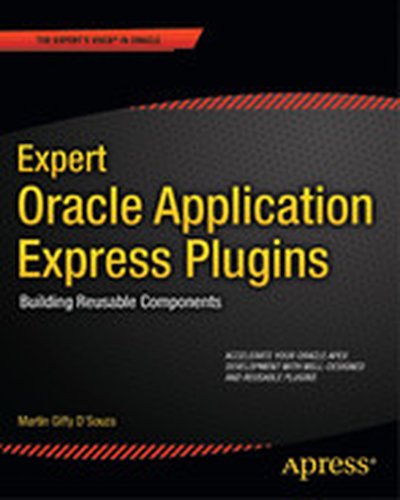
Expert Oracle Application Express Plugins: Building Reusable Components

Expert Oracle Application Express Plugins is your “go to” book on the groundbreaking plugin architecture introduced in Oracle Application Express 4.0. Using the new APEX functionality, you can create well-packaged, documented, reusable components and reliably leverage your coding investments across many applications. Components you create can define new item and region types, specify validation processes, and present dynamic actions to client applications. You can design innovative and colorful ways to display information, such as displaying the temperature using an image of a thermometer, or displaying sales velocity in the form of an automotive speedometer. The new plugin architecture is sure to create a tidal wave of creativity. Author Martin D'Souza shows everything you need to know to get started in building and deploying plugins of your own design. You'll learn the underlying architecture, including the APIs used to tie your plugins seamlessly into an Application Express environment. You'll learn about the different types of plugins, and you'll walk through examples of each to ensure that you can create the right type of plugin when you need it. Finally, Expert Oracle Application Express Plugins shows how to work as part of the larger Application Express community by leveraging that community's efforts and by giving back as you deploy your own plugins to the broad audience of Application Express developers. Presents the architecture and APIs available for customizing Application Express Gives clear examples of plugin development, for each type of plugin Helps you work as part of the broader community of plugin developers What you'll learn Understand the APEX plugin architecture Design and develop each of the four types of plugin Debug and troubleshoot plugin-based applications Deploy your plugins to the wider community Make your plugins compatible across different browsers Master the plugin APIs that APEX provides Who this book is for Expert Oracle APEX Plugins is aimed at Oracle Application Express developers wanting to develop reusable components using Application Express's new, plugin architecuture. The book appeals to in-house developers wanting to preserve their investment in writing code by packaging it for convenient reuse in other applications. The book also appeals to commercial software developers who want to write plugins for sale.