talk-data.com talk-data.com

Topic

API

Application Programming Interface (API)

integration software_development data_exchange

856

tagged

Activity Trend

65 peak/qtr
2020-Q1 2026-Q1

Activities

856 activities · Newest first

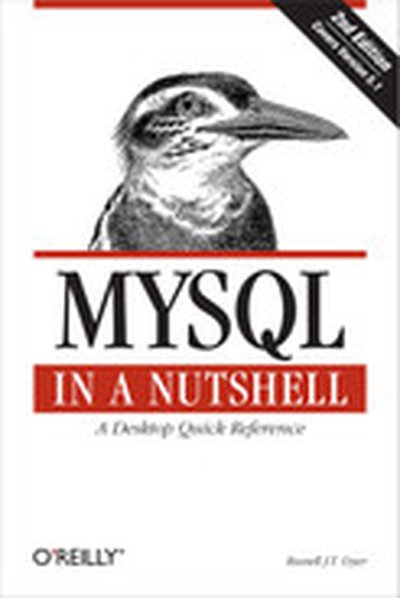
MySQL in a Nutshell, 2nd Edition

When you need to find the right SQL keyword or MySQL client command-line option right away, turn to this convenient reference, known for the same speed and flexibility as the system it covers so thoroughly. MySQL is packed with so many capabilities that the odds of remembering a particular function or statement at the right moment are pretty slim. With MySQL in a Nutshell, you get the details you need, day in and day out, in one concise and extremely well organized book. The new edition contains all the commands and programming information for version 5.1, including new features and language interfaces. It's ideal for anyone using MySQL, from novices who need to get up to speed to advanced users who want a handy reference. Like all O'Reilly Nutshell references, it's easy to use and highly authoritative, written by the editor of the MySQL Knowledge Base at MySQL AB, the creator and owner of MySQL. Inside, you'll find: A thorough reference to MySQL statements, functions, and administrative utilities Several tutorial chapters to help newcomers get started Programming language APIs for PHP, Perl, and C Brief tutorials at the beginning of each API chapter to help anyone, regardless of experience level, understand and master unfamiliar territory New chapters on replication, triggers, and stored procedures Plenty of new examples of how MySQL is used in practice Useful tips to help you get through the most difficult subjectsWhether you employ MySQL in a mission-critical, heavy-use environment or for applications that are more modest, this book puts a wealth of easy-to-find information at your fingertips, saving you hundreds of hours of trial and error and tedious online searching. If you're ready to take advantage of everything MySQL has to offer, MySQL in a Nutshell has precisely what it takes.

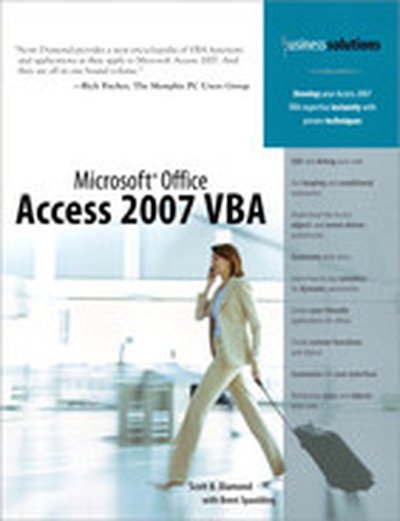
Microsoft® Office Access 2007 VBA

Business Solutions Microsoft® Office Access 2007 VBA Develop your Access 2007 VBA expertise instantly with proven techniques Microsoft Office Access 2007 VBA builds on the skills you’ve already developed in creating database applications and helps you take them to the next level—using Visual Basic for Applications (VBA) to accomplish things you once performed manually. To facilitate this lofty goal, Access includes the VBA programming language. Even if you’ve never programmed, this book will help you learn how to leverage the power of VBA to make your work with Access more efficient than ever before. Microsoft Office Access 2007 VBA is for professionals who use Microsoft Access frequently in their daily work. You have serious work to get done and you can’t spend all day reading a computer book. This book teaches you the essential skills you need to automate your databases as quickly as possible. Although written for Access 2007, the techniques and concepts covered will work in most versions of Microsoft Access. Highlights of This Book Include • Navigating within the Visual Basic Editor • Using variables, constants, and data types • Employing built-in functions • Creating procedures • Understanding object-and event-driven coding • Working with arrays • Understanding scope • Working with forms • Using selection controls • Creating reports • Exploring menus, navigation, and ribbons • Using object models • Working with data • Defining database schema • Using the Windows API • Working with XML files • Exploring Access SQL On the Website Download database files used in the book at www.quepublishing.com. Category Office Applications Covers Visual Basic for Applications User Level Intermediate - Advanced Scott B. Diamond is a seasoned database designer and Microsoft Access 2007 MVP. During the last 20+ years, he has designed databases on a wide range of platforms, including dBASE, FoxPro, SQL/DS, Lotus Approach, Lotus Notes, and, for the past 10 years, Microsoft Access. Scott has worked as a consultant, both in-house and freelance, and as a support professional at firms that are among the leaders in their industries. Scott spends some of his free time answering questions at the premier site for Access support: http://www.utteraccess.com. Brent Spaulding started writing applications about 20 years ago and has utilized Microsoft Access since version 2.0. He looks forward to using Access well into the future. In July 2007, he received the Microsoft MVP award for Access, which recognizes his talent and contributions to the Access community. Front cover bullets: Edit and debug your code Use looping and conditional statements Understand the Access object- and event-driven architecture Automate data entry Learn how to use variables for dynamic automation Create user-friendly applications for others Create custom functions and objects Customize the user interface Manipulate data and objects with code

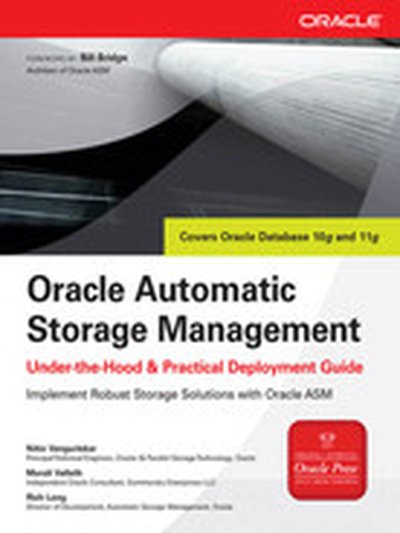
Oracle Automatic Storage Management: Under-the-Hood & Practical Deployment Guide

Streamline data management and provisioning Build and manage a storage infrastructure with Oracle scalable Automatic Storage Management using Oracle Automatic Storage Management (Oracle ASM) and the detailed information contained in this exclusive Oracle Press resource. Written by a team of database experts, maintain a dynamic, highly available Oracle database Oracle Automatic Storage Management: Under-the-Hood & Practical Deployment Guide explains how to build and storage environment . Inside, you'll learn how to configure storage for Oracle ASM, build disk groups, use data striping and mirroring, and optimize performance. You'll also learn how to ensure consistency across server and storage platforms, maximize data redundancy, and administer Oracle ASM from the command line. Manage Oracle ASM Instances and configure Oracle RDBMS instances to leverage Oracle ASM Define, discover, and manage disk storage under Oracle ASM Create external, normal-redundancy, and high-redundancy disk groups Add and remove Oracle ASM storage without affecting RDMS instance availability Learn how Oracle ASM provides even I/O distribution Work with Oracle ASM directories, files, templates, and aliases Improve storage performance and integrity using the ASMLIB API Simplify system administration with the Oracle ASM command line interface Understand key internal Oracle ASM structures and algorithms

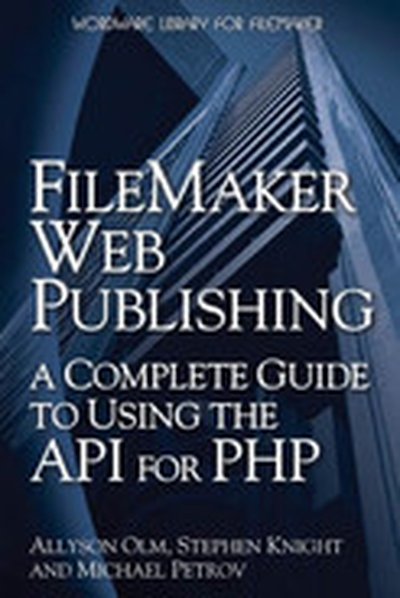
FileMaker Web Publishing: A Complete Guide to Using the API for PHP

FileMaker Web Publishing offers an unparalleled development strategy for database managers, web designers, and programmers who are interested in getting the most out of FileMaker databases on the web. The book introduces the basics of HTML, cascading style sheets, and PHP, then moves on to specific concepts such as database portals, value lists, and complex navigation systems. Advanced topics include uploading and referencing files within the database and sending dynamically formatted emails.

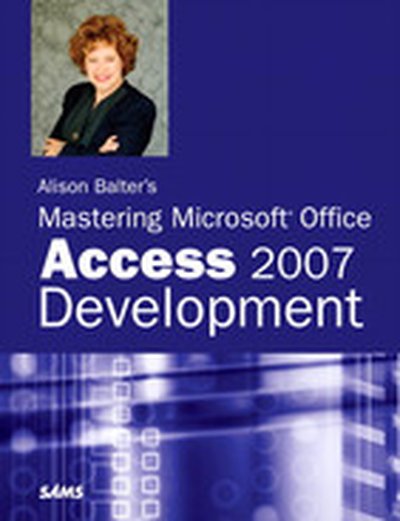
Alison Balter’s Mastering Microsoft® Office Access 2007 Development

Microsoft Office 2007 is a major upgrade from the last version of Office; Access will also be greatly revised. Alison Balter is the name that Access developers will trust to guide them through Access 2007's new features. She has the rare ability to take complex topics and explain them clearly, as shown by the success of her ten previous books on Access. Balter is known for providing real-world solutions to specific Access development problems. She also is known for her ability to back up her practical examples with just enough underlying theory to give the reader a good overall understanding of Access. In short, this book will provide beginning and intermediate Access developers with everything that they need to know to design and build Access 2007 applications. It should also appeal to DBAs and power users who want or need to get started building custom Access apps. This latest book in her Mastering Access series will not disappoint her many fans who anxiously await each new version, and should win her new fans as well. Introduction Part I The Basics of Access Development 1 Access as a Development Tool. . . . . . . . . . . . . . . . . . . . . . . . . . . . . . . . . . . . . . . . . . . . . . . . . . . . . . . . . . . 7 2 What Every Developer Needs to Know About Databases and Tables . . . . . . . 75 3 Relationships: Your Key to Data Integrity . . . . . . . . . . . . . . . . . . . . . . . . . . . . . . . . . . . . . . . . 115 4 What Every Developer Needs to Know About Query Basics. . . . . . . . . . . . . . . . . 137 5 What Every Developer Needs to Know About Forms. . . . . . . . . . . . . . . . . . . . . . . . . . 189 6 What Every Developer Needs to Know About Reports. . . . . . . . . . . . . . . . . . . . . . . . 269 7 What Are Macros, and When Do You Need Them? . . . . . . . . . . . . . . . . . . . . . . . . . . . 315 8 VBA: An Introduction . . . . . . . . . . . . . . . . . . . . . . . . . . . . . . . . . . . . . . . . . . . . . . . . . . . . . . . . . . . . . . . . . . 345 9 Objects, Properties, Methods, and Events Explained . . . . . . . . . . . . . . . . . . . . . . . . . . 401 10 Advanced Form Techniques. . . . . . . . . . . . . . . . . . . . . . . . . . . . . . . . . . . . . . . . . . . . . . . . . . . . . . . . . . . 431 11 Advanced Report Techniques. . . . . . . . . . . . . . . . . . . . . . . . . . . . . . . . . . . . . . . . . . . . . . . . . . . . . . . . . 493 12 Advanced Query Techniques . . . . . . . . . . . . . . . . . . . . . . . . . . . . . . . . . . . . . . . . . . . . . . . . . . . . . . . . . 539 13 Advanced VBA Techniques. . . . . . . . . . . . . . . . . . . . . . . . . . . . . . . . . . . . . . . . . . . . . . . . . . . . . . . . . . . . 599 14 Exploiting the Power of Class Modules. . . . . . . . . . . . . . . . . . . . . . . . . . . . . . . . . . . . . . . . . . . . 637 15 What Are ActiveX Data Objects, and Why Are They Important?. . . . . . . . . . 671 Part II What to Do When Things Don’t Go as Planned 16 Debugging: Your Key to Successful Development . . . . . . . . . . . . . . . . . . . . . . . . . . . . . . 727 17 Error Handling: Preparing for the Inevitable . . . . . . . . . . . . . . . . . . . . . . . . . . . . . . . . . . . . 755 18 Optimizing Your Application. . . . . . . . . . . . . . . . . . . . . . . . . . . . . . . . . . . . . . . . . . . . . . . . . . . . . . . . . 801 Part III Developing Multiuser and Enterprise Applications 19 A Strategy to Developing Access Applications. . . . . . . . . . . . . . . . . . . . . . . . . . . . . . . . . . . 835 20 Using External Data. . . . . . . . . . . . . . . . . . . . . . . . . . . . . . . . . . . . . . . . . . . . . . . . . . . . . . . . . . . . . . . . . . . . . 847 21 Access 2007 and SharePoint . . . . . . . . . . . . . . . . . . . . . . . . . . . . . . . . . . . . . . . . . . . . . . . . . . . . . . . . . . 883 22 Developing Multiuser and Enterprise Applications . . . . . . . . . . . . . . . . . . . . . . . . . . . . 909 00_0672329328_FM.qxd 5/4/07 9:23 AM Page iii Part IV Black Belt Programming 23 Working with and Customizing Ribbons . . . . . . . . . . . . . . . . . . . . . . . . . . . . . . . . . . . . . . . . . 935 24 Automation: Communicating with Other Applications. . . . . . . . . . . . . . . . . . . . . . 949 25 Exploiting the Power of the Windows API . . . . . . . . . . . . . . . . . . . . . . . . . . . . . . . . . . . . . . . 985 26 Creating Your Own Libraries. . . . . . . . . . . . . . . . . . . . . . . . . . . . . . . . . . . . . . . . . . . . . . . . . . . . . . . . 1011 27 Using Builders and Wizards . . . . . . . . . . . . . . . . . . . . . . . . . . . . . . . . . . . . . . . . . . . . . . . . . . . . . . . . . 1027 28 An Introduction to Access and the Internet/Intranet. . . . . . . . . . . . . . . . . . . . . . . . 1055 Part V Adding Polish to Your Application 29 Documenting Your Application. . . . . . . . . . . . . . . . . . . . . . . . . . . . . . . . . . . . . . . . . . . . . . . . . . . . 1073 30 Maintaining Your Application. . . . . . . . . . . . . . . . . . . . . . . . . . . . . . . . . . . . . . . . . . . . . . . . . . . . . . 1091 31 Database Security Made Easy . . . . . . . . . . . . . . . . . . . . . . . . . . . . . . . . . . . . . . . . . . . . . . . . . . . . . . . 1103 The following appendixes are available for download at www.samspublishing.com/title/0672329328. Part VI Appendixes A Naming Conventions. . . . . . . . . . . . . . . . . . . . . . . . . . . . . . . . . . . . . . . . . . . . . . . . . . . . . . . . . . . PDF:1131 B Table Structures. . . . . . . . . . . . . . . . . . . . . . . . . . . . . . . . . . . . . . . . . . . . . . . .

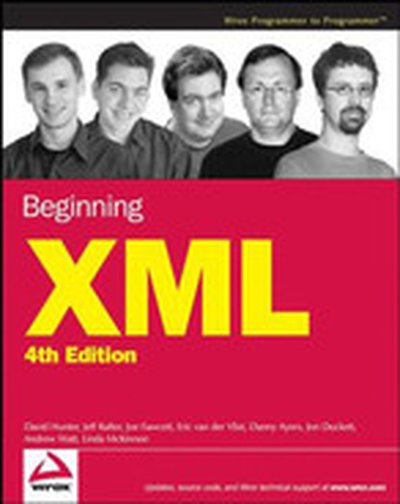
Beginning XML, 4th Edition

When the first edition of this book was written, XML was a relatively new language but already gaining ground fast and becoming more and more widely used in a vast range of applications. By the time of the second edition, XML had already proven itself to be more than a passing fad, and was in fact being used throughout the industry for an incredibly wide range of uses. With the third edition, it was clear that XML was a mature technology, but more important, it became evident that the XML landscape was dividing into several areas of expertise. Now in this edition, we needed to categorize the increasing number of specifications surrounding XML, which either use XML or provide functionality in addition to the XML core specification. So what is XML? It's a markup language, used to describe the structure of data in meaningful ways. Anywhere that data is input/output, stored, or transmitted from one place to another, is a potential fit for XML's capabilities. Perhaps the most well-known applications are web-related (especially with the latest developments in handheld web access—for which some of the technology is XML-based). However, there are many other non-web-based applications for which XML is useful—for example, as a replacement for (or to complement) traditional databases, or for the transfer of financial information between businesses. News organizations, along with individuals, have also been using XML to distribute syndicated news stories and blog entries. This book aims to teach you all you need to know about XML—what it is, how it works, what technologies surround it, and how it can best be used in a variety of situations, from simple data transfer to using XML in your web pages. It answers the fundamental questions: What is XML? How do you use XML? How does it work? * What can you use it for, anyway? This book is for people who know that it would be a pretty good idea to learn XML but aren't 100 percent sure why. You've heard the hype but haven't seen enough substance to figure out what XML is and what it can do. You may be using development tools that try to hide the XML behind user interfaces and scripts, but you want to know what is really happening behind the scenes. You may already be somehow involved in web development and probably even know the basics of HTML, although neither of these qualifications is absolutely necessary for this book. What you don't need is knowledge of markup languages in general. This book assumes that you're new to the concept of markup languages, and we have structured it in a way that should make sense to the beginner and yet quickly bring you to XML expert status. The word "Beginning" in the title refers to the style of the book, rather than the reader's experience level. There are two types of beginner for whom this book is ideal: Programmers who are already familiar with some web programming or data exchange techniques. Programmers in this category will already understand some of the concepts discussed here, but you will learn how you can incorporate XML technologies to enhance those solutions you currently develop. Those working in a programming environment but with no substantial knowledge or experience of web development or data exchange applications. In addition to learning how XML technologies can be applied to such applications, you will be introduced to some new concepts to help you understand how such systems work. The subjects covered in this book are arranged to take you from novice to expert in as logical a manner as we could. This Fourth Edition is structured in sections based on various areas of XML expertise. Unless you are already using XML, you should start by reading the introduction to XML in Part I. From there, you can quickly jump into specific areas of expertise, or, if you prefer, you can read through the book in order. Keep in mind that there is quite a lot of overlap in XML, and that some of the sections make use of techniques described elsewhere in the book. The book begins by explaining what exactly XML is and why the industry felt that a language like this was needed. After covering the why, the next logical step is the how, so it shows you how to create well-formed XML. Once you understand the whys and hows of XML, you'll go on to some more advanced things you can do when creating your XML documents, to make them not only well formed, but valid. (And you'll learn what "valid" really means.) After you're comfortable with XML and have seen it in action, the book unleashes the programmer within and looks at an XML-based programming language that you can use to transform XML documents from one format to another. Eventually, you will need to store and retrieve XML information from databases. At this point, you will learn not only the state of the art for XML and databases, but also how to query XML information using an SQL-like syntax called XQuery. XML wouldn't really be useful unless you could write programs to read the data in XML documents and create new XML documents, so we'll get back to programming and look at a couple of ways that you can do that. Understanding how to program and use XML within your own business is one thing, but sending that information to a business partner or publishing it to the Internet is another. You'll learn about technologies that use XML that enable you to send messages across the Internet, publish information, and discover services that provide information. Since you have all of this data in XML format, it would be great if you could easily display it to people, and it turns out you can. You'll see an XML version of HTML called XHTML. You'll also look at a technology you may already be using in conjunction with HTML documents called CSS. CSS enables you to add visual styles to your XML documents. In addition, you'll learn how to design stunning graphics and make interactive forms using XML. Finally, the book ends with a case study, which should help to give you ideas about how XML can be used in real-life situations, and which could be used in your own applications. This book builds on the strengths of the earlier editions, and provides new material to reflect the changes in the XML landscape—notably XQuery, RSS and Atom, and AJAX. Updates have been made to reflect the most recent versions of specifications and best practices throughout the book. In addition to the many changes, each chapter has a set of exercise questions to test your understanding of the material. Possible solutions to these questions appear in Appendix A. Part I: Introduction: The introduction is where most readers should begin. The first three chapters introduce some of the goals of XML as well as the specific rules for constructing XML. Once you have read this part you should be able to read and create your own XML documents. Chapter 1: What Is XML?: This chapter cover some basic concepts, introducing the fact that XML is a markup language (a bit like HTML) whereby you can define your own elements, tags, and attributes (known as a vocabulary). You'll see that tags have no presentation meaning—they're just a way to describe the structure of the data. Chapter 2: Well-Formed XML: In addition to explaining what well-formed XML is, we offer a look at the rules that exist (the XML 1.0 and 1.1 Recommendations) for naming and structuring elements—you need to comply with these rules in order to produce well-formed XML. Chapter 3: XML Namespaces: Because tags can be made up, you need to avoid name conflicts when sharing documents. Namespaces provide a way to uniquely identify a group of tags, using a URI. This chapter explains how to use namespaces. Part II: Validation: In addition to the well-formedness rules you learn in Part I, you will most likely want to learn how to create and use different XML vocabularies. This Part introduces you to DTDs, XML Schemas, and RELAX NG: three languages that define custom XML vocabularies. It also shows you how to utilize these definitions to validate your XML documents. Chapter 4: Document Type Definitions: You can specify how an XML document should be structured, and even provide default values, using Document Type Definitions (DTDs). If XML conforms to the associated DTD, it is known as valid XML. This chapter covers the basics of using DTDs. Chapter 5: XML Schemas: XML Schemas, like DTDs, enable you to define how a document should be structured. In addition to defining document structure, they enable you to specify the individual datatypes of attribute values and element content. They are a more powerful alternative to DTDs. Chapter 6: RELAX NG: RELAX NG is a third technology used to define the structure of documents. In addition to a new syntax and new features, it takes the best from XML Schemas and DTDs, and is therefore very simple and very powerful. RELAX NG has two syntaxes; both the full syntax and compact syntax are discussed. Part III: Processing: In addition to defining and creating XML documents, you need to know how to work with documents to extract information and convert it to other formats. In fact, easily extracting information and converting it to other formats is what makes XML so powerful. Chapter 7: XPath: The XPath language is used to locate sections and data in the XML document, and it's important in many other XML technologies. Chapter 8: XSLT: XML can be transformed into other XML documents, HTML, and other formats using XSLT stylesheets, which are introduced in this chapter. Part IV: Databases: Creating and processing XML documents is good, but eventually you will want to store those documents. This section describes strategies for storing and retrieving XML documents and document fragments from different databases. Chapter 9: XQuery, the XML Query Language: Very often, you will need to retrieve information from within a database. XQuery, which is built on XPath and XPath2, enables you to do this in an elegant way. Chapter 10: XML and Databases: XML is perfect for structuring data, and some traditional databases are beginning to offer support for XML. This chapter discusses these, and provides a general overview of how XML can be used in an n-tier architecture. In addition, new databases based on XML are introduced. Part V: Programming: At some point in your XML career, you will need to work with an XML document from within a custom application. The two most popular methodologies, the Document Object Model (DOM) and the Simple API for XML (SAX), are explained in this part. Chapter 11: The Document Object Model (DOM): Programmers can use a variety of programming languages to manipulate XML using the Document Object Model's objects, interfaces, methods, and properties, which are described in this chapter. Chapter 12: Simple API for XML (SAX): An alternative to the DOM for programmatically manipulating XML data is to use the Simple API for XML (SAX) as an interface. This chapter shows how to use SAX and utilizes examples from the Java SAX API. Part VI: Communication: Sending and receiving data from one computer to another is often difficult, but several technologies have been created to make communication with XML much easier. This part discusses RSS and content syndication, as well as web services and SOAP. This edition includes a new chapter on Ajax techniques. Chapter 13: RSS, Atom, and Content Syndication: RSS is an actively evolving technology that is used to publish syndicated news stories and website summaries on the Internet. This chapter not only discusses how to use the different versions of RSS and Atom, it also covers the future direction of the technology. In addition, it demonstrates how to create a simple newsreader application that works with any of the currently published versions. Chapter 14: Web Services: Web services enable you to perform cross-computer communications. This chapter describes web services and introduces you to using remote procedure calls in XML (using XML-RPC and REST), as well as giving you a brief look at major topics such as SOAP. Finally, it breaks down the assortment of specifications designed to work in conjunction with web services. Chapter 15: SOAP and WSDL: Fundamental to XML web services, the Simple Object Access Protocol (SOAP) is one of the most popular specifications for allowing cross-computer communications. Using SOAP, you can package up XML documents and send them across the Internet to be processed. This chapter explains SOAP and the Web Services Description Language (WSDL) that is used to publish your service. Chapter 16: Ajax: Ajax enables you to utilize JavaScript with web services and SOAP, or REST communications. Additionally, Ajax patterns can be used within web pages to communicate with the web server without refreshing. This chapter is new to the Fourth Edition. Part VII: Display: Several XML technologies are devoted to displaying the data stored inside of an XML document. Some of these technologies are web-based, and some are designed for applications and mobile devices. This part discusses the primary display strategies and formats used today. Chapter 17: Cascading Style Sheets (CSS): Website designers have long been using Cascading Style Sheets (CSS) with their HTML to easily make changes to a website's presentation without having to touch the underlying HTML documents. This power is also available for XML, enabling you to display XML documents right in the browser. Or, if you need a bit more flexibility with your presentation, you can use XSLT to transform your XML to HTML or XHTML and then use CSS to style these documents. Chapter 18: XHTML: XHTML is a new version of HTML that follows the rules of XML. This chapter discusses the differences between HTML and XHTML, and shows you how XHTML can help make your sites available to a wider variety of browsers, from legacy browsers to the latest browsers on mobile phones. Chapter 19: Scalable Vector Graphics (SVG): Do you want to produce a custom graphic using XML? SVG enables you to describe a graphic using XML-based vector commands. This chapter teaches you the basics of SVG and then dives into a more complex SVG-based application that can be published to the Internet. Chapter 20: XForms: XForms are XML-based forms that can be used to design desktop applications, paper-based forms, and of course XHTML-based forms. This chapter demonstrates both the basics and some of the more interesting uses of XForms. Part VIII: Case Study: Throughout the book you'll gain an understanding of how XML is used in web, business-to-business (B2B), data storage, and many other applications. The case study covers an example application and shows how the theory can be put into practice in real-life situations. The case study is new to this edition. Chapter 21: Case Study: Payment Calculator: This case study explores some of the possibilities and strategies for using XML in your website. It includes an example that demonstrates a loan payment calculator by creating a web page using XHTML and CSS, communicating with a local web service using AJAX, utilizing an XML Schema to build data structures in .NET, and ultimately using the Document Object Model to display the results in SVG. An online version of this case study on the book's website covers the same material using Ruby on Rails instead of .NET. Appendixes: Appendix A provides answers to the exercise questions that appear throughout the book. The remaining appendixes provide reference material that you may find useful as you begin to apply the knowledge gained throughout the book in your own applications. These are: Appendix B: XPath Reference; Appendix C: XSLT Reference; Appendix D: The XML Document Object Model; Appendix E: XML Schema Element and Attribute Reference; Appendix F: XML Schema Datatypes Reference; Appendix G: SAX 2.0.2 Reference. Appendixes A, B, and C are included within the book; Appendixes D-G are available on the book's website.

Getting Started with Commerce Module for OmniFind Discovery Edition Customization 101

IBM Commerce Module for OmniFind Discovery Edition integrates IBM OmniFind Discovery Edition with IBM WebSphere Commerce. The integration helps online retail and catalog companies convert shoppers into buyers by making it easier for people to find the right products and services that match their specific requirements from the Web. This IBM Redbooks publication provides an introduction to customizing the Commerce Module for OmniFind Discovery Edition using OmniFind Discovery Edition APIs. We introduce some of the basic APIs and show examples of using them to run simple searches, refine search results, and navigate within the search results. Using a sample start store as the case study, we explain how to use the APIs to add or modify existing menus and navigation options and change the appearance and behavior of the existing sample store Web site. We show you how to work with OmniFind Discovery Edition search engine and pass multiple constraints to narrow searches for the online store. This book is intended to be used by system integrators and solution developers who will be working with the Commerce Module for OmniFind Discovery Edition and performing customization for the online stores powered by OmniFind Discovery Edition. Information center for OmniFind Discovery Edition Version 8.4: Primary product support resource for OmniFind Discovery Edition:

Understanding MySQL Internals

Although MySQL's source code is open in the sense of being publicly available, it's essentially closed to you if you don't understand it. In this book, Sasha Pachev -- a former member of the MySQL Development Team -- provides a comprehensive tour of MySQL 5 that shows you how to figure out the inner workings of this powerful database. You'll go right to heart of the database to learn how data structures and convenience functions operate, how to add new storage engines and configuration options, and much more. The core of Understanding MySQL Internals begins with an Architecture Overview that provides a brief introduction of how the different components of MySQL work together. You then learn the steps for setting up a working compilable copy of the code that you can change and test at your pleasure. Other sections of the book cover: Core server classes, structures, and API The communication protocol between the client and the server Configuration variables, the controls of the server; includes a tutorial on how to add your own Thread-based request handling -- understanding threads and how they are used in MySQL An overview of MySQL storage engines The storage engine interface for integrating third-party storage engines The table lock manager The parser and optimizer for improving MySQL's performance Integrating a transactional storage engine into MySQL The internals of replication Understanding MySQL Internals provides unprecedented opportunities for developers, DBAs, database application programmers, IT departments, software vendors, and computer science students to learn about the inner workings of this enterprise-proven database. With this book, you will soon reach a new level of comprehension regarding database development that will enable you to accomplish your goals. It's your guide to discovering and improving a great database.

Beginning Google Maps Applications with Rails and Ajax: From Novice to Professional

The Google Maps API remains one of the showcase examples of the Web 2.0 development paradigm. Beginning Google Maps Applications with Rails and Ajax: From Novice to Professional is the first book to comprehensively introduce the service from a developer perspective, showing you how you can integrate mapping features into your Rails-driven web applications. Proceeding far beyond simplistic map display, youll learn how to draw from a variety of data sources such as the U.S. Census Bureau's TIGER/Line data and Google's own geocoding feature to build comprehensive geocoding services for mapping many locations around the world. The book also steers you through various examples that show how to encourage user interaction such as through pinpointing map locations, adding comments, and building community-driven maps. Youll want to pick up a copy of this book because This is the first book to comprehensively introduce the Google Maps application development using the Rails development framework. Youll be introduced to the very latest changes to the Google Maps API, embodied in the version 2 release. It is written by four developers actively involved in the creation of location-based mapping services. For additional info, please visit the author's reference site for this book.

Access™ 2007 Bible

I recommend this book for anyone who wants a strong foundation in Access. —Jeff Lenamon, CIBC World Markets Updated edition with exciting new Access 2007 features! Harness the power of Access 2007 with the expert guidance in this comprehensive reference. Beginners will appreciate the thorough attention to database fundamentals and terminology. Experienced users can jump right into Access 2007 enhancements like the all-new user interface and wider use of XML and Web services. Each of the book's six parts thoroughly focuses on key elements in a logical sequence, so you have what you need, when you need it. Designed as both a reference and a tutorial, Access 2007 Bible is a powerful tool for developers needing to make the most of the new features in Access 2007. Build Access tables using good relational database techniques Construct efficient databases using a five-step design method Design efficient data-entry and data display forms Utilize the improved Access report designer Use Visual Basic(r) for Applications and the VBA Editor to automate applications Build and customize Access 2007 ribbons Seamlessly exchange Access data with SharePoint(r) Employ advanced techniques such as the Windows(r) API and object-oriented programming Add security and use data replication in your Access applications What's on the CD-ROM? Follow the examples in the book chapter by chapter using the bonus materials on the CD-ROM. You'll find separate Microsoft Access database files for each chapter and other working files, including All the examples and databases used in the book, including database files, images, data files in various formats, and icon files used in the book's examples A complete sample application file, including queries, reports, objects, and modules, that you can use as a reference See the CD-ROM appendix for details and complete system requirements. Note: CD-ROM/DVD and other supplementary materials are not included as part of eBook file.

Java and XML, 3rd Edition

Java and XML, 3rd Edition, shows you how to cut through all the hype about XML and put it to work. It teaches you how to use the APIs, tools, and tricks of XML to build real-world applications. The result is a new approach to managing information that touches everything from configuration files to web sites. After two chapters on XML basics, including XPath, XSL, DTDs, and XML Schema, the rest of the book focuses on using XML from your Java applications. This third edition of Java and XML covers all major Java XML processing libraries, including full coverage of the SAX, DOM, StAX, JDOM, and dom4j APIs as well as the latest version of the Java API for XML Processing (JAXP) and Java Architecture for XML Binding (JAXB). The chapters on web technology have been entirely rewritten to focus on the today's most relevant topics: syndicating content with RSS and creating Web 2.0 applications. You'll learn how to create, read, and modify RSS feeds for syndicated content and use XML to power the next generation of websites with Ajax and Adobe Flash. Topics include: The basics of XML, including DTDs, namespaces, XML Schema, XPath, and Transformations The SAX API, including all handlers, filters, and writers The DOM API, including DOM Level 2, Level 3, and the DOM HTML module The JDOM API, including the core and a look at XPath support The StAX API, including StAX factories, producing documents and XMLPull Data Binding with JAXB, using the new JAXB 2.0 annotations Web syndication and podcasting with RSS XML on the Presentation Layer, paying attention to Ajax and Flash applications If you are developing with Java and need to use XML, or think that you will be in the future; if you're involved in the new peer-to-peer movement, messaging, or web services; or if you're developing software for electronic commerce, Java and XML will be an indispensable companion.

SQL Server 2005 Practical Troubleshooting: The Database Engine

Never-Before-Published Insiders’ Information for Troubleshooting SQL Server 2005. This is the definitive guide to troubleshooting the Microsoft SQL Server 2005 database engine, direct from the people who know it most intimately: the people who wrote it, designed it, and support it. SQL Server expert Ken Henderson, author of the best-selling Guru’s Guides to SQL Server, has assembled a “dream team” of SQL Server developers and support engineers to provide in-depth troubleshooting and diagnostic information that has never been documented before: information that would be impossible to get without access to Microsoft’s own source code. From caching to clustering, query processing to Service Broker, this book will help you address even the toughest problems with database engine operations. Each chapter begins with a brief architectural overview of a key SQL Server component, then drills down into the most common problems users encounter, offering specific guidance on investigating and resolving them. You’ll find comprehensive, in-depth chapters on • Waiting and blocking • Data corruption and recovery • Memory • Procedure cache issues • Query processing • Server crashes and other critical failures • Service Broker • SQLOS and scheduling • tempdb • Clustering This is the indispensable resource for everyone who must keep SQL Server running smoothly: DBAs, database application developers, API programmers, and Web developers alike. Contents About the Authors ix Preface xii Acknowledgments xiv 1 Waiting and Blocking Issues 1 2 Data Corruption and Recovery Issues 47 3 Memory Issues 137 4 Procedure Cache Issues 183 5 Query Processor Issues 225 6 Server Crashes and Other Critical Failures 273 7 Service Broker Issues 331 8 SQLOS and Scheduling Issues 369 9 Tempdb Issues 411 10 Clustering Issues 425 The Aging Champion 441 Index 445

MySQL Cookbook, 2nd Edition

Along with MySQL's popularity has come a flood of questions about solving specific problems, and that's where this Cookbook is essential. Designed as a handy resource when you need quick solutions or techniques, the book offers dozens of short, focused pieces of code and hundreds of worked-out examples for programmers of all levels who don't have the time (or expertise) to solve MySQL problems from scratch. The new edition covers MySQL 5.0 and its powerful new features, as well as the older but still widespread MySQL 4.1. One major emphasis of this book is how to use SQL to formulate queries for particular kinds of questions, using the mysql client program included in MySQL distributions. The other major emphasis is how to write programs that interact with the MySQL server through an API. You'll find plenty of examples using several language APIs in multiple scenarios and situations, including the use of Ruby to retrieve and format data. There are also many new examples for using Perl, PHP, Python, and Java as well. Other recipes in the book teach you to: Access data from multiple tables at the same time Use SQL to select, sort, and summarize rows Find matches or mismatches between rows in two tables Determine intervals between dates or times, including age calculations Store images into MySQL and retrieve them for display in web pages Get LOAD DATA to read your data files properly or find which values in the file are invalid Use strict mode to prevent entry of bad data into your database Copy a table or a database to another server Generate sequence numbers to use as unique row identifiers Create database events that execute according to a schedule And a lot more MySQL Cookbook doesn't attempt to develop full-fledged, complex applications. Instead, it's intended to assist you in developing applications yourself by helping you get past problems that have you stumped.

Integrating and Extending BIRT

A new edition of this title is available, ISBN-10: 0321580303 ISBN-13: 9780321580306 The second of a two-book series about business intelligence and reporting technology, introduces programmers to BIRT architecture and the reporting framework. Built on the Eclipse platform, this exciting technology makes it possible for programmers to build and deploy customized reports using scripting and BIRT APIs. In addition, programmers can extend the BIRT framework by building new plug-ins using the Eclipse Plug-in Development Environment. Integrating and Extending BIRT This book describes the key components of BIRT architecture, applications, and engines, including installing, deploying, and troubleshooting the Reporting and Charting engines in an Enterprise Java application-server environment.For developers who wish to incorporate custom business logic in their reports or access data from Java objects, the book describes BIRT's extensive scripting capabilities in JavaScript and Java. For developers who want to extend the BIRT framework, the book describes the key extension points to use in creating customized report items, rendering extensions for generating output other than HTML or PDF, and Open Data Access (ODA) drivers for new data sources. The book provides extensive examples of how to build plug-ins to extend the features of the BIRT framework. Topics discussed include Installing and deploying BIRT Deploying a BIRT report to an application server Understanding BIRT architecture Scripting in a BIRT report design Integrating BIRT functionality in applications Working with the BIRT extension framework

Getting Started with IBM Tivoli Workload Scheduler V8.3

IBM Tivoli Workload Scheduler is an IBM strategic scheduling product that runs on different platforms including the mainframe. The new version of the product, IBM Tivoli Workload Scheduler V8.3, comes with some important enhancements, such as relational database management system (RDBMS) support, new advanced planning system, which allows the definition of plans that span more that 24 hours, removal of framework requirements, new application programming interface (API), Job Scheduling Console enhancements, and so on. This IBM Redbooks publication documents the architecture, deployment, best practices, and migration scenarios for IBM Tivoli Workload Scheduler V8.3 on distributed environment. In addition, we cover IBM Tivoli Workload Scheduler V8.3 security, IBM DB2 and IBM WebSphere considerations, troubleshooting, tuning for performance, application programming interface, and JnextPlan, which has replaced the JnextDay process in this release. Clients and Tivoli professionals who are responsible for installing, administering, maintaining, or using IBM Tivoli Workload Scheduler V8.3 will find this book a major reference.

Inside SQL Server 2005 Tools

Direct from Microsoft Insiders: the Complete Hands-On Guide to SQL Server 2005’s Powerful Tools! Microsoft SQL Server 2005’s high-powered management tools can dramatically improve DBA productivity and effectiveness. Now there’s a comprehensive guide to SQL Server 2005’s toolset, straight from the Microsoft team that created it. This book covers the entire toolset in unprecedented depth, guides database professionals in choosing the right tools, and shows them how to use various tools collectively to solve real-world problems. The authors present “how-to” solutions and never-before-published tips for SQL Server 2005 installation, upgrades, configuration, authoring, schema design, development, deployment, optimization, troubleshooting, and more. Coverage includes  Understanding how SQL Server 2005 tools differ from their predecessors  Leveraging the new Business Intelligence Development Studio and Management Studio to accomplish dozens of common tasks  Improving security by reducing the “surface area” you expose  Executing queries with the new Query Editor and SQLCMD query tools  Optimizing with the revamped SQL Server Profiler and Database Engine Tuning Advisor  Scheduling maintenance tasks with the SQL Server Agent  Monitoring with the Activity Monitor, SQL Server Agent, and other tools  Moving data efficiently and reliably with Integration Services  Using SQL Server’s new e-mail tool, Database Mail  Managing replication in complex distributed environments  Mastering SQL Server’s Analysis Services’ OLAP and Data Mining tools  Using Notification Services 2.0, Reporting Services, and more  Extending functionality using underlying APIs and the included CD-ROM’s sample code. MICHAEL RAHEEM is the senior product manager of the Microsoft SQL Server team and led the design and implementation of several SQL Server tools, such as SQL Server Management Studio, Database Mail, Upgrade Advisors, and Surface Area Configuration. He currently leads the SQL Server enterprise marketing efforts including high availability, scalability, and performance. DIMA SONKIN is development lead in the SQL Server Tools group responsible for SQL Server Agent, SMO, DMO, SQL Profiler, Database Engine Tuning Advisor, Database Mail, SQLMail, SqlCmd, and OSQL. THIERRY D’HERS is the lead program manager on Microsoft’s SQL BI Analysis Services team and has spent five years designing and specifying Analysis Services tools. KAMI LEMONDS is the documentation manager for Microsoft’s SQL Server User Education team and contributed to the SQL Server 2000 Resource Kit. CD-ROM contains all sample code from the book and corresponding Visual Studio project files. Contents Foreword . . . . . . . . . . . . . . . . . . . . . . . . . . . . . . . xvii Preface . . . . . . . . . . . . . . . . . . . . . . . . . . . . . . . . xix Acknowledgments . . . . . . . . . . . . . . . . . . . . . . . xxvi About the Authors . . . . . . . . . . . . . . . . . . . . . . . xxvii Chapter 1 Inside the Fundamentals. . . . . . . . . . . . . . . . . . . . . 1 Chapter 2 Inside the Installation and Upgrade Tools. . . . . . . 23 Chapter 3 Inside the Configuration Tools . . . . . . . . . . . . . . . 73 Chapter 4 Inside Management and Administration Tools . . 129 Chapter 5 Inside Data Authoring Tools . . . . . . . . . . . . . . . . 181 Chapter 6 Inside SQLCMD Query Tools . . . . . . . . . . . . . . . . 199 Chapter 7 Inside Tuning and Optimization Tools . . . . . . . . . 237 Chapter 8 Inside Scheduling Tools . . . . . . . . . . . . . . . . . . . 273 Chapter 9 Inside Monitoring Tools. . . . . . . . . . . . . . . . . . . . 305 Chapter 10 Inside Email Tools . . . . . . . . . . . . . . . . . . . . . . . . 337 Chapter 11 Inside Programming Object Models . . . . . . . . . . 357 Chapter 12 Inside Replication Tools . . . . . . . . . . . . . . . . . . . 385 Chapter 13 Inside Analysis Services OLAP Tools . . . . . . . . . 429 Chapter 14 Inside Analysis Services Data Mining Tools . . . . . . . . . . . . . . . . . . . . . . . . . . . . 519 Chapter 15 Inside Notification Services Tools . . . . . . . . . . . 543 Chapter 16 Inside Integration Services Tools . . . . . . . . . . . . 601 Chapter 17 Inside the Reporting Services Tools . . . . . . . . . . 679 Appendix A Sample KPI Client Code— Retrieving and Exposing Your First KPI. . . . . . . . . . . . . . . . . . . . 711 Appendix B KPI Utilities—Code for Parsing Display Folders and Getting Image Indexes . . . . . . . . . . 713 Appendix C KPI Viewer . . . . . . . . . . . . . . . . . . . . . . . . . . . . . 721 Appendix D Complete List of Data Mining Stored Procedures . . . . . . . . . . . . . . . . . . . . . . . . . . . . . 723 Index . . . . . . . . . . . . . . . . . . . . . . . . . . . . . . . . . . 733

Beginning Google Maps Applications with PHP and Ajax: From Novice to Professional

Until recently, building interactive web-based mapping applications has been a cumbersome affair. This changed when Google released its powerful Maps API. Beginning Google Maps Applications with PHP and Ajax was written to help you take advantage of this technology in your own endeavorswhether you're an enthusiast playing for fun or a professional building for profit. This book covers version 2 of the API, including Google's new Geocoding service. Authors Jeffrey Sambells, Cameron Turner, and Michael Purvis get rolling with examples that require hardly any code at all, but you'll quickly become acquainted with many facets of the Maps API. They demonstrate powerful methods for simultaneously plotting large data sets, creating your own map overlays, and harvesting and geocoding sets of addresses. You'll see how to set up alternative tile sets and where to access imagery to use for them. The authors even show you how to build your own geocoder from scratch, for those high-volume batch jobs. As well as providing hands-on examples of real mapping projects, this book supplies a complete reference for the Maps API, along with the relevant aspects of JavaScript, CSS, PHP, and SQL. Visit the authors' website for additional tips and advice.

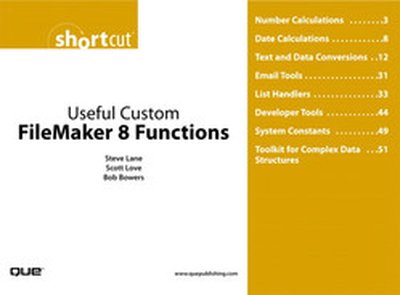
Useful Custom FileMaker 8 Functions

This Short Cut presents a sampling of custom functions that we’ve found useful, or that serve as good examples of functions in our day-to-day practice. The functions are broken into groups according to their purpose, much as FileMaker’s calculation functions are. Please note that these functions are meant as examples—although the examples were not tested exhaustively, nor is this collection meant to be comprehensive. We hope you’ll find some of them helpful directly, or that reading and analyzing others might provide a springboard for your own ideas. Table of Contents Date Calculations Text and Data Conversions Email Tools List Handlers Developer Tools System Constants Toolkit for Complex Data Structures Data API Within FileMaker Data Tree Using XML as a Data Structure Path-Based Selections The Functions

Google Hacks, 3rd Edition

Everyone knows that Google lets you search billions of web pages. But few people realize that Google also gives you hundreds of cool ways to organize and play with information. Since we released the last edition of this bestselling book, Google has added many new features and services to its expanding universe: Google Earth, Google Talk, Google Maps, Google Blog Search, Video Search, Music Search, Google Base, Google Reader, and Google Desktop among them. We've found ways to get these new services to do even more. The expanded third edition of Google Hacks is a brand-new and infinitely more useful book for this powerful search engine. You'll not only find dozens of hacks for the new Google services, but plenty of updated tips, tricks and scripts for hacking the old ones. Now you can make a Google Earth movie, visualize your web site traffic with Google Analytics, post pictures to your blog with Picasa, or access Gmail in your favorite email client. Industrial strength and real-world tested, this new collection enables you to mine a ton of information within Google's reach. And have a lot of fun while doing it: Search Google over IM with a Google Talk bot Build a customized Google Map and add it to your own web site Cover your searching tracks and take back your browsing privacy Turn any Google query into an RSS feed that you can monitor in Google Reader or the newsreader of your choice Keep tabs on blogs in new, useful ways Turn Gmail into an external hard drive for Windows, Mac, or Linux Beef up your web pages with search, ads, news feeds, and more Program Google with the Google API and language of your choice For those of you concerned about Google as an emerging Big Brother, this new edition also offers advice and concrete tips for protecting your privacy. Get into the world of Google and bend it to your will!

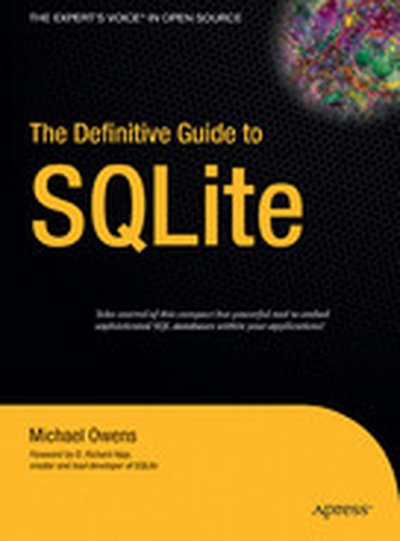
The Definitive Guide to SQLite

Traditional relational databases and embedded databases both have shortcomings that can leave a developer perplexed. So for many people, the solution resides in an open source embeddable database with an amazingly small footprint (less than 250 kilobytes). SQLite packs a powerful array of features and can handle databases as large as 2 terabytes. It offers a flexible set of datatypes and the ability to perform transactions, and it is supported by languages like C, PHP, Perl, and Python. And because SQLite's databases are completely file based, privileges are granted at the operating system level, allowing for easy and fast user management. The Definitive Guide to SQLite is the first book to devote complete coverage to this powerful database. It offers you a thorough overview of SQLite capabilities and APIs, while remaining cognizant of newcomers who may be making their first foray into a database environment with SQLite. This book serves as both a first-time tutorial and future reference guide.