talk-data.com talk-data.com

Topic

BI

Business Intelligence (BI)

data_visualization reporting analytics

1211

tagged

Activity Trend

111 peak/qtr
2020-Q1 2026-Q1

Activities

1211 activities · Newest first

IBM Cognos 8 Planning

IBM Cognos 8 Planning is a powerful tool for creating, managing, and deploying business planning models effectively. This book guides you through the core concepts and practical steps required to master Cognos Planning, from the basics of model creation with Analyst to web deployment using Contributor. With a step-by-step approach, you'll learn everything needed to handle real-world projects. What this Book will help me do Understand the entire model development process in IBM Cognos 8 Planning, enabling you to plan effectively. Use Analyst tools to precisely define and manipulate data structures for seamless model integration. Master the creation of Contributor applications to collect and manage user input in a collaborative environment. Learn automation techniques to streamline common tasks, improving efficiency in planning workflows. Integrate IBM Cognos Planning with BI tools to turn planning insights into actionable business intelligence. Author(s) This book is collaboratively written by three seasoned Cognos experts, who bring over 25 years of professional experience in delivering Cognos solutions to businesses globally. Their pragmatic approach and deep knowledge ensure a resource written with clarity and effectiveness, sharing valuable insights gained from real-world implementations. Their passion is to empower learners. Who is it for? This book is ideal for developers starting with IBM Cognos Planning, or transitioning from another tool. If you're eager to design effective planning models while learning the practicalities of Cognos Planning, this guide provides foundational knowledge and actionable insights. Perfect for beginners seeking thorough and straightforward learning.

Microsoft® SQL Server™ 2008 Reporting Services Unleashed

Microsoft® SQL Server™ 2008 Reporting Services Unleashed Michael Lisin Jim Joseph Amit Goyal The authoritative, example-rich guide to Microsoft’s powerful reporting platform With Microsoft SQL Server 2008 Reporting Services you can quickly deliver relevant business intelligence data wherever it’s needed–across the entire enterprise, and through the entire reporting lifecycle. SQL Server 2008 Reporting Services Unleashed gives you all the authoritative information you’ll need to make the most of Microsoft’s most powerful reporting platform as a database professional, manager, or user. In-depth coverage makes this book an ideal reference, and its extensive set of practical examples help you address virtually any challenge in deployment, configuration, administration, or report building. The authors have extensively expanded this edition with deeper reference information, many more practical examples, and insider perspective into Reporting Services 2008’s powerful new enhancements. You’ll discover how to take full advantage of Reporting Services’ significant architectural changes, its flexible new Tablix control, improved visualization through charts and gauges, deep SharePoint integration through SharePoint Integrated Mode, new output presentation formats, and much more. Understand how to Learn about the new features of Service Pack 1 (SP1) and the SQL Server 2008 R2 release Quickly take advantage of Microsoft’s newest SQL Server Reporting Services enhancements Use Reporting Services to identify trends and solve real business problems Master report authoring–from basic, wizard-driven techniques to the cutting edge Group, sort, and aggregate data, and define the right scope for your information Utilize advanced report formatting techniques Work effectively with multidimensional sources Manage report data sources and models Secure reports against attacks and intrusions Customize Reporting Services with embedded functions, custom assemblies, URL access, Web Services, and other extensions Thoroughly integrate SQL Server reporting into any SharePoint site Michael Lisin, lead author of Microsoft SQL Server 2005 Reporting Services, has years of field experience working with SQL Server Reporting Services at Microsoft and delivering solutions for Microsoft’s enterprise customers. Jim Joseph, co-author of Microsoft SQL Server 2005 Reporting Services Unleashed, is an independent contractor with 10 years experience developing custom software solutions in a variety of industries. He has worked with SQL Server Reporting Services since the first beta release. Amit Goyal, lead program manager for Microsoft’s Reporting Services team, has extensive insider’s knowledge of SQL Server 2008 Reporting Services. ON THE WEB: Download all examples and source code presented in this book from informit.com/sams Category: Microsoft Databases Covers: Microsoft SQL Server 2008 Reporting Services User Level: Intermediate—Advanced

Pro Business Activity Monitoring in BizTalk 2009

Business Activity Monitoring, or BAM, provides real-time business intelligence by capturing data as it flows through a business system. By using BAM, you can monitor a business process in real time and generate alerts when the process needs human intervention. Pro Business Activity Monitoring in BizTalk 2009 focuses on Microsoft's BAM tools, which provide a flexible infrastructure that captures data from Windows Communication Foundation, Windows Workflow Foundation, .NET applications, and BizTalk Server. This book shows why BAM is an important component of any business intelligence strategy because it bridges the gap between business intelligence and business process management. Part One of the book covers the basics of BAM. It teaches you how to install BAM, and then it leads you through a complete but simple project to capture data from a WCF service Part Two of the book describes the BAM tool set. It shows you how to define the data that is captured by BAM, wire up a BizTalk application for BAM, and view BAM data using the BAM Portal Part Three of the book focuses on monitoring applications written in WCF or WF. It also shows you how to use the BAM API Part Four of the book covers advanced topics in BAM. These topics include integrating BAM with Microsoft's BI stack, creating relationships between BAM activities, managing BAM servers, and monitoring BizTalk applications using BAM This book contains numerous exercises to help you learn BAM. Source code for the samples is available from Apress.com. For many CIOs, business intelligence is at the top of their priority lists. Learn why with Pro Business Activity Monitoring in BizTalk 2009. What you'll learn Show users what your application is doing and how their business Implement a BAM solution without writing any code Monitor applications written in WCF, WF, and BizTalk Server Create an observation model to define the data that BAM will collect from your application Use the BAM API to implement custom BAM solutions Manage a BAM solution Integrate BAM with your BI strategy and Microsoft's BI tools Who this book is for This book is for anyone who wants to know what's happening in their organization, right now! Developers building WCF, WF, or BizTalk applications will learn how to monitor those applications without writing extra code. Architects will learn how to bridge service-oriented architecture, business process management, and BI. Decision makers will learn how to see what's happening inside business processes. BI specialists will learn how BAM provides real-time capabilities that supplement any BI strategy. Business users and analysts will learn how BAM allows them to understand what's happening in the business every minute of every day. About the Apress Pro Series The Apress Pro series books are practical, professional tutorials to keep you on and moving up the professional ladder. You have gotten the job, now you need to hone your skills in these tough competitive times. The Apress Pro series expands your skills and expertise in exactly the areas you need. Master the content of a Pro book, and you will always be able to get the job done in a professional development project. Written by experts in their field, Pro series books from Apress give you the hard-won solutions to problems you will face in your professional programming career.

Business Intelligence Success Factors: Tools for Aligning Your Business in the Global Economy

Praise for Business Intelligence Success Factors: Tools for Aligning your business in the Global Economy "Olivia Parr Rud does a remarkable job of weaving together many topics in a strategic way. As 'quants,' we're fascinated with data and fact-based decision-making. But success only comes when you consider the human factor, especially effective communications. Making topics like evolutionary biology, complexity science, and systems thinking relevant for business success is a unique and compelling view. As Max Frisch said, 'We hired workers and human beings came instead.'" —Anne Milley, Senior Director, Technology Product Marketing, SAS "Business Intelligence Success Factors is a must-read for anyone implementing BI on an organizational level. This book explains the business landscape and the underlying reasons for our current volatility, offering clear guidance on navigating our information rich global economy." —Ron Powell, Editorial Director, Business Intelligence Network Transform challenges into opportunities with emerging Business Intelligence technologies Written by an expert in data mining and statistical analysis, this valuable resource unveils the connection between the increased use of BI and the need for new, proven theories and models in BI, as well as the guidance to implement them successfully in your organization. Are you ready to become adaptable? Learn how to harness today's rapidly evolving global economy with Business Intelligence Success Factors.

Microsoft® SQL Server® 2008 Analysis Services Step by Step

Teach yourself to use SQL Server 2008 Analysis Services for business intelligence one step at a time. You'll start by building your understanding of the business intelligence platform enabled by SQL Server and the Microsoft Office System, highlighting the role of Analysis Services. Then, you'll create a simple multidimensional OLAP cube and progressively add features to help improve, secure, deploy, and maintain an Analysis Services database. You'll explore core Analysis Services 2008 features and capabilities, including dimension, cube, and aggregation design wizards; a new attribute relationship designer; designer AMO warnings; and using dynamic management views to monitor resources. And as you complete each lesson, you can hone your skills using the practice exercises from the companion CD. Plus, you can review and download code samples illustrating the author's own, professional techniques direct from the companion Web site.

Data Warehousing For Dummies®, 2nd Edition

Data warehousing is one of the hottest business topics, and there’s more to understanding data warehousing technologies than you might think. Find out the basics of data warehousing and how it facilitates data mining and business intelligence with Data Warehousing For Dummies, 2nd Edition. Data is probably your company’s most important asset, so your data warehouse should serve your needs. The fully updated Second Edition of Data Warehousing For Dummies helps you understand, develop, implement, and use data warehouses, and offers a sneak peek into their future. You’ll learn to: Analyze top-down and bottom-up data warehouse designs Understand the structure and technologies of data warehouses, operational data stores, and data marts Choose your project team and apply best development practices to your data warehousing projects Implement a data warehouse, step by step, and involve end-users in the process Review and upgrade existing data storage to make it serve your needs Comprehend OLAP, column-wise databases, hardware assisted databases, and middleware Use data mining intelligently and find what you need Make informed choices about consultants and data warehousing products Data Warehousing For Dummies, 2nd Edition also shows you how to involve users in the testing process and gain valuable feedback, what it takes to successfully manage a data warehouse project, and how to tell if your project is on track. You’ll find it’s the most useful source of data on the topic!

Microsoft® SQL Server® 2008 MDX Step by Step

Teach yourself the Multidimensional Expressions (MDX) query language—one step at a time. With this practical, learn-by-doing tutorial, you’ll build the core techniques for using MDX with Analysis Services to deliver high-performance business intelligence solutions. Discover how to: Construct and execute MDX queries Work with tuples, sets, and expressions Build complex sets to retrieve the exact data users need Perform aggregation functions and navigate data hierarchies Assemble time-based business metrics Customize an Analysis Services cube through the MDX script Implement dynamic security to control data access Develop MDX-driven reports in SQL Server Reporting Services CD features: Practice exercises Database and code samples Fully searchable eBook

Microsoft® SQL Server® 2008 Reporting Services Step by Step

Teach yourself how to build, manage, and access SQL Server 2008 reports one step at a time. Whether you re a report developer, IT administrator, or business user, this sequential, learn-by-doing tutorial shows you how to deliver the business intelligence information your organization needs. Discover how to: Install and configure Reporting Services Put Report Builder and Report Designer tools to work Create interactive, online reports that enable users to sort and filter data Add charts and gauges to present data visually Deploy reports to Microsoft Office SharePoint Server Monitor server performance and help secure content Use subscriptions to distribute reports via e-mail Build ad hoc reports and extend them with custom code CD features: Practice exercises and code samples Fully searchable eBook.

Oracle CRM On Demand Reporting

Your One-Stop Guide to Oracle CRM On Demand Reporting Plan, build, and distribute data-rich business intelligence reports with ease. Oracle CRM On Demand Reporting details the entire report-building process and explains how to use the powerful features available in Answers On Demand to create and share comprehensive, integrated reports. The book includes proven strategies for report design and development, real-world examples, formatting tips, advanced reporting techniques, and sample formulas. Convert disparate corporate data into actionable business intelligence with help from this detailed guide. Maximize the features of Answers On Demand Strategically plan your reports Format, sort, filter, and modify report data Use column formulas with numeric, date and time, and text data Apply logic and transform data with column formulas Format report title and table views Add charts, graphs, pivot tables, filter prompts, and interactivity to reports Configure advanced views and create custom dashboards Manage reports and control access

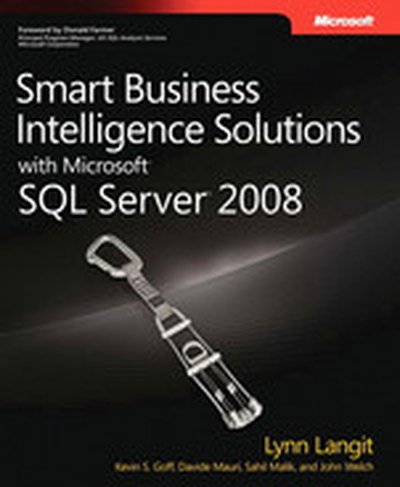
Smart Business Intelligence Solutions with Microsoft® SQL Server® 2008

Get the end-to-end instruction you need to design, develop, and deploy more effective data integration, reporting, and analysis solutions using SQL Server 2008—whether you’re new to business intelligence (BI) programming or a seasoned pro. With real-world examples and insights from an expert team, you’ll master the concepts, tools, and techniques for building solutions that deliver intelligence—and business value—exactly where users want it. Discover how to: Manage the development life cycle and build a BI team Dig into SQL Server Analysis Services, Integration Services, and Reporting Services Navigate the Business Intelligence Development Studio (BIDS) Write queries that rank, sort, and drill down on sales data Develop extract, transform, and load (ETL) solutions Add a source code control system Help secure packages for deployment via encryption and credentials Use MDX and DMX Query Designers to build reports based on OLAP cubes and data mining models Create and implement custom objects using .NET code View reports in Microsoft Office Excel and Office SharePoint Serverook

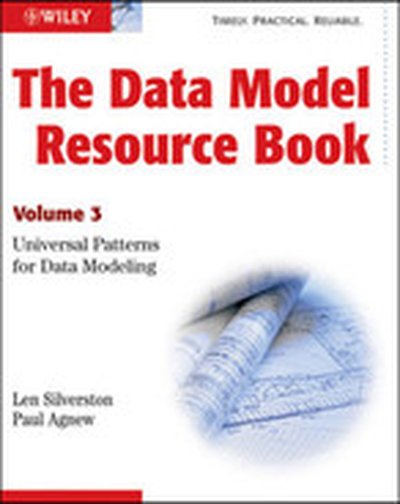
The Data Model Resource Book, Volume 3: Universal Patterns for Data Modeling

This third volume of the best-selling "Data Model Resource Book" series revolutionizes the data modeling discipline by answering the question "How can you save significant time while improving the quality of any type of data modeling effort?" In contrast to the first two volumes, this new volume focuses on the fundamental, underlying patterns that affect over 50 percent of most data modeling efforts. These patterns can be used to considerably reduce modeling time and cost, to jump-start data modeling efforts, as standards and guidelines to increase data model consistency and quality, and as an objective source against which an enterprise can evaluate data models. Praise for The Data Model Resource Book, Volume 3 "Len and Paul look beneath the superficial issues of data modeling and have produced a work that is a must for every serious designer and manager of an IT project." " The Data Model Resource Book, Volume 3: Universal Patterns for Data Modeling is a great source for reusable patterns you can use to save a tremendous amount of time, effort, and cost on any data modeling effort. Len Silverston and Paul Agnewhave provided an indispensable reference of very high-quality patterns for the most foundational types of datamodel structures. This book represents a revolutionary leap in moving the data modeling profession forward." — Ron Powell, Cofounder and Editorial Director of the Business Intelligence Network "After we model a Customer, Product, or Order, there is still more about each of these that remains to be captured, such as roles they play, classifications in which they belong, or states in which they change. The Data Model Resource Book, Volume 3: Universal Patterns for Data Modeling clearly illustrates these common structures. Len Silverston and Paul Agnew have created a valuable addition to our field, allowing us to improve the consistency and quality of our models by leveraging the many common structures within this text." — Steve Hoberman, Best-Selling Author of Data Modeling Made Simple "The large national health insurance company I work at has actively used these data patterns and the (Universal Data Models) UDM, ahead of this book, through Len Silverston’s UDM Jump Start engagement. The patterns have found their way into the core of our Enterprise Information Model, our data warehouse designs, and progressively into key business function databases. We are getting to reuse the patterns across projects and are reaping benefits in understanding, flexibility, and time-to-market. Thanks so much." — David Chasteen, Enterprise Information Architect "Reusing proven data modeling design patterns means exactly that. Data models become stable, but remain very flexible to accommodate changes. We have had the fortune of having Len and Paul share the patterns that are described in this book via our engagements with Universal Data Models, LLC. These data modeling design patterns have helped us to focus on the essential business issues because we have leveraged these reusable building blocks for many of the standard design problems. These design patterns have also helped us to evaluate the quality of data models for their intended purpose. Many times there are a lot of enhancements required. Too often the very specialized business-oriented data model is also implemented physically. This may have significant drawbacks to flexibility. I’m looking forward to increasing the data modeling design pattern competence within Nokia with the help of this book." — Teemu Mattelmaki, Chief Information Architect, Nokia "Once again, Len Silverston, this time together with Paul Agnew, has made a valuable contribution to the body of knowledge about datamodels, and the act of building sound data models. As a professional data modeler, and teacher of data modeling for almost three decades, I have always been aware that I had developed some familiar mental "patterns" which I acquired very early in my data modeling experience. When teaching data modeling, we use relatively simple workshops, but they are carefully designed so the students will see and acquire a lot of these basic "patterns" — templates that they will recognize and can use to interpret different subject matter into data model form quickly and easily. I’ve always used these patterns in the course of facilitating data modeling sessions; I was able to recognize "Ah, this is just like . . .," and quickly apply a pattern that I’d seen before. But, in all this time, I’ve never sat down and clearly categorized and documented what each of these “patterns’’ actually was in such a way that they could be easily and clearly communicated to others; Len and Paul have done exactly that. As in the other Data Model Resource Books, the thinking and writing is extraordinarily clear and understandable. I personally would have been very proud to have authored this book, and I sincerely applaud Len and Paul for another great contribution to the art and science of data modeling. It will be of great value to any data modeler." — William G. Smith, President, William G. Smith & Associates, www.williamgsmith.com "Len Silverston and Paul Agnew’s book, Universal Patterns for Data Modeling, is essential reading for anyone undertaking commercial datamodeling. With this latest volume that compiles and insightfully describes fundamental, universal data patterns, The Data Model Resource Book series represents the most important contribution to the data modeling discipline in the last decade." — Dr. Graeme Simsion, Author of Data Modeling Essentials and Data Modeling Theory and Practice "Volume 3 of this trilogy is a most welcome addition to Len Silverston’s two previous books in this area. Guidance has existed for some time for those who desire to use pattern-based analysis to jump-start their data modeling efforts. Guidance exists for those who want to use generalized and industry-specific data constructs to leverage their efforts. What has been missing is guidance to those of us needing guidance to complete the roughly one-third of data models that are not generalized or industry-specific. This is where the magic of individual organizational strategies must manifest itself, and Len and Paul have done so clearly and articulately in a manner that complements the first two volumes of The Data Model Resource Book. By adding this book to Volumes 1 and 2 you will be gaining access to some of the most integrated data modeling guidance available on the planet." — Dr. Peter Aiken, Author of XML in Data Management and data management industry leader VCU/Data Blueprint

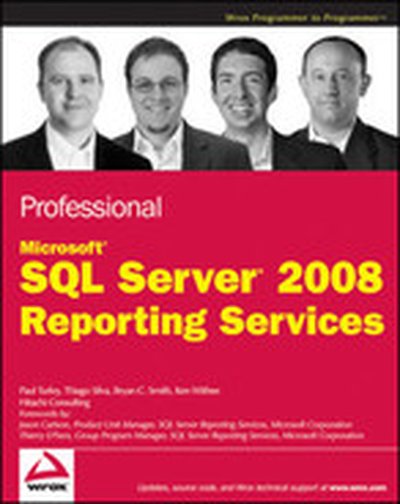
Professional Microsoft® SQL Server® 2008 Reporting Services

Teaches solution architects, designers, and developers how to use Microsoft's reporting platform to create reporting and business intelligence (BI) solutions Updated with new information about holistic BI solutions, comprehensive OLAP/Analysis Services reporting, and complete production deployment scenarios Includes programming examples focused on specific, scenario-based solutions Explains reporting services architecture and business intelligence, teaches the fundamentals of designing reports through the use of careful planning considerations, and covers advanced report design and filtering techniques

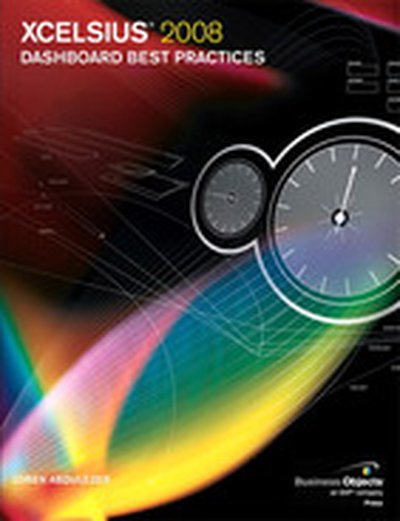
Xcelsius® 2008 Dashboard Best Practices

THE DEFINITIVE, COMPREHENSIVE, OFFICIAL GUIDE TO XCELSIUS 2008 DASHBOARDS Using Xcelsius, you can create powerful, interactive dashboards, gather data from spreadsheets or databases, and deliver knowledge that can be instantly understood and acted upon. Now there’s a definitive, authoritative guide to making the most of Xcelsius 2008, the newest version of this breakthrough product. Loren Abdulezer, editor-in-chief of Xcelsius Journal, shares insider’s knowledge that goes far beyond any other book or online help resource. Abdulezer introduces Xcelsius 2008, reviews its core concepts, and demonstrates the wide range of dashboards it can create. After you know what’s possible, you’ll go deep inside Xcelsius, gaining hands-on experience with every feature you need to master. You’ll learn how to quickly represent any data with charting components; use dials, gauges, and speedometers; incorporate multiple layers in your dashboards and visualizations; use Xcelsius to perform more useful analyses and manage more interactively; work with maps, demographics, and segmented data; create “smart data” and alerts; and much more. Abdulezer offers tips and tricks you won’t find anywhere else. You’ll learn how to work with data that isn’t rock-solid--and even how to create your own custom components that go beyond Xcelsius’s built-in features. Whether you’re a business intelligence or database professional, power user, developer, or consultant, this book will help you create superior Xcelsius dashboards--and make better decisions. THE ONLY XCELSIUS 2008 DASHBOARDING BOOK YOU NEED Use Xcelsius 2008 to get better answers, identify emerging trends and opportunities, and manage more effectively Learn hands-on, through step-by-step examples using real business data Discover tips and tricks proven in real-world environments Deliver dashboard content in whatever format works best: as HTML pages, PowerPoint presentations, PDF files, or Word documents Fully leverage the information in your Excel spreadsheets--and go beyond Excel to use XML source data, too Implement Xcelsius best practices drawn from the hard-won knowledge of the entire global user community ON THE WEB Registered owners of the book can find all this and more online: All sample files used in the book Additional guides and tutorials to help you build dashboards Templates and example files for new dashboard interfaces Introduction 1 Part I Xcelsius 2008 Fundamentals 1 Motivation for Using Xcelsius 2008 11 2 Showcase of Xcelsius 2008 Dashboards 33 3 Getting Familiar with Xcelsius 2008 43 4 Embedded Spreadsheets: The Secret Sauce of Xcelsius 2008 69 5 Using Charts and Graphs to Represent Data 127 6 Single Value Components: Dials, Gauges, Speedometers, and the Like 157 Part II Xcelsius 2008 Best Practices and Techniques 7 Using Multi-Layer Visibility in Your Dashboards and Visualizations 181 8 Managing Interactivity 203 9 Xcelsius and Statistics 229 10 Financial Analysis 257 11 Maps in Xcelsius 275 12 Smart Data and Alerts 297 13 Working with Less-Than-Optimal Data 315 14 Other Dashboard Techniques and Practices 337 Part III Advanced Features 15 XML and Data Connectivity 353 16 Creating Custom Components for Fun and Profit 371 Part IV Appendices A Supported Spreadsheet Functions in Xcelsius 2008 401 B Xcelsius Product Family Comparison 415 C Xcelsius Best Practice Techniques and Hip Pocket Tips 425 Index 431

Business Intelligence

"This readable, practical book helps business people quickly understand what business intelligence is, how it works, where it's used, and why and when to use it-all illustrated by real case studies, not just theory." Nigel Pendse Author of The OLAP Report www.olapreport.com So much information, so little time. All too often, business data is hard to get at and use-thus slowing decision-making to a crawl. This insightful book illustrates how organizations can make better, faster decisions about their customers, partners, and operations by turning mountains of data into valuable business information that's always at the fingertips of decision makers. You'll learn what's involved in using business intelligence to bring together information, people, and technology to create successful business strategies-and how to execute those strategies with confidence. Topics covered include: • THE BUSINESS INTELLIGENCE MINDSET: Discover the basics behind business intelligence, such as how it's defined, why and how to use it in your organization, and what characteristics, components, and general architecture most business intelligence solutions share. • THE CASE FOR BUSINESS INTELLIGENCE: Read how world leaders in finance, manufacturing, and retail have successfully implemented business intelligence solutions and see what benefits they have reaped. • THE PRACTICE OF BUSINESS INTELLIGENCE: Find out what's involved in implementing a business intelligence solution in your organization, including how to identify your business intelligence opportunities, what decisions you must make to get a business intelligence project going, and what to do to sustain the momentum so that you can continue to make sense of all the data you gather.

Microsoft® SQL Server™ 2008 Analysis Services Unleashed

As the foundation of the Microsoft Business Intelligence Strategy, Microsoft SQL Server 2008 Analysis Services provides users with faster access to data and even more tools for managing and analyzing data across multidimensional objects (databases, dimensions, cubes). Microsoft SQL Server 2008 Analysis Services Unleashed is the ultimate guide for anyone who is planning to use the latest version of Analysis Services. It gives readers insight into the way Analysis Services functions, and explains practical methods for designing and creating multidimensional objects. It also provides valuable insight into the reasons behind the design decisions taken by the product development team. The authors have been involved with Analysis Services from its earliest days. They have documented in detail the internal features of Analysis Services 2008, explaining server architecture, main data structures, data processing, and query resolution algorithms. Discover the new functionality introduced in Analysis Services 2008 including MDX enhancements and new DMV (dynamic memory views) Work with the Business Intelligence Development Studio, the new Dimension Editor, and Aggregation Designer interfaces Enjoy complete coverage of new Shared Scalable Databases scale-out infrastructure Learn the key concepts of multidimensional modeling Explore the multidimensional object model and its definition language Integrate multidimensional and relational databases Build client applications to access data in Analysis Services Unravel the inner workings of the server architecture, including main data structures, data processing, and query resolution algorithms Learn the main concepts of the MDX language and gain an in-depth understanding of advanced MDX concepts Gain a deeper understanding of the internal and external protocols for data transfer, including the XML/A protocol Discover how Analysis Services manages memory Explore the security model, including role-based security, code-access security, and data security Category: Microsoft SQL Server Covers: Microsoft SQL Server 2008 Analysis Services User Level: Intermediate-Advanced $59.99 USA / $65.99 CAN / £38.99 Net UK±

Microsoft® SQL Server® 2008 Step by Step

Teach yourself SQL Server 2008—one step at a time. Get the practical guidance you need to build database solutions that solve real-world business problems. Learn to integrate SQL Server data in your applications, write queries, develop reports, and employ powerful business intelligence systems. Discover how to: Install and work with core components and tools Create tables and index structures Manipulate and retrieve data Secure, manage, back up, and recover databases Apply tuning plus optimization techniques to generate high-performing database applications Optimize availability through clustering, database mirroring, and log shipping Tap business intelligence tools—Reporting, Analysis, and Integration Services CD features: Practice exercises and code samples Fully searchable eBook For customers who purchase an ebook version of this title, instructions for downloading the CD files can be found in the ebook.

Professional Microsoft® SQL Server® 2008 Administration

SQL Server 2008 represents a sizable jump forward in scalability, performance, and usability for the DBA, developer, and business intelligence (BI) developer. It is no longer unheard of to have 20-terabyte databases running on a SQL Server. SQL Server administration used to just be the job of a database administrator (DBA), but as SQL Server proliferates throughout smaller companies, many developers have begun to act as administrators as well. Additionally, some of the new features in SQL Server are more developer-centric, and poor configuration of these features can result in poor performance. SQL Server now enables you to manage the policies on hundreds of SQL Servers in your environment as if you were managing a single instance. We've provided a comprehensive, tutorial-based book to get you over the learning curve of how to configure and administer SQL Server 2008. Whether you're an administrator or developer using SQL Server, you can't avoid wearing a DBA hat at some point. Developers often have SQL Server on their own workstations and must provide guidance to the administrator about how they'd like the production configured. Oftentimes, they're responsible for creating the database tables and indexes. Administrators or DBAs support the production servers and often inherit the database from the developer. This book is intended for developers, DBAs, and casual users who hope to administer or may already be administering a SQL Server 2008 system and its business intelligence features, such as Integration Services. This book is a professional book, meaning the authors assume that you know the basics about how to query a SQL Server and have some rudimentary concepts of SQL Server already. For example, this book does not show you how to create a database or walk you through the installation of SQL Server using the wizard. Instead, the author of the installation chapter may provide insight into how to use some of the more advanced concepts of the installation. Although this book does not cover how to query a SQL Server database, it does cover how to tune the queries you've already written. The first ten chapters of the book are about administering the various areas of SQL Server, including the developer and business intelligence features. Chapter 1 briefly covers the architecture of SQL Server and the changing role of the DBA. Chapters 2 and 3 dive into best practices on installing and upgrading to SQL Server 2008. Managing your SQL Server database instance is talked about in Chapter 4. This chapter also describes some of the hidden tools you may not even know you have. Once you know how to manage your SQL Server, you can learn in Chapter 5 how to automate many of the redundant monitoring and maintenance tasks. This chapter also discusses best practices on configuring SQL Server Agent. Chapters 6 and 7 cover how to properly administer and automate many tasks inside of the Microsoft business intelligence products, such as Integration Services and Analysis Services. Developers will find that Chapter 8 is very useful, as it covers how to administer the development features, such as SQL CLR. Chapter 9 explains how to secure your SQL Server from many common threats and how to create logins and users. Chapter 10 covers how to create a SQL Server project and do proper change management in promoting your scripts through the various environments. It also covers the Policy-Based Management framework in SQL Server. Chapters 11 through 15 make up the performance tuning part of the book. Chapter 11 discusses how to choose the right hardware configuration for your SQL Server in order to achieve optimal performance. After the hardware and operating system is configured, Chapter 12 shows you how to optimize your SQL Server instance for the best performance. Chapter 13 describes how to monitor your SQL Server instance for problematic issues such as blocking and locking. Chapters 14 and 15 discuss how to optimize the T-SQL that accesses your tables and then how to index your tables appropriately. Chapters 16 through 20 consist of the high-availability chapters of the book. Chapter 16 covers how to use the various forms of replication, while database mirroring is covered in Chapter 17. Classic issues and best practices with backing up and recovering your database are discussed in Chapter 18. Chapter 19 dives deeply into the role of log shipping in your high-availability strategy, and Chapter 20 presents a step-by-step guide to clustering your SQL Server and Windows 2008 server. This edition of the book covers all the same great information we covered in the last book, and we've added loads of new content for SQL Server 2008, which adds numerous new features to improve the DBA's life. In short, the new version of SQL Server focuses on improving your efficiency, the scale of your server, and the performance of your environment, so you can do more in much less time, and with fewer resources and people. This means you can manage many servers at one time using Policy-Based Management, scale your I/O load using compression, and collect valuable information about your environment using data collectors, to name just a few key new features. To follow the examples in this book, you will need to have SQL Server 2008 installed. If you wish to learn how to administer the business intelligence features, you need to have Analysis Services and the Integration Services components installed. You need a machine that can support the minimum hardware requirements to run SQL Server 2008; and you also need the AdventureWorks2008 and AdventureWorksDW2008 databases installed. Instructions for accessing these databases can be found in the ReadMe file on this book's Web site. Some features in this book (especially in the high-availability part) require the Enterprise or Developer Edition of SQL Server. If you do not have this edition, you will still be able to follow through some of the examples in the chapter with Standard Edition.

Crystal Reports® 2008 Official Guide

CRYSTAL REPORTS® 2008 OFFICIAL GUIDE Whether you’re a DBA, data warehousing or business intelligence professional, Every significant enhancement introduced in Crystal Reports 2008 is covered, including its new visualization options and more robust Web services capabilities. The book concludes by showing how to use Crystal Reports’ powerful .NET and Java SDKs to customize and extend enterprise reporting in virtually unlimited ways. • Learn hands-on, through step-by-step examples and exercises–and discover tips and tricks proven in real-world enterprise environments • Master new Crystal Reports 2008 features, including interactive report viewing, Xcelsius dashboarding, Flex, and Flash integration, Report Designer improvements, report bursting, and more • Publish professional-quality reports against virtually any data source, including relational and OLAP databases, Universes, SAP, PeopleSoft, JavaBeans, .NET/COM objects, XML, and more • Discover advanced visualization techniques using Xcelsius, charts, and maps • Learn methods for distributing reports and integrating content into other applications • Learn about the latest reporting addition to the Business Objects family–Xcelsius and begin creating dynamic and interactive dashboards NEIL FITZGERALD has spent several years working at Business Objects and with one of Business Objects’ largest providers of custom BI and enterprise reporting solutions. BOB COATES currently works as a Sales Consultant for Business Objects, an SAP company, where he has been employed for more than eleven years. RYAN GOODMAN is the founder of Centigon Solutions, Inc., and remains one of the top Xcelsius experts and evangelists in the world. MICHAEL VOLOSHKO is a senior presales consultant for the financial services team at Business Objects. ON THE WEB Find all this and more at informit.com/sams: • Java and .NET sample reports and code samples for all examples in the book • Bonus chapters, tips, tricks, and links to great reporting resources CATEGORY: Database COVERS: Crystal Reports 2008, Crystal Reports Server 2008, Crystal Reports Viewer, crystalreports.com, Xcelsius 2008 USER LEVEL: Beginning–Intermediate informit.com/sams

Microsoft® SQL Server™ 2008 All-In-One Desk Reference For Dummies®

If you’re in charge of database administration, developing database software, or looking for database solutions for your company, Microsoft SQL Server 2008 All-In-One Desk Reference For Dummies can help you get a handle on this extremely popular relational database management system. Here you’ll find what’s new in the latest version; how to choose and install the right variation for your needs; how to monitor, maintain, and protect your data; and what it takes to keep your database healthy. You’ll discover how to: Build and maintain tables Design a database and communicate with it Retrieve, analyze, and report data Build solid, robust database applications Use the SQL Server Optimizer and Query Designer Navigate SQL Server with Visual Studio Develop useful reports with the Report Builder and Report Designer Create Business Intelligence solutions with Business Intelligence Development Studio Configure your server and perform major administrative tasks To help you quickly find what you need, Microsoft SQL Server 2008 All-In-One Desk Reference For Dummies is divided into nine minibooks: Essential Concepts Designing and Using Databases Interacting With Your Data Database Programming Reporting Services Analysis Services Performance Tips and Tricks Database Administration Appendixes Microsoft SQL Server 2008 All-In-One Desk Reference For Dummies gets you started, helps you solve problems, and will even answer your questions down the road!

Pro SQL Server 2008 Reporting Services

Take full advantage of everything SQL Server 2008 Reporting Services has to offer and deliver customizable, web–enabled reports across your business at a reasonable cost. Learn best–practices from professionals who use SQL Server Reporting Services daily to deliver solutions to paying clients and gain the competitive edge on using Microsoft's enterprise–level reporting platform. Provides best–practices for using Reporting Services Written by practicing professionals with paying clients Your key to delivering business intelligence across the enterprise