talk-data.com talk-data.com

Topic

data-science-tasks

794

tagged

Activity Trend

1 peak/qtr
2020-Q1 2026-Q1

Activities

Showing filtered results

Filtering by: O'Reilly Data Science Books ×
Intermittent Demand Forecasting

INTERMITTENT DEMAND FORECASTING The first text to focus on the methods and approaches of intermittent, rather than fast, demand forecasting Intermittent Demand Forecasting is for anyone who is interested in improving forecasts of intermittent demand products, and enhancing the management of inventories. Whether you are a practitioner, at the sharp end of demand planning, a software designer, a student, an academic teaching operational research or operations management courses, or a researcher in this field, we hope that the book will inspire you to rethink demand forecasting. If you do so, then you can contribute towards significant economic and environmental benefits. No prior knowledge of intermittent demand forecasting or inventory management is assumed in this book. The key formulae are accompanied by worked examples to show how they can be implemented in practice. For those wishing to understand the theory in more depth, technical notes are provided at the end of each chapter, as well as an extensive and up-to-date collection of references for further study. Software developments are reviewed, to give an appreciation of the current state of the art in commercial and open source software. “Intermittent demand forecasting may seem like a specialized area but actually is at the center of sustainability efforts to consume less and to waste less. Boylan and Syntetos have done a superb job in showing how improvements in inventory management are pivotal in achieving this. Their book covers both the theory and practice of intermittent demand forecasting and my prediction is that it will fast become the bible of the field.” — Spyros Makridakis, Professor, University of Nicosia, and Director, Institute for the Future and the Makridakis Open Forecasting Center (MOFC). “We have been able to support our clients by adopting many of the ideas discussed in this excellent book, and implementing them in our software. I am sure that these ideas will be equally helpful for other supply chain software vendors and for companies wanting to update and upgrade their capabilities in forecasting and inventory management.” — Suresh Acharya, VP, Research and Development, Blue Yonder. “As product variants proliferate and the pace of business quickens, more and more items have intermittent demand. Boylan and Syntetos have long been leaders in extending forecasting and inventory methods to accommodate this new reality. Their book gathers and clarifies decades of research in this area, and explains how practitioners can exploit this knowledge to make their operations more efficient and effective.” — Thomas R. Willemain, Professor Emeritus, Rensselaer Polytechnic Institute.
Mastering Tableau 2021 - Third Edition

Tableau 2021 brings a wide range of tools and techniques for mastering data visualization and business intelligence. In this book, you will delve into the advanced methodologies to fully utilize Tableau's capabilities. Whether you're dealing with geo-spatial, time-series analytics, or complex dashboards, this resource provides expertise through real-world data challenges. What this Book will help me do Draw connections between multiple databases and create insightful Tableau dashboards. Master advanced data visualization techniques that lead to impactful storytelling. Understand Tableau's integration with programming languages such as Python and R. Analyze datasets with time-series and geo-spatial methods to gain predictive insights. Leverage Tableau Prep Builder for efficient data cleaning and transformation processes. Author(s) Marleen Meier and David Baldwin are seasoned professionals in business intelligence and data analytics. They bring years of practical experience and have helped numerous organizations worldwide transform their data visualization strategies using Tableau. Their collaborative approach ensures a comprehensive, beginner to advanced learning experience. Who is it for? This book is perfect for business intelligence analysts, data analysts, and industry professionals who are already familiar with Tableau's basics and wish to expand their knowledge. It provides advanced techniques and implementations of Tableau for improving data storytelling and dashboard performance. Readers seeking to connect Tableau with external programming tools will also greatly benefit from this guide.

Interactive Dashboards and Data Apps with Plotly and Dash

This book, "Interactive Dashboards and Data Apps with Plotly and Dash", is a practical guide to building dynamic dashboards and applications using the Dash Python framework. It covers creating visualizations, integrating interactive controls, and deploying the apps, all without requiring JavaScript expertise. What this Book will help me do Master creating interactive data dashboards using Dash and Plotly. Understand how to integrate controls such as sliders and dropdowns into apps. Learn to use Plotly Express for visually representing data with ease. Develop capabilities to deploy a fully functional web app for data interaction. Understand how to use multi-page configurations and URLs for advanced apps. Author(s) None Dabbas is a seasoned Python developer with extensive expertise in data visualization and full-stack development. Drawing from real-world experience, None brings a practical approach to teaching, ensuring that learners understand not only how to build applications but why the approach works. Who is it for? This book is ideal for data analysts, engineers, and developers looking to enhance their visualization capabilities. If you are familiar with Python and have basic HTML skills, you will find this book accessible and rewarding. Beginners looking to explore advanced dashboard creation without JavaScript will also appreciate the clear approach.

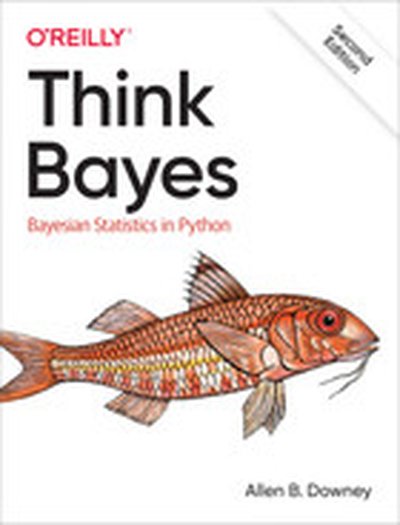
Think Bayes, 2nd Edition

If you know how to program, you're ready to tackle Bayesian statistics. With this book, you'll learn how to solve statistical problems with Python code instead of mathematical formulas, using discrete probability distributions rather than continuous mathematics. Once you get the math out of the way, the Bayesian fundamentals will become clearer and you'll begin to apply these techniques to real-world problems. Bayesian statistical methods are becoming more common and more important, but there aren't many resources available to help beginners. Based on undergraduate classes taught by author Allen B. Downey, this book's computational approach helps you get a solid start. Use your programming skills to learn and understand Bayesian statistics Work with problems involving estimation, prediction, decision analysis, evidence, and Bayesian hypothesis testing Get started with simple examples, using coins, dice, and a bowl of cookies Learn computational methods for solving real-world problems

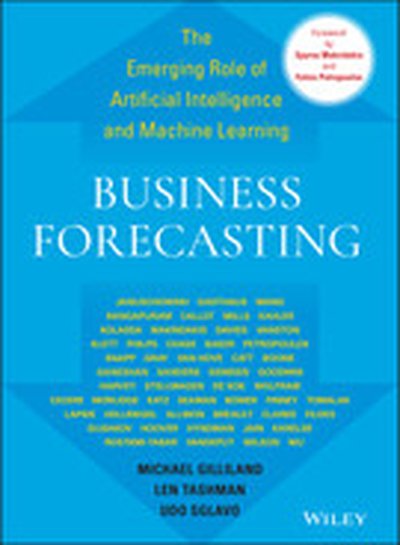
Business Forecasting

Discover the role of machine learning and artificial intelligence in business forecasting from some of the brightest minds in the field In Business Forecasting: The Emerging Role of Artificial Intelligence and Machine Learning accomplished authors Michael Gilliland, Len Tashman, and Udo Sglavo deliver relevant and timely insights from some of the most important and influential authors in the field of forecasting. You'll learn about the role played by machine learning and AI in the forecasting process and discover brand-new research, case studies, and thoughtful discussions covering an array of practical topics. The book offers multiple perspectives on issues like monitoring forecast performance, forecasting process, communication and accountability for forecasts, and the use of big data in forecasting. You will find: Discussions on deep learning in forecasting, including current trends and challenges Explorations of neural network-based forecasting strategies A treatment of the future of artificial intelligence in business forecasting Analyses of forecasting methods, including modeling, selection, and monitoring In addition to the Foreword by renowned researchers Spyros Makridakis and Fotios Petropoulos, the book also includes 16 "opinion/editorial" Afterwords by a diverse range of top academics, consultants, vendors, and industry practitioners, each providing their own unique vision of the issues, current state, and future direction of business forecasting. Perfect for financial controllers, chief financial officers, business analysts, forecast analysts, and demand planners, Business Forecasting will also earn a place in the libraries of other executives and managers who seek a one-stop resource to help them critically assess and improve their own organization's forecasting efforts.

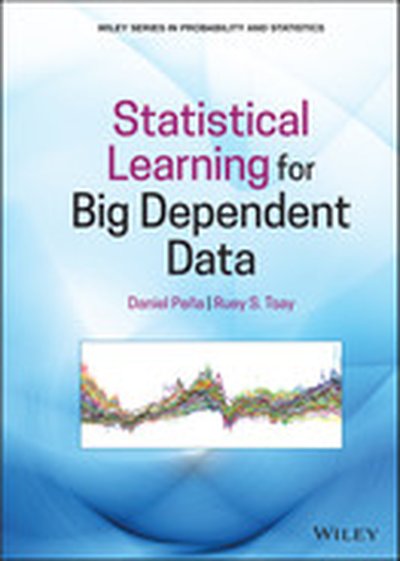
Statistical Learning for Big Dependent Data

Master advanced topics in the analysis of large, dynamically dependent datasets with this insightful resource Statistical Learning with Big Dependent Data delivers a comprehensive presentation of the statistical and machine learning methods useful for analyzing and forecasting large and dynamically dependent data sets. The book presents automatic procedures for modelling and forecasting large sets of time series data. Beginning with some visualization tools, the book discusses procedures and methods for finding outliers, clusters, and other types of heterogeneity in big dependent data. It then introduces various dimension reduction methods, including regularization and factor models such as regularized Lasso in the presence of dynamical dependence and dynamic factor models. The book also covers other forecasting procedures, including index models, partial least squares, boosting, and now-casting. It further presents machine-learning methods, including neural network, deep learning, classification and regression trees and random forests. Finally, procedures for modelling and forecasting spatio-temporal dependent data are also presented. Throughout the book, the advantages and disadvantages of the methods discussed are given. The book uses real-world examples to demonstrate applications, including use of many R packages. Finally, an R package associated with the book is available to assist readers in reproducing the analyses of examples and to facilitate real applications. Analysis of Big Dependent Data includes a wide variety of topics for modeling and understanding big dependent data, like: New ways to plot large sets of time series An automatic procedure to build univariate ARMA models for individual components of a large data set Powerful outlier detection procedures for large sets of related time series New methods for finding the number of clusters of time series and discrimination methods , including vector support machines, for time series Broad coverage of dynamic factor models including new representations and estimation methods for generalized dynamic factor models Discussion on the usefulness of lasso with time series and an evaluation of several machine learning procedure for forecasting large sets of time series Forecasting large sets of time series with exogenous variables, including discussions of index models, partial least squares, and boosting. Introduction of modern procedures for modeling and forecasting spatio-temporal data Perfect for PhD students and researchers in business, economics, engineering, and science: Statistical Learning with Big Dependent Data also belongs to the bookshelves of practitioners in these fields who hope to improve their understanding of statistical and machine learning methods for analyzing and forecasting big dependent data.

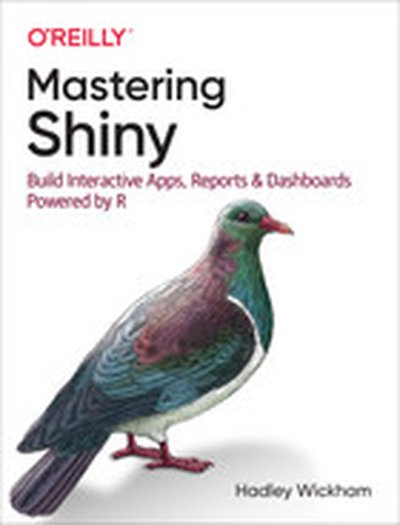
Mastering Shiny

Master the Shiny web framework—and take your R skills to a whole new level. By letting you move beyond static reports, Shiny helps you create fully interactive web apps for data analyses. Users will be able to jump between datasets, explore different subsets or facets of the data, run models with parameter values of their choosing, customize visualizations, and much more. Hadley Wickham from RStudio shows data scientists, data analysts, statisticians, and scientific researchers with no knowledge of HTML, CSS, or JavaScript how to create rich web apps from R. This in-depth guide provides a learning path that you can follow with confidence, as you go from a Shiny beginner to an expert developer who can write large, complex apps that are maintainable and performant. Get started: Discover how the major pieces of a Shiny app fit together Put Shiny in action: Explore Shiny functionality with a focus on code samples, example apps, and useful techniques Master reactivity: Go deep into the theory and practice of reactive programming and examine reactive graph components Apply best practices: Examine useful techniques for making your Shiny apps work well in production

Bootstrapping

Bootstrapping is a conceptually simple statistical technique to increase the quality of estimates, conduct robustness checks and compute standard errors for virtually any statistic. This book provides an intelligible and compact introduction for students, scientists and practitioners. It not only gives a clear explanation of the underlying concepts but also demonstrates the application of bootstrapping using Python and Stata.

Automated Unit Testing with ABAP: A Practical Approach

Write automated unit tests for the ABAP language. This book teaches programmers using simple examples and metaphors and explains the underlying concepts of writing effective automated unit tests. Many, if not most, ABAP programmers learned their programming and testing skills before the ABAP development environment provided an automated unit testing facility. Automated Unit Testing with ABAP: A Practical Approach offers hope and salvation to ABAP programmers who continue to toil with antiquated manual unit testing processes, taking them by the hand and lifting them out of that dungeon of despair with a modern and proven alternative. It begins by explaining how the xUnit family of automated testing frameworks provides a quick and effective means of insuring high-quality software. It then focuses on the ABAP Unit Testing Facility, the xUnit framework applicable specifically to the ABAP language, showing how it can be used to bring ABAP applications underautomated testing control, from old legacy applications to those newly written. Whereas xUnit testing has been widely accepted with developers writing in many other programming languages, it is an unfortunate fact in the ABAP community that many programmers still are unfamiliar with xUnit concepts and do not know how to begin implementing automated unit testing into their development process. This book demonstrates how to refactor programs so they become designed for testability, showing how to use process encapsulation and test isolation to facilitate automated testing, including a thorough explanation of test-driven development and the use of test doubles. The book: Shows how to write automated unit tests for ABAP Instills ABAP programmers with the confidence to refactor poorly written code Explains how an automated testing harness facilitates rapid software development Teaches how to utilize test-driven development (TDD) withABAP Offers advice and tips on the best ways to write automated unit tests What You Will Learn Become familiar with the xUnit approach to testing Know the ABAP statements that interfere with running automated unit tests and how to accommodate them Understand what it means to isolate code for testing and how this is achieved Gain the confidence to refactor poorly written code Make ABAP programs designed for testability Reap the benefits of spending less time manually unit testing ABAP programs Use test-driven development (TDD) with ABAP programming Use configurable test doubles in ABAP Who This Book Is For ABAP programmers who remain unfamiliar with the automated unit testing facility and those who already use it butwant to improve their skill writing and using automated tests. The book addresses the reluctance and trepidation felt by procedural ABAP programmers who need to know some object-oriented concepts to use this facility, expands their horizons, and helps them step through the doorway leading to a different approach to program design.

IBM SPSS Essentials, 2nd Edition

Master the fundamentals of SPSS with this newly updated and instructive resource The newly and thoroughly revised Second Edition of SPSS Essentials delivers a comprehensive guide for students in the social sciences who wish to learn how to use the Statistical Package for the Social Sciences (SPSS) for the effective collection, management, and analysis of data. The accomplished researchers and authors provide readers with the practical nuts and bolts of SPSS usage and data entry, with a particular emphasis on managing and manipulating data. The book offers an introduction to SPSS, how to navigate it, and a discussion of how to understand the data the reader is working with. It also covers inferential statistics, including topics like hypothesis testing, one-sample Z-testing, T-testing, ANOVAs, correlations, and regression. Five unique appendices round out the text, providing readers with discussions of dealing with real-world data, troubleshooting, advanced data manipulations, and new workbook activities. SPSS Essentials offers a wide variety of features, including: A revised chapter order, designed to match the pacing and content of typical undergraduate statistics classes An explanation of when particular inferential statistics are appropriate for use, given the nature of the data being worked with Additional material on understanding your data sample, including discussions of SPSS output and how to find the most relevant information A companion website offering additional problem sets, complete with answers Perfect for undergraduate students of the social sciences who are just getting started with SPSS, SPSS Essentials also belongs on the bookshelves of advanced placement high school students and practitioners in social science who want to brush up on the fundamentals of this powerful and flexible software package.

Advances in Longitudinal Survey Methodology

Advances in Longitudinal Survey Methodology Explore an up-to-date overview of best practices in the implementation of longitudinal surveys from leading experts in the field of survey methodology Advances in Longitudinal Survey Methodology delivers a thorough review of the most current knowledge in the implementation of longitudinal surveys. The book provides a comprehensive overview of the many advances that have been made in the field of longitudinal survey methodology over the past fifteen years, as well as extending the topic coverage of the earlier volume, “Methodology of Longitudinal Surveys”, published in 2009. This new edited volume covers subjects like dependent interviewing, interviewer effects, panel conditioning, rotation group bias, measurement of cognition, and weighting. New chapters discussing the recent shift to mixed-mode data collection and obtaining respondents’ consent to data linkage add to the book’s relevance to students and social scientists seeking to understand modern challenges facing data collectors today. Readers will also benefit from the inclusion of: A thorough introduction to refreshment sampling for longitudinal surveys, including consideration of principles, sampling frame, sample design, questionnaire design, and frequency An exploration of the collection of biomarker data in longitudinal surveys, including detailed measurements of ill health, biological pathways, and genetics in longitudinal studies An examination of innovations in participant engagement and tracking in longitudinal surveys, including current practices and new evidence on internet and social media for participant engagement. An invaluable source for post-graduate students, professors, and researchers in the field of survey methodology, Advances in Longitudinal Survey Methodology will also earn a place in the libraries of anyone who regularly works with or conducts longitudinal surveys and requires a one-stop reference for the latest developments and findings in the field.

Data Science for Supply Chain Forecasting

Using data science in order to solve a problem requires a scientific mindset more than coding skills. Data Science for Supply Chain Forecasting, Second Edition contends that a true scientific method which includes experimentation, observation, and constant questioning must be applied to supply chains to achieve excellence in demand forecasting. This second edition adds more than 45 percent extra content with four new chapters including an introduction to neural networks and the forecast value added framework. Part I focuses on statistical "traditional" models, Part II, on machine learning, and the all-new Part III discusses demand forecasting process management. The various chapters focus on both forecast models and new concepts such as metrics, underfitting, overfitting, outliers, feature optimization, and external demand drivers. The book is replete with do-it-yourself sections with implementations provided in Python (and Excel for the statistical models) to show the readers how to apply these models themselves. This hands-on book, covering the entire range of forecasting—from the basics all the way to leading-edge models—will benefit supply chain practitioners, forecasters, and analysts looking to go the extra mile with demand forecasting. Events around the book Link to a De Gruyter Online Event in which the author Nicolas Vandeput together with Stefan de Kok, supply chain innovator and CEO of Wahupa; Spyros Makridakis, professor at the University of Nicosia and director of the Institute For the Future (IFF); and Edouard Thieuleux, founder of AbcSupplyChain, discuss the general issues and challenges of demand forecasting and provide insights into best practices (process, models) and discussing how data science and machine learning impact those forecasts. The event will be moderated by Michael Gilliland, marketing manager for SAS forecasting software: https://youtu.be/1rXjXcabW2s

Tableau Prep Cookbook

Tableau Prep Cookbook is your practical guide to mastering Tableau Prep Builder for data preparation. Through real-world examples, you will learn techniques to clean, combine, and transform your data, enabling you to create robust pipelines for analytics and insights. Gain hands-on experience with concepts like data cleaning, advanced calculations, and preparing data for Business Intelligence tools. What this Book will help me do Master cleaning and combining data sources for analysis using Tableau Prep. Learn to create and deploy workflows for data preparation within your organization. Develop proficiency in building robust datasets for BI and analytics applications. Apply advanced techniques like scripting and custom calculations in Tableau Prep. Get hands-on experience by working through realistic, practical data scenarios. Author(s) None Kleine is an experienced data analytics professional with a passion for empowering organizations through robust data pipelines. Drawing from years of experience in BI tools and data preparation, None presents Tableau Prep Cookbook with a clear, actionable approach to learning. Their expertise ensures that readers gain practical skills to use Tableau Prep effectively. Who is it for? This book is perfect for data analysts, business intelligence professionals, and Tableau users looking to add Tableau Prep to their skills. If you're starting with beginner knowledge in data preparation or are looking to enhance your ability to manage data workflows, this book is designed for you. Gain the skills you need to prepare data effectively using Tableau Prep and elevate your analytics capabilities.

Forecasting Time Series Data with Facebook Prophet

Delve into the art of time series forecasting with the comprehensive power of Facebook Prophet. This tool enables users to develop precise forecasting models with simplicity and effectiveness. Through this book, you'll explore Prophet's core functionality and advanced configurations, equipping yourself with the knowledge to proficiently model and predict data trends. What this Book will help me do Build intuitive and effective forecasting models using Facebook Prophet. Understand the role and implementation of seasonality and holiday effects in time series data. Identify and address outliers and special data events effectively. Optimize forecasts using advanced techniques like hyperparameter tuning and additional regressors. Evaluate and deploy forecasting models in production settings for practical applications. Author(s) Greg Rafferty is a seasoned data science professional with extensive experience in time series forecasting. Having worked on diverse forecasting projects, Greg brings a unique perspective that integrates practicality and depth. His approachable writing style makes complex topics accessible and actionable. Who is it for? This book is tailored for data scientists, analysts, and developers seeking to enhance their forecasting capabilities using Python. If you have a grounding in Python and a basic understanding of forecasting principles, you will find this book a valuable resource to sharpen your expertise and achieve new forecasting precision.

Intelligent Data Analytics for Terror Threat Prediction

Intelligent data analytics for terror threat prediction is an emerging field of research at the intersection of information science and computer science, bringing with it a new era of tremendous opportunities and challenges due to plenty of easily available criminal data for further analysis. This book provides innovative insights that will help obtain interventions to undertake emerging dynamic scenarios of criminal activities. Furthermore, it presents emerging issues, challenges and management strategies in public safety and crime control development across various domains. The book will play a vital role in improvising human life to a great extent. Researchers and practitioners working in the fields of data mining, machine learning and artificial intelligence will greatly benefit from this book, which will be a good addition to the state-of-the-art approaches collected for intelligent data analytics. It will also be very beneficial for those who are new to the field and need to quickly become acquainted with the best performing methods. With this book they will be able to compare different approaches and carry forward their research in the most important areas of this field, which has a direct impact on the betterment of human life by maintaining the security of our society. No other book is currently on the market which provides such a good collection of state-of-the-art methods for intelligent data analytics-based models for terror threat prediction, as intelligent data analytics is a newly emerging field and research in data mining and machine learning is still in the early stage of development.

The Data Detective's Toolkit

Reduce the cost and time of cleaning, managing, and preparing research data while also improving data quality! Have you ever wished there was an easy way to reduce your workload and improve the quality of your data? The Data Detective’s Toolkit: Cutting-Edge Techniques and SAS Macros to Clean, Prepare, and Manage Data will help you automate many of the labor-intensive tasks needed to turn raw data into high-quality, analysis-ready data. You will find the right tools and techniques in this book to reduce the amount of time needed to clean, edit, validate, and document your data. These tools include SAS macros as well as ingenious ways of using SAS procedures and functions. The innovative logic built into the book’s macro programs enables you to monitor the quality of your data using information from the formats and labels created for the variables in your data set. The book explains how to harmonize data sets that need to be combined and automate data cleaning tasks to detect errors in data including out-of-range values, inconsistent flow through skip paths, missing data, no variation in values for a variable, and duplicates. By the end of this book, you will be able to automatically produce codebooks, crosswalks, and data catalogs.

Google Data Studio for Beginners: Start Making Your Data Actionable

Google Data Studio is becoming a go-to tool in the analytics community. All business roles across the industry benefit from foundational knowledge of this now-essential technology, and Google Data Studio for Beginners is here to provide it. Release your locked-up data and turn it into beautiful, actionable, and shareable reports that can be consumed by experts and novices alike. Authors Grant Kemp and Gerry White begin by walking you through the basics, such how to create simple dashboards and interactive visualizations. As you progress through Google Data Studio for Beginners, you will build up the knowledge necessary to blend multiple data sources and create comprehensive marketing dashboards. Some intermediate features such as calculated fields, cleaning up data, and data blending to build powerhouse reports are featured as well. Presenting your data in client-ready, digestible forms is a key factor that many find to be a roadblock, and this book will help strengthen this essential skill in your organization. Centralizing the power from sources such as Google Analytics, online surveys, and a multitude of other popular data management tools puts you as a business leader and analyzer ahead of the rest. Your team as a whole will benefit from Google Data Studio for Beginners, because by using these tools, teams can collaboratively work on data to build their understanding and turn their data into action. Data Studio is quickly solidifying itself as the industry standard, and you don’t want to miss this essential guide for excelling in it. What You Will Learn Combine various data sources to create great looking and actionable visualizations Reuse and modify other dashboards that have been created by industry pros Use intermediate features such as calculated fields and data blending to build powerhouse reports Who This Book Is For Users looking to learn Google Analytics, SEO professionals, digital marketers, and other business professionals who want to mine their data into an actionable dashboard.

Information Theory Meets Power Laws

Discover new theoretical connections between stochastic phenomena and the structure of natural language with this powerful volume! Information Theory Meets Power Laws: Stochastic Processes and Language Models presents readers with a novel subtype of a probabilistic approach to language, which is based on statistical laws of texts and their analysis by means of information theory. The distinguished author insightfully and rigorously examines the linguistic and mathematical subject matter while eschewing needlessly abstract and superfluous constructions. The book begins with a less formal treatment of its subjects in the first chapter, introducing its concepts to readers without mathematical training and allowing those unfamiliar with linguistics to learn the book’s motivations. Despite its inherent complexity, Information Theory Meets Power Laws: Stochastic Processes and Language Models is a surprisingly approachable treatment of idealized mathematical models of human language. The author succeeds in developing some of the theory underlying fundamental stochastic and semantic phenomena, like strong nonergodicity, in a way that has not previously been seriously attempted. In doing so, he covers topics including: Zipf’s and Herdan’s laws for natural language Power laws for information, repetitions, and correlations Markov, finite-state,and Santa Fe processes Bayesian and frequentist interpretations of probability Ergodic decomposition, Kolmogorov complexity, and universal coding Theorems about facts and words Information measures for fields Rényi entropies, recurrence times, and subword complexity Asymptotically mean stationary processes Written primarily for mathematics graduate students and professionals interested in information theory or discrete stochastic processes, Information Theory Meets Power Laws: Stochastic Processes and Language Models also belongs on the bookshelves of doctoral students and researchers in artificial intelligence, computational and quantitative linguistics as well as physics of complex systems.

Applied Regression Modeling, 3rd Edition

Master the fundamentals of regression without learning calculus with this one-stop resource The newly and thoroughly revised 3rd Edition of Applied Regression Modeling delivers a concise but comprehensive treatment of the application of statistical regression analysis for those with little or no background in calculus. Accomplished instructor and author Dr. Iain Pardoe has reworked many of the more challenging topics, included learning outcomes and additional end-of-chapter exercises, and added coverage of several brand-new topics including multiple linear regression using matrices. The methods described in the text are clearly illustrated with multi-format datasets available on the book's supplementary website. In addition to a fulsome explanation of foundational regression techniques, the book introduces modeling extensions that illustrate advanced regression strategies, including model building, logistic regression, Poisson regression, discrete choice models, multilevel models, Bayesian modeling, and time series forecasting. Illustrations, graphs, and computer software output appear throughout the book to assist readers in understanding and retaining the more complex content. Applied Regression Modeling covers a wide variety of topics, like: Simple linear regression models, including the least squares criterion, how to evaluate model fit, and estimation/prediction Multiple linear regression, including testing regression parameters, checking model assumptions graphically, and testing model assumptions numerically Regression model building, including predictor and response variable transformations, qualitative predictors, and regression pitfalls Three fully described case studies, including one each on home prices, vehicle fuel efficiency, and pharmaceutical patches Perfect for students of any undergraduate statistics course in which regression analysis is a main focus, Applied Regression Modeling also belongs on the bookshelves of non-statistics graduate students, including MBAs, and for students of vocational, professional, and applied courses like data science and machine learning.

Statistical Topics and Stochastic Models for Dependent Data with Applications
  This book is a collective volume authored by leading scientists in the field of stochastic modelling, associated statistical topics and corresponding applications. The main classes of stochastic processes for dependent data investigated throughout this book are Markov, semi-Markov, autoregressive and piecewise deterministic Markov models. The material is divided into three parts corresponding to: (i) Markov and semi-Markov processes, (ii) autoregressive processes and (iii) techniques based on divergence measures and entropies. A special attention is payed to applications in reliability, survival analysis and related fields.