talk-data.com talk-data.com

Topic

data-science

2252

tagged

Activity Trend

1 peak/qtr
2020-Q1 2026-Q1

Activities

2252 activities · Newest first

SAS® Programming for Enterprise Guide® Users

In this pragmatic, example-driven book, author Neil Constable demonstrates how you can use SAS code to enhance the capabilities of SAS Enterprise Guide. Designed to help you gain extra value from the products you already have, SAS Programming for Enterprise Guide Users contains tips and techniques that show you a variety of features that cannot be accessed directly through the task interfaces. In all cases, techniques are shown with examples that you can try and test, plus additional exercises are included to give you more practice. The end result is more efficient and resilient use of SAS Enterprise Guide in a wider variety of business areas. Included is a discussion of the following subject areas: the Output Delivery System advanced formatting macro variables and macros advanced reporting using PROC REPORT highlighting in reports hyperlinking between reports and graphs data manipulation using SQL data manipulation using the DATA step extended graphics By adding small amounts of code in key areas, SAS Enterprise Guide users can get more out of the product than the tasks reveal. Users should be familiar with the SAS Enterprise Guide user interface and tasks. No programming experience is necessary.

Google Analytics

Web analytics is the process of measuring your web site, analyzing the data, and making changes based on the analysis. Many businesses are just starting to learn how they can increase the performance of their web site by using web analytics. For many people, their first exposure to web analytics is Google Analytics, a free tool available to everyone. Although analysis is vital to web analytics, you can't do analysis without good data. Configuring Google Analytics correctly is the key to collecting good data. This Short Cut provides a thorough description of how the Google Analytics system works, information about many different types of implementations, and ways to avoid common pitfalls. It also shares some best practices to get your setup correct the first time.

Forecasting Expected Returns in the Financial Markets

Forecasting returns is as important as forecasting volatility in multiple areas of finance. This topic, essential to practitioners, is also studied by academics. In this new book, Dr Stephen Satchell brings together a collection of leading thinkers and practitioners from around the world who address this complex problem using the latest quantitative techniques. Forecasting expected returns is an essential aspect of finance and highly technical The first collection of papers to present new and developing techniques *International authors present both academic and practitioner perspectives

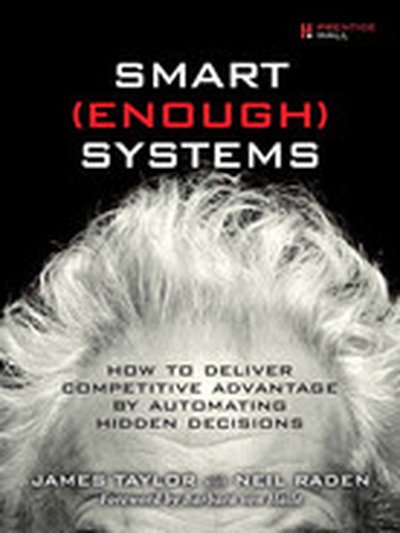
Smart (Enough) Systems: How to Deliver Competitive Advantage by Automating the Decisions Hidden in Your Business

“Automated decisions systems are probably already being used in your industry, and they will undoubtedly grow in importance. If your business needs to make quick, accurate decisions on an industrialized scale, you need to read this book.” Thomas H. Davenport, Professor, Babson College, Author of Competing on Analytics The computer-based systems most organizations rely on to support their businesses are not very smart. Many of the business decisions these companies make tend to be hidden in systems that make poor decisions, or don’t make them at all. Further, most systems struggle to keep up with the pace of change. The answer is not to implement newer, “intelligent” systems. The fact is that much of today’s existing technology has the potential to be “smart enough” to make a big difference to an organization’s business. This book tells you how. Although the business context and underlying principles are explained in a nontechnical manner, the book also contains how-to guidance for more technical readers. The book’s companion site, www.smartenoughsystems.com, has additional information and references for practitioners as well as news and updates. Additional Praise for Smart (Enough) Systems “James Taylor and Neil Raden are on to something important in this book–the tremendous value of improving the large number of routine decisions that are made in organizations every day.” Dr. Hugh J. Watson, Chair of Business Administration, University of Georgia “This is a very important book. It lays out the agenda for business technology in the new century–nothing less than how to reorganize every aspect of how a company treats its customers.” David Raab, President, ClientXClient “This book is an important contribution to business productivity because it covers the opportunity from both the business executive’s and technologist’s perspective. This should be on every operational executive’s and every CIO’s list of essential reading.” John Parkinson, Former CTO, Capgemini, North American Region “This book shows how to use proven technology to make business processes smarter. It clearly makes the case that organizations need to optimize their operational decisions. It is a must-have reference for process professionals throughout your organization.” Jim Sinur, Chief Strategy Officer, Global 360, Inc.

SAS for Mixed Models, Second Edition, 2nd Edition
The indispensable, up-to-date guide to mixed models using SAS. Discover the latest capabilities available for a variety of applications featuring the MIXED, GLIMMIX, and NLMIXED procedures in SAS for Mixed Models, Second Edition, the comprehensive mixed models guide for data analysis, completely revised and updated for SAS 9 by authors Ramon Littell, George Milliken, Walter Stroup, Russell Wolfinger, and Oliver Schabenberger. The theory underlying the models, the forms of the models for various applications, and a wealth of examples from different fields of study are integrated in the discussions of these models: random effect only and random coefficients models; split-plot, multilocation, and repeated measures models; hierarchical models with nested random effects; analysis of covariance models; spatial correlation models; generalized linear mixed models; and nonlinear mixed models.

Professionals and students with a background in two-way ANOVA and regression and a basic knowledge of linear models and matrix algebra will benefit from the topics covered.

This book is part of the SAS Press program.

The R Book

The high-level language of R is recognized as one of the most powerful and flexible statistical software environments, and is rapidly becoming the standard setting for quantitative analysis, statistics and graphics. R provides free access to unrivalled coverage and cutting-edge applications, enabling the user to apply numerous statistical methods ranging from simple regression to time series or multivariate analysis. Building on the success of the author's bestselling Statistics: An Introduction using R, The R Book is packed with worked examples, providing an all inclusive guide to R, ideal for novice and more accomplished users alike. The book assumes no background in statistics or computing and introduces the advantages of the R environment, detailing its applications in a wide range of disciplines. Provides the first comprehensive reference manual for the R language, including practical guidance and full coverage of the graphics facilities. Introduces all the statistical models covered by R, beginning with simple classical tests such as chi-square and t-test. Proceeds to examine more advance methods, from regression and analysis of variance, through to generalized linear models, generalized mixed models, time series, spatial statistics, multivariate statistics and much more. The R Book is aimed at undergraduates, postgraduates and professionals in science, engineering and medicine. It is also ideal for students and professionals in statistics, economics, geography and the social sciences.

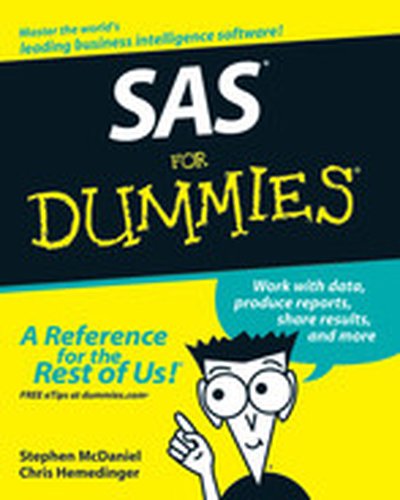
SAS For Dummies

Created in partnership with SAS, this book explores SAS, a business intelligence software that can be used in any business setting or enterprise for data delivery, reporting, data mining, forecasting, statistical analysis, and more. SAS employee and technologist Stephen McDaniel combines real-world expertise and a friendly writing style to introduce readers to SAS basics. It covers crucial topics such as getting various types of data into the software, producing reports, working with the data, basic SAS programming, macros, and working with SAS and databases.

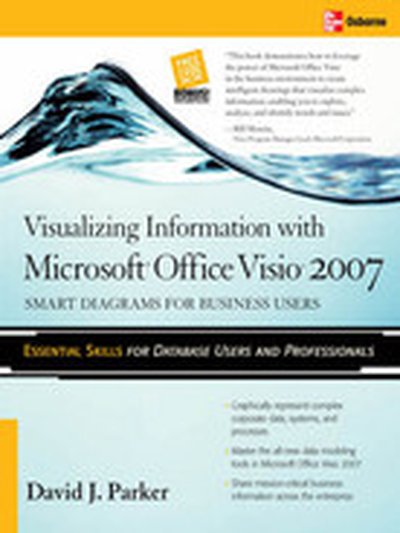
Visualizing Information with Microsoft® Office Visio® 2007

Create and distribute data-connected Microsoft Office Visio diagrams and reports Get full details on the powerful features of Microsoft Office Visio 2007 inside this comprehensive volume. Written by Visio expert David Parker, Visualizing Information with Microsoft Office Visio 2007 demonstrates how to effectively visualize, explore, and communicate complex business information. Learn to use PivotDiagrams, Data Graphics, and Smart Tags, as well as link data to shapes and create meaningful Visio documents and reports. Plus, you'll get vital security information, time-saving tips, troubleshooting techniques, and downloadable macros and code samples. Essential Skills for Database Users and Professionals Create shapes and link them to data Summarize and analyze information using PivotDiagrams Use Data Graphics, Smart Tags, and SmartShapes to reinforce information Generate robust Excel, HTML, and XML reports Create custom, reusable templates, stencils, and masters Update and enhance diagrams with Reviewer's comments and markups Integrate Visio diagrams with other Windows applications Publish and securely distribute Visio documents and summaries Extend functionality using VBA macros, add-ins, and wrapper applications

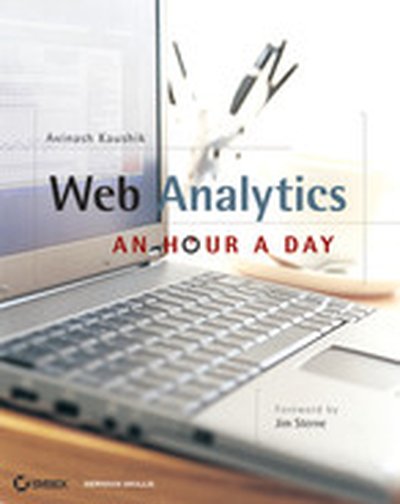
Web Analytics

Written by an in-the-trenches practitioner, this step-by-step guide shows you how to implement a successful Web analytics strategy. Web analytics expert Avinash Kaushik, in his thought-provoking style, debunks leading myths and leads you on a path to gaining actionable insights from your analytics efforts. Discover how to move beyond clickstream analysis, why qualitative data should be your focus, and more insights and techniques that will help you develop a customer-centric mindset without sacrificing your company’s bottom line. Note: CD-ROM/DVD and other supplementary materials are not included as part of eBook file.

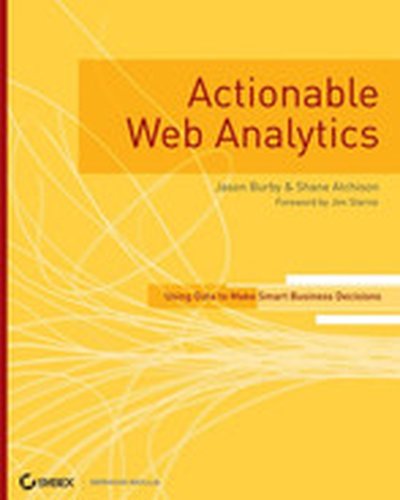
Actionable Web Analytics: Using Data To Make Smart Business Decisions

Knowing everything you can about each click to your Web site can help you make strategic decisions regarding your business. This book is about the why, not just the how, of web analytics and the rules for developing a "culture of analysis" inside your organization. Why you should collect various types of data. Why you need a strategy. Why it must remain flexible. Why your data must generate meaningful action. The authors answer these critical questions—and many more—using their decade of experience in Web analytics.

Forecasting Oracle Performance

What makes seasoned IT professionals run for cover? Answer: Forecasting Oracle Performance! Craig Shallahamer is an Oracle performance expert with over 18 years of experience. His book is the first to focus not on the problem of solving today's problem, but squarely on the problem of forecasting the future performance of an Oracle database. Other Oracle performance books are good for putting out fires; Craig's book helps you avoid all the heat in the first place. If you’re an IT practioner who appreciates application over mathematical proofs than you’ll be pleasantly surprised! Each chapter is filled with examples to transform the theory, mathematics, and methods into something you can practically apply. Craig's goal is to teach you about real-word Oracle performance forecasting. Period. There is no hidden agenda. This book is a kind of training course. After reading, studying, and practicing the material covered in this book, you to be able to confidently, responsibly, and professionally forecast performance and system capacity in a wide variety of real-life situations. If you are more management-minded (or want to be), you will be delighted with the service level management focus. Forecasting makes good business sense because it maximizes the return on IT investment and minimizes unplanned down time. To those who think forecasting is a waste of money: well...obviously, they’ve never been on the evening news because their company lost millions of dollars in revenue and brand destruction because of poorly performing or unavailable systems. Without a doubt, you will be equipped to deal with the realities of forecasting Oracle performance. But this book gives you more. Not only will you receive a technical and mathematical perspective, but also a communication, a presentation, and a management perspective. This is career building stuff and immensely satisfying! What you'll learn This book is a “how-to” book filled with examples to transform theory and mathematics into something you can practically apply. You will learn how to use a variety of forecasting models, which will enable you to methodically: Help manage service levels from a business value perspective Identify the risk of over utilized resources Predict what component of an architecture is at risk Predict when a system will be at risk Develop multiple risk mitigating strategies to ensure service levels are maintained Characterize a complex Oracle workload Who this book is for IT professionals who must ensure their production Oracle systems are meeting service levels, in part, through forecasting performance, identifying risk, and developing solutions to ensure systems are available without wasting budget. Readers include database administrators, IT managers, developers, capacity planners, systems architects, systems integrators.

Visio® 2007 Bible

Whether you're designing a network, a business plan, or an office building, Visio 2007 can transform your vision into sophisticated diagrams and drawings and this comprehensive reference shows you how. You'll discover how to use Visio for IT, architecture, engineering, and business projects; explore the new features of Visio 2007; learn to publish Visio diagrams to the Web; and much more. If you want to develop your skills in Visio, this is the book you need to succeed.

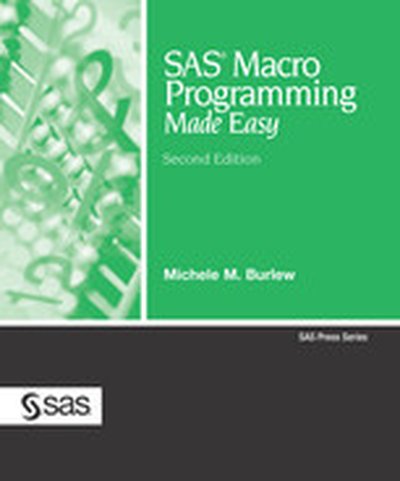
SAS® Macro Programming Made Easy, Second Edition

Need help understanding the SAS macro facility? You will find all the answers that you need in this easy-to-follow book! Michele Burlew puts her decades of macro programming experience to work for you as she guides you through the basics, as well as the more complex features of the SAS macro facility. Updated extensively for SAS 9, this book includes plenty of examples and step-by-step instructions. You will learn the elements of the macro facility (macro variables, macro programs, macro language), how to write a macro program, macro programming techniques, tips on using the macro facility, how the macro facility fits into SAS, and about the interfaces between the macro facility and other components of SAS. New topics for the second edition include using SAS 9 macro and SAS language features, debugging macro programs, adding error checking to macro programs, and building a library of utility macro programs. Beginning macro programmers will learn to write SAS macro programs quickly and efficiently. More experienced macro programmers will find this book useful to refresh their conceptual knowledge and expand on their macro programming skills. It is also important to note that the macro facility is a highly popular part of SAS and found in the job requirements for many SAS programming jobs. In addition, macro facility concepts are tested on the SAS Advanced Programming Exam. The book assumes some SAS programming experience, including knowledge of how to write a DATA step and how to use SAS procedures.

Webbots, Spiders, and Screen Scrapers

The Internet is bigger and better than what a mere browser allows. Webbots, Spiders, and Screen Scrapers is for programmers and businesspeople who want to take full advantage of the vast resources available on the Web. There's no reason to let browsers limit your online experience-especially when you can easily automate online tasks to suit your individual needs. Learn how to write webbots and spiders that do all this and more: Programmatically download entire websites Effectively parse data from web pages Manage cookies Decode encrypted files Automate form submissions Send and receive email Send SMS alerts to your cell phone Unlock password-protected websites Automatically bid in online auctions Exchange data with FTP and NNTP servers Sample projects using standard code libraries reinforce these new skills. You'll learn how to create your own webbots and spiders that track online prices, aggregate different data sources into a single web page, and archive the online data you just can't live without. You'll learn inside information from an experienced webbot developer on how and when to write stealthy webbots that mimic human behavior, tips for developing fault-tolerant designs, and various methods for launching and scheduling webbots. You'll also get advice on how to write webbots and spiders that respect website owner property rights, plus techniques for shielding websites from unwanted robots. As a bonus, visit the author's website to test your webbots on sample target pages, and to download the scripts and code libraries used in the book. Some tasks are just too tedious-or too important!- to leave to humans. Once you've automated your online life, you'll never let a browser limit the way you use the Internet again.

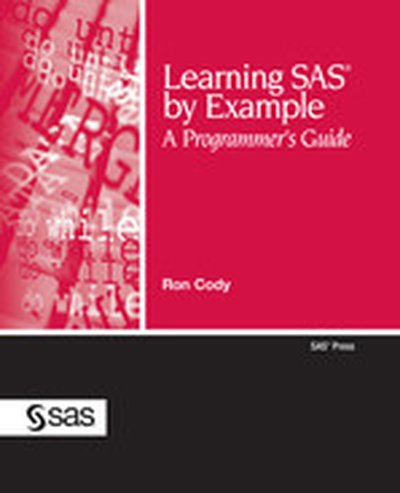
Learning SAS by Example
Learn to program SAS by example!

If you like learning by example, then Learning SAS by Example: A Programmer's Guide makes it easy to learn SAS programming. In an instructive and conversational tone, author Ron Cody clearly explains each programming technique and then illustrates it with one or more real-life examples, followed by a detailed description of how the program works. The text is divided into four major sections: Getting Started; DATA Step Processing; Presenting and Summarizing Your Data; and Advanced Topics. Subjects addressed include: Reading data from external sources Learning details of DATA step programming Subsetting and combining SAS data sets Understanding SAS functions and working with arrays Creating reports with PROC REPORT and PROC TABULATE Learning to use the SAS Output Delivery System Getting started with the SAS macro language Introducing PROC SQL

You can test your knowledge and hone your skills by solving the problems at the end of each chapter. (Solutions to odd-numbered problems are located at the back of this book. Solutions to all problems are available to instructors by visiting Ron Cody's author page for details.) This book is intended for beginners and intermediate users. Readers should know how to enter and submit a SAS program from their operating system.

This book is part of the SAS Press program.

QuickBase: The Missing Manual

Ready to put Intuit's QuickBase to work? Our new Missing Manual shows you how to capture, modify, share, and manage data and documents with this web-based data-sharing program quickly and easily. No longer do you have to coordinate your team through a blizzard of emails or play frustrating games of "guess which document is the right one." QuickBase saves your organization time and money, letting you manage and share the information that makes your business tick: sales figures, project timelines, drafts of documents, purchase or work requests--whatever information you need to keep business flowing smoothly. QuickBase: The Missing Manual shows you how to choose among QuickBase's dozens of ready-made applications (mini-databases, essentially) and how to customize one to fit your needs exactly. You'll also learn to assign people different roles within the application. The guide also shows you how to: Capture and modify data: Whatever kind of data you need to store--sales leads, catalog listings, project milestones, workflow checklists--you can use QuickBase's forms to record and organize that data so it makes sense to you. Filter, sort, and group data: Easily find the records that match your criteria, and then sort those records into groups that make their relationships clear. Display your data: QuickBase uses different views (Table, Grid Edit, Summary/Crosstab, Calendar, Chart, and Timeline) to display and summarize data. Switching between them is easy, like taking tasks listed in a table and displaying them as a timeline. Create reports: Print out a hard copy, embed charts in the annual report, or email this month's sales numbers. Because Intuit frequently introduces new features to QuickBase, you'll find updates to this book at our Missing Manual web site so you can benefit from the latest technology and user suggestions right away.

Business and Competitive Analysis: Effective Application of New and Classic Methods

“I believe that this book will fill a great need for both full-time competitive intelligence practitioners, and those looking to add analytical skills to their managerial tool kit.” --Bill Fiora, Partner and Founder, Outward Insights “All practicing managers and business decision makers should be grateful to Fleisher and Bensoussan for showing them how their analysis work can become more rigorous and their approach less casual. Accept no imitations. This is the genuine article.” --Sheila Wright, Director of the Competitive Intelligence-Marketing Interface Teaching and Research Initiative (CIMITRI) at Leicester Business School, De Montfort University The Definitive How-To Guide for Business and Competitive Analysis Transform raw data into compelling, actionable business recommendations Answer the questions executives ask–“What?” “So What?” and “Now What?” Today’s 24 most valuable techniques: how to choose them, how to use them For everyone who performs analysis: managers, consultants, functional specialists, and strategists A completely new book by the authors of the popular Strategic and Competitive Analysis Business success begins with deep clarity about your competition and your business environment. But, even as data gathering has improved dramatically, few business professionals know the state-of-the-art techniques for analyzing their data. Now there’s a comprehensive, immensely practical guide to today’s best tools and techniques for answering tough questions and making actionable recommendations. begins with end-to-end guidance on the analysis process, including defining problems, avoiding analytical pitfalls, choosing tools, and communicating results. Next, the authors offer detailed guides on 24 of today’s most valuable analysis models: techniques that have never been brought together in one book before.They offer in-depth, step-by-step guidance for using every technique–along with realistic assessments of strengths, weaknesses, feasibility, and business value. Business and Competitive Analysis You are flooded with data. This book will help you transform that data into actionable insights and recommendations that enterprise decision makers cannot and will not ignore. Craig S. Fleisher and Babette E. Bensoussan begin with a practical primer on the process and context of business and competitive analysis: how it works, how to avoid pitfalls, and how to communicate results. Next, they introduce their unique FAROUT method for choosing the right tools for each assignment. The authors then present 24 of today’s most valuable analysis methods.They cover “classic” techniques, such as McKinsey 7S and industry analysis, as well as emerging techniques from multiple disciplines:economics,corporate finance, sociology, anthropology, and the intelligence and futurist communities. For each, they present clear descriptions, background context, strategic rationales, strengths, weaknesses, step-by-step instructions, and references. The result is a book you can rely on to meet any analysis challenge, no matter how complex or novel. The fundamentals of business and competitive analysis Goals, processes, pitfalls, deliverables, and benefits Competitive analysis techniques Nine Forces, Competitive Positioning, Business Model, SERVO, and Supply Chain Analyses Enterprise analysis techniques Benchmarking, McKinsey 7S, Shadowing, Product Line, and Win/Loss Analyses Environmental analysis techniques Strategic Relationships, Corporate Reputation, Critical Success Factors, Driving Forces, and Country Risk Analyses Evolutionary analysis techniques Technology Forecasting,War Gaming, Event/Timeline, Indications and Warning Analyses, and more Financial, probabilistic, and statistical techniques Basic Statistics, Competitor Cash Flow, Analysis of Competing Hypothesis (ACH), and Linchpin Analyses Table of Contents: Preface 1. Business and Competitive Analysis: Definition, Context, and Benefits 2. Performing the Analysis Process 3. Avoiding Analysis Pitfalls 4. Communicating Analysis Results 5. Applying the FAROUT method 6. Industry Analysis (The Nine Forces) 7. Competitive Positioning Analysis 8. Business Model Analysis 9. SERVO Analysis 10. Supply Chain Management (SCM) Analysis 11. Benchmarking Analysis 12. McKinsey 7S Analysis 13. Shadowing 14. Product Line Analysis 15. Win/Loss Analysis 16. Strategic Relationship Analysis 17. Corporate Reputation Analysis 18. Critical Success Factors Analysis 19. Country Risk Analysis 20. Driving Forces Analysis 21. Event and Timeline Analysis 22. Technology Forecasting 23. War Gaming 24. Indications and Warning Analysis 25. Historiographical Analysis 26. Interpretation of Statistical Analysis 27. Competitor Cash Flow Analysis 28. Analysis of Competing Hypothesis 29. Linchpin Analysis Index