talk-data.com talk-data.com

Topic

data-science

2252

tagged

Activity Trend

1 peak/qtr
2020-Q1 2026-Q1

Activities

2252 activities · Newest first

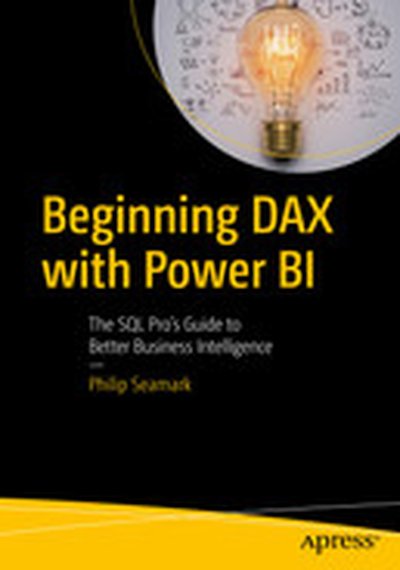
Beginning DAX with Power BI: The SQL Pro’s Guide to Better Business Intelligence

Attention all SQL Pros, DAX is not just for writing Excel-based formulas! Get hands-on learning and expert advice on how to use the vast capabilities of the DAX language to solve common data modeling challenges. Beginning DAX with Power BI teaches key concepts such as mapping techniques from SQL to DAX, filtering, grouping, joining, pivoting, and using temporary tables, all aimed at the SQL professional. Join author Philip Seamark as he guides you on a journey through typical business data transformation scenarios and challenges, and teaches you, step-by-step, how to resolve challenges using DAX. Tips, tricks, and shortcuts are included and explained, along with examples of the SQL equivalent, in order to accelerate learning. Examples in the book range from beginner to advanced, with plenty of detailed explanation when walking through each scenario. What You’ll Learn Turbocharge your Power BI model by adding advanced DAX programming techniques Know when to use calculated measures versus calculated columns Generate new tables on the fly from existing data Optimize, monitor, and tune Power BI to improve performance of your models Discover new ideas, tricks, and time-saving techniques for better models Who This Book Is For Business intelligence developers, business analysts, or any SQL user who wants to use Power BI as a reporting tool. A solid understanding of SQL is recommended, as examples throughout the book include the DAX equivalents to SQL problem/solution scenarios.
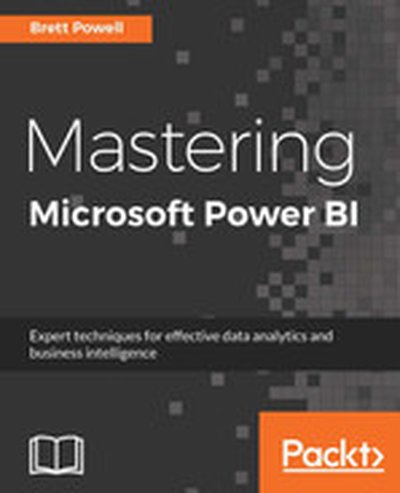
Mastering Microsoft Power BI

Dive right into the powerful world of Microsoft Power BI with this comprehensive guide. This book takes you through every step of mastering Power BI, from data modeling to creating actionable visualizations. You'll find clear explanations and practical steps to improve your data analytics and enhance business decision-making. What this Book will help me do Learn to connect and transform data using Power Query M Language to create clean, structured datasets. Understand how to design scalable and performance-optimized Power BI Data Models for effective analytics. Develop professional, visually appealing and interactive reports and dashboards to convey insights confidently. Implement best practices for managing Power BI solutions, including deployment, version control, and monitoring. Gain practical knowledge to administer Power BI across organizational structures, ensuring security and efficiency. Author(s) None Powell is a seasoned expert in business intelligence and a passionate educator in the field of data analytics. With extensive hands-on experience in Microsoft Power BI, None has supported many organizations in unlocking the potential of their data. The approachable writing style reflects a real-world yet proficient understanding of Power BI's capabilities. Who is it for? This book is ideal for business intelligence professionals looking to deepen their expertise in Microsoft Power BI. Readers already familiar with basic BI concepts and Power BI will gain significant technical depth. It suits professionals keen to enhance their data modeling, visualization, and analytics skills. If you're aiming to create impactful dashboards and benefit from advanced insights, this book is for you.

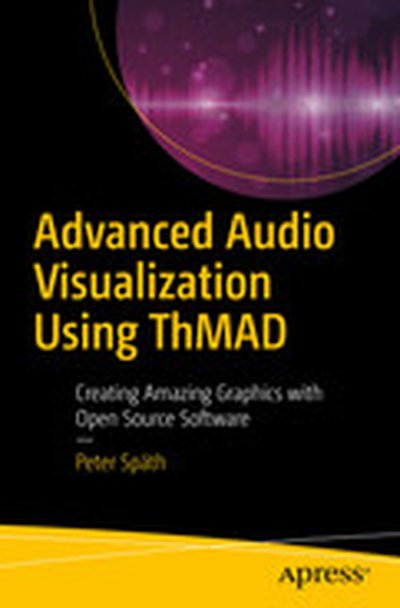
Advanced Audio Visualization Using ThMAD: Creating Amazing Graphics with Open Source Software

Learn advanced techniques and improve your audio visualization skills with Thinking Machine Audio Dreams (ThMAD). With this book, you can concentrate on advanced examples and usage patterns, including using shaders in a more profound way, and how to incorporate ThMAD into a tool chain using the professional sound server JACK. Advanced Audio Visualization Using ThMAD provides advanced techniques for generating graphics, improving performance, and providing readers with the skills needed to create more interesting visualizations. You will also learn professional setups with highly developed visual and aural art tool chains. What You'll Learn Use the ThMAD software for advanced setups in their personal and professional projects Gain a pragmatic introduction to using shaders Use JACK sound servers with ThMAD Control the timing ThMAD Work withadvanced configurations Who This Book Is For Artists and developers already familiar with ThMAD and looking to enhance their projects. In addition, readers primarily interested in using shaders or the Jack audio server for graphics generation can benefit from the book as well.

Data Analysis with R, Second Edition - Second Edition

"Data Analysis with R, Second Edition" is your ultimate guide to mastering data analysis in R, encompassing everything from foundational concepts to advanced techniques. You will learn to manipulate, analyze, and visualize data effectively, applying cutting-edge R packages like ggplot2 and dplyr. Through rich examples, this comprehensive book thoroughly prepares you to tackle real-world analytical challenges. What this Book will help me do Understand foundational statistical reasoning and sampling methods. Perform hypothesis testing and apply Bayesian methods to data analysis. Build and evaluate regression, classification, and time series models. Handle messy and missing data using advanced R techniques and methods. Optimize performance through parallel processing, Rcpp, and efficient data manipulation. Author(s) Chris Burnett is an experienced data analyst with over 15 years of expertise harnessing R for insights. A passionate advocate for accessible computing, Chris integrates practical exercises and rich examples to demystify complex analytical techniques. Their experience and dedication shine in this approachable yet detailed guide. Who is it for? This book is ideal for budding and professional data analysts or data scientists who wish to deepen their expertise in R. It suits learners with a basic understanding of R who aim to extend their proficiency in applied data analysis. The guide provides significant value for professionals aiming to implement effective analytical models. Readers seeking to grow within the analytics sector will find this resource indispensable.

Mastering the SAS DS2 Procedure

Enhance your SAS data-wrangling skills with high-precision and parallel data manipulation using the DS2 programming language. Now in its second edition, this book addresses the DS2 programming language from SAS, which combines the precise procedural power and control of the Base SAS DATA step language with the simplicity and flexibility of SQL. DS2 provides simple, safe syntax for performing complex data transformations in parallel and enables manipulation of native database data types at full precision. It also covers PROC FEDSQL, a modernized SQL language that blends perfectly with DS2. You will learn to harness the power of parallel processing to speed up CPU-intensive computing processes in Base SAS and how to achieve even more speed by processing DS2 programs on massively parallel database systems. Techniques for leveraging internet APIs to acquire data, avoiding large data movements when working with data from disparate sources, and leveraging DS2's new data types for full-precision numeric calculations are presented, with examples of why these techniques are essential for the modern data wrangler. Here's what's new in this edition: how to significantly improve performance by using the new SAS Viya architecture with its SAS Cloud Analytic Services (CAS) how to declare private variables and methods in a package the new PROC DSTODS2 the PCRXFIND and PCRXREPLACE packages While working though the code samples provided with this book, you will build a library of custom, reusable, and easily shareable DS2 program modules, execute parallelized DATA step programs to speed up a CPU-intensive process, and conduct advanced data transformations using hash objects and matrix math operations. This book is part of the SAS Press Series.

Mathematical Statistics

Explores mathematical statistics in its entirety—from the fundamentals to modern methods This book introduces readers to point estimation, confidence intervals, and statistical tests. Based on the general theory of linear models, it provides an in-depth overview of the following: analysis of variance (ANOVA) for models with fixed, random, and mixed effects; regression analysis is also first presented for linear models with fixed, random, and mixed effects before being expanded to nonlinear models; statistical multi-decision problems like statistical selection procedures (Bechhofer and Gupta) and sequential tests; and design of experiments from a mathematical-statistical point of view. Most analysis methods have been supplemented by formulae for minimal sample sizes. The chapters also contain exercises with hints for solutions. Translated from the successful German text, Mathematical Statistics requires knowledge of probability theory (combinatorics, probability distributions, functions and sequences of random variables), which is typically taught in the earlier semesters of scientific and mathematical study courses. It teaches readers all about statistical analysis and covers the design of experiments. The book also describes optimal allocation in the chapters on regression analysis. Additionally, it features a chapter devoted solely to experimental designs. Classroom-tested with exercises included Practice-oriented (taken from day-to-day statistical work of the authors) Includes further studies including design of experiments and sample sizing Presents and uses IBM SPSS Statistics 24 for practical calculations of data Mathematical Statistics is a recommended text for advanced students and practitioners of math, probability, and statistics.

Relational Research and Organisation Studies

Relational Research and Organisation Studies does not only present and discuss guidelines for practice at a onto-epistemological level but also presents and discusses concrete cases of research projects building on relational constructionist ideas. Furthermore, excerpts of data are presented and analyzed in order to explain the co-constructed processes of the inquiries more in detail.

Mastering Qlik Sense

Mastering Qlik Sense is a comprehensive guide designed to empower you to utilize Qlik Sense for advanced data analytics and dynamic visualizations. This book provides detailed insights into creating seamless Business Intelligence solutions tailored to your needs. Whether you're building dashboards, optimizing data models, or exploring Qlik Cloud functionalities, this book has you covered. What this Book will help me do Build interactive and insightful dashboards using Qlik Sense's intuitive tools. Learn to model data efficiently and apply best practices for optimized performance. Master the Qlik Sense APIs and create advanced custom extensions. Understand enterprise security measures including role-based access controls. Gain expertise in migrating from QlikView to Qlik Sense effectively Author(s) Juan Ignacio Vitantonio is an experienced expert in Business Intelligence solutions and data analytics. With a profound understanding of Qlik technologies, Juan has developed and implemented impactful BI solutions across various industries. His writing reflects his practical knowledge and passion for empowering users with actionable insights into data. Who is it for? This book is perfect for BI professionals, data analysts, and organizations aiming to leverage Qlik Sense for advanced analytics. Ideal for those with a foundational grasp of Qlik Sense, it also provides comprehensive guidance for QlikView users transitioning to Qlik Sense. If you want to improve your BI solutions and data-driven decision-making skills, this book is for you.

The SAS Programmer's PROC REPORT Handbook

Generate reports with style! The SAS Programmer's PROC REPORT Handbook: ODS Companion explains how to use style elements within a style template to customize reports generated by PROC REPORT, leading to more appealing and effective business reports. Many programmers are faced with generating reports that are easy to read and comprehend for a wide variety of audiences, which is where the ODS destinations and style changes come into play. This book teaches you how to use style elements in PROC REPORT, a versatile reporting procedure, to customize your output. Mastering style elements allows you to change visual aspects of reports, such as borders, column widths, fonts, backgrounds, and more. This companion to The SAS Programmer’s PROC REPORT Handbook: Basic to Advanced Reporting Techniques explores how the style elements within a style template affect the output generated by PROC REPORT. It provides examples of altering the style elements and the effect on the main ODS destinations, while also discussing common pitfalls that programmers can avoid while working with tables, Microsoft Excel, Microsoft Power Point, and PDF output.

Data as a Feature

Business applications are evolving and user expectations for quality, easy-to-use software is at an all-time high. The consumerization of applications is making the role of product managers more difficult than ever. How do you build products or services that meet demands for both power and simplicity? Companies are now gaining competitive advantage by providing intuitive application experiences that help users achieve goals. The best applications—the ones that stick—are those that empower users to realize the full value of their data. In this book, we explore how treating data as a feature can help product managers create indisposable applications that help users solve their most critical goals. Understand your users’ goals, the data they’ll need to achieve them, where the data comes from, and how to visualize data effectively Use personas to help you keep users in mind when making critical development and design decisions Provide an interwoven data experience by immersing reports, dashboards, and visualizations into your applications Make your data “over-the-counter” so that you and your users can accurately and easily interpret it Learn how to manage your data roadmap and handle requests for additional features

SAS for Forecasting Time Series, Third Edition, 3rd Edition

To use statistical methods and SAS applications to forecast the future values of data taken over time, you need only follow this thoroughly updated classic on the subject. With this third edition of SAS for Forecasting Time Series, intermediate-to-advanced SAS users—such as statisticians, economists, and data scientists—can now match the most sophisticated forecasting methods to the most current SAS applications. Starting with fundamentals, this new edition presents methods for modeling both univariate and multivariate data taken over time. From the well-known ARIMA models to unobserved components, methods that span the range from simple to complex are discussed and illustrated. Many of the newer methods are variations on the basic ARIMA structures. Completely updated, this new edition includes fresh, interesting business situations and data sets, and new sections on these up-to-date statistical methods: ARIMA models Vector autoregressive models Exponential smoothing models Unobserved component and state-space models Seasonal adjustment Spectral analysis Focusing on application, this guide teaches a wide range of forecasting techniques by example. The examples provide the statistical underpinnings necessary to put the methods into practice. The following up-to-date SAS applications are covered in this edition: The ARIMA procedure The AUTOREG procedure The VARMAX procedure The ESM procedure The UCM and SSM procedures The X13 procedure The SPECTRA procedure SAS Forecast Studio Each SAS application is presented with explanation of its strengths, weaknesses, and best uses. Even users of automated forecasting systems will benefit from this knowledge of what is done and why. Moreover, the accompanying examples can serve as templates that you easily adjust to fit your specific forecasting needs. This book is part of the SAS Press program.

HBR Guide to Data Analytics Basics for Managers (HBR Guide Series)

Don't let a fear of numbers hold you back. Today's business environment brings with it an onslaught of data. Now more than ever, managers must know how to tease insight from data--to understand where the numbers come from, make sense of them, and use them to inform tough decisions. How do you get started? Whether you're working with data experts or running your own tests, you'll find answers in the HBR Guide to Data Analytics Basics for Managers. This book describes three key steps in the data analysis process, so you can get the information you need, study the data, and communicate your findings to others. You'll learn how to: Identify the metrics you need to measure Run experiments and A/B tests Ask the right questions of your data experts Understand statistical terms and concepts Create effective charts and visualizations Avoid common mistakes

The Routledge Companion to Trust

Comprising six thematic sections, The Routledge Companion to Trust provides a comprehensive survey of trust research. With contributions from international experts, this volume examines the major topics and emerging areas within the field, including essays on the foundations, levels and theories of trust.

Business Case Analysis with R: Simulation Tutorials to Support Complex Business Decisions

This tutorial teaches you how to use the statistical programming language R to develop a business case simulation and analysis. It presents a methodology for conducting business case analysis that minimizes decision delay by focusing stakeholders on what matters most and suggests pathways for minimizing the risk in strategic and capital allocation decisions. Business case analysis, often conducted in spreadsheets, exposes decision makers to additional risks that arise just from the use of the spreadsheet environment. R has become one of the most widely used tools for reproducible quantitative analysis, and analysts fluent in this language are in high demand. The R language, traditionally used for statistical analysis, provides a more explicit, flexible, and extensible environment than spreadsheets for conducting business case analysis. The main tutorial follows the case in which a chemical manufacturing company considers constructing a chemical reactor and production facility to bring a new compound to market. There are numerous uncertainties and risks involved, including the possibility that a competitor brings a similar product online. The company must determine the value of making the decision to move forward and where they might prioritize their attention to make a more informed and robust decision. While the example used is a chemical company, the analysis structure it presents can be applied to just about any business decision, from IT projects to new product development to commercial real estate. The supporting tutorials include the perspective of the founder of a professional service firm who wants to grow his business and a member of a strategic planning group in a biomedical device company who wants to know how much to budget in order to refine the quality of information about critical uncertainties that might affect the value of a chosen product development pathway. What You’ll Learn Set upa business case abstraction in an influence diagram to communicate the essence of the problem to other stakeholders Model the inherent uncertainties in the problem with Monte Carlo simulation using the R language Communicate the results graphically Draw appropriate insights from the results Develop creative decision strategies for thorough opportunity cost analysis Calculate the value of information on critical uncertainties between competing decision strategies to set the budget for deeper data analysis Construct appropriate information to satisfy the parameters for the Monte Carlo simulation when little or no empirical data are available Who This Book Is For Financial analysts, data practitioners, and risk/business professionals; also appropriate for graduate level finance, business, or data science students

SQL Server 2017 Machine Learning Services with R

Learn how to leverage SQL Server 2017 Machine Learning Services and the R programming language to create robust, efficient data analysis and machine learning solutions. This book provides actionable insights and practical examples to help you implement and manage database-oriented analytics and predictive modeling. What this Book will help me do Understand and use SQL Server 2017 Machine Learning Services integrated with R. Gain experience in installing, configuring, and maintaining R services in SQL Server. Create and operationalize predictive models using RevoScaleR and other R packages. Improve database solutions by incorporating advanced analytics techniques. Monitor and manage R-based services effectively for reliable production solutions. Author(s) Tomaž Kaštrun and None Koesmarno bring a wealth of expertise as practitioners and educators in data science and SQL Server technologies. They share their experience innovatively, making intricate subjects approachable. Their unified teaching method ensures readers can directly benefit from practical examples and real-world applications. Who is it for? This book is tailored for database administrators, data analysts, and data scientists eager to integrate R with SQL Server. It caters to professionals with varying levels of R experience who are looking to enhance their proficiency in database-oriented analytics. Readers will benefit most if they are motivated to design effective, data-driven solutions in SQL Server environments.

A Practical Guide for Informationists

A Practical Guide for Informationists: Supporting Research and Clinical Practice guides new informationists to a successful career, giving them a pathway to this savvier, more technically advanced, domain-focused role in modern day information centers and libraries. The book's broad scope serves as an invaluable toolkit for healthcare professionals, researchers and graduate students in information management, library and information science, data management, informatics, etc. Furthermore, it is also ideal as a textbook for courses in medical reference services/medical informatics in MLIS programs. Offer examples (e.g. case studies) of ways of delivering information services to end users Includes recommendations, evidence and worksheets/take-aways/templates to be repurposed and adapted by the reader Aimed at the broad area of healthcare and research libraries

Practical Data Science: A Guide to Building the Technology Stack for Turning Data Lakes into Business Assets

Learn how to build a data science technology stack and perform good data science with repeatable methods. You will learn how to turn data lakes into business assets. The data science technology stack demonstrated in Practical Data Science is built from components in general use in the industry. Data scientist Andreas Vermeulen demonstrates in detail how to build and provision a technology stack to yield repeatable results. He shows you how to apply practical methods to extract actionable business knowledge from data lakes consisting of data from a polyglot of data types and dimensions. What You'll Learn Become fluent in the essential concepts and terminology of data science and data engineering Build and use a technology stack that meets industry criteria Master the methods for retrieving actionable business knowledge Coordinate the handling ofpolyglot data types in a data lake for repeatable results Who This Book Is For Data scientists and data engineers who are required to convert data from a data lake into actionable knowledge for their business, and students who aspire to be data scientists and data engineers

R Projects For Dummies

Make the most of R’s extensive toolset R Projects For Dummies offers a unique learn-by-doing approach. You will increase the depth and breadth of your R skillset by completing a wide variety of projects. By using R’s graphics, interactive, and machine learning tools, you’ll learn to apply R’s extensive capabilities in an array of scenarios. The depth of the project experience is unmatched by any other content online or in print. And you just might increase your statistics knowledge along the way, too! R is a free tool, and it’s the basis of a huge amount of work in data science. It's taking the place of costly statistical software that sometimes takes a long time to learn. One reason is that you can use just a few R commands to create sophisticated analyses. Another is that easy-to-learn R graphics enable you make the results of those analyses available to a wide audience. This book will help you sharpen your skills by applying them in the context of projects with R, including dashboards, image processing, data reduction, mapping, and more. Appropriate for R users at all levels Helps R programmers plan and complete their own projects Focuses on R functions and packages Shows how to carry out complex analyses by just entering a few commands If you’re brand new to R or just want to brush up on your skills, R Projects For Dummies will help you complete your projects with ease.

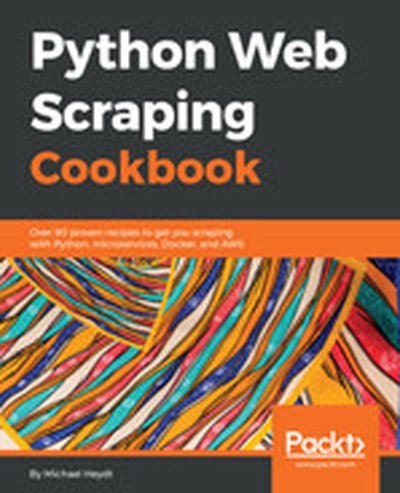
Python Web Scraping Cookbook

Python Web Scraping Cookbook is your comprehensive guide to building efficient and functional web scraping tools using Python. With practical recipes, you'll learn to overcome the challenges of dynamic content, captcha, and irregular web structures while deploying scalable solutions. What this Book will help me do Master the use of Python libraries like BeautifulSoup and Scrapy for scraping data. Perfect techniques for handling JavaScript-heavy sites using Selenium. Learn to overcome web scraping challenges, such as captchas and rate-limiting. Design scalable scraping pipelines with cloud deployment in AWS. Understand web data extraction techniques with XPath, CSS selectors, and more. Author(s) Michael Heydt is a seasoned software engineer and technical author with a focus on data engineering and cloud solutions. Having worked with Python extensively, he brings real-world insights into web scraping. His practical approach simplifies complex concepts. Who is it for? This book is perfect for Python developers and data enthusiasts keen to master web scraping techniques. If you're a programmer with insights into Python scripting and wish to scrape, analyze, and utilize web data efficiently, this book is for you.