talk-data.com talk-data.com

Topic

data

3406

tagged

Activity Trend

3 peak/qtr
2020-Q1 2026-Q1

Activities

Showing filtered results

Filtering by: O'Reilly Data Engineering Books ×
Business Metadata: Capturing Enterprise Knowledge

Business Metadata: Capturing Enterprise Knowledge is the first book that helps businesses capture corporate (human) knowledge and unstructured data, and offer solutions for codifying it for use in IT and management. Written by Bill Inmon, one of the fathers of the data warehouse and well-known author, the book is filled with war stories, examples, and cases from current projects. It includes a complete metadata acquisition methodology and project plan to guide readers every step of the way, and sample unstructured metadata for use in self-testing and developing skills. This book is recommended for IT professionals, including those in consulting, working on systems that will deliver better knowledge management capability. This includes people in these positions: data architects, data analysts, SOA architects, metadata analysts, repository (metadata data warehouse) managers as well as vendors that have a metadata component as part of their systems or tools. First book that helps businesses capture corporate (human) knowledge and unstructured data, and offer solutions for codifying it for use in IT and management Written by Bill Inmon, one of the fathers of the data warehouse and well-known author, and filled with war stories, examples, and cases from current projects Very practical, includes a complete metadata acquisition methodology and project plan to guide readers every step of the way Includes sample unstructured metadata for use in self-testing and developing skills
DW 2.0: The Architecture for the Next Generation of Data Warehousing

DW 2.0: The Architecture for the Next Generation of Data Warehousing is the first book on the new generation of data warehouse architecture, DW 2.0, by the father of the data warehouse. The book describes the future of data warehousing that is technologically possible today, at both an architectural level and technology level. The perspective of the book is from the top down: looking at the overall architecture and then delving into the issues underlying the components. This allows people who are building or using a data warehouse to see what lies ahead and determine what new technology to buy, how to plan extensions to the data warehouse, what can be salvaged from the current system, and how to justify the expense at the most practical level. This book gives experienced data warehouse professionals everything they need in order to implement the new generation DW 2.0. It is designed for professionals in the IT organization, including data architects, DBAs, systems design and development professionals, as well as data warehouse and knowledge management professionals. First book on the new generation of data warehouse architecture, DW 2.0 Written by the "father of the data warehouse", Bill Inmon, a columnist and newsletter editor of The Bill Inmon Channel on the Business Intelligence Network Long overdue comprehensive coverage of the implementation of technology and tools that enable the new generation of the DW: metadata, temporal data, ETL, unstructured data, and data quality control

Information Assurance

In today’s fast paced, infocentric environment, professionals increasingly rely on networked information technology to do business. Unfortunately, with the advent of such technology came new and complex problems that continue to threaten the availability, integrity, and confidentiality of our electronic information. It is therefore absolutely imperative to take measures to protect and defend information systems by ensuring their security and non-repudiation. Information Assurance skillfully addresses this issue by detailing the sufficient capacity networked systems need to operate while under attack, and itemizing failsafe design features such as alarms, restoration protocols, and management configurations to detect problems and automatically diagnose and respond. Moreover, this volume is unique in providing comprehensive coverage of both state-of-the-art survivability and security techniques, and the manner in which these two components interact to build robust Information Assurance (IA). The first and (so far) only book to combine coverage of both security AND survivability in a networked information technology setting Leading industry and academic researchers provide state-of-the-art survivability and security techniques and explain how these components interact in providing information assurance Additional focus on security and survivability issues in wireless networks

Information Modeling and Relational Databases, 2nd Edition

Information Modeling and Relational Databases, Second Edition, provides an introduction to ORM (Object-Role Modeling)and much more. In fact, it is the only book to go beyond introductory coverage and provide all of the in-depth instruction you need to transform knowledge from domain experts into a sound database design. This book is intended for anyone with a stake in the accuracy and efficacy of databases: systems analysts, information modelers, database designers and administrators, and programmers. Terry Halpin, a pioneer in the development of ORM, blends conceptual information with practical instruction that will let you begin using ORM effectively as soon as possible. Supported by examples, exercises, and useful background information, his step-by-step approach teaches you to develop a natural-language-based ORM model, and then, where needed, abstract ER and UML models from it. This book will quickly make you proficient in the modeling technique that is proving vital to the development of accurate and efficient databases that best meet real business objectives. Presents the most indepth coverage of Object-Role Modeling available anywhere, including a thorough update of the book for ORM2, as well as UML2 and E-R (Entity-Relationship) modeling Includes clear coverage of relational database concepts, and the latest developments in SQL and XML, including a new chapter on the impact of XML on information modeling, exchange and transformation New and improved case studies and exercises are provided for many topics

Using Microsoft® Access® 2010

Get comfortable with Access 2010. Don’t just read about it: see it, hear it, with step-by-step video tutorials and valuable audio sidebars delivered through the Free Web Edition that comes with every USING book. For the price of the book you get online access anywhere with a web connection--no books to carry, updated content, and the benefit of video and audio learning. Way more than just a book, this is all the help you’ll ever need...where you want, when you want! Learn fast, learn easy, using web, video, and audio: Show Me video walks through tasks you’ve just got to see--including bonus advanced techniques Tell Me More audio delivers practical insights straight from the experts Audio sidebars featuring Ross Pimentel UNLOCK THE FREE WEB EDITION--To register your USING book, visit quepublishing.com/using.

Web Dragons

Web Dragons offers a perspective on the world of Web search and the effects of search engines and information availability on the present and future world. In the blink of an eye since the turn of the millennium, the lives of people who work with information have been utterly transformed. Everything we need to know is on the web. It's where we learn and play, shop and do business, keep up with old friends and meet new ones. Search engines make it possible for us to find the stuff we need to know. Search engines — web dragons — are the portals through which we access society's treasure trove of information. How do they stack up against librarians, the gatekeepers over centuries past? What role will libraries play in a world whose information is ruled by the web? How is the web organized? Who controls its contents, and how do they do it? How do search engines work? How can web visibility be exploited by those who want to sell us their wares? What's coming tomorrow, and can we influence it? As we witness the dawn of a new era, this book shows readers what it will look like and how it will change their world. Whoever you are: if you care about information, this book will open your eyes and make you blink. Presents a critical view of the idea of funneling information access through a small handful of gateways and the notion of a centralized index--and the problems that may cause Provides promising approaches for addressing the problems, such as the personalization of web services Presented by authorities in the field of digital libraries, web history, machine learning, and web and data mining Find more information at the author's site: webdragons.net

Joe Celko's Analytics and OLAP in SQL

Joe Celko's Analytics and OLAP in SQL is the first book that teaches what SQL programmers need in order to successfully make the transition from On-Line Transaction Processing (OLTP) systems into the world of On-Line Analytical Processing (OLAP). This book is not an in-depth look at particular subjects, but an overview of many subjects that will give the working RDBMS programmers a map of the terra incognita they will face — if they want to grow. It contains expert advice from a noted SQL authority and award-winning columnist, who has given ten years of service to the ANSI SQL standards committee and many more years of dependable help to readers of online forums. It offers real-world insights and lots of practical examples. It covers the OLAP extensions in SQL-99; ETL tools, OLAP features supported in DBMSs, other query tools, simple reports, and statistical software. This book is ideal for experienced SQL programmers who have worked with OLTP systems who need to learn techniques—and even some tricks—that they can use in an OLAP situation. Expert advice from a noted SQL authority and award-winning columnist, who has given ten years of service to the ANSI SQL standards committee and many more years of dependable help to readers of online forums First book that teaches what SQL programmers need in order to successfully make the transition from transactional systems (OLTP) into the world of data warehouse data and OLAP Offers real-world insights and lots of practical examples Covers the OLAP extensions in SQL-99; ETL tools, OLAP features supported in DBMSs, other query tools, simple reports, and statistical software

Joe Celko's SQL for Smarties, 3rd Edition

SQL for Smarties was hailed as the first book devoted explicitly to the advanced techniques needed to transform an experienced SQL programmer into an expert. Now, 10 years later and in the third edition, this classic still reigns supreme as the book written by an SQL master that teaches future SQL masters. These are not just tips and techniques; Joe also offers the best solutions to old and new challenges and conveys the way you need to think in order to get the most out of SQL programming efforts for both correctness and performance. In the third edition, Joe features new examples and updates to SQL-99, expanded sections of Query techniques, and a new section on schema design, with the same war-story teaching style that made the first and second editions of this book classics. Expert advice from a noted SQL authority and award-winning columnist, who has given ten years of service to the ANSI SQL standards committee and many more years of dependable help to readers of online forums. Teaches scores of advanced techniques that can be used with any product, in any SQL environment, whether it is an SQL-92 or SQL-99 environment. Offers tips for working around system deficiencies. Continues to use war stories--updated!--that give insights into real-world SQL programming challenges.

Physical Database Design

The rapidly increasing volume of information contained in relational databases places a strain on databases, performance, and maintainability: DBAs are under greater pressure than ever to optimize database structure for system performance and administration. Physical Database Design discusses the concept of how physical structures of databases affect performance, including specific examples, guidelines, and best and worst practices for a variety of DBMSs and configurations. Something as simple as improving the table index design has a profound impact on performance. Every form of relational database, such as Online Transaction Processing (OLTP), Enterprise Resource Management (ERP), Data Mining (DM), or Management Resource Planning (MRP), can be improved using the methods provided in the book. The first complete treatment on physical database design, written by the authors of the seminal, Database Modeling and Design: Logical Design, Fourth Edition Includes an introduction to the major concepts of physical database design as well as detailed examples, using methodologies and tools most popular for relational databases today: Oracle, DB2 (IBM), and SQL Server (Microsoft) Focuses on physical database design for exploiting B+tree indexing, clustered indexes, multidimensional clustering (MDC), range partitioning, shared nothing partitioning, shared disk data placement, materialized views, bitmap indexes, automated design tools, and more!

Star Schema The Complete Reference

The definitive guide to dimensional design for your data warehouse Learn the best practices of dimensional design. Star Schema: The Complete Reference offers in-depth coverage of design principles and their underlying rationales. Organized around design concepts and illustrated with detailed examples, this is a step-by-step guidebook for beginners and a comprehensive resource for experts. This all-inclusive volume begins with dimensional design fundamentals and shows how they fit into diverse data warehouse architectures, including those of W.H. Inmon and Ralph Kimball. The book progresses through a series of advanced techniques that help you address real-world complexity, maximize performance, and adapt to the requirements of BI and ETL software products. You are furnished with design tasks and deliverables that can be incorporated into any project, regardless of architecture or methodology. Master the fundamentals of star schema design and slow change processing Identify situations that call for multiple stars or cubes Ensure compatibility across subject areas as your data warehouse grows Accommodate repeating attributes, recursive hierarchies, and poor data quality Support conflicting requirements for historic data Handle variation within a business process and correlation of disparate activities Boost performance using derived schemas and aggregates Learn when it's appropriate to adjust designs for BI and ETL tools

Data Model Patterns: A Metadata Map

Data Model Patterns: A Metadata Map not only presents a conceptual model of a metadata repository but also demonstrates a true enterprise data model of the information technology industry itself. It provides a step-by-step description of the model and is organized so that different readers can benefit from different parts. It offers a view of the world being addressed by all the techniques, methods, and tools of the information processing industry (for example, object-oriented design, CASE, business process re-engineering, etc.) and presents several concepts that need to be addressed by such tools. This book is pertinent, with companies and government agencies realizing that the data they use represent a significant corporate resource recognize the need to integrate data that has traditionally only been available from disparate sources. An important component of this integration is management of the "metadata" that describe, catalogue, and provide access to the various forms of underlying business data. The "metadata repository" is essential to keep track of the various physical components of these systems and their semantics. The book is ideal for data management professionals, data modeling and design professionals, and data warehouse and database repository designers. A comprehensive work based on the Zachman Framework for information architecture—encompassing the Business Owner's, Architect's, and Designer's views, for all columns (data, activities, locations, people, timing, and motivation) Provides a step-by-step description of model and is organized so that different readers can benefit from different parts Provides a view of the world being addressed by all the techniques, methods and tools of the information processing industry (for example, object-oriented design, CASE, business process re-engineering, etc.) Presents many concepts that are not currently being addressed by such tools — and should be

MySQL High Availability

Server bottlenecks and failures are a fact of life in any database deployment, but they don't have to bring everything to a halt. MySQL has several features that can help you protect your system from outages, whether it's running on hardware, virtual machines, or in the cloud. MySQL High Availability explains how to use these replication, cluster, and monitoring features in a wide range of real-life situations. Written by engineers who designed many of the tools covered inside, this book reveals undocumented or hard-to-find aspects of MySQL reliability and high availability -- knowledge that’s essential for any organization using this database system. "MySQL replication is widely deployed but has never been adequately explained. This book changes that."-- Mark Callaghan, MySQL contributor and leader of MySQL engineering efforts at a few of the world's largest Internet companies Explore the binary log, a file for replication that helps in disaster recovery and troubleshooting Get techniques for improving response time and handling large data sets Monitor database activity and performance, as well as major operating system parameters Keep track of what masters and slaves are doing, and deal with failures and restarts, corruption, and other incidents Automate key tasks with code from an open source library written by the authors Learn techniques for using MySQL in virtualized environments, such as Amazon Web Services Use MySQL Cluster to achieve high availability

Beginning SQL Server Modeling: Model-Driven Application Development in SQL Server 2008

Get ready for model-driven application development with SQL Server Modeling! This book covers Microsoft's SQL Server Modeling (formerly known under the code name "Oslo") in detail and contains the information you need to be successful with designing and implementing workflow modeling. Beginning SQL Server Modeling will help you gain a comprehensive understanding of how to apply DSLs and other modeling components in the development of SQL Server implementations. Most importantly, after reading the book and working through the examples, you will have considerable experience using SQL Modeling components, because the book and accompanying source code take you through the steps of actually building solutions using the platform. Beginning SQL Server Modeling is the only book that comprehensively covers .NET application development using SQL Modeling. This book explains the critical concepts of SQL Server Modeling and model-driven development that every SQL Server developer should know. The book is simple and concise, giving readers an immediate return on their investment. After learning the lessons of this book, business process analysts and developers will be prepared to use SQL modeling for model-based design, development, and implementations.

Expert Oracle Database Architecture: Oracle Database 9

Now in its second edition, this best-selling book by Tom Kyte of Ask Tom fame continues to bring you some of the best thinking on how to apply Oracle Database to produce scalable applications that perform well and deliver correct results. Tom has a simple philosophy: you can treat Oracle as a black box and just stick data into it or you can understand how it works and exploit it as a powerful computing environment. If you choose the latter, then you'll find that there are few information management problems that you cannot solve quickly and elegantly. This fully revised second edition covers the latest developments in Oracle Database 11g. Each feature is taught in a proof-by-example manner, not only discussing what it is, but also how it works, how to implement software using it, and the common pitfalls associated with it. Don't treat Oracle Database as a black-box. Get this book. Get under the hood. Turbo-charge your career. Fully-revised to cover Oracle Database 11g Proof-by-example approach: Let the evidence be your guide Dives deeply into Oracle Databases's most powerful features

Microsoft® Access® 2010: Step by Step

Experience learning made easy-and quickly teach yourself how to build database solutions with Access 2010. With STEP BY STEP, you set the pace-building and practicing the skills you need, just when you need them! Topics include building an Access database from scratch or from templates; publishing your database to the Web; exchanging data with other databases and Microsoft Office documents; creating data-entry forms; using filters and queries; designing reports; using conditional formatting; preventing data corruption and unauthorized access; and other core topics.

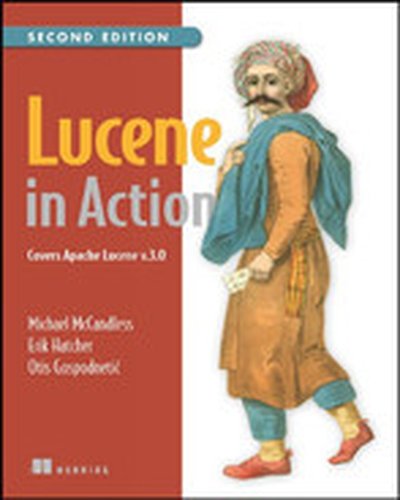
Lucene in Action, Second Edition

When Lucene first appeared, this superfast search engine was nothing short of amazing. Today, Lucene still delivers. Its high-performance, easy-to-use API, features like numeric fields, payloads, near-real-time search, and huge increases in indexing and searching speed make it the leading search tool. And with clear writing, reusable examples, and unmatched advice, Lucene in Action, Second Edition is still the definitive guide to effectively integrating search into your applications. This totally revised book shows you how to index your documents, including formats such as MS Word, PDF, HTML, and XML. It introduces you to searching, sorting, and filtering, and covers the numerous improvements to Lucene since the first edition. Source code is for Lucene 3.0.1. About the Technology About the Book What's Inside Performing hot backups Using numeric fields Tuning for indexing or searching speed Boosting matches with payloads Creating reusable analyzers Adding concurrency with threads Four new case studies Much more! About the Reader About the Authors Michael McCandless is a Lucene PMC member and committer with more than a decade of experience building search engines. Erik Hatcher and Otis Gospodnetić are the authors of the first edition of Lucene in Action and long-time contributors to Lucene, Solr, Mahout, and other Lucene-based projects. Quotes ... brings you up to speed. - Doug Cutting, Founder of Lucene, Nutch, and Hadoop This new edition has it all. - Chad Davis, Blackdog Software, Author of Struts 2 in Action Very readable, full of expert tips. - Rick Wagner, Acxiom Corp. Elegant, and easy to read - just like Lucene itself. - Shai Erera, IBM Haifa Research Labs For a Lucene developer, it's required reading. - Stuart Caborn, Thoughtworks

Hibernate Recipes: A Problem-Solution Approach

Hibernate continues to be the most popular out-of-the-box framework solution for Java Persistence and data/database accessibility techniques and patterns. It is used for e-commerce–based web applications as well as heavy-duty transactional systems for the enterprise. Gary Mak, the author of the best-selling Spring Recipes, now brings you Hibernate Recipes. This book contains a collection of code recipes and templates for learning and building Hibernate solutions for you and your clients. This book is your pragmatic day-to-day reference and guide for doing all things involving Hibernate. There are many books focused on learning Hibernate, but this book takes you further and shows how you can apply it practically in your daily work.

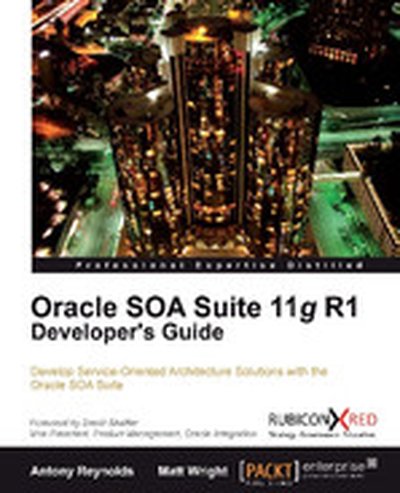
Oracle SOA Suite 11g R1 Developer's Guide

This book provides a detailed guide to developing Service-Oriented Architecture (SOA) solutions using Oracle SOA Suite 11g R1. You'll learn how to implement real-world SOA applications with the suite's various tools and technologies. The tutorials and practical examples ensure that you'll acquire the hands-on skills you need to succeed. What this Book will help me do Learn to use the Oracle Service Bus for building seamless service integrations. Master the BPEL Process Manager to design advanced business workflows. Understand the comprehensive functionalities of the Mediator and Rules Editor. Gain insights on deploying and securing SOA composites effectively. Develop skills in leveraging the Metadata Repository for reusable resources. Author(s) The authors are experts with years of practical experience in SOA architecture and Oracle's suite of tools. They bring their professional expertise and teaching acumen to foster a deep understanding of the subject. Their goal is to translate technical concepts into accessible and actionable insights, making it manageable for developers and architects alike. Who is it for? This book is tailored for developers and architects with foundational knowledge of SOA concepts, including web services and XML technologies. It's for professionals aiming to deepen their expertise in SOA implementation using Oracle's ecosystem. If you're looking to tackle real-world challenges in enterprise integration, this resource is for you.

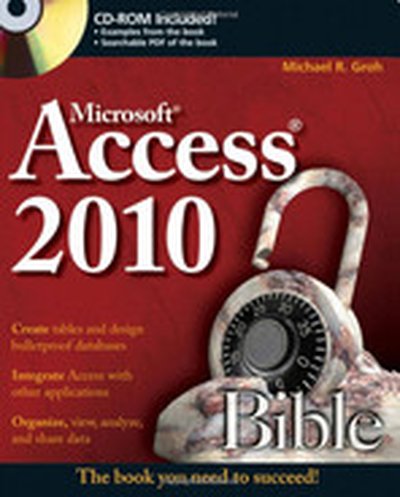
Access® 2010 Bible

The expert guidance you need to get the most out of Access 2010 Get the Access 2010 information you need to succeed with this comprehensive reference. If this is your first encounter with Access, you'll appreciate the thorough attention to database fundamentals and terminology. If you're familiar with earlier versions, you can jump right into Access 2010 enhancements such as the new Access user interface and wider use of XML and Web services. Takes you under the hood of Microsoft Access 2010, the database application included with Microsoft Office 2010 Explores the latest enhancements, such as a new user interface and wider use of XML and Web services; also, how to exchange data with Word, Excel, PowerPoint, and other Office apps Covers how to create tables, manipulate datasheets, and work with multiple tables Explains the seven database objects and how to use a seven-step design method to build a database tailored to your needs Shows you how to build forms, use Visual Basic and the VBA Editor, automate query parameters, create functions and subroutines, use XML to create data access pages, and more Includes a CD with all source code from the book and working examples, plus bonus shareware, freeware, trial, demo and evaluation programs that work with or enhance Microsoft Office You’ll want to keep this soup-to-nuts Access reference close at hand! Note: CD-ROM/DVD and other supplementary materials are not included as part of eBook file.

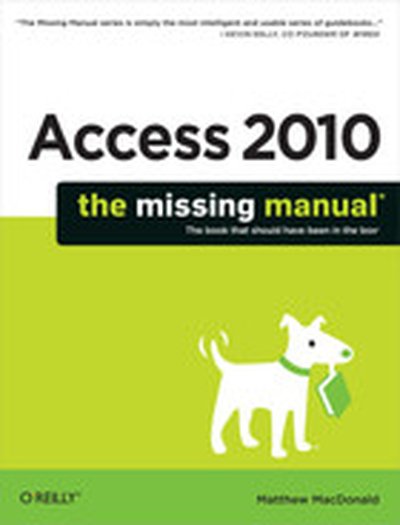
Access 2010: The Missing Manual

Unlock the secrets of this powerful database program and discover how to use your data in creative ways. With this book’s easy step-by-step process, you’ll quickly learn how to build and maintain a complete Access database, using Access 2013’s new, simpler user interface and templates. You also get practices and tips from the pros for good database design—ideal whether you’re using Access for school, business, or at home. The important stuff you need to know: Build a database with ease. Store information to track numbers, products, documents, and more. Customize the interface. Build your own forms to make data entry a snap. Find what you need fast. Search, sort, and summarize huge amounts of information. Put your data to use. Turn raw info into printed reports with attractive formatting. Share your data. Collaborate online with SharePoint and the Access web database. Dive into Access programming. Get tricks and techniques to automate common tasks. Create rich data connections. Build dynamic links with SQL Server, SharePoint, and other systems.