talk-data.com talk-data.com

Topic

data

3406

tagged

Activity Trend

3 peak/qtr
2020-Q1 2026-Q1

Activities

Showing filtered results

Filtering by: O'Reilly Data Engineering Books ×
IBM TotalStorage Productivity Center V2.3: Getting Started

IBM TotalStorage Productivity Center is a suite of infrastructure management software that can centralize, automate, and simplify the management of complex and heterogeneous storage environments. It can help reduce the effort of managing complex storage infrastructures, improve storage capacity utilization, and improve administration efficiency. IBM TotalStorage Productivity Center allows you to respond to on demand storage needs and brings together, in a single point, the management of storage devices, fabric, and data. This IBM Redbooks publication is intended for administrators and users who are installing and using IBM TotalStorage Productivity Center. It provides an overview of the product components and functions. We describe the hardware and software environment required, provide a step-by-step installation procedure, and offer customization and usage hints and tips. This book is not a replacement for the existing IBM Redbooks, or product manuals, that detail the implementation and configuration of the individual products that make up the IBM TotalStorage Productivity Center , or the products as they may have been called in previous versions. We refer to those books as appropriate throughout this book.
SAP R/3 Handbook, Third Edition, 3rd Edition

Implement a comprehensive, integrated application platform Take full advantage of the power, flexibility, and adaptability of SAP -- the premier solution for service-based, enterprise-scale business processes. SAP R/3 Handbook, Third Edition offers complete coverage of installation, implementation, operation, and support. You'll get full details on all the components, including SAP Web Application Server, SAP NetWeaver, the ABAP workbench, and more. Administration, security, and integration with other systems is also covered. ESSENTIAL SKILLS FOR SAP TECHNICAL CONSULTANTS Get an overview of SAP business, integration, and collaboration solutions Understand SAP Web Application Server architecture Get details on the SAP NetWeaver platform Access SAP systems through the SAP presentation interface Use the ABAP workbench development environment Handle system administration and implement security Manage system-wide changes with the Transport Management System (TMS) Analyze performance and troubleshoot SAP solutions

Implementing NFSv4 in the Enterprise: Planning and Migration Strategies

The most recent maintenance release of IBM AIX 5L Version 5.3 includes a significant set of new features added to the NFSv4 implementation. In 2004, the first IBM Redbooks publication devoted to the topic of NFSv4 implementation in AIX 5L was published: "Securing NFS in AIX: An Introduction to NFS V4 in AIX 5L," SG24-7204. This book provides additional up-to-date information to help IBM clients understand and take advantage of the new NFSv4 functions provided by AIX 5L Version 5.3 with the 5300-03 Recommended Maintenance Package. The NFSv4 implementation in AIX 5L has now expanded to provide core features that make it capable of providing a much broader range of distributed file system services than any prior version of NFS. The scope of this book includes methods for implementing NFSv4 in the enterprise and extensive coverage of methods for how it can potentially be used as a migration target for existing AFS-based and DCE/DFS-based enterprise file systems. Please note that the additional material referenced in the text is not available from IBM.

End-to-end Automation with IBM Tivoli System Automation for Multiplatforms

IBM Tivoli System Automation for Multiplatforms monitors and automates applications distributed across Linux® , AIX® , and z/OS operating systems by introducing a new product structure with two major components: IBM Tivoli System Automation for Multiplatforms utilizes an adapter infrastructure to integrate with IBM Tivoli System Automation for z/OS, allowing for a more effective high-availability, automation, and management of multi-tier applications. This IBM Redbooks publication introduces the new versions of the IBM Tivoli Systems Automation product family and gives a broad understanding of the new architecture and components of both IBM Tivoli System Automation for Multiplatforms V2.1 and IBM Tivoli System Automation for z/OS V3.1 using a scenario based approach. This book is a valuable addition to the existing products documentation and should be read in conjunction with the official products documentation, which complements some of the concepts explained in this book. The instructions given in this book are very detailed and explicit. These instructions are not the only way to install the products and related prerequisites. They are meant to be followed by anyone to successfully install, configure, and set up end-to-end automation management using IBM Tivoli System Automation for Multiplatforms V2.1 and IBM Tivoli System Automation for z/OS V3.1 in environments of any size. Please note that the additional material referenced in the text is not available from IBM.

IBM TotalStorage DS6000 Series: Performance Monitoring and Tuning

This IBM Redbooks publication provides guidance about how to configure, monitor, and manage your IBM TotalStorage DS6000 to achieve optimum performance. We describe the DS6000 performance features and characteristics and how they can be exploited with the different server platforms that can attach to it. Then in consecutive chapters we detail the specific performance recommendations and discussions that apply for each server environment, as well as for database and Copy Services environments.

XSLT Cookbook, 2nd Edition

Forget those funky robot toys that were all the rage in the '80s, XSLT (Extensible Stylesheet Transformations) is the ultimate transformer. This powerful language is expert at transforming XML documents into PDF files, HTML documents, JPEG files--virtually anything your heart desires. As useful as XSLT is, though, most people have a difficult time learning its many peculiarities. And now Version 2.0, while elegant and powerful, has only added to the confusion. XSLT Cookbook, Second Edition wants to set the record straight. It helps you sharpen your programming skills and overall understanding of XSLT through a collection of detailed recipes. Each recipe breaks down a specific problem into manageable chunks, giving you an easy-to-grasp roadmap for integrating XSLT with your data and applications. No other XSLT book around employs this practical problem-solution-discussion format. In addition to offering code recipes for solving everyday problems with XSLT 1.0, this new edition shows you how to leverage the improvements found in XSLT 2.0, such as how to simplify the string manipulation and date/time conversion processes. The book also covers XPath 2.0, a critical companion standard, as well as topics ranging from basic transformations to complex sorting and linking. It even explores extension functions on a variety of different XSLT processors and shows ways to combine multiple documents using XSLT. Code examples add a real-world dimension to each technique. Whether you're just starting out in XSLT or looking for advanced techniques, you'll find the level of information you need in XSLT Cookbook, Second Edition.

MySQL® Crash Course

MySQL is one of the most popular database management systems available, powering everything from Internet powerhouses to individual corporate databases to simple end-user applications, and everything in between. And this book will teach you all you need to know to be immediately productive with MySQL. By working through 30 highly focused hands-on lessons, your MySQL Crash Course will be both easier and more effective than you'd have thought possible. Learn how to: Retrieve and sort data Filter data using comparisons, regular expressions, full text search, and much more Join relational data Create and alter tables Insert, update, and delete data Leverage the power of stored procedures and triggers Use views and Cursors Manage transactional processing Create user accounts and manage security via access control Ben Forta is Macromedia's Senior Technical Evangelist, and has almost 20 years of experience in the computer industry in product development, support, training, and product marketing. Ben is the author of the best-selling Sams Teach Yourself SQL in 10 Minutes (now in its third edition, and translated into over a dozen languages), ColdFusion Web Application Construction Kit, and Advanced ColdFusion Development (both published by Que Publishing), Sams Teach Yourself Regular Expressions in 10 Minutes, as well as books on SQL, Flash, JSP, HomeSite, WAP, Windows 2000, and other subjects.

Professional LAMP: Linux®, Apache, MySQL®, and PHP5 Web Development

The combination of Linux, Apache, MySQL, and PHP is popular because of interaction, flexibility, customization, and-most importantly-the cost effectiveness of its components Helps LAMP professionals take their skills to the next level with in-depth discussions of OOP; extensions of PHP such as PEAR, GD, XML, and CURL; improving site security; and advanced tools available to the coder Those proficient in other languages such as Java, C++, Perl and ASP will find this guide invaluable when transitioning to the LAMP environment The Web site includes sample scripts created in the course of each chapter, and several applications that can be modified and reused

Initial Public Offerings (IPO)

After the cooling off of IPOs since the dot com bubble, Google has rekindled the fire for IPOs. This IPO reader contains new articles exclusive to this reader by leading academics from around the world dealing with quantitative and qualitative analyses of this increasingly popular and important area of finance. Articles address new methods of IPO performance, international IPOs, IPO evaluation, IPO underwriting, evaluation and bookbuilding. Although numerous articles are technical in nature, with econometric and statistical models, particular attention has been directed towards the understanding and the applicability of the results as well as theoretical development in this area. This reader will assist researchers, academics, and graduate students to further understand the latest research on IPOs. Interest in IPOs is increasing again after the Google IPO, and IPOs are up significantly from last year Chapters by well known academics provide an international perspective, describing research results from IPO data in countries spanning the globe *Research is based on real results from IPO data collected over the past 5-7 years

Creating a Database in FileMaker Pro 8: Visual QuickProject Guide

If you want to make a great-looking, practical database fast but don't want to get bogged down with the details, then you need a Visual QuickProject Guide! If you've never created a database before, the task can be daunting. Recognizing that you don't necessarily want or need to know about every FileMaker Pro 8 feature, this low-priced, compact guide is the quickest route to creating a functional, organized database. Whether you're a small business owner looking for a better way to track inventory and invoices, someone just looking for a streamlined way to keep track of your contacts, or your boss simply needs a a project database, this book covers the FileMaker Pro 8 basics with full-color illustrations and step-by-step instructions to help you get your project done quickly. The guide also includes a companion Web site with downloadable graphic buttons, custom forms and templates, and more.

Siebel 7.8 with IBM DB2 UDB V8.2 Handbook

This IBM Redbooks publication delivers details about DB2 UDB V8.2 on Siebel 7.8. It outlines the partnership between Siebel Systems and IBM and the benefits of using DB2 UDB to support the Siebel Enterprise. The most commonly used components of the Siebel Enterprise and the DB2 UDB architecture are described. We provide the planning considerations for running DB2 UDB in Siebel environment. The step-by-step installation and configuration details are followed. We then describe information on methods to populate and maintain data in Siebel tables including data archival techniques and information on ensuring data integrity and data quality. The database administration, monitoring, and tuning tools provided by DB2 UDB and operating systems are discussed and the tool usage provided. The book also provides in-depth discussion on high availability and disaster recovery options and setup procedure for a Siebel/DB2 UDB environment. Finally, the book provides information about the components of Siebel Analytics and where these components fit in the overall scheme with Siebel Enterprise.

Sams Teach Yourself XML in 24 Hours, Third Edition

The third edition of Sams Teach Yourself XML in 24 Hours, Complete Starter Kit is everything you need to know about the XML language and how to use it in practical, innovative applications. Understanding the syntax of XML is only a small part of the learning process; understanding how to apply it is the larger part of the learning process, and is the primary focus of this book. It covers a broad range of topics, and wil show you how to use XML to mine data on the web, how to use it to interact with existing data services such as iTunes and Google, and how to use it in applications such as e-books, online speech synthesis, and multimedia. Sams Teach Yourself XML in 24 Hours, Complete Starter Kit, Third Edition will teach you what you need to know to get up and running with XML and more importantly, how to do cool things with it!

Sams Teach Yourself SAP™ in 24 Hours, Second Edition

A new edition of this book is now available, ISBN-10: 0137142846 ISBN:13 9780137142842 Sams Teach Yourself SAP in 24 Hours, Second Edition is the perfect tool for learning one of the most sophisticated enterprise solutions available today. Designed to being with the basics, you will become acquainted with the entire SAP system, from navigation to creating your own reports. You'll also cover: Implementation tools and methodologies NetWeaver ECC 5.0 Designing Screens and menus Reporting Integration with Microsoft Office And more Written by leading SAP consultants with over 20 years of combined experience, this easy-to-understand tutorial is ideal for getting up and running with SAP quickly and efficiently.

Cost-Based Oracle Fundamentals

The question, "Why isn't Oracle using my index?" must be one of the most popular (or perhaps unpopular) questions ever asked on the Oracle help forums. You've picked exactly the right columns, you've got them in the ideal order, you've computed statistics, you've checked for null columns—and the optimizer flatly refuses to use your index unless you hint it. What could possibly be going wrong? If you've suffered the frustration of watching the optimizer do something completely bizarre when the best execution plan is totally obvious, or spent hours or days trying to make the optimizer do what you want it to do, then this is the book you need. You'll come to know how the optimizer thinks, understand why it makes mistakes, and recognize the data patterns that make it go awry. With this information at your fingertips, you will save an enormous amount of time on designing and trouble-shooting your SQL. The cost-based optimizer is simply a piece of code that contains a model of how Oracle databases work. By applying this model to the statistics about your data, the optimizer tries to efficiently convert your query into an executable plan. Unfortunately, the model can't be perfect, your statistics can't be perfect, and the resulting execution plan may be far from perfect. In Cost-Based Oracle Fundamentals, the first book in a series of three, Jonathan Lewis—one of the foremost authorities in this field—describes the most commonly used parts of the model, what the optimizer does with your statistics, and why things go wrong. With this information, you'll be in a position to fix entire problem areas, not just single SQL statements, by adjusting the model or creating more truthful statistics.

Microsoft® SQL Server™ 2005 Administrator's Pocket Consultant

Here’s the utterly practical, pocket-sized reference for IT professionals who need to administer, optimize, and maintain Microsoft SQL Server 2005 in their organization. This unique guide provides essential details for using Microsoft SQL Server 2005 to help protect and manage your company’s data—whether automating tasks; creating indexes and views; performing backups and recovery; replicating transactions; tuning performance; managing server activity; importing and exporting data; or performing other key tasks. Featuring quick-reference tables, lists, and step-by-step instructions, this handy, one-stop guide provides fast, accurate answers on the spot—whether you’re at your desk or in the field!

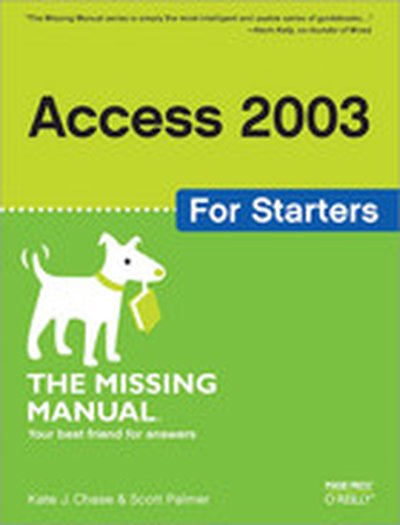
Access 2003 for Starters: The Missing Manual

Maybe you got Access as part of Microsoft Office and wonder what it can do for you and your household; maybe you're a small business manager and don't have a techie on staff to train the office in Microsoft Access. Regardless, you want to quickly get your feet wet--but not get in over your head--and Access 2003 for Starters: The Missing Manual is the book to make it happen. Far more than a skimpy introduction but much less daunting than a weighty tech book, Access 2003 for Starters: The Missing Manual demystifies databases and explains how to design and create them with ease. It delivers everything you need--and nothing you don't--to use Access right away. It's your expert guide to the Access features that are most vital and most useful, and it's your trusted advisor on the more in-depth features that are best saved for developers and programmers. Access is sophisticated and powerful enough for professional developers but easy and practical enough for everyday users like you. This Missing Manual explains all the major features of Access 2003, including designing and creating databases, organizing and filtering information, and generating effective forms and reports. Bestselling authors, database designers, and programmers Scott Palmer, Ph.D., and Kate Chase are your guides for putting the world's most popular desktop data management program to work. Their clear explanations, step-by-step instructions, plenty of illustrations, and timesaving advice help you get up to speed quickly and painlessly. Whether you're just starting out or you know you've been avoiding aspects of the program and missing out on much of what it can do, this friendly, witty book will gently immerse you in Microsoft Access. Keep it handy, as you'll undoubtedly refer to it again and again.

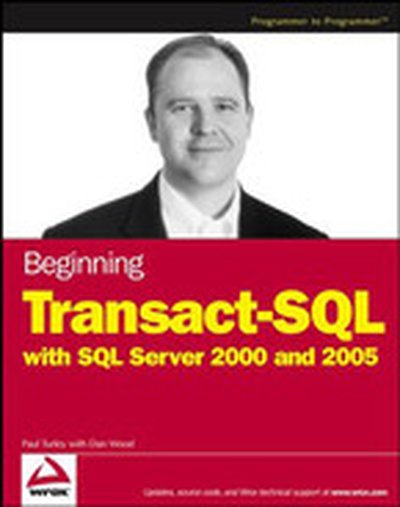
Beginning Transact-SQL with SQL Server 2000 and 2005

Beginning Transact-SQL with SQL Server 2000 and 2005 Transact-SQL is a powerful implementation of the ANSI standard SQL database query language. In order to build effective database applications, you must gain a thorough understanding of these features. This book provides you with a comprehensive introduction to the T-SQL language and shows you how it can be used to work with both the SQL Server 2000 and 2005 releases. Beginning with an overview of the SQL Server query operations and tools that are used with T-SQL, the author goes on to explain how to design and build applications of increasing complexity. By gaining an understanding of the power of the T-SQL language, you'll be prepared to meet the ever-increasing demands of programming. What you will learn from this book How T-SQL provides you with the means to create tools for managing hundreds of databases Various programming techniques that use views and stored procedures Ways to optimize query performance How to create databases that will be an essential foundation to applications you develop later Who this book is for This book is for database developers and administrators who have not yet programmed with Transact-SQL. Some familiarity with relational databases and basic SQL is helpful, and some programming experience is helpful. Wrox Beginning guides are crafted to make learning programming languages and technologies easier than you think, providing a structured, tutorial format that will guide you through all the techniques involved.

JD Edwards EnterpriseOne 8.9 High Availability and Storage for the IBM eServer pSeries Client

As companies depend more and more on their enterprise software for daily operations, they require highly available systems. JD Edwards EnterpriseOne has long enabled their software with the IBM High Availability Cluster Multi-Processing (HACMP) product for high availability. This IBM Redbooks publication describes the IBM HACMP/Enhanced Scalability (HACMP/ES) Version 4.5 solution to certify JD Edwards EnterpriseOne 8.9 in an IBM AIX high availability environment. This book also describes HACMP/ES Version 5.1. It explains how to install and tune HACMP/ES, as well as reviews the setup steps to enable JD Edwards EnterpriseOne for HACMP/ES. While writing this book, we conducted tests to simulate that the failures and observations made to ensure that the high availability environment performed properly. The results of these tests are also documented. This book highlights and explains those characteristics that are specific to JD Edwards EnterpriseOne. It contains significant window examples and worksheets to help facilitate an easy step-by-step installation process. It does not replace the extensive installation and administration documentation that is already available for HACMP/ES.

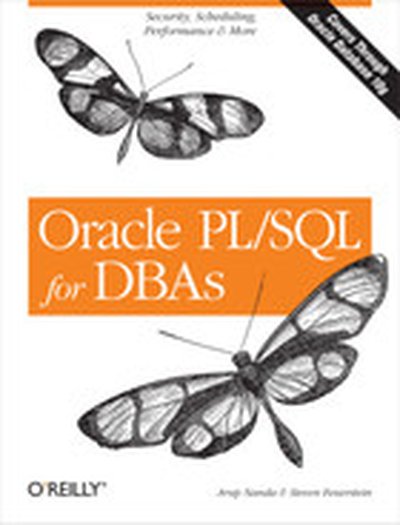
Oracle PL/SQL for DBAs

PL/SQL, Oracle's powerful procedural language, has been the cornerstone of Oracle application development for nearly 15 years. Although primarily a tool for developers, PL/SQL has also become an essential tool for database administration, as DBAs take increasing responsibility for site performance and as the lines between developers and DBAs blur. Until now, there has not been a book focused squarely on the language topics of special concern to DBAs Oracle PL/SQL for DBAs fills the gap. Covering the latest Oracle version, Oracle Database 10g Release 2 and packed with code and usage examples, it contains: A quick tour of the PL/SQL language, providing enough basic information about language fundamentals to get DBAs up and running Extensive coverage of security topics for DBAs: Encryption (including both traditional methods and Oracle's new Transparent Data Encryption, TDE); Row-Level Security(RLS), Fine-Grained Auditing (FGA); and random value generation Methods for DBAs to improve query and database performance with cursors and table functions Coverage of Oracle scheduling, which allows jobs such as database monitoring andstatistics gathering to be scheduled for regular execution Using Oracle's built-in packages (DBMS_CRYPTO, DBMS_RLS, DBMS_FGA, DBMS_RANDOM,DBMS_SCHEDULING) as a base, the book describes ways of building on top of these packages to suit particular organizational needs. Authors are Arup Nanda, Oracle Magazine 2003 DBA of the Year, and Steven Feuerstein, the world's foremost PL/SQL expert and coauthor of the classic reference, Oracle PL/SQL Programming. DBAs who have not yet discovered how helpful PL/SQL can be will find this book a superb introduction to the language and its special database administration features. Even if you have used PL/SQL for years, you'll find the detailed coverage in this book to be an invaluable resource.

SAP Solutions on IBM DB2 UDB V8.2.2 Handbook

IBM and SAP share a vision for responding to customers' specific requirements for tighter integration, platform flexibility, lower total cost of ownership, and improved performance. DB2 UDB V8.2.2 is an SAP-optimized version that uses autonomic computing technologies specifically tuned to help SAP users streamline installation, improve performance, and increase availability. This IBM Redbooks publication provides information for SAP consultants and SAP system administrators. It includes the latest DB2 UDB architecture details, SAP-related features and functions, practical advice on SAP NetWeaver 2004 installations, and DB2 configuration in SAP environments. We describe DB2 UDB’s logical and physical database objects, storage management, SAPs data classes, and space reclamation strategies, and provide the best practices for intelligent storage subsystems. We also discuss how to use DBA Cockpit to monitor your system, DB2 UDB log file management, database backup and recovery, and high availability and clustered solutions. We introduce the Problem Description / Problem Source Identification (PD/PSI) methodology, and the troubleshooting approaches for common problems. Finally, we include a discussion of the new features of SAP NetWeaver 2004s Business Intelligence (SAP BI) with DB2 UDB V8.2.2.