talk-data.com talk-data.com

Topic

data

2093

tagged

Activity Trend

3 peak/qtr
2020-Q1 2026-Q1

Activities

Showing filtered results

Filtering by: O'Reilly Data Science Books ×
PROC TABULATE by Example, Second Edition

An abundance of real-world examples highlights Lauren Haworth Lake’s and Julie McKnight's PROC TABULATE by Example, Second Edition. Beginning and intermediate SAS® users will find this step-by-step guide to producing tables and reports using the TABULATE procedure both convenient and inviting. Topics are presented in order of increasing complexity, making this an excellent training manual or self-tutorial. The concise format also makes this a quick reference guide for specific applications for more advanced users. A very handy section on common problems and their solutions is also included. With this book, you will quickly learn how to generate tables using macros, handle percentages and missing data, modify row and column headings, and produce one-, two-, and three-dimensional tables using PROC TABULATE. Also provided are more advanced tips on complex formatting with the Output Delivery System (ODS) and exporting PROC TABULATE output to other applications.

Marketing Data Science: Modeling Techniques in Predictive Analytics with R and Python

Now a leader of Northwestern University's prestigious analytics program presents a fully-integrated treatment of both the business and academic elements of marketing applications in predictive analytics. Writing for both managers and students, Thomas W. Miller explains essential concepts, principles, and theory in the context of real-world applications. , Building on Miller's pioneering program, thoroughly addresses segmentation, target marketing, brand and product positioning, new product development, choice modeling, recommender systems, pricing research, retail site selection, demand estimation, sales forecasting, customer retention, and lifetime value analysis. Marketing Data Science Starting where Miller's widely-praised Modeling Techniques in Predictive Analytics left off, he integrates crucial information and insights that were previously segregated in texts on web analytics, network science, information technology, and programming. Coverage includes: The role of analytics in delivering effective messages on the web Understanding the web by understanding its hidden structures Being recognized on the web – and watching your own competitors Visualizing networks and understanding communities within them Measuring sentiment and making recommendations Leveraging key data science methods: databases/data preparation, classical/Bayesian statistics, regression/classification, machine learning, and text analytics Six complete case studies address exceptionally relevant issues such as: separating legitimate email from spam; identifying legally-relevant information for lawsuit discovery; gleaning insights from anonymous web surfing data, and more. This text's extensive set of web and network problems draw on rich public-domain data sources; many are accompanied by solutions in Python and/or R. will be an invaluable resource for all students, faculty, and professional marketers who want to use business analytics to improve marketing performance. Marketing Data Science

Statistical Learning with Sparsity

Discover New Methods for Dealing with High-Dimensional Data A sparse statistical model has only a small number of nonzero parameters or weights; therefore, it is much easier to estimate and interpret than a dense model. Statistical Learning with Sparsity: The Lasso and Generalizations presents methods that exploit sparsity to help recover the underlying signal in a set of data. Top experts in this rapidly evolving field, the authors describe the lasso for linear regression and a simple coordinate descent algorithm for its computation. They discuss the application of ℓ 1 penalties to generalized linear models and support vector machines, cover generalized penalties such as the elastic net and group lasso, and review numerical methods for optimization. They also present statistical inference methods for fitted (lasso) models, including the bootstrap, Bayesian methods, and recently developed approaches. In addition, the book examines matrix decomposition, sparse multivariate analysis, graphical models, and compressed sensing. It concludes with a survey of theoretical results for the lasso. In this age of big data, the number of features measured on a person or object can be large and might be larger than the number of observations. This book shows how the sparsity assumption allows us to tackle these problems and extract useful and reproducible patterns from big datasets. Data analysts, computer scientists, and theorists will appreciate this thorough and up-to-date treatment of sparse statistical modeling.

Meta-Analysis: A Structural Equation Modeling Approach

Presents a novel approach to conducting meta-analysis using structural equation modeling. Structural equation modeling (SEM) and meta-analysis are two powerful statistical methods in the educational, social, behavioral, and medical sciences. They are often treated as two unrelated topics in the literature. This book presents a unified framework on analyzing meta-analytic data within the SEM framework, and illustrates how to conduct meta-analysis using the metaSEM package in the R statistical environment. Meta-Analysis: A Structural Equation Modeling Approach begins by introducing the importance of SEM and meta-analysis in answering research questions. Key ideas in meta-analysis and SEM are briefly reviewed, and various meta-analytic models are then introduced and linked to the SEM framework. Fixed-, random-, and mixed-effects models in univariate and multivariate meta-analyses, three-level meta-analysis, and meta-analytic structural equation modeling, are introduced. Advanced topics, such as using restricted maximum likelihood estimation method and handling missing covariates, are also covered. Readers will learn a single framework to apply both meta-analysis and SEM. Examples in R and in Mplus are included. This book will be a valuable resource for statistical and academic researchers and graduate students carrying out meta-analyses, and will also be useful to researchers and statisticians using SEM in biostatistics. Basic knowledge of either SEM or meta-analysis will be helpful in understanding the materials in this book.

Theoretical Foundations of Functional Data Analysis, with an Introduction to Linear Operators

Theoretical Foundations of Functional Data Analysis, with an Introduction to Linear Operators provides a uniquely broad compendium of the key mathematical concepts and results that are relevant for the theoretical development of functional data analysis (FDA). The self-contained treatment of selected topics of functional analysis and operator theory includes reproducing kernel Hilbert spaces, singular value decomposition of compact operators on Hilbert spaces and perturbation theory for both self-adjoint and non self-adjoint operators. The probabilistic foundation for FDA is described from the perspective of random elements in Hilbert spaces as well as from the viewpoint of continuous time stochastic processes. Nonparametric estimation approaches including kernel and regularized smoothing are also introduced. These tools are then used to investigate the properties of estimators for the mean element, covariance operators, principal components, regression function and canonical correlations. A general treatment of canonical correlations in Hilbert spaces naturally leads to FDA formulations of factor analysis, regression, MANOVA and discriminant analysis. This book will provide a valuable reference for statisticians and other researchers interested in developing or understanding the mathematical aspects of FDA. It is also suitable for a graduate level special topics course.

Elementary Statistics Using SAS

Bridging the gap between statistics texts and SAS documentation, Elementary Statistics Using SAS is written for those who want to perform analyses to solve problems. The first section of the book explains the basics of SAS data sets and shows how to use SAS for descriptive statistics and graphs. The second section discusses fundamental statistical concepts, including normality and hypothesis testing. The remaining sections of the book show analyses for comparing two groups, comparing multiple groups, fitting regression equations, and exploring contingency tables. For each analysis, author Sandra Schlotzhauer explains assumptions, statistical approach, and SAS methods and syntax, and makes conclusions from the results. Statistical methods covered include two-sample t-tests, paired-difference t-tests, analysis of variance, multiple comparison techniques, regression, regression diagnostics, and chi-square tests. Elementary Statistics Using SAS is a thoroughly revised and updated edition of Ramon Littell and Sandra Schlotzhauer's SAS System for Elementary Statistical Analysis. This book is part of the SAS Press program.

Beyond Basic Statistics: Tips, Tricks, and Techniques Every Data Analyst Should Know

Features basic statistical concepts as a tool for thinking critically, wading through large quantities of information, and answering practical, everyday questions Written in an engaging and inviting manner, Beyond Basic Statistics: Tips, Tricks, and Techniques Every Data Analyst Should Know presents the more subjective side of statistics—the art of data analytics. Each chapter explores a different question using fun, common sense examples that illustrate the concepts, methods, and applications of statistical techniques. Without going into the specifics of theorems, propositions, or formulas, the book effectively demonstrates statistics as a useful problem-solving tool. In addition, the author demonstrates how statistics is a tool for thinking critically, wading through large volumes of information, and answering life's important questions. Beyond Basic Statistics: Tips, Tricks, and Techniques Every Data Analyst Should Know also features: Plentiful examples throughout aimed to strengthen readers' understanding of the statistical concepts and methods A step-by-step approach to elementary statistical topics such as sampling, hypothesis tests, outlier detection, normality tests, robust statistics, and multiple regression A case study in each chapter that illustrates the use of the presented techniques Highlights of well-known shortcomings that can lead to false conclusions An introduction to advanced techniques such as validation and bootstrapping Featuring examples that are engaging and non-application specific, the book appeals to a broad audience of students and professionals alike, specifically students of undergraduate statistics, managers, medical professionals, and anyone who has to make decisions based on raw data or compiled results.

Google Analytics Integrations

Get a complete view of your customers and make your marketing analysis more meaningful How well do you really know your customers? Find out with the help of expert author Daniel Waisberg and Google Analytics Integrations. This unique guide takes you well beyond the basics of using Google Analytics to track metrics, showing you how to transform this simple data collection tool into a powerful, central marketing analysis platform for your organization. You'll learn how Google AdWords, AdSense, CRMs, and other data sources can be used together to deliver actionable insights about your customers and their behavior. Explains proven techniques and best practices for collecting clean and accurate information from the start Shows you how to import your organization's marketing and customer data into Google Analytics Illustrates the importance of taking a holistic view of your customers and how this knowledge can transform your business Provides step-by-step guidance on using the latest analytical tools and services to gain a complete understanding of your customers, their needs, and what motivates them to take action Google Analytics Integration is your in-depth guide to improving your data integration, behavioral analysis, and ultimately, your bottom line.

Learning Tableau

Learning Tableau is your guide to mastering Tableau 9.0 for building impactful data visualizations and creating interactive, insightful dashboards. Whether you're beginning your data visualization journey or seek to refine your skills, this book provides a comprehensive approach to unlocking the potential of your data. What this Book will help me do Understand how to create basic and advanced visualizations for effective data representation. Learn techniques to enhance data analysis through custom calculations and interactive features. Gain skills to integrate and analyze data from multiple sources using Tableau's blending and joining features. Master the art of designing and formatting visually appealing dashboards to tell compelling data stories. Explore advanced Tableau functionalities like LOD calculations and sheet swapping to improve analytical insights. Author(s) Joshua N. Milligan is a seasoned data professional with a wealth of experience in Tableau. As a Tableau Zen Master, he combines his practical expertise and in-depth knowledge to craft a beginner-friendly guide for professionals looking to grasp Tableau's features effectively. His approachable and engaging writing style makes complex concepts accessible. Who is it for? This book is ideal for professionals and enthusiasts aiming to develop their skills in data visualization and Tableau. It's suitable for individuals with basic knowledge of data or databases, but no prior Tableau experience is necessary. Whether you're a data analyst, business professional, or IT specialist, this book will help you communicate data insights clearly. Readers will achieve a comprehensive understanding of Tableau 9.0's capabilities to create valuable outcomes.

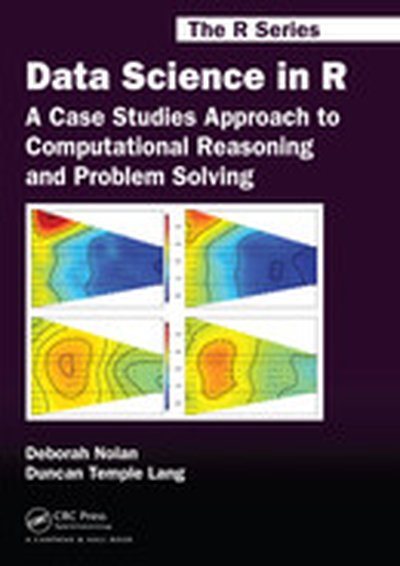
Data Science in R

This book explains the details involved in solving real computational problems encountered in data analysis. It reveals the dynamic and iterative process by which data analysts approach a problem and reason about different ways of implementing solutions. The book's collection of projects, exercises, and sample solutions encompass practical topics pertaining to data processing and analysis. The book can be used for self-study or as supplementary reading in a statistical computing course, allowing students to gain valuable data science skills.

Data Science from Scratch

Data science libraries, frameworks, modules, and toolkits are great for doing data science, but they’re also a good way to dive into the discipline without actually understanding data science. In this book, you’ll learn how many of the most fundamental data science tools and algorithms work by implementing them from scratch. If you have an aptitude for mathematics and some programming skills, author Joel Grus will help you get comfortable with the math and statistics at the core of data science, and with hacking skills you need to get started as a data scientist. Today’s messy glut of data holds answers to questions no one’s even thought to ask. This book provides you with the know-how to dig those answers out. Get a crash course in Python Learn the basics of linear algebra, statistics, and probability—and understand how and when they're used in data science Collect, explore, clean, munge, and manipulate data Dive into the fundamentals of machine learning Implement models such as k-nearest Neighbors, Naive Bayes, linear and logistic regression, decision trees, neural networks, and clustering Explore recommender systems, natural language processing, network analysis, MapReduce, and databases

Analyzing Receiver Operating Characteristic Curves with SAS

As a diagnostic decision-making tool, receiver operating characteristic (ROC) curves provide a comprehensive and visually attractive way to summarize the accuracy of predictions. They are used extensively in medical diagnosis and increasingly in fields such as data mining, credit scoring, weather forecasting, and psychometry. In Analyzing Receiver Operating Characteristic Curves with SAS, author Mithat Gonen illustrates the many existing SAS procedures that can be tailored to produce ROC curves and expands upon further analyses using other SAS procedures and macros. Both parametric and nonparametric methods for analyzing ROC curves are covered in detail. Topics addressed include: Appropriate methods for binary, ordinal, and continuous measures Computations using PROC FREQ, PROC LOGISTIC, PROC NLMIXED, and macros Comparing the ROC curves of several markers and adjusting them for covariates ROC curves with censored data Using the ROC curve for evaluating multivariable prediction models via bootstrap and cross-validation ROC curves in SAS Enterprise Miner And more! Written for any statistician interested in learning more about ROC curve methodology, the book assumes readers have a basic understanding of regression procedures and moderate familiarity with Base SAS and SAS/STAT. Some familiarity with SAS/GRAPH is helpful but not essential. This book is part of the SAS Press program.

Cody's Data Cleaning Techniques Using SAS, Second Edition

Thoroughly updated for SAS 9, Cody's Data Cleaning Techniques Using SAS, Second Edition, addresses tasks that nearly every SAS programmer needs to do - that is, make sure that data errors are located and corrected. Written in Ron Cody's signature informal, tutorial style, this book develops and demonstrates data cleaning programs and macros that you can use as written or modify for your own special data cleaning needs. Each topic is developed through specific examples, and every program and macro is explained in detail.

Statistical Programming in SAS

In Statistical Programming in SAS, author A. John Bailer integrates SAS tools with interesting statistical applications and uses SAS 9.2 as a platform to introduce programming ideas for statistical analysis, data management, and data display and simulation. Written using a reader-friendly and narrative style, the book includes extensive examples and case studies to present a well-structured introduction to programming issues.

Learning Pandas

"Learning Pandas" is your comprehensive guide to mastering pandas, the powerful Python library for data manipulation and analysis. In this book, you'll explore pandas' capabilities and learn to apply them to real-world data challenges. With clear explanations and hands-on examples, you'll enhance your ability to analyze, clean, and visualize data effectively. What this Book will help me do Understand the core concepts of pandas and how it integrates with Python. Learn to efficiently manipulate and transform datasets using pandas. Gain skills in analyzing and cleaning data to prepare for insights. Explore techniques for working with time-series data and financial datasets. Discover how to create compelling visualizations with pandas to communicate findings. Author(s) Michael Heydt is an experienced Python developer and data scientist with expertise in teaching technical concepts to others. With a deep understanding of the pandas library, Michael has authored several guides on data analysis and is passionate about making complex information accessible. His practical approach ensures readers can directly apply lessons to their own projects. Who is it for? This book is ideal for Python programmers who want to harness the power of pandas for data analysis. Whether you're a beginner in data science or looking to refine your skills, you'll find clear, actionable guidance here. Basic programming knowledge is assumed, but no prior pandas experience is necessary. If you're eager to turn data into impactful insights, this book is for you.

Probability and Statistics
This book is designed for engineering students studying for the core paper on probability and statistics. The topics have been dealt in a coherent manner, supported by illustrations for better compre¬hension. Each chapter is replete with examples and exercises. The book also has numerous Multiple Choice Questions at the end of each chapter, thus providing the student with an abundant repository of exam specific problems.
Seeing the Future

This book guides you through an enjoyable journey, step by step, into the future. A team of fictional characters is introduced to share their learning and working experiences with the readers. In the beginning of the book, you will take the first step by learning the most basic models for one-period forecasts based on past performance of a market. You will also learn how to evaluate your newly built models. Next, you will progress further into intermediate-level models, including multi-period forecasts based on past performance of a market or based on an external factor. It also introduces interval forecasting, which allows you to obtain a range of forecast values instead of a single value in the future. In the second half, you will familiarize yourself with advanced models that provide multi-period forecasts based on multiple internal or external factors. Toward the end, you will learn several applied models in business and economics that will facilitate you with practical applications related to real life situations. The  last chapter summarizes all models introduced in this book and provides a table of references for finding the most important concepts, tables, and figures in the book so that you can recall every step of your adventure.

Bayesian Inference for Partially Identified Models

This book shows how the Bayesian approach to inference is applicable to partially identified models (PIMs) and examines the performance of Bayesian procedures in partially identified contexts. Drawing on his many years of research in this area, the author presents a thorough overview of the statistical theory, properties, and applications of PIMs. He covers a range of PIMs, including models for misclassified data and models involving instrumental variables. He also includes real data applications of PIMs that have recently appeared in the literature.

Exchanging Data between SAS and Microsoft Excel

Master simple-to-complex techniques for transporting and managing data between SAS and Excel William Benjamin's Exchanging Data between SAS and Microsoft Excel: Tips and Techniques to Transfer and Manage Data More Efficiently describes many of the options and methods that enable a SAS programmer to transport data between SAS and Excel. The book includes examples that all levels of SAS and Excel users can apply to their everyday programming tasks. Because the book makes no assumptions about the skill levels of either SAS or Excel users, it has a wide-ranging application, providing detailed instructions about how to apply the techniques shown. It contains sections that gather instructional and syntactical information together that are otherwise widely dispersed, and it provides detailed examples about how to apply the software to everyday applications. These examples enable novice users and power developers alike the chance to expand their capabilities and enhance their skillsets. By moving from simple-to-complex applications and examples, the layout of the book allows it to be used as both a training and a reference tool. Excel users and SAS programmers are presented with tools that will assist in the integration of SAS and Excel processes in order to automate reporting and programming interfaces. This enables programming staff to request their own reports or processes and, in turn, support a much larger community.

Financial Forecasting, Analysis and Modelling: A Framework for Long-Term Forecasting

Risk analysis has become critical to modern financial planning Financial Forecasting, Analysis and Modelling provides a complete framework of long-term financial forecasts in a practical and accessible way, helping finance professionals include uncertainty in their planning and budgeting process. With thorough coverage of financial statement simulation models and clear, concise implementation instruction, this book guides readers step-by-step through the entire projection plan development process. Readers learn the tools, techniques, and special considerations that increase accuracy and smooth the workflow, and develop a more robust analysis process that improves financial strategy. The companion website provides a complete operational model that can be customised to develop financial projections or a range of other key financial measures, giving readers an immediately-applicable tool to facilitate effective decision-making. In the aftermath of the recent financial crisis, the need for experienced financial modelling professionals has steadily increased as organisations rush to adjust to economic volatility and uncertainty. This book provides the deeper level of understanding needed to develop stronger financial planning, with techniques tailored to real-life situations. Develop long-term projection plans using Excel Use appropriate models to develop a more proactive strategy Apply risk and uncertainty projections more accurately Master the Excel Scenario Manager, Sensitivity Analysis, Monte Carlo Simulation, and more Risk plays a larger role in financial planning than ever before, and possible outcomes must be measured before decisions are made. Uncertainty has become a critical component in financial planning, and accuracy demands it be used appropriately. With special focus on uncertainty in modelling and planning, Financial Forecasting, Analysis and Modelling is a comprehensive guide to the mechanics of modern finance.