talk-data.com talk-data.com

Topic

data

2093

tagged

Activity Trend

3 peak/qtr
2020-Q1 2026-Q1

Activities

Showing filtered results

Filtering by: O'Reilly Data Science Books ×
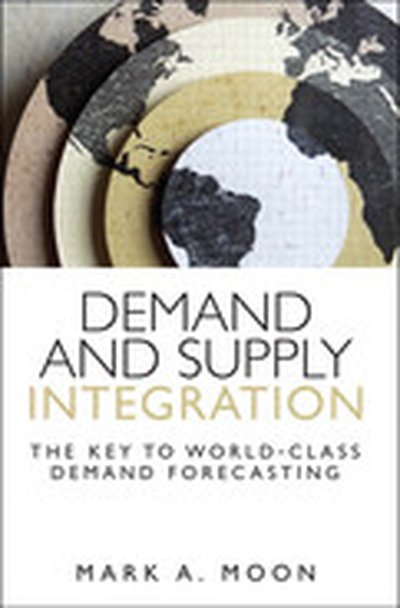
Demand and Supply Integration: The Key to World-Class Demand Forecasting

Supply chain professionals: master pioneering techniques for integrating demand and supply, and create demand forecasts that are far more accurate and useful! In Demand and Supply Integration, Dr. Mark Moon presents the specific design characteristics of a world-class demand forecasting management process, showing how to effectively integrate demand forecasting within a comprehensive Demand and Supply Integration (DSI) process. Writing for supply chain professionals in any business, government agency, or military procurement organization, Moon explains what DSI is, how it differs from approaches such as SandOP, and how to recognize the symptoms of failures to sufficiently integrate demand and supply. He outlines the key characteristics of successful DSI implementations, shows how to approach Demand Forecasting as a management process, and guides you through understanding, selecting, and applying the best available qualitative and quantitative forecasting techniques. You'll learn how to thoroughly reflect market intelligence in your forecasts; measure your forecasting performance; implement state-of-the-art demand forecasting systems; manage Demand Reviews, and much more. For wide audiences of supply chain, logistics, and operations management professionals at all levels, from analyst and manager to Director, Vice President, and Chief Supply Chain Officer; and for researchers and graduate students in the field.
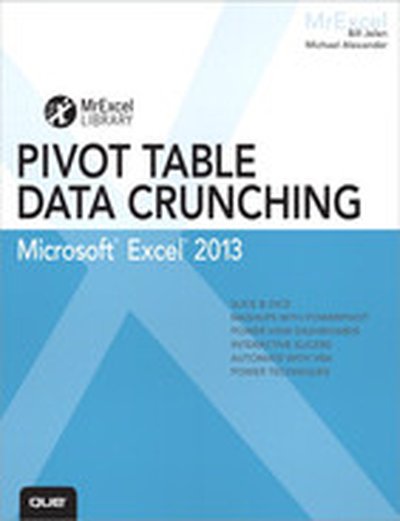
Excel 2013 Pivot Table Data Crunching

CRUNCH ANY DATA, FROM ANY SOURCE, QUICKLY AND EASILY, WITH EXCEL 2013 PIVOT TABLES! Use Excel 2013 pivot tables and pivot charts to produce powerful, dynamic reports in minutes instead of hours… understand exactly what’s going on in your business… take control, and stay in control! Even if you’ve never created a pivot table before, this book will help you leverage all their amazing flexibility and analytical power. In just the first seven chapters, you learn how to generate complex pivot reports complete with drill-down capabilities and accompanying charts. Then, you go even further, discovering how to build a comprehensive, dynamic pivot table reporting system for any business task or function. Learning advanced pivot table and pivot chart techniques for Excel 2013 or the newest Office 365 has never been easier. You’ll find simple, step-by-step instructions, real-world case studies, even complete, easy recipes for solving your most common business analysis problems. • Create, customize, and change your pivot tables and pivot charts • Transform gigantic data sets into crystal-clear summary reports • Summarize and analyze data even faster with new Excel 2013 recommended pivot tables • Instantly highlight your most (and least) profitable customers, products, or regions • Quickly filter pivot tables using slicers • Use dynamic dashboards using Power View to see exactly where your business stands right now • Revamp analyses on the fly by simply dragging and dropping fields • Build dynamic self-service reporting systems your entire team can use • Use PowerPivot or the Data Model to create pivot tables from multiple data sources and worksheets • Work with and analyze OLAP data, and much more About MrExcel Library: Every book in the MrExcel Library pinpoints a specific set of crucial Excel tasks and presents focused skills and examples for performing them rapidly and effectively. Selected by Bill Jelen, Microsoft Excel MVP and mastermind behind the leading Excel solutions website MrExcel.com, these • Dramatically increase your productivity—saving you 50 hours a year or more • Present proven, creative strategies for solving real-world problems • Show you how to get great results, no matter how much data you have • Help you avoid critical mistakes that even experienced users make CATEGORY: Spreadsheets COVERS: Microsoft Office Excel 2013

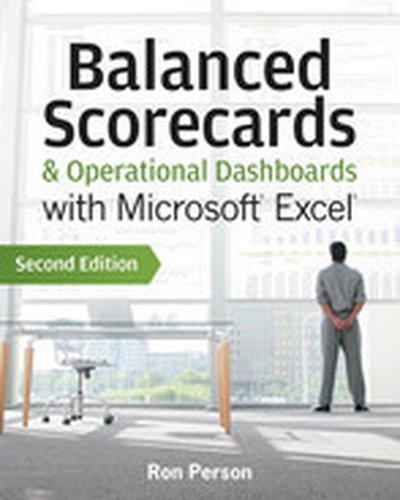
Balanced Scorecards and Operational Dashboards with Microsoft Excel, 2nd Edition

Learn to maintain and update scorecards and dashboards with Excel Balanced Scorecards and operational dashboards measure organizational performance and Microsoft Excel is the tool used worldwide to create these scorecards and dashboards. This book covers time-proven step-by-step processes on how to guide executive teams and managers in creating scorecards and dashboards. It then shows Excel developers how to create those scorecards and dashboards. This is the only book that converts theory into practice. The author addresses the people and processes you need to identify strategy and operational metrics and then implement them in dashboards in three versions of Excel. You'll learn how balanced scorecards help organizations translate strategy into action and the ways that performance dashboards enable managers monitor operations. Covers Excel 2010 back to Excel 2003 Shows how to develop consensus on strategy and operational plans with the executive teams Details steps in creating tactical action plans Gives step-by-step guidance in creating the most powerful management dashboards Puts over ten years of experience in one book Balanced Scorecards & Operational Dashboards with Microsoft Excel, Second Edition is the ultimate resource for enhancing your strategic and operational performance.

Analysis and Probability

Probability theory is a rapidly expanding field and is used in many areas of science and technology. Beginning from a basis of abstract analysis, this mathematics book develops the knowledge needed for advanced students to develop a complex understanding of probability. The first part of the book systematically presents concepts and results from analysis before embarking on the study of probability theory. The initial section will also be useful for those interested in topology, measure theory, real analysis and functional analysis. The second part of the book presents the concepts, methodology and fundamental results of probability theory. Exercises are included throughout the text, not just at the end, to teach each concept fully as it is explained, including presentations of interesting extensions of the theory. The complete and detailed nature of the book makes it ideal as a reference book or for self-study in probability and related fields. Covers a wide range of subjects including f-expansions, Fuk-Nagaev inequalities and Markov triples. Provides multiple clearly worked exercises with complete proofs. Guides readers through examples so they can understand and write research papers independently.

Decision Support, Analytics, and Business Intelligence, Second Edition

Competition is becoming more intense and decision makers are encountering increasing complexity, rapid change, and higher levels of risk. In many situations, the solution is more and better computerized decision support, especially analytics and business intelligence. Today managers need to learn about and understand computerized decision support. If a business is to succeed, managers must know much more about information technology solutions. This second edition of a powerful introductory book is targeted at busy managers and MBA students who need to grasp the basics of computerized decision support, including the following: What are analytics? What is a decision support system? How can managers identify opportunities to create innovative computerized support? Inside, the author addresses these questions and some 60 more fundamental questions that are key to understanding the rapidly changing realm of computerized decision support. In a short period of time, you’ll “get up to speed” on decision support, analytics, and business intelligence.

Essential MATLAB for Engineers and Scientists, 5th Edition

The fifth edition of Essential MATLAB for Engineers and Scientists provides a concise, balanced overview of MATLAB's functionality that facilitates independent learning, with coverage of both the fundamentals and applications. The essentials of MATLAB are illustrated throughout, featuring complete coverage of the software's windows and menus. Program design and algorithm development are presented clearly and intuitively, along with many examples from a wide range of familiar scientific and engineering areas. This is an ideal book for a first course on MATLAB or for an engineering problem-solving course using MATLAB, as well as a self-learning tutorial for professionals and students expected to learn and apply MATLAB. • Updated with the features of Matlab R2012b • More complete coverage of Matlab windows and menus • Expanded discussion of writing functions and scripts • Revised and expanded Part II: Applications • Expanded section on GUIs • More exercises and examples throughout • Extensive teacher support on http://textbooks.elsevier.com: solutions manual, extra problems, multiple choice questions, PowerPoint slides • Companion website for students providing M-files used within the book and selected solutions to end of chapter problems • Flexible access options: print, e-text, and e-text subscription

Learning to Program with MATLAB: Building GUI Tools

The text is for instructors who want to use MATLAB to teach introductory programming concepts. Since many students struggle with applying the concepts that underlie good programming practice, was designed upon the observation that student learning is enhanced if the students themselves build the GUI (graphical user interface) tool, construct the computational model, implement the visualization of results, and design the GUI. This text teaches the core concepts of computer programming—arrays, loops, functions, and basic data structures—using MATLAB. The chapter sequence covers text-based programs, then programs that produce graphics, building up to an emphasis on GUI tools. This progression unleashes the real power of MATLAB—creating visual expressions of the underlying mathematics of a problem or design. Learning to Program with MATLAB: Building GUI Tools

MATLAB® by Example

MATLAB By Example guides the reader through each step of writing MATLAB programs. The book assumes no previous programming experience on the part of the reader, and uses multiple examples in clear language to introduce concepts and practical tools. Straightforward and detailed instructions allow beginners to learn and develop their MATLAB skills quickly. The book consists of ten chapters, discussing in detail the integrated development environment (IDE), scalars, vectors, arrays, adopting structured programming style using functions and recursive functions, control flow, debugging, profiling, and structures. A chapter also describes Symbolic Math Toolbox, teaching readers how to solve algebraic equations, differentiation, integration, differential equations, and Laplace and Fourier transforms. Containing hundreds of examples illustrated using screen shots, hundreds of exercises, and three projects, this book can be used to complement coursework or as a self-study book, and can be used as a textbook in universities, colleges and high schools. No programming experience necessary to learn MATLAB Examples with screenshots and plentiful exercises throughout help make MATLAB easy to understand Projects enable readers to write long MATLAB programs, and take the first step toward being a professional MATLAB programmer

R Graphics Cookbook

This practical guide provides more than 150 recipes to help you generate high-quality graphs quickly, without having to comb through all the details of R’s graphing systems. Each recipe tackles a specific problem with a solution you can apply to your own project, and includes a discussion of how and why the recipe works. Most of the recipes use the ggplot2 package, a powerful and flexible way to make graphs in R. If you have a basic understanding of the R language, you’re ready to get started. Use R’s default graphics for quick exploration of data Create a variety of bar graphs, line graphs, and scatter plots Summarize data distributions with histograms, density curves, box plots, and other examples Provide annotations to help viewers interpret data Control the overall appearance of graphics Render data groups alongside each other for easy comparison Use colors in plots Create network graphs, heat maps, and 3D scatter plots Structure data for graphing

Case Studies in Bayesian Statistical Modelling and Analysis

Provides an accessible foundation to Bayesian analysis using real world models This book aims to present an introduction to Bayesian modelling and computation, by considering real case studies drawn from diverse fields spanning ecology, health, genetics and finance. Each chapter comprises a description of the problem, the corresponding model, the computational method, results and inferences as well as the issues that arise in the implementation of these approaches. Case Studies in Bayesian Statistical Modelling and Analysis: Illustrates how to do Bayesian analysis in a clear and concise manner using real-world problems. Each chapter focuses on a real-world problem and describes the way in which the problem may be analysed using Bayesian methods. Features approaches that can be used in a wide area of application, such as, health, the environment, genetics, information science, medicine, biology, industry and remote sensing. Case Studies in Bayesian Statistical Modelling and Analysis is aimed at statisticians, researchers and practitioners who have some expertise in statistical modelling and analysis, and some understanding of the basics of Bayesian statistics, but little experience in its application. Graduate students of statistics and biostatistics will also find this book beneficial.

The R Book, 2nd Edition

Hugely successful and popular text presenting an extensive and comprehensive guide for all R users The R language is recognized as one of the most powerful and flexible statistical software packages, enabling users to apply many statistical techniques that would be impossible without such software to help implement such large data sets. R has become an essential tool for understanding and carrying out research. This edition: Features full colour text and extensive graphics throughout. Introduces a clear structure with numbered section headings to help readers locate information more efficiently. Looks at the evolution of R over the past five years. Features a new chapter on Bayesian Analysis and Meta-Analysis. Presents a fully revised and updated bibliography and reference section. Is supported by an accompanying website allowing examples from the text to be run by the user. Praise for the first edition: '...if you are an R user or wannabe R user, this text is the one that should be on your shelf. The breadth of topics covered is unsurpassed when it comes to texts on data analysis in R.' (The American Statistician, August 2008) 'The High-level software language of R is setting standards in quantitative analysis. And now anybody can get to grips with it thanks to The R Book...' ( Professional Pensions, July 2007)

Custom Tasks for SAS Enterprise Guide Using Microsoft .NET
Have you ever used SAS Enterprise Guide and found yourself wishing that it had that one specific feature, something that you know would make it the perfect tool for your work or industry? You don't have to settle for just the "out of the box" features; you can add your own capabilities with SAS custom tasks!

Chris Hemedinger's new book takes you step-by-step through the process of creating custom tasks for use in SAS Enterprise Guide and SAS Add-In for Microsoft Office. Using standard off-the-shelf development tools for Microsoft .NET, you'll learn how you can hook in your custom processes and make them available to a wide range of SAS users. In the first part of the book, you'll learn how to use the development environment and the programming interfaces provided by SAS to create, test, and deploy new custom tasks. You'll learn about the services that the SAS Enterprise Guide framework offers, including data access, the ability to run SAS programs, and integration of your custom results into a SAS Enterprise Guide project.

In the second part of the book, Hemedinger provides a variety of useful, field-tested and ready-to-run examples—complete with C# and Visual Basic .NET source code. Each example highlights different programming techniques that you can apply immediately within your own custom tasks. The book also addresses important aspects of .NET programming, such as debugging, exception handling, threading models, and user interface design.

This book is part of the SAS Press program.

Implementing CDISC Using SAS
For decades researchers and programmers have used SAS to analyze, summarize, and report clinical trial data. Now Chris Holland and Jack Shostak have written the first comprehensive book on applying clinical research data and metadata to the Clinical Data Interchange Standards Consortium (CDISC) standards.

Implementing CDISC Using SAS: An End-to-End Guide is an all-inclusive guide on how to implement and analyze Study Data Tabulation Model (SDTM) and Analysis Data Model (ADaM) data and prepare clinical trial data for regulatory submissions. Topics covered include creating and using metadata, developing conversion specifications, implementing and validating SDTM and ADaM data, determining solutions for legacy data conversions, and preparing data for regulatory submission. The book covers products such as Base SAS, SAS Clinical Data Integration, and the SAS Clinical Standards Toolkit, as well as JMP Clinical.

Anyone dealing with CDISC standards--including SAS or JMP programmers, statisticians, and data managers in the pharmaceutical, biotechnology, or medical device industries--will find the philosophical best practices and implementation examples in this book invaluable.

This book is part of the SAS Press program.

Understanding and Applying Research Design

A fresh approach to bridging research design with statistical analysis While good social science requires both research design and statistical analysis, most books treat these two areas separately. Understanding and Applying Research Design introduces an accessible approach to integrating design and statistics, focusing on the processes of posing, testing, and interpreting research questions in the social sciences. The authors analyze real-world data using SPSS software, guiding readers on the overall process of science, focusing on premises, procedures, and designs of social scientific research. Three clearly organized sections move seamlessly from theoretical topics to statistical techniques at the heart of research procedures, and finally, to practical application of research design: Premises of Research introduces the research process and the capabilities of SPSS, with coverage of ethics, Empirical Generalization, and Chi Square and Contingency Table Analysis Procedures of Research explores key quantitative methods in research design including measurement, correlation, regression, and causation Designs of Research outlines various design frameworks, with discussion of survey research, aggregate research, and experiments Throughout the book, SPSS software is used to showcase the discussed techniques, and detailed appendices provide guidance on key statistical procedures and tips for data management. Numerous exercises allow readers to test their comprehension of the presented material, and a related website features additional data sets and SPSS code. Understanding and Applying Research Design is an excellent book for social sciences and education courses on research methods at the upper-undergraduate level. The book is also an insightful reference for professionals who would like to learn how to pose, test, and interpret research questions with confidence.

Probability and Statistics by Pearson

This book is designed for engineering students studying the core paper on probability and statistics during their second or third years. It includes detailed explanation of theory with numerous examples and exercises, as well as relevant references to engineering applications. Each also has numerous objective type questions and answers and hints are provided for all the exercise problems and objective type questions.

Book Contents –

  1. Probability
  2. Probability Distribution
  3. Special Distribution
  4. Sampling Distributions
  5. Estimation Theory
  6. Inferences Concerning Means and Proportions
  7. Tests of Significance
  8. Curve Fitting: Regression and Correlation Analysis
  9. Analysis of Variance
  10. Statistical Quality Control
  11. Queueing Theory Appendix A: Test Based on Normal Distributions Appendix B: Statistical Tables Appendix C: Basic Results Additional Solved Problems Index
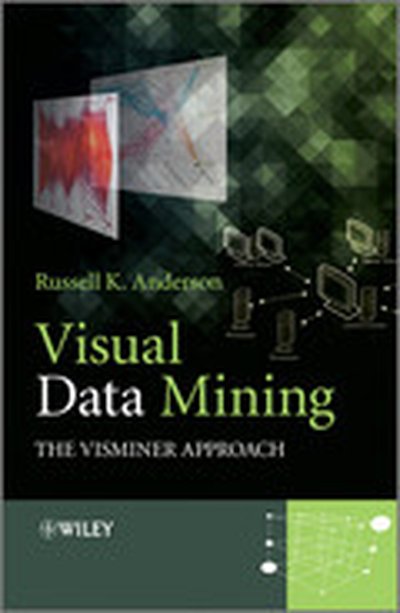
Visual Data Mining: The VisMiner Approach, 2nd Edition

A visual approach to data mining. Data mining has been defined as the search for useful and previously unknown patterns in large datasets, yet when faced with the task of mining a large dataset, it is not always obvious where to start and how to proceed. This book introduces a visual methodology for data mining demonstrating the application of methodology along with a sequence of exercises using VisMiner. VisMiner has been developed by the author and provides a powerful visual data mining tool enabling the reader to see the data that they are working on and to visually evaluate the models created from the data. Key features: Presents visual support for all phases of data mining including dataset preparation. Provides a comprehensive set of non-trivial datasets and problems with accompanying software. Features 3-D visualizations of multi-dimensional datasets. Gives support for spatial data analysis with GIS like features. Describes data mining algorithms with guidance on when and how to use. Accompanied by VisMiner, a visual software tool for data mining, developed specifically to bridge the gap between theory and practice. Visual Data Mining: The VisMiner Approach is designed as a hands-on work book to introduce the methodologies to students in data mining, advanced statistics, and business intelligence courses. This book provides a set of tutorials, exercises, and case studies that support students in learning data mining processes. In praise of the VisMiner approach: "What we discovered among students was that the visualization concepts and tools brought the analysis alive in a way that was broadly understood and could be used to make sound decisions with greater certainty about the outcomes"—Dr. James V. Hansen, J. Owen Cherrington Professor, Marriott School, Brigham Young University, USA "Students learn best when they are able to visualize relationships between data and results during the data mining process. VisMiner is easy to learn and yet offers great visualization capabilities throughout the data mining process. My students liked it very much and so did I." —Dr. Douglas Dean, Assoc. Professor of Information Systems, Marriott School, Brigham Young University, USA

Big Data Analytics: Turning Big Data into Big Money

Unique insights to implement big data analytics and reap big returns to your bottom line Focusing on the business and financial value of big data analytics, respected technology journalist Frank J. Ohlhorst shares his insights on the newly emerging field of big data analytics in Big Data AnalyticsM. This breakthrough book demonstrates the importance of analytics, defines the processes, highlights the tangible and intangible values and discusses how you can turn a business liability into actionable material that can be used to redefine markets, improve profits and identify new business opportunities. Reveals big data analytics as the next wave for businesses looking for competitive advantage Takes an in-depth look at the financial value of big data analytics Offers tools and best practices for working with big data Once the domain of large on-line retailers such as eBay and Amazon, big data is now accessible by businesses of all sizes and across industries. From how to mine the data your company collects, to the data that is available on the outside, Big Data Analytics shows how you can leverage big data into a key component in your business's growth strategy.

Data Insights

Data Insights: New Ways to Visualize and Make Sense of Data offers thought-provoking insights into how visualization can foster a clearer and more comprehensive understanding of data. The book offers perspectives from people with different backgrounds, including data scientists, statisticians, painters, and writers. It argues that all data is useless, or misleading, if we do not know what it means.Organized into seven chapters, the book explores some of the ways that data visualization and other emerging approaches can make data meaningful and therefore useful. It also discusses some fundamental ideas and basic questions in the data lifecycle; the process of interactions between people, data, and displays that lead to better questions and more useful answers; and the fundamentals, origins, and purposes of the basic building blocks that are used in data visualization. The reader is introduced to tried and true approaches to understanding users in the context of user interface design, how communications can get distorted, and how data visualization is related to thinking machines. Finally, the book looks at the future of data visualization by assessing its strengths and weaknesses. Case studies from business analytics, healthcare, network monitoring, security, and games, among others, as well as illustrations, thought-provoking quotes, and real-world examples are included.This book will prove useful to computer professionals, technical marketing professionals, content strategists, Web and product designers, and researchers. Demonstrates, with a variety of case studies, how visualizations can foster a clearer and more comprehensive understanding of data Answers the question, "How can data visualization help me?" with discussions of how it fits into a wide array of purposes and situations Makes the case that data visualization is not just about technology; it also involves a deeply human process

Theoretical Foundations of Digital Imaging Using MATLAB

Helping readers master digital imaging, this text presents a unified theoretical basis for understanding and designing methods of imaging and image processing. Designed for newcomers to imaging science and engineering, the book covers the subject in its entirety, from image formation to image perfecting. The author avoids using heavy mathematics and derives all formulas in full detail. To facilitate a deeper understanding of the major results, the book includes a number of exercises supported by MATLAB programs, with the code available at www.crcpress.com.