talk-data.com talk-data.com

Topic

data

5765

tagged

Activity Trend

3 peak/qtr
2020-Q1 2026-Q1

Activities

5765 activities · Newest first

Database Design for Mere Mortals®: A Hands-on Guide to Relational Database Design, Third Edition

The #1 Easy, Commonsense Guide to Database Design! Michael J. Hernandez’s best-selling Database Design for Mere Mortals® has earned worldwide respect as the clearest, simplest way to learn relational database design. Now, he’s made this hands-on, software-independent tutorial even easier, while ensuring that his design methodology is still relevant to the latest databases, applications, and best practices. Step by step, shows you how to design databases that are soundly structured, reliable, and flexible, even in modern web applications. Hernandez guides you through everything from database planning to defining tables, fields, keys, table relationships, business rules, and views. You’ll learn practical ways to improve data integrity, how to avoid common mistakes, and when to break the rules. Database Design for Mere Mortals ® , Third Edition, Coverage includes Understanding database types, models, and design terminology Discovering what good database design can do for you—and why bad design can make your life miserable Setting objectives for your database, and transforming those objectives into real designs Analyzing a current database so you can identify ways to improve it Establishing table structures and relationships, assigning primary keys, setting field specifications, and setting up views Ensuring the appropriate level of data integrity for each application Identifying and establishing business rules Whatever relational database systems you use, Hernandez will help you design databases that are robust and trustworthy. Never designed a database before? Settling for inadequate generic designs? Running existing databases that need improvement? Start here.
IBM System Storage DS8000 Copy Services for Open Systems

In today’s highly competitive and real-time environment, the ability to manage all IT operations on a continuous basis makes the creation of copies and backups of data a core requirement for any IT deployment. Furthermore, it is necessary to provide proactive efficient disaster recovery strategies that can ensure continuous data availability for business operations. The Copy Services functions available with the IBM® System Storage® DS8000® are part of these strategies. This IBM Redbooks® publication helps you plan, install, configure, and manage the Copy Services functions of the DS8000 when they are used in Open System and IBM i environments. This book provides the details necessary to implement and control each of the Copy Services functions. Numerous examples illustrate how to use the various interfaces with each of the Copy Services. This book also covers the 3-site Metro/Global Mirror with Incremental Resync feature and introduces the IBM Tivoli® Storage Productivity Center for Replication solution. This book should be read with The IBM System Storage DS8000 Series: Architecture and Implementation, SG24-8886. There is also a companion book, IBM System Storage DS8000 Copy Services for IBM System z®, SG24-6787, which supports the configuration of the Copy Services functions in IBM z/OS® environments.

IBM Parallel Environment (PE) Developer Edition

This publication helps strengthen the position of IBM® software solutions and enables for High Performance Computing (hardware, software, and tools) with a well-defined and documented deployment model within an IBM environment. As a result, customers receive a planned foundation for dynamic infrastructure for parallel High Performance Computing (HPC) applications. This IBM Redbooks® publication addresses topics to take advantage of the strengths of IBM PE Developers Edition for HPC applications. The objective is to solve customer's challenges and maximize systems' throughput, performance, and management. This publication examines the tools, utilities, documentation, and other resources available to help the IBM technical teams provide solutions and support for IBM HPC solutions in an IBM hardware environment. This IBM Redbooks is targeted toward technical professionals (consultants, technical support staff, IT Architects, and IT Specialists) responsible for providing HPC solutions and support.

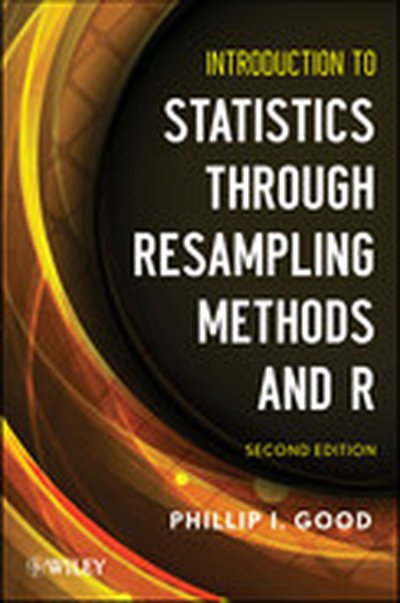
Introduction to Statistics Through Resampling Methods and R, 2nd Edition

A highly accessible alternative approach to basic statistics Praise for the First Edition: "Certainly one of the most impressive little paperback 200-page introductory statistics books that I will ever see . . . it would make a good nightstand book for every statistician."—Technometrics Written in a highly accessible style, Introduction to Statistics through Resampling Methods and R, Second Edition guides students in the understanding of descriptive statistics, estimation, hypothesis testing, and model building. The book emphasizes the discovery method, enabling readers to ascertain solutions on their own rather than simply copy answers or apply a formula by rote. The Second Edition utilizes the R programming language to simplify tedious computations, illustrate new concepts, and assist readers in completing exercises. The text facilitates quick learning through the use of: More than 250 exercises—with selected "hints"—scattered throughout to stimulate readers' thinking and to actively engage them in applying their newfound skills An increased focus on why a method is introduced Multiple explanations of basic concepts Real-life applications in a variety of disciplines Dozens of thought-provoking, problem-solving questions in the final chapter to assist readers in applying statistics to real-life applications Introduction to Statistics through Resampling Methods and R, Second Edition is an excellent resource for students and practitioners in the fields of agriculture, astrophysics, bacteriology, biology, botany, business, climatology, clinical trials, economics, education, epidemiology, genetics, geology, growth processes, hospital administration, law, manufacturing, marketing, medicine, mycology, physics, political science, psychology, social welfare, sports, and toxicology who want to master and learn to apply statistical methods.

Perception and Imaging, 4th Edition

How do you experience a photograph? What do you want a viewer to feel when they look at your image? Perception and Imaging explains how we see and what we don't see. Relevant psychological principles will help you predict your viewer's emotional reaction to your photographic images, giving you more power, control, and tools for communicating your desired message. Knowing how our minds work helps photographers, graphic designers, videographers, animators, and visual communicators both create and critique sophisticated works of visual art. Benefit from this insight in your work. Topics covered in this book: gestalt grouping, memory and association, space, time, color, contours, illusion and ambiguity, morphics, personality, subliminals, critiquing photographs, and rhetoric.

Practical Signals Theory with MATLAB Applications

is organized around applications, first introducing the actual behavior of specific signals and then using them to motivate the presentation of mathematical concepts. Tervo sequences the presentation of the major transforms by their complexity: first Fourier, then Laplace, and finally the z-transform. Practical Signals Theory with MATLAB Applications The goal is to help students who can't visualize phenomena from an equation to develop their intuition and learn to analyze signals by inspection. Finally, most examples and problems are designed to use MATLAB, making the presentation more in line with modern engineering practice.

IBM System Storage DS8000 Copy Services for IBM System z

In today’s highly competitive and real-time environment, the ability to manage all IT operations on a continuous basis makes the creation of copies and backups of data a core requirement for any IT deployment. Furthermore, it is necessary to provide proactive efficient disaster recovery strategies that can ensure continuous data availability for business operations. The Copy Services functions available with the IBM® System Storage® DS8000® are part of these strategies. This IBM Redbooks® publication helps you plan, install, configure, and manage the Copy Services functions of the DS8000 when they are used in Open System and IBM i environments. This book provides the details necessary to implement and control each of the Copy Services functions. Numerous examples illustrate how to use the various interfaces with each of the Copy Services. This book also covers the 3-site Metro/Global Mirror with Incremental Resync feature and introduces the IBM Tivoli® Storage Productivity Center for Replication solution. This book should be read with The IBM System Storage DS8000 Series: Architecture and Implementation, SG24-8886. There is also a companion book, IBM System Storage DS8000 Copy Services for IBM System z, SG24-6787, which supports the configuration of the Copy Services functions in IBM z/OS® environments.

IBM System Storage DS8000: Host Attachment and Interoperability

This IBM® Redbooks® publication addresses host attachment and interoperability considerations for the IBM System Storage® DS8000® series. Within this book, you can find information about the most popular host operating systems platforms, including Windows®, IBM AIX®, VIOS, Linux®, Solaris, HP-UX, VMware, Apple, and IBM z/OS® The topics covered in this book target administrators or other technical personnel with a working knowledge of storage systems and a general understanding of open systems. You can use this book as guidance when installing, attaching, and configuring System Storage DS8000. The practical, usage-oriented guidance provided in this book complements the IBM System Storage DS8000 Host Systems Attachment Guide, SC26-7917.

Cyberethics: Morality and Law in Cyberspace, 5th Edition

The Internet and widespread use of blogging, email, social media and e-commerce have foregrounded new, complex moral issues and dilemmas. Likewise, modern technologies and social networks have brought numerous challenges to legal systems, which have difficulty keeping up with borderless global information technologies. The fully revised and updated Fifth Edition of Cyberethics: Morality and Law in Cyberspace offers an in-depth and comprehensive examination of the social costs and moral issues emerging from ever-expanding use of the Internet and new information technologies. Focusing heavily on content control, free speech, intellectual property, and security, Cyberethics: Morality and Law in Cyberspace provides legal and philosophical discussions of these critical issues.

The updated Fifth Edition includes new sections on Floridi’s Macroethics, gatekeepers and search engines, censorship, anti-piracy legislation, patents, and smartphones. Real-life case studies, including all-new examples focusing on Google, Facebook, video games, reader’s rights, and the Lulz Sec Hackers, provide real-world context. Ideal for undergraduate computer ethics courses as well as a general readership, Cyberethics is an excellent resource for students and laypeople alike.

Key Features: •Additional and revised content on P2P networks, hacktivists, cybercrime, a user's ability to control and monitor cookies in IE, mobilization data, online surveillance, threats posed by social networking, invasive commercial initiatives, Wikileaks, and more. •Examines the threat of the Internet on our privacy as consumers and employees, with a focus on covert information gathering, the use of "Cookies" and spyware. •End-of-chapter questions and case studies encourage critical thinking •Discusses the common ethical and public policy problems that have arisen and how technology or law would propose to solve these issues •Provides an unbiased review of Internet governance regulations

Carpenter's Complete Guide to the SAS REPORT Procedure

Art Carpenter demystifies the powerful REPORT procedure and shows you how to incorporate this highly flexible and customizable procedure into your SAS reporting programs. Combining his years of SAS experience with a talent for instruction, Art offers clear and comprehensive coverage that demonstrates how valuable this procedure is for both summarizing and displaying data. Illustrated with more than two hundred examples and sample exercises to reinforce your learning, Carpenter's Complete Guide to the SAS REPORT Procedure provides you with information that you can put to immediate use. The text is divided into three distinct sections. Part 1 introduces you to PROC REPORT, showing you how it works and "thinks." This section is designed to be read linearly by users who are unfamiliar with the procedure. Part 2 is a collection of increasingly more complex examples that feature advanced options and capabilities. It also introduces the relationship between PROC REPORT and the Output Delivery System (ODS). Part 3 incorporates the options and statements described in Parts 1 and 2 into a series of examples that highlight many of the extended capabilities of PROC REPORT. Included in this section is a discussion of a few ODS statements and options that might be useful to a PROC REPORT programmer, plus an in-depth look at the PROC REPORT process itself, especially as it relates to the execution of compute blocks. Art's author page at support.sas.com/carpenter includes the following bonus material: example SAS data sets, example results, and a compilation of nearly 100 related conference papers. This book is part of the SAS Press program.

Computation and Storage in the Cloud

Computation and Storage in the Cloud is the first comprehensive and systematic work investigating the issue of computation and storage trade-off in the cloud in order to reduce the overall application cost. Scientific applications are usually computation and data intensive, where complex computation tasks take a long time for execution and the generated datasets are often terabytes or petabytes in size. Storing valuable generated application datasets can save their regeneration cost when they are reused, not to mention the waiting time caused by regeneration. However, the large size of the scientific datasets is a big challenge for their storage. By proposing innovative concepts, theorems and algorithms, this book will help bring the cost down dramatically for both cloud users and service providers to run computation and data intensive scientific applications in the cloud. Covers cost models and benchmarking that explain the necessary tradeoffs for both cloud providers and users Describes several novel strategies for storing application datasets in the cloud Includes real-world case studies of scientific research applications Covers cost models and benchmarking that explain the necessary tradeoffs for both cloud providers and users Describes several novel strategies for storing application datasets in the cloud Includes real-world case studies of scientific research applications

Developing with Couchbase Server

Today’s highly interactive websites pose a challenge for traditional SQL databases—the ability to scale rapidly and serve loads of concurrent users. With this concise guide, you’ll learn how to build web applications on top of Couchbase Server 2.0, a NoSQL database that can handle websites and social media where hundreds of thousands of users read and write large volumes of information. Using food recipe information as examples, this book demonstrates how to take advantage of Couchbase’s document-oriented database design, and how to store and query data with various CRUD operations. Discover why Couchbase is better than SQL databases with memcached tiers for managing data from the most interactive portions of your application. Learn about Couchbase Server’s cluster-based architecture and how it differs from SQL databases Choose a client library for Java, .NET, Ruby, Python, PHP, or C, and connect to a cluster Structure data in a variety of formats, from serialized objects, a stream of raw bytes, or as JSON documents Learn core storage and retrieval methods, including document IDs, expiry times, and concurrent updates Create views with map/reduce and learn Couchbase mechanisms for querying and selection

Managing Security and Compliance in Cloud or Virtualized Data Centers Using IBM PowerSC

IBM® PowerSC provides a security and compliance solution that is optimized for virtualized environments on IBM Power Systems™ servers, running IBM PowerVM® and IBM AIX®. Security control and compliance are some of the key components that are needed to defend the virtualized data center and cloud infrastructure against ever evolving new threats. The IBM business-driven approach to enterprise security used in conjunction with solutions such as PowerSC makes IBM the premier security vendor in the market today. This IBM Redbooks® deliverable helps IT and Security managers, architects, and consultants to strengthen their security and compliance posture in a virtualized environment running IBM PowerVM.

Oracle Exadata Recipes: A Problem-Solution Approach

Oracle Exadata Recipes takes an example-based, problem/solution approach in showing how to size, install, configure, manage, monitor, optimize, and migrate Oracle database workloads on and to the Oracle Exadata Database Machine. Whether you're an Oracle Database administrator, Unix/Linux administrator, storage administrator, network administrator, or Oracle developer, Oracle Exadata Recipes provides effective and proven solutions to accomplish a wide variety of tasks on the Exadata Database Machine. You can feel confident using the reliable solutions that are demonstrated in this book in your enterprise Exadata environment. Managing Oracle Exadata is unlike managing a traditional Oracle database. Oracle's Exadata Database Machine is a pre-configured engineered system comprised of hardware and software, built to deliver extreme performance for Oracle Database workloads. Exadata delivers extreme performance by offering an optimally balanced hardware infrastructure with fast components at each layer of the engineered technology stack, as well as a unique set of Oracle software features designed to leverage the high-performing hardware infrastructure by reducing I/O demands. Let Oracle Exadata Recipes help you translate your existing Oracle Database knowledge into the exciting new growth area that is Oracle Exadata. Helps extend your Oracle Database skillset to the fast-growing, Exadata platform Presents information on managing Exadata in a helpful, example-based format Clearly explains unique Exadata software and hardware features What you'll learn Install and configure Exadata Manage your Exadata hardware infrastructure Monitor and troubleshoot performance issues Manage smart scan and cell offload processing Take advantage of Hybrid Columnar Compression Deploy Smart Flash Cache and Smart Flash Logging Ensure the health of your Exadata environment Who this book is for Oracle Exadata Recipes is for Oracle Database administrators, Unix/Linux administrators, storage administrators, backup administrators, network administrators, and Oracle developers who want to quickly learn to develop effective and proven solutions without reading through a lengthy manual scrubbing for techniques. Readers in a hurry will appreciate the recipe format that sets up solutions to common tasks as the centerpiece of the book.

Using Social Media for Global Security

Essential reading for cybersecurity professionals, security analysts, policy experts, decision-makers, activists, and law enforcement! During the Arab Spring movements, the world witnessed the power of social media to dramatically shape events. Now this timely book shows government decision-makers, security analysts, and activists how to use the social world to improve security locally, nationally, and globally--and cost-effectively. Authored by two technology/behavior/security professionals, Using Social Media for Global Security offers pages of instruction and detail on cutting-edge social media technologies, analyzing social media data, and building crowdsourcing platforms. The book teaches how to collect social media data and analyze it to map the social networks of terrorists and sex traffickers, and forecast attacks and famines. You will learn how to coalesce communities through social media to help catch murderers, coordinate disaster relief, and collect intelligence about drug smuggling from hard-to-reach areas. Also highlighting dramatic case studies drawn from the headlines, this crucial book is a must-read. Illustrates linguistic, correlative, and network analysis of OSINT Examines using crowdsourcing technologies to work and engage with populations globally to solve security problems Explores how to ethically deal with social media data without compromising people's rights to privacy and freedom of expression Shows activists fighting against oppressive regimes how they can protect their identities online If you're responsible for maintaining local, national or global security, you'll want to read Using Social Media for Global Security.

Chi-Squared Goodness of Fit Tests with Applications

Chi-Squared Goodness of Fit Tests with Applications provides a thorough and complete context for the theoretical basis and implementation of Pearson’s monumental contribution and its wide applicability for chi-squared goodness of fit tests. The book is ideal for researchers and scientists conducting statistical analysis in processing of experimental data as well as to students and practitioners with a good mathematical background who use statistical methods. The historical context, especially Chapter 7, provides great insight into importance of this subject with an authoritative author team. This reference includes the most recent application developments in using these methods and models. Systematic presentation with interesting historical context and coverage of the fundamentals of the subject Presents modern model validity methods, graphical techniques, and computer-intensive methods Recent research and a variety of open problems Interesting real-life examples for practitioners

Creating Value-Based Archiving Solutions with IBM Content Collector

This IBM® Redbooks® publication describes how the IBM Content Collector family of products can help companies to create value-based archiving solutions. IBM Content Collector provides enterprise-wide content archiving and retention management capabilities. It also provides IT administrators with a high level of control over the archiving environment. From a common interface, organizations can implement policies that define what gets archived from which source system, make decisions about how content gets archived based on the content or metadata of the information, and determine the retention and governance rules associated with that type of content. Content Collector enables IT staff to implement granular archiving policies to collect and archive specific pieces of information. IBM Content Collector helps with the following tasks: Eliminating point solutions and lowering costs with a unified collection, management, and governance approach that works effectively across a broad range of source systems and information types Appraising, improving understanding of, culling, and properly selecting the information to archive Retaining, holding, and disposing of archived content efficiently and defensibly Eliminating the costs and risks inherent with over-retention This book covers the basic concepts of the IBM Content Collector product family. It presents an overview explaining how it provides value-based archiving and a defensible disposal capability in the archiving solutions. With the integration of IBM Content Classification and IBM Enterprise Records, the book also explains and showcases how these products can be used to add more flexibility, power, and capabilities to archiving solutions. The book is intended for IT architects and solution designers who need to understand and use IBM Content Collector for archiving solution implementations. Use cases are included to provide specific, step-by-step details about implementing common solutions that fulfill some of the general business requirements.

Agile SAP: Introducing flexibility, transparency and speed to SAP implementations

Invaluable practical advice Many SAP projects use waterfall methodologies, but these often run into budgeting and scheduling problems. In this unique book, Sean Robson presents ways of improving SAP implementations and offers practical advice on the most effective way to see a project through from beginning to end. Basing his strategies on the twelve principles of the Agile Manifesto, and drawing on his vast experience, he particularly focuses on the use of Scrum and Kanban and their suitability for certain types of projects, enabling you to select the most appropriate method for the task in hand. Apply it to your projects As you read this book, you will understand how to: " Bring your SAP projects in on time and within budget Build more flexibility and transparency in to your implementations, enabling you to adapt more quickly to your clients' needs Realize cost savings as you analyze your expenditure, reduce waste and increase efficiencies in the delivery cycle Increase customer loyalty as you adopt 'best practice' in order to maintain consistently high standards Work more effectively as you increase collaboration within the company and reduce the stress that so often accompanies large-scale projects Improve clarity of requirements and eliminate unnecessary paperwork.

A First Course in Probability and Markov Chains

Provides an introduction to basic structures of probability with a view towards applications in information technology A First Course in Probability and Markov Chains presents an introduction to the basic elements in probability and focuses on two main areas. The first part explores notions and structures in probability, including combinatorics, probability measures, probability distributions, conditional probability, inclusion-exclusion formulas, random variables, dispersion indexes, independent random variables as well as weak and strong laws of large numbers and central limit theorem. In the second part of the book, focus is given to Discrete Time Discrete Markov Chains which is addressed together with an introduction to Poisson processes and Continuous Time Discrete Markov Chains. This book also looks at making use of measure theory notations that unify all the presentation, in particular avoiding the separate treatment of continuous and discrete distributions. A First Course in Probability and Markov Chains: Presents the basic elements of probability. Explores elementary probability with combinatorics, uniform probability, the inclusion-exclusion principle, independence and convergence of random variables. Features applications of Law of Large Numbers. Introduces Bernoulli and Poisson processes as well as discrete and continuous time Markov Chains with discrete states. Includes illustrations and examples throughout, along with solutions to problems featured in this book. The authors present a unified and comprehensive overview of probability and Markov Chains aimed at educating engineers working with probability and statistics as well as advanced undergraduate students in sciences and engineering with a basic background in mathematical analysis and linear algebra.

Big Data, Big Analytics: Emerging Business Intelligence and Analytic Trends for Today's Businesses

Unique prospective on the big data analytics phenomenon for both business and IT professionals The availability of Big Data, low-cost commodity hardware and new information management and analytics software has produced a unique moment in the history of business. The convergence of these trends means that we have the capabilities required to analyze astonishing data sets quickly and cost-effectively for the first time in history. These capabilities are neither theoretical nor trivial. They represent a genuine leap forward and a clear opportunity to realize enormous gains in terms of efficiency, productivity, revenue and profitability. The Age of Big Data is here, and these are truly revolutionary times. This timely book looks at cutting-edge companies supporting an exciting new generation of business analytics. Learn more about the trends in big data and how they are impacting the business world (Risk, Marketing, Healthcare, Financial Services, etc.) Explains this new technology and how companies can use them effectively to gather the data that they need and glean critical insights Explores relevant topics such as data privacy, data visualization, unstructured data, crowd sourcing data scientists, cloud computing for big data, and much more.