talk-data.com talk-data.com

Topic

data

5765

tagged

Activity Trend

3 peak/qtr
2020-Q1 2026-Q1

Activities

5765 activities · Newest first

Data Visualization: a successful design process

Dive into the world of data visualization with 'Data Visualization: a Successful Design Process'. Learn to convert complex datasets into vivid, insightful visuals using proven design methodologies and tools. This resource equips you to craft visuals that not only engage your audience but also uncover critical trends and narratives hidden in data. What this Book will help me do Master the fundamentals of visualization taxonomy to choose the ideal design for your data. Develop analytical questions and identify key narratives to structure your data representation. Understand the human visual system and how it impacts effective visual communication. Apply critical thinking to select visualization techniques suited to different data types. Gain an in-depth knowledge of data visualization tools and contemporary practices. Author(s) The author of this book is a seasoned expert in the field of data visualization, known for their innovative approach to transforming data into impactful visuals. With years of experience navigating the intersection of data science and design, their method focuses on empowering professionals to communicate insights effectively. Their writing combines a deep understanding of technical skills with actionable, inspiring guidance. Who is it for? This book is perfect for professionals, analysts, and designers who aim to improve their data visualization skills. Whether you are a beginner or an experienced individual seeking to refine your approach, this book caters to all skill levels. If your goal includes communicating data insights clearly and effectively to varied audiences, this book is for you.

SAP ABAP Advanced Cookbook

Dive into the advanced features of SAP programming with the 'SAP ABAP Advanced Cookbook'. This comprehensive guide includes over 80 sophisticated recipes, designed to enhance your understanding and application of ABAP programming. Whether you're mastering design patterns, optimizing performance, or exploring the latest in Adobe Interactive Forms, this book empowers you with practical skills and real-world examples. What this Book will help me do Explore advanced techniques in Web Dynpro programming to build robust SAP applications. Improve SAP program performance using tools like transaction SAT and SQL Trace. Master design patterns and advanced Object-Oriented ABAP concepts. Learn to create and utilize Simple Transformations and Web Services effectively. Gain expertise in Adobe Interactive Forms and their integration into SAP workflows. Author(s) Rehan Zaidi is an experienced SAP professional specializing in ABAP programming. With years of consultancy and development experience, Rehan has a passion for creating practical solutions to complex problems. His book reflects his hands-on expertise and teaching approach, enriched with many real-world examples and step-by-step guides. Who is it for? This book is ideal for ABAP developers and SAP consultants seeking to advance their programming skills. If you are familiar with ABAP programming fundamentals and are looking to apply more sophisticated techniques and skills to real-world SAP projects, this book will serve as a valuable resource. Whether you're aiming to optimize performance, work with dynamic programming, or integrate advanced forms into your applications, this book provides clear, actionable insights to help you achieve your goals.

The R Book, 2nd Edition

Hugely successful and popular text presenting an extensive and comprehensive guide for all R users The R language is recognized as one of the most powerful and flexible statistical software packages, enabling users to apply many statistical techniques that would be impossible without such software to help implement such large data sets. R has become an essential tool for understanding and carrying out research. This edition: Features full colour text and extensive graphics throughout. Introduces a clear structure with numbered section headings to help readers locate information more efficiently. Looks at the evolution of R over the past five years. Features a new chapter on Bayesian Analysis and Meta-Analysis. Presents a fully revised and updated bibliography and reference section. Is supported by an accompanying website allowing examples from the text to be run by the user. Praise for the first edition: '...if you are an R user or wannabe R user, this text is the one that should be on your shelf. The breadth of topics covered is unsurpassed when it comes to texts on data analysis in R.' (The American Statistician, August 2008) 'The High-level software language of R is setting standards in quantitative analysis. And now anybody can get to grips with it thanks to The R Book...' ( Professional Pensions, July 2007)

Building Node Applications with MongoDB and Backbone

Build an application from backend to browser with Node.js, and kick open the doors to real-time event programming. With this hands-on book, you’ll learn how to create a social network application similar to LinkedIn and Facebook, but with a real-time twist. And you’ll build it with just one programming language: JavaScript. If you’re an experienced web developer unfamiliar with JavaScript, the book’s first section introduces you to the project’s core technologies: Node.js, Backbone.js, and the MongoDB data store. You’ll then launch into the project—a highly responsive, highly scalable application—guided by clear explanations and lots of code examples. Learn about key modules in Node.js for building real-time apps Use the Backbone.js framework to write clean browser code, and maintain better data integration with MongoDB Structure project files as a foundation for code that will arrive later Create user accounts and learn how to secure the data Use Backbone.js templates to build the application’s UIs, and integrate access control with Node.js Develop a contact list to help users link to and track other accounts Use Socket.io to create real-time chat functionality Extend your UIs to give users up-to-the-minute information

View Updating and Relational Theory

Views are virtual tables. That means they should be updatable, just as "real" or base tables are. In fact, view updatability isn’t just desirable, it’s crucial, for practical reasons as well as theoretical ones. But view updating has always been a controversial topic. Ever since the relational model first appeared, there has been widespread skepticism as to whether (in general) view updating is even possible. In stark contrast to this conventional wisdom, this book shows how views, just like base tables, can always be updated (so long as the updates don’t violate any integrity constraints). More generally, it shows how updating always ought to work, regardless of whether the target is a base table or a view. The proposed scheme is 100% consistent with the relational model, but rather different from the way updating works in SQL products today. This book can: Help database products improve in the future Help with a "roll your own" implementation, absent such product improvements Make you aware of the crucial role of predicates and constraints Show you how relational products are really supposed to behave Anyone with a professional interest in the relational model, relational technology, or database systems in general can benefit from this book.

IBM System Storage DS5000 Series Implementation and Best Practices Guide

This IBM® Redbooks® publication represents a compilation of best practices for deploying and configuring the IBM System Storage® DS5000 Series family of products. This book is intended for IBM technical professionals, Business Partners, and customers responsible for the planning, deployment, and maintenance of the IBM System Storage DS5000 Series family of products. We realize that setting up DS5000 Storage Servers can be a complex task. There is no single configuration that will be satisfactory for every application or situation. First, we provide a conceptual framework for understanding the hardware in a Storage Area Network. Then, we offer our guidelines, hints, and tips for the physical installation, cabling, and zoning, using the Storage Manager setup tasks. Next, we provide a quick guide to help you install and configure the DS5000 using best practices. After that, we turn our attention to the performance and tuning of various components and features, including numerous guidelines. We look at performance implications for various application products such as IBM DB2®, Oracle, IBM Tivoli® Storage Manager, Microsoft SQL server, and in particular, Microsoft Exchange server. Then we review the various tools available to simulate workloads and to measure, collect, and analyze performance data. We also consider the IBM AIX® environment, including IBM High Availability Cluster Multiprocessing (HACMP™) and IBM General Parallel File System (GPFS™). This edition of the book also includes guidelines for managing and using the DS5000 with the IBM System Storage SAN Volume Controller (SVC) and IBM Storwize® V7000.

Custom Tasks for SAS Enterprise Guide Using Microsoft .NET
Have you ever used SAS Enterprise Guide and found yourself wishing that it had that one specific feature, something that you know would make it the perfect tool for your work or industry? You don't have to settle for just the "out of the box" features; you can add your own capabilities with SAS custom tasks!

Chris Hemedinger's new book takes you step-by-step through the process of creating custom tasks for use in SAS Enterprise Guide and SAS Add-In for Microsoft Office. Using standard off-the-shelf development tools for Microsoft .NET, you'll learn how you can hook in your custom processes and make them available to a wide range of SAS users. In the first part of the book, you'll learn how to use the development environment and the programming interfaces provided by SAS to create, test, and deploy new custom tasks. You'll learn about the services that the SAS Enterprise Guide framework offers, including data access, the ability to run SAS programs, and integration of your custom results into a SAS Enterprise Guide project.

In the second part of the book, Hemedinger provides a variety of useful, field-tested and ready-to-run examples—complete with C# and Visual Basic .NET source code. Each example highlights different programming techniques that you can apply immediately within your own custom tasks. The book also addresses important aspects of .NET programming, such as debugging, exception handling, threading models, and user interface design.

This book is part of the SAS Press program.

Encyclopedia of Financial Models I

An essential reference dedicated to a wide array of financial models, issues in financial modeling, and mathematical and statistical tools for financial modeling The need for serious coverage of financial modeling has never been greater, especially with the size, diversity, and efficiency of modern capital markets. With this in mind, the Encyclopedia of Financial Models, 3 Volume Set has been created to help a broad spectrum of individuals—ranging from finance professionals to academics and students—understand financial modeling and make use of the various models currently available. Incorporating timely research and in-depth analysis, the Encyclopedia of Financial Models is an informative 3-Volume Set that covers both established and cutting-edge models and discusses their real-world applications. Edited by Frank Fabozzi, this set includes contributions from global financial experts as well as academics with extensive consulting experience in this field. Organized alphabetically by category, this reliable resource consists of three separate volumes and 127 entries—touching on everything from asset pricing and bond valuation models to trading cost models and volatility—and provides readers with a balanced understanding of today's dynamic world of financial modeling. This 3-Volume Set contains coverage of the fundamentals and advances in financial modeling and provides the mathematical and statistical techniques needed to develop and test financial models Emphasizes both technical and implementation issues, providing researchers, educators, students, and practitioners with the necessary background to deal with issues related to financial modeling Each volume includes a complete table of contents and index for easy access to various parts of the encyclopedia Financial models have become increasingly commonplace, as well as complex. They are essential in a wide range of financial endeavors, and this 3-Volume Set will help put them in perspective.

Encyclopedia of Financial Models II

An essential reference dedicated to a wide array of financial models, issues in financial modeling, and mathematical and statistical tools for financial modeling The need for serious coverage of financial modeling has never been greater, especially with the size, diversity, and efficiency of modern capital markets. With this in mind, the Encyclopedia of Financial Models, 3 Volume Set has been created to help a broad spectrum of individuals—ranging from finance professionals to academics and students—understand financial modeling and make use of the various models currently available. Incorporating timely research and in-depth analysis, the Encyclopedia of Financial Models is an informative 3-Volume Set that covers both established and cutting-edge models and discusses their real-world applications. Edited by Frank Fabozzi, this set includes contributions from global financial experts as well as academics with extensive consulting experience in this field. Organized alphabetically by category, this reliable resource consists of three separate volumes and 127 entries—touching on everything from asset pricing and bond valuation models to trading cost models and volatility—and provides readers with a balanced understanding of today's dynamic world of financial modeling. This 3-Volume Set contains coverage of the fundamentals and advances in financial modeling and provides the mathematical and statistical techniques needed to develop and test financial models Emphasizes both technical and implementation issues, providing researchers, educators, students, and practitioners with the necessary background to deal with issues related to financial modeling Each volume includes a complete table of contents and index for easy access to various parts of the encyclopedia Financial models have become increasingly commonplace, as well as complex. They are essential in a wide range of financial endeavors, and this 3-Volume Set will help put them in perspective.

Implementing CDISC Using SAS
For decades researchers and programmers have used SAS to analyze, summarize, and report clinical trial data. Now Chris Holland and Jack Shostak have written the first comprehensive book on applying clinical research data and metadata to the Clinical Data Interchange Standards Consortium (CDISC) standards.

Implementing CDISC Using SAS: An End-to-End Guide is an all-inclusive guide on how to implement and analyze Study Data Tabulation Model (SDTM) and Analysis Data Model (ADaM) data and prepare clinical trial data for regulatory submissions. Topics covered include creating and using metadata, developing conversion specifications, implementing and validating SDTM and ADaM data, determining solutions for legacy data conversions, and preparing data for regulatory submission. The book covers products such as Base SAS, SAS Clinical Data Integration, and the SAS Clinical Standards Toolkit, as well as JMP Clinical.

Anyone dealing with CDISC standards--including SAS or JMP programmers, statisticians, and data managers in the pharmaceutical, biotechnology, or medical device industries--will find the philosophical best practices and implementation examples in this book invaluable.

This book is part of the SAS Press program.

Expert MySQL, Second Edition

Expert MySQL is the leading reference for learning, understanding, and extending the MySQL server. It unlocks the full promise of open source by showing how to modify the code, create your own storage engine, build your own authentication plugins, and even add your own functions and commands to the SQL language. No other book provides the level of detail or the extensive examples of the inner workings of MySQL that have taken engineers years to master. Expert MySQL is a must have book for all systems integrators, engineers, and software developers working with the MySQL server code. Expert MySQL is also a wealth of information on key aspects of MySQL internals. You'll learn about internal query representation, how the optimizer creates execution plans, and how to exert control over those plans for optimal performance in your environment. You'll even learn to build your own query optimizer, giving insight that can help you understand and resolve tough performance problems. High-availability and replication are also covered, making Expert MySQL a must-have book for anyone doing high-end work involving MySQL. Shows how to customize MySQL and its storage and authentication engines Provides in-depth knowledge of internals for use in query tuning and performance troubleshooting Covers high-end features such as high-availability and replication What you'll learn Learn the inner workings of MySQL Diagnose and improve poorly performing queries Implement high-availablity solutions and replication Modify and debug the server code Build your own pluggable storage engines and authentication modules Implement new SQL functions and syntax Build your own query optimizer Who this book is for Expert MySQL is written for systems integrators, software developers, and database administrators who are using MySQL and desire a deeper knowledge of MySQL internals in support of high-end work such as performance troubleshooting, customization of the engine and its plugins, query optimizaion, building of high-availability environments, replication of data, and so forth.

Understanding and Applying Research Design

A fresh approach to bridging research design with statistical analysis While good social science requires both research design and statistical analysis, most books treat these two areas separately. Understanding and Applying Research Design introduces an accessible approach to integrating design and statistics, focusing on the processes of posing, testing, and interpreting research questions in the social sciences. The authors analyze real-world data using SPSS software, guiding readers on the overall process of science, focusing on premises, procedures, and designs of social scientific research. Three clearly organized sections move seamlessly from theoretical topics to statistical techniques at the heart of research procedures, and finally, to practical application of research design: Premises of Research introduces the research process and the capabilities of SPSS, with coverage of ethics, Empirical Generalization, and Chi Square and Contingency Table Analysis Procedures of Research explores key quantitative methods in research design including measurement, correlation, regression, and causation Designs of Research outlines various design frameworks, with discussion of survey research, aggregate research, and experiments Throughout the book, SPSS software is used to showcase the discussed techniques, and detailed appendices provide guidance on key statistical procedures and tips for data management. Numerous exercises allow readers to test their comprehension of the presented material, and a related website features additional data sets and SPSS code. Understanding and Applying Research Design is an excellent book for social sciences and education courses on research methods at the upper-undergraduate level. The book is also an insightful reference for professionals who would like to learn how to pose, test, and interpret research questions with confidence.

Training Kit (Exam 70-461): Querying Microsoft® SQL Server® 2012

Ace your preparation for Microsoft Certification Exam 70-461 with this 2-in-1 Training Kit from Microsoft Press. Work at your own pace through a series of lessons and practical exercises, and then assess your skills with practice tests on CD–featuring multiple, customizable testing options. Maximize your performance on the exam by learning how to: Create database objects Work with data Modify data Troubleshoot and optimize queries For customers who purchase an ebook version of this title, instructions for downloading the CD files can be found in the ebook.

Oracle E-Business Suite Financials Handbook 3/E, 3rd Edition

Implement the Full Spectrum of Oracle E-Business Suite Financial Applications Maintain an integrated, customer-focused financial computing framework that meets global business requirements while lowering total cost of ownership. Oracle E-Business Suite Financials Handbook, Third Edition offers fully updated coverage of the latest applications and modules. Find out how to enforce robust accounting rules, establish workflow, manage invoices and inventory, create budgets and forecasts, and secure your corporate assets. This Oracle Press guide thoroughly explains how to deploy custom Web applications, automate tax reporting, and incorporate Oracle Fusion Applications. Centralize financial data with Oracle General Ledger and Oracle Subledger Accounting Track invoices and payments through Oracle Receivables and Oracle Payables Forecast cash requirements and manage portfolios with Oracle Treasury Increase liquidity and profitability using Oracle Cash Management Establish asset depreciation schedules and handle leases and warranty information with Oracle Assets Use Oracle Purchasing and Oracle Inventory to optimize supply chain efficiency Handle procurement and billing information using Oracle Projects and Oracle Order Management Employ the all-new Oracle E-Business Tax and Oracle Landed Cost Management Leverage Oracle Fusion Applications in a co-existence strategy with Oracle E-Business Suite Financials Implement an end-to-end disaster recovery strategy

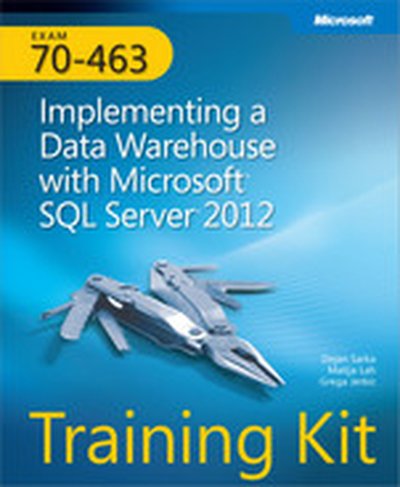
Training Kit (Exam 70-463): Implementing a Data Warehouse with Microsoft SQL Server 2012

Ace your preparation for Microsoft® Certification Exam 70-463 with this 2-in-1 Training Kit from Microsoft Press®. Work at your own pace through a series of lessons and practical exercises, and then assess your skills with online practice tests—featuring multiple, customizable testing options. Maximize your performance on the exam by learning how to: Design and implement a data warehouse Develop and enhance SQL Server Integration Services packages Manage and maintain SQL Server Integration Services packages Build data quality solutions Implement custom code in SQL Server Integration Services packages

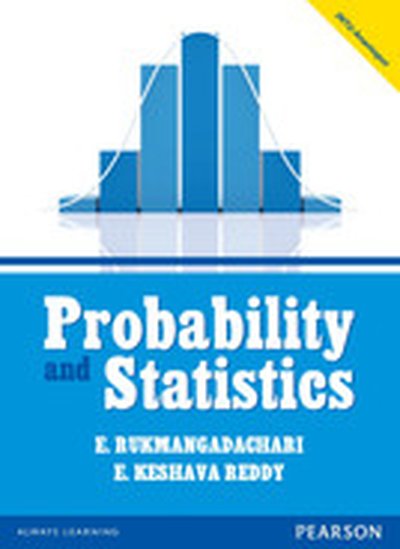
Probability and Statistics by Pearson

This book is designed for engineering students studying the core paper on probability and statistics during their second or third years. It includes detailed explanation of theory with numerous examples and exercises, as well as relevant references to engineering applications. Each also has numerous objective type questions and answers and hints are provided for all the exercise problems and objective type questions.

Book Contents –

  1. Probability
  2. Probability Distribution
  3. Special Distribution
  4. Sampling Distributions
  5. Estimation Theory
  6. Inferences Concerning Means and Proportions
  7. Tests of Significance
  8. Curve Fitting: Regression and Correlation Analysis
  9. Analysis of Variance
  10. Statistical Quality Control
  11. Queueing Theory Appendix A: Test Based on Normal Distributions Appendix B: Statistical Tables Appendix C: Basic Results Additional Solved Problems Index
Web Technology, Theory and Practice

This book introduces the keyset technologies that are currently used to create applications on web. It explains the principal HTML concept, the client-side used JavaScript and the server-side used JSP with relevant coding examples. Emphasis is given on XML with examples including XML Transformations (XSTL). Apart from this, the book also dwells into the alternatives to XML such as the JSON.

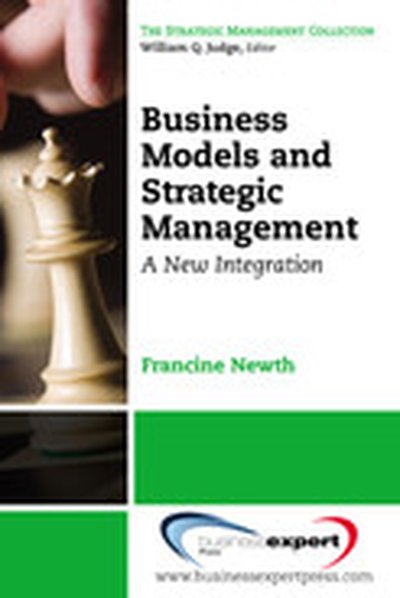
Business Models and Strategic Management

Finally, a book comes along that provides a unique yet simple and powerful approach to understand the business model and the critical role strategic management has in supporting it. Its value is in business model thinking. It brings you a combination of the best contributions of academe and industry that will help build business model-centric organizations. Inside, you’ll learn about strategy from a business model perspective. What does that mean? It means that you’ll first have to think rigorously about your value proposition; your current or future competencies; and your revenue streams and cost structure before developing, adopting, or modifying your strategies. What is the difference between a business model and a strategy? A business model is how a company operates, and a strategy is how a company competes. When the basis of competition changes because a new model disrupts the economics in the industry, it requires an adjustment in business models before any new strategy can work. This book adds a business model level to the traditional strategic management process that is more consistent with current “real-world” practices in strategic thinking and analysis. It takes you deeper into the intricacies of what constitutes a business model and how current strategy derives from it, and offers 7 modules that will show you the key components to manage your business model, to help conduct business model analysis, and to assess the financial viability of a business model, just to name a few.

IBM zEnterprise EC12 Technical Introduction

In a smarter planet, information-centric processes are exploding in growth. The mainframe has always been the IT industry's leading platform for transaction processing, consolidated and secure data serving, and support for available enterprise-wide applications. IBM® has extended the mainframe platform to help large enterprises reshape their client experiences through information-centric computing and to deliver on key business initiatives. IBM zEnterprise® is recognized as the most reliable and trusted system, and the most secure environment for core business operations. The new zEnterprise System consists of the IBM zEnterprise EC12 (zEC12), an updated IBM zEnterprise Unified Resource Manager, and the IBM zEnterprise BladeCenter® Extension (zBX) Model 003. This IBM Redbooks® publication describes the zEC12, with its improved scalability, performance, security, resiliency, availability, and virtualization. The zEC12 has no peer as a trusted platform that also provides the most efficient transaction processing and database management. With efficiency at scale delivering significant cost savings on core processes, resources can be freed up to focus on developing new services to drive growth. This book provides a technical overview of the zEC12, zBX Model 003, and Unified Resource Manager. This publication is intended for IT managers, architects, consultants, and anyone else who wants to understand the elements of the zEnterprise System. For this introduction to the zEC12, readers are not expected to be familiar with current IBM System z® technology and terminology.

Pro SQL Database for Windows Azure: SQL Server in the Cloud, Second Edition

Pro SQL Database for Windows Azure, 2nd Edition shows how to create enterprise-level database deployments without the usual investment in datacenter and other infrastructure. Take advantage instead of Microsoft's worldwide backbone for cloud computing that delivers all the power of SQL Server in the form of the cloud-based SQL Database for Windows Azure. You can create and deploy a database in mere minutes that is accessible worldwide and takes advantage of SQL Database's high-availability features to protect your data while ensuring 99.9% uptime. SQL Azure is ideally suited for startups, who can benefit from instant access to a robust and secure web-accessible database platform for use in rapidly deploying new products to market. SQL Azure is also ideal for small and mid-sized businesses, giving them the same ability to deploy SQL Server as any large enterprise, but without the management overhead. Even large enterprises find SQL Azure useful in creating failover environments, development environments, extra capacity to handle surges in demand, and more. Pro SQL Database for Windows Azure covers the very latest in Microsoft's fast-moving, cloud platform, showing how to program and administer it in a variety of cloud computing scenarios. You'll learn to program SQL Azure from ASP.NET, from WinForms, and from SQL Reporting Services. You'll learn to manage the platform by planning for scalability, troubleshooting performance issues, and implementing strong security. You'll learn the unique aspects of SQL Azure such as sharding and federation support that combine to place SQL Azure a step above and ahead of the competiton. Shows how to use SQL Azure from classic Windows applications, ASP.NET and Windows Communication Foundation Covers management, performance, scalability, and troubleshooting Addresses the all-important issue of securing your data Helps you properly design for high-performance in a cloud environment Helps you adopt the new Federations feature in SQL Azure What you'll learn Create and manage SQL Database for Windows Azure databases Access SQL Azure from WinForms, ASP.NET, Reporting Services, and more Optimize database design for Azure's distributed cloud platform Share data between databases using SQL Database's Data Synch Service Secure data from intrusion and unauthorized access Learn strategies for data migration and backup Who this book is for Pro SQL Database for Windows Azure, 2nd Edition is aimed at developers and database administrators desiring instant access to a fully-capable SQL Server database environment without the pain of sorting out and managing the physical infrastructure.