talk-data.com talk-data.com

Topic

data

5765

tagged

Activity Trend

3 peak/qtr
2020-Q1 2026-Q1

Activities

5765 activities · Newest first

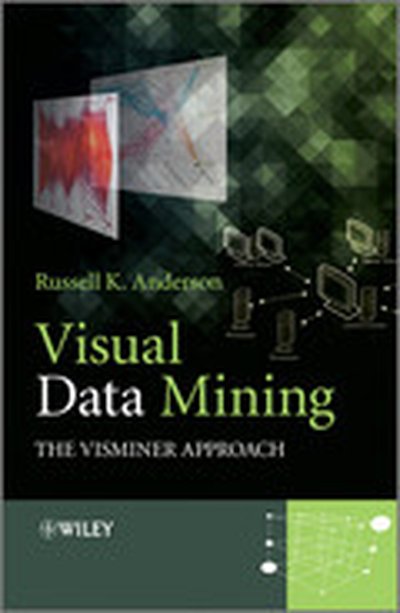
Visual Data Mining: The VisMiner Approach, 2nd Edition

A visual approach to data mining. Data mining has been defined as the search for useful and previously unknown patterns in large datasets, yet when faced with the task of mining a large dataset, it is not always obvious where to start and how to proceed. This book introduces a visual methodology for data mining demonstrating the application of methodology along with a sequence of exercises using VisMiner. VisMiner has been developed by the author and provides a powerful visual data mining tool enabling the reader to see the data that they are working on and to visually evaluate the models created from the data. Key features: Presents visual support for all phases of data mining including dataset preparation. Provides a comprehensive set of non-trivial datasets and problems with accompanying software. Features 3-D visualizations of multi-dimensional datasets. Gives support for spatial data analysis with GIS like features. Describes data mining algorithms with guidance on when and how to use. Accompanied by VisMiner, a visual software tool for data mining, developed specifically to bridge the gap between theory and practice. Visual Data Mining: The VisMiner Approach is designed as a hands-on work book to introduce the methodologies to students in data mining, advanced statistics, and business intelligence courses. This book provides a set of tutorials, exercises, and case studies that support students in learning data mining processes. In praise of the VisMiner approach: "What we discovered among students was that the visualization concepts and tools brought the analysis alive in a way that was broadly understood and could be used to make sound decisions with greater certainty about the outcomes"—Dr. James V. Hansen, J. Owen Cherrington Professor, Marriott School, Brigham Young University, USA "Students learn best when they are able to visualize relationships between data and results during the data mining process. VisMiner is easy to learn and yet offers great visualization capabilities throughout the data mining process. My students liked it very much and so did I." —Dr. Douglas Dean, Assoc. Professor of Information Systems, Marriott School, Brigham Young University, USA
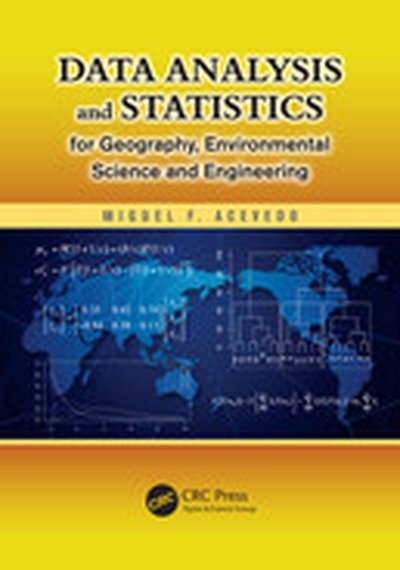
Data Analysis and Statistics for Geography, Environmental Science, and Engineering

Providing a solid foundation for twenty-first-century scientists and engineers, Data Analysis and Statistics for Geography, Environmental Science, and Engineering guides readers in learning quantitative methodology, including how to implement data analysis methods using open-source software. Given the importance of interdisciplinary work in sustainability, the book brings together principles of statistics and probability, multivariate analysis, and spatial analysis methods applicable across a variety of science and engineering disciplines. Learn How to Use a Variety of Data Analysis and Statistics Methods Based on the author’s many years of teaching graduate and undergraduate students, this textbook emphasizes hands-on learning. Organized into two parts, it allows greater flexibility using the material in various countries and types of curricula. The first part covers probability, random variables and inferential statistics, applications of regression, time series analysis, and analysis of spatial point patterns. The second part uses matrix algebra to address multidimensional problems. After a review of matrices, it delves into multiple regression, dependent random processes and autoregressive time series, spatial analysis using geostatistics and spatial regression, discriminant analysis, and a variety of multivariate analyses based on eigenvector methods. Build from Fundamental Concepts to Effective Problem Solving Each chapter starts with conceptual and theoretical material to give a firm foundation in how the methods work. Examples and exercises illustrate the applications and demonstrate how to go from concepts to problem solving. Hands-on computer sessions allow students to grasp the practical implications and learn by doing. Throughout, the computer examples and exercises use seeg and RcmdrPlugin.seeg, open-source R packages developed by the author, which help students acquire the skills to implement and conduct analysis and to analyze the results. This self-contained book offers a unified presentation of data analysis methods for more effective problem solving. With clear, easy-to-follow explanations, the book helps students to develop a solid understanding of basic statistical analysis and prepares them for learning the more advanced and specialized methods they will need in their work.

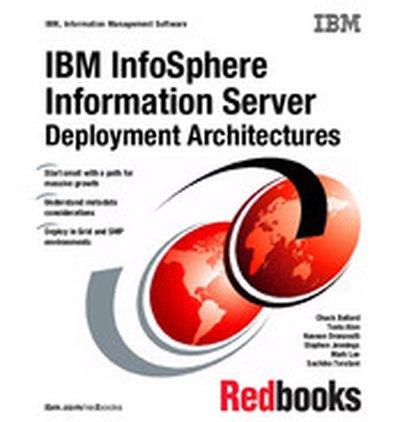
IBM InfoSphere Information Server Deployment Architectures

Typical deployment architectures introduce challenges to fully using the shared metadata platform across products, environments, and servers. Data privacy and information security requirements add even more levels of complexity. IBM® InfoSphere® Information Server provides a comprehensive, metadata-driven platform for delivering trusted information across heterogeneous systems. This IBM Redbooks® publication presents guidelines and criteria for the successful deployment of InfoSphere Information Server components in typical logical infrastructure topologies that use shared metadata capabilities of the platform, and support development lifecycle, data privacy, information security, high availability, and performance requirements. This book can help you evaluate information requirements to determine an appropriate deployment architecture, based on guidelines that are presented here, and that can fulfill specific use cases. It can also help you effectively use the functionality of your Information Server product modules and components to successfully achieve your business goals. This book is for IT architects, information management and integration specialists, and system administrators who are responsible for delivering the full suite of information integration capabilities of InfoSphere Information Server.

IBM Platform Computing Solutions

This IBM® Platform Computing Solutions Redbooks® publication is the first book to describe each of the available offerings that are part of the IBM portfolio of Cloud, analytics, and High Performance Computing (HPC) solutions for our clients. This IBM Redbooks publication delivers descriptions of the available offerings from IBM Platform Computing that address challenges for our clients in each industry. We include a few implementation and testing scenarios with selected solutions. This publication helps strengthen the position of IBM Platform Computing solutions with a well-defined and documented deployment model within an IBM System x® environment. This deployment model offers clients a planned foundation for dynamic cloud infrastructure, provisioning, large-scale parallel HPC application development, cluster management, and grid applications. This IBM publication is targeted to IT specialists, IT architects, support personnel, and clients. This book is intended for anyone who wants information about how IBM Platform Computing solutions use IBM to provide a wide array of client solutions.

MapReduce Design Patterns

Until now, design patterns for the MapReduce framework have been scattered among various research papers, blogs, and books. This handy guide brings together a unique collection of valuable MapReduce patterns that will save you time and effort regardless of the domain, language, or development framework you’re using. Each pattern is explained in context, with pitfalls and caveats clearly identified to help you avoid common design mistakes when modeling your big data architecture. This book also provides a complete overview of MapReduce that explains its origins and implementations, and why design patterns are so important. All code examples are written for Hadoop. Summarization patterns: get a top-level view by summarizing and grouping data Filtering patterns: view data subsets such as records generated from one user Data organization patterns: reorganize data to work with other systems, or to make MapReduce analysis easier Join patterns: analyze different datasets together to discover interesting relationships Metapatterns: piece together several patterns to solve multi-stage problems, or to perform several analytics in the same job Input and output patterns: customize the way you use Hadoop to load or store data "A clear exposition of MapReduce programs for common data processing patterns—this book is indespensible for anyone using Hadoop." --Tom White, author of Hadoop: The Definitive Guide

Enterprise Search

Is your organization rapidly accumulating more information than you know how to manage? This book helps you create an enterprise search solution based on more than just technology. Author Martin White shows you how to plan and implement a managed search environment that meets the needs of your business and your employees. Learn why it’s vital to have a dedicated staff manage your search technology and support your users. In one survey, 93% of executives said their organization is losing revenue because they’re not fully able to use the information they collect. With this book, business managers, IT managers, and information professionals can maximize the value of corporate information and data assets. Use 12 critical factors to gauge your organization’s search needs Learn how to make a business case for search Research your user requirements and evaluate your current search solution Create a support team with technical skills and organizational knowledge to manage your solution Set quality guidelines for organizational content and metadata Get an overview of open source and commercial search technology Choose an application based on your requirements, not for its features Make mobile and location-independent search part of your solution

IBM Intelligent Operations Center for Smarter Cities Administration Guide

IBM® defines a smarter city as one that makes optimal use of all available information to better understand and control its operations and optimize the use of resources. There is much information available from different sources. However, city officials often lack the holistic view of the city's operations that is required to respond to the citizens' needs in a timely manner and use the city resources wisely. IBM Intelligent Operations Center delivers a unified view of city agencies, providing three primary elements for successful management of cities: use information, anticipate problems, and coordinate actions and resources. Chapter 1 of this IBM Redbooks® publication introduces the IBM Intelligent Operations Center solution. The chapter provides a high-level overview of its features, benefits, and architecture. This information is intended for city officials and IT architects that must understand the business value of IBM Intelligent Operations Center and its architecture. The remaining chapters of this book focus on information that help IBM Intelligent Operations Center administrators perform daily administration tasks. This book describes commands and tools that IBM Intelligent Operations Center administrators must use to keep the solution running, troubleshoot and diagnose problems, and perform preventive maintenance. This book includes preferred practices, tips and techniques, and general suggestions for administrators of IBM Intelligent Operations Center on-premises deployments. For related information about this topic, refer to the following IBM Redbooks publications: IBM Intelligent Operations Center for Smarter Cities Redpaper, REDP-4939 IBM Intelligent Operations Center for Smarter Cities Solution Guide

Big Data Analytics: Turning Big Data into Big Money

Unique insights to implement big data analytics and reap big returns to your bottom line Focusing on the business and financial value of big data analytics, respected technology journalist Frank J. Ohlhorst shares his insights on the newly emerging field of big data analytics in Big Data AnalyticsM. This breakthrough book demonstrates the importance of analytics, defines the processes, highlights the tangible and intangible values and discusses how you can turn a business liability into actionable material that can be used to redefine markets, improve profits and identify new business opportunities. Reveals big data analytics as the next wave for businesses looking for competitive advantage Takes an in-depth look at the financial value of big data analytics Offers tools and best practices for working with big data Once the domain of large on-line retailers such as eBay and Amazon, big data is now accessible by businesses of all sizes and across industries. From how to mine the data your company collects, to the data that is available on the outside, Big Data Analytics shows how you can leverage big data into a key component in your business's growth strategy.

Knight's Microsoft SQL Server 2012 Integration Services 24-Hour Trainer

Book-and-video package gets novices up to speed on Microsoft SQL Server 2012 If you need a practical, hands-on introduction, especially to SQL Server Integration Services (SSIS), this book-and-video package from authority Brian Knight is the perfect solution. Each lesson includes three major components: a description of how each SSIS feature or process works, a tutorial that walks you through the process or technique, and an accompanying video lesson. It's a complete learning package that will give you the confidence you need to start your first SSIS project. Guides novice database administrators and developers who are learning Microsoft SQL Server 2012 and SQL Server Integration Services (SSIS) Provides expert instruction from leading SQL Server authority and author, Brian Knight Includes a book and a video, complete instruction that includes lessons, hands-on tutorials, and video demonstrations by the author Covers the very latest changes and updates in the SQL Server 2012 release Microsoft SQL Server 2012 Integration Services 24-Hour Trainer makes SQL Server 2012 and SSIS much less intimidating. Note: CD-ROM/DVD and other supplementary materials are not included as part of the e-book file, but are available for download after purchase.

Body Area Communications: Channel Modeling, Communication Systems, and EMC

Providing an introduction to the fundamentals of body area communications, this book covers the key topics of channel modeling, modulation and demodulation, and performance evaluation A systematic introduction to body area networks (BAN), this book focuses on three major parts: channel modeling, modulation/demodulation communications performance, and electromagnetic compatibility considerations. The content is logically structured to lead readers from an introductory level through to in-depth and more advanced topics. Provides a concise introduction to this emerging topic based on classroom-tested materials Details the latest IEEE 802.15.6 standard activities Moves from very basic physics, to useful mathematic models, and then to practical considerations Covers not only EM physics and communications, but also biological applications Topics approached include: link budget, bit error rate performance, RAKE and diversity reception; SAR analysis for human safety evaluation; and modeling of electromagnetic interference to implanted cardiac pacemakers Provides Matlab and Fortran programs for download from the Companion Website

Business Intelligence, 2nd Edition

Business Intelligence: The Savvy Managers Guide, Second Edition, discusses the objectives and practices for designing and deploying a business intelligence (BI) program. It looks at the basics of a BI program, from the value of information and the mechanics of planning for success to data model infrastructure, data preparation, data analysis, integration, knowledge discovery, and the actual use of discovered knowledge. Organized into 21 chapters, this book begins with an overview of the kind of knowledge that can be exposed and exploited through the use of BI. It then proceeds with a discussion of information use in the context of how value is created within an organization, how BI can improve the ways of doing business, and organizational preparedness for exploiting the results of a BI program. It also looks at some of the critical factors to be taken into account in the planning and execution of a successful BI program. In addition, the reader is introduced to considerations for developing the BI roadmap, the platforms for analysis such as data warehouses, and the concepts of business metadata. Other chapters focus on data preparation and data discovery, the business rules approach, and data mining techniques and predictive analytics. Finally, emerging technologies such as text analytics and sentiment analysis are considered. This book will be valuable to data management and BI professionals, including senior and middle-level managers, Chief Information Officers and Chief Data Officers, senior business executives and business staff members, database or software engineers, and business analysts. Guides managers through developing, administering, or simply understanding business intelligence technology Keeps pace with the changes in best practices, tools, methods and processes used to transform an organization’s data into actionable knowledge Contains a handy, quick-reference to technologies and terminology

Data Insights

Data Insights: New Ways to Visualize and Make Sense of Data offers thought-provoking insights into how visualization can foster a clearer and more comprehensive understanding of data. The book offers perspectives from people with different backgrounds, including data scientists, statisticians, painters, and writers. It argues that all data is useless, or misleading, if we do not know what it means.Organized into seven chapters, the book explores some of the ways that data visualization and other emerging approaches can make data meaningful and therefore useful. It also discusses some fundamental ideas and basic questions in the data lifecycle; the process of interactions between people, data, and displays that lead to better questions and more useful answers; and the fundamentals, origins, and purposes of the basic building blocks that are used in data visualization. The reader is introduced to tried and true approaches to understanding users in the context of user interface design, how communications can get distorted, and how data visualization is related to thinking machines. Finally, the book looks at the future of data visualization by assessing its strengths and weaknesses. Case studies from business analytics, healthcare, network monitoring, security, and games, among others, as well as illustrations, thought-provoking quotes, and real-world examples are included.This book will prove useful to computer professionals, technical marketing professionals, content strategists, Web and product designers, and researchers. Demonstrates, with a variety of case studies, how visualizations can foster a clearer and more comprehensive understanding of data Answers the question, "How can data visualization help me?" with discussions of how it fits into a wide array of purposes and situations Makes the case that data visualization is not just about technology; it also involves a deeply human process

Theoretical Foundations of Digital Imaging Using MATLAB

Helping readers master digital imaging, this text presents a unified theoretical basis for understanding and designing methods of imaging and image processing. Designed for newcomers to imaging science and engineering, the book covers the subject in its entirety, from image formation to image perfecting. The author avoids using heavy mathematics and derives all formulas in full detail. To facilitate a deeper understanding of the major results, the book includes a number of exercises supported by MATLAB programs, with the code available at www.crcpress.com.

POWER7 and POWER7+ Optimization and Tuning Guide

This IBM® Redbooks® publication provides advice and technical information about optimizing and tuning application code to run on systems that are based on the IBM POWER7® and POWER7+™ processors. This advice is drawn from application optimization efforts across many different types of code that runs under the IBM AIX® and Linux operating systems, focusing on the more pervasive performance opportunities that are identified, and how to capitalize on them. The technical information was developed by a set of domain experts at IBM. The focus of this book is to gather the right technical information, and lay out simple guidance for optimizing code performance on the IBM POWER7 and POWER7+ systems that run the AIX or Linux operating systems. This book contains a large amount of straightforward performance optimization that can be performed with minimal effort and without previous experience or in-depth knowledge. This optimization work can: Improve the performance of the application that is being optimized for the POWER7 system Carry over improvements to systems that are based on related processor chips Improve performance on other platforms The audience of this book is those personnel who are responsible for performing migration and implementation activities on IBM POWER7-based servers, which includes system administrators, system architects, network administrators, information architects, and database administrators (DBAs).

Using Open Source Platforms for Business Intelligence

Open Source BI solutions have many advantages over traditional proprietary software, from offering lower initial costs to more flexible support and integration options; but, until now, there has been no comprehensive guide to the complete offerings of the OS BI market. Writing for IT managers and business analysts without bias toward any BI suite, industry insider Lyndsay Wise covers the benefits and challenges of all available open source BI systems and tools, enabling readers to identify the solutions and technologies that best meet their business needs. Wise compares and contrasts types of OS BI and proprietary tools on the market, including Pentaho, Jaspersoft, RapidMiner, SpagoBI, BIRT, and many more. Real-world case studies and project templates clarify the steps involved in implementing open source BI, saving new users the time and trouble of developing their own solutions from scratch. For business managers who are hard pressed to indentify the best BI solutions and software for their companies, this book provides a practical guide to evaluating the ROI of open source versus traditional BI deployments. The only book to provide complete coverage of all open source BI systems and tools specifically for business managers, without bias toward any OS BI suite A practical, step-by-step guide to implementing OS BI solutions that maximize ROI Comprehensive coverage of all open source systems and tools, including architectures, data integration, support, optimization, data mining, data warehousing, and interoperability Case studies and project templates enable readers to evaluate the benefits and tradeoffs of all OS BI options without having to spend time developing their own solutions from scratch

Encyclopedia of Financial Models III

An essential reference dedicated to a wide array of financial models, issues in financial modeling, and mathematical and statistical tools for financial modeling The need for serious coverage of financial modeling has never been greater, especially with the size, diversity, and efficiency of modern capital markets. With this in mind, the Encyclopedia of Financial Models, 3 Volume Set has been created to help a broad spectrum of individuals—ranging from finance professionals to academics and students—understand financial modeling and make use of the various models currently available. Incorporating timely research and in-depth analysis, the Encyclopedia of Financial Models is an informative 3-Volume Set that covers both established and cutting-edge models and discusses their real-world applications. Edited by Frank Fabozzi, this set includes contributions from global financial experts as well as academics with extensive consulting experience in this field. Organized alphabetically by category, this reliable resource consists of three separate volumes and 127 entries—touching on everything from asset pricing and bond valuation models to trading cost models and volatility—and provides readers with a balanced understanding of today's dynamic world of financial modeling. This 3-Volume Set contains coverage of the fundamentals and advances in financial modeling and provides the mathematical and statistical techniques needed to develop and test financial models Emphasizes both technical and implementation issues, providing researchers, educators, students, and practitioners with the necessary background to deal with issues related to financial modeling Each volume includes a complete table of contents and index for easy access to various parts of the encyclopedia Financial models have become increasingly commonplace, as well as complex. They are essential in a wide range of financial endeavors, and this 3-Volume Set will help put them in perspective.

Architect's Guide to IBM CICS on System z

IBM® CICS® Transaction Server (CICS TS) has been available in various guises for over 40 years, and continues to be one of the most widely used pieces of commercial software. This IBM Redbooks® publication helps application architects discover the value of CICS Transaction Server to their business. This book can help architects understand the value and capabilities of CICS Transaction Server and the CICS tools portfolio. The book also provides detailed guidance on the leading practices for designing and integrating CICS applications within an enterprise, and the patterns and techniques you can use to create CICS systems that provide the qualities of service that your business requires.

IBM Cognos Business Intelligence v10: The Complete Guide

Maximize the Value of Business Intelligence with IBM Cognos v10 -- Hands-on, from Start to Finish This easy-to-use, hands-on guide brings together all the information and insight you need to drive maximum business value from IBM Cognos v10. Long-time IBM Cognos expert and product designer Sangeeta Gautam thoroughly illuminates Cognos BI v10’s key capabilities: analysis, query, reporting, and dashboards. Gautam shows how to take full advantage of each key IBM Cognos feature, including brand-new innovations such as Active Reports and the new IBM Cognos Workspace report consumption environment. She concludes by walking you through successfully planning and implementing an integrated business intelligence solution using IBM’s best-practice methodologies. The first and only guide of its kind, offers expert insights for BI designers, architects, developers, administrators, project managers, nontechnical end-users, and partners throughout all areas of the business—from sales and marketing to operations and lines of business. If you’re pursuing official IBM Cognos certification, you’ll also find Cognos certification sample questions and information to help you with the certification process. IBM Cognos Business Intelligence v10 Coverage Includes • Understanding IBM Cognos BI’s components and open, extensible architecture • Working with IBM Cognos key “studio” tools: Analysis Studio, Query Studio, Report Studio, and Event Studio • Developing and managing powerful reports that draw on the rich capabilities of IBM Cognos Workspace and Workspace Advanced • Designing Star Schema databases and metadata models to answer the questions your organization cares about most • Efficiently maintaining and systematically securing IBM Cognos BI environments and their objects • Using IBM Cognos Connection as your single point of entry to all corporate data • Building interactive, easy-to-manage Active Reports for casual business users • Using new IBM Cognos BI v10.1 Dynamic Query Mode (DQM) to improve performance with complex heterogeneous data • Identifying, exploring, and exploiting hidden data relationships • Creating quick ad hoc queries that deliver fast answers • Establishing user and administrator roles

QlikView 11 for Developers

In 'QlikView 11 for Developers', you will learn how to leverage QlikView to create robust, insightful business intelligence applications. By following the case study of HighCloud Airlines, this book offers a practical, step-by-step guide to developing and mastering QlikView to address real-world data analysis needs. What this Book will help me do Build comprehensive QlikView dashboards with advanced techniques. Understand how to create associative data models by integrating different data sources. Design interactive user interfaces to enable insightful analysis. Apply best practices in QlikView scripting to transform and prepare data. Master QlikView's built-in functions for calculations and analyses. Author(s) The authors of 'QlikView 11 for Developers' bring extensive experience in business intelligence and QlikView application development. With backgrounds in software engineering and data visualization, they combine technical rigor with practical insights. Their teaching approach ensures concepts are accessible and actionable for a wide range of learners. Who is it for? This book is ideal for software developers and data analysts who want to harness QlikView to build business intelligence applications. It is tailored for those with a basic understanding of business intelligence looking to deepen their expertise in QlikView. The content is also valuable for power users seeking efficiency through advanced features. Readers will gain practical, hands-on knowledge by following this guide.

The Essential R Reference

An essential library of basic commands you can copy and paste into R The powerful and open-source statistical programming language R is rapidly growing in popularity, but it requires that you type in commands at the keyboard rather than use a mouse, so you have to learn the language of R. But there is a shortcut, and that's where this unique book comes in. A companion book to Visualize This: The FlowingData Guide to Design, Visualization, and Statistics, this practical reference is a library of basic R commands that you can copy and paste into R to perform many types of statistical analyses. Whether you're in technology, science, medicine, business, or engineering, you can quickly turn to your topic in this handy book and find the commands you need. Comprehensive command reference for the R programming language and a companion book to Visualize This: The FlowingData Guide to Design, Visualization, and Statistics Combines elements of a dictionary, glossary, and thesaurus for the R language Provides easy accessibility to the commands you need, by topic, which you can cut and paste into R as needed Covers getting, saving, examining, and manipulating data; statistical test and math; and all the things you can do with graphs Also includes a collection of utilities that you'll find useful Simplify the complex statistical R programming language with The Essential R Reference.