talk-data.com talk-data.com

Topic

data

5765

tagged

Activity Trend

3 peak/qtr
2020-Q1 2026-Q1

Activities

5765 activities · Newest first

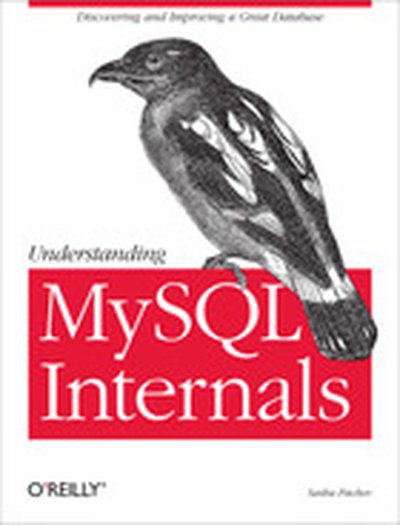
Understanding MySQL Internals

Although MySQL's source code is open in the sense of being publicly available, it's essentially closed to you if you don't understand it. In this book, Sasha Pachev -- a former member of the MySQL Development Team -- provides a comprehensive tour of MySQL 5 that shows you how to figure out the inner workings of this powerful database. You'll go right to heart of the database to learn how data structures and convenience functions operate, how to add new storage engines and configuration options, and much more. The core of Understanding MySQL Internals begins with an Architecture Overview that provides a brief introduction of how the different components of MySQL work together. You then learn the steps for setting up a working compilable copy of the code that you can change and test at your pleasure. Other sections of the book cover: Core server classes, structures, and API The communication protocol between the client and the server Configuration variables, the controls of the server; includes a tutorial on how to add your own Thread-based request handling -- understanding threads and how they are used in MySQL An overview of MySQL storage engines The storage engine interface for integrating third-party storage engines The table lock manager The parser and optimizer for improving MySQL's performance Integrating a transactional storage engine into MySQL The internals of replication Understanding MySQL Internals provides unprecedented opportunities for developers, DBAs, database application programmers, IT departments, software vendors, and computer science students to learn about the inner workings of this enterprise-proven database. With this book, you will soon reach a new level of comprehension regarding database development that will enable you to accomplish your goals. It's your guide to discovering and improving a great database.

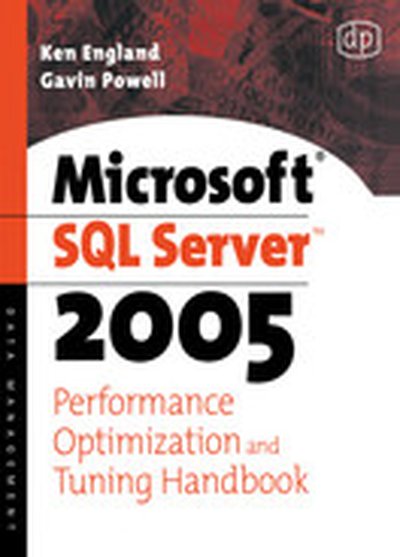
Microsoft SQL Server 2005 Performance Optimization and Tuning Handbook

Database professionals will find that this new edition aids in mastering the latest version of Microsoft’s SQL Server. Developers and database administrators (DBAs) use SQL on a daily basis in application development and the subsequent problem solving and fine tuning. Answers to SQL issues can be quickly located helping the DBA or developer optimize and tune a database to maximum efficiency. Basic questions are easily located on the topics of filtering, sorting, operators, conditionals, pseudo columns, single row functions, joins, grouping functions, sub queries, composite queries, hierarchies, flashback queries, parallel queries, expressions and regular expressions. Assistance on DML, data types (including collections), XML, DDL for basic database objects such as tales, views and indexes, partitioning, and security is also considered. * Identifies the most common issues DBAs face day to day for easy reference *Provides DBAs with solutions actually used by the authors in enterprise environments to resolve common and specialized problems to optimization issues. * Addresses issues that have been introduced by new features which can add more control but reduce performance.

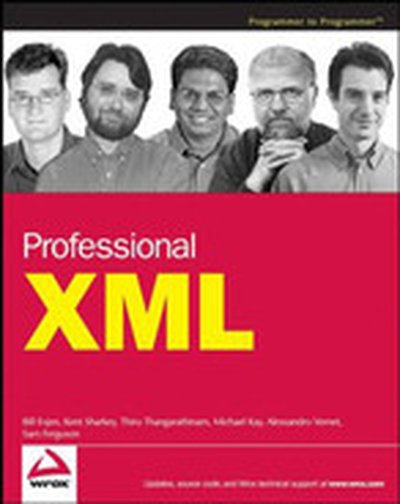
Professional XML

As XML gains popularity, developers are looking to implement XML technologies in their line-of-business applications This book offers readers real-world insight into XML so that they can build the best possible applications Offers an in-depth look at XML and discusses XML tools, services (RSS, SOAP, REST, WSDL), programming (DOM, SAX, Ajax), and languages (.NET, Java, PHP)

Visio® 2007 Bible

Whether you're designing a network, a business plan, or an office building, Visio 2007 can transform your vision into sophisticated diagrams and drawings and this comprehensive reference shows you how. You'll discover how to use Visio for IT, architecture, engineering, and business projects; explore the new features of Visio 2007; learn to publish Visio diagrams to the Web; and much more. If you want to develop your skills in Visio, this is the book you need to succeed.

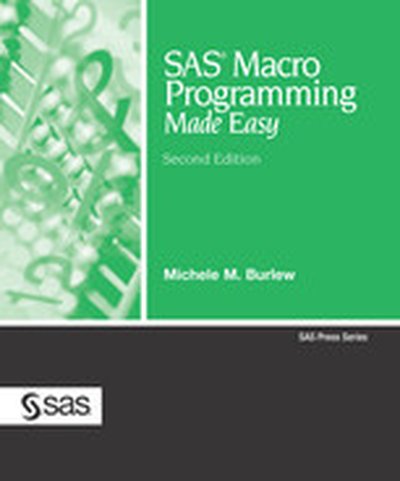
SAS® Macro Programming Made Easy, Second Edition

Need help understanding the SAS macro facility? You will find all the answers that you need in this easy-to-follow book! Michele Burlew puts her decades of macro programming experience to work for you as she guides you through the basics, as well as the more complex features of the SAS macro facility. Updated extensively for SAS 9, this book includes plenty of examples and step-by-step instructions. You will learn the elements of the macro facility (macro variables, macro programs, macro language), how to write a macro program, macro programming techniques, tips on using the macro facility, how the macro facility fits into SAS, and about the interfaces between the macro facility and other components of SAS. New topics for the second edition include using SAS 9 macro and SAS language features, debugging macro programs, adding error checking to macro programs, and building a library of utility macro programs. Beginning macro programmers will learn to write SAS macro programs quickly and efficiently. More experienced macro programmers will find this book useful to refresh their conceptual knowledge and expand on their macro programming skills. It is also important to note that the macro facility is a highly popular part of SAS and found in the job requirements for many SAS programming jobs. In addition, macro facility concepts are tested on the SAS Advanced Programming Exam. The book assumes some SAS programming experience, including knowledge of how to write a DATA step and how to use SAS procedures.

XQuery

With the XQuery 1.0 standard, you finally have a tool that will make it much easier to search, extract and manipulate information from XML content stored in databases. This in-depth tutorial not only walks you through the XQuery specification, but also teaches you how to program with this widely anticipated query language. XQuery is for query writers who have some knowledge of XML basics, but not necessarily advanced knowledge of XML-related technologies. It can be used both as a tutorial, by reading cover to cover, and as a reference, by using the comprehensive index and appendixes. Either way, you will find the background knowledge in namespaces, schemas, built-in types and regular expressions that is relevant to writing XML queries. This book provides: A high-level overview and quick tour of XQuery Information to write sophisticated queries, without being bogged down by the details of types, namespaces, and schemas Advanced concepts for users who want to take advantage of modularity, namespaces, typing and schemas Guidelines for working with specific types of data, such as numbers, strings, dates, URIs and processing instructions A complete alphabetical reference to the built-in functions and types You will also learn about XQuery's support for filtering, sorting, and grouping data, as well as how to use FLWOR expressions, XPath, and XQuery tools for extracting and combining information. With this book, you will discover how to apply all of these tools to a wide variety of data sources, and how to recombine information from multiple sources into a single final output result. Whether you're coming from SQL, XSLT, or starting from scratch, this carefully paced tutorial takes you through the final 1.0 standard in detail.

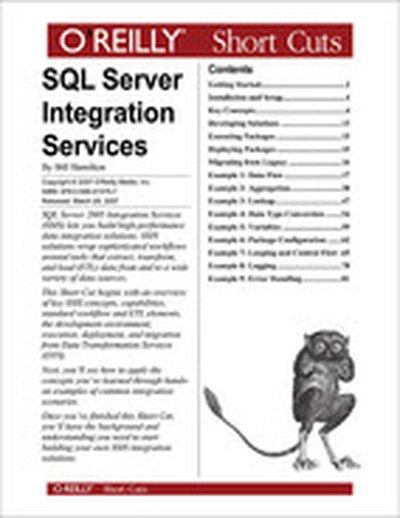
SQL Server Integration Services

SQL Server 2005 Integration Services (SSIS) lets you build high-performance data integration solutions. SSIS solutions wrap sophisticated workflows around tasks that extract, transform, and load (ETL) data from and to a wide variety of data sources. This Short Cut begins with an overview of key SSIS concepts, capabilities, standard workflow and ETL elements, the development environment, execution, deployment, and migration from Data Transformation Services (DTS). Next, you'll see how to apply the concepts you've learned through hands-on examples of common integration scenarios. Once you've finished this Short Cut, you'll have the background and understanding you need to start building your own SSIS integration solutions.

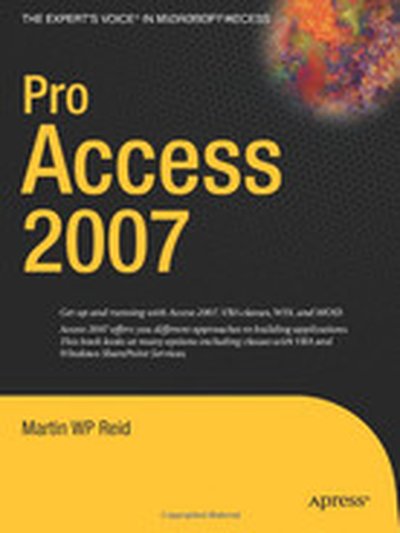
Pro Access 2007

Pro Access 2007M covers the features of Microsoft Access 2007, including working with SharePoint Office Server and customizing Ribbons. The book is aimed at professional developers and power users who are new to Access 2007. Among other topics, youll learn about the new Access menu structure, including customization, as well as new SharePoint features. This book provides good, short, solid information with as little waffle as possible. And the book includes solid examples that thoroughly explain new features. Author Martin Reid is also a working Access developer who is respected by his peers and knows what working developers face, especially at the time of a new release. What you'll learn Creating custom menus using RibbonX Get up and running building Visual Basic for Applications Classes Learn about Microsoft Office SharePoint Server and how it fits into Access Working with SQL Server and using the new Microsoft Access 2007 to SQL Server 2005 tools Code examples provided to highlight real-world issues Use Access and .NET to present information via the Internet

Webbots, Spiders, and Screen Scrapers

The Internet is bigger and better than what a mere browser allows. Webbots, Spiders, and Screen Scrapers is for programmers and businesspeople who want to take full advantage of the vast resources available on the Web. There's no reason to let browsers limit your online experience-especially when you can easily automate online tasks to suit your individual needs. Learn how to write webbots and spiders that do all this and more: Programmatically download entire websites Effectively parse data from web pages Manage cookies Decode encrypted files Automate form submissions Send and receive email Send SMS alerts to your cell phone Unlock password-protected websites Automatically bid in online auctions Exchange data with FTP and NNTP servers Sample projects using standard code libraries reinforce these new skills. You'll learn how to create your own webbots and spiders that track online prices, aggregate different data sources into a single web page, and archive the online data you just can't live without. You'll learn inside information from an experienced webbot developer on how and when to write stealthy webbots that mimic human behavior, tips for developing fault-tolerant designs, and various methods for launching and scheduling webbots. You'll also get advice on how to write webbots and spiders that respect website owner property rights, plus techniques for shielding websites from unwanted robots. As a bonus, visit the author's website to test your webbots on sample target pages, and to download the scripts and code libraries used in the book. Some tasks are just too tedious-or too important!- to leave to humans. Once you've automated your online life, you'll never let a browser limit the way you use the Internet again.

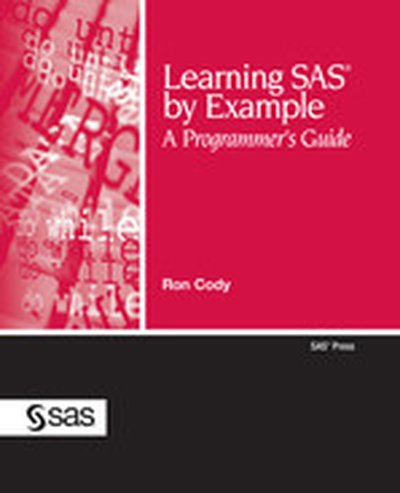
Learning SAS by Example
Learn to program SAS by example!

If you like learning by example, then Learning SAS by Example: A Programmer's Guide makes it easy to learn SAS programming. In an instructive and conversational tone, author Ron Cody clearly explains each programming technique and then illustrates it with one or more real-life examples, followed by a detailed description of how the program works. The text is divided into four major sections: Getting Started; DATA Step Processing; Presenting and Summarizing Your Data; and Advanced Topics. Subjects addressed include: Reading data from external sources Learning details of DATA step programming Subsetting and combining SAS data sets Understanding SAS functions and working with arrays Creating reports with PROC REPORT and PROC TABULATE Learning to use the SAS Output Delivery System Getting started with the SAS macro language Introducing PROC SQL

You can test your knowledge and hone your skills by solving the problems at the end of each chapter. (Solutions to odd-numbered problems are located at the back of this book. Solutions to all problems are available to instructors by visiting Ron Cody's author page for details.) This book is intended for beginners and intermediate users. Readers should know how to enter and submit a SAS program from their operating system.

This book is part of the SAS Press program.

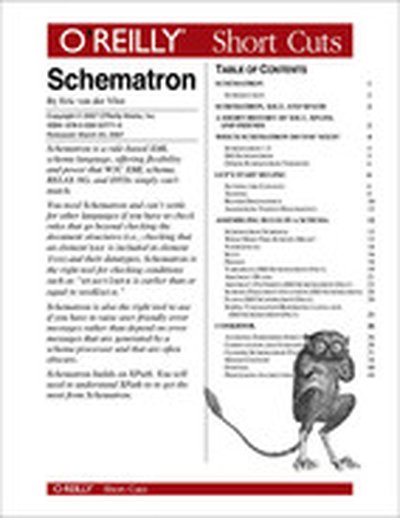
Schematron

Schematron is a rule-based XML schema language, offering flexibility and power that W3C XML schema, RELAX NG, and DTDs simply can't match. You need Schematron and can't settle for other languages if you have to check rules that go beyond checking the document structures (i.e., checking that an element bar is included in element foo) and their datatypes. Schematron is the right tool for checking conditions such as "startDate is earlier than or equal to endDate." Schematron is also the right tool to use if you have to raise user-friendly error messages rather than depend on error messages that are generated by a schema processor and that are often obscure. Schematron builds on XPath. You will need to understand XPath to to get the most from Schematron.

SQL Injection Defenses

This Short Cut introduces you to how SQL injection vulnerabilities work, what makes applications vulnerable, and how to protect them. It helps you find your vulnerabilities with analysis and testing tools and describes simple approaches for fixing them in the most popular web-programming languages. This Short Cut also helps you protect your live applications by describing how to monitor for and block attacks before your data is stolen. Hacking is an increasingly criminal enterprise, and web applications are an attractive path to identity theft. If the applications you build, manage, or guard are a path to sensitive data, you must protect your applications and their users from this growing threat.

Pro Ora cle Database 10g RAC on Linux Installation, Administration, and Performance

Real Application Clusters (RAC) and the Grid architecture are Oracle's strategy for scaling out enterprise systems to cope with bigger workloads and more users. Many books limit themselves by conceptualizing and theorizing about RAC technology, but this book is the first to portray implementing and administering an Oracle 10 g RAC system in a Linux environment. This book features basic concepts underlying Linux and Oracle RAC, design strategies, hardware procurement and configuration, and many other topics. The RAC-specific technologies described include configuration of the interconnect, OCFS, ASM, Cluster Ready Services, and Grid Control. The Oracle features RMAN and Data Guard are also discussed, along with available hardware options. The authors include practical examples and configuration information, so that upon reading this book, you'll be armed with the information you need to build an Oracle RAC database on Linux, whether it is on a single laptop or a 64-node Itanium cluster.

QuickBase: The Missing Manual

Ready to put Intuit's QuickBase to work? Our new Missing Manual shows you how to capture, modify, share, and manage data and documents with this web-based data-sharing program quickly and easily. No longer do you have to coordinate your team through a blizzard of emails or play frustrating games of "guess which document is the right one." QuickBase saves your organization time and money, letting you manage and share the information that makes your business tick: sales figures, project timelines, drafts of documents, purchase or work requests--whatever information you need to keep business flowing smoothly. QuickBase: The Missing Manual shows you how to choose among QuickBase's dozens of ready-made applications (mini-databases, essentially) and how to customize one to fit your needs exactly. You'll also learn to assign people different roles within the application. The guide also shows you how to: Capture and modify data: Whatever kind of data you need to store--sales leads, catalog listings, project milestones, workflow checklists--you can use QuickBase's forms to record and organize that data so it makes sense to you. Filter, sort, and group data: Easily find the records that match your criteria, and then sort those records into groups that make their relationships clear. Display your data: QuickBase uses different views (Table, Grid Edit, Summary/Crosstab, Calendar, Chart, and Timeline) to display and summarize data. Switching between them is easy, like taking tasks listed in a table and displaying them as a timeline. Create reports: Print out a hard copy, embed charts in the annual report, or email this month's sales numbers. Because Intuit frequently introduces new features to QuickBase, you'll find updates to this book at our Missing Manual web site so you can benefit from the latest technology and user suggestions right away.

IBM System Storage N Series for SAP

This IBM Redbooks publication provides best practices for deploying IBM System Storage N series storage systems, in support of mySAP Business Suite solutions that run in UNIX and NFS environments that use a DB2 database. We address common storage infrastructure design, operation, and management challenges that are faced by businesses and IT personnel, deploying the latest generation of SAP solutions.

OnDemand SQL Performance Analysis Simplified on DB2 for i5/OS in V5R4

The goal of database performance tuning is to minimize the response time of your queries. It is also to optimize your server’s resources by minimizing network traffic, disk I/O, and CPU time. This IBM IBM Redbooks publication helps you to understand the basics of identifying and tuning the performance of Structured Query Language (SQL) statements using IBM DB2 for i5/OS . DB2 for i5/OS provides a comprehensive set of tools that help technical analysts tune SQL queries. The SQL Performance Monitors are part of the set of tools that IBM i5/OS provides for assisting in SQL performance analysis since Version 3 Release 6. These monitors help to analyze database performance problems after SQL requests are run. In V5R4 of i5/OS iSeries Navigator provides a series of new tools to do SQL Performance analysis that we cover in this book. Among the new tools that we will covering are:

The IBM Virtualization Engine TS7510: Getting Started with i5/OS and Backup Recovery and Media Services

This IBM Redbooks publication provides a getting started level of information about supporting the IBM Virtualization Engine TS7510 under i5/OS, primarily using the Backup Recovery and Media Services (BRMS), 5722-BR1, management product. BRMS is the primary backup and recovery management product for i5/OS. This book cannot make you an expert in i5/OS backup and recovery or in the use of BRMS. It also cannot make you an expert in full usage and management of the IBM Virtualization Engine TS7510 capabilities. More complete coverage of the TS7510 is included in the book IBM Virtualization Engine TS7510: Tape Virtualization for Open Systems Servers, SG24-7189. However, this book does provide sufficient information and examples to get you up and running with the IBM Virtualization Engine TS7510 attached to an i5/OS partition or system using BRMS. This book also helps you to understand where the IBM Virtualization Engine TS7510 can fit into your complete set of backup and recovery processes where multiple systems or servers, or logical partitions have to save data to a common repository. The TS7510 helps you to minimize your backup window, facilitates data sharing among the multiple systems, and helps you to minimize your total cost of ownership (TCO) in the backup and recovery area.

Beginning Google Maps Applications with Rails and Ajax: From Novice to Professional

The Google Maps API remains one of the showcase examples of the Web 2.0 development paradigm. Beginning Google Maps Applications with Rails and Ajax: From Novice to Professional is the first book to comprehensively introduce the service from a developer perspective, showing you how you can integrate mapping features into your Rails-driven web applications. Proceeding far beyond simplistic map display, youll learn how to draw from a variety of data sources such as the U.S. Census Bureau's TIGER/Line data and Google's own geocoding feature to build comprehensive geocoding services for mapping many locations around the world. The book also steers you through various examples that show how to encourage user interaction such as through pinpointing map locations, adding comments, and building community-driven maps. Youll want to pick up a copy of this book because This is the first book to comprehensively introduce the Google Maps application development using the Rails development framework. Youll be introduced to the very latest changes to the Google Maps API, embodied in the version 2 release. It is written by four developers actively involved in the creation of location-based mapping services. For additional info, please visit the author's reference site for this book.

Beyond Schemas: Planning Your XML Model

Have you ever wondered how to get started writing your own schema? As you prepare to create your schema, you must consider a number of factors. This guide explains each of those factors in detail and recommends an approach for documenting your schema development plan in an information model. Your information model can not only be used as a planning mechanism to develop your schema but can also be used as a training resource and as a reference guide for those using the schema after it is developed. By putting a well-thought-out information model in place, you are bound to produce a schema that you can use indefinitely and build upon easily.

Business and Competitive Analysis: Effective Application of New and Classic Methods

“I believe that this book will fill a great need for both full-time competitive intelligence practitioners, and those looking to add analytical skills to their managerial tool kit.” --Bill Fiora, Partner and Founder, Outward Insights “All practicing managers and business decision makers should be grateful to Fleisher and Bensoussan for showing them how their analysis work can become more rigorous and their approach less casual. Accept no imitations. This is the genuine article.” --Sheila Wright, Director of the Competitive Intelligence-Marketing Interface Teaching and Research Initiative (CIMITRI) at Leicester Business School, De Montfort University The Definitive How-To Guide for Business and Competitive Analysis Transform raw data into compelling, actionable business recommendations Answer the questions executives ask–“What?” “So What?” and “Now What?” Today’s 24 most valuable techniques: how to choose them, how to use them For everyone who performs analysis: managers, consultants, functional specialists, and strategists A completely new book by the authors of the popular Strategic and Competitive Analysis Business success begins with deep clarity about your competition and your business environment. But, even as data gathering has improved dramatically, few business professionals know the state-of-the-art techniques for analyzing their data. Now there’s a comprehensive, immensely practical guide to today’s best tools and techniques for answering tough questions and making actionable recommendations. begins with end-to-end guidance on the analysis process, including defining problems, avoiding analytical pitfalls, choosing tools, and communicating results. Next, the authors offer detailed guides on 24 of today’s most valuable analysis models: techniques that have never been brought together in one book before.They offer in-depth, step-by-step guidance for using every technique–along with realistic assessments of strengths, weaknesses, feasibility, and business value. Business and Competitive Analysis You are flooded with data. This book will help you transform that data into actionable insights and recommendations that enterprise decision makers cannot and will not ignore. Craig S. Fleisher and Babette E. Bensoussan begin with a practical primer on the process and context of business and competitive analysis: how it works, how to avoid pitfalls, and how to communicate results. Next, they introduce their unique FAROUT method for choosing the right tools for each assignment. The authors then present 24 of today’s most valuable analysis methods.They cover “classic” techniques, such as McKinsey 7S and industry analysis, as well as emerging techniques from multiple disciplines:economics,corporate finance, sociology, anthropology, and the intelligence and futurist communities. For each, they present clear descriptions, background context, strategic rationales, strengths, weaknesses, step-by-step instructions, and references. The result is a book you can rely on to meet any analysis challenge, no matter how complex or novel. The fundamentals of business and competitive analysis Goals, processes, pitfalls, deliverables, and benefits Competitive analysis techniques Nine Forces, Competitive Positioning, Business Model, SERVO, and Supply Chain Analyses Enterprise analysis techniques Benchmarking, McKinsey 7S, Shadowing, Product Line, and Win/Loss Analyses Environmental analysis techniques Strategic Relationships, Corporate Reputation, Critical Success Factors, Driving Forces, and Country Risk Analyses Evolutionary analysis techniques Technology Forecasting,War Gaming, Event/Timeline, Indications and Warning Analyses, and more Financial, probabilistic, and statistical techniques Basic Statistics, Competitor Cash Flow, Analysis of Competing Hypothesis (ACH), and Linchpin Analyses Table of Contents: Preface 1. Business and Competitive Analysis: Definition, Context, and Benefits 2. Performing the Analysis Process 3. Avoiding Analysis Pitfalls 4. Communicating Analysis Results 5. Applying the FAROUT method 6. Industry Analysis (The Nine Forces) 7. Competitive Positioning Analysis 8. Business Model Analysis 9. SERVO Analysis 10. Supply Chain Management (SCM) Analysis 11. Benchmarking Analysis 12. McKinsey 7S Analysis 13. Shadowing 14. Product Line Analysis 15. Win/Loss Analysis 16. Strategic Relationship Analysis 17. Corporate Reputation Analysis 18. Critical Success Factors Analysis 19. Country Risk Analysis 20. Driving Forces Analysis 21. Event and Timeline Analysis 22. Technology Forecasting 23. War Gaming 24. Indications and Warning Analysis 25. Historiographical Analysis 26. Interpretation of Statistical Analysis 27. Competitor Cash Flow Analysis 28. Analysis of Competing Hypothesis 29. Linchpin Analysis Index