talk-data.com talk-data.com

Topic

data

5765

tagged

Activity Trend

3 peak/qtr
2020-Q1 2026-Q1

Activities

5765 activities · Newest first

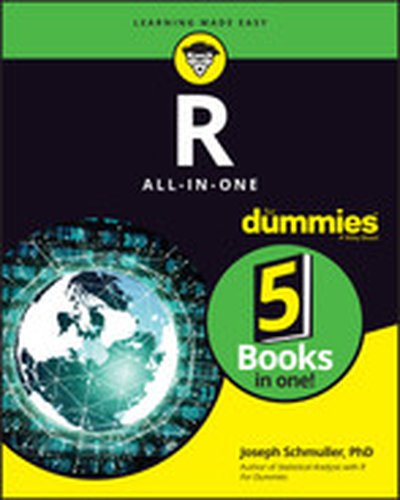
R All-in-One For Dummies

A deep dive into the programming language of choice for statistics and data With R All-in-One For Dummies, you get five mini-books in one, offering a complete and thorough resource on the R programming language and a road map for making sense of the sea of data we're all swimming in. Maybe you're pursuing a career in data science, maybe you're looking to infuse a little statistics know-how into your existing career, or maybe you're just R-curious. This book has your back. Along with providing an overview of coding in R and how to work with the language, this book delves into the types of projects and applications R programmers tend to tackle the most. You'll find coverage of statistical analysis, machine learning, and data management with R. Grasp the basics of the R programming language and write your first lines of code Understand how R programmers use code to analyze data and perform statistical analysis Use R to create data visualizations and machine learning programs Work through sample projects to hone your R coding skill This is an excellent all-in-one resource for beginning coders who'd like to move into the data space by knowing more about R.
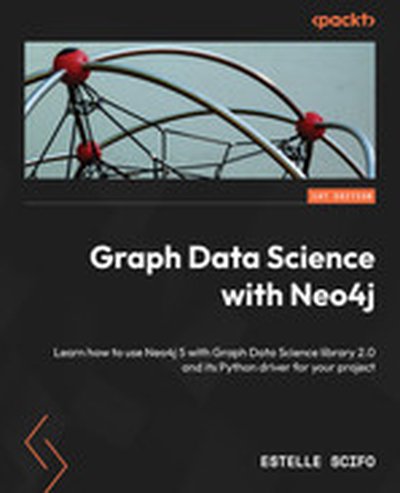
Graph Data Science with Neo4j

"Graph Data Science with Neo4j" teaches you how to utilize Neo4j 5 and its Graph Data Science Library 2.0 for analyzing and making predictions with graph data. By integrating graph algorithms into actionable machine learning pipelines using Python, you'll harness the power of graph-based data models. What this Book will help me do Query and manipulate graph data using Cypher in Neo4j. Design and implement graph datasets using your data and public sources. Utilize graph-specific algorithms for tasks such as link prediction. Integrate graph data science pipelines into machine learning projects. Understand and apply predictive modeling using the GDS Library. Author(s) None Scifo, the author of "Graph Data Science with Neo4j," is an experienced data scientist with expertise in graph databases and advanced machine learning techniques. Their technical approach combines practical implementation with clear, step-by-step guidance to provide readers the skills they need to excel. Who is it for? This book is ideal for data scientists and analysts familiar with basic Neo4j concepts and Python-based data science workflows who wish to deepen their skills in graph algorithms and machine learning integration. It is particularly suited for professionals aiming to advance their expertise in graph data science for practical applications.

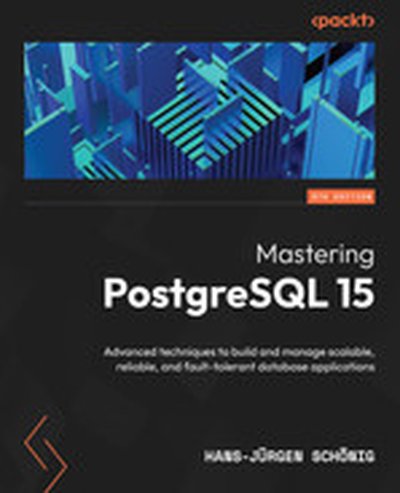
Mastering PostgreSQL 15 - Fifth Edition

Mastering PostgreSQL 15 provides a deep dive into advanced topics of PostgreSQL database systems, covering installation, configuration, optimization, and administration. By reading this book, you will gain the skills to manage, secure, and optimize PostgreSQL database instances for complex applications. What this Book will help me do Understand and utilize advanced indexing techniques in PostgreSQL to improve query performance. Perform efficient database backup and recovery processes to ensure data safety and integrity. Master replication and failover methods to achieve high availability and data consistency. Implement authentication and encryption to enhance database server security. Troubleshoot PostgreSQL to identify and resolve common operational issues. Author(s) Hans-Jürgen Schönig, the author of Mastering PostgreSQL 15, is a leading expert in PostgreSQL with decades of experience in the field. His passion for databases has driven him to deliver solutions in high-performance database management and large-scale data systems. With a thorough and approachable style, Hans-Jürgen imparts complex technical knowledge effectively to his readers. Who is it for? This book is ideal for experienced PostgreSQL developers and database administrators looking to master PostgreSQL 15. Readers should have a foundational understanding of database systems and are seeking to implement advanced features and best practices in enterprise environments. It's tailored for those aspiring to enhance their operational and architectural skills in managing PostgreSQL systems.

Microsoft Power Platform Enterprise Architecture - Second Edition

Microsoft Power Platform Enterprise Architecture is your essential guide to designing powerful, enterprise-grade solutions using Microsoft technology. This thoroughly structured book equips you with architectural insights, methodologies, and best practices necessary to optimize solutions using the Microsoft Power Platform and integrate them seamlessly with M365 and Azure. What this Book will help me do Design robust enterprise solutions leveraging Microsoft Power Platform and Dynamics 365. Integrate Power Platform tools with Microsoft 365 and Azure effectively for comprehensive solutions. Implement advanced security, extensibility, and lifecycle management methodologies. Migrate and manage data efficiently within the Power Platform ecosystem. Overcome architectural challenges in multi-system integration using proven techniques. Author(s) Robert Rybaric, the author of this book, is an experienced enterprise architect specializing in Microsoft technologies. With years of expertise in designing enterprise systems, Robert brings practical insights into crafting effective solutions using Microsoft Power Platform. His approach emphasizes clarity and practicality, ensuring concepts are both illustrative and applicable for readers. Who is it for? This book is ideal for enterprise architects and technical decision-makers aiming to design and deploy complex solutions using the Microsoft Power Platform. It is tailored for professionals with familiarity with Microsoft Power Platform and Azure services who wish to refine their skills in enterprise architecture to meet growing business demands efficiently.

Tableau Desktop Specialist Certification

This book is your comprehensive guide to achieving the Tableau Desktop Specialist certification. By working through its structured content, you'll gain the skills necessary to understand and utilize Tableau for data analysis and visualization, and you'll be confidently prepared to pass the certification exam. What this Book will help me do Master how to load and prepare data in Tableau efficiently for analysis. Design and create visually impactful charts and dashboards tailored to your audience. Learn to utilize calculations, parameters, and advanced functions in Tableau. Develop an understanding of managing dimensions, measures, and their application. Gain confidence in sharing and presenting insights effectively with Tableau. Author(s) Adam Mico, a renowned Tableau ambassador and visionary, has extensive experience in the data visualization field. Having successfully obtained the Tableau Desktop Specialist certification himself, Adam combines practical expertise with an intuitive teaching approach, ensuring readers gain both the knowledge and confidence required to excel. Who is it for? If you're starting your journey in data visualization or looking to formalize your Tableau skills, this book is intended for you. Beginners without prior Tableau experience will find structured guidance, while those with some knowledge will appreciate the detailed preparation tips. Ideal for professionals aiming to pass the Tableau Desktop Specialist certification or improve their data analysis capabilities.

CompTIA Data+ DA0-001 Exam Cram

CompTIA® Data+ DA0-001 Exam Cram is an all-inclusive study guide designed to help you pass the CompTIA Data+ DA0-001 exam. Prepare for test day success with complete coverage of exam objectives and topics, plus hundreds of realistic practice questions. Extensive prep tools include quizzes, Exam Alerts, and our essential last-minute review CramSheet. The powerful Pearson Test Prep practice software provides real-time assessment and feedback with two complete exams. Covers the critical information needed to score higher on your Data+ DA0-001 exam! Understand data concepts, environments, mining, analysis, visualization, governance, quality, and controls Work with databases, data warehouses, database schemas, dimensions, data types, structures, and file formats Acquire data and understand how it can be monetized Clean and profile data so it;s more accurate, consistent, and useful Review essential techniques for manipulating and querying data Explore essential tools and techniques of modern data analytics Understand both descriptive and inferential statistical methods Get started with data visualization, reporting, and dashboards Leverage charts, graphs, and reports for data-driven decision-making Learn important data governance concepts ...

IBM FlashSystem 9500 Product Guide

This IBM® Redpaper® Product Guide describes the IBM FlashSystem® 9500 solution, which is a next-generation IBM FlashSystem control enclosure. It combines the performance of flash and a Non-Volatile Memory Express (NVMe)-optimized architecture with the reliability and innovation of IBM FlashCore® technology and the rich feature set and high availability (HA) of IBM Spectrum® Virtualize. Often, applications exist that are foundational to the operations and success of an enterprise. These applications might function as prime revenue generators, guide or control important tasks, or provide crucial business intelligence, among many other jobs. Whatever their purpose, they are mission critical to the organization. They demand the highest levels of performance, functionality, security, and availability. They also must be protected against the modern scourge, cyberattacks. To support such mission-critical applications, enterprises of all types and sizes turn to the IBM FlashSystem 9500. IBM FlashSystem 9500 provides a rich set of software-defined storage (SDS) features that are delivered by IBM Spectrum Virtualize, including the following examples: Data reduction and deduplication Dynamic tiering Thin-provisioning Snapshots Cloning Replication and data copy services Cyber resilience Transparent Cloud Tiering IBM HyperSwap® including 3-site replication for HA Scale-out and scale-up configurations that further enhance capacity and throughput for better availability With the release of IBM Spectrum Virtualize V8.5, extra functions and features are available, including support for new third-generation IBM FlashCore Modules NVMe-type drives within the control enclosure, and 100 Gbps Ethernet adapters that provide NVMe Remote Direct Memory Access (RDMA) options. New software features include GUI enhancements and security enhancements, including multifactor authentication (MFA) and single sign-on (SSO), and Fibre Channel (FC) portsets.

IBM Software Systems Integration: With IBM MQ Series for JMS, IBM FileNet Case Manager, and IBM Business Automation Workflow

Examine the working details for real-world Java programs used for system integration with IBM Software, applying various API libraries (as used by Banking and Insurance companies). This book includes the step-by-step procedure to use the IBM FileNet Case Manager 5.3.3 Case Builder solution and the similar IBM System, IBM Business Automation Workflow to create an Audit System. You'll learn how to implement the workflow with a client Java Message Service (JMS) java method developed with Workflow Custom Operations System Step components. Using IBM Cognos Analytics Version 11.2, you'll be able to create new views for IBM Case Manager Analytics for custom time dimensions. The book also explains the SQL code and procedures required to create example Online Analytical Processing (OLAP) cubes with multi-level time dimensions for IBM Case Manager analytics. IBM Software Systems Integration features the most up to date systems software procedures using tested API calls. What You Will Learn Review techniques for generating custom IBM JMS code Create a new custom view for a multi-level time dimension See how a java program can provide the IBM FileNet document management API calls for content store folder and document replication Configure Java components for content engine events Who This Book Is ForIT consultants, Systems and Solution Architects.

Introduction to System Science with MATLAB, 2nd Edition

Introduction to SYSTEM SCIENCE with MATLAB Explores the mathematical basis for developing and evaluating continuous and discrete systems In this revised Second Edition of Introduction to System Science with MATLAB®, the authors Gary Sandquist and Zakary Wilde provide a comprehensive exploration of essential concepts, mathematical framework, analytical resources, and productive skills required to address any rational system confidently and adequately for quantitative evaluation. This Second Edition is supplemented with new updates to the mathematical and technical materials from the first edition. A new chapter to assist readers to generalize and execute algorithms for systems development and analysis, as well as an expansion of the chapter covering specific system science applications, is included. The book provides the mathematical basis for developing and evaluating single and multiple input/output systems that are continuous or discrete. It offers the mathematical basis for the recognition, definition, quantitative modeling, analysis, and evaluation in system science. The book also provides: A comprehensive introduction to system science and the principles of causality and cause and effect operations, including their historical and scientific background A complete exploration of fundamental systems concepts and basic system equations, including definitions and classifications Practical applications and discussions of single-input systems, multiple-input systems, and system modeling and evaluation An in-depth examination of generalized system analysis methods and specific system science applications Perfect for upper-level undergraduate and graduate students in engineering, mathematics, and physical sciences, Introduction to System Science with MATLAB® will also earn a prominent place in libraries of researchers in the life and social sciences.

Building Table Views with Phoenix LiveView

Data is at the core of every business, but it is useless if nobody can access and analyze it. Learn how to generate business value by making your data accessible with advanced table UIs. This definitive guide teaches you how to bring your data to the fingertips of nontechnical users with advanced features like pagination, sorting, filtering, and infinity scrolling. Build reactive and reuseable table components by leveraging Phoenix LiveView, schemaless changesets, and Ecto query composition. Table UIs are the bread and butter for every web developer, so it is time to learn how to build them right. As a web developer, you have to build tables. Lots and lots of tables. With table UIs making up such a significant part of your daily work, you need to know how to build the right table for the task, with all the needed features. Building a simple table is easy, but tables only become really useful with advanced features like pagination, sorting, and filtering. That;s where building a table can quickly become complicated. This book shows you how to implement advanced table features in a clean and reusable way. You'll build fast and interactive table UIs by leveraging Phoenix LiveView. Make vast amounts of data manageable with common but complex features like pagination, sorting, filtering, and inifinity scrolling. Use SOLID coding principles to make your queries reusable with query composition. Compartmentalize your UI with LiveComponents and learn how to handle user input securely with schemaless changesets. Share your view onto the data painlessly by storing your search parameters in the URL. Data is one of the most valuable assets of your business, but you cannot unlock its potential if you don't know how to make it accessible. This book shows you how to deliver that data to your users' fingertips quickly. What You Need: You'll need Elixir 1.12 or later, Erlang/OTP 24 or later, Phoenix 1.6 or later, and PostgreSQL installed on your machine.

IBM SAN Volume Controller and Storwize Family Native IP Replication

IBM® has announced native Internet Protocol (IP) replication using Bridgeworks SANSlide technology with its IBM System Storage® SAN Volume Controller (SVC), IBM Storwize® V7000, IBM Storwize V5000 and Storwize V3700 virtualized storage systems. This combination of SANSlide and the SVC/Storwize family provides a powerful solution for clients who require efficient, IP-based replication over long distances. This certification gives SVC/Storwize clients a fully supported, transparent technology that includes unmatched levels of performance and reliability. With the SANSlide protocol acceleration technology, it is now possible to replicate data across continents in a cost-efficient way, with little or no loss in performance. At the same time, bandwidth usage can improve to over 95%, rather than the 1% - 5% normally achieved in long-distance IP networks. This IBM Redpaper™ publication shows the steps required to implement this solution efficiently and speedily.

Building Solutions with the Microsoft Power Platform

With the accelerating speed of business and the increasing dependence on technology, companies today are significantly changing the way they build in-house business solutions. Many now use low-code and no code technologies to help them deal with specific issues, but that's just the beginning. With this practical guide, power users and developers will discover ways to resolve everyday challenges by building end-to-end solutions with the Microsoft Power Platform. Author Jason Rivera, who specializes in SharePoint and the Microsoft 365 solution architecture, provides a comprehensive overview of how to use the Power Platform to build end-to-end solutions that address tactical business needs. By learning key components of the platform, including Power Apps, Power Automate, and Power BI, you'll be able to build low-code and no code applications, automate repeatable business processes, and create interactive reports from available data. Learn how the Power Platform apps work together Incorporate AI into the Power Platform without extensive ML or AI knowledge Create end-to-end solutions to solve tactical business needs, including data collection, process automation, and reporting Build AI-based solutions using Power Virtual Agents and AI Builder

Essential Math for AI

Companies are scrambling to integrate AI into their systems and operations. But to build truly successful solutions, you need a firm grasp of the underlying mathematics. This accessible guide walks you through the math necessary to thrive in the AI field such as focusing on real-world applications rather than dense academic theory. Engineers, data scientists, and students alike will examine mathematical topics critical for AI--including regression, neural networks, optimization, backpropagation, convolution, Markov chains, and more--through popular applications such as computer vision, natural language processing, and automated systems. And supplementary Jupyter notebooks shed light on examples with Python code and visualizations. Whether you're just beginning your career or have years of experience, this book gives you the foundation necessary to dive deeper in the field. Understand the underlying mathematics powering AI systems, including generative adversarial networks, random graphs, large random matrices, mathematical logic, optimal control, and more Learn how to adapt mathematical methods to different applications from completely different fields Gain the mathematical fluency to interpret and explain how AI systems arrive at their decisions

IBM SANnav Management Portal v2.2.X Implementation Guide

IBM® SANnav Management Portal and IBM SANnav Global View empower IT administrators to be more efficient and productive by providing comprehensive visibility into the SAN environment. These tools transform information about SAN behavior and performance into actionable insights, allowing administrators to quickly identify, isolate, and correct problems before they impact the business. In addition, SANnav Management Portal and SANnav Global View accelerate administrative tasks by simplifying workflows and automating redundant steps, making it easier for organizations to realize their goal of an autonomous SAN. This IBM Redbooks® publication introduces IBM SANnav Management Portal and SANnav Global View, and covers the installation, customization, operation, and troubleshooting of the IBM SANnav Management Portal. This book is targeted at IT and network administrators.

Visual Data Insights Using SAS ODS Graphics: A Guide to Communication-Effective Data Visualization

SAS ODS graphics users will learn in this book how to visually understand and communicate the significance of data to deliver images for quick and easy insight, with precise numbers. Many charts or plots require the viewer to run the eye from a bar end or plot point to some point on an axis, and then to interpolate between tick marks to estimate the value. Some design choices can lead to wrong conclusions or mistaken impressions. Graphic software relies on defaults to deliver something if you make a minimal effort, but that something is not likely to be exactly what you want. Visual Data Insights Using SAS ODS Graphics provides examples using experience-based design principles. It presents examples of bar charts, pie charts, and trend lines or time series plots, the graph types commonly used in business, other organizations, and the media for visual insight into data. Newer graphs are also included: dot plots, needle plots, waterfall charts, butterflycharts, heat maps, bubble plots, step plots, high-low plots, and donut charts. In addition, there are basic tools of statistics: scatter plots, box plots, histograms, fit and confidence plots, and distributions. Author LeRoy Bessler introduces unique creations, including sparsely annotated time series, maximally informative bar charts, better box plots, histograms based on interesting atypical rationales, and much more. The examples use SAS sample data sets as input. Any SAS user can experiment with the code presented to see what else is possible, or adapt it to repurpose the design and apply it with a customized version of that code. What You’ll Learn Create graphs that are easily and quickly interpreted, and without ambiguity Supply precise data values that are correct on the graph and correctly associated with the graphic visual elements Take advantage of widely applicable (but not necessarily available elsewhere) design examples Avoid bad practices that are encouraged by poor examples elsewhere Get past sub-optimal designs and results that are built into software defaults Take advantage of less familiar capabilities available in the software Who This Book Is For SAS software users who want to understand their data and/or visually deliver their results

Data Modeling with Tableau

"Data Modeling with Tableau" provides a comprehensive guide to effectively utilizing Tableau Prep and Tableau Desktop for building elegant data models that drive organizational insights. You'll explore robust data modeling strategies and governance practices tailored to Tableau's diverse toolset, empowering you to make faster and more informed decisions based on data. What this Book will help me do Understand the fundamentals of data modeling in Tableau using Prep Builder and Desktop. Learn to optimize data sources for performance and better query capabilities. Implement secure and scalable governance strategies with Tableau Server and Cloud. Use advanced Tableau features like Ask Data and Explain Data to enable powerful analytics. Apply best practices for sharing and extending data models within your organization. Author(s) Kirk Munroe is an experienced data professional with a deep understanding of Tableau-driven analytics. With years of in-field expertise, Kirk now dedicates his career to helping businesses unlock their data's potential through effective Tableau solutions. His hands-on approach ensures this book is practical and approachable. Who is it for? This book is ideal for data analysts and business analysts aiming to enhance their skills in data modeling. It is also valuable for professionals such as data stewards, looking to implement secure and performant data strategies. If you seek to make enterprise data more accessible and actionable, this book is for you.

Net Zeros and Ones

Design, implement, and integrate a complete data sanitization program In Net Zeros and Ones: How Data Erasure Promotes Sustainability, Privacy, and Security, a well-rounded team of accomplished industry veterans delivers a comprehensive guide to managing permanent and sustainable data erasure while complying with regulatory, legal, and industry requirements. In the book, you’ll discover the why, how, and when of data sanitization, including why it is a crucial component in achieving circularity within IT operations. You will also learn about future-proofing yourself against security breaches and data leaks involving your most sensitive information—all while being served entertaining industry anecdotes and commentary from leading industry personalities. The authors also discuss: Several new standards on data erasure, including the soon-to-be published standards by the IEEE and ISO How data sanitization strengthens a sustainability or Environmental, Social, and Governance (ESG) program How to adhere to data retention policies, litigation holds, and regulatory frameworks that require certain data to be retained for specific timeframes An ideal resource for ESG, data protection, and privacy professionals, Net Zeros and Ones will also earn a place in the libraries of application developers and IT asset managers seeking a one-stop explanation of how data erasure fits into their data and asset management programs.

Pro Oracle SQL Development: Best Practices for Writing Advanced Queries

Write SQL statements that are more powerful, simpler, and faster using the advanced features of Oracle SQL. This updated second edition includes the newest advanced features: improved data structures (such as more JSON support and more table options), improved automated processes (such as automatic indexing), and improved SQL language extensions (such as polymorphic table functions, SQL macros, and the multilingual engine). Pro Oracle SQL Development is for anyone who already knows Oracle SQL and is ready to take their skills to the next level. This book provides a clearer way of thinking about SQL by building sets, and it provides practical advice for using complex features while avoiding anti-patterns that lead to poor performance and wrong results. Relevant theories, real-world best practices, and style guidelines help you get the most out of Oracle SQL. Many developers, testers, analysts, and administrators use Oracle databases frequently, but their queries are limited because they do not take advantage of Oracle’s advanced features. This book inspires you to achieve more with your Oracle SQL statements by creating your own style for writing simple, yet powerful, SQL. It teaches you how to think about and solve performance problems in Oracle SQL, and it covers enough advanced topics to put you on the path to becoming an Oracle expert. What You'll Learn Solve challenging problems with declarative SQL instead of procedural languages Write SQL statements that are large and powerful, but also elegant and fast Create development environments that are simple, scalable, and conducive to learning Visualize and understand SQL more intuitively Apply advanced syntax, objects, and architecture Avoid SQL anti-patterns that accumulate technical debt Tune SQL statements with multiple strategies that can significantly improve performance Who This Book Is For Developers, testers, analysts, and administrators who want to harness the full power of Oracle SQL to solve their problems as simply and as quickly as possible; traditional database professionals looking for new ways of thinking about the language they have used for so long; and modern full stack developers who need an explanation of how a database can be much more than simply a place to store data

SAP S/4HANA Financial Accounting Configuration: Learn Configuration and Development on an S/4 System

Upgrade your knowledge to learn S/4HANA, the latest version of the SAP ERP system, with its built-in intelligent technologies, including AI, machine learning, and advanced analytics. Since the first edition of this book published as SAP ERP Financial and Controlling: Configuration and Use Management, the perspective has changed significantly as S/4HANA now comes with new features, such as FIORI (new GUI), which focuses on flexible app style development and interactivity with mobile phones. It also has a universal journal, which helps in data integration in a single location, such as centralized processing, and is faster than ECC S/3. It merges FI & CO efficiently, which enables document posting in the Controlling area setup. General Ledger Accounts (FI) and Cost Element (CO) are mapped together in a way that cost elements (both primary and secondary) are part of G/L accounts. And a mandatory setup of customer-vendor integration with business partners is included vs the earlier ECC creation with separate vendor master and customer master.This updated edition presents new features in SAP S/4HANA, with in-depth coverage of the FI syllabus in SAP S/4HANA. A practical and hands-on approach includes scenarios with real-life examples and practical illustrations. There is no unnecessary jargon in this configuration and end-user manual. What You Will Learn Configure SAP FI as a pro in S/4 Master core aspects of Financial Accounting and Controlling Integrate SAP Financial with other SAP modules Gain a thorough hands-on experience with IMG (Implementation Guide) Understand and explain the functionalities of SAP FI Who This Book Is For FI consultants, trainers, developers, accountants, and SAP FI support organizations will find the book an excellent reference guide. Beginners without prior FI configuration experience will find the step-by-step illustrations to be practical and great hands-on experience.