talk-data.com talk-data.com

Topic

ETL/ELT

ETL/ELT

data_integration data_transformation data_loading

480

tagged

Activity Trend

40 peak/qtr
2020-Q1 2026-Q1

Activities

480 activities · Newest first

Pentaho® Kettle Solutions: Building Open Source ETL Solutions with Pentaho Data Integration

A complete guide to Pentaho Kettle, the Pentaho Data lntegration toolset for ETL This practical book is a complete guide to installing, configuring, and managing Pentaho Kettle. If you're a database administrator or developer, you'll first get up to speed on Kettle basics and how to apply Kettle to create ETL solutions—before progressing to specialized concepts such as clustering, extensibility, and data vault models. Learn how to design and build every phase of an ETL solution. Shows developers and database administrators how to use the open-source Pentaho Kettle for enterprise-level ETL processes (Extracting, Transforming, and Loading data) Assumes no prior knowledge of Kettle or ETL, and brings beginners thoroughly up to speed at their own pace Explains how to get Kettle solutions up and running, then follows the 34 ETL subsystems model, as created by the Kimball Group, to explore the entire ETL lifecycle, including all aspects of data warehousing with Kettle Goes beyond routine tasks to explore how to extend Kettle and scale Kettle solutions using a distributed "cloud" Get the most out of Pentaho Kettle and your data warehousing with this detailed guide—from simple single table data migration to complex multisystem clustered data integration tasks.
DW 2.0: The Architecture for the Next Generation of Data Warehousing

DW 2.0: The Architecture for the Next Generation of Data Warehousing is the first book on the new generation of data warehouse architecture, DW 2.0, by the father of the data warehouse. The book describes the future of data warehousing that is technologically possible today, at both an architectural level and technology level. The perspective of the book is from the top down: looking at the overall architecture and then delving into the issues underlying the components. This allows people who are building or using a data warehouse to see what lies ahead and determine what new technology to buy, how to plan extensions to the data warehouse, what can be salvaged from the current system, and how to justify the expense at the most practical level. This book gives experienced data warehouse professionals everything they need in order to implement the new generation DW 2.0. It is designed for professionals in the IT organization, including data architects, DBAs, systems design and development professionals, as well as data warehouse and knowledge management professionals. First book on the new generation of data warehouse architecture, DW 2.0 Written by the "father of the data warehouse", Bill Inmon, a columnist and newsletter editor of The Bill Inmon Channel on the Business Intelligence Network Long overdue comprehensive coverage of the implementation of technology and tools that enable the new generation of the DW: metadata, temporal data, ETL, unstructured data, and data quality control

Joe Celko's Analytics and OLAP in SQL

Joe Celko's Analytics and OLAP in SQL is the first book that teaches what SQL programmers need in order to successfully make the transition from On-Line Transaction Processing (OLTP) systems into the world of On-Line Analytical Processing (OLAP). This book is not an in-depth look at particular subjects, but an overview of many subjects that will give the working RDBMS programmers a map of the terra incognita they will face — if they want to grow. It contains expert advice from a noted SQL authority and award-winning columnist, who has given ten years of service to the ANSI SQL standards committee and many more years of dependable help to readers of online forums. It offers real-world insights and lots of practical examples. It covers the OLAP extensions in SQL-99; ETL tools, OLAP features supported in DBMSs, other query tools, simple reports, and statistical software. This book is ideal for experienced SQL programmers who have worked with OLTP systems who need to learn techniques—and even some tricks—that they can use in an OLAP situation. Expert advice from a noted SQL authority and award-winning columnist, who has given ten years of service to the ANSI SQL standards committee and many more years of dependable help to readers of online forums First book that teaches what SQL programmers need in order to successfully make the transition from transactional systems (OLTP) into the world of data warehouse data and OLAP Offers real-world insights and lots of practical examples Covers the OLAP extensions in SQL-99; ETL tools, OLAP features supported in DBMSs, other query tools, simple reports, and statistical software

Star Schema The Complete Reference

The definitive guide to dimensional design for your data warehouse Learn the best practices of dimensional design. Star Schema: The Complete Reference offers in-depth coverage of design principles and their underlying rationales. Organized around design concepts and illustrated with detailed examples, this is a step-by-step guidebook for beginners and a comprehensive resource for experts. This all-inclusive volume begins with dimensional design fundamentals and shows how they fit into diverse data warehouse architectures, including those of W.H. Inmon and Ralph Kimball. The book progresses through a series of advanced techniques that help you address real-world complexity, maximize performance, and adapt to the requirements of BI and ETL software products. You are furnished with design tasks and deliverables that can be incorporated into any project, regardless of architecture or methodology. Master the fundamentals of star schema design and slow change processing Identify situations that call for multiple stars or cubes Ensure compatibility across subject areas as your data warehouse grows Accommodate repeating attributes, recursive hierarchies, and poor data quality Support conflicting requirements for historic data Handle variation within a business process and correlation of disparate activities Boost performance using derived schemas and aggregates Learn when it's appropriate to adjust designs for BI and ETL tools

Pentaho 3.2 Data Integration Beginner's Guide

Explore, transform, validate, and integrate your data with ease Get started with Pentaho Data Integration from scratch. Enrich your data transformation operations by embedding Java and JavaScript code in PDI transformations. Create a simple but complete Datamart Project that will cover all key features of PDI. Part of Packt's Beginner's Guide series: Each task gradually develops from the previous task with an organized sequence of instructions accompanied with relevant explanation and a set of challenging tasks that the reader will be able to accomplish. In Detail Pentaho Data Integration (a.k.a. Kettle) is a full-featured open source ETL (Extract, Transform, and Load) solution. Although PDI is a feature-rich tool, effectively capturing, manipulating, cleansing, transferring, and loading data can get complicated. This book is full of practical examples that will help you to take advantage of Pentaho Data Integration's graphical, drag-and-drop design environment. You will quickly get started with Pentaho Data Integration by following the step-by-step guidance in this book. The useful tips in this book will encourage you to exploit powerful features of Pentaho Data Integration and perform ETL operations with ease. Starting with the installation of the PDI software, this book will teach you all the key PDI concepts. Each chapter introduces new features, allowing you to gradually get involved with the tool. First, you will learn to work with plain files, and to do all kinds of data manipulation. Then, the book gives you a primer on databases and teaches you how to work with databases inside PDI. Not only that, you'll be given an introduction to data warehouse concepts and you will learn to load data in a data warehouse. After that, you will learn to implement simple and complex processes. Once you've learned all the basics, you will build a simple datamart that will serve to reinforce all the concepts learned through the book. A practical, easy-to-read guide that gives you full understanding of the Pentaho Data Integration tool and shows you how to use it to your advantage to manipulate data

The Kimball Group Reader: Relentlessly Practical Tools for Data Warehousing and Business Intelligence

An unparalleled collection of recommended guidelines for data warehousing and business intelligence pioneered by Ralph Kimball and his team of colleagues from the Kimball Group. Recognized and respected throughout the world as the most influential leaders in the data warehousing industry, Ralph Kimball and the Kimball Group have written articles covering more than 250 topics that define the field of data warehousing. For the first time, the Kimball Group's incomparable advice, design tips, and best practices have been gathered in this remarkable collection of articles, which spans a decade of data warehousing innovation. Each group of articles is introduced with original commentaries that explain their role in the overall lifecycle methodology developed by the Kimball Group. These practical, hands-on articles are fully updated to reflect current practices and terminology and cover the complete lifecycle—including project planning, requirements gathering, dimensional modeling, ETL, and business intelligence and analytics. This easily referenced collection is nothing less than vital if you are involved with data warehousing or business intelligence in any capacity.

Microsoft® SQL Server® 2008 Integration Services: Problem-Design-Solution

An authoritative guide to designing effective solutions for data cleansing, ETL, and file management with SQL Server 2008 Integration Services SQL Server Integration Services (SSIS) is the leading tool in the data warehouse industry, used for performing extraction, transformation, and load operations. After an overview of SSIS architecture, the authors walk you a series of real-world problems and show various techniques for handling them. Shows you how to design SSIS solutions for data cleansing, ETL and file management Demonstrates how to integrate data from a variety of data sources, Shows how to monitor SSIS performance, Demonstrates how to avoid common pitfalls involved with SSIS deployment Explains how to ensure performance of the deployed solution and effectively handle unexpected system failures and outages The companion Web site provides sample code and database scripts that readers can directly implement This book shows you how to design, build, deploy, and manage solutions to real-world problems that SSIS administrators and developers face day-to-day.

Pentaho® Solutions: Business Intelligence and Data Warehousing with Pentaho and MySQL®

Your all-in-one resource for using Pentaho with MySQL for Business Intelligence and Data Warehousing Open-source Pentaho provides business intelligence (BI) and data warehousing solutions at a fraction of the cost of proprietary solutions. Now you can take advantage of Pentaho for your business needs with this practical guide written by two major participants in the Pentaho community. The book covers all components of the Pentaho BI Suite. You'll learn to install, use, and maintain Pentaho-and find plenty of background discussion that will bring you thoroughly up to speed on BI and Pentaho concepts. Of all available open source BI products, Pentaho offers the most comprehensive toolset and is the fastest growing open source product suite Explains how to build and load a data warehouse with Pentaho Kettle for data integration/ETL, manually create JFree (pentaho reporting services) reports using direct SQL queries, and create Mondrian (Pentaho analysis services) cubes and attach them to a JPivot cube browser Review deploying reports, cubes and metadata to the Pentaho platform in order to distribute BI solutions to end-users Shows how to set up scheduling, subscription and automatic distribution The companion Web site provides complete source code examples, sample data, and links to related resources.

Knight's 24-Hour Trainer: Microsoft® SQL Server® 2008 Integration Services

A unique book-and-video package for Knight's 24-Hour Trainer: Microsoft® SQL Server® 2008 Integration Services If you need a practical, hands-on introduction to Microsoft SQL Server 2008 Integration Services (SSIS), this book and video package from foremost SSIS authority Brian Knight gets you thoroughly up to speed. Each lesson in the book includes three major components: a thorough description of how each SSIS feature or process works; a tutorial that walks you through the process or technique; and a video lesson that demonstrates it. If you take full advantage of this comprehensive package, you will gain enough experience to tackle your first SSIS project with confidence. SQL Server Integration Services 2008 (SSIS) builds on the revolutionary database product suite first introduced by Microsoft in 2005 and is a powerful tool for performing extraction, transformation, and load (ETL) operations essential to data warehousing If you're just learning SSIS, the step-by-step tutorials in this book and video training package will ready you to tackle your own first project Note: CD-ROM/DVD and other supplementary materials are not included as part of eBook file.

Market Risk Analysis Volume IV: Value-at-Risk Models

Written by leading market risk academic, Professor Carol Alexander, Value-at-Risk Models forms part four of the Market Risk Analysis four volume set. Building on the three previous volumes this book provides by far the most comprehensive, rigorous and detailed treatment of market VaR models. It rests on the basic knowledge of financial mathematics and statistics gained from Volume I, of factor models, principal component analysis, statistical models of volatility and correlation and copulas from Volume II and, from Volume III, knowledge of pricing and hedging financial instruments and of mapping portfolios of similar instruments to risk factors. A unifying characteristic of the series is the pedagogical approach to practical examples that are relevant to market risk analysis in practice. All together, the Market Risk Analysis four volume set illustrates virtually every concept or formula with a practical, numerical example or a longer, empirical case study. Across all four volumes there are approximately 300 numerical and empirical examples, 400 graphs and figures and 30 case studies many of which are contained in interactive Excel spreadsheets available from the the accompanying CD-ROM . Empirical examples and case studies specific to this volume include: Parametric linear value at risk (VaR)models: normal, Student t and normal mixture and their expected tail loss (ETL); New formulae for VaR based on autocorrelated returns; Historical simulation VaR models: how to scale historical VaR and volatility adjusted historical VaR; Monte Carlo simulation VaR models based on multivariate normal and Student t distributions, and based on copulas; Examples and case studies of numerous applications to interest rate sensitive, equity, commodity and international portfolios; Decomposition of systematic VaR of large portfolios into standard alone and marginal VaR components; Backtesting and the assessment of risk model risk; Hypothetical factor push and historical stress tests, and stress testing based on VaR and ETL. "The ebook version does not provide access to the companion files".

Smart Business Intelligence Solutions with Microsoft® SQL Server® 2008

Get the end-to-end instruction you need to design, develop, and deploy more effective data integration, reporting, and analysis solutions using SQL Server 2008—whether you’re new to business intelligence (BI) programming or a seasoned pro. With real-world examples and insights from an expert team, you’ll master the concepts, tools, and techniques for building solutions that deliver intelligence—and business value—exactly where users want it. Discover how to: Manage the development life cycle and build a BI team Dig into SQL Server Analysis Services, Integration Services, and Reporting Services Navigate the Business Intelligence Development Studio (BIDS) Write queries that rank, sort, and drill down on sales data Develop extract, transform, and load (ETL) solutions Add a source code control system Help secure packages for deployment via encryption and credentials Use MDX and DMX Query Designers to build reports based on OLAP cubes and data mining models Create and implement custom objects using .NET code View reports in Microsoft Office Excel and Office SharePoint Serverook

Professional SQL Server® 2008 Integration Services

The new edition of the successful previous version is 25 percent revised and packed with more than 200 pages of new material on the 2008 release of SQL Server Integration Services (SSIS) Renowned author Brian Knight and his expert coauthors show developers how to master the 2008 release of SSIS, which is both more powerful and more complex than ever Case studies and tutorial examples acquired over the three years since the previous edition will contribute to helping illustrate advanced concepts and techniques New chapters include coverage of data warehousing using SSIS, new methods for managing the SSIS platform, and improved techniques for ETL operations

Expert SQL Server™ 2005 Integration Services

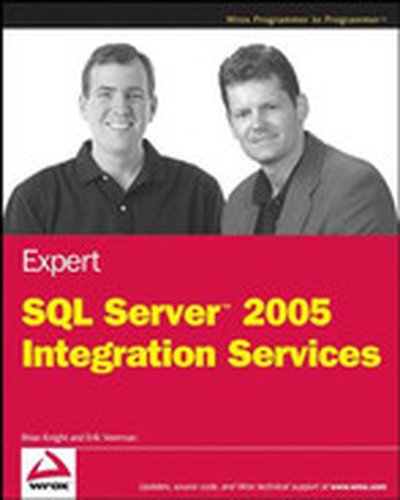
As a practical guide for Integration Services ETL development, this book shows you ways to implement your ETL solution requirements from the data to the administration and everything in-between. Each chapter begins with a review of pertinent ETL concepts and moves into working those out into a design with multiple examples and related Integration Services features with the end goal of putting it all together to get a solution.

SQL Server Integration Services

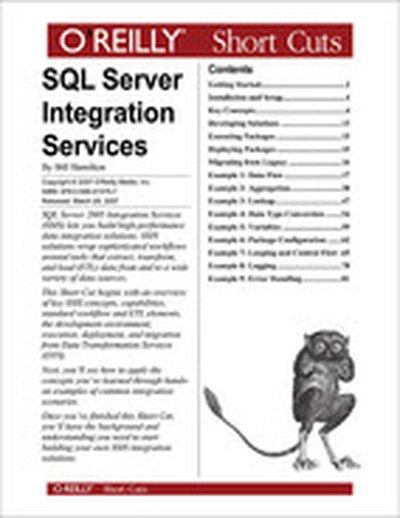
SQL Server 2005 Integration Services (SSIS) lets you build high-performance data integration solutions. SSIS solutions wrap sophisticated workflows around tasks that extract, transform, and load (ETL) data from and to a wide variety of data sources. This Short Cut begins with an overview of key SSIS concepts, capabilities, standard workflow and ETL elements, the development environment, execution, deployment, and migration from Data Transformation Services (DTS). Next, you'll see how to apply the concepts you've learned through hands-on examples of common integration scenarios. Once you've finished this Short Cut, you'll have the background and understanding you need to start building your own SSIS integration solutions.

Microsoft SQL Server 2005 Integration Services

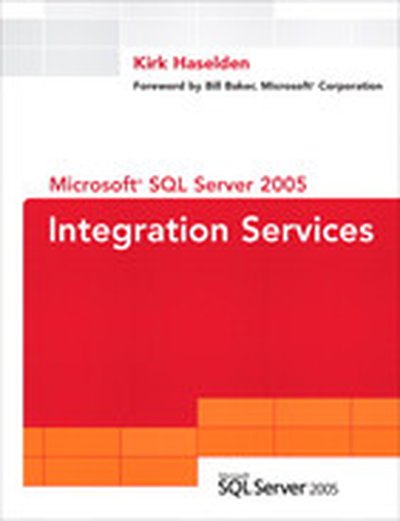
All medium to large companies have to deal with data being stored in a number of databases, spreadsheets and proprietary applications. Bringing all this data together into one system can be useful to analyzing the business; but can also be quite difficult to do. Integration Services is the next big bet in Microsoft's business intelligence lineup, providing you with true enterprise extract transform and load features (ETL). Microsoft SQL Server 2005 Integration Services concentrates on providing you with real world solutions to real world problems, giving you a head start on various projects. If you are only evaluating Integration Services, you'll be able to focus on the early chapters with the option of drilling down into details in the later chapters where some of the more complex concepts will be discussed in detail. The interesting sidebars peppered throughout the book provide insight into the processes, people and decisions that yielded the final IS product.

Professional SQL Server™ 2005 Integration Services

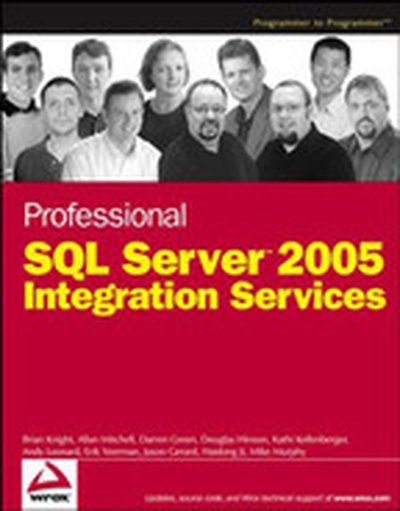
This book will help you get past the initial learning curve quickly so that you can get started using SSIS to transform data, create a workflow, or maintain your SQL Server. Offering you hands-on guidance, you'll learn a new world of integration possibilities and be able to move away from scripting complex logic to programming tasks using a full-featured language. What you will learn from this book Ways to quickly move and transform data How to configure every aspect of SSIS How to interface SSIS with web services and XML Techniques to scale the SSIS and make it more reliable How to migrate DTS packages to SSIS How to create your own custom tasks and user interfaces How to create an application that interfaces with SSIS to manage the environment A detailed usable case study for a complete ETL solution Who this book is for This book is for developers, DBAs, and users who are looking to program custom code in all of the .NET languages. It is expected that you know the basics of how to query the SQL Server and have some fundamental programming skills. Wrox Professional guides are planned and written by working programmers to meet the real-world needs of programmers, developers, and IT professionals. Focused and relevant, they address the issues technology professionals face every day. They provide examples, practical solutions, and expert education in new technologies, all designed to help programmers do a better job.

The Data Warehouse ETL Toolkit: Practical Techniques for Extracting, Cleaning, Conforming, and Delivering Data

Cowritten by Ralph Kimball, the world's leading data warehousing authority, whose previous books have sold more than 150,000 copies Delivers real-world solutions for the most time- and labor-intensive portion of data warehousing-data staging, or the extract, transform, load (ETL) process Delineates best practices for extracting data from scattered sources, removing redundant and inaccurate data, transforming the remaining data into correctly formatted data structures, and then loading the end product into the data warehouse Offers proven time-saving ETL techniques, comprehensive guidance on building dimensional structures, and crucial advice on ensuring data quality

Implementing Tivoli Data Warehouse V 1.2

With Tivoli Data Warehouse, you can analyze historical trends from various Tivoli and customer applications. The Tivoli Data Warehouse infrastructure enables a set of extract, transform, and load (ETL) utilities to extract and move data from Tivoli application data stores to a central repository. The open architecture of Tivoli Data Warehouse also enables data from non-Tivoli applications to be integrated into its central repository. Data from the central repository can be extracted into data marts that pertain to the reporting needs of selected groups. These data marts can also be used to produce cross application reports. This IBM Redbooks publication focuses on planning, installation, customization, use, maintenance, and troubleshooting topics related to the new features of the Tivoli Data Warehouse version 1.2. This is done using a number of case study scenarios and several warehouse enablement packs. The instructions given in this book are very detailed and explicit. These instructions are not the only way to install the products and related prerequisites. They are meant to be followed by anyone to successfully install, configure, and set up Tivoli Data Warehouse environments of any size.

Business Intelligence Roadmap: The Complete Project Lifecycle for Decision-Support Applications

"If you are looking for a complete treatment of business intelligence, then go no further than this book. Larissa T. Moss and Shaku Atre have covered all the bases in a cohesive and logical order, making it easy for the reader to follow their line of thought. From early design to ETL to physical database design, the book ties together all the components of business intelligence." --Bill Inmon, Inmon Enterprises is a visual guide to developing an effective business intelligence (BI) decision-support application. This book outlines a methodology that takes into account the complexity of developing applications in an integrated BI environment. The authors walk readers through every step of the process--from strategic planning to the selection of new technologies and the evaluation of application releases. The book also serves as a single-source guide to the best practices of BI projects. Business Intelligence Roadmap Part I steers readers through the six stages of a BI project: justification, planning, business analysis, design, construction, and deployment. Each chapter describes one of sixteen development steps and the major activities, deliverables, roles, and responsibilities. All technical material is clearly expressed in tables, graphs, and diagrams. Part II provides five matrices that serve as references for the development process charted in Part I. Management tools, such as graphs illustrating the timing and coordination of activities, are included throughout the book. The authors conclude by crystallizing their many years of experience in a list of dos, don'ts, tips, and rules of thumb. The accompanying CD-ROM includes a complete, customizable work breakdown structure. Both the book and the methodology it describes are designed to adapt to the specific needs of individual stakeholders and organizations. The book directs business representatives, business sponsors, project managers, and technicians to the chapters that address their distinct responsibilities. The framework of the book allows organizations to begin at any step and enables projects to be scheduled and managed in a variety of ways. is a clear and comprehensive guide to negotiating the complexities inherent in the development of valuable business intelligence decision-support applications Business Intelligence Roadmap

IBM TotalStorage Expert Hands-On Usage Guide

The IBM TotalStorage Expert V2R1 is the rebranded name for the IBM Storwatch Expert. It provides all the function in the StorWatch versions you have come to rely on - and then some. The IBM Total Storage Expert is made up of two component features: Enterprise Storage Server (ESS) Expert and Enterprise Tape Library (ETL) Expert. IBM TotalStorage Expert helps storage administrators boost the productivity of storage resources. It gathers and presents information that helps administrators manage the Enterprise Storage Server (ESS) and three Enterprise Tape Library (ETL) solutions: IBM TotalStorage Enterprise Automated Tape Library, IBM TotalStorage Virtual Tape Server, and IBM TotalStorage Peer-to-Peer Virtual Tape Server. The TotalStorage Expert prepares reports and graphical charts from the data it has collected. These reports and charts can be used in managing assets, capacity, and performance for your ESSs and ETLs. This IBM Redbooks publication will help you to install, tailor, and configure the TotalStorage Expert, and will show you how to use TotalStorage Expert.