 talk-data.com
Topic
GenAI
Generative AI
1517
tagged
Activity Trend
Top Events
Send us a text Welcome to the cozy corner of the tech world where ones and zeros mingle with casual chit-chat. Datatopics Unplugged is your go-to spot for relaxed discussions around tech, news, data, and society. Dive into conversations that should flow as smoothly as your morning coffee (but don't), where industry insights meet laid-back banter. Whether you're a data aficionado or just someone curious about the digital age, pull up a chair, relax, and let's get into the heart of data, unplugged style!
In this episode we are joined by Christophe Beke, where we discuss the following: Meta identifies networks pushing deceptive content likely generated by AI: Unpacking Meta’s discovery of AI-generated deep fakes used in political scams and phishing attacks.Klarna using GenAI to cut marketing costs by $10 million annually: Exploring how Klarna leverages generative AI to save on marketing costs and the broader impact of AI-generated content on branding and creativity.Apple and OpenAI partnership rumors: Speculating on Apple’s potential partnership with OpenAI and what this partnership mean for Siri and user privacy.Even the Raspberry Pi is getting in on AI: Exciting new AI capabilities for the Raspberry Pi and the privacy questions they raise. Plus discussion on windows screenshot tools & more privacy concerns.Nvidia teases next-gen “Rubin” AI chips: Nvidia’s surprising early reveal of their next-gen AI chips—what’s behind the move?Marker: A new tool for converting PDFs to Markdown: Discovering the Marker library and its perks for converting PDFs while keeping valuable metadata.Signal EU Market Exit: The privacy-focused app’s decision to leave the EU market over regulatory challenges and the broader debate on privacy vs. security.Reframing ‘tech debt’: Fresh perspectives on managing technical debt in the fast-paced world of software development.Our newsletter: Don’t miss out! Subscribe to our data and AI newsletter for the latest headlines and insights.
This session focuses on the benefits of moving databases to the cloud, the AWS portfolio of purpose-built and managed database services, customer success stories, and tools to make your migrations easier.
Learn more: https://go.aws/3x2mha0 Learn more about AWS events: https://go.aws/3kss9CP
Subscribe: More AWS videos: http://bit.ly/2O3zS75 More AWS events videos: http://bit.ly/316g9t4
ABOUT AWS Amazon Web Services (AWS) hosts events, both online and in-person, bringing the cloud computing community together to connect, collaborate, and learn from AWS experts. AWS is the world’s most comprehensive and broadly adopted cloud platform, offering over 200 fully featured services from data centers globally. Millions of customers—including the fastest-growing startups, largest enterprises, and leading government agencies—are using AWS to lower costs, become more agile, and innovate faster.
AWSEvents #GenerativeAI #AI #Cloud #AWSAIandDataConference
The AWS AI and Data Conference is a one-day event showcasing the power of Generative AI, Predictive Machine Learning, and Advanced Data Analytics for organizations. It highlights real-world applications and innovations in various industries, offering a chance to learn from AWS experts and customers who have used these technologies to scale operations and meet evolving customer demands. Attendees will explore the latest trends, best practices, and AWS tools like Amazon Bedrock, enabling efficient AI application development. Open to both experts and newcomers, the conference provides essential insights and networking opportunities to boost innovation within your organization.
Learn more: https://go.aws/3x2mha0 Learn more about AWS events: https://go.aws/3kss9CP
Subscribe: More AWS videos: http://bit.ly/2O3zS75 More AWS events videos: http://bit.ly/316g9t4
ABOUT AWS Amazon Web Services (AWS) hosts events, both online and in-person, bringing the cloud computing community together to connect, collaborate, and learn from AWS experts. AWS is the world’s most comprehensive and broadly adopted cloud platform, offering over 200 fully featured services from data centers globally. Millions of customers—including the fastest-growing startups, largest enterprises, and leading government agencies—are using AWS to lower costs, become more agile, and innovate faster.
AWSEvents #GenerativeAI #AI #Cloud #AWSAIandDataConference
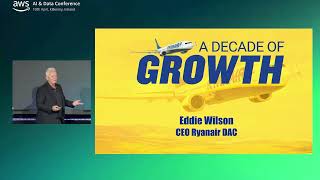
Eddie Wilson, CEO of Ryanair, details how Ryanair's scaling plans are supported by technology.
Learn more: https://go.aws/3x2mha0 Learn more about AWS events: https://go.aws/3kss9CP
Subscribe: More AWS videos: http://bit.ly/2O3zS75 More AWS events videos: http://bit.ly/316g9t4
ABOUT AWS Amazon Web Services (AWS) hosts events, both online and in-person, bringing the cloud computing community together to connect, collaborate, and learn from AWS experts. AWS is the world’s most comprehensive and broadly adopted cloud platform, offering over 200 fully featured services from data centers globally. Millions of customers—including the fastest-growing startups, largest enterprises, and leading government agencies—are using AWS to lower costs, become more agile, and innovate faster.
AWSEvents #Ryanair #GenerativeAI #AI #Cloud #AWSAIandDataConference
This session goes through the new capabilities of Amazon Codewhisperer, Q, and Bedrock. Learn how Datalex have adopted these technologies for their product development processes and data management platform.
Learn more: https://go.aws/3x2mha0 Learn more about AWS events: https://go.aws/3kss9CP
Subscribe: More AWS videos: http://bit.ly/2O3zS75 More AWS events videos: http://bit.ly/316g9t4
ABOUT AWS Amazon Web Services (AWS) hosts events, both online and in-person, bringing the cloud computing community together to connect, collaborate, and learn from AWS experts. AWS is the world’s most comprehensive and broadly adopted cloud platform, offering over 200 fully featured services from data centers globally. Millions of customers—including the fastest-growing startups, largest enterprises, and leading government agencies—are using AWS to lower costs, become more agile, and innovate faster.
AWSEvents #GenerativeAI #AI #Cloud #AWSAIandDataConference
Uncover the power of Zero-ETL integrations for your data in AWS. Learn firsthand how integrating Amazon Aurora with Amazon Redshift and Amazon DynamoDB with Amazon OpenSearch enables near real-time analytics and machine learning. Tailored for developers, architects, and administrators, discover key insights, best practices, and techniques for seamless integration of fully managed services, reducing latency and unlocking the full potential of your data in AWS.
Learn more: https://go.aws/3x2mha0 Learn more about AWS events: https://go.aws/3kss9CP
Subscribe: More AWS videos: http://bit.ly/2O3zS75 More AWS events videos: http://bit.ly/316g9t4
ABOUT AWS Amazon Web Services (AWS) hosts events, both online and in-person, bringing the cloud computing community together to connect, collaborate, and learn from AWS experts. AWS is the world’s most comprehensive and broadly adopted cloud platform, offering over 200 fully featured services from data centers globally. Millions of customers—including the fastest-growing startups, largest enterprises, and leading government agencies—are using AWS to lower costs, become more agile, and innovate faster.
AWSEvents #GenerativeAI #AI #Cloud #AWSAIandDataConference
Learn how Sonrai Analytics leverage AI/ML on AWS to reduce cancer drug trial times. By analysing different data types in the Machine Learning Pipeline, Sonrai Analytics are able to improve diagnosis and treatments for patients worldwide. In this session we will cover some common AI/ML pipeline approaches when building, training and deploying end-to-end AI/ML models on Amazon SageMaker.
Learn more: https://go.aws/3x2mha0 Learn more about AWS events: https://go.aws/3kss9CP
Subscribe: More AWS videos: http://bit.ly/2O3zS75 More AWS events videos: http://bit.ly/316g9t4
ABOUT AWS Amazon Web Services (AWS) hosts events, both online and in-person, bringing the cloud computing community together to connect, collaborate, and learn from AWS experts. AWS is the world’s most comprehensive and broadly adopted cloud platform, offering over 200 fully featured services from data centers globally. Millions of customers—including the fastest-growing startups, largest enterprises, and leading government agencies—are using AWS to lower costs, become more agile, and innovate faster.
AWSEvents #GenerativeAI #AI #Cloud #AWSAIandDataConference
As AI continues to transform industries, the applications of generative AI and Large Language Models (LLMs) are becoming increasingly significant. This session delves into the utility of these models across various sectors. Gain an understanding of how to use LLMs, embeddings, vector datastores, and their indexing techniques to create search solutions for enhanced user experiences and improved outcomes on AWS using Amazon Bedrock, Aurora, and LangChain. By the end of this session, participants will be equipped with the knowledge to harness the power of LLMs and vector databases, paving the way for the development of innovative search solutions on AWS.
Learn more: https://go.aws/3x2mha0 Learn more about AWS events: https://go.aws/3kss9CP
Subscribe: More AWS videos: http://bit.ly/2O3zS75 More AWS events videos: http://bit.ly/316g9t4
ABOUT AWS Amazon Web Services (AWS) hosts events, both online and in-person, bringing the cloud computing community together to connect, collaborate, and learn from AWS experts. AWS is the world’s most comprehensive and broadly adopted cloud platform, offering over 200 fully featured services from data centers globally. Millions of customers—including the fastest-growing startups, largest enterprises, and leading government agencies—are using AWS to lower costs, become more agile, and innovate faster.
AWSEvents #GenerativeAI #AI #Cloud #AWSAIandDataConference
Today, we’re joined by Cenk Sidar, Founder & CEO at Enquire AI, the ultimate AI-powered knowledge network. We talk about: Advances in GenAI large language models that enable ingestion of anonymized dataHow Enquire AI created a new tier of users with GenAI & productizing their existing data lake Keeping data current on a real-time basisImpacts of commodification of large language modelsHow companies can survive irrelevance when large AI firms launch new featuresReplicating the thinking and judgment of experienced employees to make them ‘eternal’
In today's fast-paced digital world, managing IT operations is more complex than ever. With the rise of cloud services, microservices, and constant software deployments, the pressure on IT teams to keep everything running smoothly is immense. But how do you keep up with the ever-growing flood of data and ensure your systems are always available? AIOps is the use of artificial intelligence to automate and scale IT operations. But what exactly is AIOps, and how can it transform your IT operations? Assaf Resnick is the CEO and Co-Founder of BigPanda. Before founding BigPanda, Assaf was an investor at Sequoia Capital, where he focused on early and growth-stage investing in software, internet, and mobile sectors. Assaf’s time at Sequoia gave him a front-row seat to the challenges of IT scale, complexity, and velocity faced by Operations teams in rapidly scaling and accelerating organizations. This is the problem that Assaf founded BigPanda to solve. In the episode, Richie and Assaf explore AIOps, how AIOps helps manage increasingly complex IT operations, how AIOps differs from DevOps and MLOps, examples of AIOps projects, a real world application of AIOps, the key benefits of AIOps, how to implement AIOps, excitement in the space, how GenAI is improving AIOps and much more. Links Mentioned in the Show: BigPandaGartner: Market Guide for AIOps Platforms[Course] Implementing AI Solutions in BusinessRelated Episode: Adding AI to the Data Warehouse with Sridhar Ramaswamy, CEO at SnowflakeSign up to RADAR: AI Edition New to DataCamp? Learn on the go using the DataCamp mobile app Empower your business with world-class data and AI skills with DataCamp for business
Is it possible to achieve GPT 4 performance with GPT 3.5? In this session you will learn What are Gen AI agents Where do agents shine and where not? how to integrate it carefully with your application. During this session Yaniv will present a demo with multi agents to solve research problem
Welcome to another curated, Promoted Episode of Experiencing Data!
In episode 144, Shashank Garg, Co-Founder and CEO of Infocepts, joins me to explore whether all this discussion of data products out on the web actually has substance and is worth the perceived extra effort. Do we always need to take a product approach for ML and analytics initiatives? Shashank dives into how Infocepts approaches the creation of data solutions that are designed to be actionable within specific business workflows—and as I often do, I started out by asking Shashank how he and Infocepts define the term “data product.” We discuss a few real-world applications Infocepts has built, and the measurable impact of these data products—as well as some of the challenges they’ve faced that your team might as well. Skill sets also came up; who does design? Who takes ownership of the product/value side? And of course, we touch a bit on GenAI.
Highlights/ Skip to
Shashank gives his definition of data products (01:24) We tackle the challenges of user adoption in data products (04:29) We discuss the crucial role of integrating actionable insights into data products for enhanced decision-making (05:47) Shashank shares insights on the evolution of data products from concept to practical integration (10:35) We explore the challenges and strategies in designing user-centric data products (12:30) I ask Shashank about typical environments and challenges when starting new data product consultations (15:57) Shashank explains how Infocepts incorporates AI into their data solutions (18:55) We discuss the importance of understanding user personas and engaging with actual users (25:06) Shashank describes the roles involved in data product development’s ideation and brainstorming stages (32:20) The issue of proxy users not truly representing end-users in data product design is examined (35:47) We consider how organizations are adopting a product-oriented approach to their data strategies (39:48) Shashank and I delve into the implications of GenAI and other AI technologies on product orientation and user adoption (43:47) Closing thoughts (51:00)
Quotes from Today’s Episode
“Data products, at least to us at Infocepts, refers to a way of thinking about and organizing your data in a way so that it drives consumption, and most importantly, actions.” - Shashank Garg (1:44) “The way I see it is [that] the role of a DPM (data product manager)—whether they have the title or not—is benefits creation. You need to be responsible for benefits, not for outputs. The outputs have to create benefits or it doesn’t count. Game over” - Brian O’Neill (10:07) We talk about bridging the gap between the worlds of business and analytics... There's a huge gap between the perception of users and the tech leaders who are producing it." - Shashank Garg (17:37) “IT leaders often limit their roles to provisioning their secure data, and then they rely on businesses to be able to generate insights and take actions. Sometimes this handoff works, and sometimes it doesn’t because of quality governance.” - Shashank Garg (23:02) “Data is the kind of field where people can react very, very quickly to what’s wrong.” - Shashank Garg (29:44) “It’s much easier to get to a good prototype if we know what the inputs to a prototype are, which include data about the people who are going to use the solution, their usage scenarios, use cases, attitudes, beliefs…all these kinds of things.” - Brian O’Neill (31:49) “For data, you need a separate person, and then for designing, you need a separate person, and for analysis, you need a separate person—the more you can combine, I don’t think you can create super-humans who can do all three, four disciplines, but at least two disciplines and can appreciate the third one that makes it easier.” - Shashank Garg (39:20) “When we think of AI, we’re all talking about multiple different delivery methods here. I think AI is starting to become GenAI to a lot of non-data people. It’s like their—everything is GenAI.” - Brian O'Neill (43:48)
Links
Infocepts website: https://www.infocepts.ai/ Shashank Garg on LinkedIn: https://www.linkedin.com/in/shashankgarg/ Top 5 Data & AI initiatives for business success: https://www.infocepts.ai/downloads/top-5-data-and-ai-initiatives-to-drive-business-growth-in-2024-beyond/
Explore the reasons for data engineers to collaborate with data scientists, machine learning (ML) engineers, and developers on DataOps initiatives that support GenAI. Published at: https://www.eckerson.com/articles/dataops-for-generative-ai-data-pipelines-part-iii-team-collaboration
This blog explores three criteria to evaluate tools that manage unstructured data pipelines for GenAI. Published at: https://www.eckerson.com/articles/data-engineering-for-genai-three-criteria-to-evaluate-pipeline-tools
Summary
The purpose of business intelligence systems is to allow anyone in the business to access and decode data to help them make informed decisions. Unfortunately this often turns into an exercise in frustration for everyone involved due to complex workflows and hard-to-understand dashboards. The team at Zenlytic have leaned on the promise of large language models to build an AI agent that lets you converse with your data. In this episode they share their journey through the fast-moving landscape of generative AI and unpack the difference between an AI chatbot and an AI agent.
Announcements
Hello and welcome to the Data Engineering Podcast, the show about modern data management This episode is supported by Code Comments, an original podcast from Red Hat. As someone who listens to the Data Engineering Podcast, you know that the road from tool selection to production readiness is anything but smooth or straight. In Code Comments, host Jamie Parker, Red Hatter and experienced engineer, shares the journey of technologists from across the industry and their hard-won lessons in implementing new technologies. I listened to the recent episode "Transforming Your Database" and appreciated the valuable advice on how to approach the selection and integration of new databases in applications and the impact on team dynamics. There are 3 seasons of great episodes and new ones landing everywhere you listen to podcasts. Search for "Code Commentst" in your podcast player or go to dataengineeringpodcast.com/codecomments today to subscribe. My thanks to the team at Code Comments for their support. Data lakes are notoriously complex. For data engineers who battle to build and scale high quality data workflows on the data lake, Starburst is an end-to-end data lakehouse platform built on Trino, the query engine Apache Iceberg was designed for, with complete support for all table formats including Apache Iceberg, Hive, and Delta Lake. Trusted by teams of all sizes, including Comcast and Doordash. Want to see Starburst in action? Go to dataengineeringpodcast.com/starburst and get $500 in credits to try Starburst Galaxy today, the easiest and fastest way to get started using Trino. Your host is Tobias Macey and today I'm interviewing Ryan Janssen and Paul Blankley about their experiences building AI powered agents for interacting with your data
Interview
Introduction How did you get involved in data? In AI? Can you describe what Zenlytic is and the role that AI is playing in your platform? What have been the key stages in your AI journey?
What are some of the dead ends that you ran into along the path to where you are today? What are some of the persistent challenges that you are facing?
So tell us more about data agents. Firstly, what are data agents and why do you think they're important? How are data agents different from chatbots? Are data agents harder to build? How do you make them work in production? What other technical architectures have you had to develop to support the use of AI in Zenlytic? How have you approached the work of customer education as you introduce this functionality? What are some of the most interesting or erroneous misconceptions that you have heard about what the AI can and can't do? How have you balanced accuracy/trustworthiness with user experience and flexibility in the conversational AI, given the potential for these models to create erroneous responses? What are the most interesting, innovative, or unexpected ways that you have seen your AI agent used? What are the most interesting, unexpected, or challenging lessons that you have learned while working on building an AI agent for business intelligence? When is an AI agent the wrong choice? What do you have planned for the future of AI in the Zenlytic product?
Contact Info
Ryan
Paul
Parting Question
From your perspective, what is the biggest gap in the tooling or technology for data management today?
Closing Announce
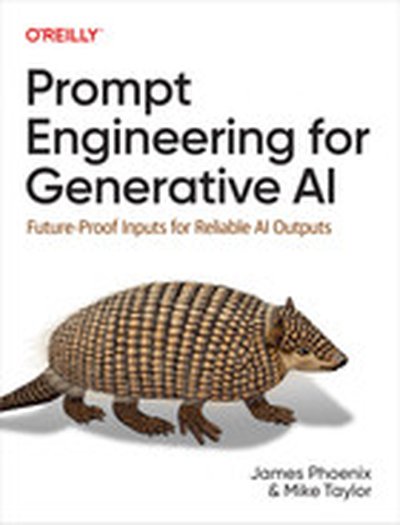
Large language models (LLMs) and diffusion models such as ChatGPT and Stable Diffusion have unprecedented potential. Because they have been trained on all the public text and images on the internet, they can make useful contributions to a wide variety of tasks. And with the barrier to entry greatly reduced today, practically any developer can harness LLMs and diffusion models to tackle problems previously unsuitable for automation. With this book, you'll gain a solid foundation in generative AI, including how to apply these models in practice. When first integrating LLMs and diffusion models into their workflows, most developers struggle to coax reliable enough results from them to use in automated systems. Authors James Phoenix and Mike Taylor show you how a set of principles called prompt engineering can enable you to work effectively with AI. Learn how to empower AI to work for you. This book explains: The structure of the interaction chain of your program's AI model and the fine-grained steps in between How AI model requests arise from transforming the application problem into a document completion problem in the model training domain The influence of LLM and diffusion model architecture—and how to best interact with it How these principles apply in practice in the domains of natural language processing, text and image generation, and code
Welcome back! In today's solo episode, I share the top five struggles that enterprise SAAS leaders have in the analytics/insight/decision support space that most frequently leads them to think they have a UI/UX design problem that has to be addressed. A lot of today's episode will talk about "slow creep," unaddressed design problems that gradually build up over time and begin to impact both UX and your revenue negatively. I will also share 20 UI and UX design problems I often see (even if clients do not!) that, when left unaddressed, may create sales friction, adoption problems, churn, or unhappy end users. If you work at a software company or are directly monetizing an ML or analytical data product, this episode is for you!
Highlights/ Skip to
I discuss how specific UI/UX design problems can significantly impact business performance (02:51) I discuss five common reasons why enterprise software leaders typically reach out for help (04:39) The 20 common symptoms I've observed in client engagements that indicate the need for professional UI/UX intervention or training (13:22) The dangers of adding too many features or customization and how it can overwhelm users (16:00) The issues of integrating AI into user interfaces and UXs without proper design thinking (30:08) I encourage listeners to apply the insights shared to improve their data products (48:02)
Quotes from Today’s Episode “One of the problems with bad design is that some of it we can see and some of it we can't — unless you know what you're looking for." - Brian O’Neill (02:23) “Design is usually not top of mind for an enterprise software product, especially one in the machine learning and analytics space. However, if you have human users, even enterprise ones, their tolerance for bad software is much lower today than in the past.” Brian O’Neill - (13:04) “Early on when you're trying to get product market fit, you can't be everything for everyone. You need to be an A+ experience for the person you're trying to satisfy.” -Brian O’Neill (15:39) “Often when I see customization, it is mostly used as a crutch for not making real product strategy and design decisions.” - Brian O’Neill (16:04) "Customization of data and dashboard products may be more of a tax than a benefit. In the marketing copy, customization sounds like a benefit...until you actually go in and try to do it. It puts the mental effort to design a good solution on the user." - Brian O’Neill (16:26) “We need to think strategically when implementing Gen AI or just AI in general into the product UX because it won’t automatically help drive sales or increase business value.” - Brian O’Neill (20:50) “A lot of times our analytics and machine learning tools… are insight decision support products. They're supposed to be rooted in facts and data, but when it comes to designing these products, there's not a whole lot of data and facts that are actually informing the product design choices.” Brian O’Neill - (30:37) “If your IP is that special, but also complex, it needs the proper UI/UX design treatment so that the value can be surfaced in such a way someone is willing to pay for it if not also find it indispensable and delightful.” - Brian O’Neill (45:02)
Links The (5) big reasons AI/ML and analytics product leaders invest in UI/UX design help: https://designingforanalytics.com/resources/the-5-big-reasons-ai-ml-and-analytics-product-leaders-invest-in-ui-ux-design-help/ Subscribe for free insights on designing useful, high-value enterprise ML and analytical data products: https://designingforanalytics.com/list Access my free frameworks, guides, and additional reading for SAAS leaders on designing high-value ML and analytical data products: https://designingforanalytics.com/resources Need help getting your product’s design/UX on track—so you can see more sales, less churn, and higher user adoption? Schedule a free 60-minute Discovery Call with me and I’ll give you my read on your situation and my recommendations to get ahead:https://designingforanalytics.com/services/
Data engineering is now considered a crucial job in IT as Generative AI, the hottest technology of this decade, relies on data engineers to provide accurate inputs. Published at: https://www.eckerson.com/articles/data-engineering-for-genai-how-to-optimize-data-pipelines-and-governance
Eric Avidon is a journalist at TechTarget who's interviewed Tristan a few times, and now Tristan gets to flip the script and interview Eric. Eric is a journalist veteran, covering everything from finance to the Boston Red Sox, but now he spends a lot of time with vendors in the data space and has a broad view of what's going on. Eric and Tristan discuss AI and analytics and how mature these features really are today, data quality and its importance, the AI strategies of Snowflake and Databricks, and a lot more. Plus, part way through you can hear Tristan reacting to a mild earthquake that hit the East Coast. For full show notes and to read 6+ years of back issues of the podcast's companion newsletter, head to https://roundup.getdbt.com.