talk-data.com talk-data.com

Topic

google-analytics

42

tagged

Activity Trend

1 peak/qtr
2020-Q1 2026-Q1

Activities

Showing filtered results

Filtering by: O'Reilly Data Science Books ×
Path to Stellar Business Performance Analysis : A Design and Implementation Handbook

Business performance analysis is central to any business, as it helps to make or mend products, services, and processes. This book provides several blueprints for setting up business performance analytics (BPA) shops, from process layout for performance measures to tracking the underlying metrics of them using website tools such as Google Analytics and Looker Studio. Delivering satisfying user experiences in the context of overarching business objectives is key to delivering elevated business performance. This book transcends the topic of tracking user behaviors in websites from generic to specific KPI scenario-based tracking using Google Analytics/Google Tag Manager. Business Performance Analysis stands out by helping you create fit-for-purpose and coherent performance analysis blueprints by integrating performance measure creation and website analytics of BPA together. What You Will Learn Design a Business Performance Analysis function Analyze performance metrics with website analytics tools Identify business performance metrics for common product scenarios Who This Book is For Senior leaders, product managers, product owners, UX and web analytics professionals

Speed Metrics Guide: Choosing the Right Metrics to Use When Evaluating Websites

Faster websites offer a better user experience and typically have higher conversion rates. It can be challenging to know where to invest to meaningfully improve a website's speed. Investing correctly to improve speed starts with understanding how to correctly measure speed and knowing how to use those measurements to identify the biggest opportunities. Speed Metrics Guidehelps marketers, SEOs, business leaders, designers, and everybody else involved in website performance select the right metrics to use to optimize their website's speed. Each chapter examines a specific metric, discusses what it measures, why the metric matters and what tactics will help improve that metric. What You'll Learn The best metrics and tools to help you measure website speed, including Google's Core Web Vitals How and when to best use each metric Where each metric fits within the website loading process How to use each metric to find different ways of improving website speed Who This book Is For Non-technical audience, including marketers, SEOs, designers, and UX professionals.

Learning Google Analytics

Why is Google Analytics 4 the most modern data model available for digital marketing analytics? Rather than simply reporting what has happened, GA4's new cloud integrations enable more data activation, linking online and offline data across all your streams to provide end-to-end marketing data. This practical book prepares you for the future of digital marketing by demonstrating how GA4 supports these additional cloud integrations. Author Mark Edmondson, Google developer expert for Google Analytics and Google Cloud, provides a concise yet comprehensive overview of GA4 and its cloud integrations. Data, business, and marketing analysts will learn major facets of GA4's powerful new analytics model, with topics including data architecture and strategy, and data ingestion, storage, and modeling. You'll explore common data activation use cases and get the guidance you need to implement them. You'll learn: How Google Cloud integrates with GA4 The potential use cases that GA4 integrations can enable Skills and resources needed to create GA4 integrations How much GA4 data capture is necessary to enable use cases The process of designing dataflows from strategy through data storage, modeling, and activation How to adapt the use cases to fit your business needs

API Strategy for Decision Makers

API Strategy for Decision Makers provides actionable best practices for building winning API products. Whether you're with an API-first company or with an existing enterprise software company looking to expand your API offerings, this report shows you how to grow your API product into a center of revenue and metrics to measure against. Authors Mike Amundsen and Derric Gilling draw on real-life examples to guide you through the important considerations for successfully developing and executing on your API strategy. By identifying winning business cases, sharing best practices for adoption and monetization, and showing you how to create a great API experience, this report presents a detailed overview for every C-suite executive and product owner managing an API platform. With this report, you'll: Learn how to apply common product management techniques to better manage your APIs as products Discover how to define a strategy from initial adoption, monetization, and deprecation of your APIs Determine how to position your API products in your company's portfolio as well as the wider market Dig deep into the step-by-step process of making your API strategy come to life Explore the power of API observability, monitoring, and analytics as a means to quantify, track, and optimize your API strategy

Analytics Stories

Inform your own analyses by seeing how one of the best data analysts in the world approaches analytics problems Analytics Stories: How to Make Good Things Happen is a thoughtful, incisive, and entertaining exploration of the application of analytics to real-world problems and situations. Covering fields as diverse as sports, finance, politics, healthcare, and business, Analytics Stories bridges the gap between the oft inscrutable world of data analytics and the concrete problems it solves. Distinguished professor and author Wayne L. Winston answers questions like: Was Liverpool over Barcelona the greatest upset in sports history? Was Derek Jeter a great infielder What's wrong with the NFL QB rating? How did Madoff keep his fund going? Does a mutual fund’s past performance predict future performance? What caused the Crash of 2008? Can we predict where crimes are likely to occur? Is the lot of the American worker improving? How can analytics save the US Republic? The birth of evidence-based medicine: How did James Lind know citrus fruits cured scurvy? How can I objectively compare hospitals? How can we predict heart attacks in real time? How does a retail store know if you're pregnant? How can I use A/B testing to improve sales from my website? How can analytics help me write a hit song? Perfect for anyone with the word “analyst” in their job title, Analytics Stories illuminates the process of applying analytic principles to practical problems and highlights the potential pitfalls that await careless analysts.

INFORMS Analytics Body of Knowledge

Standardizes the definition and framework of analytics ABOK stands for Analytics Body of Knowledge. Based on the authors’ definition of analytics—which is “a process by which a team of people helps an organization make better decisions (the objective) through the analysis of data (the activity)”— this book from Institute for Operations Research and the Management Sciences (INFORMS) represents the perspectives of some of the most respected experts on analytics. The INFORMS ABOK documents the core concepts and skills with which an analytics professional should be familiar; establishes a dynamic resource that will be used by practitioners to increase their understanding of analytics; and, presents instructors with a framework for developing academic courses and programs in analytics. The INFORMS ABOK offers in-depth insight from peer-reviewed chapters that provide readers with a better understanding of the dynamic field of analytics. Chapters cover: Introduction to Analytics; Getting Started with Analytics; The Analytics Team; The Data; Solution Methodology; Model Building; Machine Learning; Deployment and Life Cycle Management; and The Blossoming Analytics Talent Pool: An Overview of the Analytics Ecosystem. Across industries and academia, readers with various backgrounds in analytics – from novices who are interested in learning more about the basics of analytics to experienced professionals who want a different perspective on some aspect of analytics – will benefit from reading about and implementing the concepts and methods covered by the INFORMS ABOK.

Analytics and Big Data for Accountants

Analytics is the new force driving business. Tools have been created to measure program impacts and ROI, visualize data and business processes, and uncover the relationship between key performance indicators, many using the unprecedented amount of data now flowing into organizations. Featuring updated examples and surveys, this dynamic book covers leading-edge topics in analytics and finance. It is packed with useful tips and practical guidance you can apply immediately. This book prepares accountants to: Deal with major trends in predictive analytics, optimization, correlation of metrics, and big data. Interpret and manage new trends in analytics techniques affecting your organization. Use new tools for data analytics. Critically interpret analytics reports and advise decision makers.

Fundamentals of Predictive Analytics with JMP, Second Edition

Written for students in undergraduate and graduate statistics courses, as well as for the practitioner who wants to make better decisions from data and models, this updated and expanded second edition of Fundamentals of Predictive Analytics with JMP(R) bridges the gap between courses on basic statistics, which focus on univariate and bivariate analysis, and courses on data mining and predictive analytics. Going beyond the theoretical foundation, this book gives you the technical knowledge and problem-solving skills that you need to perform real-world multivariate data analysis. First, this book teaches you to recognize when it is appropriate to use a tool, what variables and data are required, and what the results might be. Second, it teaches you how to interpret the results and then, step-by-step, how and where to perform and evaluate the analysis in JMP . Using JMP 13 and JMP 13 Pro, this book offers the following new and enhanced features in an example-driven format: an add-in for Microsoft Excel Graph Builder dirty data visualization regression ANOVA logistic regression principal component analysis LASSO elastic net cluster analysis decision trees k-nearest neighbors neural networks bootstrap forests boosted trees text mining association rules model comparison With today’s emphasis on business intelligence, business analytics, and predictive analytics, this second edition is invaluable to anyone who needs to expand his or her knowledge of statistics and to apply real-world, problem-solving analysis. This book is part of the SAS Press program.

Analytics

For years, organizations have struggled to make sense out of their data. IT projects designed to provide employees with dashboards, KPIs, and business-intelligence tools often take a year or more to reach the finish line...if they get there at all. This has always been a problem. Today, though, it's downright unacceptable. The world changes faster than ever. Speed has never been more important. By adhering to antiquated methods, firms lose the ability to see nascent trends—and act upon them until it's too late. But what if the process of turning raw data into meaningful insights didn't have to be so painful, time-consuming, and frustrating? What if there were a better way to do analytics? Fortunately, you're in luck... Analytics: The Agile Way is the eighth book from award-winning author and Arizona State University professor Phil Simon. Analytics: The Agile Way demonstrates how progressive organizations such as Google, Nextdoor, and others approach analytics in a fundamentally different way. They are applying the same Agile techniques that software developers have employed for years. They have replaced large batches in favor of smaller ones...and their results will astonish you. Through a series of case studies and examples, Analytics: The Agile Way demonstrates the benefits of this new analytics mind-set: superior access to information, quicker insights, and the ability to spot trends far ahead of your competitors.

Introduction to Google Analytics: A Guide for Absolute Beginners

Develop your digital/online marketing skills and learn web analytics to understand the performance of websites and ad campaigns. Approaches covered will be immediately useful for business or nonprofit organizations. If you are completely new to Google Analytics and you want to learn the basics, this guide will introduce you to the content quickly. Web analytics is critical to online marketers as they seek to track return on investment and optimize their websites. Introduction to Google Analytics covers the basics of Google Analytics, starting with creating a blog, and monitoring the number of people who see the blog posts and where they come from. What You'll Learn Understand basic techniques to generate traffic for a blog or website Review the performance of a website or campaign Set up a Shopify account to track ROI Create and maximize AdWords to track conversion Discover opportunities offered by Google, including the Google Individual Qualification Who This Book Is For Those who need to get up to speed on Google Analytics tools and techniques for business or personal use. This book is also suitable as a student reference.

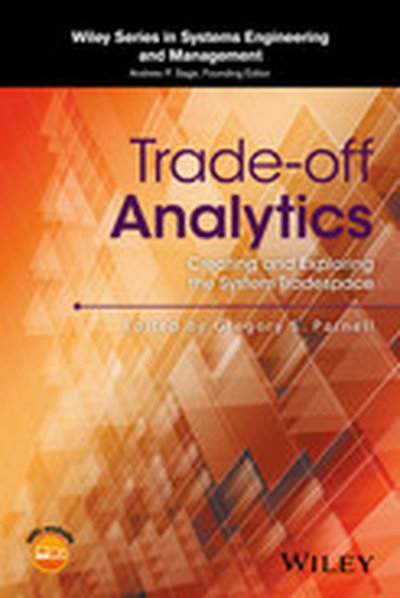
Trade-off Analytics

Presents information to create a trade-off analysis framework for use in government and commercial acquisition environments This book presents a decision management process based on decision theory and cost analysis best practices aligned with the ISO/IEC 15288, the Systems Engineering Handbook, and the Systems Engineering Body of Knowledge. It provides a sound trade-off analysis framework to generate the tradespace and evaluate value and risk to support system decision-making throughout the life cycle. Trade-off analysis and risk analysis techniques are examined. The authors present an integrated value trade-off and risk analysis framework based on decision theory. These trade-off analysis concepts are illustrated in the different life cycle stages using multiple examples from defense and commercial domains. Provides techniques to identify and structure stakeholder objectives and creative, doable alternatives Presents the advantages and disadvantages of tradespace creation and exploration techniques for trade-off analysis of concepts, architectures, design, operations, and retirement Covers the sources of uncertainty in the system life cycle and examines how to identify, assess, and model uncertainty using probability Illustrates how to perform a trade-off analysis using the INCOSE Decision Management Process using both deterministic and probabilistic techniques Trade-off Analytics: Creating and Exploring the System Tradespace is written for upper undergraduate students and graduate students studying systems design, systems engineering, industrial engineering and engineering management. This book also serves as a resource for practicing systems designers, systems engineers, project managers, and engineering managers. is a Research Professor in the Department of Industrial Engineering at the University of Arkansas. He is also a senior principal with Innovative Decisions, Inc., a decision and risk analysis firm and has served as Chairman of the Board. Dr. Parnell has published more than 100 papers and book chapters and was lead editor of Gregory S. Parnell, PhD, Decision Making for Systems Engineering and Management, Wiley Series in Systems Engineering (2nd Ed, Wiley 2011) and lead author of the Handbook of Decision Analysis (Wiley 2013). He is a fellow of INFORMS, the INCOSE, MORS, and the Society for Decision Professionals.

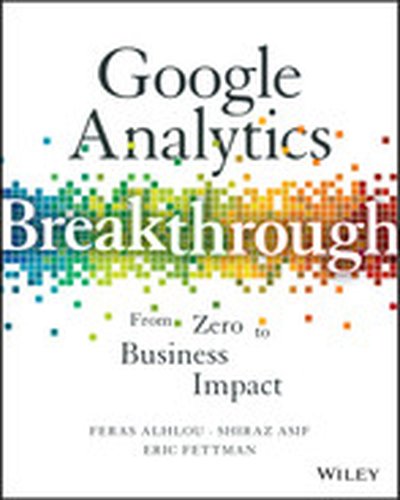
Google Analytics Breakthrough

A complete, start-to-finish guide to Google Analytics instrumentation and reporting Google Analytics Breakthrough is a much-needed comprehensive resource for the world's most widely adopted analytics tool. Designed to provide a complete, best-practices foundation in measurement strategy, implementation, reporting, and optimization, this book systematically demystifies the broad range of Google Analytics features and configurations. Throughout the end-to-end learning experience, you'll sharpen your core competencies, discover hidden functionality, learn to avoid common pitfalls, and develop next-generation tracking and analysis strategies so you can understand what is helping or hindering your digital performance and begin driving more success. Google Analytics Breakthrough offers practical instruction and expert perspectives on the full range of implementation and reporting skills: Learn how to campaign-tag inbound links to uncover the email, social, PPC, and banner/remarketing traffic hiding as other traffic sources and to confidently measure the ROI of each marketing channel Add event tracking to capture the many important user interactions that Google Analytics does not record by default, such as video plays, PDF downloads, scrolling, and AJAX updates Master Google Tag Manager for greater flexibility and process control in implementation Set up goals and Enhanced Ecommerce tracking to measure performance against organizational KPIs and configure conversion funnels to isolate drop-off Create audience segments that map to your audience constituencies, amplify trends, and help identify optimization opportunities Populate custom dimensions that reflect your organization, your content, and your visitors so Google Analytics can speak your language Gain a more complete view of customer behavior with mobile app and cross-device tracking Incorporate related tools and techniques: third-party data visualization, CRM integration for long-term value and lead qualification, marketing automation, phone conversion tracking, usability, and A/B testing Improve data storytelling and foster analytics adoption in the enterprise As many as 10-25 million organizations have installed Google Analytics, including an estimated 67 percent of Fortune 500 companies, but deficiencies plague most implementations, and inadequate reporting practices continue to hinder meaningful analysis. By following the strategies and techniques in Google Analytics Breakthrough, you can address the gaps in your own still set, transcend the common limitations, and begin using Google Analytics for real competitive advantage. Critical contributions from industry luminaries such as Brian Clifton, Tim Ash, Bryan and Jeffrey Eisenberg, and Jim Sterne – and a foreword by Avinash Kaushik – enhance the learning experience and empower you to drive consistent, real-world improvement through analytics.

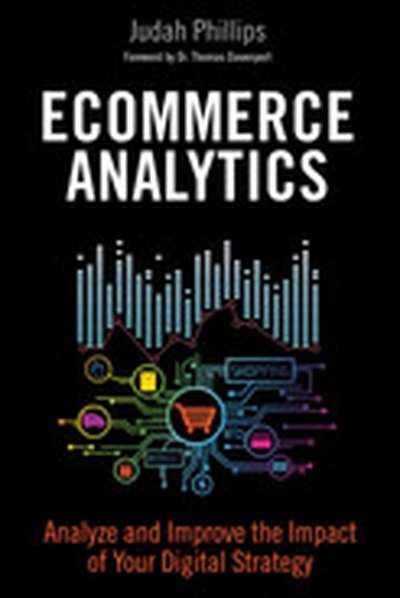
Ecommerce Analytics: Analyze and Improve the Impact of Your Digital Strategy

Today's Complete, Focused, Up-to-Date Guide to Analytics for Ecommerce Profit from analytics throughout the entire customer experience and lifecycle Make the most of all the fast-changing data sources now available to you For all ecommerce executives, strategists, entrepreneurs, marketers, analysts, and data scientists Ecommerce Analytics is the only complete single-source guide to analytics for your ecommerce business. It brings together all the knowledge and skills you need to solve your unique problems, and transform your data into better decisions and customer experiences. Judah Phillips shows how to use analysis to improve ecommerce marketing and advertising, understand customer behavior, increase conversion rates, strengthen loyalty, optimize merchandising and product mix, streamline transactions, optimize product mix, and accurately attribute sales. Drawing on extensive experience leading large-scale analytics programs, he also offers expert guidance on building successful analytical teams; surfacing high-value insights via dashboards and visualization; and managing data governance, security, and privacy. Here are the answers you need to make the most of analytics in ecommerce: throughout your organization, across your entire customer lifecycle.

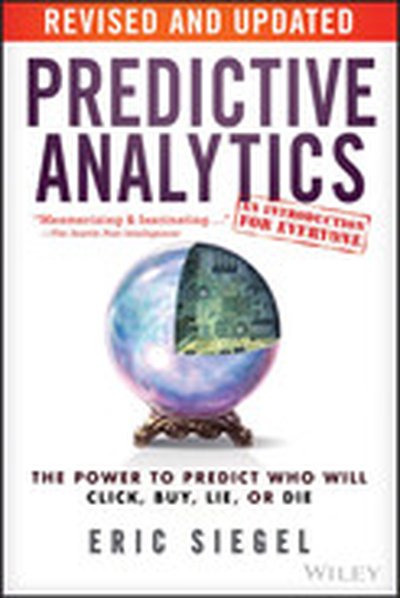
Predictive Analytics, Revised and Updated

"Mesmerizing & fascinating..." — The Seattle Post-Intelligencer "The Freakonomics of big data." —Stein Kretsinger, founding executive of Advertising.com Award-winning | Used by over 30 universities | Translated into 9 languages An introduction for everyone. In this rich, fascinating — surprisingly accessible — introduction, leading expert Eric Siegel reveals how predictive analytics works, and how it affects everyone every day. Rather than a “how to” for hands-on techies, the book serves lay readers and experts alike by covering new case studies and the latest state-of-the-art techniques. Prediction is booming. It reinvents industries and runs the world. Companies, governments, law enforcement, hospitals, and universities are seizing upon the power. These institutions predict whether you're going to click, buy, lie, or die. Why? For good reason: predicting human behavior combats risk, boosts sales, fortifies healthcare, streamlines manufacturing, conquers spam, optimizes social networks, toughens crime fighting, and wins elections. How? Prediction is powered by the world's most potent, flourishing unnatural resource: data. Accumulated in large part as the by-product of routine tasks, data is the unsalted, flavorless residue deposited en masse as organizations churn away. Surprise! This heap of refuse is a gold mine. Big data embodies an extraordinary wealth of experience from which to learn. unleashes the power of data. With this technology Predictive Analytics , the computer literally learns from data how to predict the future behavior of individuals. Perfect prediction is not possible, but putting odds on the future drives millions of decisions more effectively, determining whom to call, mail, investigate, incarcerate, set up on a date, or medicate. In this lucid, captivating introduction — now in its Revised and Updated edition — former Columbia University professor and Predictive Analytics World founder Eric Siegel reveals the power and perils of prediction: What type of mortgage risk Chase Bank predicted before the recession. Predicting which people will drop out of school, cancel a subscription, or get divorced before they even know it themselves. Why early retirement predicts a shorter life expectancy and vegetarians miss fewer flights. Five reasons why organizations predict death — including one health insurance company. How U.S. Bank and Obama for America calculated — and Hillary for America 2016 plans to calculate — the way to most strongly persuade each individual. Why the NSA wants all your data: machine learning supercomputers to fight terrorism. How IBM's Watson computer used predictive modeling to answer questions and beat the human champs on TV's Jeopardy! How companies ascertain untold, private truths — how Target figures out you're pregnant and Hewlett-Packard deduces you're about to quit your job. How judges and parole boards rely on crime-predicting computers to decide how long convicts remain in prison. 182 examples from Airbnb, the BBC, Citibank, ConEd, Facebook, Ford, Google, the IRS, LinkedIn, Match.com, MTV, Netflix, PayPal, Pfizer, Spotify, Uber, UPS, Wikipedia, and more. How does predictive analytics work? This jam-packed book satisfies by demystifying the intriguing science under the hood. For future hands-on practitioners pursuing a career in the field, it sets a strong foundation, delivers the prerequisite knowledge, and whets your appetite for more. A truly omnipresent science, predictive analytics constantly affects our daily lives. Whether

Measuring the Digital World: Using Digital Analytics to Drive Better Digital Experiences

THE DEFINITIVE GUIDE TO NEXTGENERATION DIGITAL MEASUREMENT: INDISPENSABLE INSIGHT FOR BUILDING HIGH-VALUE DIGITAL EXPERIENCES! Helps you capture the knowledge you need to deliver deep personalization at scale Reflects today’s latest insights into digital behavior and consumer psychology For every digital marketer, analyst, and executive who wants to improve performance To win at digital, you must capture the right data, quickly transform it into the right knowledge,and use them both to deliver deep personalization at scale. Conventional digital metrics simply aren’t up to the task. Now, Gary Angel shows how to reinvent digital measurement so it delivers all you need to create richer, more compelling digital experiences. For more than a decade, Angel has helped leading global enterprises succeed at digital. This book reflects all he’s learned. You’ll find valuable guidance on understanding visitor intent… creating customer taxonomies… digital segmentation… integrating VoC research… and using behavioral analysis and controlled experiments to investigate what drives customer choice. Angel will help you measure the value of every digital interaction more accurately, identify specific digital behaviors that predict success, and create a comprehensive measurement paradigm that integrates all your digital spaces. With flawed tools and siloed analytics, you’re blind to what’s really happening online. But you don’t have to be. Gary Angel will help you make the invisible visible… actionable… profitable. Most common digital metrics are virtually useless. They measure the wrong things in the wrong ways. They don’t link digital activity to customer attitudes and behaviors. They don’t work well with today’s powerful analytics tools. Above all, they don’t help you improve your performance. Angel shows how to transform “raw facts” about digital behavior into meaningful knowledge about your visitors… what they were trying to accomplish…how well you helped them… how you can personalize and optimize their digital experiences from now on… how you can use measurement to provide deep personalization at scale. More rigorous, integrated, and usable than any competitive book, Measuring the Digital World will help you create, deliver, and consume digital information with unprecedented sophistication. Whether you’re a digital analyst, marketer, user experience designer, or executive, you’ll find it indispensable. Why conventional digital metrics are arbitrary and misguided Refocus on what you need to know, not what you don’t Capture the “why” Integrate VoC research and behavioral data to build better, richer, more accurate segments Go beyond snapshots: understand your customer’s entire digital experience Understand how your customers’ views and behaviors evolve over time Segment in three dimensions for a multichannel world Treat each channel as part of a larger, integrated, sequential journey

Practical Google Analytics and Google Tag Manager for Developers

Whether you’re a marketer with development skills or a full-on web developer/analyst, Practical Google Analytics and Google Tag Manager for Developers shows you how to implement Google Analytics using Google Tag Manager to jumpstart your web analytics measurement. There’s a reason that so many organizations use Google Analytics. Effective collection of data with Google Analytics can reduce customer acquisition costs, provide priceless feedback on new product initiatives, and offer insights that will grow a customer or client base. So where does Google Tag Manager fit in? Google Tag Manager allows for unprecedented collaboration between marketing and technical teams, lightning fast updates to your site, and standardization of the most common tags for on-site tracking and marketing efforts. To achieve the rich data you're really after to better serve your users’ needs, you'll need the tools Google Tag Manager provides for a best-in-class implementation of Google Analytics measurement on your site. Written by data evangelist and Google Analytics expert Jonathan Weber and the team at LunaMetrics, this book offers foundational knowledge, a collection of practical Google Tag Manager recipes, well-tested best practices, and troubleshooting tips to get your implementation in tip-top condition. It covers topics including: • Google Analytics implementation via Google Tag Manager • How to customize Google Analytics for your unique situation • Using Google Tag Manager to track and analyze interactions across multiple devices and touch points • How to extract data from Google Analytics and use Google BigQuery to analyze Big Data questions

Google Analytics Integrations

Get a complete view of your customers and make your marketing analysis more meaningful How well do you really know your customers? Find out with the help of expert author Daniel Waisberg and Google Analytics Integrations. This unique guide takes you well beyond the basics of using Google Analytics to track metrics, showing you how to transform this simple data collection tool into a powerful, central marketing analysis platform for your organization. You'll learn how Google AdWords, AdSense, CRMs, and other data sources can be used together to deliver actionable insights about your customers and their behavior. Explains proven techniques and best practices for collecting clean and accurate information from the start Shows you how to import your organization's marketing and customer data into Google Analytics Illustrates the importance of taking a holistic view of your customers and how this knowledge can transform your business Provides step-by-step guidance on using the latest analytical tools and services to gain a complete understanding of your customers, their needs, and what motivates them to take action Google Analytics Integration is your in-depth guide to improving your data integration, behavioral analysis, and ultimately, your bottom line.

Web and Network Data Science: Modeling Techniques in Predictive Analytics

Master modern web and network data modeling: both theory and applications. In a top faculty member of Northwestern University’s prestigious analytics program presents the first fully-integrated treatment of both the business and academic elements of web and network modeling for predictive analytics. Web and Network Data Science, Some books in this field focus either entirely on business issues (e.g., Google Analytics and SEO); others are strictly academic (covering topics such as sociology, complexity theory, ecology, applied physics, and economics). This text gives today's managers and students what they really need: integrated coverage of concepts, principles, and theory in the context of real-world applications. Building on his pioneering Web Analytics course at Northwestern University, Thomas W. Miller covers usability testing, Web site performance, usage analysis, social media platforms, search engine optimization (SEO), and many other topics. He balances this practical coverage with accessible and up-to-date introductions to both social network analysis and network science, demonstrating how these disciplines can be used to solve real business problems.

Advanced Analytics Methodologies: Driving Business Value with Analytics

Advanced Analytics Methodologies is today's definitive guide to analytics implementation for MBA and university-level business students and sophisticated practitioners. Its expanded, cutting-edge coverage helps readers systematically "jump the gap" between their organization's current analytical capabilities and where they need to be. Step by step, Michele Chambers and Thomas Dinsmore help readers customize a complete roadmap for implementing analytics that supports unique corporate strategies, aligns with specific corporate cultures, and serves unique customer and stakeholder communities. Drawing on work with dozens of leading enterprises, Michele Chambers and Thomas Dinsmore provide advanced applications and examples not available elsewhere, describe high-value applications from many industries, and help you systematically identify and deliver on your company's best opportunities. They show how to: Go beyond the Analytics Maturity Model: power your unique business strategy with an equally focused analytics strategy Link key business objectives with core characteristics of your organization, value chain, and stakeholders Take advantage of game changing opportunities before competitors do Effectively integrate the managerial and operational aspects of analytics Measure performance with dashboards, scorecards, visualization, simulation, and more Prioritize and score prospective analytics projects Identify "Quick Wins" you can implement while you're planning for the long-term Build an effective Analytic Program Office to make your roadmap persistent Update and revise your roadmap for new needs and technologies This advanced text will serve the needs of students and faculty studying cutting-edge analytics techniques, as well as experienced analytics leaders and professionals including Chief Analytics Officers; Chief Data Officers; Chief Scientists; Chief Marketing Officers; Chief Risk Officers; Chief Strategy Officers; VPs of Analytics or Big Data; data scientists; business strategists; and many line-of-business executives.

Understanding the Predictive Analytics Lifecycle

A high-level, informal look at the different stages of the predictive analytics cycle Understanding the Predictive Analytics Lifecycle covers each phase of the development of a predictive analytics initiative. Through the use of illuminating case studies across a range of industries that include banking, megaresorts, mobile operators, healthcare, manufacturing, and retail, the book successfully illustrates each phase of the predictive analytics cycle to create a playbook for future projects. Predictive business analytics involves a wide variety of inputs that include individuals' skills, technologies, tools, and processes. To create a successful analytics program or project to gain forward-looking insight into making business decisions and actions, all of these factors must properly align. The book focuses on developing new insights and understanding business performance based on extensive use of data, statistical and quantitative analysis, explanatory and predictive modeling, and fact-based management as input for human decisions. The book includes: An overview of all relevant phases: design, prepare, explore, model, communicate, and measure Coverage of the stages of the predictive analytics cycle across different industries and countries A chapter dedicated to each of the phases of the development of a predictive initiative A comprehensive overview of the entire analytic process lifecycle If you're an executive looking to understand the predictive analytics lifecycle, this is a must-read resource and reference guide.