talk-data.com talk-data.com

Topic

Kubernetes

container_orchestration devops microservices

560

tagged

Activity Trend

40 peak/qtr
2020-Q1 2026-Q1

Activities

560 activities · Newest first

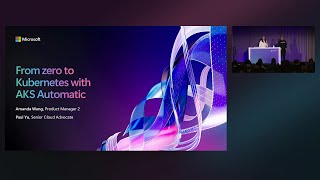
From zero to Kubernetes with AKS Automatic

Kubernetes unlocks powerful capabilities for modern apps—but can be complex. AKS Automatic changes this. In this session, we’ll introduce AKS Automatic and how it helps accelerate cloud-native adoption without the operational overhead. Whether you're modernizing or building new apps, AKS Automatic offers a streamlined path forward, delivering production-ready clusters out of the box, automating infrastructure operations, and embedding best practices for security, scalability, and performance.

Learn to deploy Enterprise-grade Retrieval-Augmented Generation (RAG) agents using NVIDIA Nemotron and NIM microservices on Azure Kubernetes Service (AKS). This hands-on lab walks you through building scalable, GPU-accelerated AI pipelines powered by Azure and NVIDIA AI Enterprise.

Please RSVP and arrive at least 5 minutes before the start time, at which point remaining spaces are open to standby attendees.

As LLMs grow, efficient inference requires multi-node execution—introducing challenges in orchestration, scheduling, and low-latency GPU-to-GPU data transfers. Hardware like the GB200 NVL72 delivers massive scale-up compute, but truly scalable inference also depends on advanced software. Explore how open-source frameworks like NVIDIA Dynamo, combined with Azure’s AKS managed Kubernetes service, unlock new levels of performance and cost-efficiency.

Build confidence in managing AKS at scale with next‑gen ops tools. In this hands‑on lab, you’ll simulate a production service hit by traffic spikes, discover how AI‑driven alerts surface hidden bottlenecks, and deploy agents that self‑heal nodes. Using open‑source tools and the aks‑mcp server, you can automate cluster scaling, patch management, and real‑time troubleshooting—letting the AI orchestrate Kubernetes and Azure resources with natural‑language commands and pre‑built MCP integrations.

Please RSVP and arrive at least 5 minutes before the start time, at which point remaining spaces are open to standby attendees.

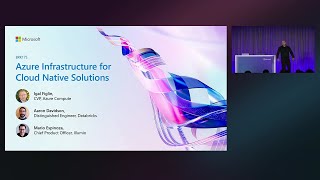
Azure Infrastructure for Cloud Native Solutions

Cloud-native architectures are transforming app development, and Azure’s infrastructure drives this evolution. This session dives into services that help develop and deploy resilient, scalable cloud-native solutions—with real customer insights and field-tested guidance. Learn how VMSS handles stateless workloads, Azure Storage and Container Networking optimize performance and cost, and how Kubernetes and other OSS thrive on Azure with enterprise-grade reliability.

Delivered in a silent stage breakout.

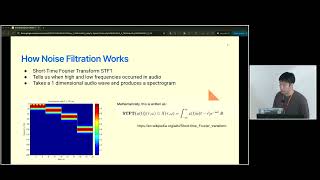
Scaling Background Noise Filtration for AI Voice Agents

In the world of AI voice agents, especially in sensitive contexts like healthcare, audio clarity is everything. Background noise—a barking dog, a TV, street sounds—degrades transcription accuracy, leading to slower, clunkier, and less reliable AI responses. But how do you solve this in real-time without breaking the bank?

This talk chronicles our journey at a health-tech startup to ship background noise filtration at scale. We'll start with the core principles of noise reduction and our initial experiments with open-source models, then dive deep into the engineering architecture required to scale a compute-hungry ML service using Python and Kubernetes. You'll learn about the practical, operational considerations of deploying third-party models and, most importantly, how to measure their true impact on the product.

To close the session, we’ll walk through practical deployment strategies using Ansible and Kubernetes, equipping you with the tools and confidence to bring your Fabric-X solutions into production.

A session focusing on the endorsement phase of Fabric-X, comparing it to traditional Hyperledger Fabric, with hands-on examples showing how the new model streamlines development for tokenization use cases and on-chain asset transfer. The session will also cover practical deployment strategies using Ansible and Kubernetes.

A session exploring the Fabric-X endorsement phase, how it differs from the traditional Hyperledger Fabric model, and implications for developers. We'll cover tokenization use cases, hands-on examples, and practical deployment strategies using Ansible and Kubernetes.

Brought to You By: •⁠ Statsig ⁠ — ⁠ The unified platform for flags, analytics, experiments, and more. Something interesting is happening with the latest generation of tech giants. Rather than building advanced experimentation tools themselves, companies like Anthropic, Figma, Notion and a bunch of others… are just using Statsig. Statsig has rebuilt this entire suite of data tools that was available at maybe 10 or 15 giants until now. Check out Statsig. •⁠ Linear – The system for modern product development. Linear is just so fast to use – and it enables velocity in product workflows. Companies like Perplexity and OpenAI have already switched over, because simplicity scales. Go ahead and check out Linear and see why it feels like a breeze to use. — What is it really like to be an engineer at Google? In this special deep dive episode, we unpack how engineering at Google actually works. We spent months researching the engineering culture of the search giant, and talked with 20+ current and former Googlers to bring you this deepdive with Elin Nilsson, tech industry researcher for The Pragmatic Engineer and a former Google intern. Google has always been an engineering-driven organization. We talk about its custom stack and tools, the design-doc culture, and the performance and promotion systems that define career growth. We also explore the culture that feels built for engineers: generous perks, a surprisingly light on-call setup often considered the best in the industry, and a deep focus on solving technical problems at scale. If you are thinking about applying to Google or are curious about how the company’s engineering culture has evolved, this episode takes a clear look at what it was like to work at Google in the past versus today, and who is a good fit for today’s Google. Jump to interesting parts: (13:50) Tech stack (1:05:08) Performance reviews (GRAD) (2:07:03) The culture of continuously rewriting things — Timestamps (00:00) Intro (01:44) Stats about Google (11:41) The shared culture across Google (13:50) Tech stack (34:33) Internal developer tools and monorepo (43:17) The downsides of having so many internal tools at Google (45:29) Perks (55:37) Engineering roles (1:02:32) Levels at Google  (1:05:08) Performance reviews (GRAD) (1:13:05) Readability (1:16:18) Promotions (1:25:46) Design docs (1:32:30) OKRs (1:44:43) Googlers, Nooglers, ReGooglers (1:57:27) Google Cloud (2:03:49) Internal transfers (2:07:03) Rewrites (2:10:19) Open source (2:14:57) Culture shift (2:31:10) Making the most of Google, as an engineer (2:39:25) Landing a job at Google — The Pragmatic Engineer deepdives relevant for this episode: •⁠ Inside Google’s engineering culture •⁠ Oncall at Google •⁠ Performance calibrations at tech companies •⁠ Promotions and tooling at Google •⁠ How Kubernetes is built •⁠ The man behind the Big Tech comics: Google cartoonist Manu Cornet — Production and marketing by ⁠⁠⁠⁠⁠⁠⁠⁠https://penname.co/⁠⁠⁠⁠⁠⁠⁠⁠. For inquiries about sponsoring the podcast, email [email protected].

Get full access to The Pragmatic Engineer at newsletter.pragmaticengineer.com/subscribe

JAX is a key framework for LLM development, offering composable function transformations and a powerful bridge between low-level compilers and high-level code. To help address the challenges of moving from development to large-scale production, this talk introduces JAX-Toolbox, an open-source project that provides a robust foundation for the LLM development lifecycle. The session covers the CI/CD architecture that provides a stable foundation for JAX-based frameworks, how to build GPU-optimized containers for LLM frameworks such as MaxText and AXLearn to ensure reproducible workflows, and practical methods for deploying frameworks' containers on Kubernetes and SLURM-based clusters.