talk-data.com talk-data.com

Topic

Kubernetes

container_orchestration devops microservices

31

tagged

Activity Trend

40 peak/qtr
2020-Q1 2026-Q1

Activities

31 activities · Newest first

High Performance Spark, 2nd Edition

Apache Spark is amazing when everything clicks. But if you haven't seen the performance improvements you expected or still don't feel confident enough to use Spark in production, this practical book is for you. Authors Holden Karau, Rachel Warren, and Anya Bida walk you through the secrets of the Spark code base, and demonstrate performance optimizations that will help your data pipelines run faster, scale to larger datasets, and avoid costly antipatterns. Ideal for data engineers, software engineers, data scientists, and system administrators, the second edition of High Performance Spark presents new use cases, code examples, and best practices for Spark 3.x and beyond. This book gives you a fresh perspective on this continually evolving framework and shows you how to work around bumps on your Spark and PySpark journey. With this book, you'll learn how to: Accelerate your ML workflows with integrations including PyTorch Handle key skew and take advantage of Spark's new dynamic partitioning Make your code reliable with scalable testing and validation techniques Make Spark high performance Deploy Spark on Kubernetes and similar environments Take advantage of GPU acceleration with RAPIDS and resource profiles Get your Spark jobs to run faster Use Spark to productionize exploratory data science projects Handle even larger datasets with Spark Gain faster insights by reducing pipeline running times

Generative AI on Kubernetes

Generative AI is revolutionizing industries, and Kubernetes has fast become the backbone for deploying and managing these resource-intensive workloads. This book serves as a practical, hands-on guide for MLOps engineers, software developers, Kubernetes administrators, and AI professionals ready to unlock AI innovation with the power of cloud native infrastructure. Authors Roland Huß and Daniele Zonca provide a clear road map for training, fine-tuning, deploying, and scaling GenAI models on Kubernetes, addressing challenges like resource optimization, automation, and security along the way. With actionable insights with real-world examples, readers will learn to tackle the opportunities and complexities of managing GenAI applications in production environments. Whether you're experimenting with large-scale language models or facing the nuances of AI deployment at scale, you'll uncover expertise you need to operationalize this exciting technology effectively. Learn to run GenAI models on Kubernetes for efficient scalability Get techniques to train and fine-tune LLMs within Kubernetes environments See how to deploy production-ready AI systems with automation and resource optimization Discover how to monitor and scale GenAI applications to handle real-world demand Uncover the best tools to operationalize your GenAI workloads Learn how to run agent-based and AI-driven applications

MongoDB 8.0 in Action, Third Edition

Deliver flexible, scalable, and high-performance data storage that's perfect for AI and other modern applications with MongoDB 8.0 and MongoDB Atlas multi-cloud data platform. In MongoDB 8.0 in Action, Third Edition you'll find comprehensive coverage of the latest version of MongoDB 8.0 and the MongoDB Atlas multi-cloud data platform. Learn to utilize MongoDB’s flexible schema design for data modeling, scale applications effectively using advanced sharding features, integrate full-text and vector-based semantic search, and more. This totally revised new edition delivers engaging hands-on tutorials and examples that put MongoDB into action! In MongoDB 8.0 in Action, Third Edition you'll: Master new features in MongoDB 8.0 Create your first, free Atlas cluster using the Atlas CLI Design scalable NoSQL databases with effective data modeling techniques Master Vector Search for building GenAI-driven applications Utilize advanced search capabilities in MongoDB Atlas, including full-text search Build Event-Driven Applications with Atlas Stream Processing Deploy and manage MongoDB Atlas clusters both locally and in the cloud using the Atlas CLI Leverage the Atlas SQL interface for familiar SQL querying Use MongoDB Atlas Online Archive for efficient data management Establish robust security practices including encryption Master backup and restore strategies Optimize database performance and identify slow queries MongoDB 8.0 in Action, Third Edition offers a clear, easy-to-understand introduction to everything in MongoDB 8.0 and MongoDB Atlas—including new advanced features such as embedded config servers in sharded clusters, or moving an unsharded collection to a different shard. The book also covers Atlas stream processing, full text search, and vector search capabilities for generative AI applications. Each chapter is packed with tips, tricks, and practical examples you can quickly apply to your projects, whether you're brand new to MongoDB or looking to get up to speed with the latest version. About the Technology MongoDB is the database of choice for storing structured, semi-structured, and unstructured data like business documents and other text and image files. MongoDB 8.0 introduces a range of exciting new features—from sharding improvements that simplify the management of distributed data, to performance enhancements that stay resilient under heavy workloads. Plus, MongoDB Atlas brings vector search and full-text search features that support AI-powered applications. About the Book MongoDB 8.0 in Action, Third Edition you’ll learn how to take advantage of all the new features of MongoDB 8.0, including the powerful MongoDB Atlas multi-cloud data platform. You’ll start with the basics of setting up and managing a document database. Then, you’ll learn how to use MongoDB for AI-driven applications, implement advanced stream processing, and optimize performance with improved indexing and query handling. Hands-on projects like creating a RAG-based chatbot and building an aggregation pipeline mean you’ll really put MongoDB into action! What's Inside The new features in MongoDB 8.0 Get familiar with MongoDB’s Atlas cloud platform Utilizing sharding enhancements Using vector-based search technologies Full-text search capabilities for efficient text indexing and querying About the Reader For developers and DBAs of all levels. No prior experience with MongoDB required. About the Author Arek Borucki is a MongoDB Champion, certified MongoDB and MongoDB Atlas administrator with expertise in distributed systems, NoSQL databases, and Kubernetes. Quotes An excellent resource with real-world examples and best practices to design, optimize, and scale modern applications. - Advait Patel, Broadcom Essential MongoDB resource. Covers new features such as full-text search, vector search, AI, and RAG applications. - Juan Roy, Credit Suisse Reflects author’s practical experience and clear teaching style. It’s packed with real-world examples and up-to-date insights. - Rajesh Nair, MongoDB Champion & community leader This book will definitely make you a MongoDB star! - Vinicios Wentz, JP Morgan & Chase Co.

Apache Kafka in Action

Apache Kafka, start to finish. Apache Kafka in Action: From basics to production guides you through the concepts and skills you’ll need to deploy and administer Kafka for data pipelines, event-driven applications, and other systems that process data streams from multiple sources. Authors Anatoly Zelenin and Alexander Kropp have spent years using Kafka in real-world production environments. In this guide, they reveal their hard-won expert insights to help you avoid common Kafka pitfalls and challenges. Inside Apache Kafka in Action you’ll discover: Apache Kafka from the ground up Achieving reliability and performance Troubleshooting Kafka systems Operations, governance, and monitoring Kafka use cases, patterns, and anti-patterns Clear, concise, and practical, Apache Kafka in Action is written for IT operators, software engineers, and IT architects working with Kafka every day. Chapter by chapter, it guides you through the skills you need to deliver and maintain reliable and fault-tolerant data-driven applications. About the Technology Apache Kafka is the gold standard streaming data platform for real-time analytics, event sourcing, and stream processing. Acting as a central hub for distributed data, it enables seamless flow between producers and consumers via a publish-subscribe model. Kafka easily handles millions of events per second, and its rock-solid design ensures high fault tolerance and smooth scalability. About the Book Apache Kafka in Action is a practical guide for IT professionals who are integrating Kafka into data-intensive applications and infrastructures. The book covers everything from Kafka fundamentals to advanced operations, with interesting visuals and real-world examples. Readers will learn to set up Kafka clusters, produce and consume messages, handle real-time streaming, and integrate Kafka into enterprise systems. This easy-to-follow book emphasizes building reliable Kafka applications and taking advantage of its distributed architecture for scalability and resilience. What's Inside Master Kafka’s distributed streaming capabilities Implement real-time data solutions Integrate Kafka into enterprise environments Build and manage Kafka applications Achieve fault tolerance and scalability About the Reader For IT operators, software architects and developers. No experience with Kafka required. About the Authors Anatoly Zelenin is a Kafka expert known for workshops across Europe, especially in banking and manufacturing. Alexander Kropp specializes in Kafka and Kubernetes, contributing to cloud platform design and monitoring. Quotes A great introduction. Even experienced users will go back to it again and again. - Jakub Scholz, Red Hat Approachable, practical, well-illustrated, and easy to follow. A must-read. - Olena Kutsenko, Confluent A zero to hero journey to understanding and using Kafka! - Anthony Nandaa, Microsoft Thoughtfully explores a wide range of topics. A wealth of valuable information seamlessly presented and easily accessible. - Olena Babenko, Aiven Oy

Big Data on Kubernetes

Big Data on Kubernetes is your comprehensive guide to leveraging Kubernetes for scalable and efficient big data solutions. You will learn key concepts of Kubernetes architecture and explore tools like Apache Spark, Airflow, and Kafka. Gain hands-on experience building complete data pipelines to tackle real-world data challenges. What this Book will help me do Understand Kubernetes architecture and learn to deploy and manage clusters. Build and orchestrate big data pipelines using Spark, Airflow, and Kafka. Develop scalable and resilient data solutions with Docker and Kubernetes. Integrate and optimize data tools for real-time ingestion and processing. Apply concepts to hands-on projects addressing actual big data scenarios. Author(s) Neylson Crepalde is an experienced data specialist with extensive knowledge of Kubernetes and big data solutions. With deep practical experience, Neylson brings real-world insights to his writing. His approach emphasizes actionable guidance and relatable problem-solving with a strong foundation in scalable architecture. Who is it for? This book is ideal for data engineers, BI analysts, data team leaders, and tech managers familiar with Python, SQL, and YAML. Targeted at professionals seeking to develop or expand their expertise in scalable big data solutions, it provides practical insights into Docker, Kubernetes, and prominent big data tools.

Modernize Applications with Apache Kafka

Application modernization has become increasingly important as older systems struggle to keep up with today's requirements. When you migrate legacy monolithic applications to microservices, easier maintenance and optimized resource utilization generally follow. But new challenges arise around communication within services and between applications. You can overcome many of these issues with the help of modern messaging technologies such as Apache Kafka. In this report, Jennifer Vargas and Richard Stroop from Red Hat explain how IT leaders and enterprise architects can use Kafka for microservices communication and then off-load operational needs through the use of Kubernetes and managed services. You'll also explore application modernization techniques that don't require you to break down your monolithic application. This report helps you: Understand the importance of migrating your monolithic applications to microservices Examine the various challenges you may face during the modernization process Explore application modernization techniques and learn the benefits of using Apache Kafka during the development process Learn how Apache Kafka can support business outcomes Understand how Kubernetes can help you overcome any difficulties you may encounter when using Kafka for application development

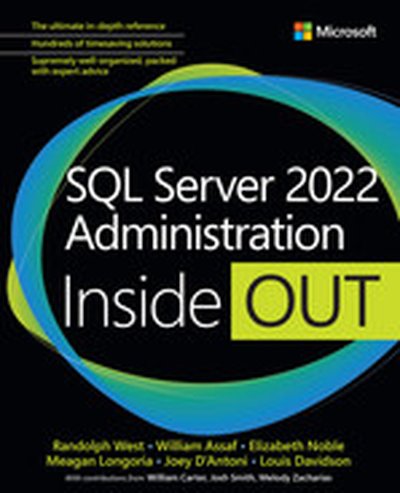
SQL Server 2022 Administration Inside Out

Conquer SQL Server 2022 and Azure SQL administration from the inside out! Dive into SQL Server 2022 administration and grow your Microsoft SQL Server data platform skillset. This well-organized reference packs in timesaving solutions, tips, and workarounds, all you need to plan, implement, deploy, provision, manage, and secure SQL Server 2022 in any environment: on-premises, cloud, or hybrid, including detailed, dedicated chapters on Azure SQL Database and Azure SQL Managed Instance. Nine experts thoroughly tour DBA capabilities available in the SQL Server 2022 Database Engine, SQL Server Data Tools, SQL Server Management Studio, PowerShell, and much more. Youll find extensive new coverage of Azure SQL Database and Azure SQL Managed Instance, both as a cloud platform of SQL Server and in their new integrations with SQL Server 2022, information available in no other book. Discover how experts tackle todays essential tasks and challenge yourself to new levels of mastery. Identify low-hanging fruit and practical, easy wins for improving SQL Server administration Get started with modern SQL Server tools, including SQL Server Management Studio, and Azure Data Studio Upgrade your SQL Server administration skillset to new features of SQL Server 2022, Azure SQL Database, Azure SQL Managed Instance, and SQL Server on Linux Design and implement modern on-premises database infrastructure, including Kubernetes Leverage data virtualization of third-party or non-relational data sources Monitor SQL instances for corruption, index activity, fragmentation, and extended events Automate maintenance plans, database mail, jobs, alerts, proxies, and event forwarding Protect data through encryption, privacy, and auditing Provision, manage, scale and secure, and bidirectionally synchronize Microsofts powerful Azure SQL Managed Instance Understand and enable new Intelligent Query Processing features to increase query concurrency Prepare a best-practice runbook for disaster recovery Use SQL Server 2022 features to span infrastructure across hybrid environments ...

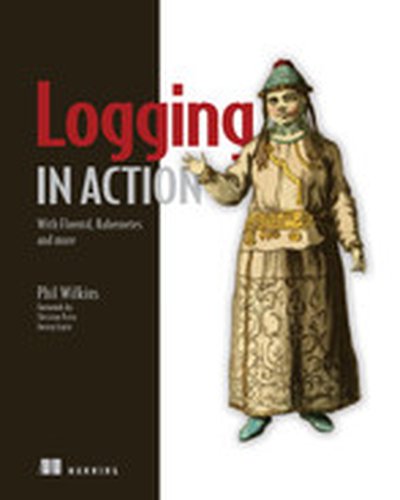
Logging in Action

Make log processing a real asset to your organization with powerful and free open source tools. In Logging in Action you will learn how to: Deploy Fluentd and Fluent Bit into traditional on-premises, IoT, hybrid, cloud, and multi-cloud environments, both small and hyperscaled Configure Fluentd and Fluent Bit to solve common log management problems Use Fluentd within Kubernetes and Docker services Connect a custom log source or destination with Fluentd’s extensible plugin framework Logging best practices and common pitfalls Logging in Action is a guide to optimize and organize logging using the CNCF Fluentd and Fluent Bit projects. You’ll use the powerful log management tool Fluentd to solve common log management, and learn how proper log management can improve performance and make management of software and infrastructure solutions easier. Through useful examples like sending log-driven events to Slack, you’ll get hands-on experience applying structure to your unstructured data. About the Technology Don’t fly blind! An effective logging system can help you see and correct problems before they cripple your software. With the Fluentd log management tool, it’s a snap to monitor the behavior and health of your software and infrastructure in real time. Designed to collect and process log data from multiple sources using the industry-standard JSON format, Fluentd delivers a truly unified logging layer across all your systems. About the Book Logging in Action teaches you to record and analyze application and infrastructure data using Fluentd. Using clear, relevant examples, it shows you exactly how to transform raw system data into a unified stream of actionable information. You’ll discover how logging configuration impacts the way your system functions and set up Fluentd to handle data from legacy IT environments, local data centers, and massive Kubernetes-driven distributed systems. You’ll even learn how to implement complex log parsing with RegEx and output events to MongoDB and Slack. What's Inside Capture log events from a wide range of systems and software, including Kubernetes and Docker Connect to custom log sources and destinations Employ Fluentd’s extensible plugin framework Create a custom plugin for niche problems About the Reader For developers, architects, and operations professionals familiar with the basics of monitoring and logging. About the Author Phil Wilkins has spent over 30 years in the software industry. Has worked for small startups through to international brands. Quotes I highly recommend using Logging in Action as a getting-started guide, a refresher, or as a way to optimize your logging journey. - From the Foreword by Anurag Gupta, Fluent maintainer and Cofounder, Calyptia Covers everything you need if you want to implement a logging system using open source technology such as Fluentd and Kubernetes. - Alex Saez, Naranja X A great exploration of the features and capabilities of Fluentd, along with very useful hands-on exercises. - George Thomas, Manhattan Associates A practical holistic guide to integrating logging into your enterprise architecture. - Satej Sahu, Honeywell

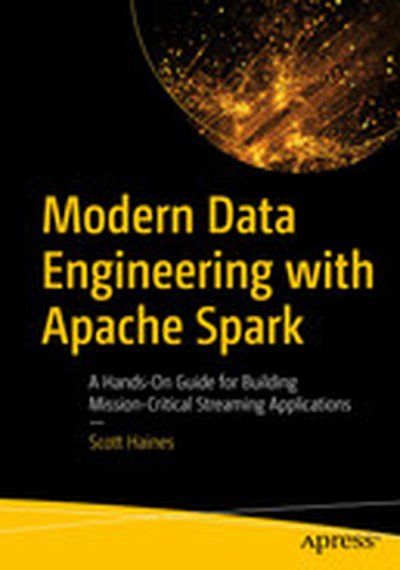
Modern Data Engineering with Apache Spark: A Hands-On Guide for Building Mission-Critical Streaming Applications

Leverage Apache Spark within a modern data engineering ecosystem. This hands-on guide will teach you how to write fully functional applications, follow industry best practices, and learn the rationale behind these decisions. With Apache Spark as the foundation, you will follow a step-by-step journey beginning with the basics of data ingestion, processing, and transformation, and ending up with an entire local data platform running Apache Spark, Apache Zeppelin, Apache Kafka, Redis, MySQL, Minio (S3), and Apache Airflow. Apache Spark applications solve a wide range of data problems from traditional data loading and processing to rich SQL-based analysis as well as complex machine learning workloads and even near real-time processing of streaming data. Spark fits well as a central foundation for any data engineering workload. This book will teach you to write interactive Spark applications using Apache Zeppelin notebooks, write and compilereusable applications and modules, and fully test both batch and streaming. You will also learn to containerize your applications using Docker and run and deploy your Spark applications using a variety of tools such as Apache Airflow, Docker and Kubernetes. ​Reading this book will empower you to take advantage of Apache Spark to optimize your data pipelines and teach you to craft modular and testable Spark applications. You will create and deploy mission-critical streaming spark applications in a low-stress environment that paves the way for your own path to production. ​ What You Will Learn Simplify data transformation with Spark Pipelines and Spark SQL Bridge data engineering with machine learning Architect modular data pipeline applications Build reusable application components and libraries Containerize your Spark applications for consistency and reliability Use Docker and Kubernetes to deploy your Spark applications Speed up application experimentation using Apache Zeppelin and Docker Understand serializable structured data and data contracts Harness effective strategies for optimizing data in your data lakes Build end-to-end Spark structured streaming applications using Redis and Apache Kafka Embrace testing for your batch and streaming applications Deploy and monitor your Spark applications Who This Book Is For Professional software engineers who want to take their current skills and apply them to new and exciting opportunities within the data ecosystem, practicing data engineers who are looking for a guiding light while traversing the many challenges of moving from batch to streaming modes, data architects who wish to provide clear and concise direction for how best to harness anduse Apache Spark within their organization, and those interested in the ins and outs of becoming a modern data engineer in today's fast-paced and data-hungry world

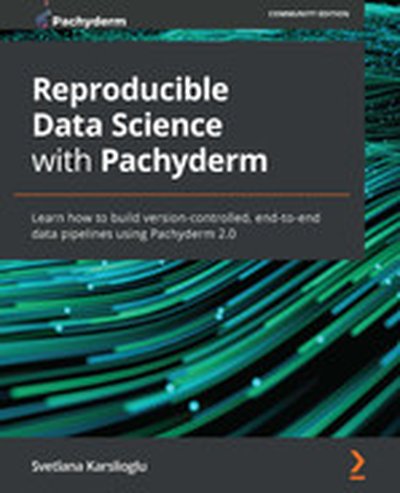
Reproducible Data Science with Pachyderm

Dive into the world of reproducible data science with Pachyderm, a specialized platform designed for version-controlled data pipelines. By following this book, 'Reproducible Data Science with Pachyderm,' you'll gain the skills to implement robust, scalable machine learning workflows with Pachyderm 2.0, covering setup, integration, and advanced use cases. What this Book will help me do Build scalable, version-controlled data pipelines with Pachyderm's unique features. Understand the principles behind reproducible data science and implement them effectively. Deploy Pachyderm on AWS, Google Cloud, and Azure while integrating with popular tools. Create and manage end-to-end machine learning workflows, including hyperparameter tuning. Leverage advanced integrations, such as Pachyderm Notebooks and language clients like Python and Go. Author(s) Svetlana Karslioglu is a seasoned data scientist with extensive experience in constructing scalable machine learning and data processing systems. With years in both practical implementation and educational endeavors, she has a talent for breaking down complex concepts into accessible learning paths. Her approach is hands-on and results-oriented, aimed at empowering professionals to excel in the field of data science. Who is it for? This book is intended for data scientists, machine learning engineers, and data engineers who are keen to ensure reproducibility in their workflows. Ideal readers may have familiarity with data science basics and some exposure to Kubernetes and programming languages like Python. By studying the book, learners will establish confidence in implementing Pachyderm for scalable and reliable data pipelines.

Cassandra: The Definitive Guide, (Revised) Third Edition, 3rd Edition

Imagine what you could do if scalability wasn't a problem. With this hands-on guide, you'll learn how the Cassandra database management system handles hundreds of terabytes of data while remaining highly available across multiple data centers. This revised third edition--updated for Cassandra 4.0 and new developments in the Cassandra ecosystem, including deployments in Kubernetes with K8ssandra--provides technical details and practical examples to help you put this database to work in a production environment. Authors Jeff Carpenter and Eben Hewitt demonstrate the advantages of Cassandra's nonrelational design, with special attention to data modeling. Developers, DBAs, and application architects looking to solve a database scaling issue or future-proof an application will learn how to harness Cassandra's speed and flexibility. Understand Cassandra's distributed and decentralized structure Use the Cassandra Query Language (CQL) and cqlsh (the CQL shell) Create a working data model and compare it with an equivalent relational model Design and develop applications using client drivers Explore cluster topology and learn how nodes exchange data Maintain a high level of performance in your cluster Deploy Cassandra onsite, in the cloud, or with Docker and Kubernetes Integrate Cassandra with Spark, Kafka, Elasticsearch, Solr, and Lucene

Apache Pulsar in Action

Deliver lightning fast and reliable messaging for your distributed applications with the flexible and resilient Apache Pulsar platform. In Apache Pulsar in Action you will learn how to: Publish from Apache Pulsar into third-party data repositories and platforms Design and develop Apache Pulsar functions Perform interactive SQL queries against data stored in Apache Pulsar Apache Pulsar in Action is a comprehensive and practical guide to building high-traffic applications with Pulsar. You’ll learn to use this mature and battle-tested platform to deliver extreme levels of speed and durability to your messaging. Apache Pulsar committer David Kjerrumgaard teaches you to apply Pulsar’s seamless scalability through hands-on case studies, including IOT analytics applications and a microservices app based on Pulsar functions. About the Technology Reliable server-to-server messaging is the heart of a distributed application. Apache Pulsar is a flexible real-time messaging platform built to run on Kubernetes and deliver the scalability and resilience required for cloud-based systems. Pulsar supports both streaming and message queuing, and unlike other solutions, it can communicate over multiple protocols including MQTT, AMQP, and Kafka’s binary protocol. About the Book Apache Pulsar in Action teaches you to build scalable streaming messaging systems using Pulsar. You’ll start with a rapid introduction to enterprise messaging and discover the unique benefits of Pulsar. Following crystal-clear explanations and engaging examples, you’ll use the Pulsar Functions framework to develop a microservices-based application. Real-world case studies illustrate how to implement the most important messaging design patterns. What's Inside Publish from Pulsar into third-party data repositories and platforms Design and develop Apache Pulsar functions Create an event-driven food delivery application About the Reader Written for experienced Java developers. No prior knowledge of Pulsar required. About the Author David Kjerrumgaard is a committer on the Apache Pulsar project. He currently serves as a Developer Advocate for StreamNative, where he develops Pulsar best practices and solutions. Quotes Apache Pulsar in Action is able to seamlessly mix the theory and abstract concepts with the clarity of practical step-by-step examples. I’d recommend to anyone! - Matteo Merli, co-creator of Apache Pulsar Gives readers insights into how the ‘magic’ works… Definitely recommended. - Henry Saputra, Splunk A complete, practical, fun-filled book. - Satej Kumar Sahu, Honeywell A definitive guide that will help you scale your applications. - Alessandro Campeis, Vimar The best book to start working with Pulsar. - Emanuele Piccinelli, Empirix

Cloud-Native Microservices with Apache Pulsar: Build Distributed Messaging Microservices

Apply different enterprise integration and processing strategies available with Pulsar, Apache's multi-tenant, high-performance, cloud-native messaging and streaming platform. This book is a comprehensive guide that examines using Pulsar Java libraries to build distributed applications with message-driven architecture. You'll begin with an introduction to Apache Pulsar architecture. The first few chapters build a foundation of message-driven architecture. Next, you'll perform a setup of all the required Pulsar components. The book also covers work with Apache Pulsar client library to build producers and consumers for the discussed patterns. You'll then explore the transformation, filter, resiliency, and tracing capabilities available with Pulsar. Moving forward, the book will discuss best practices when building message schemas and demonstrate integration patterns using microservices. Security is an important aspect of any application;the book will cover authentication and authorization in Apache Pulsar such as Transport Layer Security (TLS), OAuth 2.0, and JSON Web Token (JWT). The final chapters will cover Apache Pulsar deployment in Kubernetes. You'll build microservices and serverless components such as AWS Lambda integrated with Apache Pulsar on Kubernetes. After completing the book, you'll be able to comfortably work with the large set of out-of-the-box integration options offered by Apache Pulsar. What You'll Learn Examine the important Apache Pulsar components Build applications using Apache Pulsar client libraries Use Apache Pulsar effectively with microservices Deploy Apache Pulsar to the cloud Who This Book Is For Cloud architects and software developers who build systems in the cloud-native technologies.

Cloud Native Integration with Apache Camel: Building Agile and Scalable Integrations for Kubernetes Platforms

Address the most common integration challenges, by understanding the ins and outs of the choices and exemplifying the solutions with practical examples on how to create cloud native applications using Apache Camel. Camel will be our main tool, but we will also see some complementary tools and plugins that can make our development and testing easier, such as Quarkus, and tools for more specific use cases, such as Apache Kafka and Keycloak. You will learn to connect with databases, create REST APIs, transform data, connect with message oriented software (MOMs), secure your services, and test using Camel. You will also learn software architecture patterns for integration and how to leverage container platforms, such as Kubernetes. This book is suitable for those who are eager to learn an integration tool that fits the Kubernetes world, and who want to explore the integration challenges that can be solved using containers. What You Will Learn Focus on how to solve integration challenges Understand the basics of the Quarkus as it’s the foundation for the application Acquire a comprehensive view on Apache Camel Deploy an application in Kubernetes Follow good practices Who This Book Is For Java developers looking to learn Apache Camel; Apache Camel developers looking to learn more about Kubernetes deployments; software architects looking to study integration patterns for Kubernetes based systems; system administrators (operations teams) looking to get a better understand of how technologies are integrated.

SQL Server on Kubernetes: Designing and Building a Modern Data Platform

Build a modern data platform by deploying SQL Server in Kubernetes. Modern application deployment needs to be fast and consistent to keep up with business objectives and Kubernetes is quickly becoming the standard for deploying container-based applications, fast. This book introduces Kubernetes and its core concepts. Then it shows you how to build and interact with a Kubernetes cluster. Next, it goes deep into deploying and operationalizing SQL Server in Kubernetes, both on premises and in cloud environments such as the Azure Cloud. You will begin with container-based application fundamentals and then go into an architectural overview of a Kubernetes container and how it manages application state. Then you will learn the hands-on skill of building a production-ready cluster. With your cluster up and running, you will learn how to interact with your cluster and perform common administrative tasks. Once you can admin the cluster, you will learn how to deploy applications and SQL Server in Kubernetes. You will learn about high-availability options, and about using Azure Arc-enabled Data Services. By the end of this book, you will know how to set up a Kubernetes cluster, manage a cluster, deploy applications and databases, and keep everything up and running. What You Will Learn Understand Kubernetes architecture and cluster components Deploy your applications into Kubernetes clusters Manage your containers programmatically through API objects and controllers Deploy and operationalize SQL Server in Kubernetes Implement high-availability SQL Server scenarios on Kubernetes using Azure Arc-enabled Data Services Make use of Kubernetes deployments for Big Data Clusters Who This Book Is For DBAs and IT architects who are ready to begin planning their next-generation data platform and want to understand what it takes to run SQL Server in a container in Kubernetes. SQL Server on Kubernetes is an excellent choice for those who want to understand the big picture of why Kubernetes is the next-generation deployment method for SQL Server but also want to understand the internals, or the how, of deploying SQL Server in Kubernetes. When finished with this book, you will have the vision and skills to successfully architect, build and maintain a modern data platform deploying SQL Server on Kubernetes.

Deploying SAP Software in Red Hat OpenShift on IBM Power Systems

This IBM® Redpaper publication documents how to containerize and deploy SAP software into Red Hat OpenShift 4 Kubernetes clusters on IBM Power Systems by using predefined Red Hat Ansible scripts, different configurations, and theoretical knowledge, and it documents the findings through sample scenarios. This paper documents the following topics: Running SAP S/4HANA, SAP HANA, and SAP NetWeaver on-premises software in containers that are deployed in Red Hat OpenShift 4 on IBM Power Systems hardware. Existing SAP systems running on IBM Power Systems can be repackaged at customer sites into containers that use predefined Red Hat Ansible scripts. These containers can be deployed multiple times into Red Hat OpenShift 4 Kubernetes clusters on IBM Power Systems. The target audiences for this paper are Chief Information Officers (CIOs) that are interested in containerized solutions of SAP Enterprise Resource Planning (ERP) systems, developers that need containerized environments, and system administrators that provide and manage the infrastructure with underpinning automation. This paper complements the documentation that is available at IBM Knowledge Center, and it aligns with the educational materials that are provided by IBM Garage™ for Systems Education.

Implementation Guide for IBM Elastic Storage System 5000

This IBM® Redbooks® publication introduces and describes the IBM Elastic Storage® Server 5000 (ESS 5000) as a scalable, high-performance data and file management solution. The solution is built on proven IBM Spectrum® Scale technology, formerly IBM General Parallel File System (IBM GPFS). ESS is a modern implementation of software-defined storage, making it easier for you to deploy fast, highly scalable storage for AI and big data. With the lightning-fast NVMe storage technology and industry-leading file management capabilities of IBM Spectrum Scale, the ESS 3000 and ESS 5000 nodes can grow to over YB scalability and can be integrated into a federated global storage system. By consolidating storage requirements from the edge to the core data center — including kubernetes and Red Hat OpenShift — IBM ESS can reduce inefficiency, lower acquisition costs, simplify storage management, eliminate data silos, support multiple demanding workloads, and deliver high performance throughout your organization. This book provides a technical overview of the ESS 5000 solution and helps you to plan the installation of the environment. We also explain the use cases where we believe it fits best. Our goal is to position this book as the starting point document for customers that would use the ESS 5000 as part of their IBM Spectrum Scale setups. This book is targeted toward technical professionals (consultants, technical support staff, IT Architects, and IT Specialists) who are responsible for delivering cost-effective storage solutions with ESS 5000.

MongoDB Topology Design: Scalability, Security, and Compliance on a Global Scale

Create a world-class MongoDB cluster that is scalable, reliable, and secure. Comply with mission-critical regulatory regimes such as the European Union’s General Data Protection Regulation (GDPR). Whether you are thinking of migrating to MongoDB or need to meet legal requirements for an existing self-managed cluster, this book has you covered. It begins with the basics of replication and sharding, and quickly scales up to cover everything you need to know to control your data and keep it safe from unexpected data loss or downtime. This book covers best practices for stable MongoDB deployments. For example, a well-designed MongoDB cluster should have no single point of failure. The book covers common use cases when only one or two data centers are available. It goes into detail about creating geopolitical sharding configurations to cover the most stringent data protection regulation compliance. The book also covers different tools and approaches for automating and monitoring a cluster with Kubernetes, Docker, and popular cloud provider containers. What You Will Learn Get started with the basics of MongoDB clusters Protect and monitor a MongoDB deployment Deepen your expertise around replication and sharding Keep effective backups and plan ahead for disaster recovery Recognize and avoid problems that can occur in distributed databases Build optimal MongoDB deployments within hardware and data center limitations Who This Book Is For Solutions architects, DevOps architects and engineers, automation and cloud engineers, and database administrators who are new to MongoDB and distributed databases or who need to scale up simple deployments. This book is a complete guide to planning a deployment for optimal resilience, performance, and scaling, and covers all the details required to meet the new set of data protection regulations such as the GDPR. This book is particularly relevant for large global organizations such as financial and medical institutions, as well as government departments that need to control data in the whole stack and are prohibited from using managed cloud services.

SQL Server Big Data Clusters: Data Virtualization, Data Lake, and AI Platform

Use this guide to one of SQL Server 2019’s most impactful features—Big Data Clusters. You will learn about data virtualization and data lakes for this complete artificial intelligence (AI) and machine learning (ML) platform within the SQL Server database engine. You will know how to use Big Data Clusters to combine large volumes of streaming data for analysis along with data stored in a traditional database. For example, you can stream large volumes of data from Apache Spark in real time while executing Transact-SQL queries to bring in relevant additional data from your corporate, SQL Server database. Filled with clear examples and use cases, this book provides everything necessary to get started working with Big Data Clusters in SQL Server 2019. You will learn about the architectural foundations that are made up from Kubernetes, Spark, HDFS, and SQL Server on Linux. You then are shown how to configure and deploy Big Data Clusters in on-premises environments or in the cloud. Next, you are taught about querying. You will learn to write queries in Transact-SQL—taking advantage of skills you have honed for years—and with those queries you will be able to examine and analyze data from a wide variety of sources such as Apache Spark. Through the theoretical foundation provided in this book and easy-to-follow example scripts and notebooks, you will be ready to use and unveil the full potential of SQL Server 2019: combining different types of data spread across widely disparate sources into a single view that is useful for business intelligence and machine learning analysis. What You Will Learn Install, manage, and troubleshoot Big Data Clusters in cloud or on-premise environments Analyze large volumes of data directly from SQL Server and/or Apache Spark Manage data stored in HDFS from SQL Server as if it wererelational data Implement advanced analytics solutions through machine learning and AI Expose different data sources as a single logical source using data virtualization Who This Book Is For Data engineers, data scientists, data architects, and database administrators who want to employ data virtualization and big data analytics in their environments

Introducing Microsoft SQL Server 2019

Introducing Microsoft SQL Server 2019 is the must-have guide for database professionals eager to leverage the latest advancements in SQL Server 2019. This book covers the features and capabilities that make SQL Server 2019 a powerful tool for managing and analyzing data both on-premises and in the cloud. What this Book will help me do Understand the new features introduced in SQL Server 2019 and their practical applications. Confidently manage and analyze relational, NoSQL, and big data within SQL Server 2019. Implement containerization for SQL Server using Docker and Kubernetes. Migrate and integrate your databases effectively to use Power BI Report Server. Query data from Hadoop Distributed File System with Azure Data Studio. Author(s) The authors of 'Introducing Microsoft SQL Server 2019' are subject matter experts including Kellyn Gorman, Allan Hirt, and others. With years of professional experience in database management and SQL Server, they bring a wealth of practical insight and knowledge to the book. Their experience spans roles as administrators, architects, and educators in the field. Who is it for? This book is aimed at database professionals such as DBAs, architects, and big data engineers who are currently using earlier versions of SQL Server or other database platforms. It is particularly well-suited for professionals aiming to understand and implement SQL Server 2019's new features. Readers should have basic familiarity with SQL Server and RDBMS concepts. If you're looking to explore SQL Server 2019 to improve data management and analytics in your organization, this book is for you.