talk-data.com talk-data.com

Topic

Linux

operating_system open_source unix_like

10

tagged

Activity Trend

20 peak/qtr
2020-Q1 2026-Q1

Activities

10 activities · Newest first

Optimizing performance, deployments, and security for Linux on Azure

Whether you use Ubuntu, RHEL, SLES, or Rocky, deploying Linux on Azure is more than provisioning VMs. Learn to build secure, performant Linux environments using Azure-native tools and partner integrations. See how to streamline image creation, harden workloads, monitor performance, and stay compliant with Azure Monitor, Defender for Linux, PostgreSQL on Azure, and the secure Linux baseline. Whether architect or OSS advocate, this session helps you confidently “train your penguin” for the cloud.

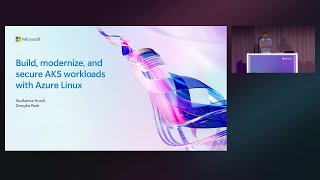
Build, modernize, and secure AKS workloads with Azure Linux

Azure Linux Container Host is an operating system image that's optimized for running container workloads on Azure Kubernetes Service (AKS). Learn how it improves performance, simplifies node lifecycle management, and enables innovations like pod sandboxing and OS Guard. See how customers use Azure Linux for workload isolation and hardened security with features like Integrity Policy Enforcement, SELinux, and dm-verity—helping enterprises modernize and scale with confidence.

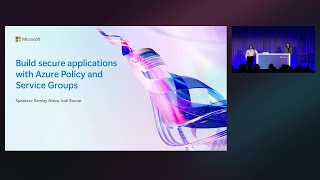
Build secure applications with Azure Policy and Service Groups

Building secure applications in the cloud requires consistent governance and continuous compliance. Learn how to use Azure Policy to enforce organizational standards, remediate non-compliant resources, and maintain compliance at scale. We’ll also explore how Service Groups simplify security management by grouping and applying policies across applications, environments, and resource types. See how these innovations help you confidently secure Windows, Linux, and database workloads in Azure.

Delivered in a silent stage breakout.

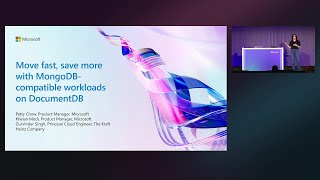
Move fast, save more with MongoDB-compatible workloads on DocumentDB

DocumentDB, the open-source MongoDB-compatible document database now part of the Linux Foundation, helps you innovate faster and save more. Customers like Kraft Heinz move fast with a JSON-native model, reduce ops with turnkey scaling and updates, and secure workloads with enterprise-grade protection and an E2E Azure SLA. Delivered as a fully managed service with support for hybrid and multicloud, Azure DocumentDB keeps you moving faster while crushing costs at enterprise scale.

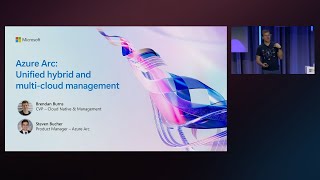
Azure Arc: Extending Azure for hybrid and multi-cloud management

Azure brings unified management to on-premises and multi-cloud environments. Learn how Azure Arc delivers consistent governance, security, and operations across Azure, hybrid, and multi-cloud environments—while enabling System Center customers to adopt a cloud-native management experience. Whether modernizing Windows/Linux or building cloud-native apps, equip yourself with tools and agents to bridge datacenter and cloud.

Use Azure Migrate for AI assisted insights and cloud transformation

Discover how you can make the most of your IT estate migrations and modernizations with the newest AI capabilities. This session guides IT teams through assessing current environments, setting goals, and creating a business case with Azure Migrate for all of your workload types like Windows Server, SQL Server, .NET, Linux, PostgreSQL, Java, and more. We’ll explore tools to inventory workloads, map dependencies, and create actionable migration roadmaps.

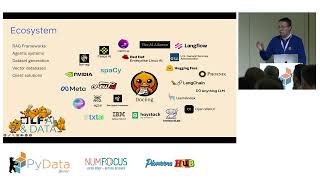
Docling: Get your documents ready for gen AI

Docling, an open source package, is rapidly becoming the de facto standard for document parsing and export in the Python community. Earning close to 30,000 GitHub in less than one year and now part of the Linux AI & Data Foundation. Docling is redefining document AI with its ease and speed of use. In this session, we’ll introduce Docling and its features, including usages with various generative AI frameworks and protocols (e.g. MCP).

Build Bigger With Small Ai: Running Small Models Locally

It's finally possible to bring the awesome power of Large Language Models (LLMs) to your laptop. This talk will explore how to run and leverage small, openly available LLMs to power common tasks involving data, including selecting the right models, practical use cases for running small models, and best practices for deploying small models effectively alongside databases.

Bio: Jeffrey Morgan is the founder of Ollama, an open-source tool to get up and run large language models. Prior to founding Ollama, Jeffrey founded Kitematic, which was acquired by Docker and evolved into Docker Desktop. He has previously worked at companies including Docker, Twitter, and Google.

➡️ Follow Us LinkedIn: https://www.linkedin.com/company/small-data-sf/ X/Twitter : https://twitter.com/smalldatasf Website: https://www.smalldatasf.com/

Discover how to run large language models (LLMs) locally using Ollama, the easiest way to get started with small AI models on your Mac, Windows, or Linux machine. Unlike massive cloud-based systems, small open source models are only a few gigabytes, allowing them to run incredibly fast on consumer hardware without network latency. This video explains why these local LLMs are not just scaled-down versions of larger models but powerful tools for developers, offering significant advantages in speed, data privacy, and cost-effectiveness by eliminating hidden cloud provider fees and risks.

Learn the most common use case for small models: combining them with your existing factual data to prevent hallucinations. We dive into retrieval augmented generation (RAG), a powerful technique where you augment a model's prompt with information from a local data source. See a practical demo of how to build a vector store from simple text files and connect it to a model like Gemma 2B, enabling you to query your own data using natural language for fast, accurate, and context-aware responses.

Explore the next frontier of local AI with small agents and tool calling, a new feature that empowers models to interact with external tools. This guide demonstrates how an LLM can autonomously decide to query a DuckDB database, write the correct SQL, and use the retrieved data to answer your questions. This advanced tutorial shows you how to connect small models directly to your data engineering workflows, moving beyond simple chat to create intelligent, data-driven applications.

Get started with practical applications for small models today, from building internal help desks to streamlining engineering tasks like code review. This video highlights how small and large models can work together effectively and shows that open source models are rapidly catching up to their cloud-scale counterparts. It's never been a better time for developers and data analysts to harness the power of local AI.

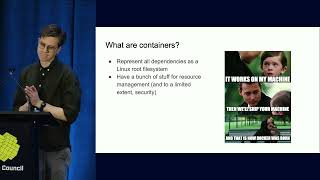
Creating our Own Kubernetes & Docker to Run Our Data Infrastructure | Modal

ABOUT THE TALK: In this talk, Erik Bernhardsson will share how Modal starts 1000s of large containers in seconds, and what they had to do under the surface to build this. This includes a custom file system written in Rust, their own container runtime, and their own container image builder. This talk will give you an idea of how containers work along with some of the low-level Linux details underneath. We'll also talk about many infrastructure tools hold data teams back, and why they deserve faster and better tools.

ABOUT THE SPEAKER: Erik Bernhardsson is the founder and CEO of Modal, which is an infrastructure provider for data teams. Before Modal, Erik was the CTO at Better for six years, and previously spent seven years at Spotify, building the music recommendation system and running data teams.

ABOUT DATA COUNCIL: Data Council (https://www.datacouncil.ai/) is a community and conference series that provides data professionals with the learning and networking opportunities they need to grow their careers.

Make sure to subscribe to our channel for the most up-to-date talks from technical professionals on data related topics including data infrastructure, data engineering, ML systems, analytics and AI from top startups and tech companies.

FOLLOW DATA COUNCIL: Twitter: https://twitter.com/DataCouncilAI LinkedIn: https://www.linkedin.com/company/datacouncil-ai/

Build Bigger With Small Ai: Running Small Models Locally

It's finally possible to bring the awesome power of Large Language Models (LLMs) to your laptop. This talk will explore how to run and leverage small, openly available LLMs to power common tasks involving data, including selecting the right models, practical use cases for running small models, and best practices for deploying small models effectively alongside databases.

Bio: Jeffrey Morgan is the founder of Ollama, an open-source tool to get up and run large language models. Prior to founding Ollama, Jeffrey founded Kitematic, which was acquired by Docker and evolved into Docker Desktop. He has previously worked at companies including Docker, Twitter, and Google.

➡️ Follow Us LinkedIn: https://www.linkedin.com/company/small-data-sf/ X/Twitter : https://twitter.com/smalldatasf Website: https://www.smalldatasf.com/

Discover how to run large language models (LLMs) locally using Ollama, the easiest way to get started with small AI models on your Mac, Windows, or Linux machine. Unlike massive cloud-based systems, small open source models are only a few gigabytes, allowing them to run incredibly fast on consumer hardware without network latency. This video explains why these local LLMs are not just scaled-down versions of larger models but powerful tools for developers, offering significant advantages in speed, data privacy, and cost-effectiveness by eliminating hidden cloud provider fees and risks.

Learn the most common use case for small models: combining them with your existing factual data to prevent hallucinations. We dive into retrieval augmented generation (RAG), a powerful technique where you augment a model's prompt with information from a local data source. See a practical demo of how to build a vector store from simple text files and connect it to a model like Gemma 2B, enabling you to query your own data using natural language for fast, accurate, and context-aware responses.

Explore the next frontier of local AI with small agents and tool calling, a new feature that empowers models to interact with external tools. This guide demonstrates how an LLM can autonomously decide to query a DuckDB database, write the correct SQL, and use the retrieved data to answer your questions. This advanced tutorial shows you how to connect small models directly to your data engineering workflows, moving beyond simple chat to create intelligent, data-driven applications.

Get started with practical applications for small models today, from building internal help desks to streamlining engineering tasks like code review. This video highlights how small and large models can work together effectively and shows that open source models are rapidly catching up to their cloud-scale counterparts. It's never been a better time for developers and data analysts to harness the power of local AI.