talk-data.com talk-data.com

Topic

Fabric

Microsoft Fabric

databricks data_plaform microsoft azure data_warehouse analytics data_analysis

323

tagged

Activity Trend

67 peak/qtr
2020-Q1 2026-Q1

Activities

323 activities · Newest first

IBM Converged Switch B32

This IBM® Redbooks® document introduces the IBM Converged Switch B32. This switch supports Fibre Channel over Ethernet (FCoE), Fibre Channel, Converged Enhanced Ethernet (CEE), and traditional Ethernet protocol connectivity for servers and storage. FCoE is a new protocol that can expand Fibre Channel into the Ethernet environment, and it helps to combine and leverage the advantages of two technologies, Fibre Channel protocol and Ethernet. Features of the IBM Converged Switch B32 include: A 32-port multiprotocol switch for server I/O consolidation Enterprise-class availability for business continuance Improved return on investment and investment protection Fabric security for mission-critical information

Implementing an IBM b-type SAN with 8 Gbps Directors and Switches

"Do everything that is necessary and absolutely nothing that is not." This IBM® Redbooks® publication, written at a Data Center Fabric Manager v10.1.4 and Fabric Operating System v6.4 level, consolidates critical information while also covering procedures and tasks that you are likely to encounter on a daily basis when implementing an IBM b-type SAN. The products that we describe in this book have more functionality than we can possibly cover in a single book. A storage area network (SAN) is a powerful infrastructure for consolidation, distance solutions, and data sharing. The quality applications that the IBM SAN portfolio provides can help you take full advantage of the benefits of the SAN. In this book, we cover the latest additions to the IBM b-type SAN family and show how you can implement them in an open systems environment. In particular, we focus on the Fibre Channel Protocol (FCP) environment. We address the key concepts that these products bring to the market and, in each case, we provide an overview of the functions that are essential to building a robust SAN environment.

IBM System Storage b-type Multiprotocol Routing: An Introduction and Implementation

The rapid spread and adoption of production storage area networks (SANs) has fueled the need for multiprotocol routers. The routers provide improved scalability, security, and manageability by enabling devices in separate SAN fabrics to communicate without merging fabrics into a single, large SAN fabric. This capability enables clients to initially deploy separate SAN solutions at the departmental and data center levels. Then, clients can consolidate these separate solutions into large enterprise SAN solutions as their experience and requirements grow and change. Alternatively, multiprotocol routers can help to connect existing enterprise SANs for a variety of reasons. For instance, the introduction of Small Computer System Interface over IP (iSCSI) provides for the connection of low-end, low-cost hosts to enterprise SANs. The use of an Internet Protocol (IP) in the Fibre Channel (FC) environment provides for resource consolidation and disaster recovery planning over long distances. And the use of FC-FC routing services provides connectivity between two or more fabrics without having to merge them into a single SAN. This IBM® Redbooks® publication targets storage network administrators, system designers, architects, and IT professionals who sell, design, or administer SANs. It introduces you to products, concepts, and technology in the IBM System Storage™ SAN Routing portfolio, which is based on Brocade products and technology. This book shows the features of these products and examples of how you can deploy and use them.

Storage Area Networks For Dummies®

If you’ve been charged with setting up storage area networks for your company, learning how SANs work and managing data storage problems might seem challenging. Storage Area Networks For Dummies, 2 comes to the rescue with just what you need to know. nd Edition Whether you already a bit SAN savvy or you’re a complete novice, here’s the scoop on how SANs save money, how to implement new technologies like data de-duplication, iScsi, and Fibre Channel over Ethernet, how to develop SANs that will aid your company’s disaster recovery plan, and much more. For example, you can: Understand what SANs are, whether you need one, and what you need to build one Learn to use loops, switches, and fabric, and design your SAN for peak performance Create a disaster recovery plan with the appropriate guidelines, remote site, and data copy techniques Discover how to connect or extend SANs and how compression can reduce costs Compare tape and disk backups and network vs. SAN backup to choose the solution you need Find out how data de-duplication makes sense for backup, replication, and retention Follow great troubleshooting tips to help you find and fix a problem Benefit from a glossary of all those pesky acronyms From the basics for beginners to advanced features like snapshot copies, storage virtualization, and heading off problems before they happen, here’s what you need to do the job with confidence!

IBM TotalStorage Productivity Center V3.1: The Next Generation

IBM TotalStorage Productivity Center is a suite of infrastructure management software that can centralize, automate, and simplify the management of complex and heterogeneous storage environments. It can help reduce the effort of managing complex storage infrastructures, improve storage capacity utilization, and improve administration efficiency. IBM TotalStorage Productivity Center allows you to respond to on demand storage needs and brings together, in a single point, the management of storage devices, fabric, and data. TotalStorage Productivity Center V3.1 is a rewrite of previous versions. This IBM Redbooks publication shows you how to access the functions as compared to the previous releases. This book is intended for administrators and users who are installing and using IBM TotalStorage Productivity Center. It provides an overview of the product components and functions. It describes the hardware and software environment required and provides a step- by-step installation procedure. Customization and usage hints and tips are also provided.

IBM TotalStorage Productivity Center V2.3: Getting Started

IBM TotalStorage Productivity Center is a suite of infrastructure management software that can centralize, automate, and simplify the management of complex and heterogeneous storage environments. It can help reduce the effort of managing complex storage infrastructures, improve storage capacity utilization, and improve administration efficiency. IBM TotalStorage Productivity Center allows you to respond to on demand storage needs and brings together, in a single point, the management of storage devices, fabric, and data. This IBM Redbooks publication is intended for administrators and users who are installing and using IBM TotalStorage Productivity Center. It provides an overview of the product components and functions. We describe the hardware and software environment required, provide a step-by-step installation procedure, and offer customization and usage hints and tips. This book is not a replacement for the existing IBM Redbooks, or product manuals, that detail the implementation and configuration of the individual products that make up the IBM TotalStorage Productivity Center , or the products as they may have been called in previous versions. We refer to those books as appropriate throughout this book.

Managing Disk Subsystems using IBM TotalStorage Productivity Center

IBM TotalStorage Productivity Center is designed to provide a single point of control for managing networked storage devices that implement the Storage Management Initiative Specification (SMI-S), including the IBM TotalStorage SAN Volume Controller, Enterprise Storage Server, and FAStT. TotalStorage Productivity Center includes the IBM Tivoli Bonus Pack for SAN Management, bringing together device management with fabric management, to help enable the storage administrator to manage the Storage Area Network from a central point. The storage administrator has the ability to configure storage devices, manage the devices, and view the Storage Area Network from a single point. This software offering is intended to complement other members of the IBM TotalStorage Virtualization family by simplifying and consolidating storage management activities. This IBM Redbooks publication includes an introduction to the TotalStorage Productivity Center and its components. It provides detailed information about the installation and configuration of TotalStorage Productivity Center for Disk and TotalStorage Productivity Center for Replication and how to use them. It is intended for anyone wanting to learn about TotalStorage Productivity Center and how it complements an on demand environment and for those planning to install and use the product.

Enterprise Service Bus

Large IT organizations increasingly face the challenge of integrating various web services, applications, and other technologies into a single network. The solution to finding a meaningful large-scale architecture that is capable of spanning a global enterprise appears to have been met in ESB, or Enterprise Service Bus. Rather than conform to the hub-and-spoke architecture of traditional enterprise application integration products, ESB provides a highly distributed approach to integration, with unique capabilities that allow individual departments or business units to build out their integration projects in incremental, digestible chunks, maintaining their own local control and autonomy, while still being able to connect together each integration project into a larger, more global integration fabric, or grid.Enterprise Service Bus offers a thorough introduction and overview for systems architects, system integrators, technical project leads, and CTO/CIO level managers who need to understand, assess, and evaluate this new approach. Written by Dave Chappell, one of the best known and authoritative voices in the field of enterprise middleware and standards-based integration, the book drills down into the technical details of the major components of ESB, showing how it can utilize an event-driven SOA to bring a variety of enterprise applications and services built on J2EE, .NET, C/C++, and other legacy environments into the reach of the everyday IT professional.With Enterprise Service Bus, readers become well versed in the problems faced by IT organizations today, gaining an understanding of how current technology deficiencies impact business issues. Through the study of real-world use cases and integration patterns drawn from several industries using ESB--including Telcos, financial services, retail, B2B exchanges, energy, manufacturing, and more--the book clearly and coherently outlines the benefits of moving toward this integration strategy. The book also compares ESB to other integration architectures, contrasting their inherent strengths and limitations.If you are charged with understanding, assessing, or implementing an integration architecture, Enterprise Service Bus will provide the straightforward information you need to draw your conclusions about this important disruptive technology.

IBM Tivoli Storage Area Network Manager: A Practical Introduction

Now that you have installed your SAN, how are you going to manage it? This IBM Redbooks publication describes the new product, IBM Tivoli Storage Area Network Manager, an active, intelligent, business-centric management solution for storage resources across the enterprise. IBM Tivoli Storage Area Network Manager provides effective discovery and presentation of SAN physical and logical topologies and provides multiple views of the SAN, including zones. Through its interface, it can be configured to show historical and real-time monitoring of SAN fabric devices. With IBM Tivoli Storage Area Network Manager, you will know what's on your SAN, how the devices are connected, and how storage is assigned to the hosts. If something goes wrong, or new devices are added, the topology display automatically updates to show the changed topology. SAN generated events can be displayed on the manager system, or forwarded to another SNMP manager or Tivoli Enterprise Console. This book is written for those who want to learn more about IBM Tivoli SAN Manager, as well as those who are about to implement it. This second edition of the book is current to IBM Tivoli SAN Manager V1.2. Please note that the additional material referenced in the text is not available from IBM.

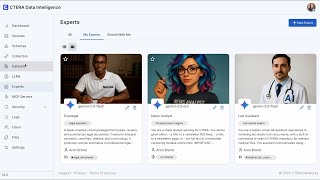
CTERA in action: Building the data fabric of global enterprises

Discover how enterprises are building their data fabric with CTERA. In this session, Technical Product Marketing Manager and former CTERA customer Kyle Edsall will show how organizations are eliminating data silos, empowering collaboration across sites, and securing critical data. See how CTERA enables IT leaders to scale with confidence and set the foundation for future data-driven innovation.

Microsoft Fabric is an all-in-one analytics solution for enterprises that covers everything from data movement to data science, Real-Time Analytics, and business intelligence. It offers a comprehensive suite of services, including data lake, data engineering, and data integration, all in one place. Microsoft Fabric is a SaaS (Software as a Service) platform which works differently than a PaaS (Platform as a Service) like Azure. With the Fabric SaaS service, you are getting a lot of security features out of the box that you might not be aware of to allow you to secure your data estate. In this session we will look at how Fabric secures your data, we will look at all the aspects of security of the Fabric platform: - Understand how users authenticate - Understand inbound security options - How can you access your secure data - Where and how is your data stored and where does it go when used - How to make sure your data is only accessible for certain users - Finally, how to govern your data with Purview integration. This will make sure you understand what you get out of the box with Fabric and have the discussion with your security team! Agenda 18:30 - Welcome, drinks and pizza 19:00 - Main Session 20:00 - Close Venue Tenth Revolution offices in London. Aldgate House, 33 Aldgate High St, London EC3N 1DL PLEASE NOTE THIS IS NOT OUR USUAL VENUE! Please provide your first and last name when registering for the event, as this is provided to building security to allow you entrance into the venue.

Forging new frontiers: How Forza Steel built an AI-ready foundation

Enterprise leaders are driving continuous transformation to stay at the forefront of real-time intelligent growth. Join us to learn how Forza Steel collaborated with Kyndryl and Microsoft to build a unified AI platform with Microsoft Fabric, Power BI, and Azure IoT to drive real-time insights, automation, and predictive analytics across manufacturing, logistics, and finance, as well as migrate their on-prem SAP to RISE on Azure.

JoinMicrosoft’s product team for a hands-on lab where you'll design and deploy anAI-powered application using SQL Database in Microsoft Fabric. This sessiondives into HTAP capabilities, enabling seamless transactional and analyticalprocessing. You'll provision a SaaS-native SQL Database, use Copilot togenerate schema and queries, and implement advanced patterns like RAG withvector search. Walk away with practical skills and a working solution you canapply immediately.

Join me for a session on mastering orchestration within Microsoft Fabric. Discover best practices for scheduling and managing your data workflows. We will be talking about native schedulers for items like semantic models, dataflows, notebooks, etc, and why using only these can bring you into specific issues that can be handled more elegantly and efficiently. Explore how to effectively schedule components with multiple dependencies like pipelines and notebooks while addressing common challenges such as dependency control and parametrization. Learn why pipelines are great for managing complex workflows, offering superior control over dependencies and execution. Finally, dive into the power of Directed Acyclic Graphs (DAGs) in tools like Apache Airflow and see how they excel at orchestrating notebooks and why this is a crucial part of orchestration in the Microsoft Fabric ecosystem. Whether you’re building pipelines and notebooks or preparing complex reporting solutions with dependencies between semantic models or between Fabric items, this session will equip you with actionable strategies to achieve efficient and scalable orchestration in Microsoft Fabric.

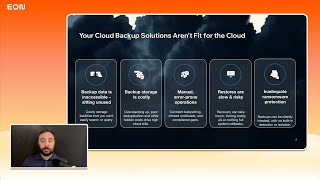
Powering Azure Fabric and AI with Eon’s Data Lake

With Eon on Azure, backups don’t just sit idle—they become a first-class data source. Eon transforms cloud backups into Iceberg tables in Blob Storage, instantly queryable through Microsoft Fabric and OneLake. Learn how backup data flows into Fabric engines like SQL, Spark, and KQL, and how it fuels AI innovation with Azure OpenAI. See how organizations can collaborate more effectively by unifying protection, analytics, and AI on Eon’s data lake.

Preview: What’s new with Azure Databases and SQL Server

Unlock the next level of performance and scalability with Azure Databases—engineered for speed, reliability, and seamless integration across your stack. At Ignite, Shireesh Thota, CVP of Azure Databases, will unveil breakthrough features and releases for Azure Databases, SQL Server 2025, and Fabric Databases for SQL and Cosmos DB. Get an inside look at how these advancements empower you to build and deploy cutting-edge applications and AI agents—faster, smarter, and at enterprise scale.

Think you know Quest? Think again.

We're investing $350M to make our 30 years of expertise your AI launchpad. The new Quest understands that AI fails without trusted data and modern identity security. Join us to see how we build the essential foundation for your AI strategy; from creating trusted, AI-ready data products to securing your entire Microsoft identity fabric (AD & Entra ID). Your legacy is your advantage.