
 talk-data.com
Topic
MongoDB
nosql_database
document_database
big_data
192
tagged
Activity Trend
27
peak/qtr
2020-Q1
2026-Q2
Top Events
Data Engineering Podcast
69
O'Reilly Data Engineering Books
68
Google Cloud Next '25
8
Google Cloud Next '24
6
O'Reilly Data Science Books
5
AWS re:Invent 2024
4
Microsoft Ignite 2025
3
Databricks DATA + AI Summit 2023
3
GolangNYC: MongoSeries - MongoDB Go Driver (Tech Talk/Lab - Intro Level)
2
Data + AI Summit 2025
2
Soirée MongoDB : Atlas Vector Search & IA pour les Sinistres Auto en Temps Réel
2
ScoutDB: Fully Agentic Mongo GUI & Accelerating GenAI Integration with MongoDB
2
Firestore with MongoDB compatibility is a serverless database service designed to maximize scalability, high availability and performance without the hidden costs of capacity planning. This session demonstrates the new Firestore with MongoDB compatibility capabilities and discusses how Dialpad has built an Ai-powered customer communications platform leveraging Firestore over the last 14 years to grow a successful, performant, reliable business.
In this session, you’ll learn how to build an AI agent using MongoDB Atlas on Google Cloud in just 15 minutes. We’ll cover how to embed and store your data along with vectors in a single database; build a vector search index and run search queries; and implement an AI agent.
This Session is hosted by a Google Cloud Next Sponsor.
Visit your registration profile at g.co/cloudnext to opt out of sharing your contact information with the sponsor hosting this session.
UKG is revolutionizing workforce management with AI agents and retrieval-augmented generation (RAG) systems. Join this session for a deep dive into how UKG, Google Cloud, and MongoDB collaborated to orchestrate enterprise data and put it to use powering intelligent, context-aware AI solutions that shape the future of work.
This Session is hosted by a Google Cloud Next Sponsor.
Visit your registration profile at g.co/cloudnext to opt out of sharing your contact information with the sponsor hosting this session.
by
Philipp Krenn
(Elastic)
,
Benjamin Flast
(MongoDB)
,
Kevin Tsai
(Google Cloud)
,
Maruti C
(Google Cloud)
Unlock the true potential of your enterprise data with AI agents that transcend chat. This panel explores how leading companies build production-ready AI agents that deliver real-world impact. We’ll examine Google Cloud, MongoDB, Elastic, and open source tools, including generative AI and large language model (LLM) optimization with efficient data handling. Learn practical approaches and build the next wave of AI solutions.
Firestore with MongoDB compatibility is a serverless database service designed to maximize scalability, high availability and performance without the hidden costs of capacity planning. This session demonstrates the new Firestore with MongoDB compatibility capabilities and discusses how Dialpad has built an Ai-powered customer communications platform leveraging Firestore over the last 14 years to grow a successful, performant, reliable business.
Google brings together the scalability, reliability and ease-of-use of Firestore with MongoDB compatibility. The session will showcase Firestore with MongoDB compatibility and its capabilities. In addition, Mayo Clinic will present their use of Firestore for multiple workloads including using Firestore’s GenAI capabilities for delivering personalized experiences in their applications.
Send us a text Richmond Alake, Developer Advocate at MongoDB, is an AI/ML practitioner with an academic background in computer vision, robotics, and machine learning. If databases that scale for AI are your thing, this one is for you. 02:05 Meet Rich Alake 03:57 A Developer Advocate at MongoDB 05:57 Passions and Fate! 08:52 AI Hype 13:14 Oh No. AGI Again… 17:30 What Makes and AI Database? 20:42 Use Cases 25:41 RAG Best Practices 27:40 The Role of Database 30:05 Why is MongoDB Better At? 32:43 What's Next 36:13 Advice on Contious Learning 38:44 Where to Find Rich? Linkedin: linkedin.com/in/richmondalake Website: https://www.mongodb.com/
Register For MongoDB: https://mdb.link/register_make_data_simple AI Agents Article: https://mdb.link/ai_agents_making_data_simple Best Repo for AI Developers: https://mdb.link/ai_developer_resource Richmond's LinkedIn: https://www.linkedin.com/in/richmondalake/ Want to be featured as a guest on Making Data Simple? Reach out to us at [email protected] and tell us why you should be next. The Making Data Simple Podcast is hosted by Al Martin, WW VP Technical Sales, IBM, where we explore trending technologies, business innovation, and leadership ... while keeping it simple & fun.
We’re improving DataFramed, and we need your help! We want to hear what you have to say about the show, and how we can make it more enjoyable for you—find out more here. What makes a database modern, and why does it matter? In a world where we face countless choices, how do you build systems that not only scale but also make life easier for your teams? And with AI reshaping industries and workflows, how do businesses bridge the gap between legacy systems and cutting-edge applications? Sahir Azam is the Chief Product Officer at MongoDB. He has been with MongoDB since 2016, where he launched the industry’s first developer data platform, MongoDB Atlas, and scaled the company’s thriving cloud business from the ground up. He also serves on the boards of Temporal and Observe, Inc, a cloud data observability startup. Sahir joined MongoDB from Sumo Logic, where he managed platform, pricing, packaging, and technology partnerships. Before Sumo Logic, he launched VMware's first organically developed SaaS management product and grew their management tools business to $1B+ in revenue. Earlier in his career, Sahir also held technical and sales-focused roles at DynamicOps, BMC Software, and BladeLogic. In the episode, Richie and Sahir Azam explore the evolution of databases beyond NoSQL, enhancing developer productivity, integrating AI capabilities, modernizing legacy systems, and much more. Links Mentioned in the Show: MongoDBConnect with SahirCourse: Introduction to MongoDB in PythonRelated Episode: Not Only Vector Databases: Putting Databases at the Heart of AI, with Andi Gutmans, VP and GM of Databases at GoogleRewatch sessions from RADAR: Forward Edition New to DataCamp? Learn on the go using the DataCamp mobile appEmpower your business with world-class data and AI skills with DataCamp for business
Amazon DocumentDB (with MongoDB compatibility) is a fully managed native JSON document database that makes it easy and cost-effective to operate critical document workloads at virtually any scale without managing infrastructure. In this session, take a deep dive into the most exciting new features Amazon DocumentDB offers including global cluster failover, global cluster switchover, compression, and the latest query APIs. Learn how the implementation of these features in your organization can improve resilience, performance, and the effectiveness of your applications.
Learn more: AWS re:Invent: https://go.aws/reinvent. More AWS events: https://go.aws/3kss9CP
Subscribe: More AWS videos: http://bit.ly/2O3zS75 More AWS events videos: http://bit.ly/316g9t4
About AWS: Amazon Web Services (AWS) hosts events, both online and in-person, bringing the cloud computing community together to connect, collaborate, and learn from AWS experts. AWS is the world's most comprehensive and broadly adopted cloud platform, offering over 200 fully featured services from data centers globally. Millions of customers—including the fastest-growing startups, largest enterprises, and leading government agencies—are using AWS to lower costs, become more agile, and innovate faster.
AWSreInvent #AWSreInvent2024
In this session, explore how you can use the generative AI capabilities of Amazon DocumentDB (with MongoDB compatibility) to make your existing applications more powerful. See demos showcasing how easily you can implement semantic search, build chatbots, and execute ML predictions within Amazon DocumentDB.
Learn more: AWS re:Invent: https://go.aws/reinvent. More AWS events: https://go.aws/3kss9CP
Subscribe: More AWS videos: http://bit.ly/2O3zS75 More AWS events videos: http://bit.ly/316g9t4
About AWS: Amazon Web Services (AWS) hosts events, both online and in-person, bringing the cloud computing community together to connect, collaborate, and learn from AWS experts. AWS is the world's most comprehensive and broadly adopted cloud platform, offering over 200 fully featured services from data centers globally. Millions of customers—including the fastest-growing startups, largest enterprises, and leading government agencies—are using AWS to lower costs, become more agile, and innovate faster.
AWSreInvent #AWSreInvent2024
Summary In this episode of the Data Engineering Podcast Sam Kleinman talks about the pivotal role of databases in software engineering. Sam shares his journey into the world of data and discusses the complexities of database selection, highlighting the trade-offs between different database architectures and how these choices affect system design, query performance, and the need for ETL processes. He emphasizes the importance of understanding specific requirements to choose the right database engine and warns against over-engineering solutions that can lead to increased complexity. Sam also touches on the tendency of engineers to move logic to the application layer due to skepticism about database longevity and advises teams to leverage database capabilities instead. Finally, he identifies a significant gap in data management tooling: the lack of easy-to-use testing tools for database interactions, highlighting the need for better testing paradigms to ensure reliability and reduce bugs in data-driven applications.
Announcements Hello and welcome to the Data Engineering Podcast, the show about modern data managementIt’s 2024, why are we still doing data migrations by hand? Teams spend months—sometimes years—manually converting queries and validating data, burning resources and crushing morale. Datafold's AI-powered Migration Agent brings migrations into the modern era. Their unique combination of AI code translation and automated data validation has helped companies complete migrations up to 10 times faster than manual approaches. And they're so confident in their solution, they'll actually guarantee your timeline in writing. Ready to turn your year-long migration into weeks? Visit dataengineeringpodcast.com/datafold today to learn how Datafold can automate your migration and ensure source to target parity. Your host is Tobias Macey and today I'm interviewing Sam Kleinman about database tradeoffs across operating environments and axes of scaleInterview IntroductionHow did you get involved in the area of data management?The database engine you use has a substantial impact on how you architect your overall system. When starting a greenfield project, what do you see as the most important factor to consider when selecting a database?points of friction introduced by database capabilitiesembedded databases (e.g. SQLite, DuckDB, LanceDB), when to use and when do they become a bottlenecksingle-node database engines (e.g. Postgres, MySQL), when are they legitimately a problemdistributed databases (e.g. CockroachDB, PlanetScale, MongoDB)polyglot storage vs. general-purpose/multimodal databasesfederated queries, benefits and limitations ease of integration vs. variability of performance and access control Contact Info LinkedInGitHubParting Question From your perspective, what is the biggest gap in the tooling or technology for data management today?Closing Announcements Thank you for listening! Don't forget to check out our other shows. Podcast.init covers the Python language, its community, and the innovative ways it is being used. The AI Engineering Podcast is your guide to the fast-moving world of building AI systems.Visit the site to subscribe to the show, sign up for the mailing list, and read the show notes.If you've learned something or tried out a project from the show then tell us about it! Email [email protected] with your story.Links MongoDBNeonPodcast EpisodeGlareDBNoSQLS3 Conditional WriteEvent driven architectureCockroachDBCouchbaseCassandraThe intro and outro music is from The Hug by The Freak Fandango Orchestra / CC BY-SA
Microsoft is making significant investments in relational and NoSQL open-source databases. Learn about Azure Database for PostgreSQL, Azure Database for MySQL, Azure Cosmos DB for MongoDB, with new enterprise-ready features to support daily business operations. See new migration capabilities as well as Microsoft's new contributions to the open-source community, including DiskANN, a PostgreSQL extension for Azure OpenAI Service, and much more.
𝗦𝗽𝗲𝗮𝗸𝗲𝗿𝘀: * Aditi Gupta * AVIJIT GUPTA * Dingding Lu * Prasanth Tammiraju
𝗦𝗲𝘀𝘀𝗶𝗼𝗻 𝗜𝗻𝗳𝗼𝗿𝗺𝗮𝘁𝗶𝗼𝗻: This is one of many sessions from the Microsoft Ignite 2024 event. View even more sessions on-demand and learn about Microsoft Ignite at https://ignite.microsoft.com
BRK207 | English (US) | Data
MSIgnite
by
James Kinley
A 30 minute demo of how to use Redpanda Connect (powered by Benthos) to generate vector embeddings on streaming text. This session will walk through the architecture and configuration used to seamlessly integrate Redpanda Connect with LangChain, OpenAI, and MongoDB Atlas to build a complete Retrieval Augmented Generation data pipeline.
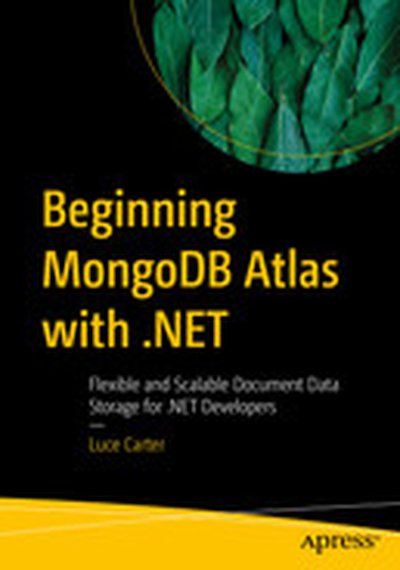
This book is a tutorial on MongoDB customized for developers working in Microsoft .NET 6, .NET 7, and beyond. It explains the differences between relational database systems and the document model supported by MongoDB, and shows how to build .NET applications that run against a MongoDB database, especially one in the cloud. Author Luce Carter kicks things off by teaching you how to determine when to use a document database versus a relational engine. After that, she walks you through building a Microsoft .NET project combining the MongoDB Atlas cloud database as a service solution with a .NET. application. In the process, you will learn how to create, read, update, and delete data in MongoDB from any .NET project. You will come away from this book with a solid understanding of MongoDB’s Developer Data Platform and how to use it from your .NET applications. You’ll be able to connect to MongoDB in the cloud and take advantage of the flexibility and scalability that MongoDB’s document storage model provides, and you’ll understand how to craft your applications to run using document storage and the MongoDB database engine. What You Will Learn Know when to use the MongoDB document model Build .NET applications that connect to MongoDB for data storage Create MongoDB clusters on the MongoDB Atlas cloud platform Store data in MongoDB Atlas Create, Read, Update, and Delete (CRUD) data from .NET Web API projects Test your CRUD endpoints using RESTful operations Validate schemas to help protect against breaking changes Who This Book Is For .NET developers who are looking for an alternative to relational databases, and those looking for a flexible and scalable document storage solution for use from .NET applications. Additionally, anyone wanting to learn MongoDB in the context of .NET and C# will benefit from this book.
Full Stack FastAPI, React, and MongoDB guides you step-by-step through creating web applications using the FARM stack. This hands-on resource teaches you how to integrate FastAPI, a modern Python framework, React for front-end development, and MongoDB for data storage to build and deploy powerful, scalable web applications. What this Book will help me do Master the essentials of MongoDB, including creating and managing document-based databases. Gain proficiency in building APIs using FastAPI and Python for robust backend systems. Develop dynamic frontends using React, integrating seamlessly with a FastAPI backend. Securely authenticate and authorize users using JSON Web Tokens in your applications. Explore advanced features like integrating AI models and building with Next.js for production-ready development. Author(s) Marko Aleksendrić, Shrey Batra, Rachelle Palmer, and Shubham Ranjan combine their expertise in web development and software engineering in this book. Together, they bring years of professional experience and a passion for teaching developers to create modern web applications effectively using cutting-edge tools. Who is it for? Intermediate web developers who possess foundational JavaScript and Python skills are the ideal audience for this book. If you want to advance your skills by mastering modern web application development with the FARM stack, this book will guide you comprehensively. With practical, real-world examples, it is designed for developers aiming to build production-grade applications.
Luce Carter discusses using MongoDB in the .NET and Azure ecosystem.
Learn how innovators like HighLevel are migrating to Firestore from MongoDB in order to realize significant total cost of ownership savings, while incorporating Firestore with AI to build differentiated solutions for their customers. This session will also cover new Firestore feature announcements.
Click the blue “Learn more” button above to tap into special offers designed to help you implement what you are learning at Google Cloud Next 25.
Join us for this session where we will explore key MongoDB Atlas features including Data Federation, Atlas Triggers, and GraphQL API. We will also dive deep into MongoDB Atlas and Google Cloud integrations, such as Vertex AI and BigQuery, and how you can leverage these tools to build and scale your apps. Leave with actionable insights on how you can build with MongoDB Atlas on Google Cloud and explore what our Startup Program can do for you.
Click the blue “Learn more” button above to tap into special offers designed to help you implement what you are learning at Google Cloud Next 25.
Attention developers! Are you struggling with the complexities of integrating Al/ML into your apps? Join this practical session where we'll explore how MongoDB Atlas and Google Cloud's offerings like Vertex Al, Gemini, Codey, BigQuery, and Dataflow, provide a comprehensive toolkit for developers. In completing this session, you'll have the tools and confidence to embark on your own Al/ML journey! By attending this session, your contact information may be shared with the sponsor for relevant follow up for this event only.
Click the blue “Learn more” button above to tap into special offers designed to help you implement what you are learning at Google Cloud Next 25.