talk-data.com talk-data.com

Topic

r

176

tagged

Activity Trend

8 peak/qtr
2020-Q1 2026-Q1

Activities

176 activities · Newest first

R for Programmers

Unlike other books about R, written from the perspective of statistics, this book is written from the perspective of programmers, providing a channel for programmers with expertise in other programming languages to quickly understand R. The contents are divided into four parts: the basics of R, the server of R, databases and big data, and the appendices, which introduce the installation of Java, various databases, and Hadoop. Because this is a reference book, there is no special sequence for reading all the chapters. Anyone new to the subject who wishes to master R comprehensively can simply follow the chapters in sequence.

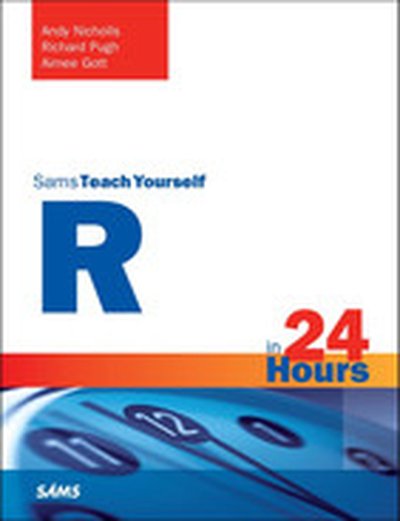
Sams Teach Yourself R in 24 Hours

In just 24 lessons of one hour or less, Sams Teach Yourself R in 24 Hours helps you learn all the R skills you need to solve a wide spectrum of real-world data analysis problems. You’ll master the entire data analysis workflow, learning to build code that’s efficient, reproducible, and suitable for sharing with others. This book’s straightforward, step-by-step approach teaches you how to import, manipulate, summarize, model, and plot data with R; formalize your analytical code; and build powerful R packages using current best practices. Practical, hands-on examples show you how to apply what you learn. Quizzes and exercises help you test your knowledge and stretch your skills. Learn How To Install, configure, and explore the R environment, including RStudio Use basic R syntax, objects, and packages Create and manage data structures, including vectors, matrices, and arrays Understand lists and data frames Work with dates, times, and factors Use common R functions, and learn to write your own Import and export data and connect to databases and spreadsheets Use the popular tidyr, dplyr and data.table packages Write more efficient R code with profiling, vectorization, and initialization Plot data and extend your graphical capabilities with ggplot2 and Lattice graphics Develop common types of models Construct high-quality packages, both simple and complex Write R classes: S3, S4, and Reference Classes Use R to generate dynamic reports Build web applications with Shiny Register your book at informit.com/register for convenient access to updates and corrections as they become available. This book’s source code can be found at http://www.mango-solutions.com/wp/teach-yourself-r-in-24-hours-book/.

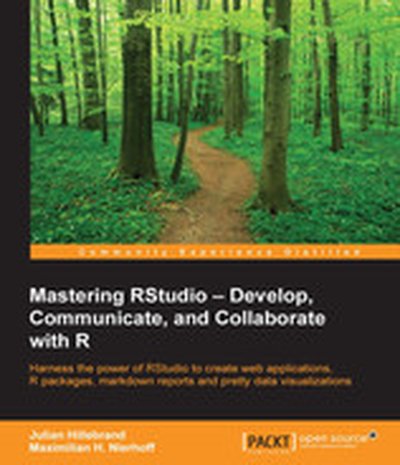
Mastering RStudio: Develop, Communicate, and Collaborate with R

"Mastering RStudio: Develop, Communicate, and Collaborate with R" is your guide to unlocking the potential of RStudio. You'll learn to use RStudio effectively in your data science projects, covering everything from creating R packages to interactive web apps with Shiny. By the end, you'll fully understand how to use RStudio tools to manage projects and share results effectively. What this Book will help me do Gain a comprehensive understanding of the RStudio interface and workflow optimizations. Effectively communicate data insights with R Markdown, including static and interactive documents. Create impactful data visualizations using R's diverse graphical systems and tools. Develop Shiny web applications to showcase and share analytical results. Learn to collaborate on projects using Git and GitHub, and understand R package development workflows. Author(s) Julian Hillebrand and None Nierhoff are experienced R developers with years of practical expertise in data science and software development. They have a passion for teaching how to utilize RStudio effectively. Their approach to writing combines practical examples with thorough explanations, ensuring readers can readily apply concepts to real-world scenarios. Who is it for? This book is ideal for R programmers and analysts seeking to enhance their workflows using RStudio. Whether you're looking to create professional data visualizations, develop R packages, or implement Shiny web applications, this book provides the tools you need. Suitable for those already familiar with basic R programming and fundamental concepts.

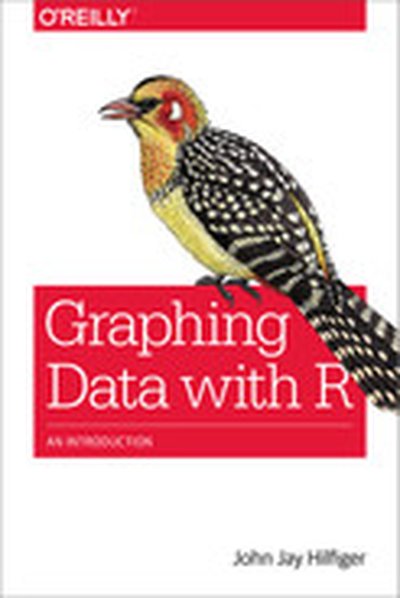
Graphing Data with R

It’s much easier to grasp complex data relationships with a graph than by scanning numbers in a spreadsheet. This introductory guide shows you how to use the R language to create a variety of useful graphs for visualizing and analyzing complex data for science, business, media, and many other fields. You’ll learn methods for highlighting important relationships and trends, reducing data to simpler forms, and emphasizing key numbers at a glance. Anyone who wants to analyze data will find something useful here—even if you don’t have a background in mathematics, statistics, or computer programming. If you want to examine data related to your work, this book is the ideal way to start.

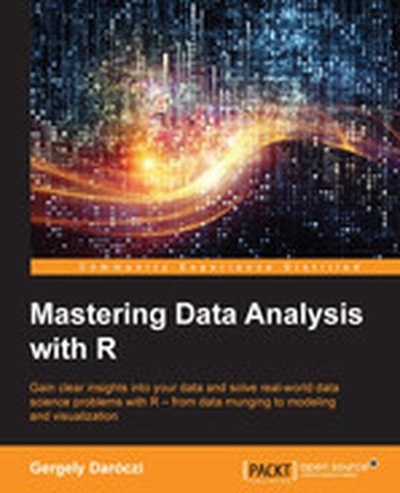
Mastering Data analysis with R

Unlock the full potential of the R programming language with 'Mastering Data Analysis with R'. This book takes you from basic data manipulation to advanced visualization and modeling techniques, providing hands-on guidance to solve real-world data science challenges. What this Book will help me do Efficiently manipulate and clean large datasets using R techniques. Build and evaluate statistical models and machine learning algorithms. Visualize data insights through compelling graphics and visualizations. Analyze social networks and graph data within R's environment. Perform geospatial data analysis with specialized R packages. Author(s) None Daróczi is a seasoned data scientist and R developer with extensive industry and academic experience. He specializes in employing R for sophisticated data analysis tasks and visualization. His approachable writing style, combined with in-depth technical expertise, ensures learners of varying levels can connect with and benefit from his materials. Who is it for? This book is ideal for data scientists, statisticians, and analysts who are familiar with basics of R and want to deepen their expertise. If you are looking to learn practical applications of advanced R capabilities for data wrangling, modeling, and visualization, this is for you. It suits professionals aiming to implement data-driven solutions and empowers them to make informed decisions with R's tools. Find practical techniques to elevate your data analysis proficiency here.

Building a Recommendation System with R

Dive into building recommendation systems with R in this comprehensive guide. You will learn about data mining, machine learning, and how R's powerful libraries and tools can be utilized to create efficient and optimized recommendation engines. By the end of this book, you will have the expertise to develop custom solutions tailored to specific data and user cases. What this Book will help me do Master the foundations of recommendation systems and their applications. Understand and implement essential data preprocessing techniques. Learn to optimize recommendation algorithms for better efficiency. Explore the use of the recommenderlab package in R for building models. Gain hands-on experience through a complete case study building a recommendation engine. Author(s) None Usuelli is a seasoned data scientist and R programming enthusiast passionate about machine learning and data analysis. They have extensive experience in developing recommendation systems for various industries, leveraging the power of R for robust solutions. None's clear teaching approach makes complex concepts accessible to learners of all levels. Who is it for? This book is ideal for developers who already possess a fundamental understanding of R and basic machine learning principles. If you aim to deepen your knowledge in creating advanced recommendation systems and practically apply these concepts, this book is the perfect resource for you. It is an excellent guide for professionals looking to specialize in predictive analytics and systems design.

Advanced R

An Essential Reference for Intermediate and Advanced R Programmers Advanced R presents useful tools and techniques for attacking many types of R programming problems, helping you avoid mistakes and dead ends. With more than ten years of experience programming in R, the author illustrates the elegance, beauty, and flexibility at the heart of R. The book develops the necessary skills to produce quality code that can be used in a variety of circumstances. You will learn: The fundamentals of R, including standard data types and functions Functional programming as a useful framework for solving wide classes of problems The positives and negatives of metaprogramming How to write fast, memory-efficient code This book not only helps current R users become R programmers but also shows existing programmers what’s special about R. Intermediate R programmers can dive deeper into R and learn new strategies for solving diverse problems while programmers from other languages can learn the details of R and understand why R works the way it does.

Machine Learning with R - Second Edition

Machine Learning with R (Second Edition) provides a thorough introduction to machine learning techniques and their application using the R programming language. You'll gain hands-on experience implementing various algorithms and solving real-world data challenges, making it an invaluable resource for aspiring data scientists and analysts. What this Book will help me do Understand the fundamentals of machine learning and its applications in data analysis. Master the use of R for cleaning, exploring, and visualizing data to prepare it for modeling. Build and apply machine learning models for classification, prediction, and clustering tasks. Evaluate and fine-tune model performance to ensure accurate predictions. Explore advanced topics like text mining, handling social network data, and big data analytics. Author(s) Brett Lantz is a data scientist with significant experience as both a practitioner and communicator in the machine learning field. With a focus on accessibility, he aims to demystify complex concepts for readers interested in data science. His blend of hands-on methods and theoretical insight has made his work a favorite for both beginners and experienced professionals. Who is it for? Ideal for data analysts and aspiring data scientists who have intermediate programming skills and are exploring machine learning. Perfect for R users ready to expand their skill set to include predictive modeling techniques. Also fits those with some experience in machine learning but new to the R environment. Provides insightful guidance for anyone looking to apply machine learning in practical, real-world scenarios.

R For Dummies, 2nd Edition

Mastering R has never been easier Picking up R can be tough, even for seasoned statisticians and data analysts. R For Dummies, 2nd Edition provides a quick and painless way to master all the R you'll ever need. Requiring no prior programming experience and packed with tons of practical examples, step-by-step exercises, and sample code, this friendly and accessible guide shows you how to know your way around lists, data frames, and other R data structures, while learning to interact with other programs, such as Microsoft Excel. You'll learn how to reshape and manipulate data, merge data sets, split and combine data, perform calculations on vectors and arrays, and so much more. R is an open source statistical environment and programming language that has become very popular in varied fields for the management and analysis of data. R provides a wide array of statistical and graphical techniques, and has become the standard among statisticians for software development and data analysis. R For Dummies, 2nd Edition takes the intimidation out of working with R and arms you with the knowledge and know-how to master the programming language of choice among statisticians and data analysts worldwide. Covers downloading, installing, and configuring R Includes tips for getting data in and out of R Offers advice on fitting regression models and ANOVA Provides helpful hints for working with graphics R For Dummies, 2nd Edition is an ideal introduction to R for complete beginners, as well as an excellent technical reference for experienced R programmers.

Mastering Predictive Analytics with R

Dive into the realm of predictive analytics with this R-focused guide. Whether you're building your first model or refining complex analytics strategies, this book equips you with fundamental techniques and in-depth understanding of predictive modeling using R. What this Book will help me do Master the end-to-end predictive modeling process. Classify and select suitable predictive models for specific use cases. Understand the mechanics and assumptions of various predictive models. Evaluate predictive model performance with appropriate metrics. Enhance your R programming skills for analytical tasks. Author(s) The authors of this book combine strong technical expertise in data science and predictive analytics with extensive hands-on experience in applying them to real-world challenges. They excel at distilling complex topics into approachable, actionable steps for readers at varying levels of familiarity with R and data analysis. Their commitment to empowering learners defines their work. Who is it for? This book is perfect for budding data scientists and quantitative analysts with basic R knowledge who aspire to master predictive analytics. Even experienced professionals will find valuable model-specific insights. If you're familiar with basic statistics and eager to bridge the gap to robust machine learning applications, this book is for you.

Spatio-Temporal Methods in Environmental Epidemiology

This is the first book of its kind to specifically address the interface between environmental epidemiology and spatio-temporal modeling. The book links recent developments in spatio-temporal methodology with epidemiological applications. Drawing on real-life problems, it provides the tools required to exploit recent advances in methodology when assessing the health risks associated with environmental hazards. The text includes practical examples together with embedded R code, details of specific R packages, and other software, including WinBUGS/OpenBUGS and INLA.

R in Action, Second Edition

R in Action, Second Edition presents both the R language and the examples that make it so useful for business developers. Focusing on practical solutions, the book offers a crash course in statistics and covers elegant methods for dealing with messy and incomplete data that are difficult to analyze using traditional methods. You'll also master R's extensive graphical capabilities for exploring and presenting data visually. And this expanded second edition includes new chapters on time series analysis, cluster analysis, and classification methodologies, including decision trees, random forests, and support vector machines. About the Technology Business pros and researchers thrive on data, and R speaks the language of data analysis. R is a powerful programming language for statistical computing. Unlike general-purpose tools, R provides thousands of modules for solving just about any data-crunching or presentation challenge you're likely to face. R runs on all important platforms and is used by thousands of major corporations and institutions worldwide. About the Book R in Action, Second Edition teaches you how to use the R language by presenting examples relevant to scientific, technical, and business developers. Focusing on practical solutions, the book offers a crash course in statistics, including elegant methods for dealing with messy and incomplete data. You'll also master R's extensive graphical capabilities for exploring and presenting data visually. And this expanded second edition includes new chapters on forecasting, data mining, and dynamic report writing. What's Inside Complete R language tutorial Using R to manage, analyze, and visualize data Techniques for debugging programs and creating packages OOP in R Over 160 graphs About the Reader This book is designed for readers who need to solve practical data analysis problems using the R language and tools. Some background in mathematics and statistics is helpful, but no prior experience with R or computer programming is required. About the Author Dr. Rob Kabacoff is a seasoned researcher who specializes in data analysis. He has taught graduate courses in statistical programming and manages the Quick-R website at statmethods.net. Quotes Essential to anyone doing data analysis with R, whether in industry or academia. - Cristofer Weber, NeoGrid A go-to reference for general R and many statistics questions. - George Gaines, KYOS Systems Inc. Accessible language, realistic examples, and clear code. - Samuel D. McQuillin, University of Houston Offers a gentle learning curve to those starting out with R for the first time. - Indrajit Sen Gupta, Mu Sigma Business Solutions

R Packages

Turn your R code into packages that others can easily download and use. This practical book shows you how to bundle reusable R functions, sample data, and documentation together by applying author Hadley Wickham’s package development philosophy. In the process, you’ll work with devtools, roxygen, and testthat, a set of R packages that automate common development tasks. Devtools encapsulates best practices that Hadley has learned from years of working with this programming language. Ideal for developers, data scientists, and programmers with various backgrounds, this book starts you with the basics and shows you how to improve your package writing over time. You’ll learn to focus on what you want your package to do, rather than think about package structure. Learn about the most useful components of an R package, including vignettes and unit tests Automate anything you can, taking advantage of the years of development experience embodied in devtools Get tips on good style, such as organizing functions into files Streamline your development process with devtools Learn the best way to submit your package to the Comprehensive R Archive Network (CRAN) Learn from a well-respected member of the R community who created 30 R packages, including ggplot2, dplyr, and tidyr

Mastering R for Quantitative Finance

Dive deeply into the quantitative finance domain using R with 'Mastering R for Quantitative Finance.' Through this book, you'll explore advanced R programming techniques tailored to financial modeling, risk assessment, and trading strategy optimization. This comprehensive guide aims to equip you with the tools to build practical quantitative finance solutions. What this Book will help me do Analyze detailed financial data using R and quantitative techniques. Develop predictive models for time series and risk management. Implement advanced trading strategies tailored to current market conditions. Master simulation techniques for scenarios without analytical solutions. Evaluate portfolio risks and potential returns with advanced methods. Author(s) None Gabler is a seasoned expert in quantitative finance and R programming, bringing years of practical experience to this book. Her approach combines theoretical depth with practical examples to ensure readers can apply the learned concepts in real-world financial contexts. Her passion for teaching and clear writing style make complex topics accessible to both practitioners and learners. Who is it for? This book is for financial professionals and data scientists seeking to delve into quantitative finance using R. Ideal readers are familiar with the basics of economics and statistics and are looking to apply advanced analytics in finance. If you are aiming to refine your modeling skills or develop precise strategies, this book is tailored for you. It's perfect for those eager to bridge the gap between theory and practical application.

Learning R for Geospatial Analysis

Learn how to leverage the power of R for geospatial analysis in this comprehensive guide. Whether you're processing spatial datasets, creating publication-quality maps, or performing GIS operations, this book covers the necessary tools and techniques for effective analysis, without requiring prior programming knowledge. What this Book will help me do Discover how to manipulate and analyze geospatial data effectively using R. Gain proficiency in loading, reshaping, and visualizing spatial data. Master key concepts like spatial queries and overlays for GIS tasks. Learn to automate spatial data workflows using reproducible R scripts. Create high-quality visualizations and maps tailored to your datasets. Author(s) None Dorman, the author of this book, is an experienced data science educator and practitioner with a particular focus on geospatial data analysis in R. With years of teaching and applied geospatial research, Dorman brings expertise in making advanced topics approachable. Their practical approach ensures readers can immediately put concepts into practice. Who is it for? This book is ideal for GIS analysts, geospatial researchers, educators, and students looking to enhance their skillset with R programming. It's particularly suited for those familiar with geographic concepts like coordinates but new to programming or R. If you aim to efficiently analyze spatial data and produce professional-grade visualizations and GIS analyses, this book is for you.

R Recipes: A Problem-Solution Approach

R Recipes is your handy problem-solution reference for learning and using the popular R programming language for statistics and other numerical analysis. Packed with hundreds of code and visual recipes, this book helps you to quickly learn the fundamentals and explore the frontiers of programming, analyzing and using R. R Recipes provides textual and visual recipes for easy and productive templates for use and re-use in your day-to-day R programming and data analysis practice. Whether you're in finance, cloud computing, big or small data analytics, or other applied computational and data science - R Recipes should be a staple for your code reference library.

Multiple Factor Analysis by Example Using R

Multiple factor analysis (MFA) enables users to analyze tables of individuals and variables in which the variables are structured into quantitative, qualitative, or mixed groups. Written by the co-developer of the methodology, this book brings together the theoretical and methodological aspects of MFA. It also covers principal component analysis, multiple correspondence analysis, factor analysis for mixed data, hierarchical MFA, and more. The book also includes examples of applications and details on how to implement MFA using an R package, with the data and R scripts available online.

Modeling Techniques in Predictive Analytics: Business Problems and Solutions with R, Revised and Expanded Edition

To succeed with predictive analytics, you must understand it on three levels: Strategy and management Methods and models Technology and code This up-to-the-minute reference thoroughly covers all three categories. Now fully updated, this uniquely accessible book will help you use predictive analytics to solve real business problems and drive real competitive advantage. If you’re new to the discipline, it will give you the strong foundation you need to get accurate, actionable results. If you’re already a modeler, programmer, or manager, it will teach you crucial skills you don’t yet have. Unlike competitive books, this guide illuminates the discipline through realistic vignettes and intuitive data visualizations– not complex math. Thomas W. Miller, leader of Northwestern University’s pioneering program in predictive analytics, guides you through defining problems, identifying data, crafting and optimizing models, writing effective R code, interpreting results, and more. Every chapter focuses on one of today’s key applications for predictive analytics, delivering skills and knowledge to put models to work–and maximize their value. Reflecting extensive student and instructor feedback, this edition adds five classroom-tested case studies, updates all code for new versions of R, explains code behavior more clearly and completely, and covers modern data science methods even more effectively. All data sets, extensive R code, and additional examples available for download at http://www.ftpress.com/miller If you want to make the most of predictive analytics, data science, and big data, this is the book for you. Thomas W. Miller’s unique balanced approach combines business context and quantitative tools, appealing to managers, analysts, programmers, and students alike. Miller addresses multiple business cases and challenges, including segmentation, brand positioning, product choice modeling, pricing research, finance, sports, text analytics, sentiment analysis, and social network analysis. He illuminates the use of cross-sectional data, time series, spatial, and spatio-temporal data. You’ll learn why each problem matters, what data are relevant, and how to explore the data you’ve identified. Miller guides you through conceptually modeling each data set with words and figures; and then modeling it again with realistic R programs that deliver actionable insights. You’ll walk through model construction, explanatory variable subset selection, and validation, mastering best practices for improving out-of-sample predictive performance. Throughout, Miller employs data visualization and statistical graphics to help you explore data, present models, and evaluate performance. This edition adds five new case studies, updates all code for the newest versions of R, adds more commenting to clarify how the code works, and offers a more detailed and up-to-date primer on data science methods. Gain powerful, actionable, profitable insights about: Advertising and promotion Consumer preference and choice Market baskets and related purchases Economic forecasting Operations management Unstructured text and language Customer sentiment Brand and price Sports team performance And much more

Hands-On Programming with R

Learn how to program by diving into the R language, and then use your newfound skills to solve practical data science problems. With this book, you’ll learn how to load data, assemble and disassemble data objects, navigate R’s environment system, write your own functions, and use all of R’s programming tools. RStudio Master Instructor Garrett Grolemund not only teaches you how to program, but also shows you how to get more from R than just visualizing and modeling data. You’ll gain valuable programming skills and support your work as a data scientist at the same time. Work hands-on with three practical data analysis projects based on casino games Store, retrieve, and change data values in your computer’s memory Write programs and simulations that outperform those written by typical R users Use R programming tools such as if else statements, for loops, and S3 classes Learn how to write lightning-fast vectorized R code Take advantage of R’s package system and debugging tools Practice and apply R programming concepts as you learn them