talk-data.com talk-data.com

Topic

r

176

tagged

Activity Trend

8 peak/qtr
2020-Q1 2026-Q1

Activities

176 activities · Newest first

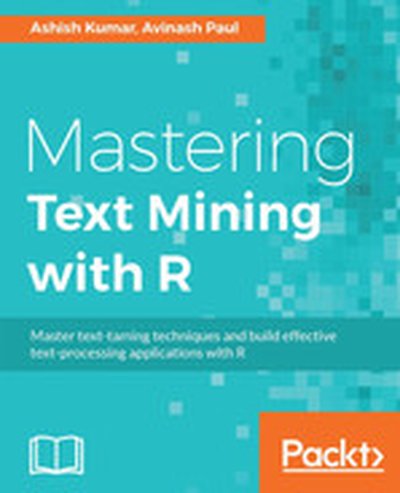
Mastering Text Mining with R

Mastering Text Mining with R is your go-to guide for learning how to process and analyze textual data using R. Throughout the book, you'll gain the skills necessary to perform data extraction and natural language processing, equipping you with practical applications tailored to real-world scenarios. What this Book will help me do Learn to access and manipulate textual data from various sources using R. Understand text processing techniques and employ them with tools like OpenNLP. Explore methods for text categorization, reduction, and summarization with hands-on exercises. Perform text classification tasks such as sentiment analysis and entity recognition. Build custom applications using text mining techniques and frameworks. Author(s) Ashish Kumar is a seasoned data scientist and software developer with years of experience in text analytics and the R programming language. He has a knack for explaining complex topics in an accessible and practical manner, ideal for learners embracing their text mining journey. Who is it for? This book is for anyone keen on mastering text mining with R. If you're an R programmer, data analyst, or data scientist looking to delve into text analytics, you'll find it ideal. Some familiarity with basic programming and statistics will enhance your experience, but all concepts are introduced clearly and effectively.

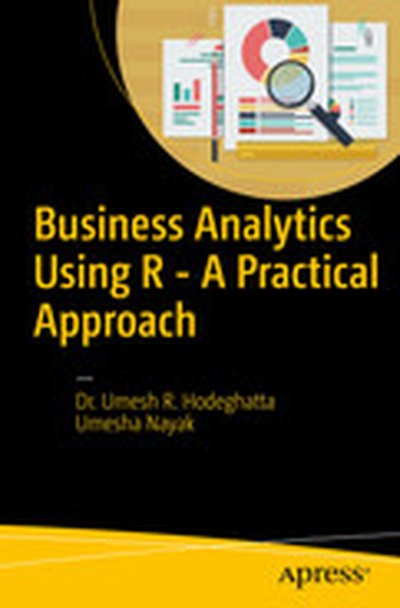
Business Analytics Using R - A Practical Approach

Learn the fundamental aspects of the business statistics, data mining, and machine learning techniques required to understand the huge amount of data generated by your organization. This book explains practical business analytics through examples, covers the steps involved in using it correctly, and shows you the context in which a particular technique does not make sense. Further, Practical Business Analytics using R helps you understand specific issues faced by organizations and how the solutions to these issues can be facilitated by business analytics. This book will discuss and explore the following through examples and case studies: An introduction to R: data management and R functions The architecture, framework, and life cycle of a business analytics project Descriptive analytics using R: descriptive statistics and data cleaning Data mining: classification, association rules, and clustering Predictive analytics: simple regression, multiple regression, and logistic regression This book includes case studies on important business analytic techniques, such as classification, association, clustering, and regression. The R language is the statistical tool used to demonstrate the concepts throughout the book. What You Will Learn • Write R programs to handle data • Build analytical models and draw useful inferences from them • Discover the basic concepts of data mining and machine learning • Carry out predictive modeling • Define a business issue as an analytical problem Who This Book Is For Beginners who want to understand and learn the fundamentals of analytics using R. Students, managers, executives, strategy and planning professionals, software professionals, and BI/DW professionals.

Efficient data processing with R

What you’ll learn—and how you can apply it You’ll learn to perform efficient data carpentry—the process of taking rough, raw, and to some extent randomly arranged input data and creating neatly organized and tidy data. Working with clean data will be beneficial for every subsequent stage of your R project. In this Lesson, readers will learn how to create user-friendly data frames with tibble, reshape data with tidyr operations such as gather and separate, process data efficiently with dplyr’s functions, and connect R to a range of database types. This lesson is for you because You are working on a project in R and have reached the data processing stage. You want to clean, manipulate, and tidy your dataset to get it ready for the next stage (typically modeling and visualization). Prerequisites Some knowledge of R Materials or downloads needed in advance Installed RStudio This Lesson relies on a number of packages for data cleaning and processing. Check that they are installed on your computer and load them with: library("tibble") library("tidyr") library("stringr") library("readr") library("dplyr") library("data.table") RSQLite and ggmap are also used in a couple of examples, though they are not central to the Lesson’s content.

Efficient R optimization

What you’ll learn—and how you can apply it You’ll learn how to optimize your tried and tested code. In this Lesson, learners will understand how to profile code to identify and prevent key bottlenecks in R performance, as well as tricks that may improve performance on row and column operations and matrices. This Lesson also presents an example of specific improvements that can be made to enhance performance of the movie_square() function. This lesson is for you because You already have well-developed code that is mature conceptually and has been tried and tested. Now, you want to optimize this code. Prerequisites: Some knowledge of R and have well-developed R code Materials or downloads needed: Installed RStudio Some examples in this Lesson require a working C++ compiler

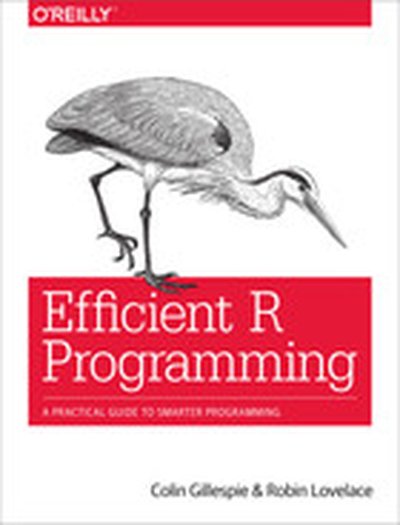
Efficient R Programming

There are many excellent R resources for visualization, data science, and package development. Hundreds of scattered vignettes, web pages, and forums explain how to use R in particular domains. But little has been written on how to simply make R work effectively—until now. This hands-on book teaches novices and experienced R users how to write efficient R code. Drawing on years of experience teaching R courses, authors Colin Gillespie and Robin Lovelace provide practical advice on a range of topics—from optimizing the set-up of RStudio to leveraging C++—that make this book a useful addition to any R user’s bookshelf.

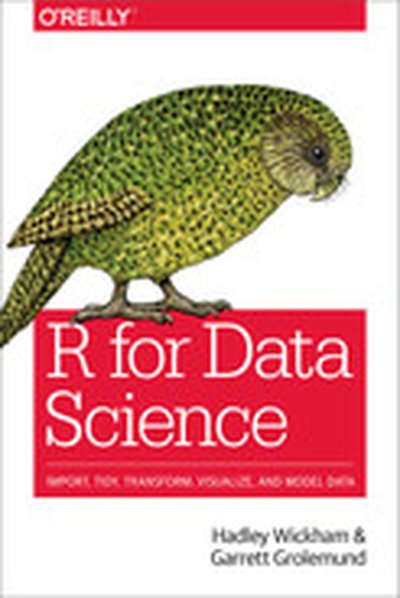
R for Data Science

Learn how to use R to turn raw data into insight, knowledge, and understanding. This book introduces you to R, RStudio, and the tidyverse, a collection of R packages designed to work together to make data science fast, fluent, and fun. Suitable for readers with no previous programming experience, R for Data Science is designed to get you doing data science as quickly as possible. Authors Hadley Wickham and Garrett Grolemund guide you through the steps of importing, wrangling, exploring, and modeling your data and communicating the results. You’ll get a complete, big-picture understanding of the data science cycle, along with basic tools you need to manage the details. Each section of the book is paired with exercises to help you practice what you’ve learned along the way. You’ll learn how to: Wrangle—transform your datasets into a form convenient for analysis Program—learn powerful R tools for solving data problems with greater clarity and ease Explore—examine your data, generate hypotheses, and quickly test them Model—provide a low-dimensional summary that captures true "signals" in your dataset Communicate—learn R Markdown for integrating prose, code, and results

R Data Structures and Algorithms

"R Data Structures and Algorithms" serves as a comprehensive guide to understanding data structures and algorithms for R developers. You will explore key data structures like stacks, queues, and trees, learn sorting and searching techniques, and apply these concepts to enhance the speed and efficiency of your R programs. What this Book will help me do Analyze algorithm efficiency using Big-O notation. Implement key data structures such as arrays, linked lists, and trees in R. Explore advanced techniques like dynamic programming and graph algorithms. Master sorting and searching algorithms for optimizing data processes. Utilize R-specific structures like vectors and data frames effectively. Author(s) The authors, PKS Prakash and Sri Krishna Rao, bring extensive experience in software development and data analysis, and a passion for making computer science concepts accessible. Their combined expertise ensures readers gain practical knowledge along with a deep theoretical understanding. Who is it for? This book is perfect for R developers aiming to deepen their understanding of data structures and algorithms. Whether you're a beginner with basic R proficiency or an advanced user seeking to boost application performance, this book provides the knowledge you need to succeed.

Advanced R: Data Programming and the Cloud

Program for data analysis using R and learn practical skills to make your work more efficient. This book covers how to automate running code and the creation of reports to share your results, as well as writing functions and packages. Advanced R is not designed to teach advanced R programming nor to teach the theory behind statistical procedures. Rather, it is designed to be a practical guide moving beyond merely using R to programming in R to automate tasks. This book will show you how to manipulate data in modern R structures and includes connecting R to data bases such as SQLite, PostgeSQL, and MongoDB. The book closes with a hands-on section to get R running in the cloud. Each chapter also includes a detailed bibliography with references to research articles and other resources that cover relevant conceptual and theoretical topics. What You Will Learn Write and document R functions Make an R package and share it via GitHub or privately Add tests to R code to insure it works as intended Build packages automatically with GitHub Use R to talk directly to databases and do complex data management Run R in the Amazon cloud Generate presentation-ready tables and reports using R Who This Book Is For Working professionals, researchers, or students who are familiar with R and basic statistical techniques such as linear regression and who want to learn how to take their R coding and programming to the next level.

R for Microsoft® Excel Users: Making the Transition for Statistical Analysis

Microsoft Excel can perform many statistical analyses, but thousands of business users and analysts are now reaching its limits. R, in contrast, can perform virtually any imaginable analysis—if you can get over its learning curve. In R for Microsoft® Excel Users, Conrad Carlberg shows exactly how to get the most from both programs. Drawing on his immense experience helping organizations apply statistical methods, Carlberg reviews how to perform key tasks in Excel, and then guides you through reaching the same outcome in R—including which packages to install and how to access them. Carlberg offers expert advice on when and how to use Excel, when and how to use R instead, and the strengths and weaknesses of each tool. Writing in clear, understandable English, Carlberg combines essential statistical theory with hands-on examples reflecting real-world challenges. By the time you’ve finished, you’ll be comfortable using R to solve a wide spectrum of problems—including many you just couldn’t handle with Excel. • Smoothly transition to R and its radically different user interface • Leverage the R community’s immense library of packages • Efficiently move data between Excel and R • Use R’s DescTools for descriptive statistics, including bivariate analyses • Perform regression analysis and statistical inference in R and Excel • Analyze variance and covariance, including single-factor and factorial ANOVA • Use R’s mlogit package and glm function for Solver-style logistic regression • Analyze time series and principal components with R and Excel

Learning R Programming

This book provides a comprehensive introduction to R programming, a powerful tool for data science and statistics. Throughout the book, readers will explore programming constructs, data structures, and popular R packages, gaining the skills needed for practical applications and problem-solving. What this Book will help me do Understand R's foundational concepts like variables, data types, and functions. Learn how to use R for data analysis, visualization, and machine learning tasks. Develop advanced R skills such as meta-programming and performance optimization. Master object-oriented programming using R's S3, S4, and R6 systems. Gain confidence in utilizing R for creating web scraping scripts and interactive reports. Author(s) None Ren, an experienced software developer and educator, specializes in languages for data analysis, including R. With years of practical experience and teaching R programming, they bring clarity and depth to complex topics. Their approachable writing style ensures learners at any level can engage effectively. Who is it for? This book is ideal for professionals in data science, statistics, and related fields with basic programming skills looking to delve into R programming. It caters to beginners and those consolidating their knowledge of R, aiming to develop practical skills for data manipulation and analysis.

Introduction to R for Business Intelligence

Master the essentials of using R for Business Intelligence in this practical guide. Through real-world use cases, learn to manipulate data, build predictive models, and create interactive dashboards to communicate insights effectively. What this Book will help me do Extract, clean, and analyze complex datasets for business applications. Perform advanced statistical and machine learning techniques like predictive modeling and clustering. Gain proficiency in creating interactive dashboards using R and the Shiny package. Develop real-world analytics skills that enhance decision-making processes. Integrate Business Intelligence workflows using R for operations, marketing, and finance domains. Author(s) None Gendron is an expert in data science and business analytics, passionate about teaching professionals to make data-driven decisions. With extensive experience in R programming, None has a knack for breaking down complex topics into easily digestible knowledge. Their practical approach ensures readers not only understand but can directly apply the concepts. Who is it for? This book is ideal for data analysts, business professionals, and entry-level data scientists looking to enhance their analytical skills. If you're familiar with basic R programming and aspire to derive actionable insights from data in the business context, this is the resource for you. It will also resonate with those in operations, marketing, or finance seeking to integrate data analysis into their decision-making.

Writing code for R packages

R packages are a great way to share and create code that you and others can use over and over again. Why is it important? Developing R code for inclusion in a package is different than simply writing R scripts. What you'll learn—and how you can apply it Learn best practices for writing R code for packages: organizing your functions, code style recommendations, understanding and planning for how code will be run. Plan for the "unknowns" once you release a package to the world. Also includes hints for submitting a package to CRAN. This lesson is for you because… You're an R developer and need to package code so that others can reuse it You want to prepare a package to submit to CRAN Prerequisites Some familiarity with the R language Materials or downloads needed in advance Install R Install RStudio This lesson is taken from by Hadley Wickham. R Packages

Big Data Analytics with R

Unlock the potential of big data analytics by mastering R programming with this comprehensive guide. This book takes you step-by-step through real-world scenarios where R's capabilities shine, providing you with practical skills to handle, process, and analyze large and complex datasets effectively. What this Book will help me do Understand the latest big data processing methods and how R can enhance their application. Set up and use big data platforms such as Hadoop and Spark in conjunction with R. Utilize R for practical big data problems, such as analyzing consumption and behavioral datasets. Integrate R with SQL and NoSQL databases to maximize its versatility in data management. Discover advanced machine learning implementations using R and Spark MLlib for predictive analytics. Author(s) None Walkowiak is an experienced data analyst and R programming expert with a passion for data engineering and machine learning. With a deep knowledge of big data platforms and extensive teaching experience, they bring a clear and approachable writing style to help learners excel. Who is it for? Ideal for data analysts, scientists, and engineers with fundamental data analysis knowledge looking to enhance their big data capabilities using R. If you aim to adapt R for large-scale data management and analysis workflows, this book is your ideal companion to bridge the gap.

R for Data Science Cookbook

The "R for Data Science Cookbook" is your comprehensive guide to tackling data problems using R. Focusing on practical applications, you will learn data manipulation, visualization, statistical inference, and machine learning with a hands-on approach using popular R packages. What this Book will help me do Master the use of R's functional programming features to streamline your analysis workflows. Extract, transform, and visualize data effectively using robust R packages like dplyr and ggplot2. Learn to create intuitive and professional visualizations and reports that communicate insights effectively. Implement key statistical modeling and machine learning techniques to solve real-world problems. Acquire expertise in data mining techniques, including clustering and association rule mining. Author(s) Yu-Wei Chiu, also known as David Chiu, is an experienced data scientist and educator. With a solid technical background in using R for data science, he combines theory with practical applications in his writing. David's approachable style and rich examples make complex topics accessible and engaging for learners. Who is it for? This book is perfect for individuals who already have a foundation in R and are looking to deepen their expertise in applying R to data science tasks. Ideal readers are analysts and statisticians eager to solve real-world problems using practical tools. If you're aspiring to work effectively with large data sets or want to learn versatile data analysis techniques, this book is designed for you. It bridges the gap between theoretical knowledge and actionable skills, making it invaluable for professionals and learners alike.

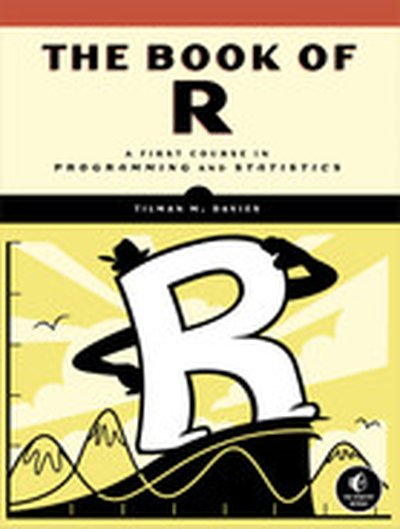
The Book of R

The Book of R is a comprehensive, beginner-friendly guide to R, the world's most popular programming language for statistical analysis. Even if you have no programming experience and little more than a grounding in the basics of mathematics, you'll find everything you need to begin using R effectively for statistical analysis. You'll start with the basics, like how to handle data and write simple programs, before moving on to more advanced topics, like producing statistical summaries of your data and performing statistical tests and modeling. You'll even learn how to create impressive data visualizations with R's basic graphics tools and contributed packages, like ggplot2 and ggvis, as well as interactive 3D visualizations using the rgl package. Dozens of hands-on exercises (with downloadable solutions) take you from theory to practice, as you learn: The fundamentals of programming in R, including how to write data frames, create functions, and use variables, statements, and loops Statistical concepts like exploratory data analysis, probabilities, hypothesis tests, and regression modeling, and how to execute them in R How to access R's thousands of functions, libraries, and data sets How to draw valid and useful conclusions from your data How to create publication-quality graphics of your resultsCombining detailed explanations with real-world examples and exercises, this book will provide you with a solid understanding of both statistics and the depth of R's functionality. Make The Book of R your doorway into the growing world of data analysis.

R: Data Analysis and Visualization

Master the art of building analytical models using R About This Book Load, wrangle, and analyze your data using the world's most powerful statistical programming language Build and customize publication-quality visualizations of powerful and stunning R graphs Develop key skills and techniques with R to create and customize data mining algorithms Use R to optimize your trading strategy and build up your own risk management system Discover how to build machine learning algorithms, prepare data, and dig deep into data prediction techniques with R Who This Book Is For This course is for data scientist or quantitative analyst who are looking at learning R and take advantage of its powerful analytical design framework. It's a seamless journey in becoming a full-stack R developer. What You Will Learn Describe and visualize the behavior of data and relationships between data Gain a thorough understanding of statistical reasoning and sampling Handle missing data gracefully using multiple imputation Create diverse types of bar charts using the default R functions Familiarize yourself with algorithms written in R for spatial data mining, text mining, and so on Understand relationships between market factors and their impact on your portfolio Harness the power of R to build machine learning algorithms with real-world data science applications Learn specialized machine learning techniques for text mining, big data, and more In Detail The R learning path created for you has five connected modules, which are a mini-course in their own right. As you complete each one, you'll have gained key skills and be ready for the material in the next module! This course begins by looking at the Data Analysis with R module. This will help you navigate the R environment. You'll gain a thorough understanding of statistical reasoning and sampling. Finally, you'll be able to put best practices into effect to make your job easier and facilitate reproducibility. The second place to explore is R Graphs, which will help you leverage powerful default R graphics and utilize advanced graphics systems such as lattice and ggplot2, the grammar of graphics. You'll learn how to produce, customize, and publish advanced visualizations using this popular and powerful framework. With the third module, Learning Data Mining with R, you will learn how to manipulate data with R using code snippets and be introduced to mining frequent patterns, association, and correlations while working with R programs. The Mastering R for Quantitative Finance module pragmatically introduces both the quantitative finance concepts and their modeling in R, enabling you to build a tailor-made trading system on your own. By the end of the module, you will be well-versed with various financial techniques using R and will be able to place good bets while making financial decisions. Finally, we'll look at the Machine Learning with R module. With this module, you'll discover all the analytical tools you need to gain insights from complex data and learn how to choose the correct algorithm for your specific needs. You'll also learn to apply machine learning methods to deal with common tasks, including classification, prediction, forecasting, and so on. Style and approach Learn data analysis, data visualization techniques, data mining, and machine learning all using R and also learn to build models in quantitative finance using this powerful language.

Learning Probabilistic Graphical Models in R

Explore the fundamentals of probabilistic graphical models (PGM) with hands-on examples using R. This book helps you translate theoretical concepts into practical solutions, addressing complex problems with Bayesian and Markov networks. It's written to demystify PGMs, equipping you to create robust models for inference, learning, and prediction. What this Book will help me do Understand and implement probabilistic graphical models, including Bayesian and Markov networks, directly in R. Learn to use various R packages for performing inference and analyzing probabilistic models. Master the essentials of Bayesian methods, transitioning to advanced concepts with clear, step-by-step guidance. Familiarize yourself with methods like PCA and ICA for analyzing and reducing complex data dimensions. Develop practical skills to apply PGM techniques to machine learning challenges and real-world data problems. Author(s) The authors bring diverse expertise in probabilistic modeling, R programming, and applied machine learning. They are passionate educators and technical writers, focusing on breaking down complex theories into accessible knowledge. Their writing emphasizes practical demonstration, leveraging their industry and academic experiences. Who is it for? This book is designed for data scientists, engineers, and machine learning enthusiasts who wish to enhance their understanding of probabilistic graphical models. Whether you're curious about Bayesian methods or looking to apply PGM approaches to data-rich challenges, this guide is perfect for learners at an intermediate level, offering practical insights and real-world applications.

RStudio for R Statistical Computing Cookbook

Dive into the practical applications of RStudio with this comprehensive cookbook, designed to help analysts and data scientists unlock the full potential of RStudio's features. You'll enhance your statistical computing, data visualization, and reporting skills through over 50 carefully curated recipes-each seamlessly blending conceptual understanding with hands-on implementation. What this Book will help me do Master the latest advanced R console features for a smooth coding experience. Create dynamic and interactive visualizations to effectively represent data insights. Improve R project management to organize and maintain reproducibility in your analyses. Apply statistical and predictive modeling techniques tailored for diverse application domains. Develop interactive web applications and detailed reports with R Markdown and Shiny. Author(s) Andrea Cirillo is an experienced data scientist with a deep knowledge of statistical computing and data analysis. Through his professional and academic career, Andrea has developed a knack for teaching and simplifying complex programming and statistics concepts. His passion is helping others advance their skills with practical, hands-on resources. Who is it for? This book is tailored for data scientists, statisticians, and R programmers with foundational R programming skills. It is ideal for professionals who aim to enhance their fluency with RStudio and improve their statistical analysis capabilities. Whether you're structuring your first analytical project or refining your data visualization techniques, this book is designed to assist your growth. Overall, the audience includes anyone seeking practical expertise in RStudio for impactful data analysis.

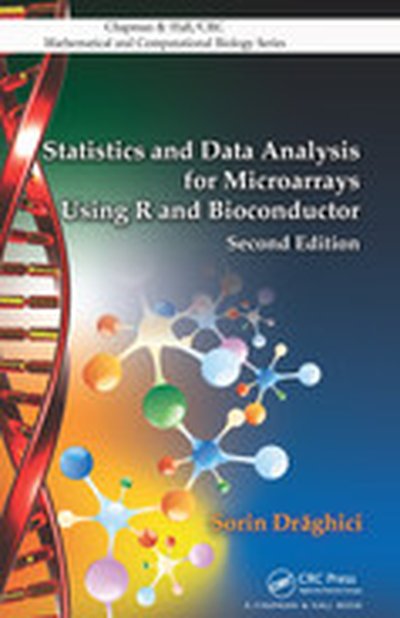
Statistics and Data Analysis for Microarrays Using R and Bioconductor, 2nd Edition

Richly illustrated in color, this bestselling text provides a clear and rigorous description of powerful analysis techniques and algorithms for mining and interpreting biological information. Omitting tedious details, heavy formalisms, and cryptic notations, the text takes a hands-on, example-based approach that explains the basics of R and micr

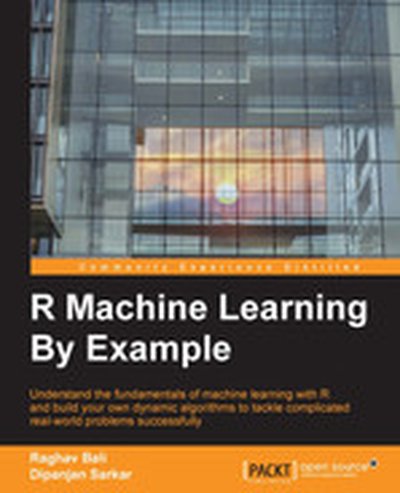
R Machine Learning By Example

This book, 'R Machine Learning by Example,' offers a hands-on approach to learning about machine learning using R. You will not only understand the theoretical aspects but also learn to apply machine learning algorithms to solve real-world problems. Through guided examples, you'll explore predictive modeling, data analysis, and other machine learning techniques implemented in R. What this Book will help me do Master the use of R for advanced data handling and exploration. Visualize multidimensional data effectively to derive insights. Understand and implement key machine learning algorithms in R. Solve practical, industry-relevant problems across multiple domains using R. Learn to optimize and fine-tune machine learning models for better results. Author(s) Raghav Bali, the author, is a seasoned data scientist with expertise in machine learning. With years of experience using R in data science, he has taught both professionals and enthusiasts how to use machine learning effectively. His approachable and clear writing style ensures that learners of various skill levels can benefit from his insights and guidance. Who is it for? This book is perfect for analysts, data scientists, or enthusiasts who want to leverage R for machine learning. It is suitable for beginners familiar with basic R concepts and intermediate learners looking to deepen their understanding of machine learning applications. If you are aiming to solve practical problems using data, this book will serve as a comprehensive guide.