Enterprise-grade GenAI needs a unified data strategy for accurate, reliable results. Learn how knowledge graphs make structured and unstructured data AI-ready while enabling governance and transparency. See how GraphRAG (retrieval-augmented generation with knowledge graphs) drives real success: a major gaming company achieved 10x faster insights, while Data2 cut workloads by 50%. Discover how knowledge graphs and GraphRAG create a foundation for trustworthy agentic AI systems across retail, healthcare, finance, and more.
 talk-data.com
Topic
RAG
Retrieval Augmented Generation (RAG)
ai
machine_learning
llm
369
tagged
Activity Trend
83
peak/qtr
2020-Q1
2026-Q2
Top Events
Microsoft Ignite 2025
36
Google Cloud Next '25
28
Google Cloud Next '24
20
Data + AI Summit 2025
19
AWS re:Invent 2024
16
AI Builders Summit 2025 | ODSC & Google Cloud event
9
Making Data Simple
9
O'Reilly Data Engineering Books
9
Microsoft Ignite 2023
8
DATA MINER Big Data Europe Conference 2020
8
Big Data LDN 2024
7
O'Reilly AI & ML Books
7
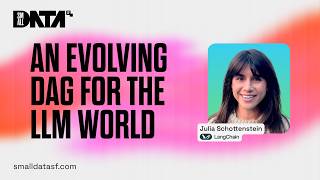
Directed Acyclic Graphs (DAGs) are the foundation of most orchestration frameworks. But what happens when you allow an LLM to act as the router? Acyclic graphs now become cyclic, which means you have to design for the challenges resulting from all this extra power. We'll cover the ins and outs of agentic applications and how to best use them in your work as a data practitioner or developer building today.
➡️ Follow Us LinkedIn: https://www.linkedin.com/company/small-data-sf/ X/Twitter : https://twitter.com/smalldatasf Website: https://www.smalldatasf.com/
Discover LangChain, the open-source framework for building powerful agentic systems. Learn how to augment LLMs with your private data, moving beyond their training cutoffs. We'll break down how LangChain uses "chains," which are essentially Directed Acyclic Graphs (DAGs) similar to data pipelines you might recognize from dbt. This structure is perfect for common patterns like Retrieval Augmented Generation (RAG), where you orchestrate steps to fetch context from a vector database and feed it to an LLM to generate an informed response, much like preparing data for analysis.
Dive into the world of AI agents, where the LLM itself determines the application's control flow. Unlike a predefined DAG, this allows for dynamic, cyclic graphs where an agent can iterate and improve its response based on previous attempts. We'll explore the core challenges in building reliable agents: effective planning and reflection, managing shared memory across multiple agents in a cognitive architecture, and ensuring reliability against task ambiguity. Understand the critical trade-offs between the dependability of static chains and the flexibility of dynamic LLM agents.
Introducing LangGraph, a framework designed to solve the agent reliability problem by balancing agent control with agency. Through a live demo in LangGraph Studio, see how to build complex AI applications using a cyclic graph. We'll demonstrate how a router agent can delegate tasks, execute a research plan with multiple steps, and use cycles to iterate on a problem. You'll also see how human-in-the-loop intervention can steer the agent for improved performance, a critical feature for building robust and observable agentic systems.
Explore some of the most exciting AI agents in production today. See how Roblox uses an AI assistant to generate virtual worlds from a prompt, how TripAdvisor’s agent acts as a personal travel concierge to create custom itineraries, and how Replit’s coding agent automates code generation and pull requests. These real-world examples showcase the practical power of moving from simple DAGs to dynamic, cyclic graphs for solving complex, agentic problems.
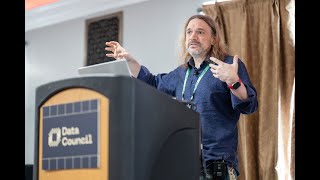

As AI adoption accelerates, many enterprises still face challenges building production-grade AI systems for high-value, knowledge-intensive use cases. RAG 2.0 is Contextual AI’s unique approach for solving mission-critical AI use cases, where accuracy requirements are high and there is a low tolerance for error.
In this talk, Douwe Kiela—CEO of Contextual AI and co-inventor of RAG—will share lessons learned from deploying enterprise AI systems at scale. He will shed light on how RAG 2.0 differs from classic RAG, the common pitfalls and limitations while moving into production, and why AI practitioners would benefit from focusing less on individual model components and more on the systems-level perspective. You will also learn how Google Cloud’s flexible, reliable, and performant AI infrastructure enabled Contextual AI to build and operate their end-to-end platform.
Unlock the power of generative AI with retrieval augmented generation (RAG) on Google Cloud. In this session, we’ll navigate key architectural decisions to deploy and run RAG apps: from model and app hosting to data ingestion and vector store choice. We’ll cover reference architecture options – from an easy-to-deploy approach with Vertex AI RAG Engine, to a fully managed solution on Vertex AI, to a flexible DIY topology with Google Kubernetes Engine and open source tools – and compare trade-offs between operational simplicity and granular control.
This session explores building sensitive data protection directly into Retrieval-Augmented Generation (RAG) architectures. We'll demonstrate how to leverage Cloud Data Loss Prevention (Cloud DLP) and the Faker Library to anonymize sensitive data within the RAG pipeline. The session will cover techniques for reversible transformations using Memorystore and Firestore for data mapping, and discuss integrating these methods with Large Language Models (LLMs) like Gemini via LangChain and Vertex AI Search. Learn how to create secure and compliant AI solutions that protect sensitive data and adhere to regulations like the EU AI Act.
What if building an AI agent that thinks, reasons, and acts autonomously took less time than your coffee break? With Vertex AI, it’s not just possible. It’s easy. Join DoiT to see how to build, deploy, and scale a production-ready AI agent in 10 minutes using Google’s top services: Gemini 2 for language understanding, the RAG Engine for fetching information, and the Agent Engine for orchestration. To top it off, watch a live demo take an agent from concept to production-ready in real time.
This Session is hosted by a Google Cloud Next Sponsor.
Visit your registration profile at g.co/cloudnext to opt out of sharing your contact information with the sponsor hosting this session.
Dive deep into the world of multimodal analytics with BigQuery. This session explores how to unlock insights from all data types in BigQuery using embeddings generation and vector search. We’ll demonstrate how BigQuery object tables combine text, documents, and images to unlock popular use cases like recommendation engines and retrieval-augmentation generation (RAG). Learn how to leverage BigQuery as a knowledge base to ground your cutting-edge AI application with your own enterprise data.
AI applications that use the retrieval augmented generation (RAG) architecture can be a lot more accurate than those built with just the AI model’s built-in knowledge. But RAG introduces additional processing steps which need to be monitored. We’ll show you how.
Concerned about AI hallucinations? While AI can be a valuable resource, it sometimes generates inaccurate, outdated, or overly general responses - a phenomenon known as "hallucination." This hands-on lab teaches you how to implement a Retrieval Augmented Generation (RAG) pipeline to address this issue. RAG improves large language models (LLMs) like Gemini by grounding their output in contextually relevant information from a specific dataset. Learn to generate embeddings, search vector space, and augment answers for more reliable results.
If you register for a Learning Center lab, please ensure that you sign up for a Google Cloud Skills Boost account for both your work domain and personal email address. You will need to authenticate your account as well (be sure to check your spam folder!). This will ensure you can arrive and access your labs quickly onsite. You can follow this link to sign up!
by
Hari Ramamurthy
(The Home Depot)
,
Isabell Gruebner
(AstraZeneca)
,
Lorenzo Spataro
(Google Cloud)
,
Rocco Michele Lancellotti
(RCS MediaGroup SpA)
,
Lavi Nigam
(Google Cloud)
,
Greg Brosman
(Google Cloud)
Want to create a retrieval-augmented generation (RAG) system perfectly tailored to your data and use case? This session dives into building custom RAG pipelines on Vertex AI. Learn how to combine Vertex AI services like document processing, vector search, and grounding to build powerful, context-aware AI applications.
Send us a text Welcome to the cozy corner of the tech world where ones and zeros mingle with casual chit-chat. Datatopics Unplugged is your go-to spot for relaxed discussions around tech, news, data, and society. Dive into conversations that should flow as smoothly as your morning coffee (but don't), where industry insights meet laid-back banter. Whether you're a data aficionado or just someone curious about the digital age, pull up a chair, relax, and let's get into the heart of data, unplugged style! In this episode, host Murilo is joined by returning guest Paolo, Data Management Team Lead at dataroots, for a deep dive into the often-overlooked but rapidly evolving domain of unstructured data quality. Tune in for a field guide to navigating documents, images, and embeddings without losing your sanity. What we unpack: Data management basics: Metadata, ownership, and why Excel isn’t everything.Structured vs unstructured data: How the wild west of PDFs, images, and audio is redefining quality.Data quality challenges for LLMs: From apples and pears to rogue chatbots with “legally binding” hallucinations.Practical checks for document hygiene: Versioning, ownership, embedding similarity, and tagging strategies.Retrieval-Augmented Generation (RAG): When ChatGPT meets your HR policies and things get weird.Monitoring and governance: Building systems that flag rot before your chatbot gives out 2017 vacation rules.Tooling and gaps: Where open source is doing well—and where we’re still duct-taping workflows.Real-world inspirations: A look at how QuantumBlack (McKinsey) is tackling similar issues with their AI for DQ framework.
Build more capable and reliable AI systems by combining context-aware retrieval-augmented generation (RAG) with agentic decision-making in an enterprise AI platform, all in Java! This session covers everything from architecture, context construction, and model routing to action planning, dynamic retrieval, and recursive reasoning, as well as the implementation of essential guardrails and monitoring systems for safe deployments. Learn about best practices, trade-offs, performance, and advanced techniques like evaluations and model context protocol.
by
rajiv shah
(Contextual AI)
,
Sarmad Qadri
(LastMile AI)
,
Ashwin Karuhatty
(Google)
,
Soumya Mohan
(Galileo)
Move your generative AI projects from proof of concept to production. In this interactive session, you’ll learn how to automate key AI lifecycle processes—evaluation, serving, and RAG—to accelerate your real-world impact. Get hands-on advice from innovative startups and gain practical strategies for streamlining workflows and boosting performance.
Build a multimodal search engine with Gemini and Vertex AI. This hands-on lab demonstrates Retrieval Augmented Generation (RAG) to query documents containing text and images. Learn to extract metadata, generate embeddings, and search using text or image queries.
If you register for a Learning Center lab, please ensure that you sign up for a Google Cloud Skills Boost account for both your work domain and personal email address. You will need to authenticate your account as well (be sure to check your spam folder!). This will ensure you can arrive and access your labs quickly onsite. You can follow this link to sign up!
UKG is revolutionizing workforce management with AI agents and retrieval-augmented generation (RAG) systems. Join this session for a deep dive into how UKG, Google Cloud, and MongoDB collaborated to orchestrate enterprise data and put it to use powering intelligent, context-aware AI solutions that shape the future of work.
This Session is hosted by a Google Cloud Next Sponsor.
Visit your registration profile at g.co/cloudnext to opt out of sharing your contact information with the sponsor hosting this session.
Want to control the output of your AI agents? This session explores essential Agent Ops practices, including metrics-driven development, large language model (LLM) evaluation with retrieval-augmented generation (RAG) and function calling, debugging with Cloud Trace, and learning from human feedback. Learn how to optimize agent performance and drive better business outcomes.
by
Philipp Krenn
(Elastic)
,
Benjamin Flast
(MongoDB)
,
Kevin Tsai
(Google Cloud)
,
Maruti C
(Google Cloud)
Unlock the true potential of your enterprise data with AI agents that transcend chat. This panel explores how leading companies build production-ready AI agents that deliver real-world impact. We’ll examine Google Cloud, MongoDB, Elastic, and open source tools, including generative AI and large language model (LLM) optimization with efficient data handling. Learn practical approaches and build the next wave of AI solutions.
by
Dave Weissman
(Google Cloud)
,
Jagdeep Singh
(Google Cloud)
,
Bhaven Avalani
(Walmart)
,
Jonathan Perry
(Goldman Sachs)
Applications of the future require a database that transcends historical paradigms. They require advanced in-database capabilities like Graph RAG, vector and full-text search without compromising on critical database properties of compliance, scale, and availability. In this talk, you'll learn how Spanner's native search and interoperable multi-model capabilities enable your developers to build intelligent, global applications on a single, zero-ETL (extract, transform, and load) data platform.