talk-data.com talk-data.com

Topic

Cyber Security

cybersecurity information_security data_security privacy

615

tagged

Activity Trend

297 peak/qtr
2020-Q1 2026-Q1

Activities

Showing filtered results

Filtering by: O'Reilly Data Engineering Books ×
PostgreSQL Configuration: Best Practices for Performance and Security

Obtain all the skills you need to configure and manage a PostgreSQL database. In this book you will begin by installing and configuring PostgreSQL on a server by focusing on system-level parameter settings before installation. You will also look at key post-installation steps to avoid issues in the future. The basic configuration of PostgreSQL is tuned for compatibility rather than performance. Keeping this in mind, you will fine-tune your PostgreSQL parameters based on your environment and application behavior. You will then get tips to improve database monitoring and maintenance followed by database security for handling sensitive data in PostgreSQL. Every system containing valuable data needs to be backed-up regularly. PostgreSQL follows a simple back-up procedure and provides fundamental approaches to back up your data. You will go through these approaches and choose the right one based on your environment. Running your application with limited resources can be tricky. To achieve this you will implement a pooling mechanism for your PostgreSQL instances to connect to other databases. Finally, you will take a look at some basic errors faced while working with PostgreSQL and learn to resolve them in the quickest manner. What You Will Learn Configure PostgreSQL for performance Monitor and maintain PostgreSQL instances Implement a backup strategy for your data Resolve errors faced while using PostgreSQL Who This Book Is For Readers with basic knowledge of PostgreSQL who wish to implement key solutions based on their environment.

IBM Power Systems Virtualization Operation Management for SAP Applications

Businesses are using IBM® Power Systems servers and Linux to consolidate multiple SAP workloads onto fewer systems, increasing infrastructure utilization; reliability, availability, and serviceability (RAS); and scalability, and reducing cost. This IBM Redpaper Redbooks publication describes key hardware and software components of an SAP solution stack. Furthermore, this book addresses non-functional items like RAS, security, and issue handling. Practical help for planning, implementation, configuration, installation, and monitoring of a solution stack are provided. This publication addresses topics for sellers, IT architects, IT specialists, and anyone who wants to implement and manage SAP workloads on IBM Power Systems servers. Moreover, this guide provides documentation to transfer how-to skills to the technical teams, and it provides solution guidance to the sales team. This publication complements documentation that is available at IBM Knowledge Center, and it aligns with educational materials that are provided by IBM Systems.

IBM TS4500 R6 Tape Library Guide

The IBM® TS4500 (TS4500) tape library is a next-generation tape solution that offers higher storage density and integrated management than previous solutions. This IBM Redbooks® publication gives you a close-up view of the new IBM TS4500 tape library. In the TS4500, IBM delivers the density that today's and tomorrow's data growth requires. It has the cost-effectiveness and the manageability to grow with business data needs, while you preserve existing investments in IBM tape library products. Now, you can achieve both a low cost per terabyte (TB) and a high TB density per square foot because the TS4500 can store up to 11 petabytes (PB) of uncompressed data in a single frame library or scale up to 2 PB per square foot to over 350 PB. The TS4500 offers the following benefits: High availability: Dual active accessors with integrated service bays reduce inactive service space by 40%. The Elastic Capacity option can be used to completely eliminate inactive service space. Flexibility to grow: The TS4500 library can grow from the right side and the left side of the first L frame because models can be placed in any active position. Increased capacity: The TS4500 can grow from a single L frame up to another 17 expansion frames with a capacity of over 23,000 cartridges. High-density (HD) generation 1 frames from the TS3500 library can be redeployed in a TS4500. Capacity on demand (CoD): CoD is supported through entry-level, intermediate, and base-capacity configurations. Advanced Library Management System (ALMS): ALMS supports dynamic storage management, which enables users to create and change logical libraries and configure any drive for any logical library. Support for IBM TS1160 while also supporting TS1155, TS1150, and TS1140 tape drive: The TS1160 gives organizations an easy way to deliver fast access to data, improve security, and provide long-term retention, all at a lower cost than disk solutions. The TS1160 offers high-performance, flexible data storage with support for data encryption. Also, this enhanced fifth-generation drive can help protect investments in tape automation by offering compatibility with existing automation. The TS1160 Tape Drive Model 60E delivers a dual 10 Gb or 25 Gb Ethernet host attachment interface that is optimized for cloud-based and hyperscale environments. The TS1160 Tape Drive Model 60F delivers a native data rate of 400 MBps, the same load/ready, locate speeds, and access times as the TS1155, and includes dual-port 16 Gb Fibre Channel support. Support of the IBM Linear Tape-Open (LTO) Ultrium 8 tape drive: The LTO Ultrium 8 offering represents significant improvements in capacity, performance, and reliability over the previous generation, LTO Ultrium 7, while still protecting your investment in the previous technology. Support of LTO 8 Type M cartridge (M8): The LTO Program is introducing a new capability with LTO-8 drives. The ability of the LTO-8 drive to write 9 TB on a brand new LTO-7 cartridge instead of 6 TB as specified by the LTO-7 format. Such a cartridge is called an LTO-7 initialized LTO-8 Type M cartridge. Integrated TS7700 back-end Fibre Channel (FC) switches are available. Up to four library-managed encryption (LME) key paths per logical library are available. This book describes the TS4500 components, feature codes, specifications, supported tape drives, encryption, new integrated management console (IMC), command-line interface (CLI), and REST over SCSI (RoS) to obtain status information about library components. You learn how to accomplish the following specific tasks:: Improve storage density with increased expansion frame capacity up to 2.4 times and support 33% more tape drives per frame

IBM Storage for Red Hat OpenShift Blueprint Version 1 Release 3

IBM Storage for Red Hat OpenShift is a comprehensive container-ready solution that includes all the hardware & software components necessary to setup and/or expand your Red Hat OpenShift environment. This blueprint includes Red Hat OpenShift Container Platform and uses Container Storage Interface (CSI) standards. IBM Storage brings enterprise data services to containers. In this blueprint, learn how to: · Combine the benefits of IBM Systems with the performance of IBM Storage solutions so that you can deliver the right services to your clients today! · Build a 24 by 7 by 365 enterprise class private cloud with Red Hat OpenShift Container Platform utilizing new open source Container Storage interface (CSI) drivers · Leverage enterprise class services such as NVMe based flash performance, high data availability, and advanced container security IBM Storage for Red Hat OpenShift Container Platform is designed for your DevOps environment for on-premises deployment with easy-to-consume components built to perform and scale for your enterprise. Simplify your journey to cloud with pre-tested and validated blueprints engineered to enable rapid deployment and peace of mind as you move to a hybrid multicloud environment. You now have the capabilities.

The SQL Workshop

The SQL Workshop is your go-to guide for delving into the essential techniques and best practices of working with SQL. You'll start with the basics of querying and database management, progressing to advanced concepts like joins, normalization, and database security. What this Book will help me do Construct and maintain relational databases that meet real-world requirements. Perform CRUD operations efficiently using SQL queries. Design effective and optimized database schemas through normalization. Secure and safeguard data with access controls and privilege management. Leverage SQL for data analysis and reporting through advanced query techniques. Author(s) Frank Solomon, Prashanth Jayaram, and Awni Al Saqqa bring together decades of practical and academic experience in SQL and database management. Their informative and hands-on approach helps readers bridge the gap between theoretical concepts and practical applications. Who is it for? Written for newcomers and intermediate learners, this book is ideal for aspiring software developers, data scientists, and database managers looking to advance their SQL skills. Beginners with no database experience will find this book's gradual learning curve approachable.

Jumpstart Snowflake: A Step-by-Step Guide to Modern Cloud Analytics

Explore the modern market of data analytics platforms and the benefits of using Snowflake computing, the data warehouse built for the cloud. With the rise of cloud technologies, organizations prefer to deploy their analytics using cloud providers such as Amazon Web Services (AWS), Microsoft Azure, or Google Cloud Platform. Cloud vendors are offering modern data platforms for building cloud analytics solutions to collect data and consolidate into single storage solutions that provide insights for business users. The core of any analytics framework is the data warehouse, and previously customers did not have many choices of platform to use. Snowflake was built specifically for the cloud and it is a true game changer for the analytics market. This book will help onboard you to Snowflake, present best practices to deploy, and use the Snowflake data warehouse. In addition, it covers modern analytics architecture and use cases. It provides use cases of integration with leading analytics software such as Matillion ETL, Tableau, and Databricks. Finally, it covers migration scenarios for on-premise legacy data warehouses. What You Will Learn Know the key functionalities of Snowflake Set up security and access with cluster Bulk load data into Snowflake using the COPY command Migrate from a legacy data warehouse to Snowflake integrate the Snowflake data platform with modern business intelligence (BI) and data integration tools Who This Book Is For Those working with data warehouse and business intelligence (BI) technologies, and existing and potential Snowflake users

IBM Storage for Red Hat OpenShift Blueprint Version 1 Release 2

IBM Storage for Red Hat OpenShift is a comprehensive container-ready solution that includes all the hardware & software components necessary to setup and/or expand your Red Hat OpenShift environment. This blueprint includes Red Hat OpenShift Container Platform and uses Container Storage Interface (CSI) standards. IBM Storage brings enterprise data services to containers. In this blueprint, learn how to: · Combine the benefits of IBM Systems with the performance of IBM Storage solutions so that you can deliver the right services to your clients today! · Build a 24 by 7 by 365 enterprise class private cloud with Red Hat OpenShift Container Platform utilizing new open source Container Storage interface (CSI) drivers · Leverage enterprise class services such as NVMe based flash performance, high data availability, and advanced container security IBM Storage for Red Hat OpenShift Container Platform is designed for your DevOps environment for on-premises deployment with easy-to-consume components built to perform and scale for your enterprise. Simplify your journey to cloud with pre-tested and validated blueprints engineered to enable rapid deployment and peace of mind as you move to a hybrid multicloud environment. You now have the capabilities.

Information Privacy Engineering and Privacy by Design: Understanding Privacy Threats, Technology, and Regulations Based on Standards and Best Practices

The Comprehensive Guide to Engineering and Implementing Privacy Best Practices As systems grow more complex and cybersecurity attacks more relentless, safeguarding privacy is ever more challenging. Organizations are increasingly responding in two ways, and both are mandated by key standards such as GDPR and ISO/IEC 27701:2019. The first approach, privacy by design, aims to embed privacy throughout the design and architecture of IT systems and business practices. The second, privacy engineering, encompasses the technical capabilities and management processes needed to implement, deploy, and operate privacy features and controls in working systems. In Information Privacy Engineering and Privacy by Design, internationally renowned IT consultant and author William Stallings brings together the comprehensive knowledge privacy executives and engineers need to apply both approaches. Using the techniques he presents, IT leaders and technical professionals can systematically anticipate and respond to a wide spectrum of privacy requirements, threats, and vulnerabilities–addressing regulations, contractual commitments, organizational policies, and the expectations of their key stakeholders. • Review privacy-related essentials of information security and cryptography • Understand the concepts of privacy by design and privacy engineering • Use modern system access controls and security countermeasures to partially satisfy privacy requirements • Enforce database privacy via anonymization and de-identification • Prevent data losses and breaches • Address privacy issues related to cloud computing and IoT • Establish effective information privacy management, from governance and culture to audits and impact assessment • Respond to key privacy rules including GDPR, U.S. federal law, and the California Consumer Privacy Act This guide will be an indispensable resource for anyone with privacy responsibilities in any organization, and for all students studying the privacy aspects of cybersecurity.

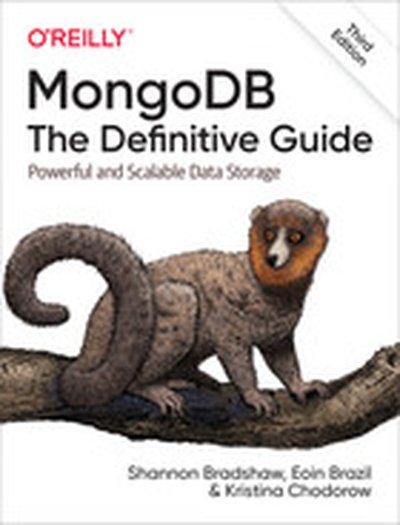
MongoDB: The Definitive Guide, 3rd Edition

Manage your data with a system designed to support modern application development. Updated for MongoDB 4.2, the third edition of this authoritative and accessible guide shows you the advantages of using document-oriented databases. You’ll learn how this secure, high-performance system enables flexible data models, high availability, and horizontal scalability. Authors Shannon Bradshaw, Eoin Brazil, and Kristina Chodorow provide guidance for database developers, advanced configuration for system administrators, and use cases for a variety of projects. NoSQL newcomers and experienced MongoDB users will find updates on querying, indexing, aggregation, transactions, replica sets, ops management, sharding and data administration, durability, monitoring, and security. In six parts, this book shows you how to: Work with MongoDB, perform write operations, find documents, and create complex queries Index collections, aggregate data, and use transactions for your application Configure a local replica set and learn how replication interacts with your application Set up cluster components and choose a shard key for a variety of applications Explore aspects of application administration and configure authentication and authorization Use stats when monitoring, back up and restore deployments, and use system settings when deploying MongoDB

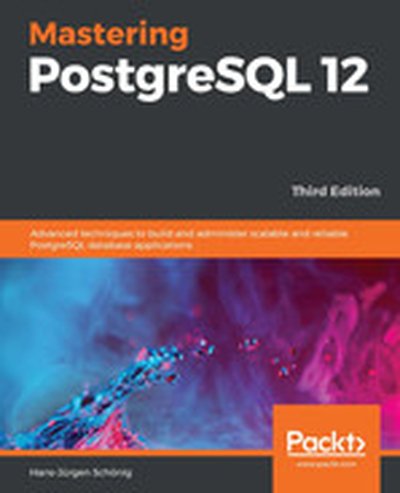
Mastering PostgreSQL 12 - Third Edition

Mastering PostgreSQL 12 delves into advanced features of PostgreSQL to help database professionals optimize, secure, and scale their database systems. Through practical examples, this book equips you with the necessary skills to address challenges in modern PostgreSQL environments. What this Book will help me do Gain expertise in PostgreSQL 12's advanced SQL functions and features. Master replication and backup techniques for scalable and fault-tolerant databases. Effectively optimize PostgreSQL queries and index utilization for performance gains. Enhance the security of PostgreSQL servers to ensure data integrity. Acquire hands-on experience in troubleshooting and resolving PostgreSQL-related issues. Author(s) Hans-Jürgen Schönig is a renowned database expert specializing in PostgreSQL. With years of experience in both database administration and development, he brings clarity to complex technical topics. His teaching approach emphasizes practical applications, making PostgreSQL's advanced features accessible for professionals. Who is it for? This book is ideal for PostgreSQL developers, administrators, and database professionals who have foundational knowledge and intend to enhance their expertise. Readers should be familiar with general database concepts and aim to master PostgreSQL's advanced functionalities. Whether you are handling enterprise environments or exploring data topology, this book serves as a vital resource.

IBM DS8000 SafeGuarded Copy

This IBM® Redpaper™ publication explains the IBM DS8000 Safeguarded Copy functionality. With Safeguarded Copy, organizations have the ability to improve their cyber resiliency by frequently creating protected point-in-time backups of their critical data, with minimum impact and effective resource utilization. The paper introduces Safeguarded Copy and discusses the need for logical corruption protection (LCP) and information about regulatory requirements. It presents the general concepts of LCP, and then explore various use cases for recovery. The paper is intended for IT security architects, who plan and design an organization's cyber security strategy, as well as the infrastructure technical specialists who implement them.

EU General Data Protection Regulation (GDPR), third edition - An Implementation and Compliance Guide

EU GDPR – An Implementation and Compliance Guide is a perfect companion for anyone managing a GDPR compliance project. It explains the changes you need to make to your data protection and information security regimes and tells you exactly what you need to do to avoid severe financial penalties.

Oracle Database Application Security: With Oracle Internet Directory, Oracle Access Manager, and Oracle Identity Manager

Focus on the security aspects of designing, building, and maintaining a secure Oracle Database application. Starting with data encryption, you will learn to work with transparent data, back-up, and networks. You will then go through the key principles of audits, where you will get to know more about identity preservation, policies and fine-grained audits. Moving on to virtual private databases, you’ll set up and configure a VPD to work in concert with other security features in Oracle, followed by tips on managing configuration drift, profiles, and default users. Shifting focus to coding, you will take a look at secure coding standards, multi-schema database models, code-based access control, and SQL injection. Finally, you’ll cover single sign-on (SSO), and will be introduced to Oracle Internet Directory (OID), Oracle Access Manager (OAM), and Oracle Identity Management (OIM) by installing and configuring them to meet your needs. Oracle databases hold the majority of the world’s relational data, and are attractive targets for attackers seeking high-value targets for data theft. Compromise of a single Oracle Database can result in tens of millions of breached records costing millions in breach-mitigation activity. This book gets you ready to avoid that nightmare scenario. What You Will Learn Work with Oracle Internet Directory using the command-line and the console Integrate Oracle Access Manager with different applications Work with the Oracle Identity Manager console and connectors, while creating your own custom one Troubleshooting issues with OID, OAM, and OID Dive deep into file system and network security concepts Who This Book Is For Oracle DBAs and developers. Readers will need a basic understanding of Oracle RDBMS and Oracle Application Server to take complete advantage of this book.

SQL Server 2019 Revealed: Including Big Data Clusters and Machine Learning

Get up to speed on the game-changing developments in SQL Server 2019. No longer just a database engine, SQL Server 2019 is cutting edge with support for machine learning (ML), big data analytics, Linux, containers, Kubernetes, Java, and data virtualization to Azure. This is not a book on traditional database administration for SQL Server. It focuses on all that is new for one of the most successful modernized data platforms in the industry. It is a book for data professionals who already know the fundamentals of SQL Server and want to up their game by building their skills in some of the hottest new areas in technology. SQL Server 2019 Revealed begins with a look at the project's team goal to integrate the world of big data with SQL Server into a major product release. The book then dives into the details of key new capabilities in SQL Server 2019 using a “learn by example” approach for Intelligent Performance, security, mission-criticalavailability, and features for the modern developer. Also covered are enhancements to SQL Server 2019 for Linux and gain a comprehensive look at SQL Server using containers and Kubernetes clusters. The book concludes by showing you how to virtualize your data access with Polybase to Oracle, MongoDB, Hadoop, and Azure, allowing you to reduce the need for expensive extract, transform, and load (ETL) applications. You will then learn how to take your knowledge of containers, Kubernetes, and Polybase to build a comprehensive solution called Big Data Clusters, which is a marquee feature of 2019. You will also learn how to gain access to Spark, SQL Server, and HDFS to build intelligence over your own data lake and deploy end-to-end machine learning applications. What You Will Learn Implement Big Data Clusters with SQL Server, Spark, and HDFS Create a Data Hub with connections to Oracle, Azure, Hadoop, and other sources Combine SQL and Spark to build a machine learning platform for AI applications Boost your performance with no application changes using Intelligent Performance Increase security of your SQL Server through Secure Enclaves and Data Classification Maximize database uptime through online indexing and Accelerated Database Recovery Build new modern applications with Graph, ML Services, and T-SQL Extensibility with Java Improve your ability to deploy SQL Server on Linux Gain in-depth knowledge to run SQL Server with containers and Kubernetes Know all the new database engine features for performance, usability, and diagnostics Use the latest tools and methods to migrate your database to SQL Server 2019 Apply your knowledge of SQL Server 2019 to Azure Who This Book Is For IT professionals and developers who understand the fundamentals of SQL Server and wish to focus on learning about the new, modern capabilities of SQL Server 2019. The book is for those who want to learn about SQL Server 2019 and the new Big Data Clusters and AI feature set, support for machine learning and Java, how to run SQL Server with containers and Kubernetes, and increased capabilities around Intelligent Performance, advanced security, and high availability.

IBM Storage for Red Hat OpenShift Blueprint Version 1 Release 1

IBM Storage for Red Hat OpenShift is a comprehensive container-ready solution that includes all the hardware & software components necessary to setup and/or expand your Red Hat OpenShift environment. This blueprint includes Red Hat OpenShift Container Platform and uses Container Storage Interface (CSI) standards. IBM Storage brings enterprise data services to containers. In this blueprint, learn how to: · Combine the benefits of IBM Systems with the performance of IBM Storage solutions so that you can deliver the right services to your clients today! · Build a 24 by 7 by 365 enterprise class private cloud with Red Hat OpenShift Container Platform utilizing new open source Container Storage interface (CSI) drivers · Leverage enterprise class services such as NVMe based flash performance, high data availability, and advanced container security IBM Storage for Red Hat OpenShift Container Platform is designed for your DevOps environment for on-premises deployment with easy-to-consume components built to perform and scale for your enterprise. Simplify your journey to cloud with pre-tested and validated blueprints engineered to enable rapid deployment and peace of mind as you move to a hybrid multicloud environment. You now have the capabilities.

IBM Storage for Red Hat OpenShift Container Platform V3.11 Blueprint Version 1 Release 1

IBM Storage for Red Hat OpenShift Container Platform is a comprehensive container-ready solution that includes all the hardware & software components necessary to setup and/or expand your Red Hat OpenShift Container Platform V3.11 environment. IBM Storage, bringing enterprise data services to containers. In this blueprint, learn how to: • Combine the benefits of IBM Systems with the performance of IBM Storage solutions so that you can deliver the right services to your clients today! • Build a 24 by 7 by 365 enterprise class private cloud with Red Hat OpenShift Container Platform • Leverage enterprise class services such as NVMe based flash performance, high data availability, and advanced container security IBM Storage for Red Hat OpenShift Container Platform: designed for your DevOps environment for on-premises deployment with easy-to-consume components built to perform and scale for your enterprise. Simplify your journey to cloud with pre-tested and validated blueprints engineered to enable rapid deployment and peace of mind as you move to a hybrid multicloud environment. You now have the capabilities.

Enhanced Cyber Security with IBM Spectrum Scale and IBM QRadar

Having appropriate storage for hosting business-critical data and advanced Security Information and Event Management software for deep inspection, detection, and prioritization of threats has become a necessity of any business. This IBM® Redpaper publication explains how the storage features of IBM Spectrum® Scale, combined with the log analysis, deep inspection, and detection of threats provided by IBM QRadar®, helps reduce the impact of incidents on business data. Such integration provides an excellent platform for hosting unstructured business data that is subject to regulatory compliance requirements. This paper describes how IBM Spectrum Scale file audit logging can be integrated with IBM QRadar. Using QRadar, an administrator can monitor, inspect, detect, and derive insights for identifying potential threats to the data stored on IBM Spectrum Scale. When the threats are identified, you can quickly act on them to mitigate or reduce the impact of incidents. This paper is intended for chief technology officers, solution engineers, security architects, and systems administrators. NOTE: This paper assumes a basic understanding of IBM Spectrum Scale, IBM QRadar, and their administration.

Simplify Management of IT Security and Compliance with IBM PowerSC in Cloud and Virtualized Environments

This IBM® Redbooks® publication provides a security and compliance solution that is optimized for virtualized environments on IBM Power Systems™ servers, running IBM PowerVM® and IBM AIX®. Security control and compliance are some of the key components that are needed to defend the virtualized data center and cloud infrastructure against ever evolving new threats. The IBM business-driven approach to enterprise security that is used with solutions, such as IBM PowerSC™, makes IBM the premier security vendor in the market today. The book explores, tests, and documents scenarios using IBM PowerSC that leverage IBM Power Systems servers architecture and software solutions from IBM to help defend the virtualized data center and cloud infrastructure against ever evolving new threats. This publication helps IT and Security managers, architects, and consultants to strengthen their security and compliance posture in a virtualized environment running IBM PowerVM.

We Have Root

A collection of popular essays from security guru Bruce Schneier In his latest collection of essays, security expert Bruce Schneier tackles a range of cybersecurity, privacy, and real-world security issues ripped from the headlines. Essays cover the ever-expanding role of technology in national security, war, transportation, the Internet of Things, elections, and more. Throughout, he challenges the status quo with a call for leaders, voters, and consumers to make better security and privacy decisions and investments. Bruce’s writing has previously appeared in some of the world's best-known and most-respected publications, including The Atlantic, the Wall Street Journal, CNN, the New York Times, the Washington Post, Wired, and many others. And now you can enjoy his essays in one place—at your own speed and convenience. • Timely security and privacy topics • The impact of security and privacy on our world • Perfect for fans of Bruce’s blog and newsletter • Lower price than his previous essay collections The essays are written for anyone who cares about the future and implications of security and privacy for society.