talk-data.com talk-data.com

Topic

Cyber Security

cybersecurity information_security data_security privacy

92

tagged

Activity Trend

297 peak/qtr
2020-Q1 2026-Q1

Activities

Showing filtered results

Filtering by: O'Reilly Data Science Books ×
Informatics for Health Professionals

Provides healthcare students and professionals with the foundational knowledge to integrate informatics principles into clinical practice. Key content focuses on current informatics research and practice including but not limited to: technology trends, information security advances, health information exchanges, care coordination, transition technologies, ethical and legislative aspects, social media use, mobile health, bioinformatics, knowledge management, data mining, and more. Helpful learning tools include case studies, provoking questions to prompt discussion and application of the material learned, research briefs to encourage the reader to access current research, and call-outs which focus on cutting-edge innovations, meaningful use, and patient safety.

Ecommerce Analytics: Analyze and Improve the Impact of Your Digital Strategy

Today's Complete, Focused, Up-to-Date Guide to Analytics for Ecommerce Profit from analytics throughout the entire customer experience and lifecycle Make the most of all the fast-changing data sources now available to you For all ecommerce executives, strategists, entrepreneurs, marketers, analysts, and data scientists Ecommerce Analytics is the only complete single-source guide to analytics for your ecommerce business. It brings together all the knowledge and skills you need to solve your unique problems, and transform your data into better decisions and customer experiences. Judah Phillips shows how to use analysis to improve ecommerce marketing and advertising, understand customer behavior, increase conversion rates, strengthen loyalty, optimize merchandising and product mix, streamline transactions, optimize product mix, and accurately attribute sales. Drawing on extensive experience leading large-scale analytics programs, he also offers expert guidance on building successful analytical teams; surfacing high-value insights via dashboards and visualization; and managing data governance, security, and privacy. Here are the answers you need to make the most of analytics in ecommerce: throughout your organization, across your entire customer lifecycle.

Tableau Your Data!, 2nd Edition

Transform your organization's data into actionable insights with Tableau Tableau is designed specifically to provide fast and easy visual analytics. The intuitive drag-and-drop interface helps you create interactive reports, dashboards, and visualizations, all without any special or advanced training. This all new edition of Tableau Your Data! is your Tableau companion, helping you get the most out of this invaluable business toolset. Tableau Your Data! shows you how to build dynamic, best of breed visualizations using the Tableau Software toolset. This comprehensive guide covers the core feature set for data analytics, and provides clear step-by-step guidance toward best practices and advanced techniques that go way beyond the user manual. You'll learn how Tableau is different from traditional business information analysis tools, and how to navigate your way around the Tableau 9.0 desktop before delving into functions and calculations, as well as sharing with the Tableau Server. Analyze data more effectively with Tableau Desktop Customize Tableau's settings for your organization's needs with detailed real-world examples on data security, scaling, syntax, and more Deploy visualizations to consumers throughout the enterprise - from sales to marketing, operations to finance, and beyond Understand Tableau functions and calculations and leverage Tableau across every link in the value chain Learn from actual working models of the book's visualizations and other web-based resources via a companion website Tableau helps you unlock the stories within the numbers, and Tableau Your Data! puts the software's full functionality right at your fingertips.

Learning to Love Data Science

Until recently, many people thought big data was a passing fad. "Data science" was an enigmatic term. Today, big data is taken seriously, and data science is considered downright sexy. With this anthology of reports from award-winning journalist Mike Barlow, you’ll appreciate how data science is fundamentally altering our world, for better and for worse. Barlow paints a picture of the emerging data space in broad strokes. From new techniques and tools to the use of data for social good, you’ll find out how far data science reaches. With this anthology, you’ll learn how: Analysts can now get results from their data queries in near real time Indie manufacturers are blurring the lines between hardware and software Companies try to balance their desire for rapid innovation with the need to tighten data security Advanced analytics and low-cost sensors are transforming equipment maintenance from a cost center to a profit center CIOs have gradually evolved from order takers to business innovators New analytics tools let businesses go beyond data analysis and straight to decision-making Mike Barlow is an award-winning journalist, author, and communications strategy consultant. Since launching his own firm, Cumulus Partners, he has represented major organizations in a number of industries.

Search-Driven Business Analytics

Compared to the speed and convenience of major web search engines, most business intelligence (BI) products are slow, stiff, and unresponsive. Business leaders today often wait days or weeks to get BI reports on inquiries about customers, products, or markets. But the latest BI products show that a significant change is taking place—a change led by search. This O’Reilly report examines three recent products with intelligent search capabilities: the ThoughtSpot Analytical Search Appliance, Microsoft’s Power BI service, and an offering from Adatao. You’ll learn how these products can provide you with answers and visualizations as quickly as questions come to mind. You’ll investigate: The convergence of BI and search What a search-driven user experience looks like The intelligence required for analytical search Data sources and their associated data modeling requirements Turning on-the-fly calculations into visualizations Applying enterprise scale and security to search

The Art and Science of Analyzing Software Data

The Art and Science of Analyzing Software Data provides valuable information on analysis techniques often used to derive insight from software data. This book shares best practices in the field generated by leading data scientists, collected from their experience training software engineering students and practitioners to master data science. The book covers topics such as the analysis of security data, code reviews, app stores, log files, and user telemetry, among others. It covers a wide variety of techniques such as co-change analysis, text analysis, topic analysis, and concept analysis, as well as advanced topics such as release planning and generation of source code comments. It includes stories from the trenches from expert data scientists illustrating how to apply data analysis in industry and open source, present results to stakeholders, and drive decisions. Presents best practices, hints, and tips to analyze data and apply tools in data science projects Presents research methods and case studies that have emerged over the past few years to further understanding of software data Shares stories from the trenches of successful data science initiatives in industry

Fraud Analytics Using Descriptive, Predictive, and Social Network Techniques: A Guide to Data Science for Fraud Detection

Detect fraud earlier to mitigate loss and prevent cascading damage Fraud Analytics Using Descriptive, Predictive, and Social Network Techniques is an authoritative guidebook for setting up a comprehensive fraud detection analytics solution. Early detection is a key factor in mitigating fraud damage, but it involves more specialized techniques than detecting fraud at the more advanced stages. This invaluable guide details both the theory and technical aspects of these techniques, and provides expert insight into streamlining implementation. Coverage includes data gathering, preprocessing, model building, and post-implementation, with comprehensive guidance on various learning techniques and the data types utilized by each. These techniques are effective for fraud detection across industry boundaries, including applications in insurance fraud, credit card fraud, anti-money laundering, healthcare fraud, telecommunications fraud, click fraud, tax evasion, and more, giving you a highly practical framework for fraud prevention. It is estimated that a typical organization loses about 5% of its revenue to fraud every year. More effective fraud detection is possible, and this book describes the various analytical techniques your organization must implement to put a stop to the revenue leak. Examine fraud patterns in historical data Utilize labeled, unlabeled, and networked data Detect fraud before the damage cascades Reduce losses, increase recovery, and tighten security The longer fraud is allowed to go on, the more harm it causes. It expands exponentially, sending ripples of damage throughout the organization, and becomes more and more complex to track, stop, and reverse. Fraud prevention relies on early and effective fraud detection, enabled by the techniques discussed here. Fraud Analytics Using Descriptive, Predictive, and Social Network Techniques helps you stop fraud in its tracks, and eliminate the opportunities for future occurrence.

Web Scraping with Python

Learn web scraping and crawling techniques to access unlimited data from any web source in any format. With this practical guide, you’ll learn how to use Python scripts and web APIs to gather and process data from thousands—or even millions—of web pages at once. Ideal for programmers, security professionals, and web administrators familiar with Python, this book not only teaches basic web scraping mechanics, but also delves into more advanced topics, such as analyzing raw data or using scrapers for frontend website testing. Code samples are available to help you understand the concepts in practice.

Learning SAP Business Objects Dashboards

"Learning SAP Business Objects Dashboards" is your definitive guide to mastering the creation of professional, interactive dashboards tailored for both desktop and mobile use. Whether you are starting with basics or looking to enhance your existing BI skill set, this book offers step-by-step guidance to build customizing and visually appealing dashboards using SAP Business Objects. What this Book will help me do Gain proficiency in using SAP BO Dashboard Designer to create compelling BI dashboards. Learn how to integrate data seamlessly into SAP dashboards for dynamic insights. Master the art of building interactive and responsive dashboards suitable for various devices. Explore advanced visualization techniques including maps, selectors, and styling. Understand how to ensure data security and successfully deploy your dashboards. Author(s) Taha Mahmoud is an experienced Business Intelligence consultant specializing in SAP technologies. With years of experience in crafting custom BI solutions, Taha brings a practical and approachable teaching style to the complex realm of dashboard design. His goal in writing this book is to impart practical skills to learners so they can confidently excel in their BI careers. Who is it for? This book is ideal for business analysts, BI developers, and data visualization enthusiasts aiming to learn or improve their SAP Business Objects dashboard skills. It requires basic knowledge of MS Excel and an analytical mindset. If you're tasked with presenting data in clear, impactful visuals or making interactive dashboards for your organization, this book is for you.

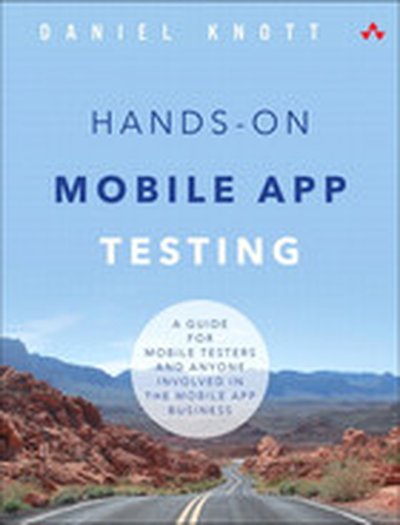
Hands-On Mobile App Testing: A Guide for Mobile Testers and Anyone Involved in the Mobile App Business

The First Complete Guide to Mobile App Testing and Quality Assurance: Start-to-Finish Testing Solutions for Both Android and iOS Today, mobile apps must meet rigorous standards of reliability, usability, security, and performance. However, many mobile developers have limited testing experience, and mobile platforms raise new challenges even for long-time testers. Now, Hands-On Mobile App Testing provides the solution: an end-to-end blueprint for thoroughly testing any iOS or Android mobile app. Reflecting his extensive real-life experience, Daniel Knott offers practical guidance on everything from mobile test planning to automation. He provides expert insights on mobile-centric issues, such as testing sensor inputs, battery usage, and hybrid apps, as well as advice on coping with device and platform fragmentation, and more. If you want top-quality apps as much as your users do, this guide will help you deliver them. You’ll find it invaluable–;whether you’re part of a large development team or you are the team. Learn how to Establish your optimal mobile test and launch strategy Create tests that reflect your customers, data networks, devices, and business models Choose and implement the best Android and iOS testing tools Automate testing while ensuring comprehensive coverage Master both functional and nonfunctional approaches to testing Address mobile’s rapid release cycles Test on emulators, simulators, and actual devices Test native, hybrid, and Web mobile apps Gain value from crowd and cloud testing (and understand their limitations) Test database access and local storage Drive value from testing throughout your app lifecycle Start testing wearables, connected homes/cars, and Internet of Things devices

Knowledge Discovery Process and Methods to Enhance Organizational Performance

Although the terms "data mining" and "knowledge discovery and data mining" (KDDM) are sometimes used interchangeably, data mining is actually just one step in the KDDM process. Data mining is the process of extracting useful information from data, while KDDM is the coordinated process of understanding the business and mining the data in order to identify previously unknown patterns. Knowledge Discovery Process and Methods to Enhance Organizational Performance explains the knowledge discovery and data mining (KDDM) process in a manner that makes it easy for readers to implement. Sharing the insights of international KDDM experts, it details powerful strategies, models, and techniques for managing the full cycle of knowledge discovery projects. The book supplies a process-centric view of how to implement successful data mining projects through the use of the KDDM process. It discusses the implications of data mining including security, privacy, ethical and legal considerations. Provides an introduction to KDDM, including the various models adopted in academia and industry Details critical success factors for KDDM projects as well as the impact of poor quality data or inaccessibility to data on KDDM projects Proposes the use of hybrid approaches that couple data mining with other analytic techniques (e.g., data envelopment analysis, cluster analysis, and neural networks) to derive greater value and utility Demonstrates the applicability of the KDDM process beyond analytics Shares experiences of implementing and applying various stages of the KDDM process in organizations The book includes case study examples of KDDM applications in business and government. After reading this book, you will understand the critical success factors required to develop robust data mining objectives that are in alignment with your organization’s strategic business objectives.

Big Data and Health Analytics

Data availability is surpassing existing paradigms for governing, managing, analyzing, and interpreting health data. Big Data and Health Analytics provides frameworks, use cases, and examples that illustrate the role of big data and analytics in modern health care, including how public health information can inform health delivery. Written for health care professionals and executives, this is not a technical book on the use of statistics and machine-learning algorithms for extracting knowledge out of data, nor a book on the intricacies of database design. Instead, this book presents the current thinking of academic and industry researchers and leaders from around the world. Using non-technical language, this book is accessible to health care professionals who might not have an IT and analytics background. It includes case studies that illustrate the business processes underlying the use of big data and health analytics to improve health care delivery. Highlighting lessons learned from the case studies, the book supplies readers with the foundation required for further specialized study in health analytics and data management. Coverage includes community health information, information visualization which offers interactive environments and analytic processes that support exploration of EHR data, the governance structure required to enable data analytics and use, federal regulations and the constraints they place on analytics, and information security. Links to websites, videos, articles, and other online content that expand and support the primary learning objectives for each major section of the book are also included to help you develop the skills you will need to achieve quality improvements in health care delivery through the effective use of data and analytics.

Creating Universes with SAP BusinessObjects

Dive into the world of SAP BusinessObjects Universe creation with this comprehensive guide. This book explains how to leverage the SAP Information Design Tool to design and maintain Universes effectively. Whether you're a beginner starting out or an experienced developer transitioning to new tools, you'll find practical insights and guided tutorials to enhance your abilities. What this Book will help me do Understand the fundamental concepts of SAP BusinessObjects Universes and how they facilitate Business Intelligence. Gain expertise in using the SAP Information Design Tool effectively for creating and managing Universes. Learn to build a solid and scalable Data Foundation layer tailored to your organization's needs. Explore methods to ensure the security of Universes using the Security Profile Editor. Master the skills to test, troubleshoot, and refine Universes for reliable reporting outcomes. Author(s) Taha Mahmoud is an experienced SAP consultant specializing in Business Intelligence. With a strong background in SAP BusinessObjects solutions, Taha brings years of hands-on expertise to teaching and technical writing. He focuses on creating precise and practical content to empower readers to solve real-world challenges. Who is it for? This book is tailored for SAP BusinessObjects Universe developers of all skill levels. Beginners will gain structured guidance on how to start and advance in Universe design. Experienced developers will find great value in mapping their knowledge to the newer tools and techniques. If you are responsible for business reporting or strive to optimize your organization's BI infrastructure, this resource is ideal for you.

Big Data Analytics Strategies for the Smart Grid

By implementing a comprehensive data analytics program, utility companies can meet the continually evolving challenges of modern grids that are operationally efficient, while reconciling the demands of greenhouse gas legislation and establishing a meaningful return on investment from smart grid deployments. Readable and accessible, Big Data Analytics Strategies for the Smart Grid addresses the needs of applying big data technologies and approaches, including Big Data cybersecurity, to the critical infrastructure that makes up the electrical utility grid. It supplies industry stakeholders with an in-depth understanding of the engineering, business, and customer domains within the power delivery market. The book explores the unique needs of electrical utility grids, including operational technology, IT, storage, processing, and how to transform grid assets for the benefit of both the utility business and energy consumers. It not only provides specific examples that illustrate how analytics work and how they are best applied, but also describes how to avoid potential problems and pitfalls. Discussing security and data privacy, it explores the role of the utility in protecting their customers’ right to privacy while still engaging in forward-looking business practices. The book includes discussions of: SAS for asset management tools The AutoGrid approach to commercial analytics Space-Time Insight’s work at the California ISO (CAISO) This book is an ideal resource for mid- to upper-level utility executives who need to understand the business value of smart grid data analytics. It explains critical concepts in a manner that will better position executives to make the right decisions about building their analytics programs. At the same time, the book provides sufficient technical depth that it is useful for data analytics professionals who need to better understand the nuances of the engineering and business challenges unique to the utilities industry.

Information Evaluation

During the reception of a piece of information, we are never passive. Depending on its origin and content, from our personal beliefs and convictions, we bestow upon this piece of information, spontaneously or after reflection, a certain amount of confidence. Too much confidence shows a degree of naivety, whereas an absolute lack of it condemns us as being paranoid. These two attitudes are symmetrically detrimental, not only to the proper perception of this information but also to its use. Beyond these two extremes, each person generally adopts an intermediate position when faced with the reception of information, depending on its provenance and credibility. We still need to understand and explain how these judgements are conceived, in what context and to what end. Spanning the approaches offered by philosophy, military intelligence, algorithmics and information science, this book presents the concepts of information and the confidence placed in it, the methods that militaries, the first to be aware of the need, have or should have adopted, tools to help them, and the prospects that they have opened up. Beyond the military context, the book reveals ways to evaluate information for the good of other fields such as economic intelligence, and, more globally, the informational monitoring by governments and businesses. Contents 1. Information: Philosophical Analysis and Strategic Applications, Mouhamadou El Hady Ba and Philippe Capet. 2. Epistemic Trust, Gloria Origgi. 3. The Fundamentals of Intelligence, Philippe Lemercier. 4. Information Evaluation in the Military Domain: Doctrines, Practices and Shortcomings, Philippe Capet and Adrien Revault d'Allonnes. 5. Multidimensional Approach to Reliability Evaluation of Information Sources, Frédéric Pichon, Christophe Labreuche, Bertrand Duqueroie and Thomas Delavallade. 6. Uncertainty of an Event and its Markers in Natural Language Processing, Mouhamadou El Hady Ba, Stéphanie Brizard, Tanneguy Dulong and Bénédicte Goujon. 7. Quantitative Information Evaluation: Modeling and Experimental Evaluation, Marie-Jeanne Lesot, Frédéric Pichon and Thomas Delavallade. 8. When Reported Information Is Second Hand, Laurence Cholvy. 9. An Architecture for the Evolution of Trust: Definition and Impact of the Necessary Dimensions of Opinion Making, Adrien Revault d'Allonnes. About the Authors Philippe Capet is a project manager and research engineer at Ektimo, working mainly on information management and control in military contexts. Thomas Delavallade is an advanced studies engineer at Thales Communications & Security, working on social media mining in the context of crisis management, cybersecurity and the fight against cybercrime.


QlikView Server and Publisher

This book, "QlikView Server and Publisher," serves as a comprehensive guide for implementing and managing QlikView Server and Publisher in enterprise environments. It walks you through the entire process, highlighting vital configuration techniques, and best practices necessary to maximize the potential of QlikView for your data solutions. What this Book will help me do Understand the best practices for configuring QlikView Server and Publisher in your organization's IT environment. Master the process of installing and maintaining QlikView Server to ensure optimal performance. Learning how to deploy enterprise-grade QlikView Server setups effectively. Gain expertise in setting up and leveraging QlikView Publisher for task scheduling and automation. Acquire the skills to integrate QlikView with advanced security solutions and monitor system efficiency. Author(s) Stephen Redmond is a renowned author and expert on data visualization platforms, particularly QlikView. With years of experience in implementing enterprise data solutions, Stephen brings practical insights to complex technical concepts. He focuses on guiding readers with systematic and approachable methods to master Qlik technologies. Who is it for? This book is designed for IT professionals and system administrators who are tasked with deploying or maintaining QlikView systems. Whether you're new to QlikView or have some experience, you'll find the material clear and beneficial to mastering enterprise implementations. The content suits individuals aiming to improve data-driven decision-making systems in their organization.

Mondrian in Action

Mondrian in Action teaches business users and developers how to use Mondrian and related tools for strategic business analysis. You'll learn how to design and populate a data warehouse and present the data via a multidimensional model. You'll follow examples showing how to create a Mondrian schema and then expand it to add basic security based on the users' roles. About the Technology Mondrian is an open source, lightning-fast data analysis engine designed to help you explore your business data and perform speed-of-thought analysis. Mondrian can be integrated into a wide variety of business analysis applications and learning it requires no specialized technical knowledge. About the Book Mondrian in Action teaches you to use Mondrian for strategic business analysis. In it, you'll learn how to organize and present data in a multidimensional manner. You'll follow apt and thoroughly explained examples showing how to create a Mondrian schema and then expand it to add basic security based on users' roles. Developers will discover how to integrate Mondrian using its olap4j Java API and web service calls via XML for Analysis. What's Inside Mondrian from the ground up -- no experience required A primer on business analytics Using Mondrian with a variety of leading applications Optimizing and restricting business data for fast, secure analysis About the Reader Written for developers building data analysis solutions. Appropriate for tech-savvy business users and DBAs needing to query and report on data. About the Authors William D. Back is an Enterprise Architect and Director of Pentaho Services. Nicholas Goodman is a Business Intelligence pro who has authored training courses on OLAP and Mondrian. Julian Hyde founded Mondrian and is the project's lead developer. Quotes A wonderful introduction to Business Intelligence and Analytics. - Lorenzo De Leon, Authentify, Inc. A great overview of the Mondrian engine that guided me through all the technical details. - Alexander Helf, veenion GmbH A significant complement to the online documentation, and an excellent introduction to how to think about designing a data warehouse. - Mark Newman, Heads Up Analytics Comprehensive ... highly recommended. - Najib Coutya, IMD Group

QlikView for Developers Cookbook

"QlikView for Developers Cookbook" empowers you to elevate your QlikView development skills beyond the introductory level. Through practical recipes, this book provides hands-on exercises covering topics like advanced visualizations, data modeling challenges, and script writing. This is an ideal resource for developers looking to master QlikView's functionalities and apply advanced techniques. What this Book will help me do Master techniques for creating advanced visualizations in QlikView. Improve your applications by applying best practices in data modeling. Learn to script and automate tasks effectively within QlikView. Enhance performance optimization to deliver faster QlikView applications. Implement robust security measures for your QlikView solutions. Author(s) Stephen Redmond is a seasoned QlikView developer with over seven years of experience in designing and implementing business intelligence solutions. His expertise encompasses advanced scripting, data modeling, and visualization techniques, making him an authority on QlikView development. Stephen's hands-on approach in teaching helps practitioners achieve excellence in their use of QlikView. Who is it for? This book is tailored for individuals with a foundational knowledge of QlikView who want to advance their skills. Whether you're a developer at a QlikView customer, partner, or QlikView itself, or someone aiming to become an expert in QlikView development, this book is crafted for you. It assumes you have a basic understanding and are eager to solve complex problems and create advanced solutions.

Handbook of Statistics

Statistical learning and analysis techniques have become extremely important today, given the tremendous growth in the size of heterogeneous data collections and the ability to process it even from physically distant locations. Recent advances made in the field of machine learning provide a strong framework for robust learning from the diverse corpora and continue to impact a variety of research problems across multiple scientific disciplines. The aim of this handbook is to familiarize beginners as well as experts with some of the recent techniques in this field. The Handbook is divided in two sections: Theory and Applications, covering machine learning, data analytics, biometrics, document recognition and security. very relevant to current research challenges faced in various fields self-contained reference to machine learning emphasis on applications-oriented techniques

Data Insights

Data Insights: New Ways to Visualize and Make Sense of Data offers thought-provoking insights into how visualization can foster a clearer and more comprehensive understanding of data. The book offers perspectives from people with different backgrounds, including data scientists, statisticians, painters, and writers. It argues that all data is useless, or misleading, if we do not know what it means.Organized into seven chapters, the book explores some of the ways that data visualization and other emerging approaches can make data meaningful and therefore useful. It also discusses some fundamental ideas and basic questions in the data lifecycle; the process of interactions between people, data, and displays that lead to better questions and more useful answers; and the fundamentals, origins, and purposes of the basic building blocks that are used in data visualization. The reader is introduced to tried and true approaches to understanding users in the context of user interface design, how communications can get distorted, and how data visualization is related to thinking machines. Finally, the book looks at the future of data visualization by assessing its strengths and weaknesses. Case studies from business analytics, healthcare, network monitoring, security, and games, among others, as well as illustrations, thought-provoking quotes, and real-world examples are included.This book will prove useful to computer professionals, technical marketing professionals, content strategists, Web and product designers, and researchers. Demonstrates, with a variety of case studies, how visualizations can foster a clearer and more comprehensive understanding of data Answers the question, "How can data visualization help me?" with discussions of how it fits into a wide array of purposes and situations Makes the case that data visualization is not just about technology; it also involves a deeply human process