talk-data.com talk-data.com

Topic

Cyber Security

cybersecurity information_security data_security privacy

2078

tagged

Activity Trend

297 peak/qtr
2020-Q1 2026-Q1

Activities

2078 activities · Newest first

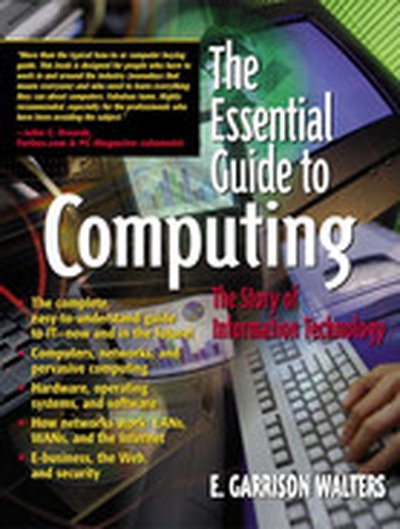
Essential Guide to Computing: The Story of Information Technology, The

The complete, easy-to-understand guide to IT—now and in the future! Computers, networks, and pervasive computing Hardware, operating systems, and software How networks work: LANs, WANs, and the Internet E-business, the Web, and security The guide for ANYONE who needs to understand the key technologies driving today's economy and high tech industries! You can't afford not to understand the information revolution that's sweeping the world-but who's got time for all the acronyms and hype most technology books give you? The Essential Guide to Computing demystifies the digital society we live in with an intelligent, thorough, and up-to-date explanation of computer, networking, and Internet technologies. It's perfect for smart professionals who want to get up to speed, but don't have computer science or engineering degrees! You'll find up-to-the-minute coverage on all of today's hottest technologies including: The evolution of computing: from the room-sized "monoliths" of the 1950s to today's global Internet Preview of the next revolution: "pervasive computing" Computer hardware: microprocessors, memory, storage, I/O, displays, and architecture Windows, Macintosh, UNIX/Linux, DOS, NetWare, Palm: what operating systems do, and how they compare Programming languages: from machine language to advanced object-oriented technologies Key software applications: databases, spreadsheets, word processing, voice recognition, and beyond Microsoft and the software industry: where they stand, where they're headed How networks work: LANs, WANs, packet switching, hardware, media, and more The Internet, e-commerce, and security Enterprise applications: data warehousing, Web-centered development, and groupware Whether you're a consumer, investor, marketer, or executive, this is your start-to-finish briefing on the information technologies that have changed the world-and the coming technologies that will transform it yet again!
NFS Illustrated

The Network File System (NFS) protocol that enables remote access to files is now a key element of any LAN. It is also currently and increasingly used as a key technology with the Web and wide area networks. Written for programmers creating NFS-based applications, network engineers creating new implementations of NFS, and network managers, NFS Illustrated promotes a thorough understanding of that protocol through extensive diagrams and real protocol traces that show NFS in action. Covering NFS versions 2 and 3, the book also looks into WebNFS and the new NFS version 4, with Internet support. Detailed and authoritative, the book not only examines NFS in depth, but also describes the protocols that underlie and support it, including External Data Representation (XDR), Remote Procedure Call (RPC), the NFS MOUNT protocol, and the NFS Lock Manager protocol. It discusses several NFS variants and compares NFS to a number of alternative file systems. You will find a detailed discussion on the NFS filesystem model and a procedure-by-procedure description of NFS versions 2 and 3, illustrated through the use of snoop traces that capture and display protocol packets from the network. In addition, the book addresses real-world implementation issues faced by those building an NFS client or server, factors that affect NFS performance, and critical performance benchmarks. Specific topics of interest include: NFS version 4, highlighting performance improvements, security features, and cross-platform interoperability for Internet operation RPC authentication and security Differences between NFS versions 2 and 3 Implementation issues for clients and servers Read-ahead and write-behind Caching policies The Lock Manager protocol Automounting NFS variants, including Spritely NFS, NQNFS, Trusted NFS, and NASD NFS NFS competitors: RFS, AFS, DCE/DFS, and CIFS The PCNFS protocol for implementing NFS on PC operating systems SPEC SFS benchmarks, WebNFS, and firewalls Comprehensive and current, NFS Illustrated is an essential resource for network professionals who want to use this widespread and evolving technology to its fullest.

Access Database Design and Programming, Second Edition

When using software products with graphical interfaces, we frequently focus so much on the details of how to use the interface that we forget about the more general concepts that allow us to understand and put the software to effective use. This is particularly true of a powerful database product like Microsoft Access. Novice, and sometimes even experienced, programmers are so concerned with how something is done in Access that they often lose sight of the general principles that underlie their database applications. Access Database Design & Programming, 2nd Edition, an update to the bestselling first edition, features: A discussion of Access' new VBA Integrated Development Environment, which, for the first time, is the one used by Word, Excel, and PowerPoint An expansion of the discussion of the VBA language itself, in response to reader requests A discussion of Microsoft's latest data access technology, called Active Data Objects (or ADO), along with a discussion of Open Database Connectivity(ODBC), which is intimately connected with ADO Unlike other Access books that take the long, detailed approach to every topic of concern to Access programmers, this book focuses instead on the core concepts, enabling programmers to develop solid, effective database applications. As a result, important topics such as designing forms and reports, database security, database replication, and programming for multiuser applications are simply not discussed. This book is a kind of "second course" in Access that provides a relatively experienced Access user who is new to programming with the frequently overlooked techniques necessary to successfully develop in the Microsoft Access environment. Anyone interested in learning Access in-depth, rather than just scraping the surface, will enjoy and immensely benefit from reading this book. Although this book is really an introduction directed to intermediate Microsoft Access users who are novice programmers, it should appeal to all levels of Access developers. For novice programmers, it focuses on a key body of knowledge that is typically neglected, but is nevertheless essential for developing effective database applications. For intermediate and advanced developers, its treatment of database design and queries provides a handy treatment that otherwise has to be gleaned from relatively uninteresting textbooks, while its programming chapters constitute a handy reference to some basic operations that can be performed using DAO or the Access object model.

Oracle Database Administration: The Essential Refe

Visit the catalog page for Oracle Database Administration: The Essential RefeVisit the errata page for Oracle Database Administration: The Essential RefeDownload the supplemental electronic content for Oracle Database Administration: The Essential Refe Oracle database administration requires a vast amount of information and an ability to perform a myriad of tasks--from installation to tuning to network troubleshooting to overall daily administration. Oracle provides many tools for performing these tasks; the trick is knowing what tool is right for the job, what commands you need to issue (and when), and what parameters and privileges you need to set. And, as every DBA knows, you need to know how do all this under pressure, while you face crisis after crisis. This book provides a concise reference to the enormous store of information an Oracle DBA needs every day (as well as what's needed only when disaster strikes). It's crammed full of quick-reference tables, task lists, and other summary material that both novice and expert DBAs will use time and time again. It covers the commands and operations new to Oracle8, but also provides Oracle7 information for sites still running earlier versions. Oracle Database Administration provides two types of material: DBA tasks--chapters summarizing how to perform critical DBA functions: installation, performance tuning, preventing data loss, networking, security and monitoring, auditing, query optimization, and the use of various Oracle tools and utilities DBA reference--chapters providing a quick reference to the Oracle instance and database, the initialization (INIT.ORA) parameters, the SQL statements commonly used by DBAs, the data dictionary tables, the system privileges and roles, and the SQLPlus, Export, Import, and SQLLoader syntax The book also includes a resource summary with references to additional books, Web sites, and other online and offline resources of special use to Oracle DBAs. Oracle Database Administration is the single essential reference you'll turn to again and again. If you must choose only one book to use at the office, keep at home, or carry to a site you're troubleshooting, this will be that book.

Oracle Distributed Systems

Any organization that uses the Oracle relational database management system (RDBMS) these days needs to use multiple databases. There are many reasons to use more than a single database in a distributed database system: Different databases may be associated with particular business functions, such as manufacturing or human resources. Databases may be aligned with geographical boundaries, such as a behemoth database at a headquarters site and smaller databases at regional offices. Two different databases may be required to access the same data in different ways, such as an order entry database whose transactions are aggregated and analyzed in a data warehouse. A busy Internet commerce site may create multiple copies of the same database to attain horizontal scalability. A copy of a production database may be created to serve as a development test bed. Tunability Platform autonomy Fault tolerance Scalability Location transparency Site autonomy Introduction to Distributed Database Systems SQLNet and Net8 Configuration and Administration Distributed Database Security Designing the Distributed System Oracle's Distributed System Implementation Sample Configurations 8. Engineering Considerations Oracle Replication Architecture Advanced Replication Option Installation Basic Replication Multi-Master Replication Updateable Snapshots Procedural Replication Conflict Avoidance and Resolution Techniques In a distributed database environment, data in two or more databases is accessible as if it were in a single database. Usually, the different databases are on different servers, which may be located at the same site or a continent away. Communication between the servers takes place via SQLNet (for Oracle7) or Net8 (for Oracle8). Distributed database environments offer a number of benefits over single- database systems, including: This book describes how you can use multiple databases and the distributed features of Oracle to best advantage. It covers: Table of contents: Part I: The Distributed System Part II: Replication Part III: Appendixes Appendix A: Built-in Packages for Distributed Systems Appendix B: Scripts

Data Warehousing: Architecture and Implementation

8090B-0 A start-to-finish process for deploying successful data warehouses. This book delivers what every data warehousing project participant needs most: a thorough overview of today's best solutions, and a reliable step-by-step process for building warehouses that meet their objectives. It answers the key questions asked by everyone involved in a data warehouse initiative: project sponsors, developers, managers, and CIOs. And, with over 75 figures, it doesn't just tell you how to get the job done: it shows you. Migration strategies and scenarios Management and support: issue resolution, capacity planning, security, backup, and more Specific answers for project sponsors, managers, and CIOs 12 steps for implementation Best techniques for schema design and metadata Choosing the right hardware, software, and platforms Evolving as new technologies mature Rely on this book's up-to-date listings of vendors and Web resources. Learn to evolve your data warehouse as new technologies mature-including metadata interchange standards, Web solutions, and Windows …Ø NT. Whatever your goals, Data Warehousing for IT Professionals will help you achieve them faster and at lower cost.

Oracle Security

Security in a relational database management system is complex, and too few DBAs, system administrators, managers, and developers understand how Oracle implements system and database security. This book gives you the guidance you need to protect your databases. Oracle security has many facets: Establishing an organization's security policy and plan Protecting system files and passwords Controlling access to database objects (tables, views, rows, columns, etc.) Building appropriate user profiles, roles, and privileges Monitoring system access via audit trails Oracle and Security Oracle System Files Oracle Database Objects The Oracle Data Dictionary Default Roles and User Accounts Profiles, Passwords, and Synonyms Developing a Database Security Plan Installing and Starting Oracle Developing a Simple Security Application Developing an Audit Plan Developing a Sample Audit Application Backing Up and Recovering a Database Using the Oracle Enterprise Manager Maintaining User Accounts Using the Oracle Security Server Using the Internet and the Web Using Extra-Cost Options Oracle Security describes how these basic database security features are implemented and provides many practical strategies for securing Oracle systems and databases. It explains how to use the Oracle Enterprise Manager and Oracle Security Server to enhance your site's security, and it touches on such advanced security features as encryption, Trusted Oracle, and various Internet and World Wide Web protection strategies. A table of contents follows: Preface Part I: Security in an Oracle System Part II: Implementing Security Part III: Enhanced Oracle Security Appendix A. References

Agentic AI SRE on Azure for faster RCA and resolution

Downtime is expensive, and every minute counts when incidents hit. Yet valuable engineering time is lost to troubleshooting, instead of driving design and innovation. NeuBird’s Agentic AI SRE delivers real-time RCA and remediation, while ensuring enterprise-grade security and governance. It correlates telemetry across Azure Monitor, observability tools, and multi-cloud, helping reduce MTTR up to 90%. Join this session to see Hawkeye by NeuBird in action.

AI-based data discovery and threat detection with Veeam

Explore how Veeam Data Cloud for M365 goes far beyond backup, leveraging Azure and Azure AI to interact with your data. These new features offer high-throughput data discovery and Veeam's patent-pending advanced malware and ransomware detection. See a live demo of natural language queries, threat evaluation, and AI-driven management via MCP server. Learn how IT Admins, SOC Leads and CISOs can quickly identify threats and prioritize mitigation- empowering security teams to act faster and smarter.

APIs dominate the web, accounting for the majority of all internet traffic. And more AI means more APIs, because they act as an important mechanism to move data into and out of AI applications, AI agents, and large language models (LLMs). So how can you make sure all of these APIs are secure? In this session, we’ll take you through OWASP’s top 10 API and LLM security risks, and show you how to mitigate these risks using Google Cloud’s security portfolio, including Apigee, Model Armor, Cloud Armor, Google Security Operations, and Security Command Center.

Bolster your data security in the AI era with Microsoft and Netskope

Want to have consistent data security and regulatory compliance with enterprise-wide visibility and policy enforcement across all your endpoints, SaaS, IaaS, and network traffic? Join this session to learn how expanded data discovery and classification from Microsoft Purview integrated with unified security and advanced controls from Netskope for all your data at rest and in motion delivers a seamless administrator and user experience to help you extend the value of your Microsoft investment.

Build AI that understands your business

Connecting LLMs to your secure, operational database involves complexity, security risks, and hallucinations. This session shows how to build context-aware AI agents directly on your existing data, going from live database to production-ready, secure AI agent in hours. You'll see how to ship personalized experiences that will define the next generation of software. RavenDB's CEO will demonstrate this approach.

Building and evaluating AI agents with Foundry Agent Service

Building intelligent AI agents is no simple task. With Microsoft Foundry Agent Service, you can rapidly create and deploy robust agents with the security, scalability, and integrations of Azure. In this walkthrough, we’ll build an agent that combines live data, reasoning, and dynamic tool usage. Using Azure Functions for real APIs and W&B Weave for detailed tracking, you’ll learn setup, tool registration, data endpoints, and Python-based interaction.

Building secure-by-design environments with Azure capabilities

Cloud providers deliver powerful security capabilities, yet most organizations struggle to fully leverage them to ensure their environment is secure-by-design. In this session, we’ll explore how to harness the Azure native security controls to accelerate a prevention-first model. Learn how Native brings order to preventive policies across cloud providers, allowing you to safely achieve a secure-by-design environment in minutes.

Use Google Cloud products to create architecture designs that are highly secure and robust. To protect your sensitive data and maintain trust with stakeholders, building a highly secure infrastructure is imperative to ensure the overall security and stability of an organization's digital presence. Attend the session to gain insights into the elements encompassed in a secure architectural framework with cloud native tools. By attending this session, your contact information may be shared with the sponsor for relevant follow up for this event only.

Click the blue “Learn more” button above to tap into special offers designed to help you implement what you are learning at Google Cloud Next 25.

Bypass resistance: the new passkey strategy beyond phishing resistance

Passkeys are an important step forward, but not the finish line. With attackers targeting help desks, enrollment , and self-service recovery to bypass MFA entirely, organizations need more to stop attacks and stay operational. Join this session to learn how RSA and Microsoft together secure the credential lifecycle, the blind spots that threat actors target, and how to build a bypass-resistant security posture.

Discussion on using Calico Network Policies to enhance security of Kubernetes pod traffic, including the differences between legacy monolithic apps and cloud-native microservices, the limitations of firewall-based approaches, and how Calico Network Policies enable fine-grained authorization, egress control, workload isolation, performance considerations, and regulatory compliance.

Navigating the complex world of compliance can be daunting. Join us to discover how to simplify your compliance journey on Google Cloud, enabling you to build at scale while meeting stringent industry regulations with ease.

This Session is hosted by a Google Cloud Next Sponsor.Visit your registration profile at g.co/cloudnext to opt out of sharing your contact information with the sponsor hosting this session.