talk-data.com talk-data.com

Topic

Cyber Security

cybersecurity information_security data_security privacy

2078

tagged

Activity Trend

297 peak/qtr
2020-Q1 2026-Q1

Activities

2078 activities · Newest first

DB2® Universal Database™ v8 Application Development Certification Guide, 2nd Edition

You will find every skill and technique you need to build enterprise, Web, and eBusiness applications with DB2 UDB v8. This book is IBM's official guide to becoming an IBM Certified Application Developer for the DB2 Universal Database v8 Family. New to the second edition is the inclusion of the information that you will need to prepare for the Fundamentals exam, a prerequisite to the Application Development exam. This section covers information about the DB2 products, tools, connectivity, data objects, manipulation, control, security, and concurrency. The application development section has been revised and updated to reflect new powerful features of DB2. You can review the DB2 client-server environment, the role of SQL, and the basic structure of a DB2 application; compare the programming interfaces available for DB2 application development, choosing the ones most appropriate to each project; and, of course, prepare for the Application Development Exam. As a bonus, information that is not needed to become an IBM Certified Application Developer for the DB2 Universal Database v8 Family has been provided by the authors to show you how to take advantage of IBM's powerful Extenders for DB2. Using Extenders, you can build searchable indexes to quickly find elements within text, audio, image, or XML objects stored in DB2. Section 1 covers all the fundamentals of DB2 to get you started and to prepare you for the DB2 UDB v8 Family Fundamentals Exam (test 700) Section 2 covers every DB2 v8 programming interface and strategy and will help prepare you for the DB2 UDB v8 Family Application Development Exam (test 703) Section 3 contains bonus materials including information about the many Extenders that are available to create powerful indexes for text, audio, image, and XML documents The accompanying CD-ROM contains a complete trial version of DB2 UDB v8 Personal Edition along with the Application Development Client.
Enterprise Business Portals II with IBM Tivoli Access Manager

Mastering IBM Tivoli Access Manager is a very important factor in successfully deploying contemporary e-business solutions. Access Manager is the key element in an e-business security framework that needs thorough understanding to achieve maximum security, functionality, and performance. Based on expandable security policies for users, groups, and protected resources, Tivoli Access Manager manages authentication and authorization for application servers, Web sites, and virtually any other resource that requires protection, including custom-written applications. This IBM Redbooks publication describes how to build an integrated enterprise business portal with Tivoli Access Manager Version 4.1, WebSphere Portal, mySAP Workplace, and the SAP Enterprise Portal. It also describes how to implement a federated single sign-on solution within a Web Services scenario. This book is partitioned into general and customer scenario based sections. This book is a valuable resource for security administrators and architects who wish to understand and implement a centralized security infrastructure. Please note that the additional material referenced in the text is not available from IBM.

PostgreSQL

PostgreSQL is the world¿s most advanced open-source database. PostgreSQL is the most comprehensive, in-depth, and easy-to-read guide to this award-winning database. This book starts with a thorough overview of SQL, a description of all PostgreSQL data types, and a complete explanation of PostgreSQL commands. If you are a developer or an administrator, you¿ll love the chapter that explores PostgreSQL performance. The authors explain how PostgreSQL stores data on disk (and in memory) and how to measure and influence the effectiveness of PostgreSQL¿s caching mechanisms. You¿ll also learn how PostgreSQL generates and evaluates execution plans. The authors explain all of the query operators that can appear in the results of an EXPLAIN command, describing the performance implications of each operator as well as the conditions which will cause PostgreSQL to use that operator. PostgreSQL is also a complete guide for the developer. Whether you¿re developing with C, C++, ODBC, Embedded SQL, Java, Tcl/Tk, Perl, Python or PHP, you¿ll find a comprehensive description of the PostgreSQL API for your language of choice. Easy to follow exercises will walk you through the development of working applications that fully demonstrate the features offered by each API. You will also find a chapter that describes the PL/pgSQL server-side procedural language, learning how to build triggers, functions, and stored-procedures. The authors have even included a chapter that walks you through the process of extending the PostgreSQL server with custom-written C functions and new data types. The accompanying web site, www.conjectrix.com, contains downloadable versions of all of the sample code and a wealth of PostgreSQL-related resources. The last section of PostgreSQL was written for the PostgreSQL administrator. You will learn how to install PostgreSQL on Windows, Linux, and Unix systems, from source code or from pre-compiled installers. The authors have described all of the PostgreSQL configuration options (compile-time, startup, and on-the-fly). The chapter on PostgreSQL security describes all of the authentication protocols that you can choose from and describes how to secure your database, both internally and externally. If you have to support a multi-national environment, you will find the chapter on internationalization and localization to be invaluable. You won¿t find a more complete guide to PostgreSQL anywhere. The authors have made PostgreSQL approachable by leading the reader from basic concepts to advanced features. Whether you¿re a database beginner or an advanced user, you will find this book a valuable addition to your library.

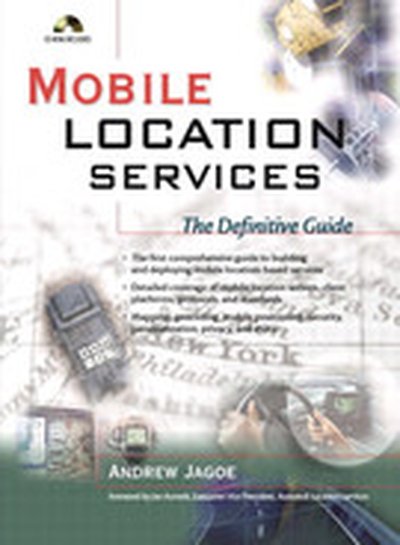
Mobile Location Services: The Definitive Guide

The first comprehensive guide to building and deploying mobile location-based services Detailed coverage of mobile location servers, client platforms, protocols, and standards Mapping, geocoding, mobile positioning, security, personalization, privacy, and more Foreword by Joe Astroth, Executive Vice President, Autodesk Location Services "I expect this comprehensive book to inspire a new generation of engineers and to help propel a new wave of independent software vendors. I only wish it was available to our staff as we developed some of our earliest services." —Joe Astroth, Executive Vice President, Autodesk Location Services The first start-to-finish guide to developing location-based services. Tomorrow's mobile applications must be smarter than ever, accessing and intelligently using a wide range of location data. In Mobile Location Services, leading mobile application consultant Andrew Jagoe presents the first end-to-end solutions guide to building and deploying location-based services and applications. Jagoe addresses every key development challenge and presents insightful case studies and interviews with key industry leaders. Mobile location servers and the components of an end-to-end location-based solution Spatial analysis: digital mapping, geocoding, routing, map image generation, and point-of-interest searches Mobile positioning: using and augmenting GPS technology Authentication and security in location-based applications Personalization, profiling, and privacy Mobile location clients: platform, protocols, languages, and localization issues Key applications: navigation, emergency assistance, travel services, advertising/marketing, and more Includes detailed appendices on the Geography Markup Language (GML), the Location Interoperability Forum's Mobile Location Protocol, and P3P privacy standards CD-ROM INCLUDED The accompanying CD-ROM contains several useful tools for developing mobile location services, as well as a list of important resources on the Internet.

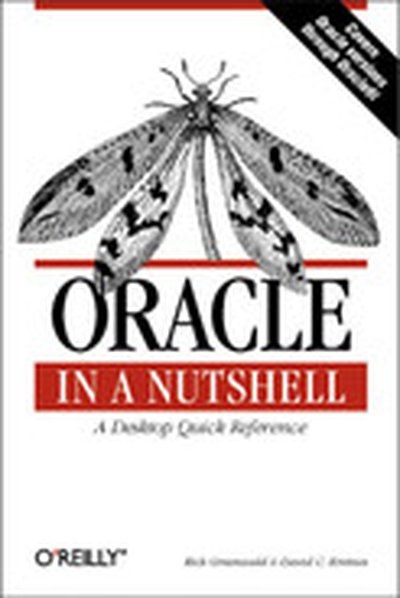
Oracle in a Nutshell

Introduced a quarter-century ago, the Oracle database remains the leading enterprise relational database management system (RDBMS) in the world. Oracle is a complex system, offering a myriad of products, languages, and tools. Frequent updates, releases, and editions complicate the ability of Oracle users to keep up with the huge amounts of frequently changing information about the database and its capabilities.The goal of Oracle in a Nutshell is to pull together the most essential information on Oracle architecture, syntax, and user interfaces. The content and format of this book, an admirable addition to O'Reilly's respected In-a-Nutshell line, combine to boil down vital Oracle commands, language constructs, parameters, and file formats in a succinct and highly accessible desktop reference. Oracle in a Nutshell covers the information that database administrators PL/SQL and Java developers, and system, network, and security administrators need as they manage Oracle databases and write code for these databases. It includes: Oracle Foundations--Overview of the Oracle architecture (memory structures and fundamental concepts), Oracle's various editions and packaging options, summary of the initialization file parameters and data dictionary views, and fundamentals of Oracle's concurrency scheme, security mechanisms (privileges, profiles, roles), and networking files (TNSNAMES.ORA, SQLNET.ORA, LISTENER.ORA, DAP.ORA, NAMES.ORA, CMAN.ORA) and options. Oracle Languages--Syntax summary for SQL language statements, SQL function calls PL/SQL language statements and characteristics, PL/SQL built-in package headers, and Java (JDBC and SQLJ) interfaces to the Oracle database. Oracle Tools--Commands provided with SQLPlus, SQLLoader, Import and Export, Oracle Recovery Manager (RMAN) and other backup/recovery methods, Oracle Enterprise Manager, and various performance tuning tools (Explain Plan, TKPROF, AUTOTRACE, UTLBSTAT, UTLESTAT, Statspack). Appendixes--Summary of Oracle datatypes, operators, expressions, conditions, numeric and date formats, and resources for additional reading.

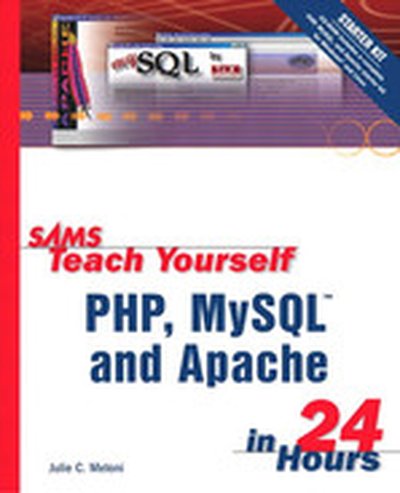
Sams Teach Yourself PHP, MySQL™ and Apache in 24 Hours

Sams Teach Yourself PHP, MySQL, and Apache in 24 Hours combines coverage of three popular open-source Web development tools into one easy-to-understand book -- and it comes with one easy-to-use Starter Kit CD-ROM for Windows or Linux. You will learn to install, configure and set up the PHP scripting language, the MySQL database system and the Apache Web server. By the end of the book, you will understand how these technologies work, and -- more importantly -- how they can work together to create a dynamic Web site. After creating a simple website using these tools, you will be able to manage a simple mailing list and create an online address book, shopping cart and storefront. You will also know how to fine tune Apache and MySQL and cover simple Web server security.

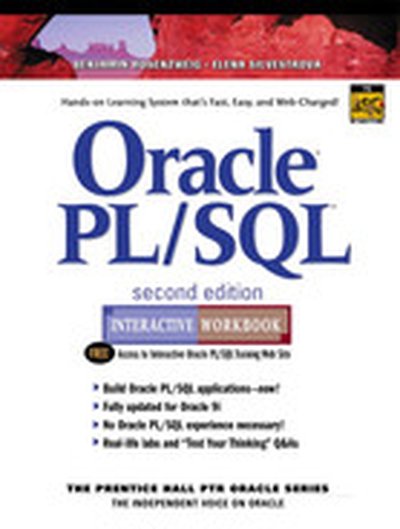
Oracle® PL/SQL® Interactive Workbook, Second Edition

Build Oracle PL/SQL applications—now. Fully updated for Oracle 9i No Oracle PL/SQL experience necessary. Real-life labs and "Test Your Thinking" Q&As Start developing applications with Oracle PL/SQL—fast. This integrated book-and-Web learning solution teaches all the Oracle PL/SQL skills you need, hands on, through real-world labs, exercises, projects, and a complete Web-based training site. Completely updated for Oracle 9i, it covers all the fundamentals—and a whole lot more. Master PL/SQL syntax, iterative and conditional control, scoping, anchored datatypes, cursors, triggers, security, tables, and packaging—plus powerful new techniques for working with exceptions, cursors, collections, and records. Your free Web-based training module includes a Virtual Study Lounge where you can interact with other learners, work on new projects, and get updates. Totally integrated with a FREE, state-of-the-art Oracle 9i learning Web site. Every Prentice Hall Oracle Interactive Workbook is fully integrated with its own exclusive Web site, giving you all this and more: "Test Your Thinking" project solutions and detailed explanations Additional self-review exercises with instant feedback and explanations An exclusive Virtual Study Lounge where you can interact with other students. Just the facts. No endless, boring discussions here. You'll learn hands on through practical exercises, self-review questions, and real-world answers. Exclusive "Test Your Thinking" projects guarantee you'll go beyond rote knowledge to really master the subject. It's an integrated learning system that's proven to work. Dozens of exercises cover the real-world tasks that matter most. Hundreds of self-review questions and answers make sure you understand.

Patterns: Connecting Self-Service Applications to the Enterprise

The Patterns for e-business are a group of proven, reusable assets that can be used to increase the speed of developing and deploying Web applications. The pattern discussed in this IBM Redbooks publication, Self-Service::Directly Integrated Single Channel application pattern, covers Web applications needing one or more point-to-point connections with back end applications. Part 1 of the book guides you through the process of selecting an Application and Runtime pattern. Next, the platform-specific product mappings are identified based upon the selected Runtime pattern. Part 2 of the book provides a set of guidelines for building your Web application with the enterprise tier using Web services, JCA and JMS. These guidelines include technology options, application design, application development, systems management, and security. Part 3 of the book teaches you by example how to design and build sample solutions using IBM WebSphere Application Server V4.0 with Web services, JCA and IBM CICS, and JMS and IBM MQSeries. Please note that the additional material referenced in the text is not available from IBM.

Enterprise Business Portals with IBM Tivoli Access Manager

Mastering the IBM Tivoli Access Manager is the most important factor for successfully deploying contemporary e-business solutions. Access Manager is the key element in an e-business security framework that needs thorough understanding to achieve maximum security, functionality, and performance. Based on expandable security policies for users, groups, and protected resources, the Tivoli Access Manager manages the authentication and authorization to application servers, Web sites, and virtually any other resource that requires protection, including custom-written applications. This IBM Redbooks publication explains the planning steps and describes how to build multi-level enterprise business portals with the new Tivoli Access Manager Version 3.9. It also discusses high-availability scenarios and platform coverage for various involved components like Web servers, registries, and Access Manager management components. It shows the integration of Access Manager into the IBM WebSphere Application Server, IBM WebSphere Everyplace Suite, BEA WebLogic application server, Siebel, and other products. This book is a valuable resource for security administrators and architects who wish to understand and implement a centralized security infrastructure.

MySQL Reference Manual

MySQL is the most popular SQL database in the open source community and is used almost universally by web sites running on open source systems. As powerful and flexible as it is lightweight and efficient, MySQL packs a large feature set into a very small and fast engine that now runs on more than 500,000 servers. This renowned online manual that has supported MySQL administrators and database developers for years is now available in paperback format. This book is an exact reproduction of the MySQL Reference Manual from the MySQL development team's Web site, minus some non-technical appendices. This version covers MySQL 4.0. Many sophisticated topics appear in this comprehensive manual, ranging from the hitches you may run into when first installing MySQL to internals that will help you tune your queries. MySQL Reference Manual contains all the comprehensive reference material one would expect for building the product, running administrative utilities, and using various API as well as MySQL's rich version of SQL. In addition, you can turn a page and find such unexpected riches as: A thorough comparison of MySQL with SQL standards and other databases A discussion of privileges and suggested uses of privileges to enhance security Directions for replicating a database and for running several MySQL servers on a single system Directions for initializing a database from a flat file Guidelines for estimating the performance of different queries A far-reaching discussion of optimization, with reference to the implementation of MySQL Investigations of the differences between data types and the pros and cons of each type of number, string, or timestamp An extended inquiry into the effects of using delayed inserts A candid explanation of why various errors occur and how to recover from them Tips for weighted, full-text searches Detailed descriptions of the features, strengths, and weaknesses of available table formats A guide to adding new functions to MySQL No serious MySQL user should be without this book.

Understanding Web Services: XML, WSDL, SOAP, and UDDI

Web services enable the new generation of Internet-based applications. These services support application-to-application Internet communication--that is, applications at different network locations can be integrated to function as if they were part of a single, large software system. Examples of applications made possible by Web services include automated business transactions and direct (nonbrowser) desktop and handheld device access to reservations, stock trading, and order-tracking systems. Several key standards have emerged that together form the foundation for Web services: XML (Extensible Markup Language), WSDL (Web Services Definition Language), SOAP (Simple Object Access Protocol), and UDDI (Universal Description, Discovery, and Integration). In addition, ebXML (Electronic Business XML) has been specified to facilitate automated business process integration among trading partners. This book introduces the main ideas and concepts behind core and extended Web services' technologies and provides developers with a primer for each of the major technologies that have emerged in this space. In addition, summarizes the major architectural approaches to Web services, examines the role of Web services within the .NET and J2EE communities, and provides information about major product offerings from BEA, Hewlett-Packard, IBM, IONA, Microsoft, Oracle, Sun Microsystems, and others. Understanding Web Services Key topics include: XML facilities for structuring and serializing data How WSDL maps services onto communication protocols and transports WSDL support for RPC-oriented and document-oriented interactions SOAP's required and optional elements Message processing and the role of intermediaries in SOAP UDDI data formats and APIs How ebXML offers an alternative to Web services that supports reliable messaging, security, and trading-partner negotiations With , you will be well informed and well positioned to participate in this vast, emerging marketplace. Understanding Web Services

Managing & Using MySQL, 2nd Edition

MySQL is a popular and robust open source database product that supports key subsets of SQL on both Linux and Unix systems. MySQL is free for nonprofit use and costs a small amount for commercial use. Unlike commercial databases, MySQL is affordable and easy to use. This book includes introductions to SQL and to relational database theory. If you plan to use MySQL to build web sites or other Linux or Unix applications, this book teaches you to do that, and it will remain useful as a reference once you understand the basics. Ample tutorial material and examples are included throughout. This book has all you need to take full advantage of this powerful database management system. It takes you through the whole process from installation and configuration to programming interfaces and database administration. This second edition has a greatly enhanced administration chapter that includes information on administrative tools, server configuration, server startup and shutdown, log file management, database backup and restore, and database administration and repair. In addition, a new chapter on security describes data, server, and client-server security, while a chapter on extending MySQL provides an overview of MySQL internals and describes the use of MySQL user-defined functions. If you know C/C++, Java, Perl, PHP, or Python, you can write programs to interact with your MySQL database. In addition, you can embed queries and updates directly in an HTML file so that a web page becomes its own interface to the database. Managing and Using MySQL includes chapters on the programming language interfaces, and it also includes a complete reference section with specific function calls for each language. Also included in the reference section are references to the SQL language, and details of the MySQL system variables, programs, and utilities. New to the second edition is a reference to the internal MySQL tables, which will be of particular interest to those who want to work extensively with MySQL security.

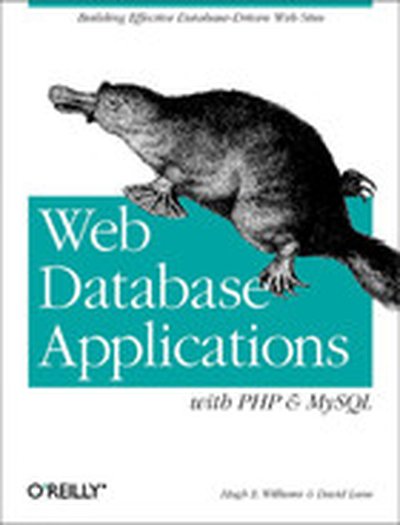
Web Database Applications with PHP, and MySQL

What do eBay, Amazon.com and CNN.com have in common? They're all applications that integrate large databases with the Web. The popularity (and power) of these applications stems from their accessibility and usability: thousands of users can access the same data at the same time without theneed to install any additional software on their computers. Web Database Applications with PHP and MySQL offers web developers a mixture of theoretical and practical information on creating web database applications. Using PHP, and MySQL, two open source technologies that are often combined to develop web applications, the book offers detailed information on designing relational databases and on web application architecture, both of which will be useful to readers who have never dealt with these issues before. The book also introduces Hugh and Dave's Online Wines, a complete (but fictional) online retail site that allows users to browse, search a database, add items to a shopping cart, manage their membership, and purchase wines. Using this site as an example, the book shows you how to implement searching and browsing, store user data, validate user input, manage transactions, and maintain security. If you want to build small to medium-scale web database applications that can run on modest hardware and process more than a million hits a day from users, this book will show you how.

Privacy Defended: Protecting Yourself Online

Privacy Defended: Protecting Yourself Online is a comprehensive book that melds detailed, how-to information on PC hardware and operating system security within the context of protecting one's privacy in a digital world. It is designed for individuals who are serious about their privacy and who also want an accessible, one-stop source of practical information. The book offers clear discussion of privacy issues as they affect everyday users of digital devices, covering all current and near-future devices and technologies that pose privacy risks to users.

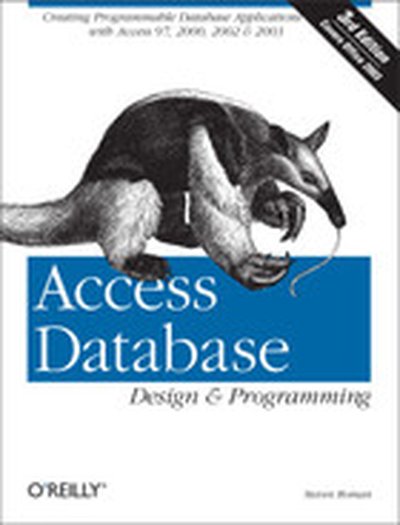
Access Database Design & Programming, 3rd Edition

Access Database Design & Programming takes you behind the details of the Access interface, focusing on the general knowledge necessary for Access power users or developers to create effective database applications. When using software products with graphical interfaces, we frequently focus so much on the interface that we forget about the general concepts that allow us to understand and use the software effectively. In particular, this book focuses on three areas: Unlike other Access books that take the long, detailed approach to every topic of concern to Access programmers, Database design. The book provides an enjoyable, informative overview of database design that carefully shows you how to normalize tables to eliminate redundancy without losing data. Queries. The book examines multi-table queries (i.e.,various types of joins) and shows how to implement them indirectly by using the Access interface or directly by using Access SQL. Programming. The book examines the VBA integrated development environment (IDE). It then goes on to provide an excellent introduction to Data Access Objects (DAO), ActiveX Data Objects (ADO), and ADO Extensions for Data Definition and Security (ADOX). These sections serve as a handy introduction and primer for basic database operations,such as modifying a table under program control, dynamically adding and deleting a record, and repositioning a record pointer. The concluding chapter focuses on common programming problems, such as computing running sums and comparing two sets. Access Database Design &Programming instead focuses on the core concepts, enabling programmers to develop solid, effective database applications. This book also serves as a 'second course' in Access that provides a relatively experienced Access user who is new to programming with the frequently overlooked techniques necessary to develop successfully in the Microsoft Access environment.Anyone interested in learning Access in depth, rather than just scraping the surface, will enjoy and benefit immensely from reading this book.

Web Security, Privacy & Commerce, 2nd Edition

Since the first edition of this classic reference was published, World Wide Web use has exploded and e-commerce has become a daily part of business and personal life. As Web use has grown, so have the threats to our security and privacy--from credit card fraud to routine invasions of privacy by marketers to web site defacements to attacks that shut down popular web sites. Web Security, Privacy & Commerce goes behind the headlines, examines the major security risks facing us today, and explains how we can minimize them. It describes risks for Windows and Unix, Microsoft Internet Explorer and Netscape Navigator, and a wide range of current programs and products. In vast detail, the book covers: Web technology--The technological underpinnings of the modern Internet and the cryptographic foundations of e-commerce are discussed, along with SSL (the Secure Sockets Layer), the significance of the PKI (Public Key Infrastructure), and digital identification, including passwords, digital signatures, and biometrics. Web privacy and security for users--Learn the real risks to user privacy, including cookies, log files, identity theft, spam, web logs, and web bugs, and the most common risk, users' own willingness to provide e-commerce sites with personal information. Hostile mobile code in plug-ins, ActiveX controls, Java applets, and JavaScript, Flash, and Shockwave programs are also covered. Web server security--Administrators and service providers discover how to secure their systems and web services. Topics include CGI, PHP, SSL certificates, law enforcement issues, and more. Web content security--Zero in on web publishing issues for content providers, including intellectual property, copyright and trademark issues, P3P and privacy policies, digital payments, client-side digital signatures, code signing, pornography filtering and PICS, and other controls on web content. Nearly double the size of the first edition, this completely updated volume is destined to be the definitive reference on Web security risks and the techniques and technologies you can use to protect your privacy, your organization, your system, and your network.

AIX Fast Connect for AIX Version 3.1 Guide

Fast Connect for AIX, announced with AIX 4.3.2, was IBM's first step to let PCs take advantage of the performance, scalability, and reliability of AIX. The new version 3.1 adds powerful new features, such as user name mapping and remote password change. This IBM Redbooks publication walks you through the installation and the setup of Fast Connect on your server. It shows how to customize this product by declaring file shares, and print shares. Because security and ease of administration of the password databases on the network are two important tasks for the system administrator, this book describes which security models are available and how to set up your PC clients to communicate with the Fast Connect for AIX server. For its in depth coverage of the Fast Connect for AIX product, this book is a must-read for I/T specialists who have to recommend a solution for AIX and PC interoperability, as well as system administrators who have to implement such a solution.

DB2® Universal Database for OS/390® Version 7.1 Certification Guide

IBM's definitive, authoritative DB2 for OS/390 and z/OS reference and self-study guide! The only comprehensive IBM(r) DB2 UDB V7.1 for OS/390 certification prep guide Covers administration, security, SQL, application development, tuning, and much more Contains dozens of expert DB2 tips, techniques and guidelines CD-ROM contains complete DB2 for OS/390 sample exam Written by IBM Gold Consultants for DB2 and S/390 The total resource for every professional running DB2 UDB V7.1 in OS/390 and z/OS environments Database administration, security, monitoring, tuning, SQL, and application development Sample test questions help you prepare for IBM's new DB2 UDB V7.1 for OS/390 exams The CD-ROM included with this book contains a complete IBM DB2 for OS/390 certification sample exam. IBM's DB2 Universal Database Version 7.1 for OS/390 delivers unparalleled performance, scalability, and reliability in today's enterprise e-business environments! Now, there's a complete, authoritative guide to deploying, managing, and developing applications with DB2 UDB V7.1 in both OS/390 and z/OS environments—and preparing for IBM's updated DB2 UDB V7.1 for OS/390 certification exam! Direct from IBM, this comprehensive day-to-day reference for running DB2 UDB in OS/390 and z/OS environments is also the only book with the in-depth knowledge professionals need in order to pass IBM's latest DB2 for OS/390DBA certification exam. Full of expert tips, techniques, and guidelines, it covers virtually every aspect of working with DB2 UDB in enterprise server: administration, connectivity, development, and much more. IBM Gold Consultants Richard Yevich and Susan Lawson present start-to-finish coverage of DB2's latest and most powerful enhancements, tools, and utilities, showing how to make the most of DB2 running on both OS/390 and next-generation z/OS platforms. Coverage includes: An overview of the DB2 UDB product family DB2 in OS/390 and z/OS environments: address spaces, attachments, interfaces, commands, and utilities Comprehensive security coverage, including access controls and auditing techniques SQL in depth: DB2 data structures, database objects, basic database design, and advanced coding DB2 UDB administration: maintaining data, backup/recovery, and more Performance monitoring and optimization: access paths, indexes, parallelism, buffer pool tuning, and subsystem tuning Data sharing: architecture and implementation in a Parallel Sysplex environment Detailed application development coverage: database extenders, cursors, stored procedures, triggers, object-relational extensions, locking, and concurrency Whether you're deploying DB2 UDB V7.1 in an OS/390 environment, managing DB2 UDB V7.1, preparing for DB2 UDB V7.1 certification, or all three, DB2 Universal Database Version 7.1 for OS/390 Certification Guide will be your single most valuable resource.

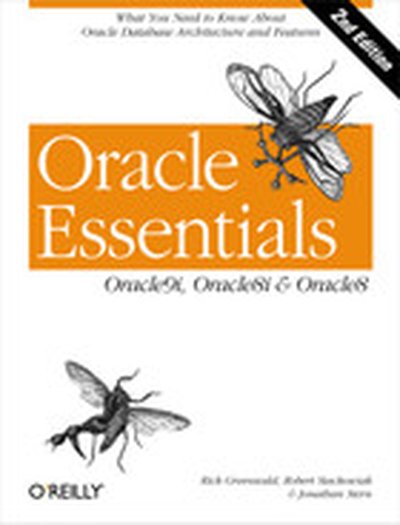
Oracle Essentials: Oracle9i, Oracle8i and Oracle8, Second Edition

The second edition of O'Reilly's bestselling Oracle Essentials has been updated to include the latest Oracle release, Oracle9 i. Oracle Essentials distills an enormous amount of information about Oracle's myriad technologies and releases into a compact, easy-to-read volume filled with focused text, illustrations, and helpful hints. Oracle9 i promises to be an even more significant upgrade than Oracle8 i, offering such major features as Real Application Clusters, flashback queries, Oracle personalization, clickstream intelligence, and Oracle Database Cache and Web Cache; it also promises significant improvements in Oracle's business intelligence, XML integration, high availability, and management capabilities. The book includes overviews of these features, as well as the new Oracle9 I Application Server (Oracle9 iAS) and Oracle9 i Portal. The book contains chapters on: Oracle products, options, and overall architecture for Oracle9 i and other recent releases Installing and running Oracle: creating databases, configuring Net8 (known as Oracle Net in Oracle9 i), starting up and shutting down Oracle Oracle data structures, datatypes, and ways of extending datatypes Managing Oracle: security, the Oracle Enterprise Manager, fragmentation and reorganization, and backup and recovery Oracle networking, monitoring, and tuning Multi-user concurrency, online transaction processing (OLTP), and high availability Hardware architectures (e.g., SMP, MPP, NUMA) and their impact on Oracle Data warehousing and distributed databases Oracle9 i, Oracle8 i, and the Web, including the latest Java, web, and XML technologies, interMedia, Oracle9 i Application Server, and Oracle9 i Portal For new Oracle users, DBAs, developers, and managers, Oracle Essentials is an all-in-one introduction to the full range of Oracle features and technologies, including the just-released Oracle9 i features. But even if you already have a library full of Oracle documentation, this compact book is the one you'll turn to, again and again, as your one-stop, truly essential reference.

Database Nation

Fifty years ago, in 1984, George Orwell imagined a future in which privacy was demolished by a totalitarian state that used spies, video surveillance, historical revisionism, and control over the media to maintain its power. Those who worry about personal privacy and identity--especially in this day of technologies that encroach upon these rights--still use Orwell's "Big Brother" language to discuss privacy issues. But the reality is that the age of a monolithic Big Brother is over. And yet the threats are perhaps even more likely to destroy the rights we've assumed were ours. Database Nation: The Death of Privacy in the 21st Century shows how, in these early years of the 21st century, advances in technology endanger our privacy in ways never before imagined. Direct marketers and retailers track our every purchase; surveillance cameras observe our movements; mobile phones will soon report our location to those who want to track us; government eavesdroppers listen in on private communications; misused medical records turn our bodies and our histories against us; and linked databases assemble detailed consumer profiles used to predict and influence our behavior. Privacy--the most basic of our civil rights--is in grave peril. Simson Garfinkel--journalist, entrepreneur, and international authority on computer security--has devoted his career to testing new technologies and warning about their implications. This newly revised update of the popular hardcover edition of Database Nation is his compelling account of how invasive technologies will affect our lives in the coming years. It's a timely, far-reaching, entertaining, and thought-provoking look at the serious threats to privacy facing us today. The book poses a disturbing question: how can we protect our basic rights to privacy, identity, and autonomy when technology is making invasion and control easier than ever before? Garfinkel's captivating blend of journalism, storytelling, and futurism is a call to arms. It will frighten, entertain, and ultimately convince us that we must take action now to protect our privacy and identity before it's too late.